Apr. 10, 8:38 p.m. EDT
“These were the ambassadors from humanity to the stars:” NASA administrator
NASA administrator Jared Isaacman praised the Artemis II crew following the lunar flyby that has riveted the world for the past 10 days, describing it as a “perfect mission” and the astronauts as “wonderful communicators — almost poets.”
“These were the ambassadors from humanity to the stars that that we sent out there and I can’t imagine a better crew.”
Isaacman added that the “textbook” descent and splashdown proves that NASA is “back in the business of sending astronauts to the moon and bringing them back safely … until we land on it in 2028.”
The next Artemis mission, slated for 2027, will also be crewed and will test the rendezvous and docking capabilities of Orion with commercial spacecraft in preparation for a planned lunar landing before the end of this decade.
Apr. 10, 8:09 p.m. EDT
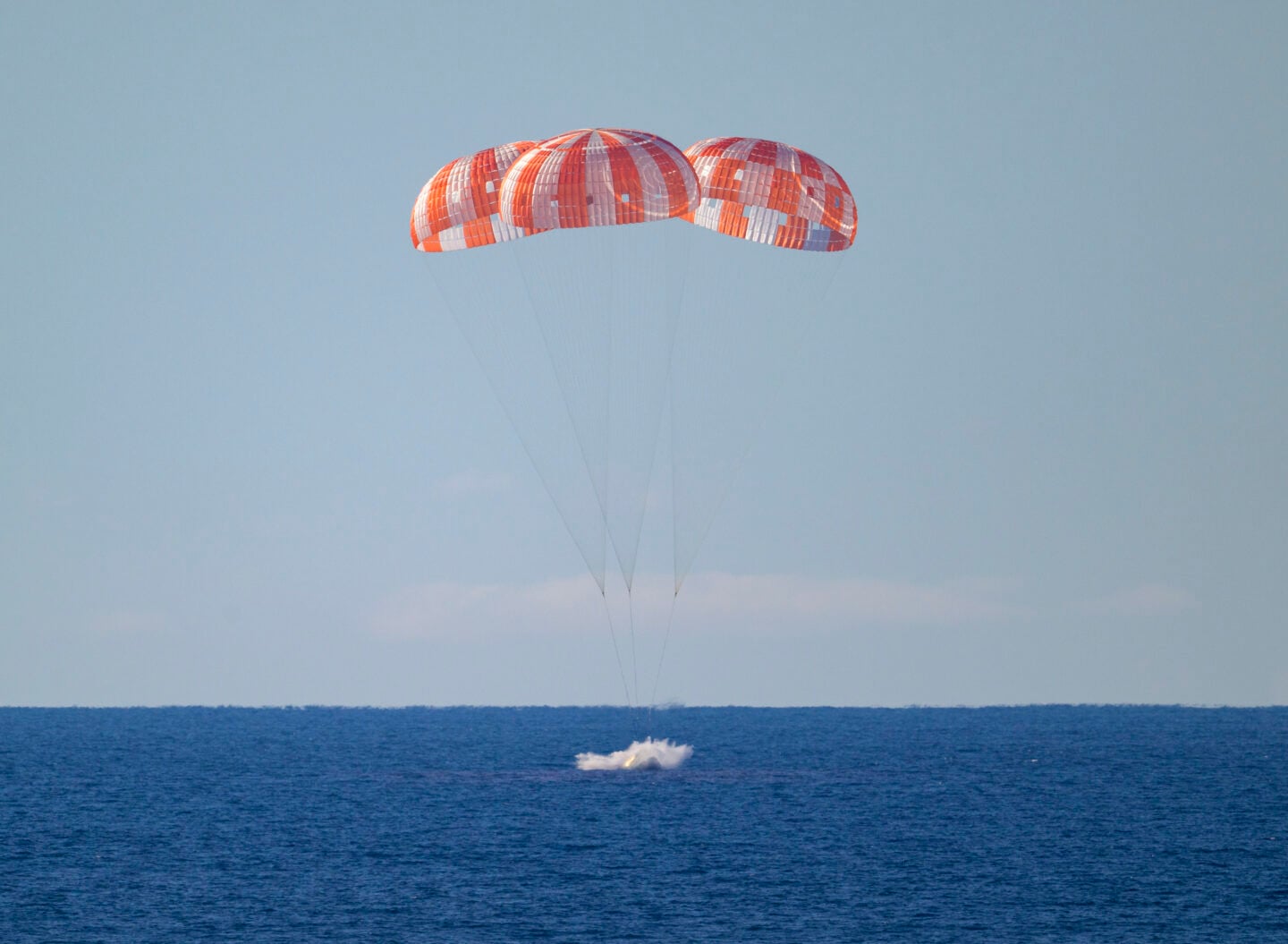
The Orion spacecraft has splashed down in the Pacific Ocean after “perfect descent”
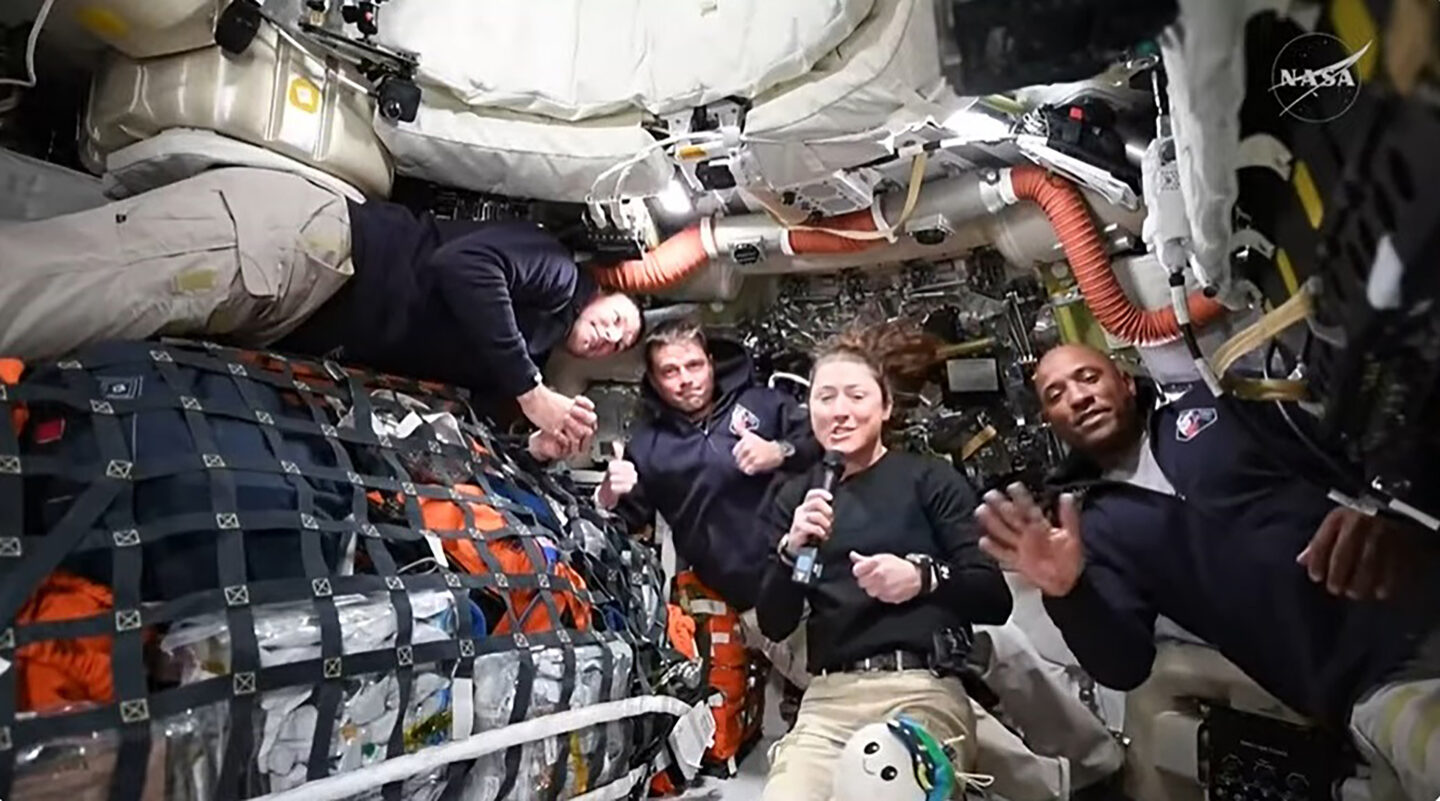
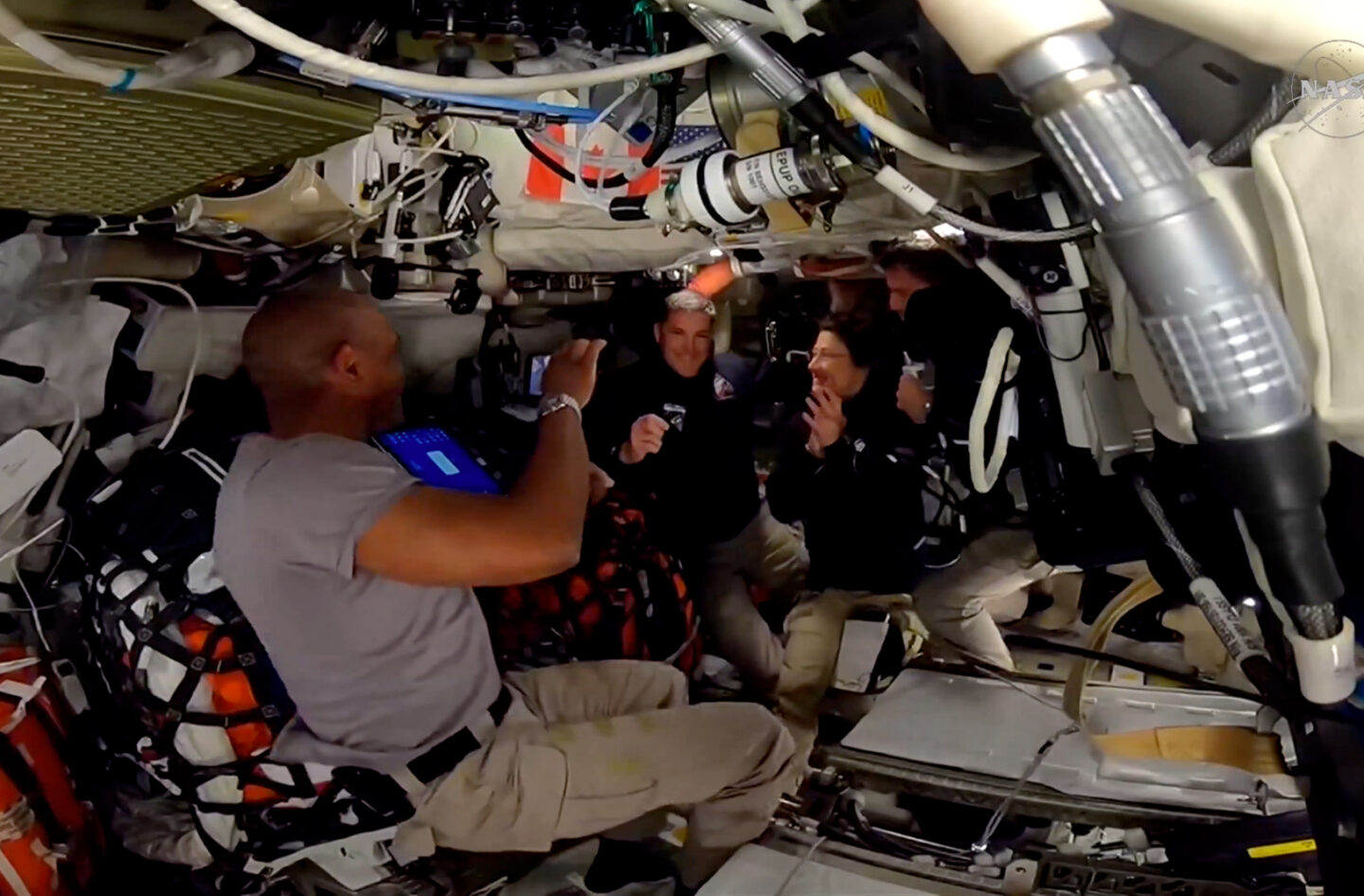
Commander Reid Wiseman reports all four crew members are well.
Apr. 10, 8:04 p.m. EDT
Voice communication re-established with crew
Apr. 10, 7:57 p.m. EDT
Orion has entered Earth’s atmosphere
Apr. 10, 7:39 p.m. EDT
Orion spacecraft on target for re-entry
Houston mission control has confirmed that the final raise burn — an injection of fuel to increase Integrity’s speed and correct its angle of attack for re-entry — is complete and the spacecraft has “the right angle of attack to mitigate any excessive heat loads on the vehicle during entry interface.”
Mission commander Reid Wiseman shared that the crew have a great view of the moon outside the window of the capsule. “Looks a little smaller than yesterday,” he quipped.
“Guess we’ll have to go back,” Capcom Jacki Mahaffey replied.
Apr. 10, 5:35 p.m. EDT
Artemis II to come close to 1969 speed record on re-entry
Unofficial numbers released by NASA predict that Integrity will be travelling at a speed of 24,661.21 miles per hour as it re-enters Earth’s atmosphere approximately two and a half hours from now. That’s just 130 mph shy of the record set back in 1969 by the Apollo 10 crew on their return from the Moon and equates to about Mach 33, or 33 times the speed of sound.
Apr. 10, 9:59 a.m. EDT
Artemis II mission preparing for high-stakes re-entry into Earth’s atmosphere
After 10 days in space, the Artemis II crew is preparing for a high-stakes return to Earth. Re-entry is the most intense phase of the mission. The Orion spacecraft will reach its maximum velocity — close to 24,000 miles per hour — just before re-entry, generating temperatures near 5,000 degrees Fahrenheit on its heat shield and forces close to four times the pull of gravity. A brief communications blackout is expected as plasma builds around the capsule. From the moment it hits the atmosphere, it will take just 13 minutes for Orion to reach the Pacific Ocean off the coast of San Diego, Calif.
Orion will face these immense forces with a known issue: its heat shield. Following the return of the uncrewed Artemis I mission, engineers found concerning cracks and pockmarks in the heat shield. Rick Henfling, Artemis II entry flight director, says NASA has taken steps to mitigate the danger to the Artemis II crew by altering the flight path for re-entry. “NASA established a tiger team to investigate the cause of the problem and then make recommendations on how to fly the Artemis II mission safely and successfully,” he says. “We are going to fly a profile that ensures the spacecraft will not see that same type of pressure [that caused the damage to the heat shield during Artemis I re-entry.]”
Apr. 6, 3:05 p.m. EDT
Artemis II astronauts break record for farthest human spaceflight
The four astronauts of the Artemis II mission, including Canada’s Jeremy Hansen, have officially travelled farther from Earth than any other humans in history. At 1:56 p.m. EDT today, Integrity travelled beyond 400,171 kilometres from Earth – the previous record set by the Apollo 13 crew in 1970 — as part of its flyby of the moon.
The capsule is expected to reach its closest distance – 6,550 kilometres – to the moon at 7:02 p.m. and reach maximum distance from Earth – 1,118,624 kilometres – a few minutes later at 7:07 p.m. Integrity will then begin its homeward journey, expected to take another four days to complete.
Gordon “Oz” Osinski, a planetary scientist and professor at Western University, calls today’s lunar flyby “icing on the cake” for a mission that has already set new benchmarks for human space exploration. “It sounds very Star Trek-esque but that will be the farthest that any humans have ever gone before. Period,” he says.
Osinski, who has led several expeditions to the Arctic to train astronauts — including Hansen and fellow Artemis II mission specialist Christina Koch — in geological analysis and sampling in preparation for future missions to the lunar surface, says he is excited for the images the Artemis II mission will bring back to Earth.
“I’m looking forward to having a whole bunch more images that I can show in presentations that I think will give people a better perspective of what the moon is like and that satellite images can’t quite capture,” he says.
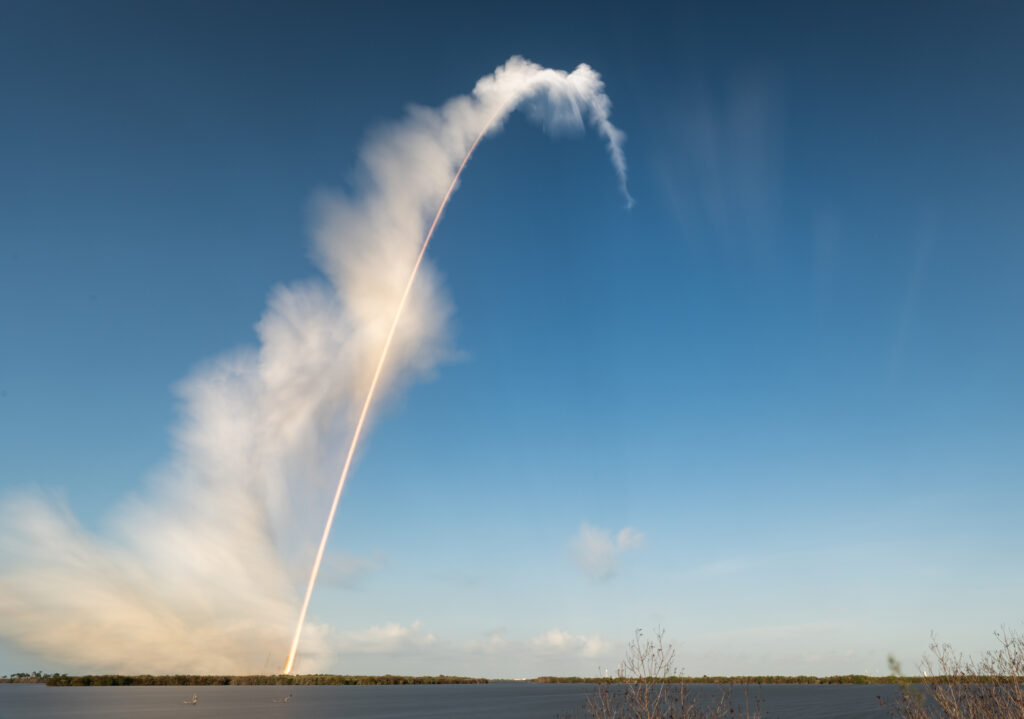
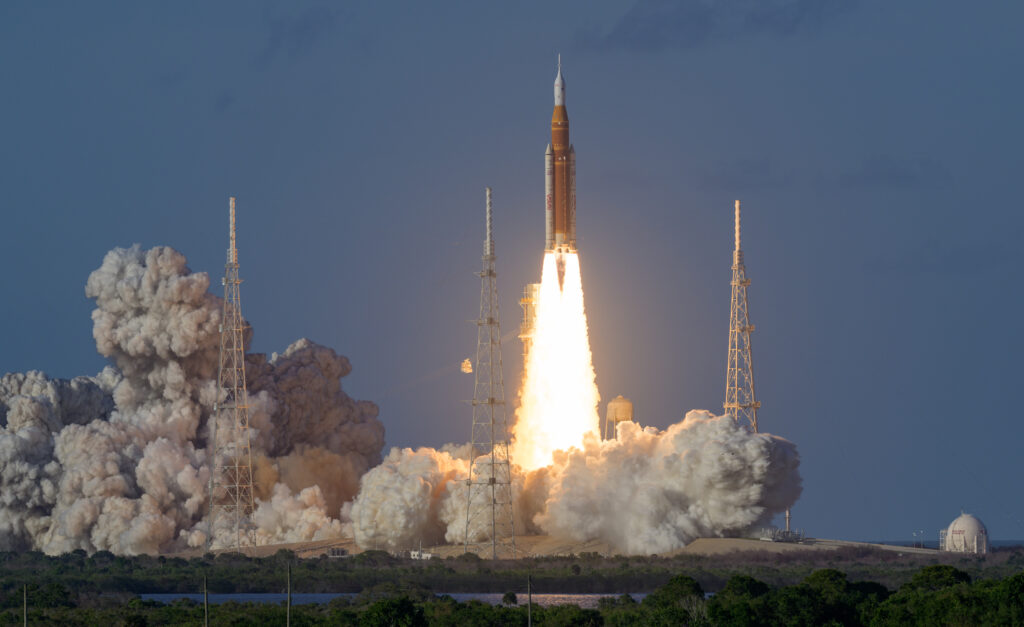
Today’s historic events follow a five-day voyage that began with liftoff from NASA’s Kennedy Space Centre on Wednesday, April 1. On Saturday morning, the Canadian Space Agency hosted a live question-and-answer session with Hansen and his crewmates from deep space, in which Hansen mused on a number of topics, ranging from the crew’s experience viewing Earth from space to fellow Canadian Ryan Gosling’s starring role in the hit movie Project Hail Mary, a sci-fi film where the hero is tasked with saving life on Earth from a dying sun. The crew watched the movie with their families via a video link while in quarantine prior to liftoff.
“Art imitates science and vice versa it seems,” said Hansen, while lightly tossing around a plush toy named Ride, which serves as the crew’s zero gravity indicator. “It’s wonderful seeing people really lean into their roles.”
Other topics discussed during the Q&A included the serendipity of the April 1 launch date, which will allow the crew to observe an eclipse of the sun (also tonight); potentially observing lunar regolith lofting, a phenomenon where fine, lunar dust is suspended above the moon’s surface; inspiring young people to do great things (“you need a big team behind you,” Hansen advised); and whether food tastes different in space.
“We haven’t found the maple syrup yet,” Hansen quipped. “Our first day in space we found some maple cookies, so that was fun after a very long day. So far, food tastes about the same as it did on Earth.” — M.B.