
Environment
What does Canada’s journey to net zero look like?
Four members of Canada’s Net Zero Advisory Body — from an economist to a scientist — discuss the best pathways to reaching Canada’s aggressive climate targets
- 1734 words
- 7 minutes
Science & Tech
Entrepreneurs from across Canada go green, joining a federal program that helps them to set emission-reduction goals that go well beyond marketing
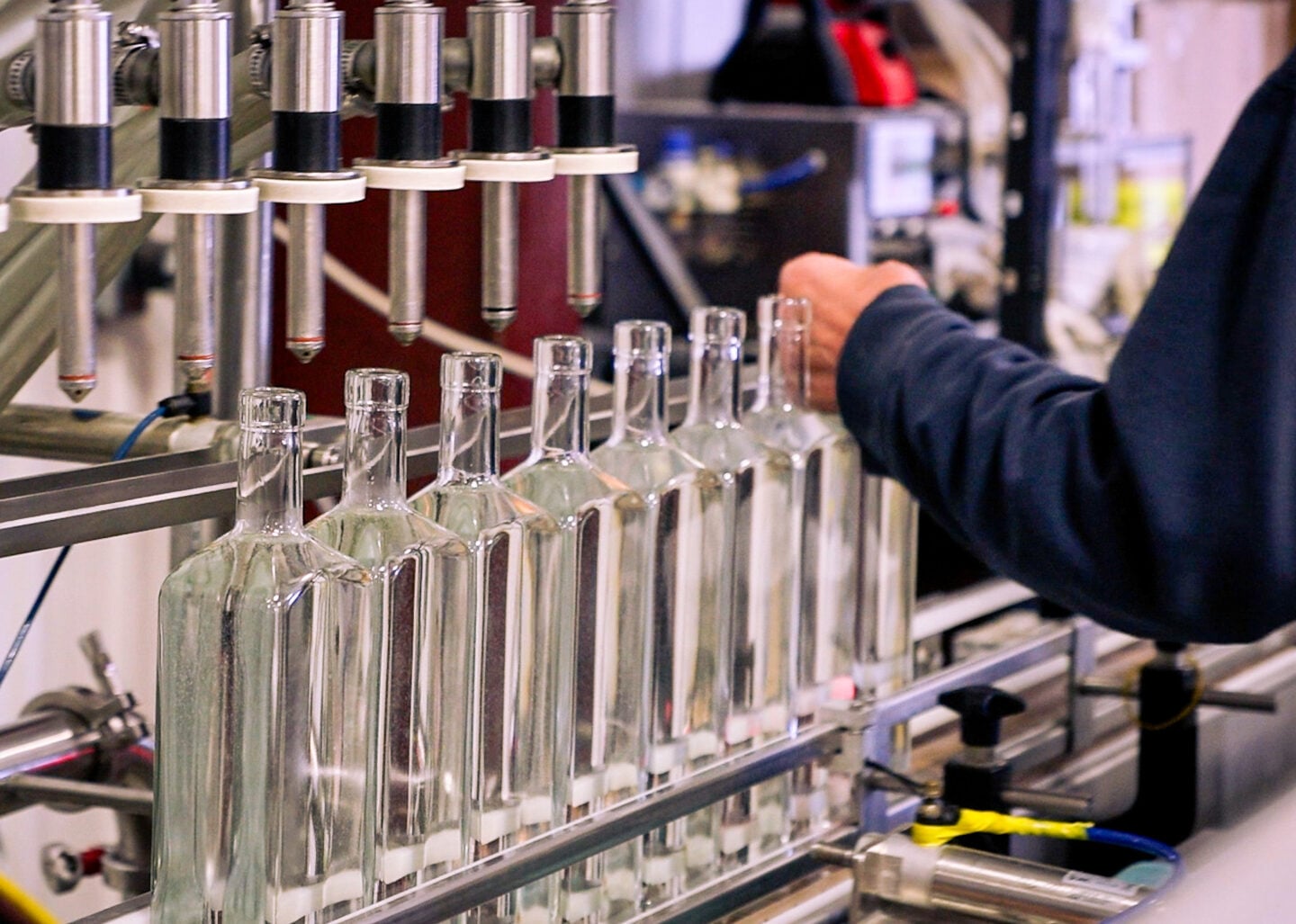
At a corporate event back in 2018, John Criswick, founder of Top Shelf Distillers, overheard an employee make a comment that cut him to the quick. The Perth, Ont., company was giving away saplings as part of its sustainability efforts. “Someone asked, ‘So why are you guys giving away trees? And she said, ‘Oh, it’s a marketing gimmick.’ I was like, ‘Holy smokes!’ I have failed at communicating this strategy and the sustainability stuff to the company.”
In his thinking about the then-four-year-old firm, Criswick imagined it should be around in a hundred years, which meant figuring out how to operate sustainably in terms of protecting access to the water and grains in its eastern Ontario locale. Criswick, however, preferred to steer clear of eco-jargon, describing his outlook as “covert environmentalism.” Five years later, however, Top Shelf pivoted from covert to overt by enrolling in the federal government’s Net-Zero Challenge. Launched in 2022, the program helps companies and other organizations scope out fully realized plans to transition their facilities and operations to net-zero emissions by 2050 — concrete goals that go well beyond marketing.
The program “really kind of helped us focus and narrow down our planning and analyzing different scenarios and put them in action,” says Shannon Kazia Norbert, the company’s director of sustainability and R&D. “It did also act as a tool to hold us accountable that we cannot greenwash our way through these necessary steps to achieve a more sustainable distillery through decarbonization.”
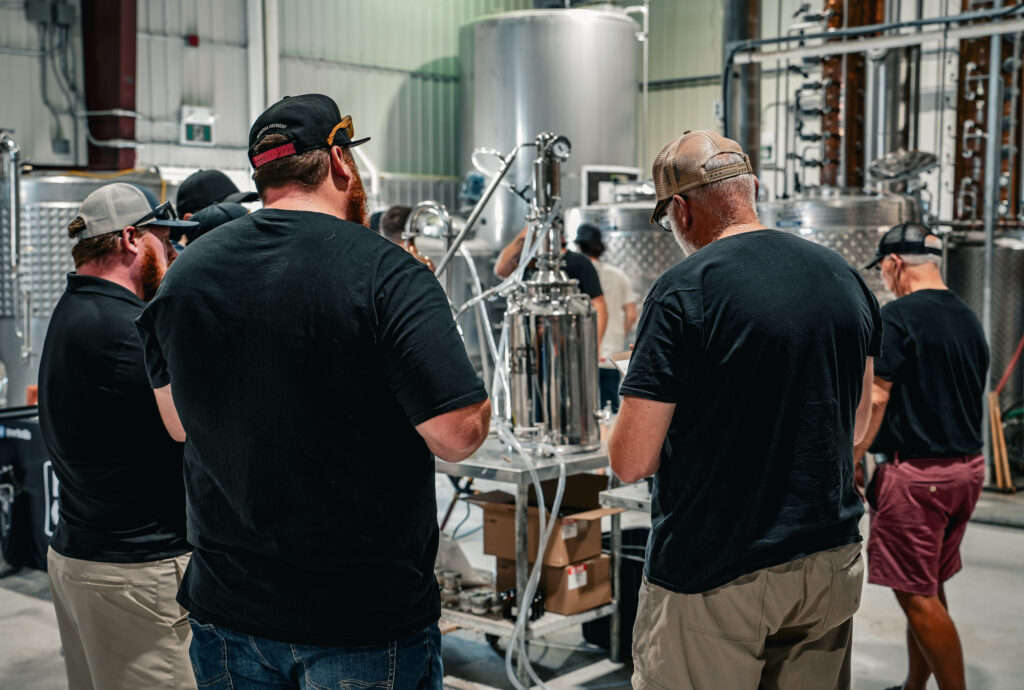
FOR EVEN THE MOST COMMITTED companies, figuring out how to reduce emissions beyond low-hanging fruit measures such as installing LED lightbulbs, can be a formidable exercise — one steeped in arcane energy consumption models, long-term cost forecasts and competing approaches to sustainability fixes (think of the complicated process of purchasing carbon offset credits). Most, like Top Shelf, eventually find themselves weighing the pros and cons of expensive capital outlays, ranging from technically complex industrial heat recovery systems to electric-vehicle fleets.
“There’s a lot of information out there,” comments Raphaël Beauchamp, director at Transition Accelerator, an environmental non-profit that has partnered with Environment and Climate Change Canada to provide participants with the necessary resources to achieve their goals. “What we’re trying to do is centralize it, bring together the insights that we have and then provide advice to companies about where they should be getting started, and not get lost in the weeds.”
As of March 2026, the program had signed up over 350 participants from a range of sectors. Joining is voluntary, except for firms that want to qualify to bid on federal contracts worth more than $25 million.
“We’re on the path to try to encourage companies who do business with us to also make that same commitment,” says Grant Hogg, an executive director at Environment and Climate Change Canada. “For a lot of those companies, this wasn’t necessarily part of their business mindset, but they now say, ‘Hey, it looks like the federal government and maybe other large companies and other governments at the city level or provincial level may start to require a net-zero commitment as well.”
Those commitments aren’t cakewalks. Participants have to work through a 76-page technical guide that shows them how to set targets, estimate their emissions, identify mitigation methods and even carry out notoriously complicated calculations, such as gauging the land-use impact of low-carbon energy technologies such as biofuels. Emissions are subdivided into scope 1, 2 and 3 based on whether they are direct or indirect and where they occur in the lifecycle of the company’s product or process.
“A lot of private-sector organizations are very keen to be able to decarbonize and willing to commit to net zero,” says Judy Meltzer, an associate assistant deputy minister for Environment and Climate Change Canada. “The trick is that it’s sometimes not necessarily clear as to how you can actually do that in a robust way.
That’s where the ambitious Net-Zero Challenge program can be helpful, bringing a value-added approach to the process. “We’re really trying to bring companies into the decarbonization tent so they don’t have to have it all figured out before they join.”
That said, some of the organizations that have signed on were already working on sustainability efforts, though maybe not as ambitious as a fully fleshed-out transition plan.

SUCH WAS THE CASE with the Toronto Zoo, which established its first sustainability strategy in 2007 and then refreshed it in 2022 as the City of Toronto adopted 2040 net-zero targets for its own operations and those of its agencies.
The zoo’s primary carbon issues involve heating the animal enclosures, maintaining appropriate humidity levels and dealing with lots of animal waste and wastewater. Scope 1 and 2 emissions (those generated by operations and the energy used in those operations) account for 17 per cent of the zoo’s greenhouse gases, says environmental sustainability manager Kyla Greenham. The zoo, she adds, is now buying EVs to replace its diesel-powered vehicles and converting the energy systems in its 105 buildings.
But even though she was confident the zoo had a handle on where it was headed in its sustainability journey, Greenham enrolled the zoo in the federal Net-Zero Challenge program to get a better handle on how to calculate scope 3 emissions (those generated within a supply chain that includes a great deal of animal feed). “I was always kind of uncomfortable with the scope 3,” she says. “It’s a much larger concept. We’re currently doing our scope 3 inventory, and we will be re-writing our net-zero target emission later this year to incorporate [it].”
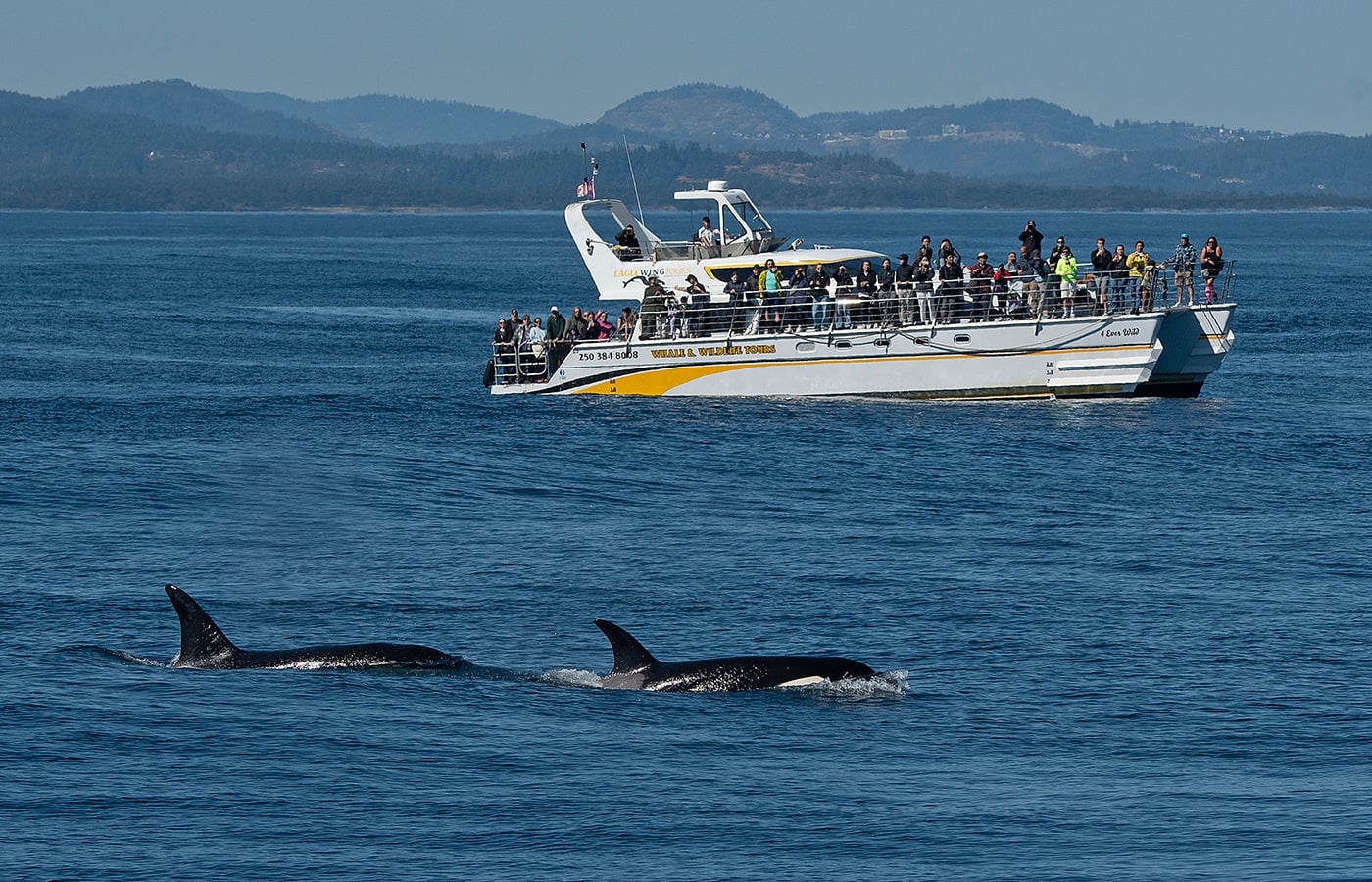
FOR EAGLE WING TOURS, a whale-watching outfit in Victoria, the program functions almost like a peer review or certification of what it has already been doing with its fleet for well over a decade. Owner Brett Soberg explains that the company, which runs tours in the Salish Sea, went carbon neutral in 2009 through a combination of measures, from greening its own administrative operations to buying carbon offsets.
In recent years, Eagle Wing, working with sustainability consultants Synergy Enterprises, set out to transition its fuel use from petroleum-based diesel to renewable diesel, a chemically identical form of diesel refined from grains and sourced in part from a local First Nation. The two fuels are interchangeable, in terms of the engine, and similar in price, except the renewable cuts the company’s emissions by 85 to 95 per cent. “Renewable diesel is something that exists on the West Coast,” he says. “It is available. We can get our hands on it. It’s one of the most practical near-term solutions available to our sector.”
Working with Victoria’s port authority, which provides fuelling services, Eagle Wing has negotiated a temporary hook-up while the agency converts to the low-emission product, per its own sustainability plan. “We’ll have something by May or June this year, which is brilliant. We’ll be light years ahead of our goal, which is to reduce our emission by 50 per cent by 2030.”
Eagle Wing enrolled in the Net-Zero Challenge to confirm its strategy to reach net-zero emissions through fuel switching, efficiencies and, at the very end, some modest investment in local carbon offset credits. Soberg says though Eagle Wing has a fairly sophisticated understanding of what its carbon footprint is, he was attracted to the federal net-zero program because it was thorough and used international standards. “There’s a rigorous process,” Soberg explains. “For us, that was important because in our business, which is a very competitive market with 30 companies that do something similar to what we do in Seattle, Vancouver and Victoria, third-party verification is key to addressing the greenwashing that does occur in our industry.”
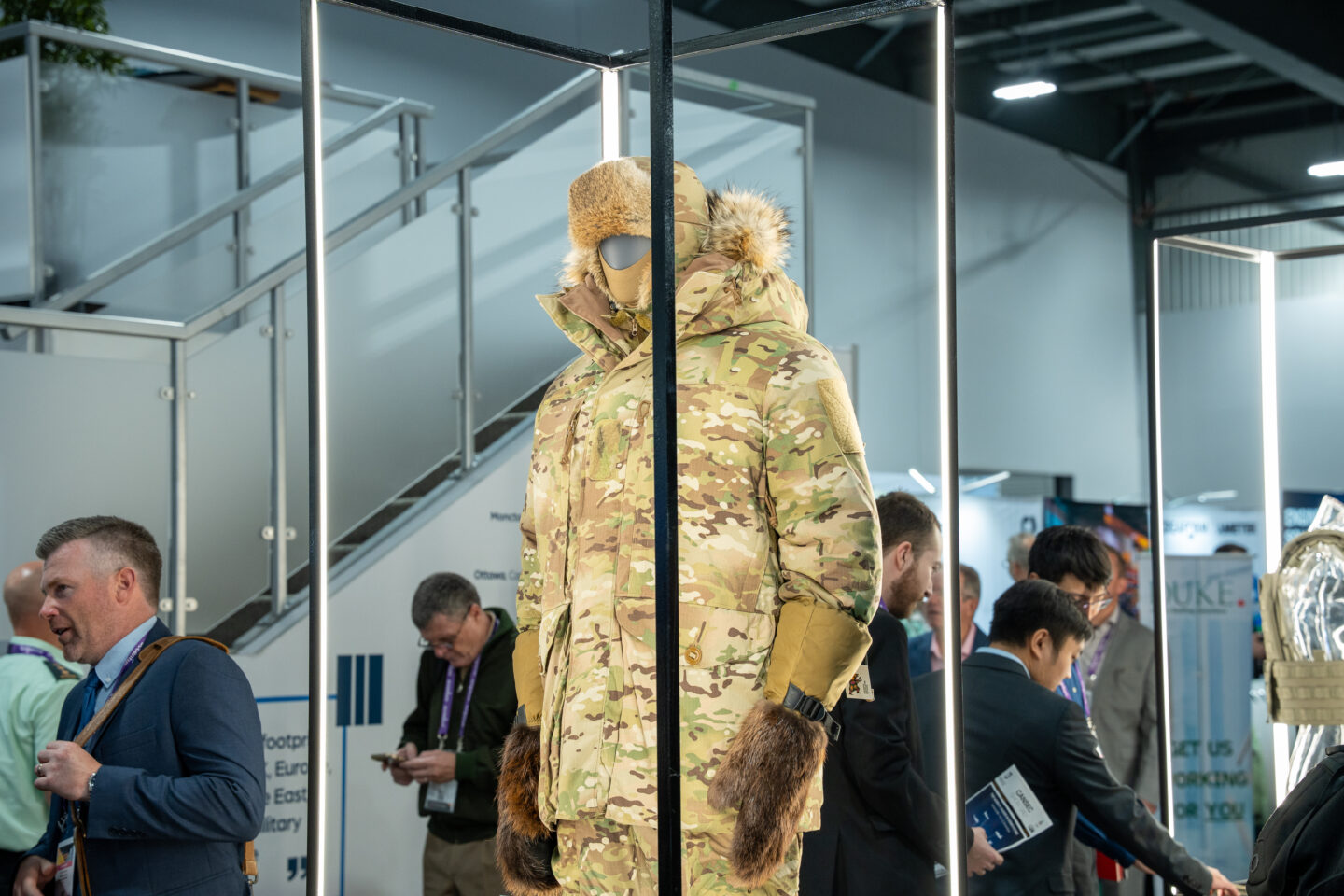
THE MOST FORMIDABLE CHALLENGES, perhaps, face industrial firms like Logistik Unicorp, a Quebec City-based manufacturer of uniforms, including specialized ones used by the Canadian Forces and law-enforcement agencies. The company’s plant has been LEED and ISO certified for environmental standards for several years, but Logistik viewed the Net-Zero Challenge as a catalyst that would push it to make wholesale changes in the way it makes its products.
“It pushed us to take a more rigorous and holistic look at our impact,” says Laura Hamel, communications and PR advisor, noting that Logistik signed on in May 2023.
With the support of external experts, Logistik assessed the materials it was using, completed a full greenhouse gas inventory and developed a three-year action plan. In particular, the company needed help to develop a strategy to transition to a circular materials approach — eliminating waste by keeping materials in use. In Logistik’s case, this meant a commitment to invest in research and development into recycling fabrics. “We are actively testing the approach through life-cycle assessments [evaluating the environmental impacts of a product, process or service throughout its entire life],” Hamel says. Logistik can use that information to rethink how products are designed from the beginning of the development process to prevent waste and improve sustainability. “The objective is to move from isolated pilots to a more systematic integration of eco-design principles across our portfolio.”
Three years in, she describes the Net-Zero Challenge program as valuable, saying Logistik and other companies benefit from the guidance it provides. But, Hamel adds, given the complexity of such corporate transformations, participants “could also benefit from greater access to early information on upcoming expectations, requirements and regulatory developments.”
“It pushed us to take a more rigorous and holistic look at our impact.”
AT TOP SHELF, the most obvious net-zero conundrum has to do with the energy the company consumes to run the distillery, which is a heat-intensive manufacturing process. For now, says Norbert, the distillery’s boilers are powered by natural gas. Criswick adds that the fermentation process itself gives off a lot of carbon dioxide.
The goal is to figure out how to transition to a renewable source without raising the price of Top Shelf’s products, and do so at the same time as the company expands its operations by building a new and much larger plant. (Top Shelf’s distillery now produces six barrels, each with 104.5 litres of pure alcohol, per week, but the company wants its planned distillery to turn out 40 barrels within the next three to five years.)
As Top Shelf’s team worked through the Net-Zero Challenge assessment, three low-carbon alternatives emerged: electricity, renewables such as solar panels or a biomass-driven boiler that would burn the dried-out “mash” that is the grain-derived by-product of the distilling process. There are pros and cons to each, Norbert says — he is considering the relatively low operating cost of switching to solar or electric heat versus the possibility of going with a circular-economy solution (burning biomass), which is more technically complicated but tells a good story. “I like the term ‘circular economy’ and embellishing that a lot more,” says Criswick, who points out that half of Top Shelf’s sales are linked to tours of its facility or participation at local events.
Norbert says the solution will likely be a combination of these technologies. “We can’t go all out on one. You’re also weighing the costs of the infrastructure, of the solar. But also, it’s a numbers game. How much is the upfront cost going to be? How much new equipment are we going to invest in for drying the grains to burn them? What grants can you apply for?” (Both the federal government and the province of Ontario offer various decarbonization subsidies.
The whole exercise, in fact, has prompted Criswick and his team to consider other ways to analyze the way they make whisky. He mentions the possibility of reusing CO2 from the fermentation process to augment plant growth in greenhouses, including those that produce commercial algae, which can be sold as feed to a nearby trout farm
Grains to spirits to fish food. “We’re still sussing that out, but it’s basically a commercialized by-product of what we’re producing there,” he says. “We’re setting up a team externally, and we’re working through a contract with the University of Guelph to get senior scientist advisory services. I’m aware of a couple of other breweries, not distilleries, doing something.” Now, thanks to the federal Net-Zero Challenge, Top Shelf may soon be doing it, too.
This story was created in partnership with Environment and Climate Change Canada.
Environment
Four members of Canada’s Net Zero Advisory Body — from an economist to a scientist — discuss the best pathways to reaching Canada’s aggressive climate targets
Environment
A new study finds zoos and aquariums in Canada are publishing more peer-reviewed research, but there is still more to be done
Places
A spotlight on the conservation work being done to support, preserve and save at-risk and endangered species

People & Culture
The Home Improvement Challenge ran concurrently around all other themed challenges and had the potential to have the greatest effect on household emissions