Science & Tech

Canada’s ‘moon joy’ will continue long past Artemis II. Here’s what’s next for our space program

While Jeremy Hansen’s mission is complete, Canadian scientists and astronauts will be involved in future space missions – including to the moon

  • Apr 23, 2026
  • 857 words
  • 4 minutes
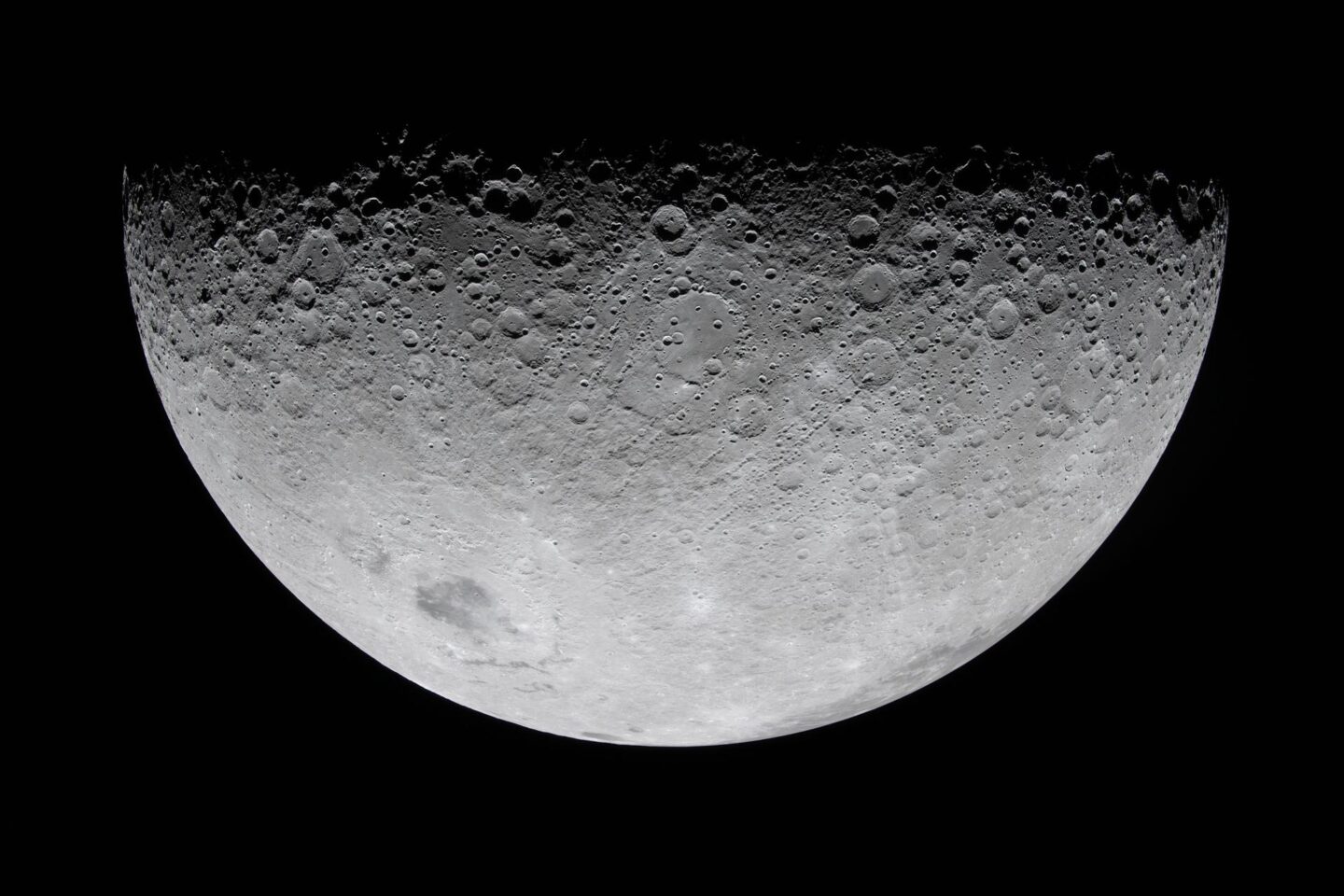
Giant chains of craters emanating from the 3.7-billion-year-old Orientale basin can be seen scouring the surface of the moon in this image captured by the Artemis II crew during their lunar flyby earlier in April. (Photo: NASA)
Expand Image
Advertisement
Advertisement
Advertisement

It’s been two weeks since the astronauts of the Artemis II mission returned safely to Earth, and you could be forgiven for missing the “moon joy” they brought to our daily lives during their historic 10-day lunar flyby.

Canadian Space Agency (CSA) astronaut Jeremy Hansen became the first Canadian — and first non-American — to fly around the moon. Hansen and NASA astronauts Reid Wiseman, Victor Glover and Christina Koch captured the hearts and imaginations of millions with their wonder-filled dispatches from outer space. The mission marked the first time any astronauts had visited the moon in nearly 54 years, since Apollo 17’s landing. The mission also brought long-standing Canadian partnerships into the spotlight – partnerships that will continue long after the mission wraps up.

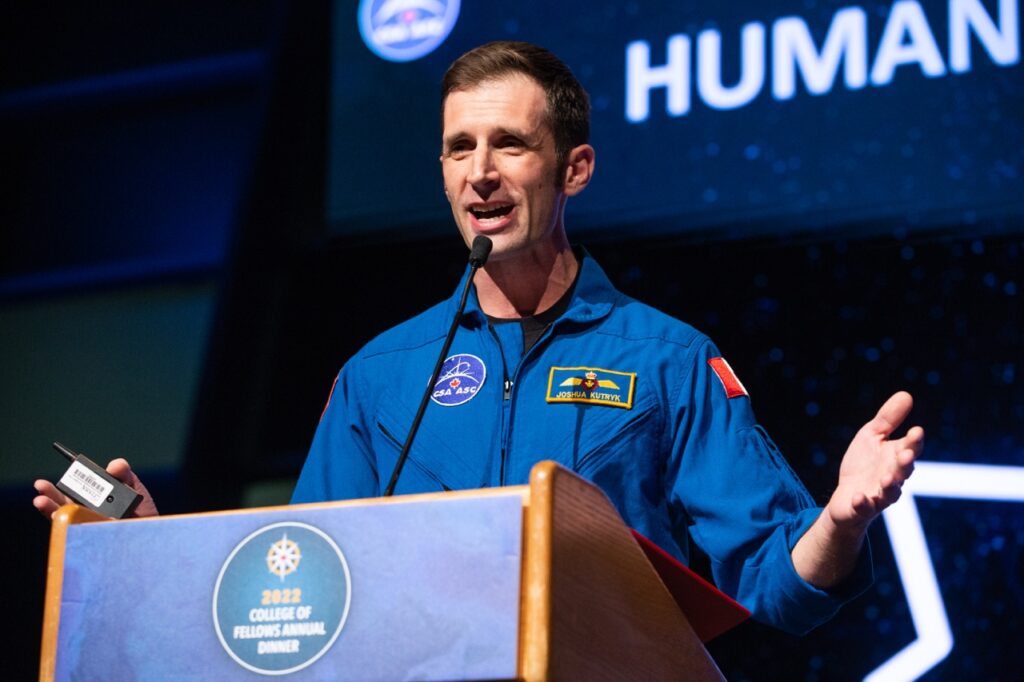
Canadian Space Agency astronaut Joshua Kutryk speaks at the Royal Canadian Geographical Society’s Geographica Gala in November 2022. Kutryk is the next Canadian astronaut set to go to space. (Photo: Ben Powless/Can Geo)
Expand Image

Astronauts

After Hansen, are any other Canadians up for Artemis missions? While that is being negotiated, there are three other fully qualified active astronauts at CSA: Jenni Gibbons, Joshua Kutryk and David Saint-Jacques.

Canada should have access to at least two Artemis mission opportunities based on the CSA’s contributions, but the second mission has not yet been decided. Gibbons, who served as Artemis II mission backup and as one of the astronaut communicators in Mission Control, seems a natural fit. She is not currently assigned to any spaceflight, but has said she’s ready to go where needed when the opportunity arises.

There will also be spaceflight opportunities closer to Earth. Kutryk, for example, has been assigned to an International Space Station mission, launching no earlier than September of this year. During the long-duration mission, Kutryk will conduct several experiments, many of them focused on human health. The last Canadian to fly an ISS mission was Saint-Jacques in 2018-19.

Meanwhile, reams of science are still to come from Artemis II. Hansen and his crew are just beginning debriefs on Earth of their science observations. But what is clear, as Hansen said at a January media event at NASA’s Kennedy Space Center, is that Canada intends to keep contributing to moon missions and other NASA crewed efforts – through science, technology, and astronauts. “We have skill sets, and I know Canada will rise to the challenge,” he said.
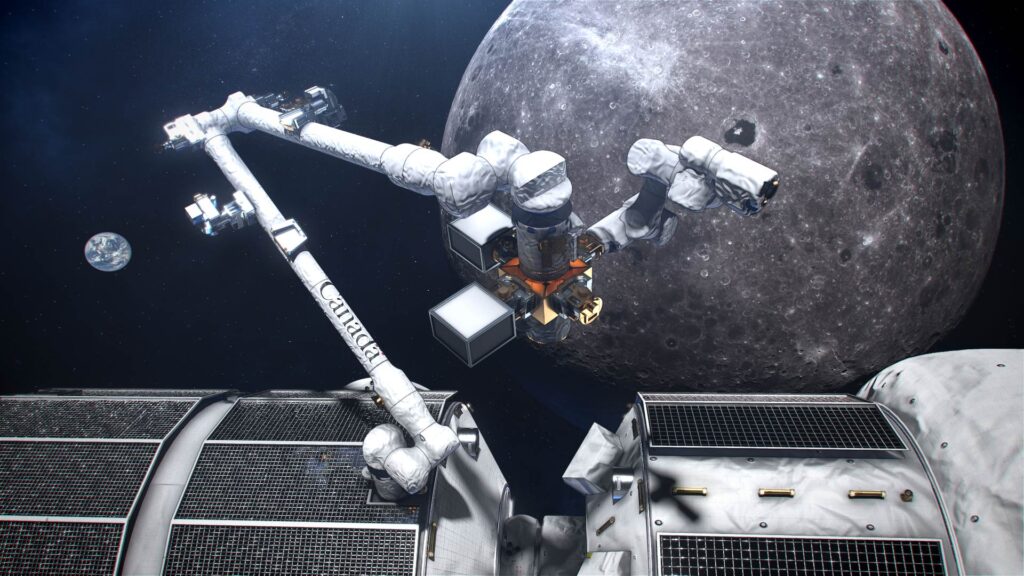
An artist's concept of Canadarm3, Canada's robotic system, located on the exterior of Gateway, a small space station in orbit around the Moon. Gateway has since been paused by NASA, but Canadarm3 will likely still be used at a future lunar surface base. (Image courtesy Canadian Space Agency, NASA)
Expand Image

Robotics

Hansen’s seat on Artemis II was paid for by CSA contributions to the Artemis program, principally through MDA Space’s Canadarm3 robotic arm. Canadarm3 was supposed to operate at the Gateway space station, orbiting the moon. However, in late March, NASA announced it would “pause” Gateway to focus resources on a base on the lunar surface.

At a media event in Longueuil, Que. on April 4, CSA President Lisa Campbell said there will still be a place at the moon base for the iconic robotic arm. “We will figure out how to bring our advanced technologies to bear on what — let’s face it — is a massive endeavour,” she said. “Canada is among the best in the world at space robotics, and there’s going to be a huge need for that.”

Canadarm3 is not the only contribution by CSA to the NASA-led Artemis program. For example, CSA plans to contribute a “lunar utility rover” or cargo vehicle to assist astronauts on the surface, which could fly as soon as 2033. The vendor for the project has not yet been selected, but three Canadian companies have early-stage contracts. It could be that Canadarm3 (or similar robotics) is used alongside the vehicle, although that is being negotiated.

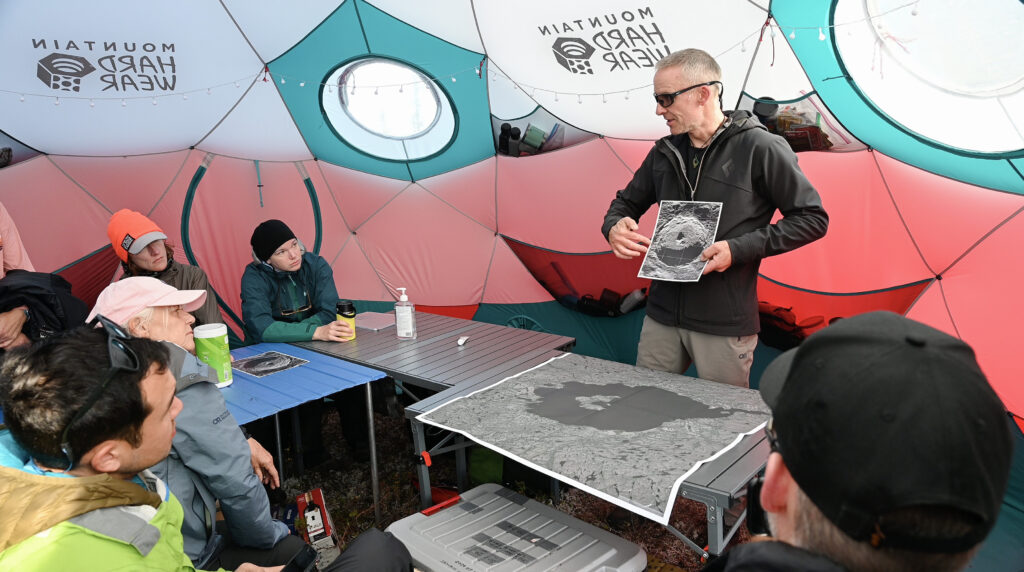
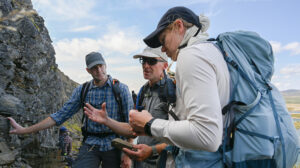
Dr. Gordon Osinski of Western University’s Institute for Earth and Planetary Exploration during a teaching moment where he compared the Tycho lunar crater to the Kamestastin crater during field geology training. (Photo: Canadian Space Agency)
Expand Image

Geology

Gordon Osinski, a professor in the department of Earth sciences at Western University, has spent about 10 years leading geology expeditions that in part assist with astronaut training. Hansen has taken part in several expeditions, and one excursion in September 2023 also included Koch and Gibbons.

Osinski has written for Canadian Geographic about the astronauts’ exploration of Kamestastin Lake crater in northern Labrador, which he calls “one of the best sites in the world for providing geology training for Artemis.” Labrador’s climate and geological history have allowed the crater to persist across the eons, and Kamestastin’s shape – with a “central peak” and uplifted rim – are analogous to the craters Artemis astronauts will encounter on the moon’s surface.

Osinski has a key role in the first lunar landing, which may happen as soon as 2028 with Artemis IV. He serves as co-investigator on the surface geology team, which will assist the astronauts remotely during “moonwalks.” Western will also contribute students and post-doctoral research to the effort.

Osinski says access to expertise on Earth, accompanied by the astronauts’ geology training, will help the team make quick decisions on the surface: “If they have some of that knowledge in their head, it will just help to make those decisions faster, which ultimately is key for this. They’re not going to have very long on the surface.”

Advertisement

Help us tell Canada’s story

You can support Canadian Geographic in 3 ways:

Related Content

Science & Tech

Artemis II astronauts have returned safely to Earth following historic mission around the moon

Canadian Geographic is following this history-making mission, which saw Canadian Space Agency astronaut Jeremy Hansen become the first Canadian to fly around the moon

  • 5285 words
  • 22 minutes

Science & Tech

Who is Jeremy Hansen, the Canadian tapped by NASA to fly around the moon?

Canadian Space Agency astronaut Jeremy Hansen will soon be blasting off on NASA’s Artemis II mission. How did he get from an imaginary treehouse spaceship in rural Ontario to the real thing? 

  • 3607 words
  • 15 minutes

Exploration

From moon joy to space-station joy: Astronaut Josh Kutryk speaks about his upcoming mission

Kutryk says Canada has a crucial role to play in the ‘new ocean’ of space

  • 922 words
  • 4 minutes

Exploration

From Labrador to Luna: Training future moon explorers

With the Artemis II mission set to blast off next spring, humanity is one step closer to returning to the moon. In the meantime, astronauts are honing their skills in a Labrador meteorite crater.

  • 2203 words
  • 9 minutes
Advertisement
Advertisement