Travel
Fundy rising
Cities and towns along the Fundy Trail Parkway are banding together to prioritize community and the environment as they share their magical landscape with the world
- 1972 words
- 8 minutes
People & Culture
A daughter looks to the stars above Fundy National Park Dark-Sky preserve for the strength to navigate her father’s dementia and what comes next
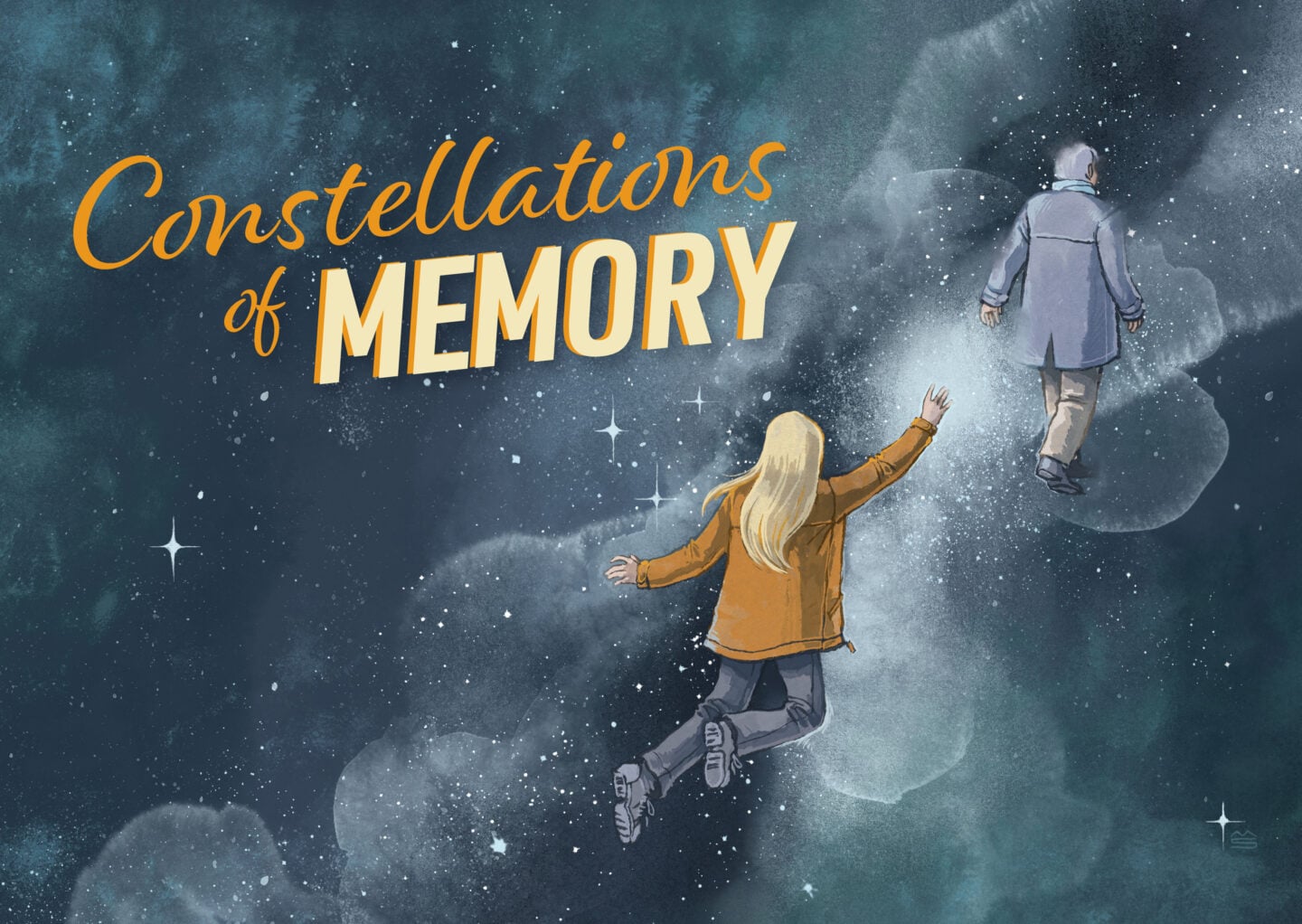
As dementia remaps my father’s cerebral constellations, I find myself standing quietly beneath the stars in New Brunswick’s Fundy National Park. It’s 7:30 p.m. in February, and the moon is new, barely a sliver — perfect for stargazing because its glow doesn’t obscure the wonders of the night sky. As my eyes adjust to the dark, I wiggle my toes to keep my feet warm. I’ve been out for only 15 minutes, but I can already feel the cold kiss of this winter night. My neck is craned back as far as it can go to take in the depth of the darkness and the stunning number of stars. My mind unconsciously turns to thoughts of my father, David Robinson. My eyes get misty, and I try to blink away the thoughts that blur my vision with tears.
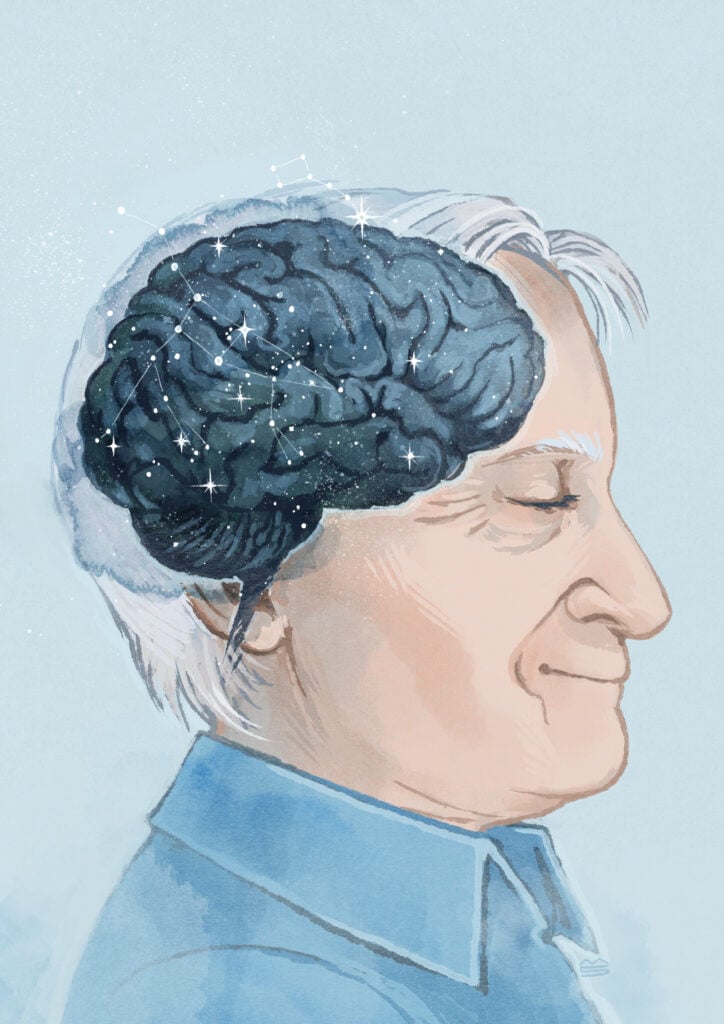
Throughout his adult life, my father was a proud member of the Royal Astronomical Society of Canada, intrigued by the night sky. My parents separated when I was six, and my older sister and I would visit him every second Saturday. On clear nights, he would heft his telescope onto the balcony of his condominium to show us the stars and planets above the Ottawa River. He would identify constellations and name them before I was even facing the right direction. When Saturn was close to Earth, he’d excitedly show us the planet’s rings, and my sister and I would take turns peering through the viewfinder in awe. Every August, he reminded us of the Perseid meteor shower, but we never watched it together because he was early to bed and early to rise.
Any time the telescope came out, it felt nice that my father wanted to share a part of his life with me.
Stargazing was more than just a hobby for my father; it was an orientation. He wanted us to know where we stand in the universe and how insignificant we are. As an engineer, he was efficient with his words, and our stargazing sessions were teaching moments. He wanted us to know how finite our time on this planet is. I couldn’t have imagined at age nine how right he would prove to be.
When my father was in his late 70s, we started to see the signs of dementia. He didn’t follow conversations as well, and his quick wit slowed. I was living in Sault Ste. Marie by then, raising my own children. Each time I visited my dad in Ottawa, I noticed his speech and walking pace were slower, and his eyes grew wider — like he was adjusting the aperture on his telescope, letting more light in to quell his confusion and its effects on his grey matter. Now he is 82, and I can’t remember the last time he informed me about the latest findings from the astronomical society’s journal. His memory and cognitive abilities are declining.
Any time the telescope came out, it felt nice that my father wanted to share a part of his life with me.
“WHAT’S THAT?” someone says nearby, pointing upwards at the Fundy night sky. “That’s the Milky Way,” I whisper to myself, resolutely like my father would have. I’m bundled up to spend about an hour here; if it weren’t winter, I’d probably be lying comfortably on a blanket.
The Milky Way stretches across the sky, splitting the constellations I know into halves. Orion’s Belt is on one side, and on the other, the Big Dipper is almost vertical, with the pot handle facing down. I’m straining to locate the Little Dipper. Why can’t I remember how my father said to find it?
My father was an extremely bright individual, and I often felt like I couldn’t measure up. Case in point, our chess games would never last more than a few moves before he’d say, “Checkmate.” I worry that he would be a bit disappointed to know that I have forgotten this knowledge of the constellations he’d imparted, even if it has been decades.
New Brunswick is 85 per cent forested, sparsely populated and blessed with low light pollution, creating a prime location to admire the stars, if clouds don’t roll in. The waters of the Bay of Fundy prevent any development to the south, making for an expansive night sky and one of the darkest skies on the southern coast, says Dan Sinclair, an interpreter for Fundy National Park.
As one of 13 dark-sky preserves managed by Parks Canada, the Fundy preserve was created to protect ecosystems from light pollution and educate visitors and neighbouring communities on the importance of dark skies. Aside from providing stargazers with pristine viewing conditions, dark-sky preserves help wildlife by giving nocturnal animals the conditions they need to forage, breed and navigate. Birds, for example, can be confused by light pollution and change their migration patterns.
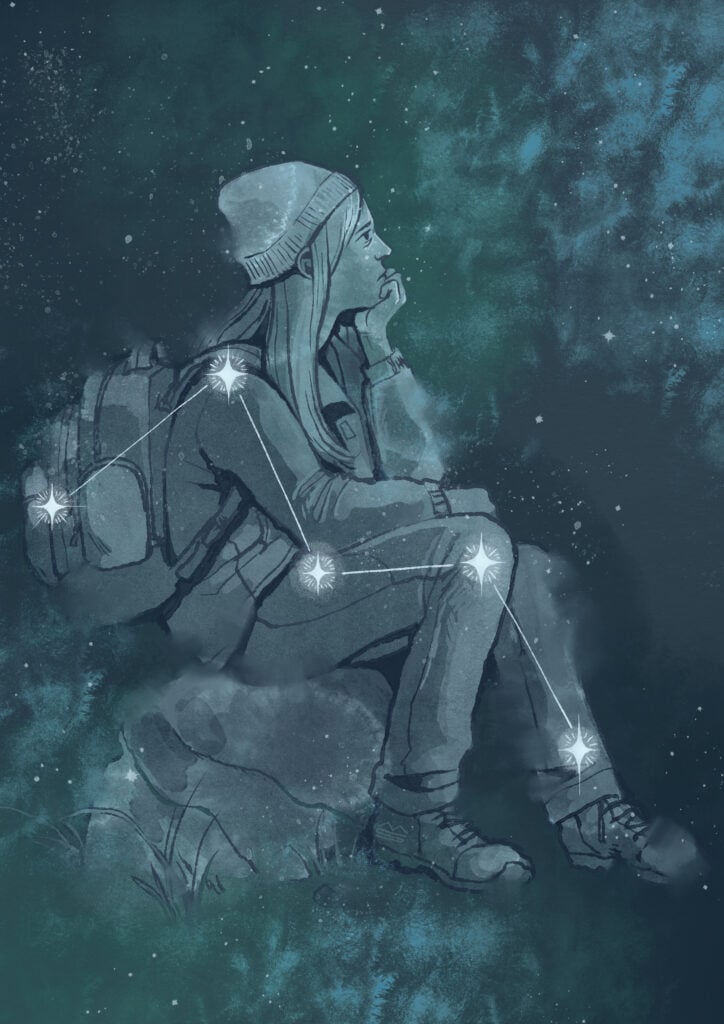
Stéphane Picard, CEO of astrotourism company Cliff Valley Astronomy, says the Fundy National Park dark-sky preserve is rated a Class 2 on the Bortle scale. Named after John E. Bortle, an American astronomer, the Bortle scale ranks the darkest conditions (1) to the most light pollution (9). I almost giggle, because this type of highly technical information would appeal to my father and prompt many follow-up questions, even if everyone else’s eyes had glazed over. Picard and Sinclair have set up three telescopes, and I’m joyfully invited into their universe.
Under their guidance, I learn how to locate the North Star, also known as Polaris, and the tail of the Little Dipper. Starting at the bottom outer edge of the Big Dipper’s bowl, farthest from the handle, Picard traces a line through the star at the lip and continues about five times that distance to the bright point of Polaris, using a powerful laser pointer. This cosmic segue unlocks the core memory of my father teaching me the same method more than four decades ago, minus the laser pointer. I’m embarrassed momentarily that I forgot. Now, I need to remember, for both of us.
As Picard tells us how Polaris was used by land and sea navigators as a true north long before we had compasses or GPS, I remember my father showing me time-lapse photos in his astronomy magazines of the stars rotating around it. I thought it looked like a record in his extensive vinyl collection.
Picard and Sinclair both grew up in this area of New Brunswick with pristine dark skies in their backyards. Sinclair refers to short stints when he moved away from the community of Alma at the park’s entrance, comparing the night sky to a close friend who is always with you, and who you don’t fully appreciate until they’re gone.
I feel a sharp stab at this comment. My father and I had a complicated relationship, and I’m not sure I appreciated him enough when he was healthier. While some people get angry and even violent with dementia, my father has become gentler and kinder, and he asks for me more than in past years. He calls me “angel” now and thanks me multiple times in one meal for having prepared it for him. I reply the same way each time, as if it were the first time, as there is no reason to tell him he’s repeating himself. It’s better to stay calm and play along.
His desire to spend more time with me is one of the reasons I’ve moved back from across the province and bought a condo in the same building. I want to be closer and support my stepmother, Adele, in his care. She has shown unbelievable strength and patience, keeping him as mentally sharp and physically fit as possible. She has him do a daily Ken-Ken math puzzle and a crossword, and takes him to a twice-weekly balance class. They still play cribbage daily. Some days he does all his own counting and skunks her; other days she is basically playing both hands. She’s taken over the cooking and laundry he used to do. He called it “domestic engineering,” and he did this happily while she worked late in her career practising medicine. Sadly, she’s now fighting against the gravitational pull of a black hole, but their love was written in the stars. He sees her as his sun, and she is defiantly loving him, keeping him in orbit around her.
He sees her as his sun, and she is defiantly loving him, keeping him in orbit around her.
“WHEN [VISITORS] see the Milky Way for the first time, they freeze in awe,” says Sinclair. “They usually say: ‘I didn’t know that’s what the night sky is supposed to look like.’ Every time, someone isn’t prepared for what they are experiencing. You hear a lot of sniffles and quivering voices in the dark.”
Picard refers to a 2016 study published in Science Advances that says nearly 80 per cent of Americans and 60 per cent of Canadians can’t see the Milky Way from where they live. “With light pollution doubling every 10 years, it’s no wonder there’s been a big increase in astro-tourism,” says Picard.
To look to the night sky for the answers to life’s big and small questions is almost primal in our genes, Sinclair says. “Whether [we] are hoping to commune with ancestors, understand their lives, want help with navigation or for cues for agriculture and hunting… we always look up.”
The Bay of Fundy is defined by having the highest tides in the world. In the afternoon at low tide, we walk the ocean floor, our boots sinking into soft sand. Sinclair talks with zeal about balance: between conservation and tourism, between forest and sea, high and low tide, and day and night. By nightfall, that balance feels personal. We also ski-shoe and toboggan, unlocking vivid childhood memories.
The darkness is hiding my tears as I think about how quickly life goes. One day, I’m pushing my straight-A report card across the table, hoping for my father to say he’s proud of me. Now, I reassure him that he is not a burden when he sits with me while Adele gets some respite. My father was a brilliant engineer, designing ship radio communication systems, and now he’s unaware that he’s been filling out the same beginner Ken-Ken puzzle reprinted for him daily for more than a year.
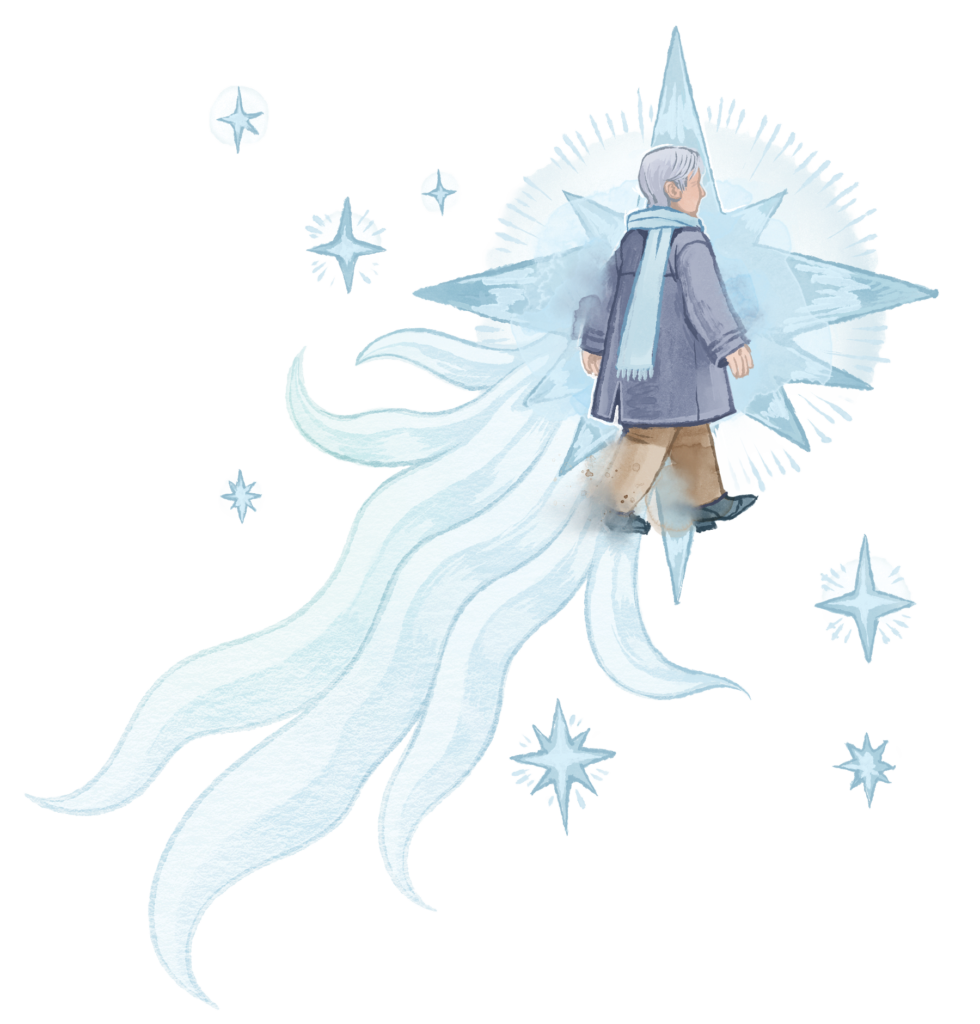
“We’ve had some pretty emotional reactions at the telescope,” says Picard, bringing me back into the moment. “We live in an age where we don’t get humbled a lot. Whether people get choked up thinking of a loved one, or just coming to the realization of how insignificant Earth is in size, yet so special as the only place we know there’s life, people tend to go quiet and get introspective.”
Introspective for sure — I’m in my head and can’t stop thinking about my father. He programmed his own Linux-based computer, as he appreciated the egalitarian nature of open-sourced operating systems, and yet last year he marvelled over me figuring out how to change the date format on his step-counter watch (something that would have taken him five minutes after a quick glance at his owner’s manual).
Pointing to the sky, Picard identifies several nebulae in the Orion constellation — barely visible without magnification. We view the wonders of the Flame and Horsehead nebulae near Orion’s Belt through the telescope, followed by the pinwheel and whirlpool galaxies Messier 101 and 51 near the Big Dipper. My father would have loved this, especially because the Horsehead looks like a knight piece in a chess set.
I stand in that vast dark and feel the quiet grief of knowing we will never stargaze together again. My father’s telescope was given away years ago, and his Royal Astronomical Society of Canada membership has now lapsed.
If conditions weren’t so good here, we might not have seen the four shooting stars cross the sky during our hour-and-a-half experience. Regardless, my wish on each one is the same: more time. We will never play chess again, as that skill faded quickly and quietly like a star’s direct collapse. We now have a personal care worker come to help with showering and shaving, and it’s a good day when he puts on his own socks.
Dementia is not an abrupt loss; it is tidal. It advances and retreats.
Some days, the stars still sparkle behind my father’s eyes and a familiar story surfaces. Most recently, I learned he used to ride a motorcycle. I also ride and had never been told this before.
Other days, the light is dulled, like clouds blocking the stars. I ask if he ever had a dog. He says, “Yes.” Then says, “Maybe it was a cat.” Then, “Maybe it was the neighbours’.” I’ll never know.
Constellations of life that I thought were permanent have gone missing. His map has gaps I cannot fill.
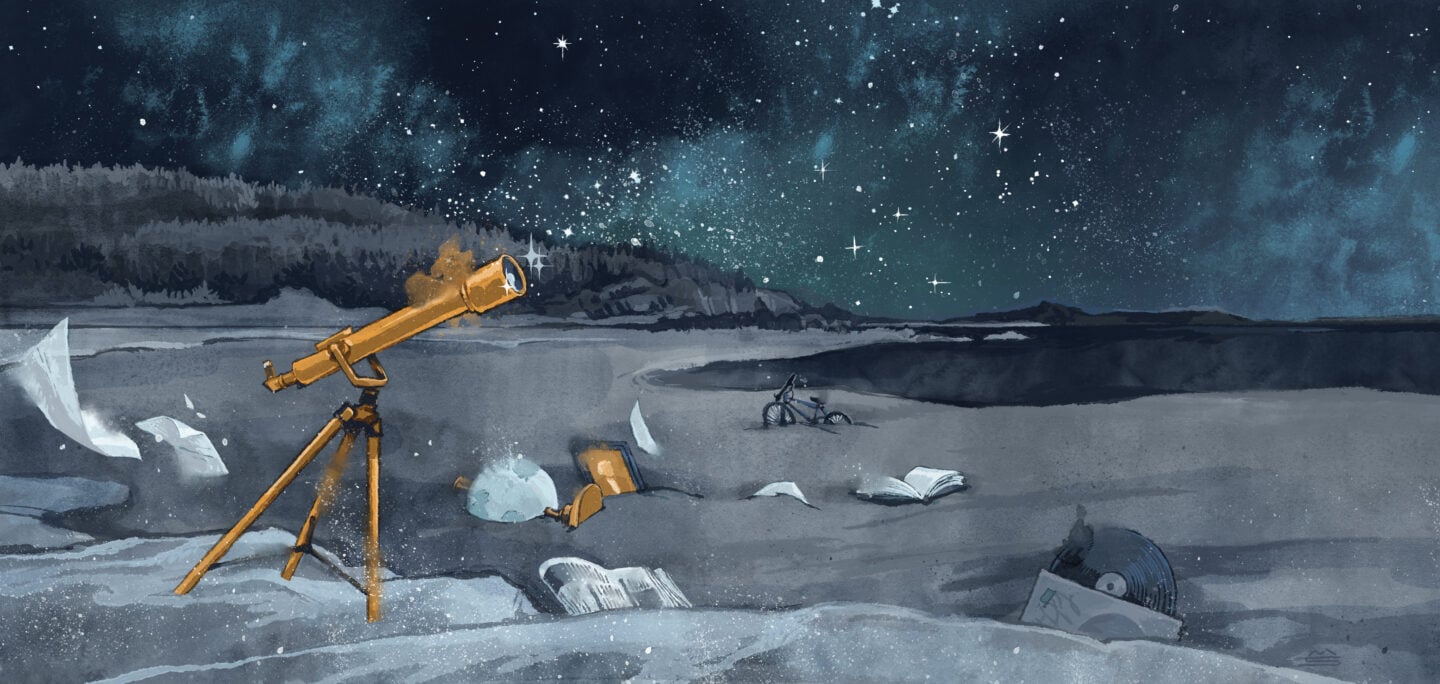
FUNDY IS FAMOUS for its tides but may also soon be known for the world’s greatest concentration of certified dark-sky destinations, thanks to Picard’s championing.
As of June 2026, there are four dark-sky preserves in New Brunswick. But Picard is targeting 12 by the end of 2027.
The dark-sky corridor would include six sites along the south shore of New Brunswick from Hopewell Rocks Provincial Park to New River Beach Provincial Park.
Picard is also working with Indigenous communities, including the Huu-ay-aht First Nations in B.C. and the Neqotkuk First Nation in New Brunswick, to secure dark-sky designations for what he hopes will be the first dark-sky Indigenous communities in Canada.
At low tide, I admire the rivulets carving temporary patterns in the sand that will soon disappear beneath returning water, reflecting the rhythm and flow of life and aging. Here in Fundy National Park, the tides come and go. The stars rotate above the forest. That is the way, and we are not in control.
“Visitors who do night programming tend to leave more connected not only to the stories of the stars but to each other,” says Sinclair. “The night sky connects us all, across cultures and across time.”
Time. Indeed.
SADLY, I DIDN’T LISTEN closely enough when my father rattled on about the stars, planets, galaxies and nebulae. I am carrying forward only a tiny portion of what he knew. Each constellation I pick out for myself is a small act of defiance against forgetting. Pleiades, the Seven Sisters, or “the W,” I say to myself.
“It’s a therapeutic thing that happens,” says Picard. “When you’re looking outwardly at the biggest show in the universe, and then you’re bringing it back to yourself. The night sky taps into people’s curiosity and imagination and can also leave them in awe and pensive.”
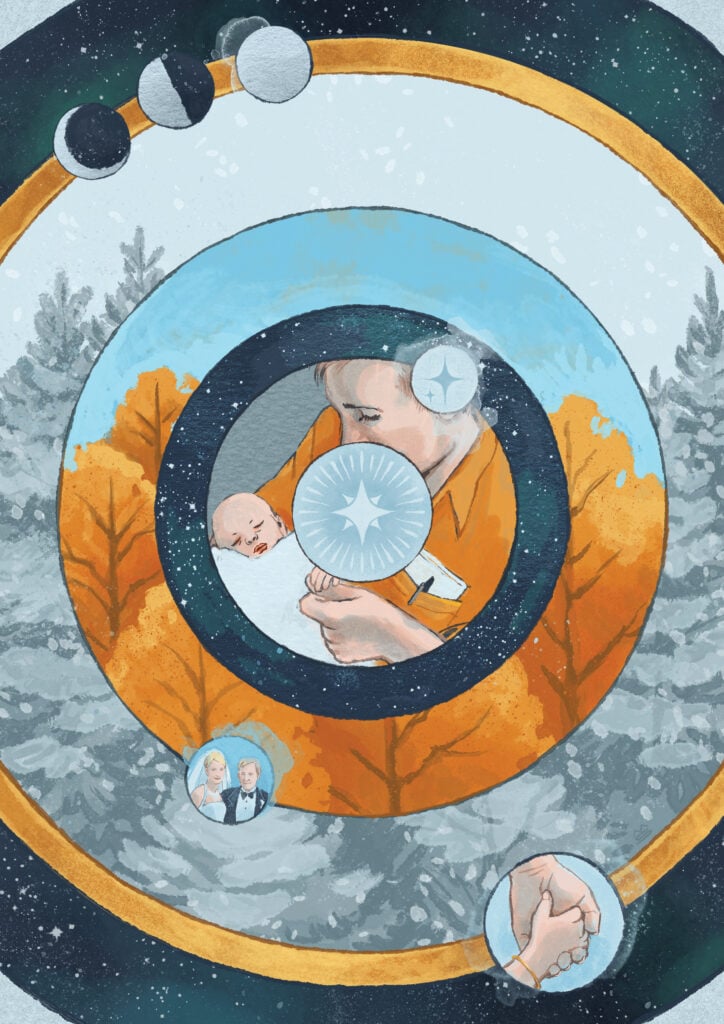
I wish my dad’s memory was fixed like the North Star and my kids and I could circle him like the constellations a bit longer to learn more about the man who mapped out the skies for me.
Picard speaks of cultures that believe their ancestors are in the stars, watching over us. This warms my heart and begins to flood my eyes.
Here, I feel the tension between permanence and fleetingness. The stars we see have burned for millions of years, yet their light travels across vast distances before it reaches us. What we witness is ancient and simultaneously immediate. Picard calls telescopes “time machines” because we are seeing light from the past that has travelled to us, and those stars might not actually exist anymore.
Stars end their lives by returning their elements to the cosmos, scattering stardust that becomes part of future generations. As my father’s dementia progresses, I find myself thinking about that celestial cycle. When his light finally fades, the pieces of him that shaped me, including his love of astronomy, will not vanish. Like stardust from a supernova, they will continue travelling through the generations that follow.
I’m trying to stay present and enjoy the beauty of a night sky where it feels like I could reach up and grab a diamond out of Orion’s Belt, but my eyes keep blurring to a past that is slipping away. I get a flash of him walking me down the aisle at my wedding, and the look of pride in his eyes, and the way he held my hand in the hospital while I recovered from health issues of my own — but only too soon the roles will be reversed.
I look skyward for answers, hoping Polaris will help me understand why the stars seem to be spinning faster right now, and for guidance on eventually having to navigate my life without my parents.
When the stars behind my father’s eyes shine, and he is fully present, even briefly, it is everything — I ask him how he’s doing, and he says, “Incredible.” When they are dull, and he is anxious and confused, I tell him everything is okay, and I do my best to hold the sky for both of us.
This story is from the September/October 2026 Issue
Travel
Cities and towns along the Fundy Trail Parkway are banding together to prioritize community and the environment as they share their magical landscape with the world
Travel
Les villes et villages situés le long de la Promenade du sentier Fundy s’associent pour donner la priorité à la communauté et à l’environnement, alors que la région partage ses paysages enchanteurs avec le monde entier.

Science & Tech
In their new book, Adventures in Memory: The Science and Secrets of Remembering and Forgetting, Norwegian sisters Hilde and Ylva Østby explore what makes our most fascinating faculty tick

Travel
It took 25 years, $100 million and a remarkable vision to turn the Fundy Trail into a Maritime road-trip wonder

Wildlife
Canadian Geographic is pleased to honour 14 photographers for their outstanding images of Canadian wildlife
Wildlife
Canadian Geographic is pleased to honour 16 photographers for their outstanding images of Canadian wildlife