Travel

Crossing Switzerland’s invisible borders

A journey from Ticino’s Mediterranean lakes to the alpine villages of Valais and Lucerne reveals how distinct languages, landscapes and traditions come together to shape one uniquely Swiss identity

  • Sep 01, 2026
  • 3,295 words
  • 14 minutes
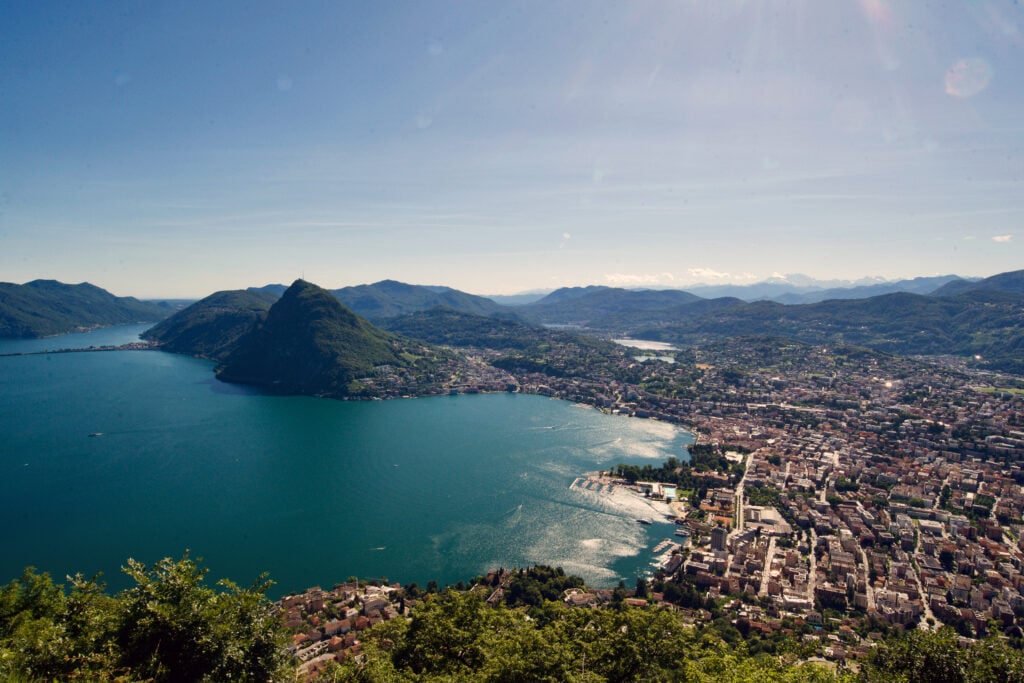
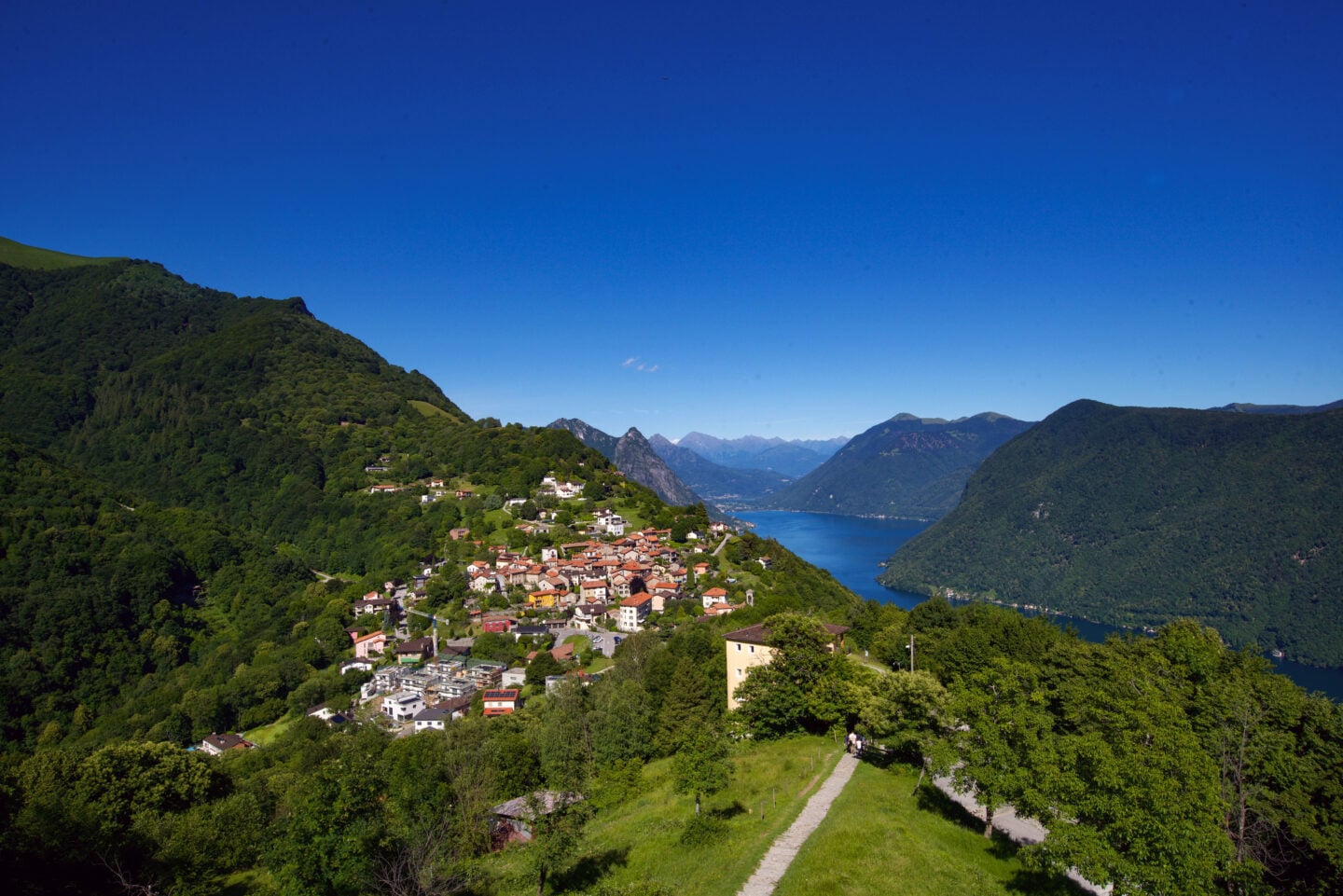
The village of Brè and Lake Lugano, seen from the summit of Monte Brè, which can be reached on foot or by funicular.
Expand Image
Advertisement
Advertisement

I glance at my watch as my guide, Christian Werder, bites into a slice of buttery sbrinz, a hard full-fat cheese with the aroma of alpine flowers. It’s 11:58 a.m. and we’re sharing lunch — and Swiss history — while enjoying a picnic at the summit of Hengst, a 2,092-metre peak in Schrattenfluh, a karst mountain range in the Swiss Alps.

Made from local cow’s milk and produced in only 42 dairies across central Switzerland, it seems a fitting cheese of choice for today’s hike, neatly sliced using a Swiss army knife, of course.

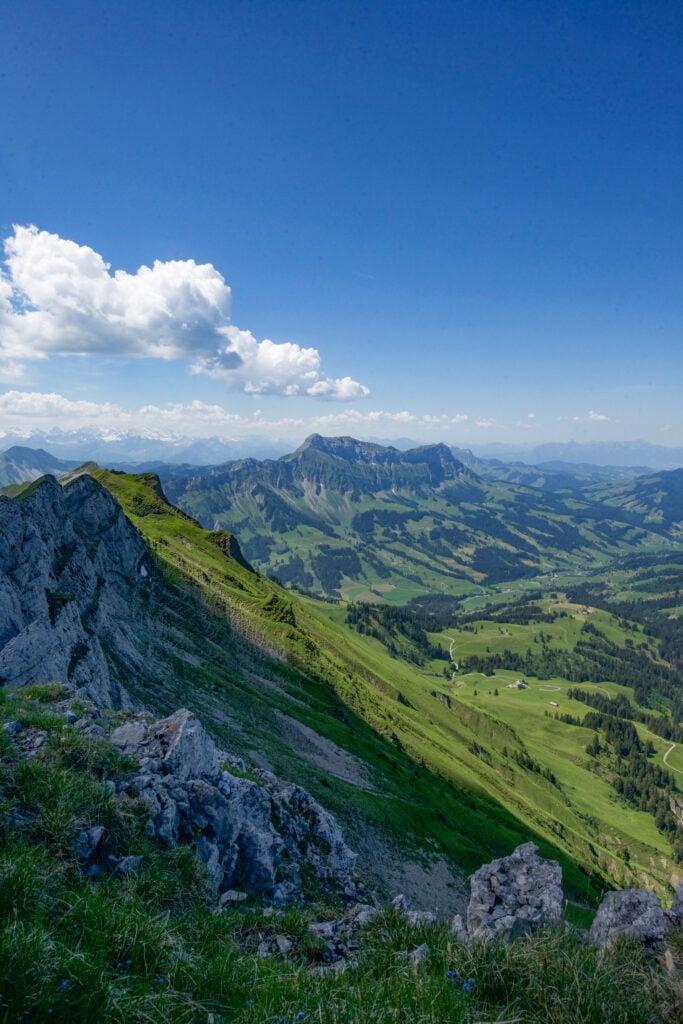
Overlooking the UNESCO Entlebuch Biosphere Reserve from the summit of Hengst.
Expand Image

“Swiss people always eat lunch at noon,” says Werder, cutting another piece of sbrinz. I smile as I check off two Swiss stereotypes in one moment — a penchant for punctuality and fantastic cheese.

Born in Lucerne, a Swiss-German-speaking city about an hour’s drive from Hengst, Werder works as an arborist and as a part-time guide for the trekking company out & ABOUT.

“We all love this country. It’s proper, safe and friendly.” He takes a bite of sbrinz as he gestures over the UNESCO Entlebuch Biosphere Reserve below. “In one week, you can see many different climates and different cultures; it’s a small country, but it’s endless.”

This is the final day of my journey. I have spent the past 10 days travelling solo through Switzerland, learning from guides like Werder along the way. It has been a revelation to discover so much cultural diversity packed into a small package. Switzerland boasts four official languages (German, French, Italian and Romansh), and each region has not only its own languages, but its own unique character and traditions.

It makes for a country filled with “invisible borders” whose residents protect their cultural identities while remaining proudly Swiss.

As I enjoy a well-earned lunch, I ponder some earlier wisdom, imparted to me on the second day of my journey. The gist: like cheese, Switzerland can’t be defined by a single variety. To understand the country as a whole, travellers must experience its regions individually.

I had met up with Franz Widmer, the managing director and founder of out & ABOUT, who provided an overview of life in Switzerland. “For us, it’s normal that Switzerland has many different areas and different languages,” he explained. “Still, we belong together. I think these different cultural aspects are important.”
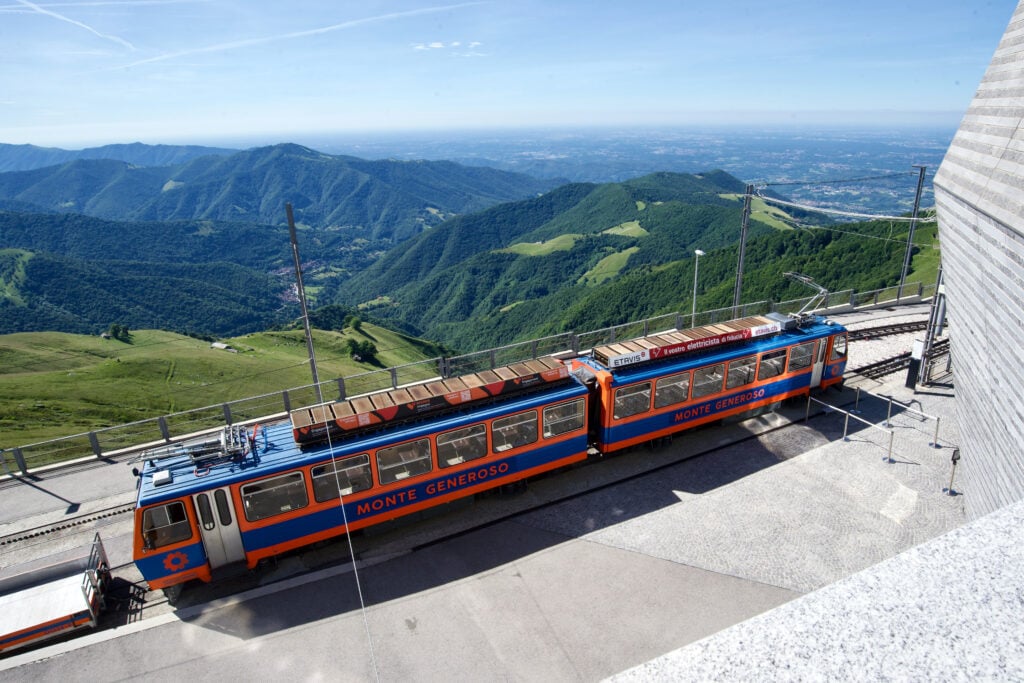
Running approximately hourly during the high season, the Monte Generoso cogwheel train transports visitors to the summit of the 1,704-metre peak on the Italian border in Ticino.
Expand Image

We were in the Italian-speaking region of Ticino, one of Switzerland’s 26 cantons (similar to provinces in Canada), when I had first asked Widmer to tell me a little bit about Swiss culture. He had responded with the most appropriate of Swiss metaphors — cheese — and his cheese-filled thoughts had stuck with me as I travelled from canton to canton, through verdant valleys and along lofty mountain trails.

We were trundling along aboard a cogwheel train to the summit of Monte Generoso, a 1,704-metre peak on the Italian border in Ticino, when Widmer hit me with the statistic that Switzerland is blessed with a whopping 700 kinds of cheese. “From valley to valley, the cheese is different. There’s not just one cheese, there’s a whole variety that changes from place to place, and that’s how the culture changes and the languages change.”

For me, that multicultural, multilingual, cheese-themed awareness began in Lugano, a Swiss-Mediterranean city dotted with palm trees, glasses of Aperol Spritz and an unmistakably Italian vibe.

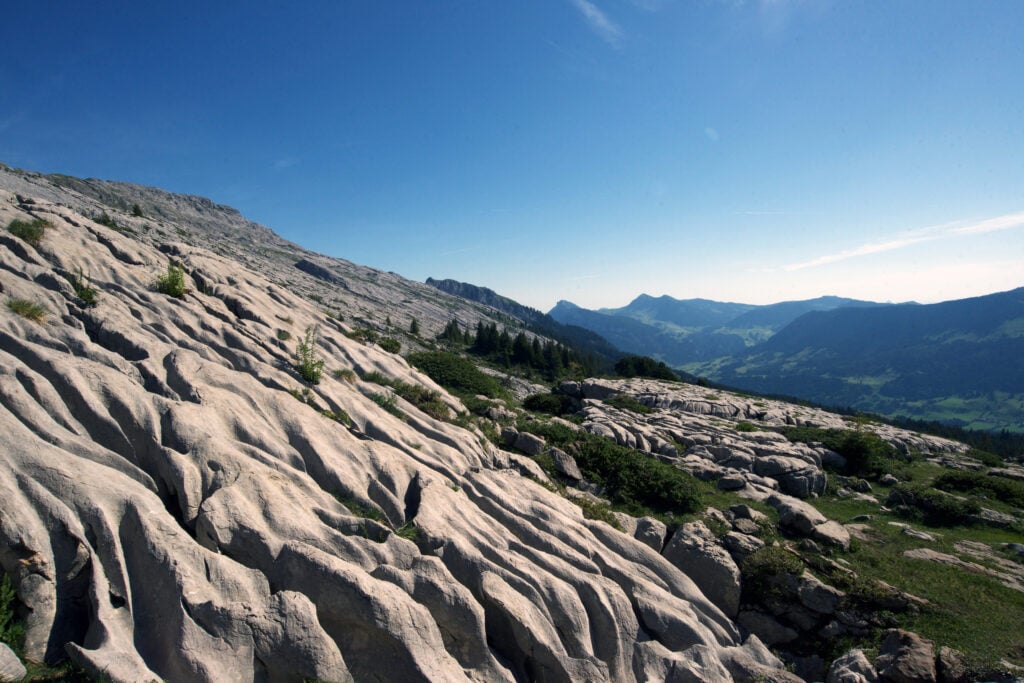
The exposed limestone of Schrattenfluh, a karst mountain range in the UNESCO Biosphere Entlebuch.
Expand Image
Overlooking the city of Lugano and Lake Lugano from the summit of Monte Brè.
Expand Image

TICINO — This feels like Italy…

I’d never tried panettone, an Italian sweet bread traditionally filled with raisins and candied fruits, until I arrived in Lugano. Placed neatly on my bed in a red box at Hotel International Au Lac Lugano, the brioche-like bread was the perfect nighttime snack, enjoyed on my balcony overlooking Lake Lugano and the twinkling storefront of a Louis Vuitton boutique.

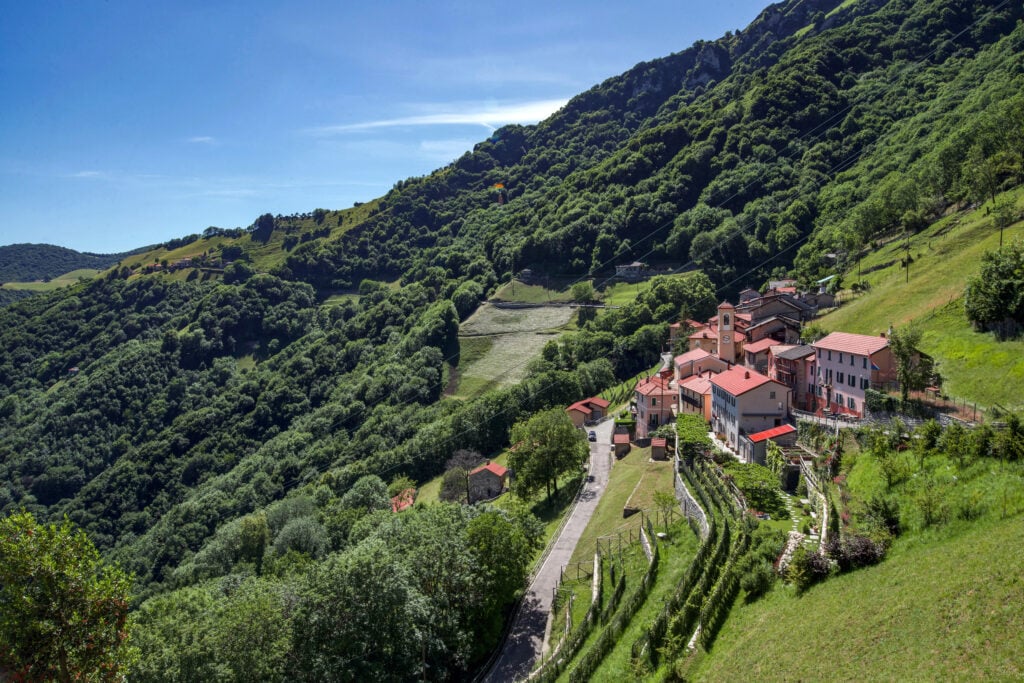
The village of Scudellate, home to just 20 residents, in Ticino’s Muggio Valley near the Italian border.
Expand Image

Before arriving in Switzerland, I pictured the entire country as an amalgam of the tourism-brochure staples — cows grazing beneath snow-capped peaks, fondue at rustic chalets and yodellers in suspenders. Those clichés were erased within the first half hour as I explored the Italian-speaking city. I strolled along the spectacular lakefront, taking in manicured gardens and high-end shopping. This corner of southern Switzerland looked for all the world like an Italian resort town.

The next day, I travelled to the Muggio Valley. Even though it was less than 30 km from Lugano, I felt as if I had entered an entirely different country. Luxury storefronts were replaced with winding mountain roads, alpine meadows and a series of picturesque stone villages, including my next destination — the tiny hamlet of Scudellate.

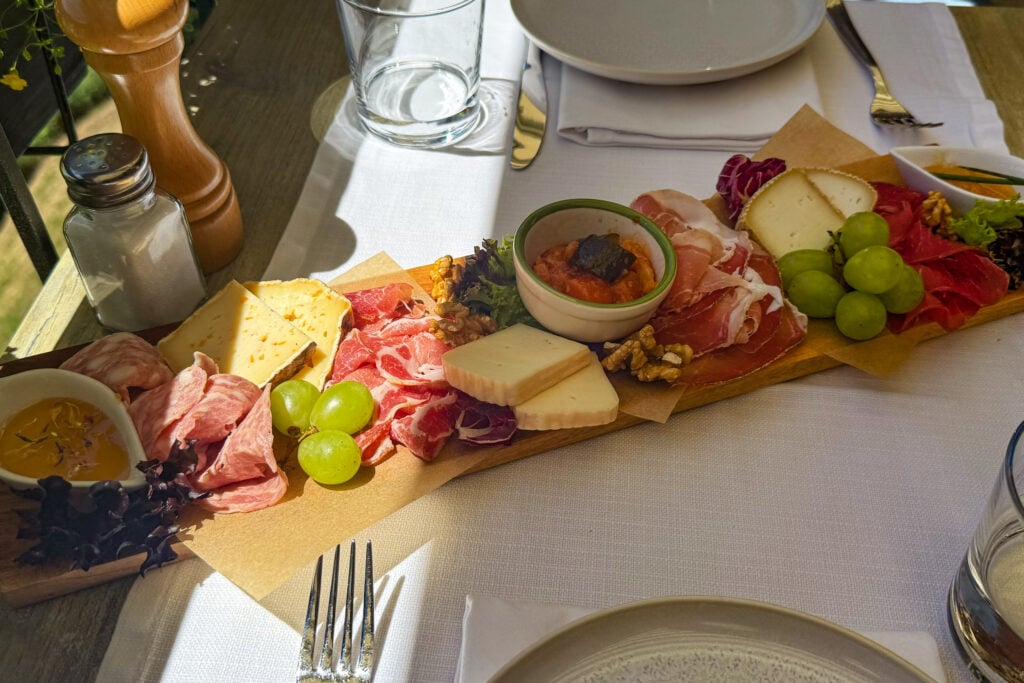
“There are the clichés of Switzerland, and that’s chocolate, cheese, alphorn and watches,” says Widmer, as we enjoy a charcuterie board of fresh cheeses and cured meats at Osteria Manciana, an inn in Scudellate. “On the one hand, I like these clichés, but I also like to show people each of them a little deeper.”

The charcuterie board in front of us is a case in point. Every one of the cheeses is Swiss, but each has its own distinctive flavour, texture and characteristics. That’s why Werder is happy to lean into the theme of cheese as an opener to a conversation about Swiss identity. “The so-called Swiss cheese is emmental cheese,” he says. But, he makes clear, that the generic classification gets it all wrong. “There’s this one valley where they produce this cheese, but there is not just one Swiss cheese.”

A charcuterie board featuring Swiss cheeses and cured meats at Osteria Manciana in Scudellate.
Expand Image
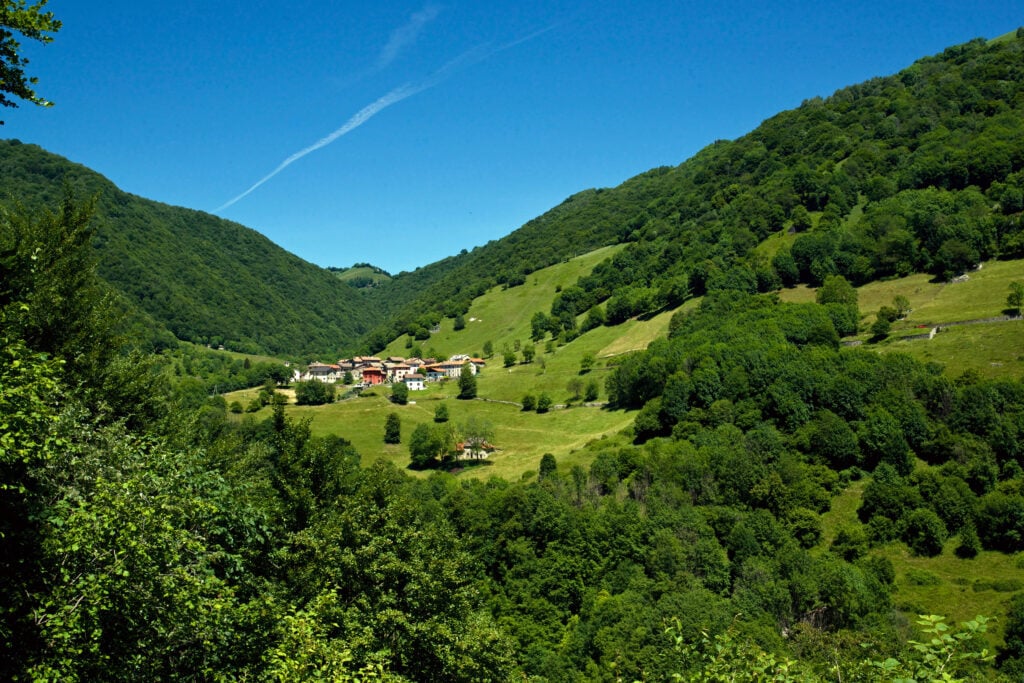
Photographed from across the border near Scudellate, Switzerland, the tiny Italian hamlet of Erbonne is about a 20-minute walk away.
Expand Image

The following morning in Scudellate, I greet the day with a breakfast that includes another myriad of cheeses served alongside fresh fruits, bread, yogurt and cereal. The accommodation forms part of the village’s albergo diffuso, or “scattered hotel,” a concept whereby rooms and services are spread throughout the community.

With just 20 residents, Scudellate has no luxury storefronts or polished promenades. The draws here are the nearby old stone villages and the network of hiking and mountain biking paths. I take full advantage, spending the day on the trails. It isn’t until I stop at Rifugio Prabello, a small mountain hut, that I realize I have unknowingly crossed the border into Italy.

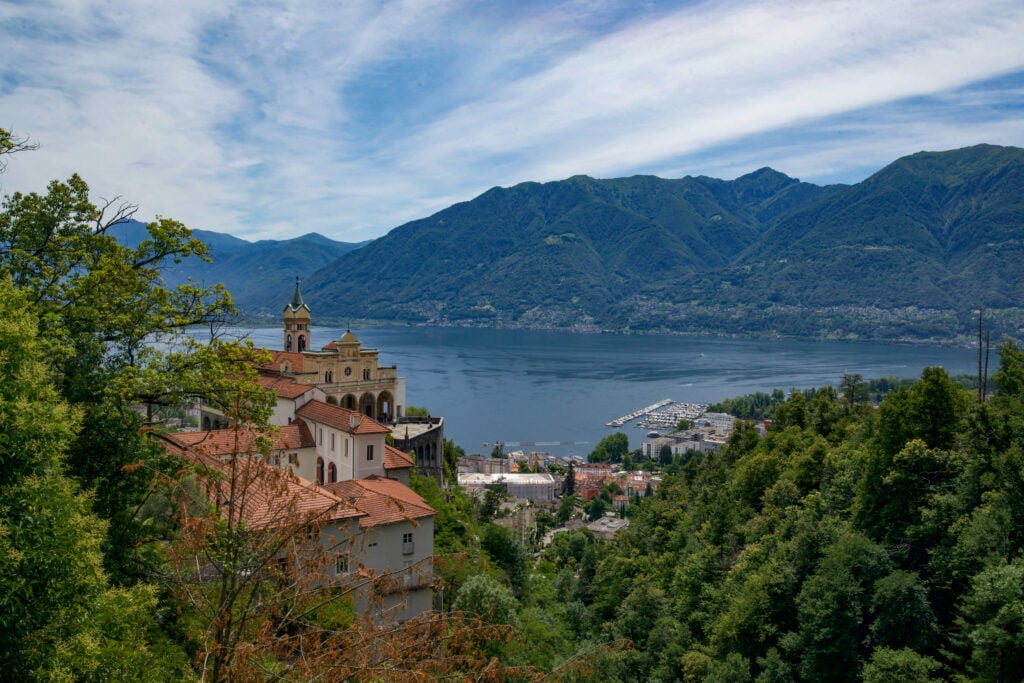
Admiring the Madonna del Sasso sanctuary and Lake Maggiore while riding the funicular from Locarno to Orselina.
Expand Image

After an espresso (when in Italy, of course), I make my way back through the Muggio Valley to Osteria Manciana before heading north to encounter another landscape entirely.

I make a quick visit to Locarno, a charming resort town on the northern shore of Lake Maggiore. Known for its historic Piazza Grande, palm-lined lakefront and Mediterranean climate, Locarno’s shops and cafes are popular with visitors who enjoy strolling and shopping.

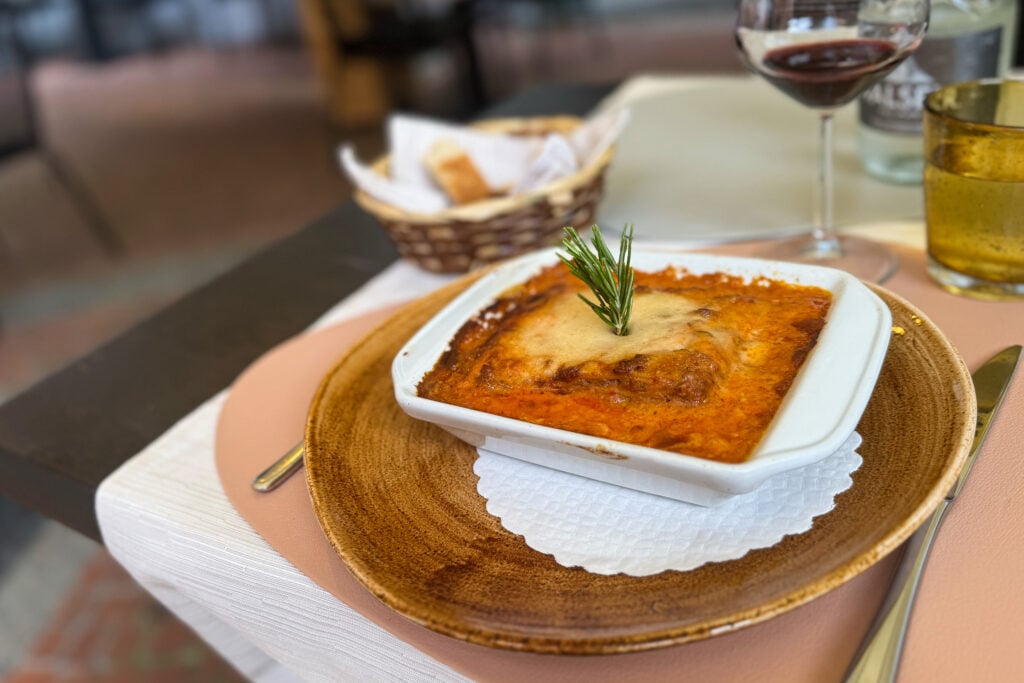
I, of course, bypass the strolling and shopping, instead opting to add in an additional trek up Cima della Trosa, a 1,869m peak that offers spectacular views over the pastel-coloured city and lake. Then, back at lake level, I devour a piping hot plate of lasagne at the iconic Ristorante Fiorentina, and follow it up with a pistachio gelato as I wander along the waterfront — a fittingly Italian end to my time in Ticino.

From here, I continue west toward Nendaz crossing another invisible border as I enter the French- and German-speaking canton of Valais — and an entirely different version of Switzerland.

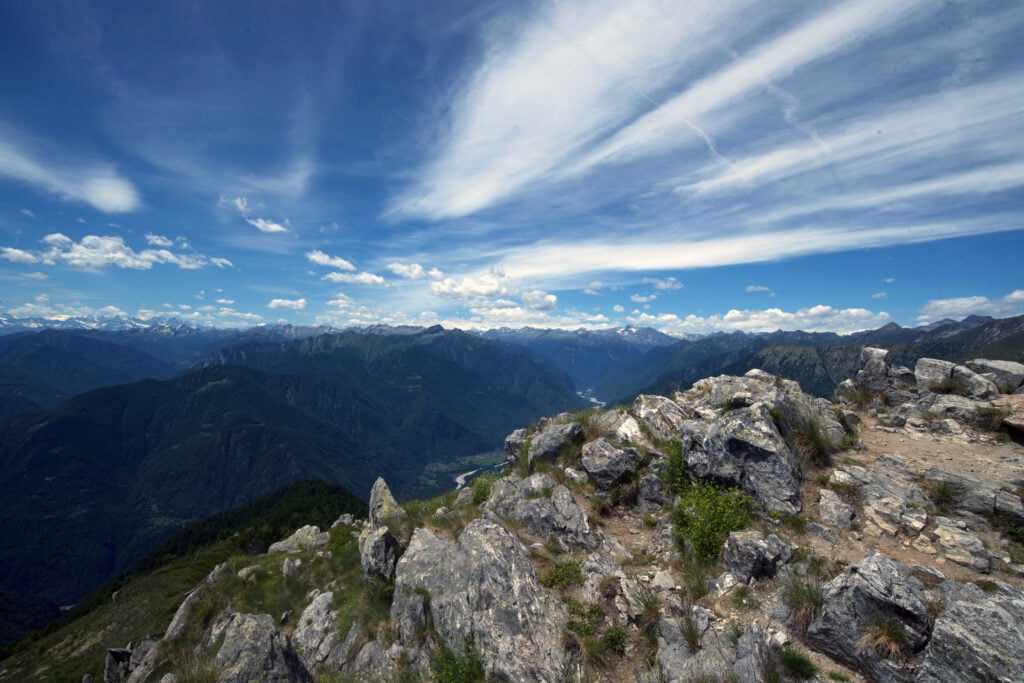
The view from the summit of Cima della Trosa, a 1,869-metre peak near Locarno.
Expand Image
Piping hot lasagne from the iconic Ristorante Fiorentina in Locarno.
Expand Image

VALAIS — Bonjour?

Raclette is the cheese of choice in the alpine resort town of Nendaz.

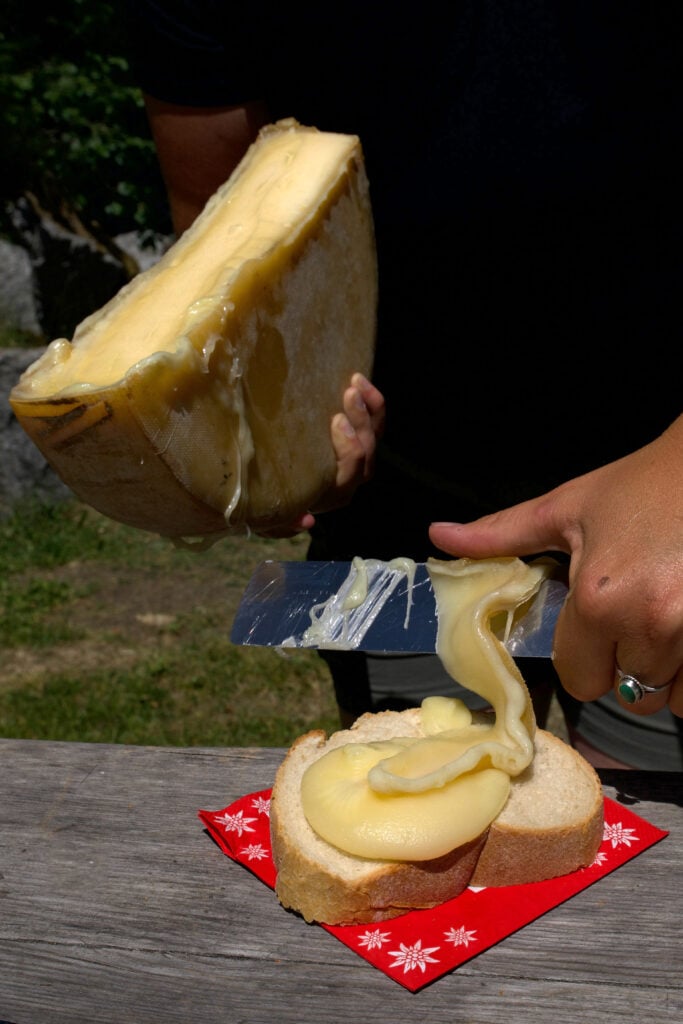
“When we eat raclette, or when we eat cheese, everyone can be together,” says Emilie Mariethoz, a guide and representative of Nendaz Tourism. “But the best cheese is the raclette,” she says, skillfully scraping up another gooey portion.

Emilie Mariethoz skillfully serves a portion of racelette, melted by campfire, on a slice of bread.
Expand Image

I am with Mariethoz and Pauline Pang, another guide with Nendaz Tourism. We are enjoying a perfect afternoon, sitting around a campfire beneath a cloudless sky, enjoying slabs of raclette, cured meats and fresh berries. Sunny Valais is home to world-class skiing, the Aletsch Glacier, and, most famously, the Matterhorn.

It’s my second day in Haute-Nendaz, a small mountain town that feels like the Swiss version of Squamish, B.C. Both are surrounded by peaks and are home to communities with strong ties to the outdoors, their residents drawn skiing, hiking and mountain biking.

As if reading my thoughts, Mariethoz comments, “[Switzerland] is like Canada, but everything is closer.”

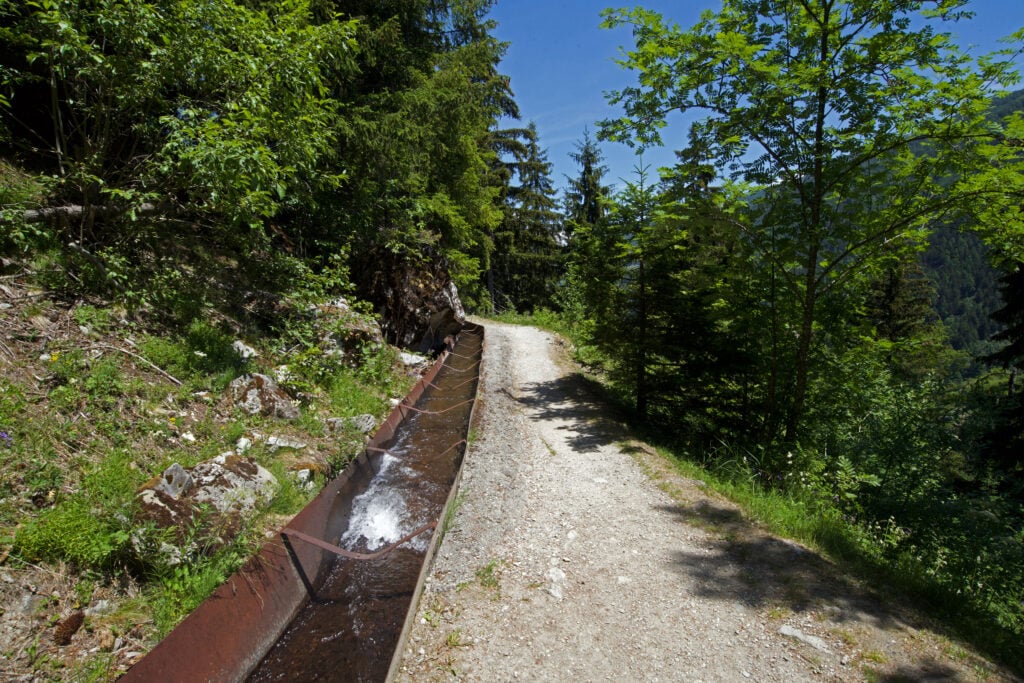
No matter where you are, nature is never far away. In Haute-Nendaz, the outdoors is literally woven through the town by the Bisse Vieux, a centuries-old irrigation channel that can be explored via a shady footpath that runs its length. Originally built to carry water from the Printse River to the farmers’ fields surrounding Nendaz, the seven-kilometre Bisse Vieux encourages visitors to slow down, appreciating both the scenery and some impressive engineering (the Bisse Vieux dates back more than 400 years).

We pass a field of black cows, and Pang explains that these are Hérens, the breed of cattle whose milk is used to make the delicious raclette we recently devoured by the campfire. The sound of their bells blends with the burbling of the water. All is calm.

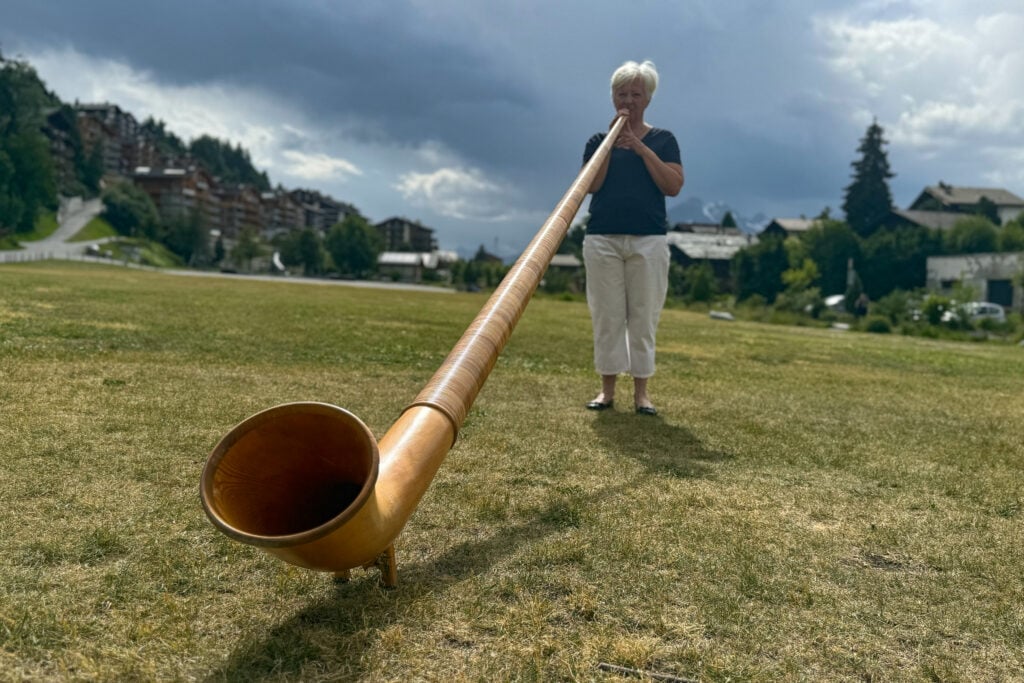
Anne Guillermin playing the alphorn in , Haute-Nendaz.
Expand Image

And then I get my hands on an alphorn…

Before leaving Nendaz, I am determined to try my hand at playing Switzerland’s most recognizable instrument: the three-metre-long wooden alphorn. The traditional lip-reed wind instrument was originally used by herdsmen and shepherds to communicate across valleys, with its first documented use dating back to the mid-16th century.

I meet up with Anne Guillermin for a quick lesson. She politely encourages me as I produce a “melody” that sounds more like an animal in distress than the sonorous alpine call made famous by the Ricola cough drop ads. Known as the capital of the alphorn, Haute-Nendaz hosts the annual International Alphorn Festival every July, which brings together more than 150 musicians to honour the instrument. I will not be one of them.

But just as I am growing accustomed to greeting people with “bonjour” instead of “ciao,” it is time for me to cross another of Switzerland’s invisible borders, this time into Valais’ Swiss-German-speaking Aletsch Arena region in the Alps. The appropriate greeting changes once again, this time to “hallo!”

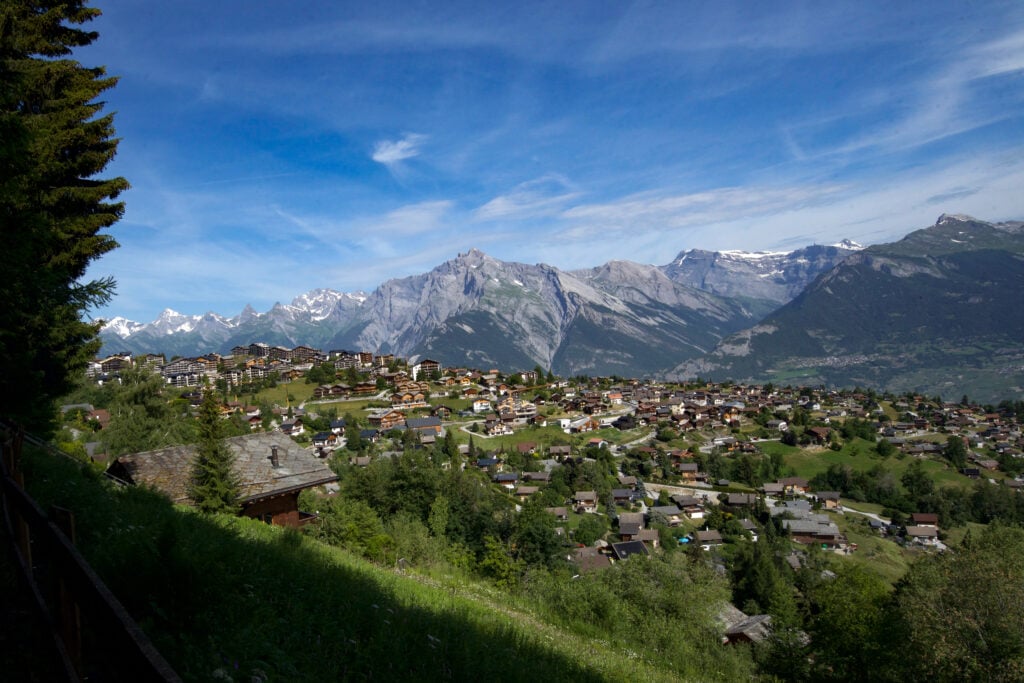
Overlooking Nendaz and the surrounding peaks of the Valais Alps.
Expand Image
The Bisse Vieux carries water from the Printse River to fields surrounding Nendaz, with a seven-kilometre footpath for hikers to enjoy.
Expand Image

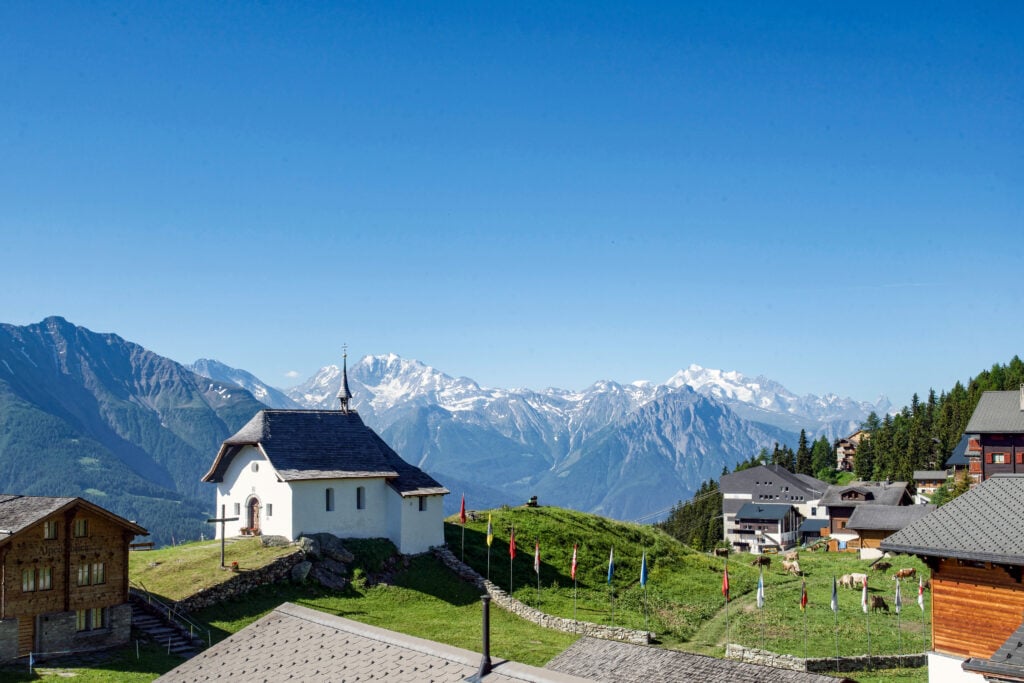
To reach the car-free village of Bettmeralp, approximately 80km northeast of Nendaz, I first ride the cable car from Bettmeralp Talstation, ascending 1,100m in just seven minutes. At the top, wooden houses, the sound of cowbells and the iconic Chapel Mary of the Snow set a seriously Swiss tone. The Matterhorn peeks up from the horizon, completing the postcard-perfect panorama.

As we stroll through Bettmeralp, Jasmine Noti, a guide with the Aletsch Arena tourism team, points out village highlights, including the nearby Bettmerhorn mountain. “The town wanted their own Matterhorn,” she jokes as we head to a viewpoint from which to take in the famed Aletsch Glacier.

The Maria zum Schnee Chapel, built in 1697, located in the car-free village of Bettmeralp, surrounded by the Valais Alps.
Expand Image

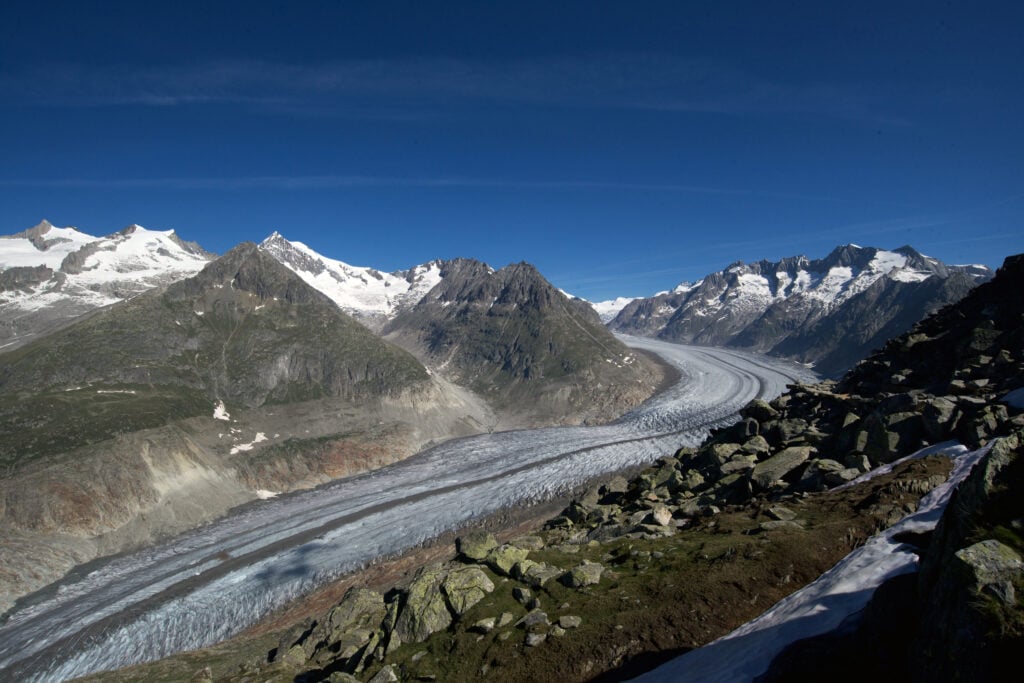
I had seen pictures of Europe’s longest glacier (the Aletsch Glacier stretches some 20 kilometres), but as Noti and I round the corner to the viewpoint, the magnitude of the landscape takes my breath away.

So does Noti’s discussion about what’s at stake as global warming precipitates glacial melt. “If we were to melt the glacier, we could give one litre of water to every person on Earth for three years,” she says.

She then points to a line along the valley wall, more than 200 metres above the glacier where the colour of the landscape naturally changes. “That’s when we had industrialization,” she says, explaining that over the last 150 years, the glacier has retreated by approximately three kilometres, exposing younger vegetation. It’s a stark illustration of just how much (and how quickly) our world is changing.

As Noti and I continue our panoramic hike toward Villa Cassel, she opens up about her personal views on the Swiss identity. “The languages divide the country, but the patriotism that surrounds being Swiss is communal.”

Europe’s longest glacier, the Aletsch Glacier stretches for approximately 20 kilometres through the Swiss Alps.
Expand Image

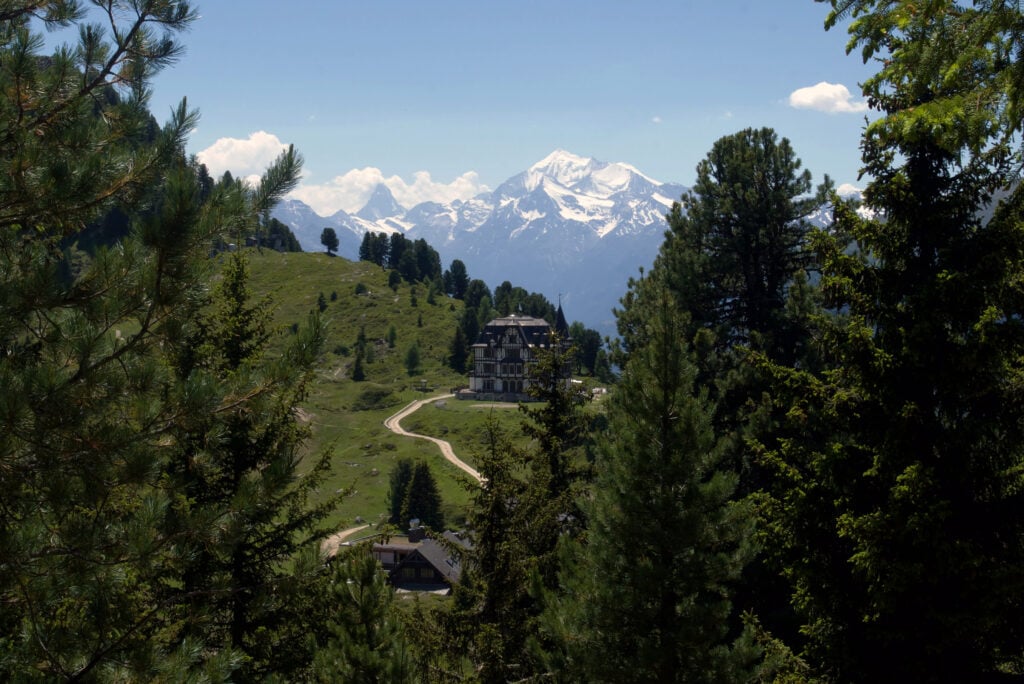
Built between 1900 and 1902 as a summer residence for British banker Sir Ernest Cassel, the historic villa has evolved over the years, welcoming guests who include King Edward VII, Winston Churchill and, tonight, me.

In the 1970s, Pro Natura, Switzerland’s oldest and largest nature conservation organization, purchased the property, which now offers overnight stays and operates guided excursions and seminars about the region.

The following day, I travel to Brig, another historic alpine town known for its blend of Swiss charm and Italian flair. Just 20 km from the Italian border, Brig certainly feels more Italian than the villages I’ve just left. Noti points to the colourful facades lining the cobblestone streets. “ I think the extra colour is because we’re closer to Italy,” she says with a smile.

Next, it’s time to cross another invisible border, this one into the canton of Lucerne, with its German roots.

Villa Cassel, framed by the Valais Alps, with the Matterhorn rising in the distance.
Expand Image
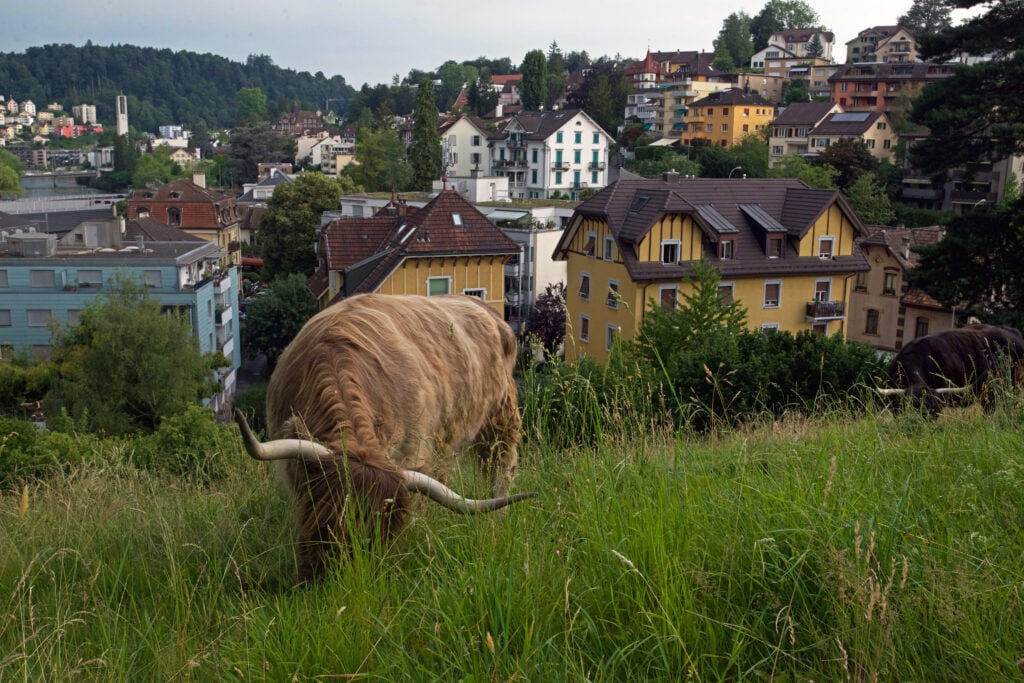
A Highland cow grazes on a hillside overlooking Lucerne.
Expand Image

LUCERNE — Bonjour! I mean, hallo!

I meet Beatrice Lampart beneath the Torbogen Luzern, a historic stone archway in front of the Lucerne railway station — she’s surrounded by dozens of young girls with braids and wearing trachten (traditional folk clothing worn in German-speaking regions).

“You should join them!” she says jokingly, pointing to my hair, which is tied back in a French braid. A guide with Luzern Tourism, Lampart has lived in the area for most of her life. This medieval city draws visitors to its historic Old Town and acts as a base for visits to mountains like Pilatus and Rigi.

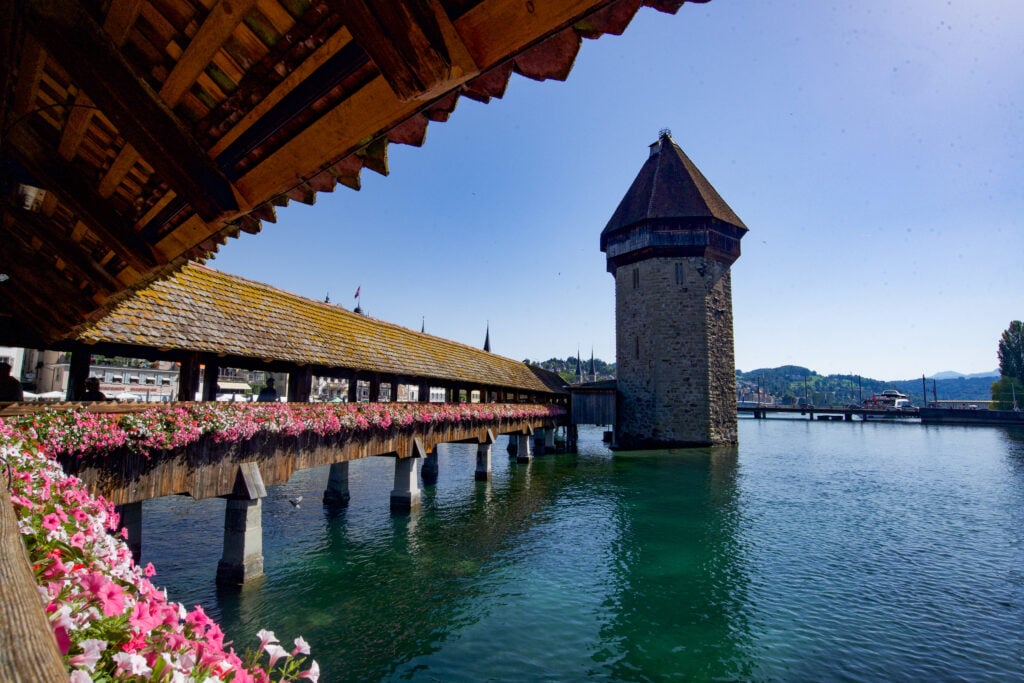
Dating to the 14th century, Lucerne’s Chapel Bridge is Europe’s oldest covered wooden bridge and one of the city’s most recognizable landmarks.
Expand Image

We make our way to vantage point along the Reuss River to admire the Chapel Bridge. Dating back to the 14th century, the covered wooden footbridge was originally built to connect the two sides of Lucerne and formed part of the town’s medieval fortifications. Today, Europe’s oldest covered bridge is a symbol of the city (and its most photographed monument).

In Lucerne’s Old Town, Lampart points out the parliament buildings for the canton of Lucerne. “The outside looks like a chocolate bar,” she says, gesturing towards the sectioned facade. The resemblance is fitting given that cheese and chocolate tours are a huge tourist draw.

“I love when guests come here and are interested in our culture,” says Lampart as we continue through the historic city. “We want people to stay here and experience this place — not just come in, buy a watch and leave.” She is encouraged that slow travel has become increasingly popular in recent years, particularly among Canadians, who often book for multiple nights.

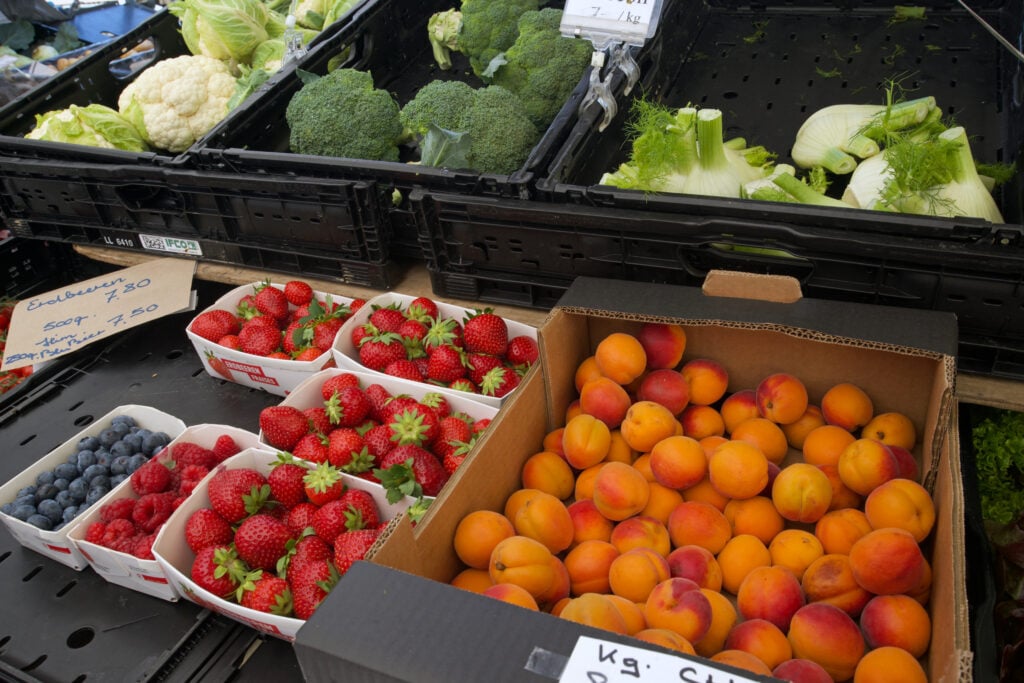
At the Lucerne Weekly Market, held along the river every Tuesday and Saturday, vendors sell fresh fruits and vegetables, flowers, spices, baked goods, and, of course, cheese. I stop for a melt-in-your-mouth wedge of Emmental. “I wouldn’t be able to live without cheese,” says Lampart. I may not be Swiss, but I 100 per cent agree.

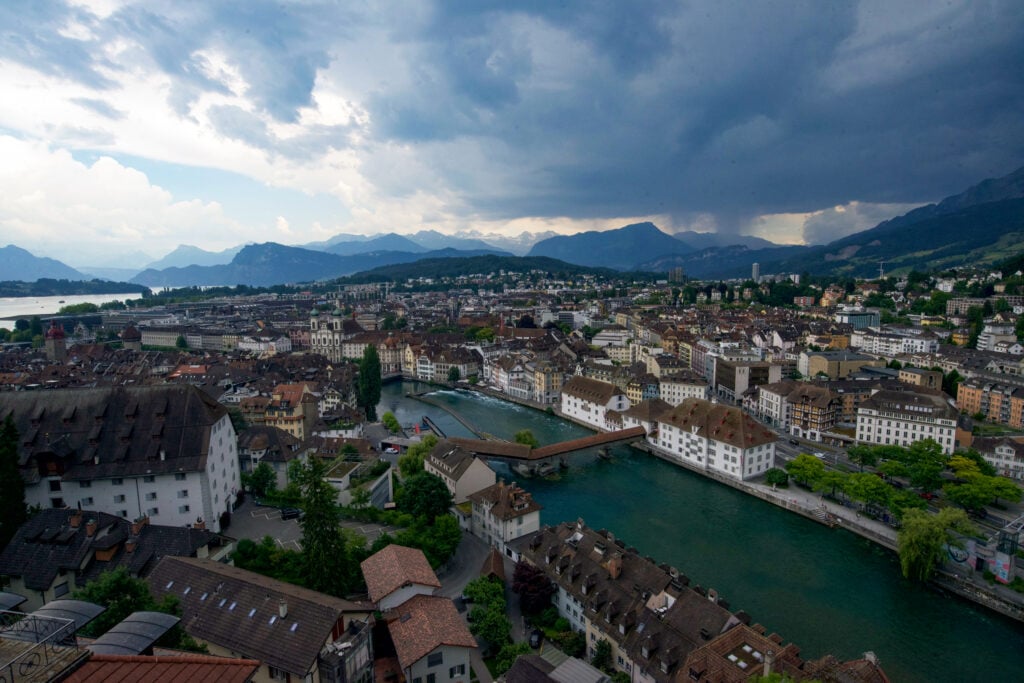
Storm clouds roll over Lucerne and the surrounding mountains.
Expand Image
Fresh produce for sale at the Lucerne Weekly Market.
Expand Image

The Swiss transportation system is renowned for being punctual, efficient and easy to navigate.

At the Lucerne Railway Station, I start out on a train, transfer to a bus and, less than two hours later, step off in the quiet mountain village of Flühli. It feels as if I have been transported to another century entirely.

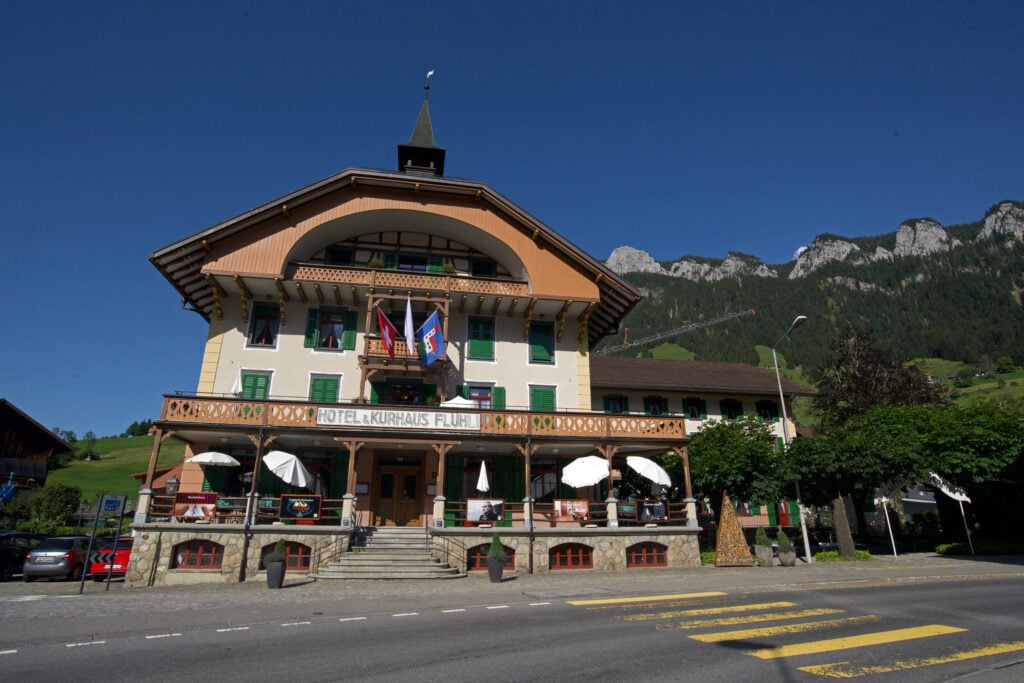
Gone are the bustling sounds of city life that characterized Lucerne, replaced in Flühli by a calming soundtrack of duelling cowbells. The village is located within the UNESCO Biosphere Entleburch, a unique region of alpine pastures and forested slopes, the valleys and deep gorges shaped by glaciers during the last Ice Age. Making my way into Hotel Kurhaus, a 29-room hotel built in 1899, I take note of the classic Swiss facade and Bernese arched roof. Inside, displays pay homage to its past, the perfect complement to the creaking wooden floors and wood-panelled walls.

Built in 1899, the 29-room Hotel Kurhaus Flühli features a classic Swiss façade and distinctive Bernese arched roof.
Expand Image

Many visitors to Switzerland arrive with the goal of ticking the usual boxes — eat fondue, buy a Rolex and stock up on chocolate — says hotel general manager Mark Metzger. But travellers who come with a pre-planned checklist can overlook so many other attributes that combine to make Switzerland so magical.

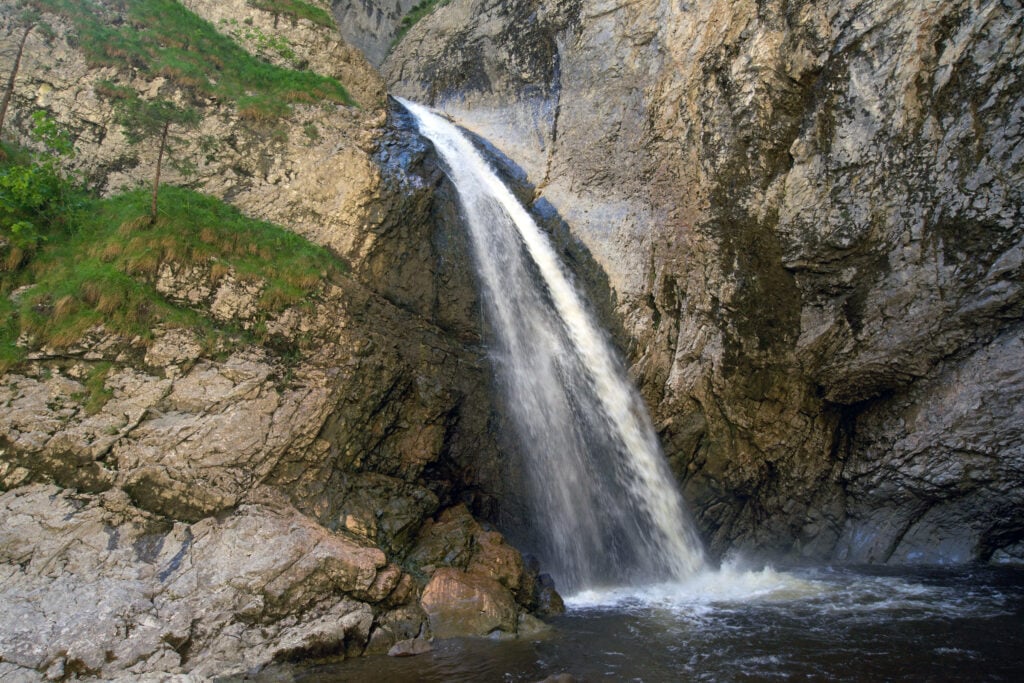
Later, I experience that magic when I stumble upon the Chessiloch Waterfall during a solo hike. Without any particular plan, I set out that evening for a walk, following one trail after another until I eventually end up at a suspension bridge which, in turn, ends at the waterfall. I am completely alone. I sit for a moment, enjoying the spray of mist and taking a few minutes to reflect on my adventures of the past 10 days.

I came to Switzerland with picturing cows, cheese, chocolate and snow-capped mountains. And although I did find all of these things, I also discovered a country much more diverse than these marketing stereotypes — a nation whose identity seems to shift with each train ride.

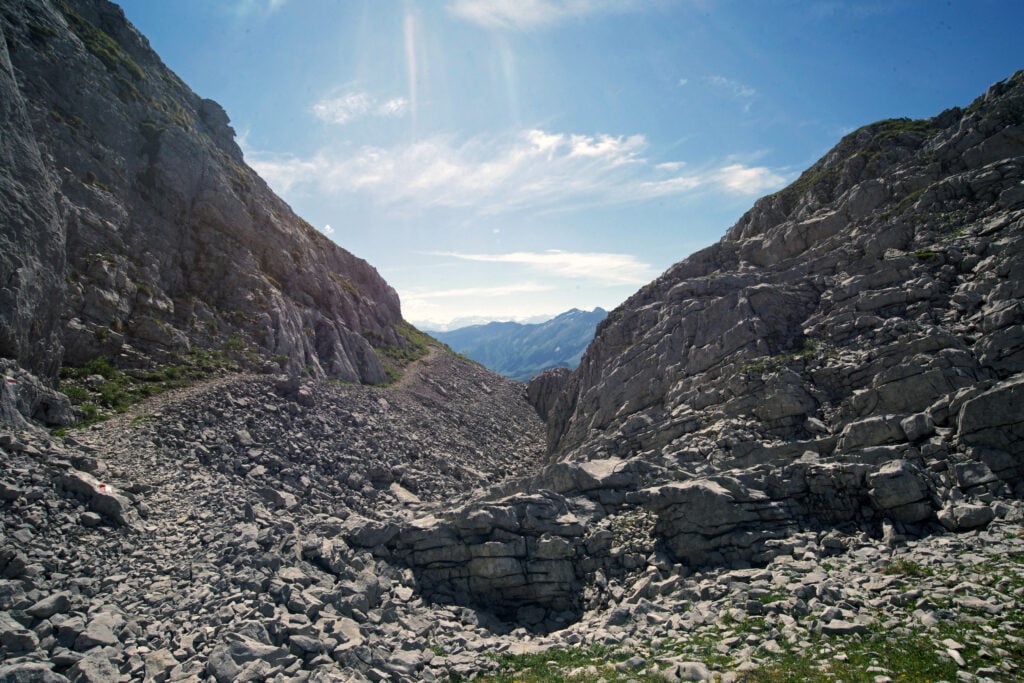
Hiking through the rocky karst terrain of Schrattenfluh en route to the summit of Hengst.
Expand Image
The Chessiloch Waterfall near Flühli in the UNESCO Biosphere Entlebuch.
Expand Image

My final day in Switzerland is spent doing what many Swiss love most: hiking. I meet guide Christian Werder in the lobby of Hotel Kurhaus, and we discuss our approach for the day. “What do you want to see?” asks Werder. “A good view,” I respond.

We map out the route to Hengst, which will take us through dense forest, past bushes of pink alprose, through the karst terrain, and eventually to the peak. Along the way, we talk about our shared love of wildflowers and our appreciation for nature. We also spend a lot of time discussing why the Swiss, despite the variety of languages, cultures and traditions found across the country, are united in their pride for this country.

“It’s one of the best places in the world,” says Werder simply. “It’s real for us. I hope it’s the same in the future: peace.” We each take one final bite of sprinz and head back down the mountain trail.

Advertisement

Help us tell Canada’s story

You can support Canadian Geographic in 3 ways:

Related Content

Travel

If there’s one thing you need to do in Switzerland… start with the train

From chocolate workshops to glacier peaks, this father-daughter rail adventure proves that in Switzerland, there’s no such thing as doing just one thing

  • 3419 words
  • 14 minutes

Travel

A Canadian experiences the Swiss Alps

From slopes to ski lift passes and resorts to spas, the cost of a ski trip to Switzerland isn’t much more expensive than a visit to the Rockies

  • 1106 words
  • 5 minutes

Places

Ultimate Canadian Geography Quiz: How well do you know the 49th parallel?

The 49th parallel forms a major part of Canada’s southern border with the United States. Test your geography smarts with our ultimate quiz!

  • 2769 words
  • 12 minutes

History

“The Switzerland of America”

How the Canadian Pacific Railway turned amenity into luxury with its now-forgotten mountain hotel dining stations

  • 717 words
  • 3 minutes
Advertisement
Advertisement