People & Culture

Canadian mountaineer Sophie Lavaud’s climb into the history books

The first French-Canadian-Swiss mountaineer to summit all 14 peaks above 8,000 metres reflects on risk, knowing when to turn back and why no climber reaches the top alone

  • Oct 29, 2026
  • 1,555 words
  • 7 minutes
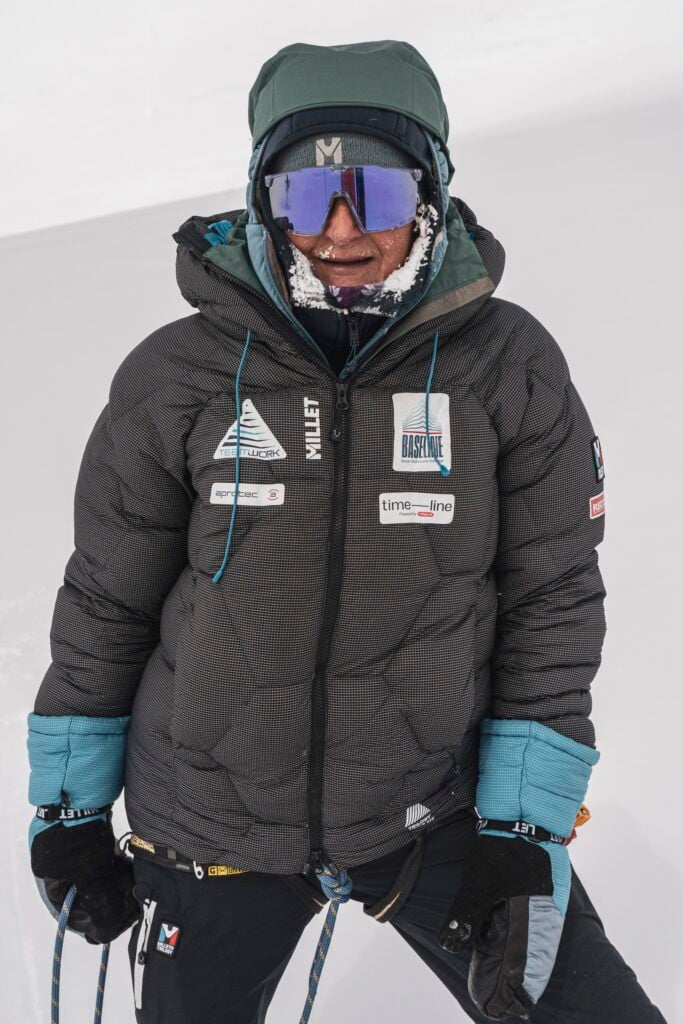
Sophie Lavaud believes that mountaineering can spread important messages about our climate and can do more than focus exclusively on personal achievement. (Photo: François Damilano)
Expand Image
Advertisement
Advertisement

When the human body passes the 8,000-metre elevation threshold, it begins to slowly break down. Low air pressure means each breath delivers about one-third of the oxygen available at sea level, and climbers can only spend a limited time in what’s known as the “death zone.” Only 14 peaks in the world reach this altitude, and summiting just one is an incredible human feat. Sophie Lavaud climbed all 14.

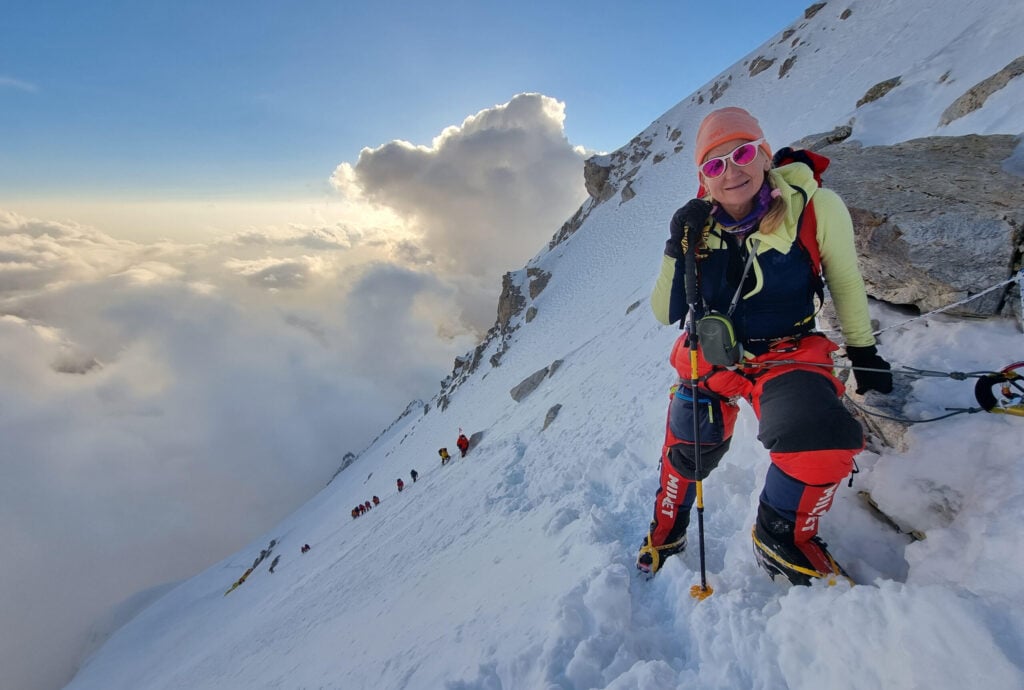
Lavaud just above Camp 3 at 6900 metres on Nanga Parbat, the ninth-highest mountain on Earth. (Photo: Dawa Sangay Sherpa)
Expand Image

Swiss-born Lavaud, whose parents were French-Canadian, reached the summit of Nanga Parbat in Pakistan (8,126m) on June 26, 2023. It was the final peak in a project that took 11 years and 22 expeditions. But for Lavaud, climbing all 14 was never a goal she set from the beginning. “It was not a dream that I had in mind; it came step by step,” she says. 

Over those years, Lavaud observed the culture of mountaineering changing, with climbers taking on more peaks in a single season and more women making their way into high-altitude spaces. She has also learned that reaching a summit is only one part of the experience. Knowing when to turn around, relying on the people who make an expedition possible and giving something back to the places and communities that welcome climbers are just as important.

Canadian Geographic sat down with Lavaud to discuss her inspiring career as a woman in mountaineering, her perspective on followership, her participation in citizen science to give back and more. 

This interview has been condensed for length and clarity.

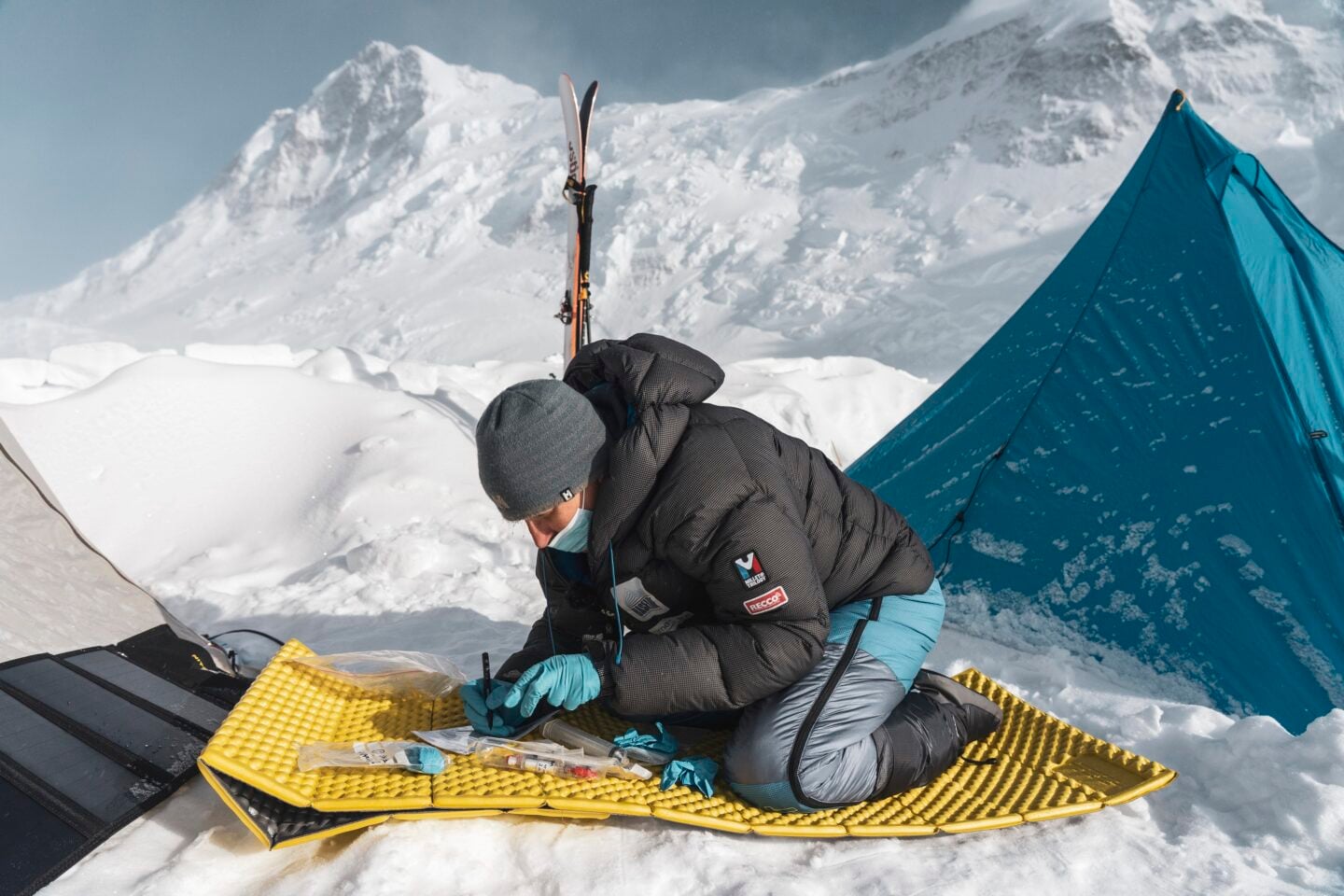
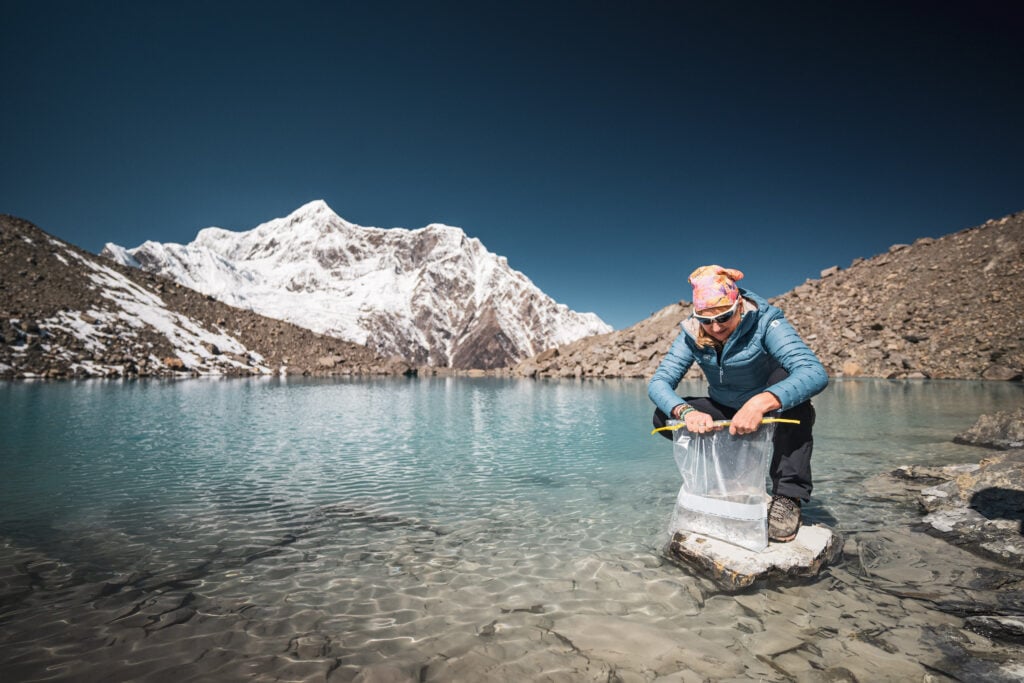
Through the Baseline — Glacier Biodiversity Challenge, Sophie Lavaud works to collect some of the most remote ice on Earth before it disappears. (Photo: Ulysse Lefebvre)
Expand Image

On becoming a mountaineer

When I was a kid, my family had an apartment in the Chamonix Valley, and we spent our holidays there, so I grew up on skis. Neither of my parents was an alpinist, but we went hiking and skiing — nothing technical. But slowly, friends started asking me to join them on hikes, and I found opportunities with people I met.

I managed Mont Blanc, but it started with an agreement with a friend who was sick and dreamed of climbing Mont Blanc. I said, “Let’s try to do it; let’s go.” We did. I loved it and wanted to climb higher.

My brother’s best friend lived in Chamonix and was a strong alpinist. I called him and asked him to teach me. I did a lot in the Alps with him. That was also when I ended a relationship, so it felt like freedom. It was like opening a pot of jam, putting your finger in it, tasting it, and loving it. I just wanted to go back. I was always attracted to going higher and higher. It was more the altitude that attracted me. That’s how I started doing 6000 [metres], 7000 [metres], and so on, until the 8000. It was also a good excuse to travel and discover new countries.

Sophie Lavaud became the first French-Canadian-Swiss mountaineer to summit all 14 peaks above 8,000 metres on June 26, 2023. (Photo: Ulysse Lefebvre)
Expand Image

On her experience as a woman in mountaineering

It has changed a lot. I always say, the higher you go, the less women you have. On my first expeditions, I was often alone as a woman. But slowly, I started to see more. During this period, the first Nepali woman became a mountain guide.

I think there’s been a big change in the approach to the 8000s. For example, with the record of Nims Dai, who showed that things can be done differently: one expedition doesn’t have to be the only expedition of a season. 

My last [8000-metre expedition] in 2023, on Nanga Parbat, had three Pakistani women, which was really unusual. [The women] are now very popular, well known, and that is a big step for the women’s community.

On the Baseline — Glacier Biodiversity Challenge

Baseline started through a conversation with my friends and the opportunity to get kits that let us collect ice samples [while climbing]. This year, there was a big change with the EPFL (École Polytechnique Fédérale de Lausanne). They have a department called ALPOLE, the Alpine and Polar Environmental Research department, and it includes many scientists and glaciologists. I found that almost none of them go to high altitudes. Now, EPFL is providing the kits. They take care of the data, and it helps them examine the biodiversity in the ice, especially the microbes and, of course, also bacteria and fungus.

The idea is that it’s the science of the last chance, because some of those glaciers will disappear. The end objective and target of EPFL is to create a biobank to preserve, collect, and keep a trace of what is inside glaciers. For something that was like a citizen science project at the beginning, and in a way, it’s still the case, it’s become something useful. My role as an alpinist is to try to get to places where glaciologists and scientists cannot go.
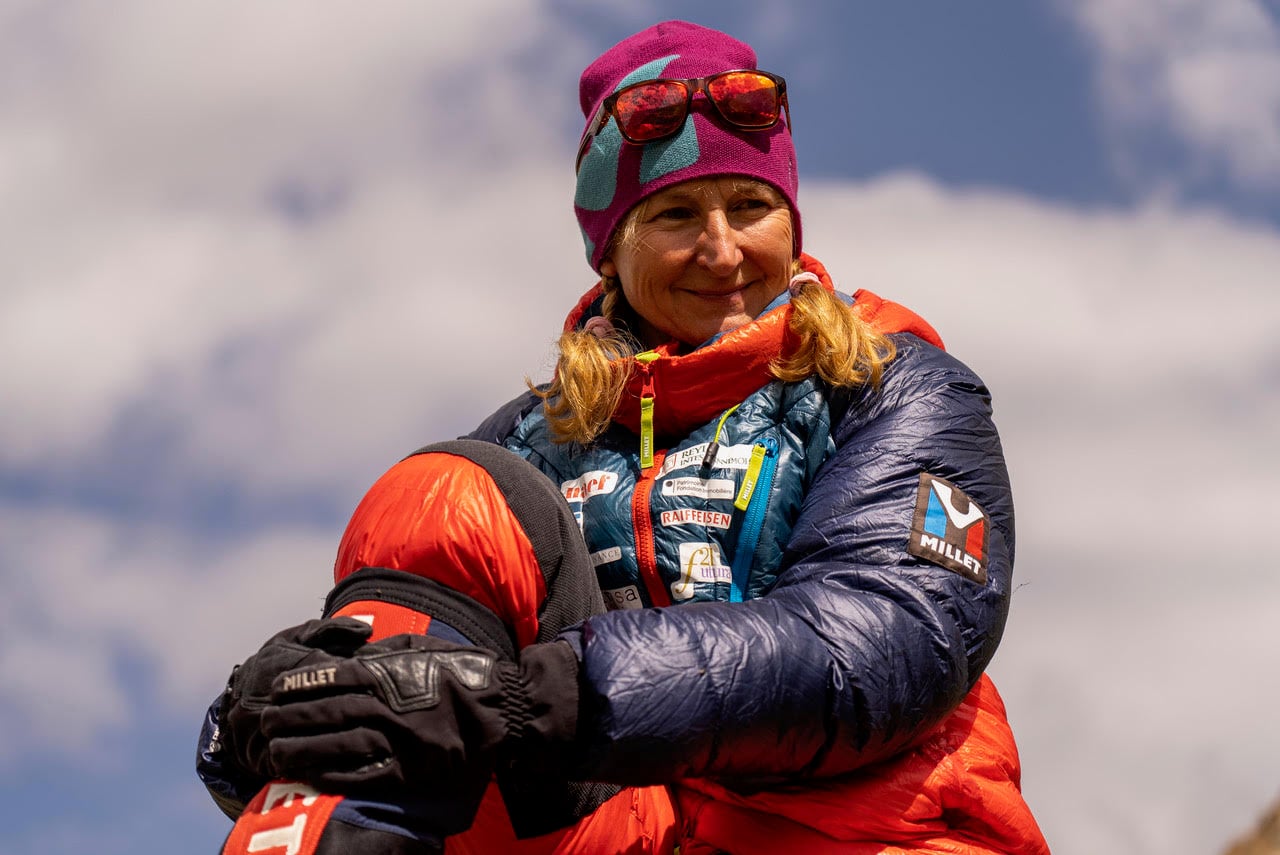
Throughout her expeditions, Lavaud always had a side project — using her mountaineering skills for good. (Photo: Ulysse Lefebvre)
Expand Image

On using her mountaineering for good

During my expeditions, I always had a side project. I’ve been an ambassador for NGOs or dedicated to specific projects, especially in Nepal: for the mountain guides, for safety, for avalanche and rescue training. Not as a rescuer, but to facilitate, because I know the country well and I know the people.

I was an ambassador for an NGO called Terre des Hommes, a Swiss NGO that takes care of children. This is my field; this is where I spend so much time. Raising awareness of what is going on is super important.

On climbing Mount Logan

It was super tough. I knew that Logan would not be an easy climb, and we had hard conditions. Even the guide who was with us, David Lussier, who is a really experienced mountain guide (this was his 10th expedition on Logan), said he’s never seen such hard conditions with the cold and the wind. We were ski touring from camp to camp, and it was so wild and so far. Yukon is very wild, but it’s also so beautiful.

The final piece is super technical; it’s a very steep wall. You leave the skis at the bottom, and then there’s a long ridge to reach the summit. It’s challenging from the first day to the last, and we faced minus-30 to minus-35 C with super strong wind; we had a storm with more than 100 km/hr. In total, we were only 12 people on the mountain for the whole season — so nobody is going there.

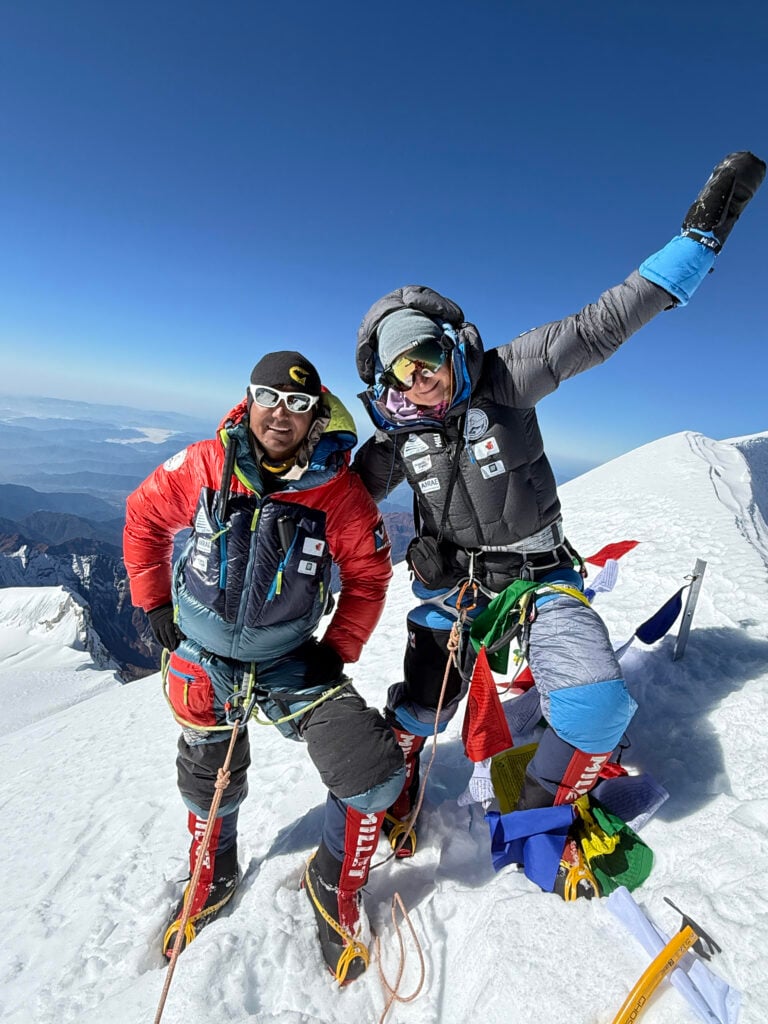
Lavaud and Sangay at the summit of Annapurna (8,091m). (Photo: Dawa Sangay Sherpa_Sophie Lavaud)
Expand Image

On followership as opposed to leadership

[Followership] is a way of thinking, and it doesn’t mean that I’m not a decision maker or a leader. The first example I give when I give a talk is that I am fully the leader of my expedition and my preparation. I am finding the sponsors, getting things ready, choosing the agency, leading the team around. But at base camp, for me, other leaders matter. It’s a way to highlight the team because most of the time, especially in mountaineering, there are so many climbers. Unless you are solo, and even if you look a little bit deeper, even solo climbers, most of the time, there is a base camp; you have staff at the base camp, and you use porters to carry your equipment and things. Of course, you are alone on the mountain, but one of the key leaders of an expedition is the cook.

If a cook isn’t cooking well and we’re all sick, nobody would summit. This is a way to recognize those who deserve it.

The key leader is also my weather forecaster. He takes the responsibility to send us up to the death zone. I’m just following his forecast. So of course, in the end, I’m deciding a lot of things, and I’m climbing. But this followership attitude and spirit, it’s a way to say that alone in the mountains, I would go nowhere.

On no longer going for 8000 metres

I decided not to go to 8000 anymore. Twenty-two expeditions is a lot, and I still have all of my 10 fingers and 10 toes. I’ve never been injured or evacuated on the mountain. But the more you push, the more risk there is.

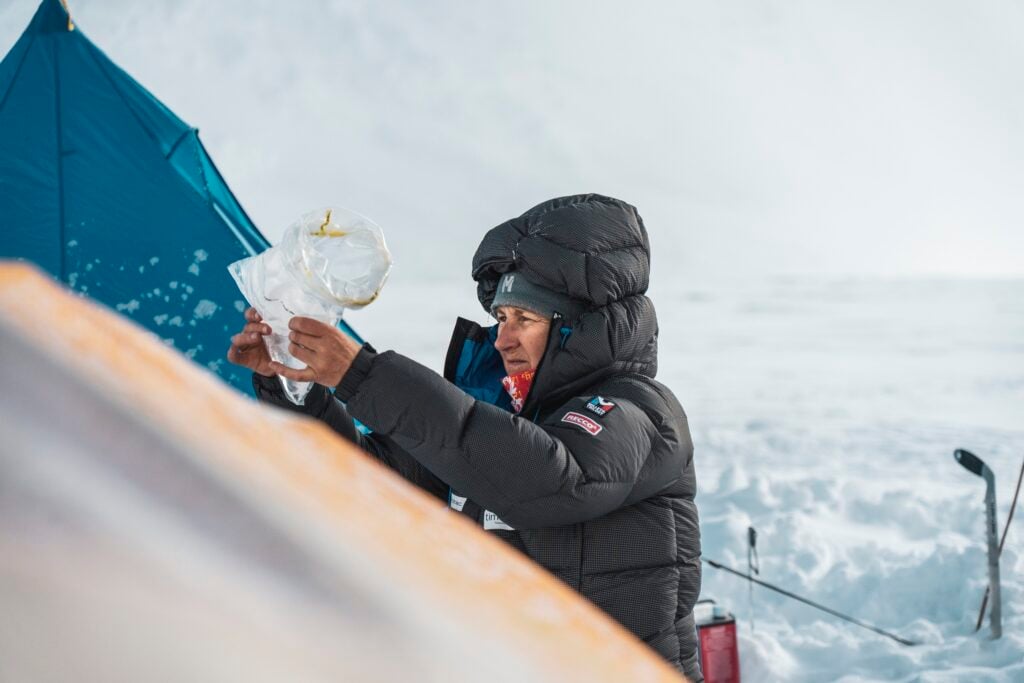
Lavaud collecting samples on Annapurna. (Photo: Manish Maharjan)
Expand Image

On the role of modern explorer

I can’t judge what others are doing; everybody has their own approach to the climb, and as we say, it can be focused on records, speed… But in my point of view, you receive so much from those countries, from those populations, and Nepal remains a very poor country. The north of Pakistan, where we go for climbing, is one of the poorest regions in Pakistan, and Tibet is politically challenging as well, just to make a long story short. For me, it’s important that what you receive from these people, you take time to give something back. And glaciers are our playground, so it’s important to take care of them and the people there; they are not just there for fun, like us. This is a hobby, a passion. But the consequences of the water melting affect their lives. They are living on this water. So It’s important to raise awareness.

Mountaineering can be a great way to spread messages and not only focus on your personal achievement.

If my journey can inspire other women… Women, I think, face more barriers because of family responsibilities and many other things. If my story can inspire more, well, that makes me happy.

Advertisement

Help us tell Canada’s story

You can support Canadian Geographic in 3 ways:

Related Content

Exploration

How scientists solved the mystery of Mount Logan’s true height

In 1992, a team backed by The Royal Canadian Geographical Society became the first to accurately measure the height of Mount Logan, Canada’s highest peak

  • 3188 words
  • 13 minutes

Exploration

Last icy stand: Scaling Mount Logan

Four researchers team up to ascend Mount Logan, measuring change and resilience on Canada’s highest peak

  • 3316 words
  • 14 minutes
Photo: Bill McKenzie

Environment

Q&A with mountaineer Roger Wallis

Meet Roger Wallis, Canadian mountaineer extraordinaire

  • 1070 words
  • 5 minutes
Everest by sunrise

Exploration

The pull of Everest

A century after a Canadian was instrumental in charting the world’s highest peak, a fellow Canadian reflects on the magnetism of Everest

  • 3903 words
  • 16 minutes
Advertisement
Advertisement