People & Culture
On thin ice: Who “owns” the Arctic?
As the climate heats up, so do talks over land ownership in the Arctic. What does Canadian Arctic Sovereignty look like as the ice melts?
- 4353 words
- 18 minutes
History
Uncorking a 150-year-old Arctic Ale yields insights about 19th-century Arctic maritime exploration

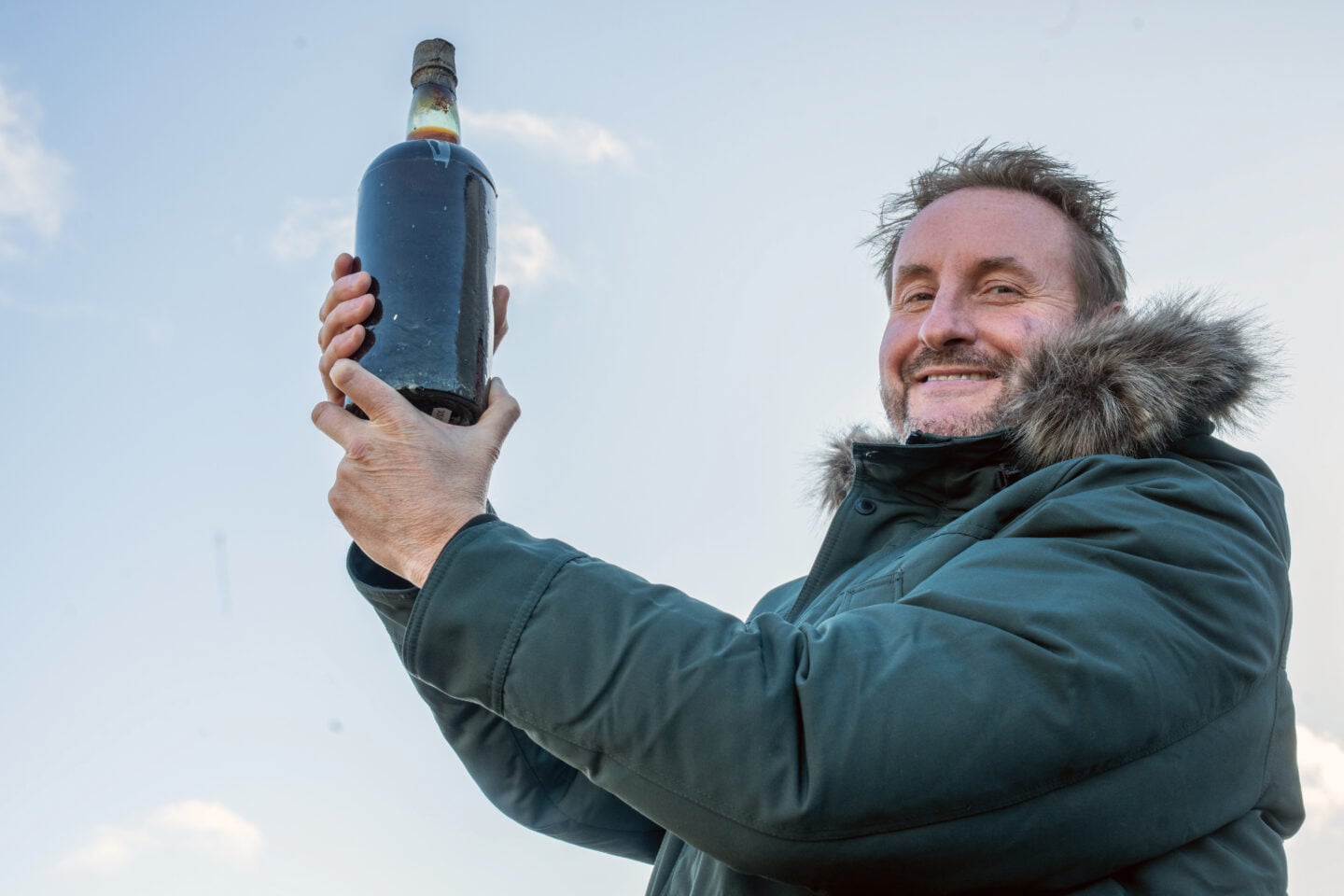
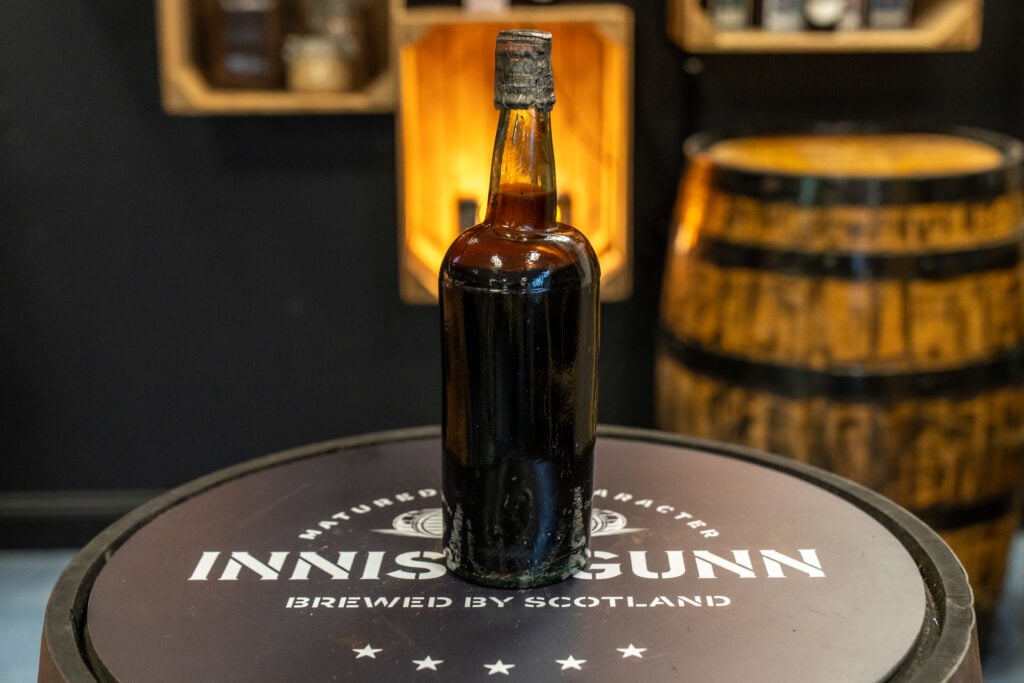
IT’S NOT EVERY DAY you open a 150-year-old beer. So, when Dougal Gunn Sharp uncorked a bottle of 1875-brewed Allsopp’s Arctic Ale at his Innis & Gunn Brewery in Perth, Scotland, it was an adventure in itself. The 19th-century British maritime explorers who brought this ale to the Canadian Arctic would undoubtedly have approved of this purposeful risk-taking.
“There was all sorts of mixed emotions: anticipation, nervousness, excitement,” says Sharp, an award-winning brewer who bought the dark, historic beer at auction for £3,300 (about 6,420 CAD) in 2015 after it was discovered languishing in a garage in Shropshire, England.
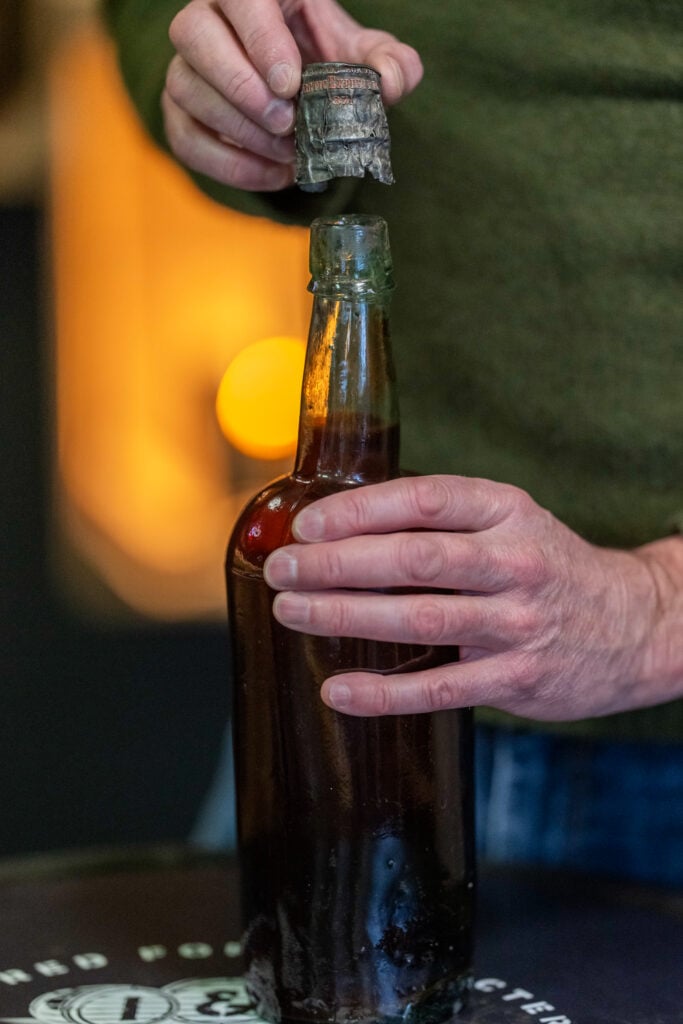
Fortunately, it hadn’t gone bad.
According to Jamie Allsopp, who heads up his family’s 1730-founded brewery and joined Sharp for the bottle-opening, taking his first sip of the viscous, extra-sweet liquid (nine per cent alcohol by volume) revealed an exciting flavour profile: “There were notes of dark chocolate. It was like an aged sherry or Madeira.”
Arctic Ale’s style was intentional. Beer destined for polar exploration had to tick multiple boxes. High sugar and alcohol content helped keep it from freezing on unheated ships when temperatures plummeted. That made Arctic Ale a viable alternative to the traditional morale-boosting British Navy rum ration dating back to the mid-1600s. As well, Arctic Ale added thousands of vital calories to the sailors’ diet in the harsh, energy-draining conditions of what is now the Northwest Territories and Nunavut.
Several noteworthy expeditions set out stocked with Arctic Ale — and, frankly, the beer proved more successful than the British Admiralty’s aspirations. Under George Nares, the 1875 British Arctic Expedition tried to become the first to reach the North Pole but fell short, plagued by scurvy. Even so, Albert Hastings Markham, who captained one of the voyage’s five ships, praised the 10 hogsheads (large wooden barrels) of ale the HMS Alert carried: “It was grand stuff — ‘strong enough,’ as one of the men observed, ‘to make our hair curl!’”
Earlier, the search for the fabled Northwest Passage, the legendary and elusive maritime trade route from Europe to Asia, was a driving force. When the notorious 1845 Franklin expedition mysteriously went missing — with 129 officers and men, including commander John Franklin — rescue missions headed to the Arctic Archipelago. It was for the 1852 government-backed search led by Halifax-born Edward Belcher that Allsopp’s inaugural batch of Arctic Ale was brewed.
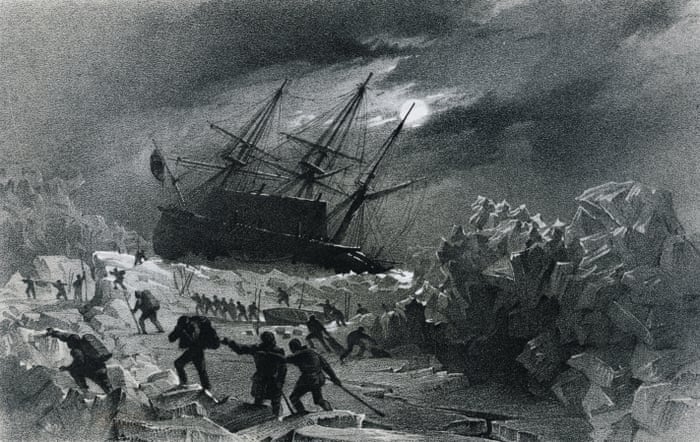
Yet there was little success to toast. Belcher not only failed to find Franklin but also abandoned four of his ships that got stuck in pack ice, one of which — the Resolute — later furnished the timbers for the White House’s Resolute desk. He faced a court-martial upon returning to England.
Still, Belcher apparently enjoyed Arctic Ale during an on-board performance of Hamlet on Dec. 21, 1852, in Northumberland Sound, writing of Allsopp’s: “That name will live for ages in the recollection of all Polars.”
Although Franklin’s ships, HMS Erebus and HMS Terror, would not be located until 2014 and 2016 respectively, Leopold McClintock at least confirmed the tragic deaths of their occupants — via Inuit contacts, written records and skeletal remains — during his 1857-59 mission financed by Franklin’s widow, Jane.
On Jan. 6, 1858, McClintock experimented by leaving a tumbler of Arctic Ale to freeze on deck at -35 C and then drinking it after it thawed out indoors at 22 C. He noted in his journal: “It seemed none the worse for its freezing, but rather flat from its long exposure.”
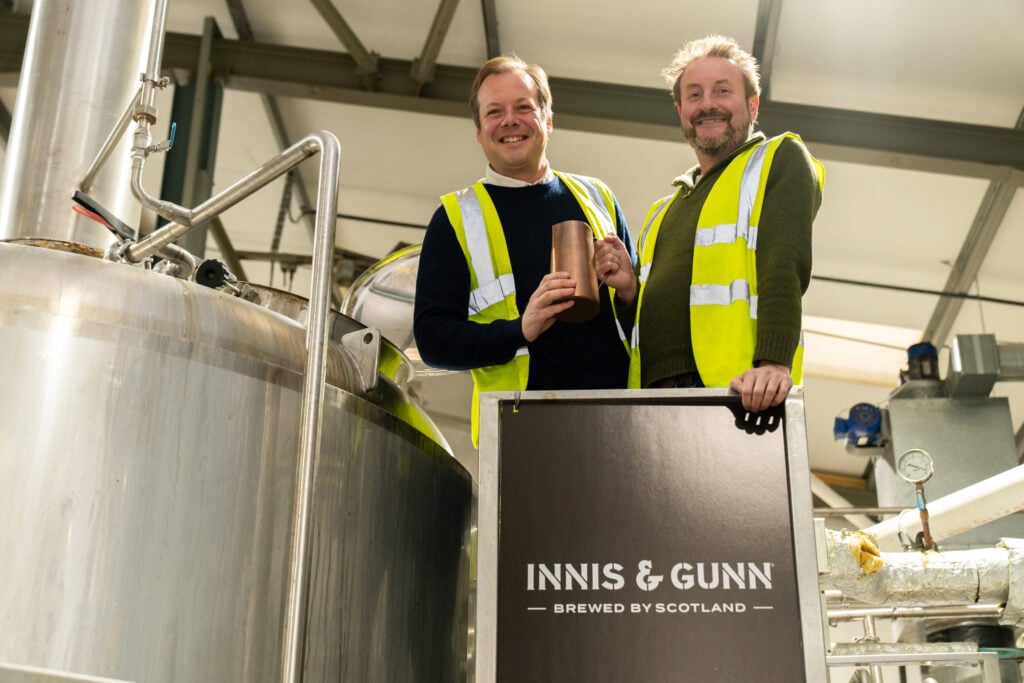
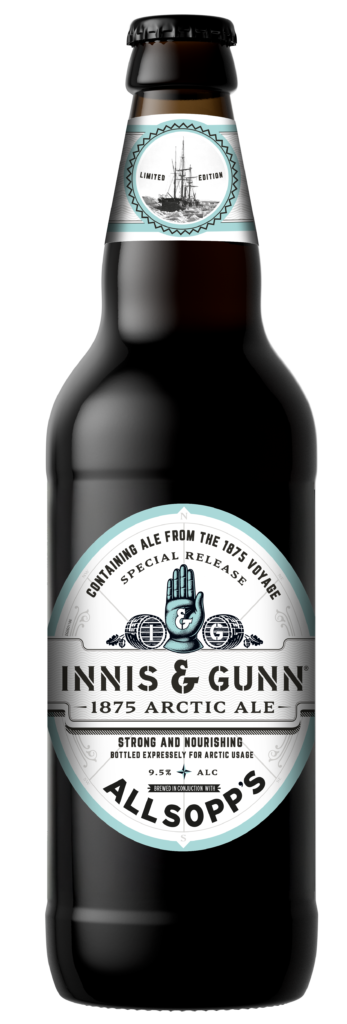
Back in the modern day, Innis & Gunn and Allsopp’s have pushed forward in their own intrepid exploration. They endeavoured to recreate the 1875 Arctic Ale, pouring out part of that vintage bottle to start a new brew using the same recipe and malt and hops varieties.
The new Innis & Gunn 1875 Arctic Ale — though born of experimentation — has not yet faced polar temperatures, besides being served at the pop-up Edinburgh Polar Ice Bar at -25 C in December. But Jamie Allsopp relishes the notion of seeing it return to the Arctic someday. For him, this launch is also an exciting change of pace from discussing what the seminal brewery was best known for before it relaunched in 2021: pioneering India Pale Ale in the 1820s. (The IPA style of beer was originally brewed in a teapot by Samuel Allsopp in 1822, in order to withstand the journey to Bombay.)
“It’s a great opportunity to start talking about these brave explorers and the romantic age of global exploration,” says Allsopp. “And a style of beer that is not particularly well-known.”
This story is from the May/June 2026 Issue
People & Culture
As the climate heats up, so do talks over land ownership in the Arctic. What does Canadian Arctic Sovereignty look like as the ice melts?

Wildlife
The threat this fish poses to the Great Lakes

Environment
The uncertainty and change that's currently disrupting the region dominated the annual meeting's agenda

History
Veteran journalist and governor-general spouse Whit Fraser recalls diplomatic row with U.S. over 1980s naval excursion into Canada’s High Arctic in excerpt from latest book