Travel
Van life: A nine-day solo road trip through Northern B.C.
I traded my apartment for a van and discovered the freedom of exploring “The Great Wilderness” on my own schedule
- 2639 words
- 11 minutes
People & Culture
Vanagon aficionados travel far and wide — but never without a wrench
YOU’VE ALMOST CERTAINLY seen one coming down the opposite side of the highway. Or perhaps you’ve driven behind one, waiting for a gap to overtake. It’s about the same width as a compact SUV, but taller and unapologetically boxy. In fact, it resembles a toaster on wheels.
But if you are stuck behind it, those feelings of irritation somehow stay buried. This isn’t just a slow car, you realize. It has dainty curtains tied back behind the rear window, for a start. And is that a kitchen? Maybe it’s more of a fast house? The iconic VW insignia on the rear hatch tells part of the story, but this is no ’70s “hippie bus” or “splittie.” This is a different animal altogether.
The Volkswagen Vanagon — a familiar sight on the roads and in the campgrounds of British Columbia in particular — is a one-off. Vanagon is a portmanteau of van and station wagon. In fact, VW’s early advertising sold it as the best of both vehicles. “Wherever you are, you’re always at home,” promised one ad. Globally, as part of VW’s Transporter line, it’s long been one of the best-selling vans in history.
As for driving one, it’s underpowered, rattles when encountering the tiniest of bumps, shakes at high (relatively speaking) speeds on the highway and feels like it will be toppled by any determined crosswind. And yet, 35-plus years after the last one rolled out of a North American showroom, it remains one of the best-loved jalopies in the land. It’s even appreciating in value. The 1980–91 Volkswagen Vanagon Westfalia made classic car authority Hagerty’s 2021 Bull Market List, which tracks the collector vehicles poised to rise in value. Their owners love them like family. They even have their own wave, which can range from a subtle peace sign to a full-on, arm-out-the-window salutation of comradeship.
In fact, a subculture — or some might say a cult — like few others in the vehicle world has formed around this iconic little van and its community of owners, who keep them running despite vastly more modern alternatives.
“FIND A SPOT. WE’RE CIRCLING THE VANAGONS.” As I pull up on a chilly April afternoon on the outskirts of Squamish, B.C., for a campout clinic for new Vanagon owners, organizer Jay Lefstein (who also goes by “Leftbrane”) — sporting a VW cap — beckons me into a space between two Vanagons. Lefstein, a skateboard park operator from Ontario turned Vanagon mechanic, is something of a “van whisperer” and a major part of the Vanagon subculture I have gained entry to. The circle is soon completed by five more vans, all with popped rooftops revealing a canvas roof tent.
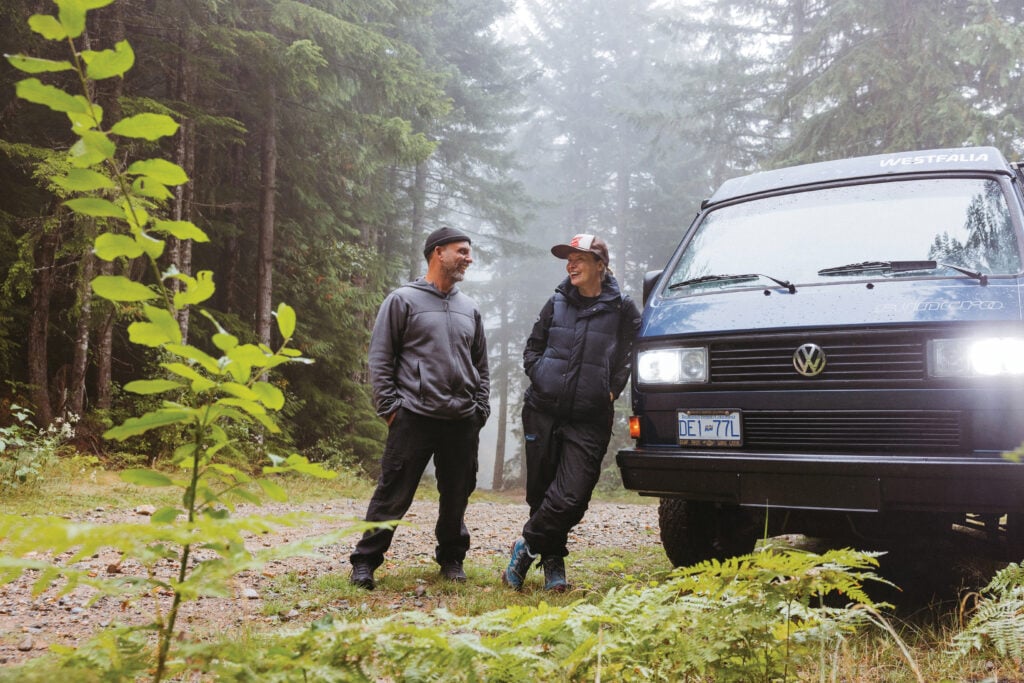
I’d always coveted a Westy and got my wish in 2018. “Hamish” — a nod to my Scottish roots — is a charming, quirky, down-to-earth ’86 Vanagon (naming your vehicle isn’t for everyone, but the Vanagon’s friendly demeanour begs for a nickname). He boasted an almost-new Ford Focus engine conversion, instead of the original aging wasserboxer, that promised reliability, easier maintenance and a little more pep on the hills. That more than made up for the mouldy pop-up tent and suspicious paint job, and I convinced my better half that Hamish was a sound investment in family fun.
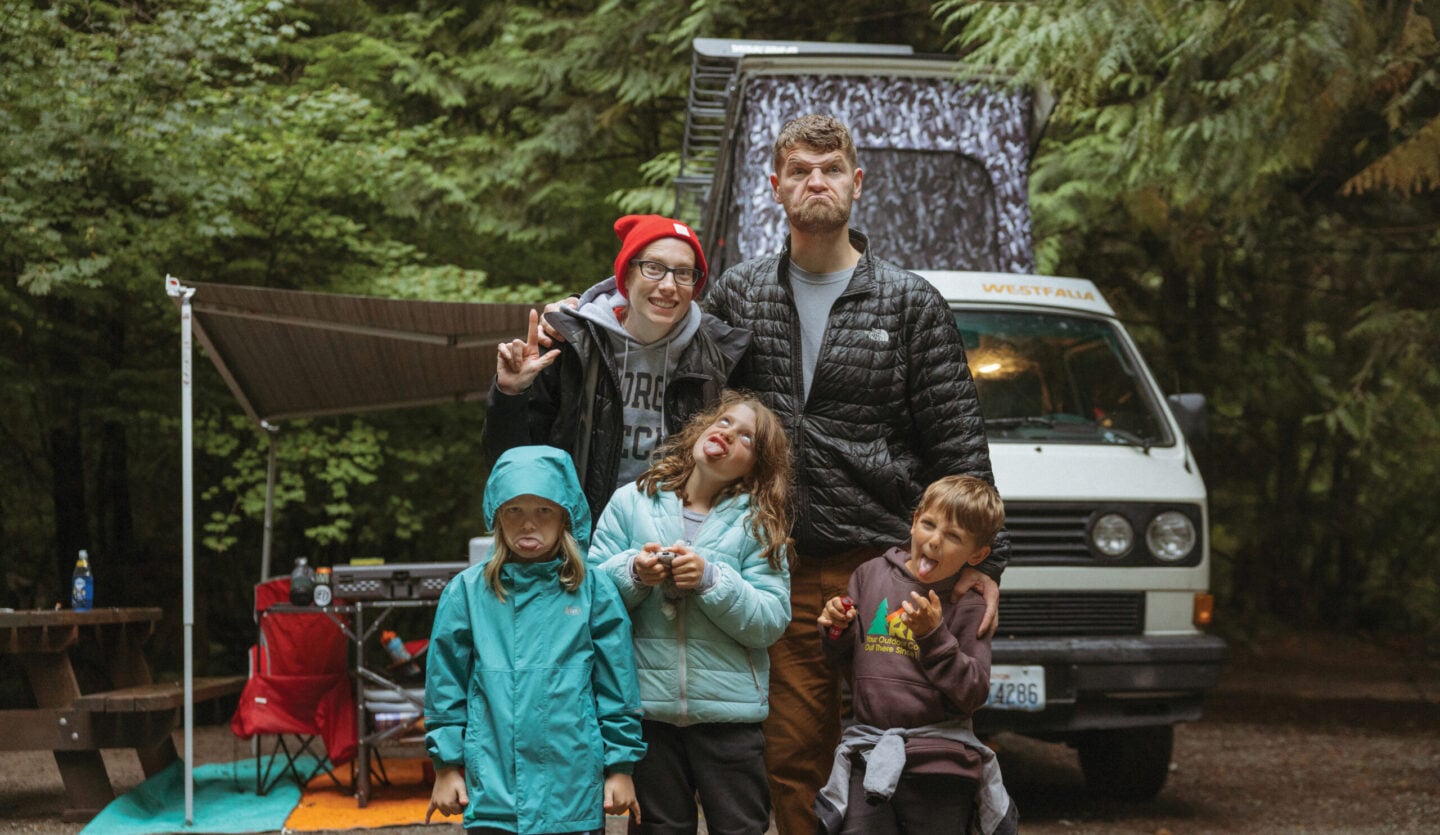
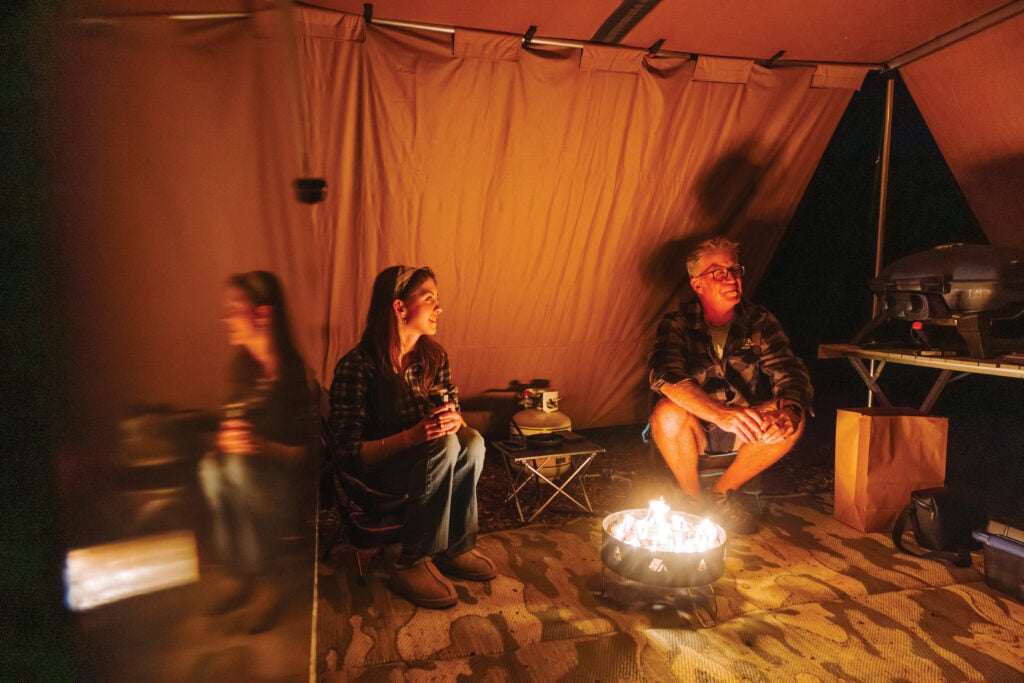
Twenty minutes later, most of us, and our Vanagons, are already fast friends. There’s a young fellow working in the film industry who uses his van as a mobile sound studio, a retired architect and a young couple with a four-wheel drive Vanagon Syncro (the alpha male of the Vanagon world) handed down by family. Chris Corpuz, the sound guy, also got his van (“DeeDee”) from family. It quickly becomes clear that for many, these vans are kind of a rolling heirloom. Corpuz has no qualms about owning a dated vehicle, albeit one now outfitted with solar panels, heater and other mod cons. “My friends are jealous,” he says. “It’s a house on wheels, right? We’re camping, and I get everyone crammed in here, and we’re just all chilling, listening to music.… The van kind of becomes a central hub.”
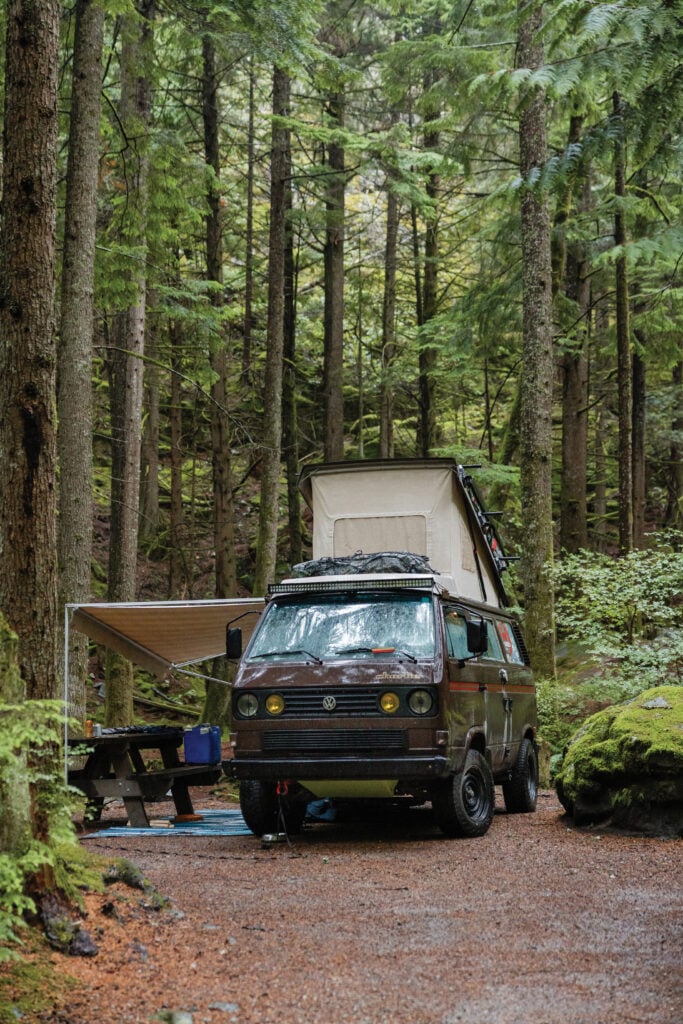
As the campfire crackles to life the next morning, Lefstein demonstrates his approach to “deploying” his Westy. There’s a built-in fridge and stovetop, cupboards for storage and a second “house” battery to power lights and other needs. The rear bench folds down to make a double bed, and there’s an upper bunk when the “pop-top” roof is raised. You can even buy a small hammock that stretches across the front seats to sleep one more. All this in about 201 cubic feet of living space. The Vanagon’s compactness makes it a much more manoeuvrable and nimble camping vehicle than modern trucks and RVs — with an interior design and layout that’s hard to top. With its retro character, the sheer high-up bouncy fun of driving one that’s well-behaved, and the scenery visible through the huge windshield, it’s not hard to understand why the Vanagon has become a bona fide classic.
The Campout Clinic was the brainwave of Lefstein’s co-organizer, Erin Lane. Lane’s first trip with her family in her new van, “Arabelle,” was a literal trial by fire, requiring emergency phone assistance from a Squamish Vanagon owner she’d only recently met. “I wished there was a course for new van owners,” she says. “Just teach me some basic stuff, like what tools I need.” She found the perfect partner in Lefstein, a mechanic, self-confessed “tool geek” and Vanagon enthusiast. Lane’s background in teaching at the University of British Columbia and Lefstein’s deep mechanical and Vanagon experience resulted in a sold-out first clinic.

“HAS ANYONE BEEN IN A BREAKDOWN IN THEIR VAN?” All hands go up. “One of the things about this community is, even if you don’t want to wrench, you might still carry tools, because you could help someone else or they could help you,” continues Lefstein. “Out on the road, that can make the difference between getting home or not.” Lefstein imparts a dizzying array of information that covers everything from a basic van tool kit to a deep dive into the Vanagon’s many hidden nooks, crannies, and eccentricities. He’s always been a VW guy, after becoming hooked on Herbie the Love Bug as a kid. Vanagons quickly stole his heart though, and he reckons he’s owned more than 20 vans over the years and parted out or rebuilt another 80. His 1991 Vanagon Syncro Westfalia in “Orly Blue” is his dream van. He talks about it as others might talk about their one true love.
Few Vanagon owners worry about speed. Instead they tinker and fix, and maybe add some creative comforts. It is part house, after all.
“What other vehicle can you drive daily, that fits in a lot of parking spots and does a U turn and parallel parks, but then has enough space to comfortably sleep and travel with?” he gushes. “There are very few vehicles that can truly do it all well.”

“JUST TAKE ANY SPOT THAT DOESN’T HAVE A VAN ON IT.” That’s easier said than done. It’s September; Hamish and I are back in Squamish for the DeLaSyncro Overland Campout, another brainchild of Jay Lefstein and pals, and there are Vanagons everywhere. Some form a tight circle in the middle of the campground. Others are huddled together on larger sites. Even more are tucked away in secluded corners. DeLa is an end-of-summer gathering for newbies and experienced “Vanagonauts” alike. All Vanagon drivetrains — 4WDs and 2WDs — and even a few other vehicles are welcome.
As more and more vans arrive, people greet each other like old friends, which many of them have become in no small part thanks to Lefstein. The air is full of excited, mostly van-related chatter: “There’s no seam rust [a common Vanagon complaint] at all!… I think 16-inch wheels are the sweet spot.… Between me and you, that’s the best van here.”
Mark Gallup, a renowned snowboard photographer based in Fernie, B.C., owns probably the most distinctive van in the campground. His 1989 Syncro 16 Dehler Profi is one of a kind, a 4WD Vanagon with a luxury camper conversion. The high-top roof resembles the hull of a boat, which is appropriate given Dehler’s status as a luxury yacht builder. The interior also has a nautical feel, including a top-loading fridge. Gallup pilots this part sailboat, part off-road beast around Canada in search of his next action shot.
Robyn Lundstrom, who works in tech and built himself a large van workshop, and Chris Lay, who started a local brewery-turned-artisan soda company, are old friends who bonded further over these vans. “I was the friend with the shop; he was the friend with the brewery,” jokes Lundstrom. Lay even brewed a special “pop-top grapefruit IPA,” using an illustration of Lundstrom’s van on the can. They talk about their vans with the kind of pride most reserve for their families.
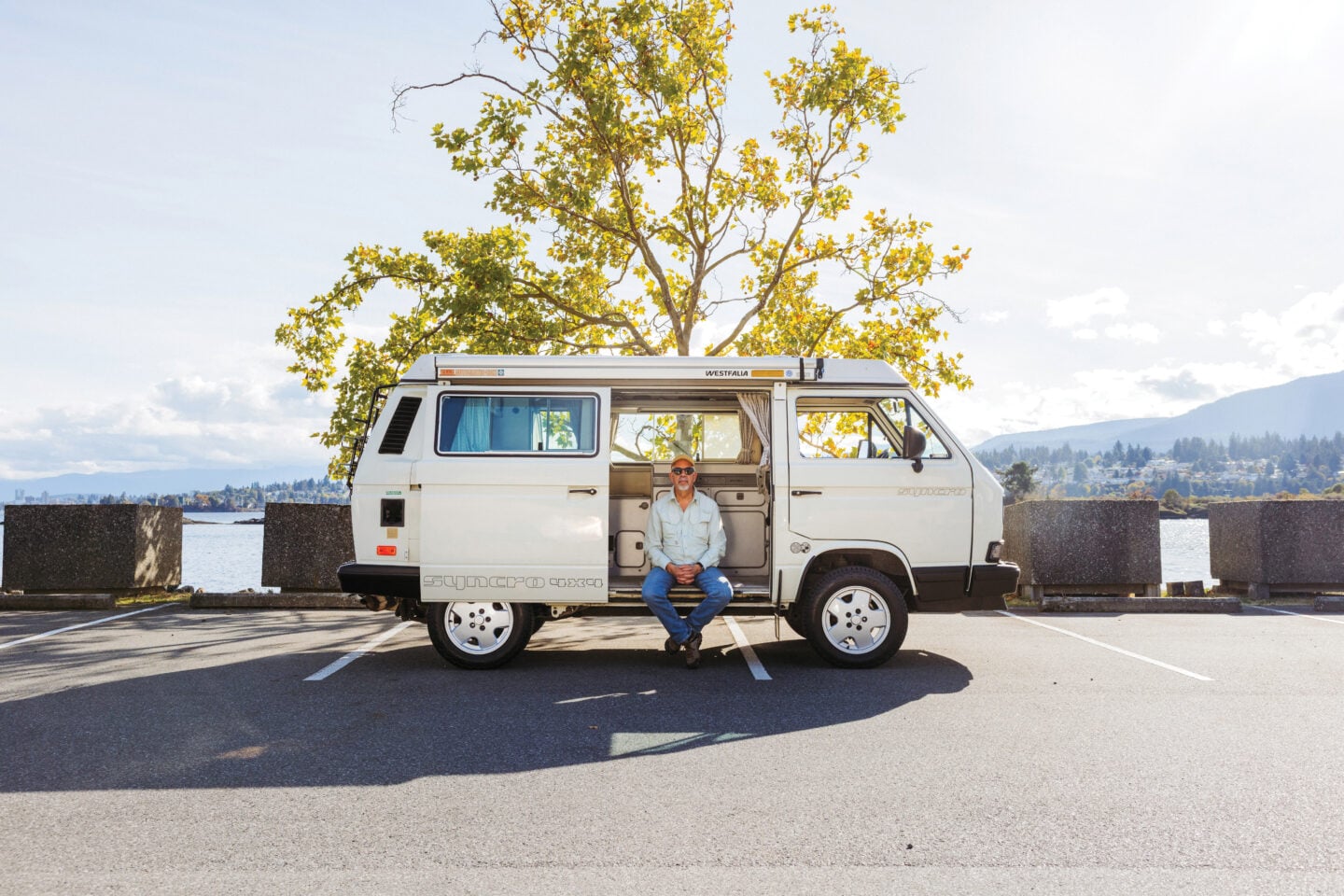
“OH. THERE GOES MY SPOILER.” David Hayward, a Nanaimo realtor whose business card is shaped like a Vanagon, doesn’t seem as worried as he maybe should be. He’s driving a pristine, off-white, mostly stock 1988 Vanagon with collector plates, but not on a nice paved highway. He’s carefully negotiating one of the many narrow, pothole-ridden fire service roads that draw off-roaders to the backroads around Squamish like black bears to blueberries. He is in a Vanagon Syncro though, similar to Lefstein’s. His is lifted with larger wheels and has a differential lock, meaning he can lock the rear wheels together for more traction when off the beaten track. Its 4WD drivetrain is more than capable of getting Hayward up and down most such trails, with just the odd bump to the spoiler and a lot of mud splatter to show for it.
“I’m not worried,” says Hayward, who got his Syncro new in 1988. “I like using it as it was intended.” Like all Vanagon owners, he’s also deeply proud and protective of his ride. “Sometimes before bed,” he says sheepishly, “I’ll go out to the garage and turn on the light and just kind of… take a peek at it.”
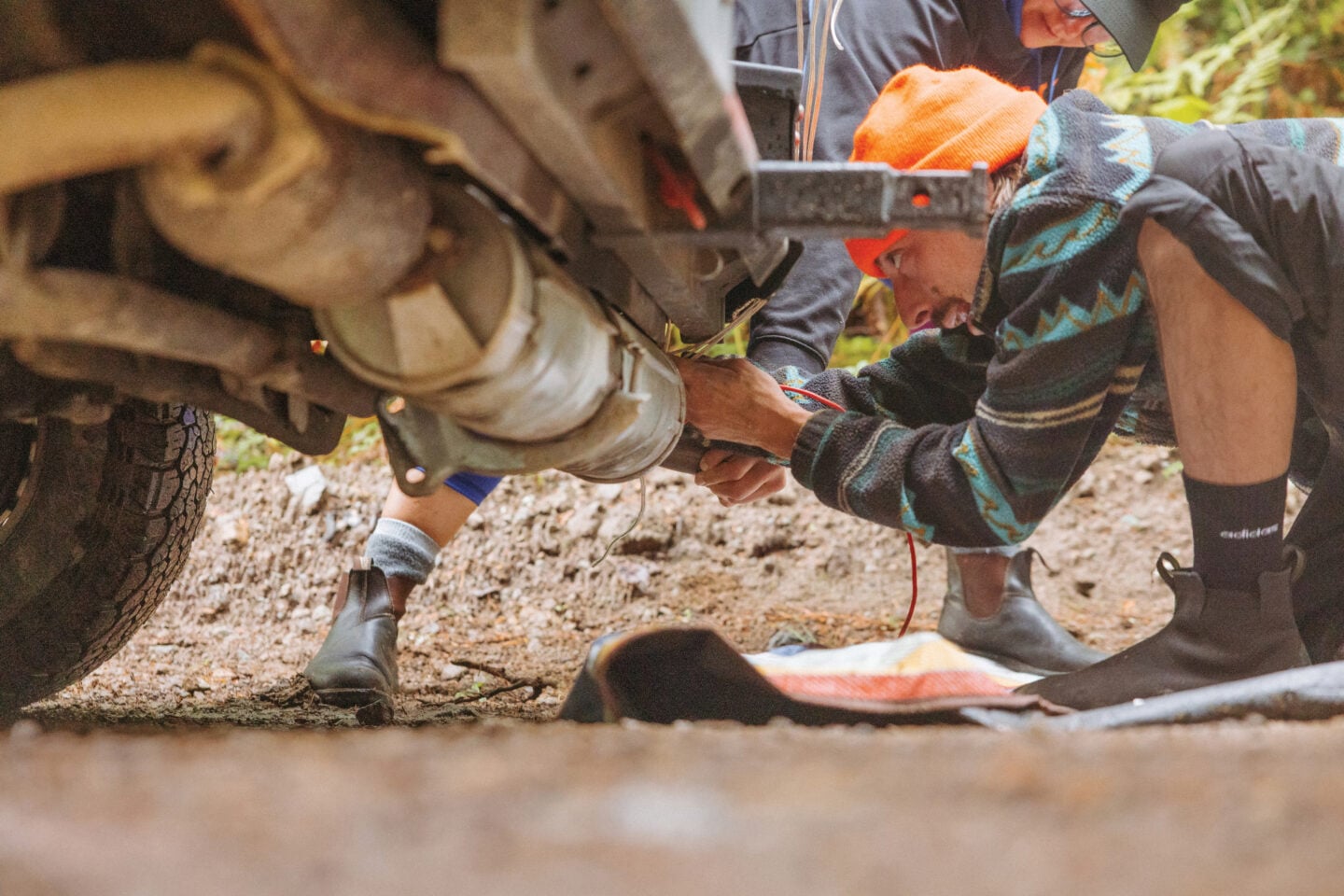
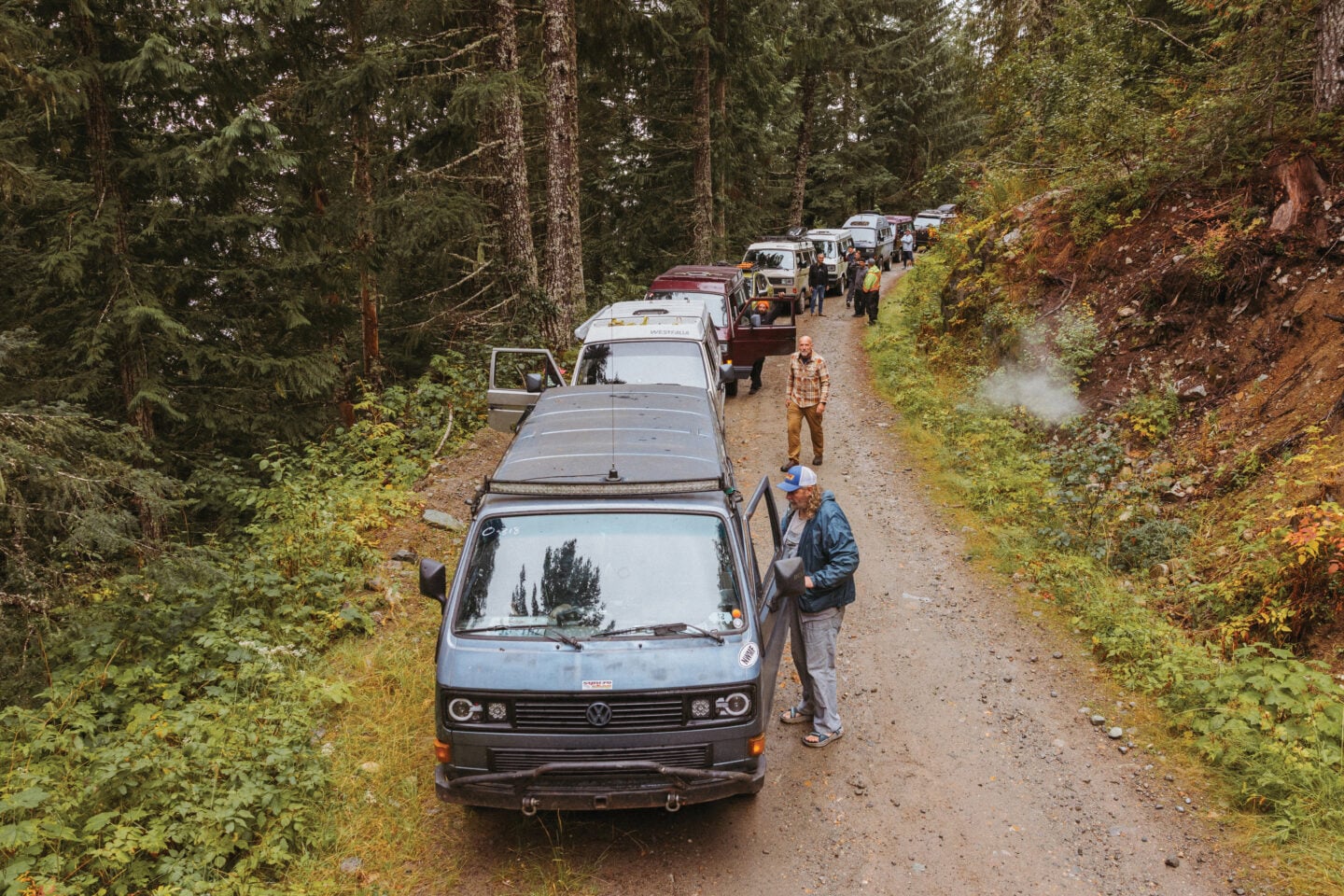
“LET’S GO!” The next morning, a typical rainy and foggy fall day in Squamish, Lefstein is herding a dozen vans into a convoy for the weekend’s main event, the group drive. Five minutes later, we’re deep in the rainforest. Crawling up Brohm Ridge on the washboard-like Cheekye Forest Service Road, the convoy runs ruts, bumps over potholes and skirts boulders — always with an eye on-maintaining momentum. Glimpses of valleys below appear through the mist and the familiar yellowy-brown cones of second-growth Douglas firs act as string lights to guide us up the trail. Driving at the rear of the pack, Lefstein is in his element, VW Vanagon cap hanging up above his kitchen. He explains how the rear differential lock works, tells van war stories, accelerates up steep slopes and stops to help someone ahead troubleshoot a concerning noise. The convoy regroups at a viewpoint, and — undeterred by a sudden, violent downpour that obscures the view of the valleys below — one Subaru-powered van bellows then takes off at a fine clip up a muddy slope. It’s strange to see these homey little vans suddenly transform into gnarly off-roaders.

Only one 2WD van, all the way from Cremona, Alta., makes it up to the top. Mechanic Jesse Schinkel owns a Vanagon called “Charlie Brown” and a Vanagon shop called Toaster Supply Co. Recognizing that they weren’t going away, he decided to specialize in Vanagons. He now scours the barns and farms of Alberta for old vans to bring back to life: “With the aftermarket support, you can rebuild these vans from nothing, as long as you have a body.” Schinkel is a veteran of multiple car scenes but maintains there’s nothing like the Vanagon community. “I love lowriders. I’ve got my buddies from the hot rod scene and friends that are from the Honda scenes, like the Japanese stuff, and nothing compares to the Vanagon culture,” he says. “It’s almost a cult!”
As a gearhead and off-roader, Schinkel appreciates the Vanagon’s capabilities, while being conscious of its foibles. “New, these things were super unreliable,” he says. “But they’re also just built better. They’ll always have their quirks, but that’s what makes them so fun.
“VW did the T1 [the “splittie”] and the T2 [the bus], then they just nailed it with the T3 [the Vanagon],” Schinkel adds. “I just love their versatility. You throw solar on your van and a heater in there, and you can stay for weeks. As long as you have food, you’re good.”
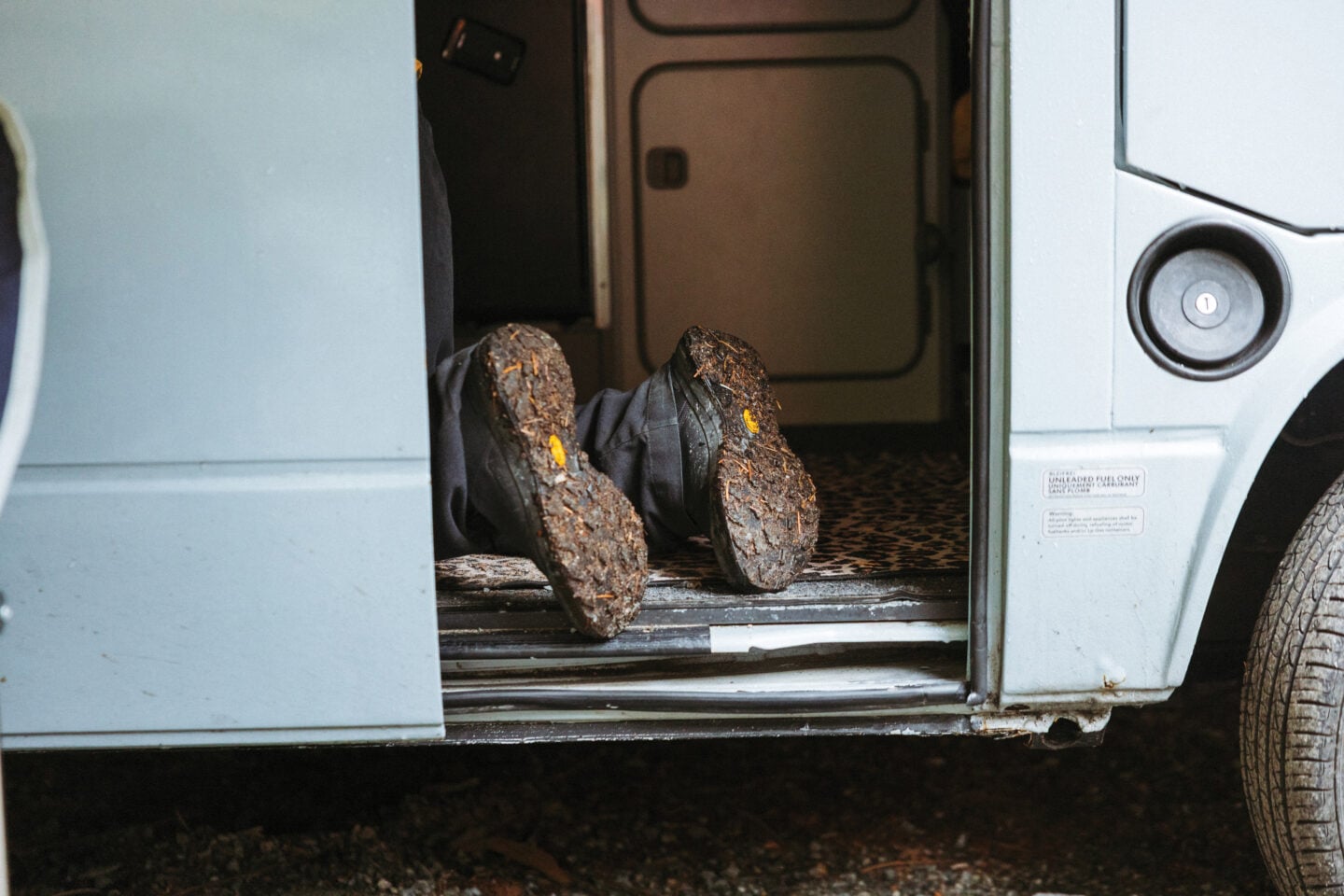
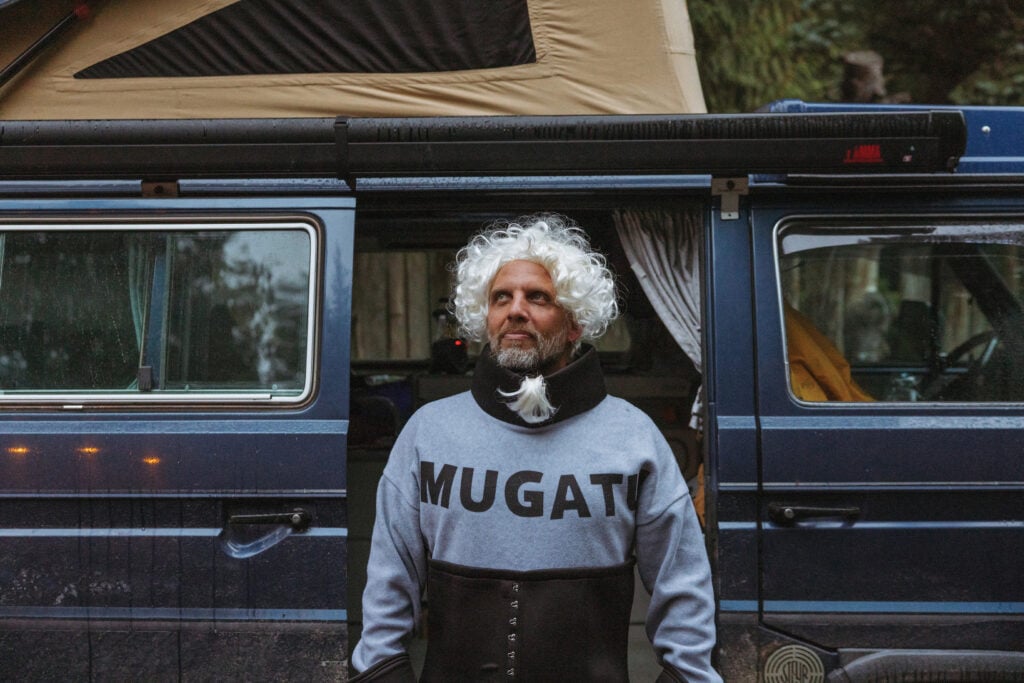
“ANYONE FOR AN ORANGE MOCHA FRAPPUCCINO?” Back at the campsite, there’s just time for some “cult members” to change into costumes for the Zoolander-themed potluck and raffle. I win one of two custom-made, perfectly sized Vanagon sleeping pads. “These aren’t for sale,” says B.C. mattress maker Troy Zanatta the next morning, as I thank him for contributing to one of our better sleeps in Hamish. “I just make them for DeLaSyncro.” It’s yet another example of owners having each other’s backs. There’s just time for a last goodbye to new friends and some last-minute packing tips as vans splutter to life and leave one by one.

On the way out of the campsite, departing vans pass a sign saying, “Slow Down.” Never has a road sign been less necessary. One van isn’t leaving anytime soon: its owner, one of many “accidental mechanics,” sits waiting for new brakes to arrive before he can drive home safely. “Brakes are important,” he shrugs. Few Vanagon owners worry about adding more speed. Instead they tinker and fix and maybe add some creature comforts. It is part house, after all.
Taking it slow is just part of the Vanagon vibe, something unlikely to ever change. In a world of fast-paced turmoil, perhaps they’re onto something. Give them a wave next time you meet one coming the other way. Who knows, maybe a barn find with a new engine, fresh lick of paint and weird sounds is in your road-tripping future. As an early 1980 advertisement said in its closing pitch, “It may be the best idea you’ve ever had.”
For Hamish, the future is solar-powered. Chris Corpuz, who we met at the Campout Clinic, left the film industry to focus on outfitting vans with solar “house power” for longer trips. Hamish will be one of his first customers. Corpuz is also working on building an electric Vanagon engine — a way for the van to live on indefinitely without losing its enduring appeal, even if it does mean losing its iconic engine rumble.
I gingerly merge Hamish, definitely one of my family’s better ideas, into the Sea to Sky Highway maelstrom and point him toward home in Vancouver. We leave the combat driving to others, settle into an easy pace and just enjoy the ride. As Vanagon owners like to say, “We’ll get there eventually.”
This story is from the September/October 2026 Issue
Travel
I traded my apartment for a van and discovered the freedom of exploring “The Great Wilderness” on my own schedule

People & Culture
Hogan’s Alley, once the centre of Vancouver’s Black community, was erased due to urban renewal — now, Black Vancouverites are working to remember its past, and restore it for future generations

People & Culture
Comment une langue autochtone gravement menacée peut être sauvée

People & Culture
The story of how a critically endangered Indigenous language can be saved