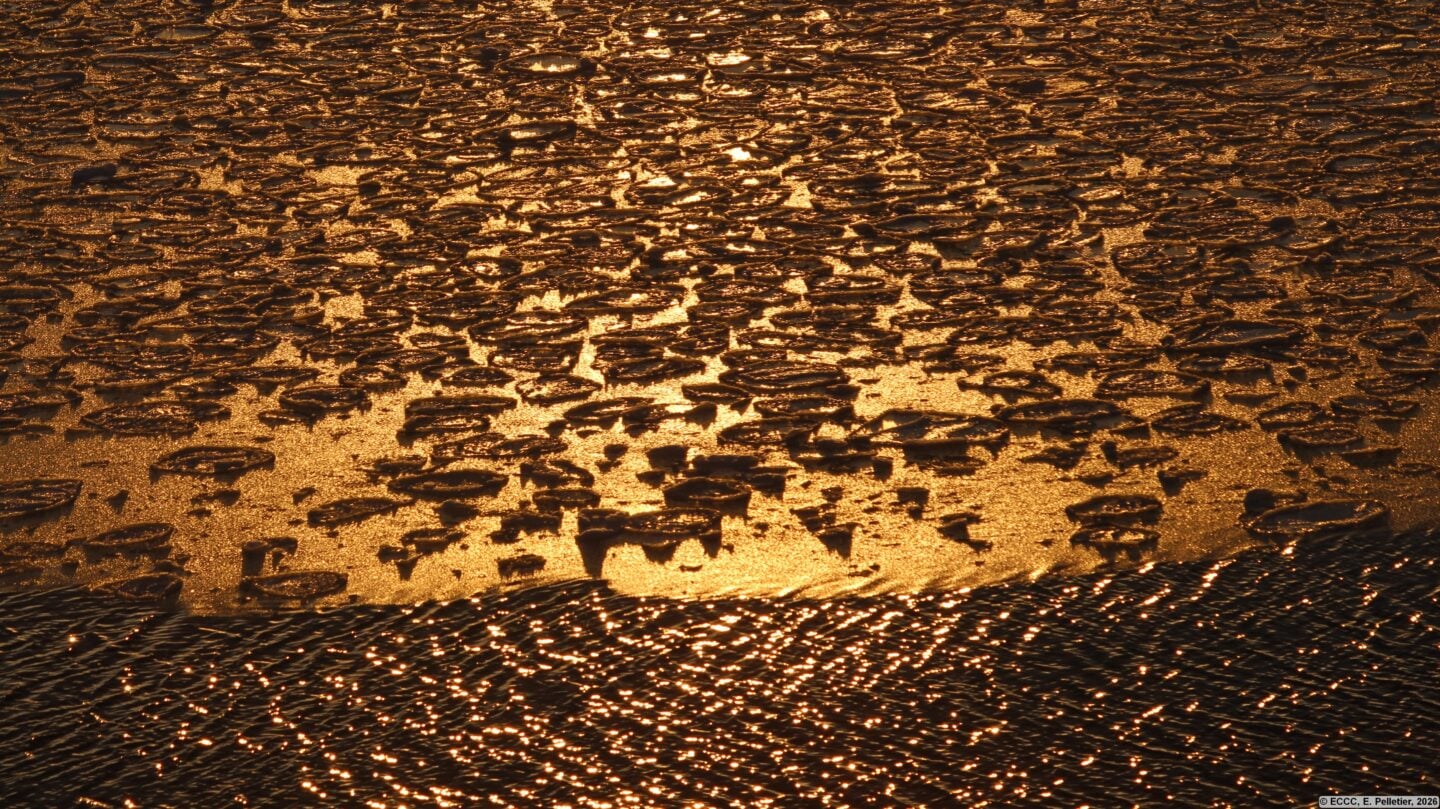
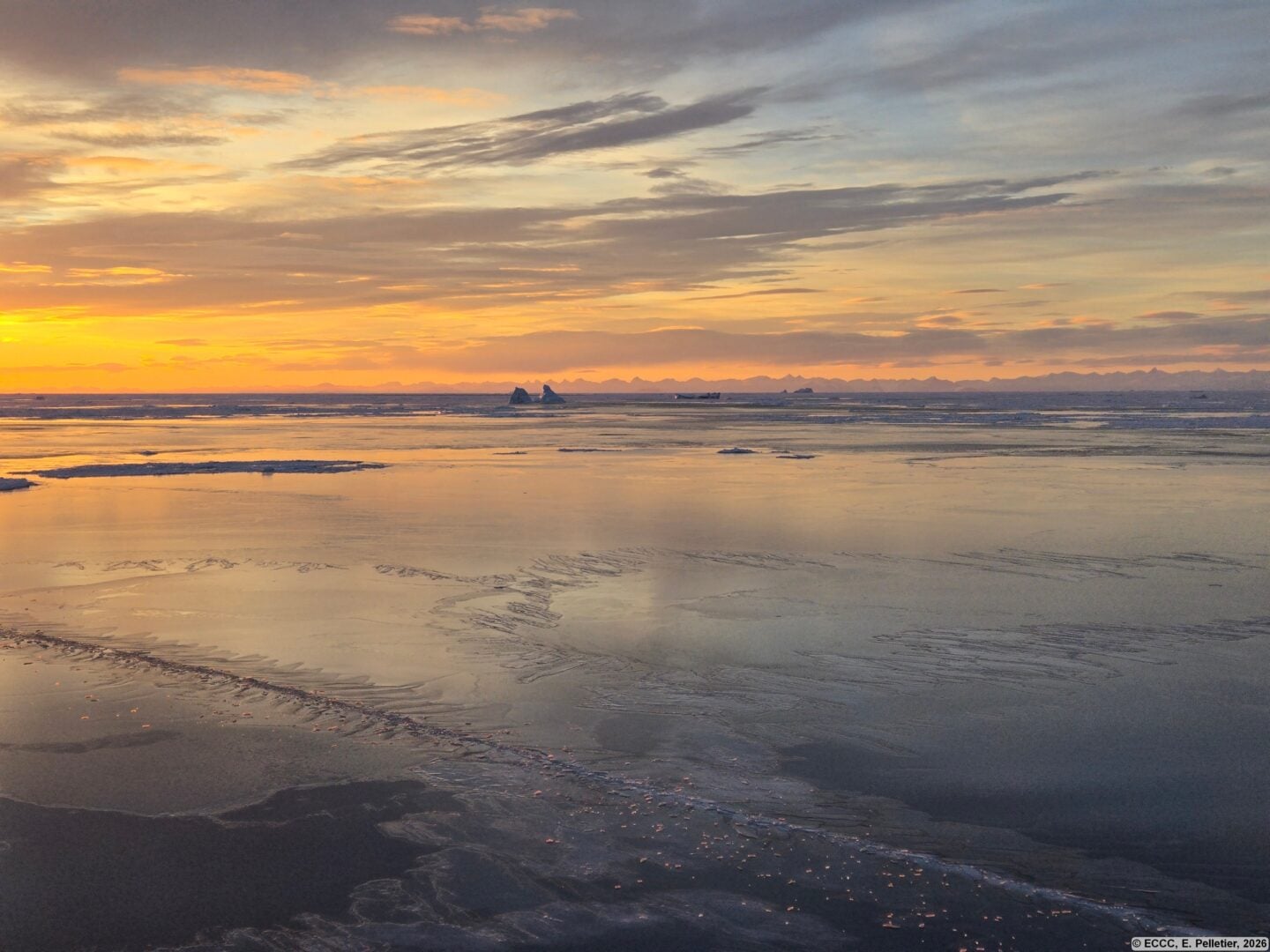
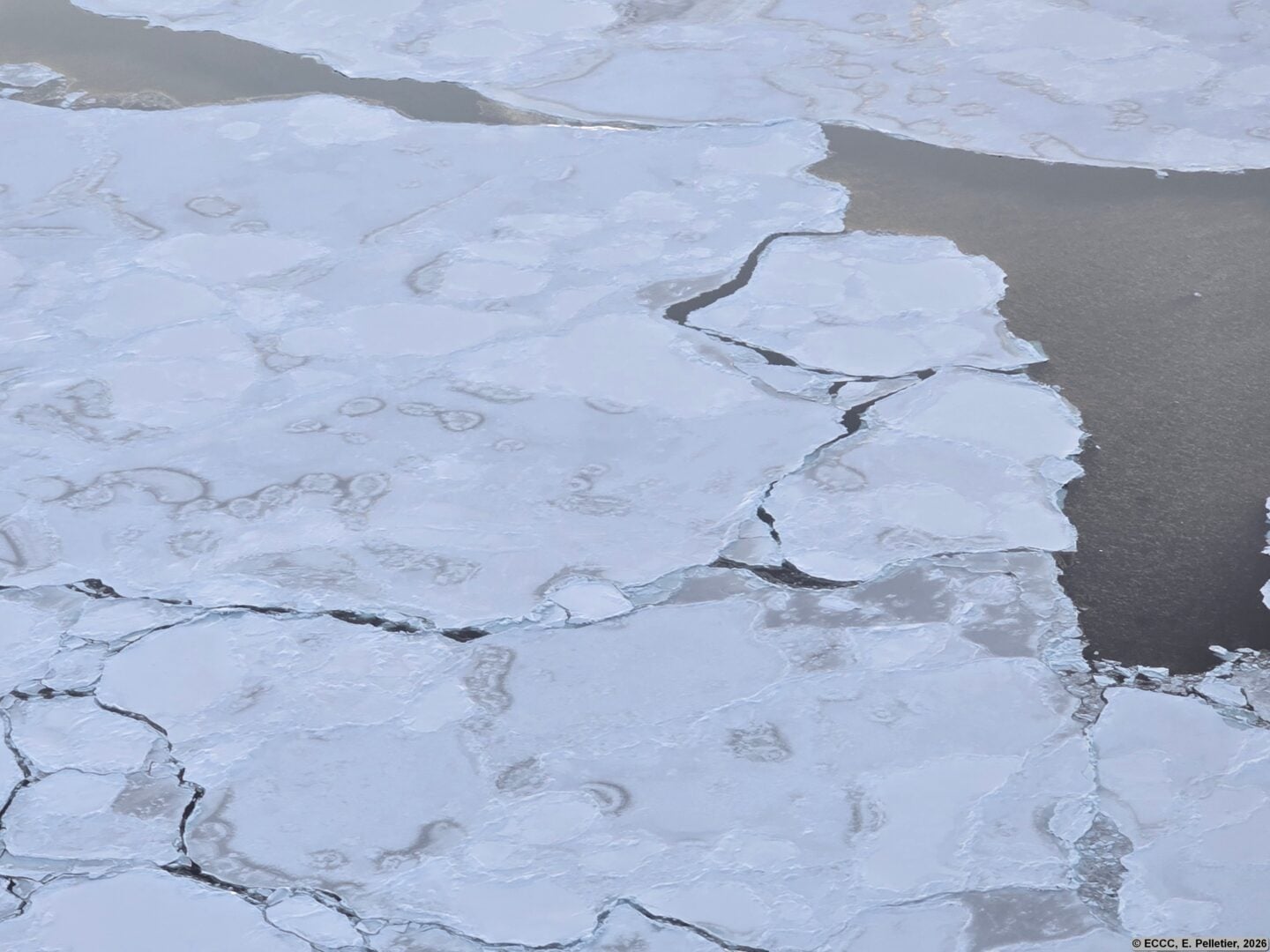
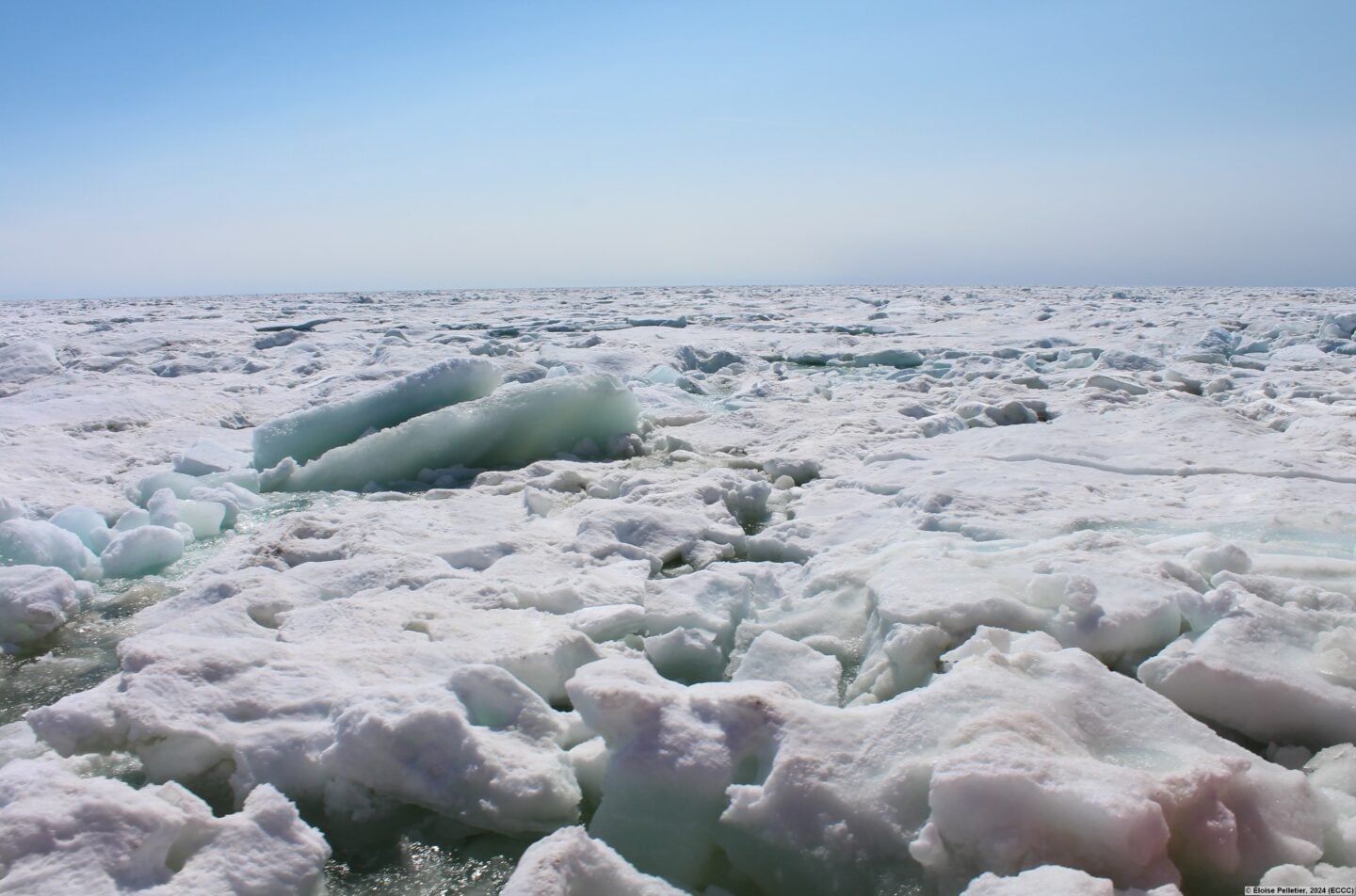
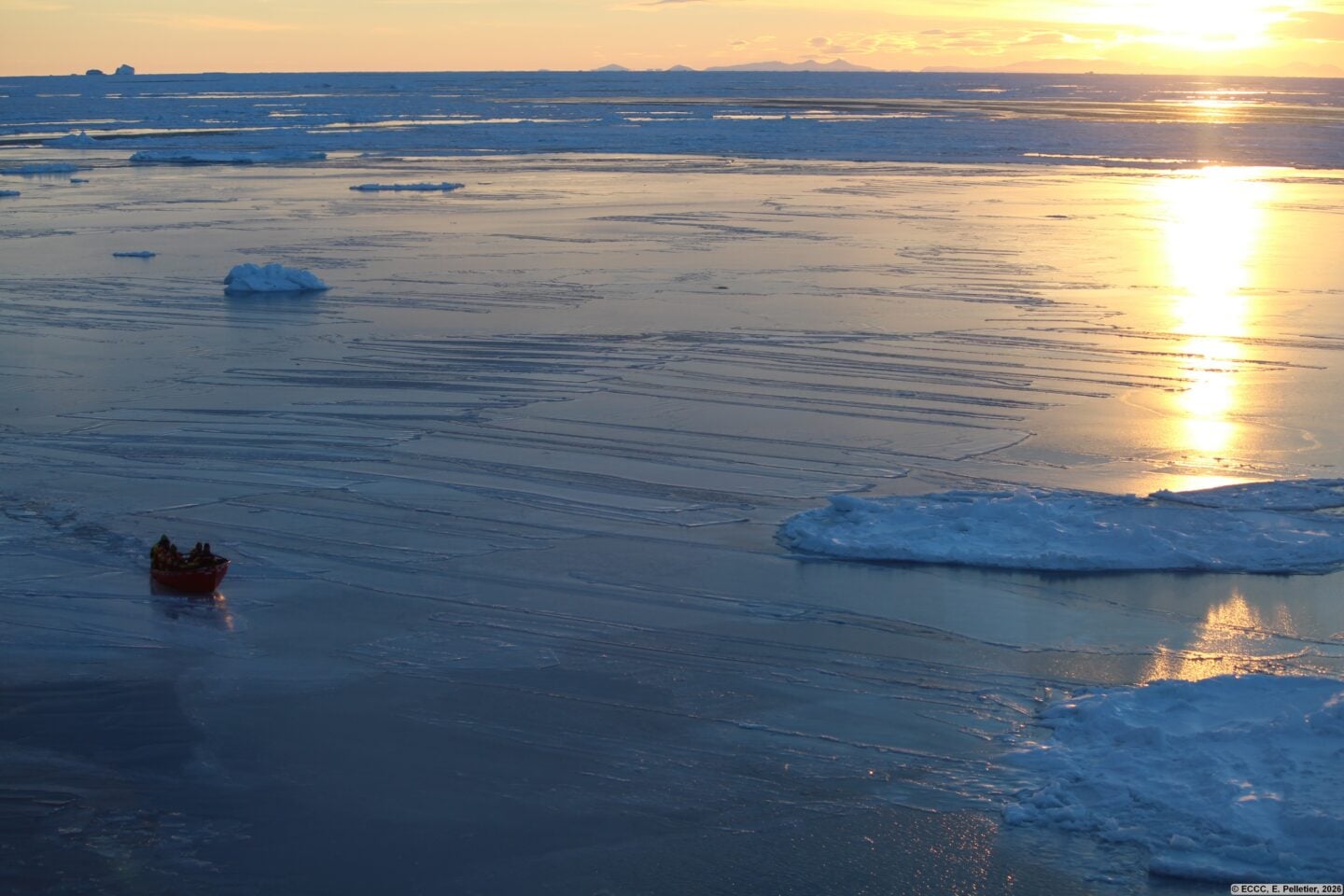
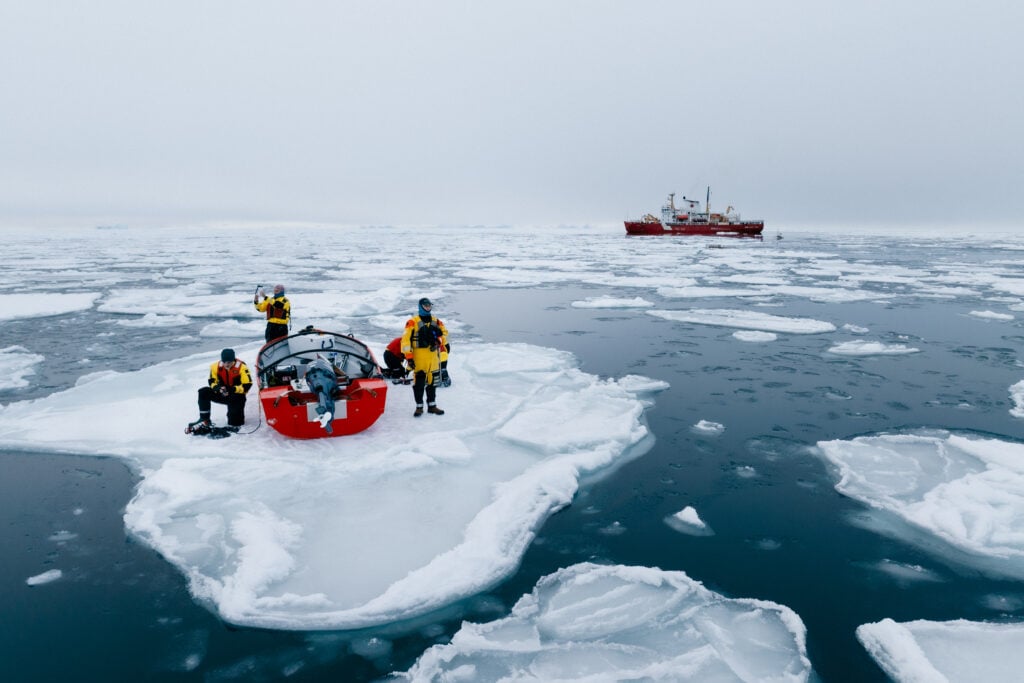
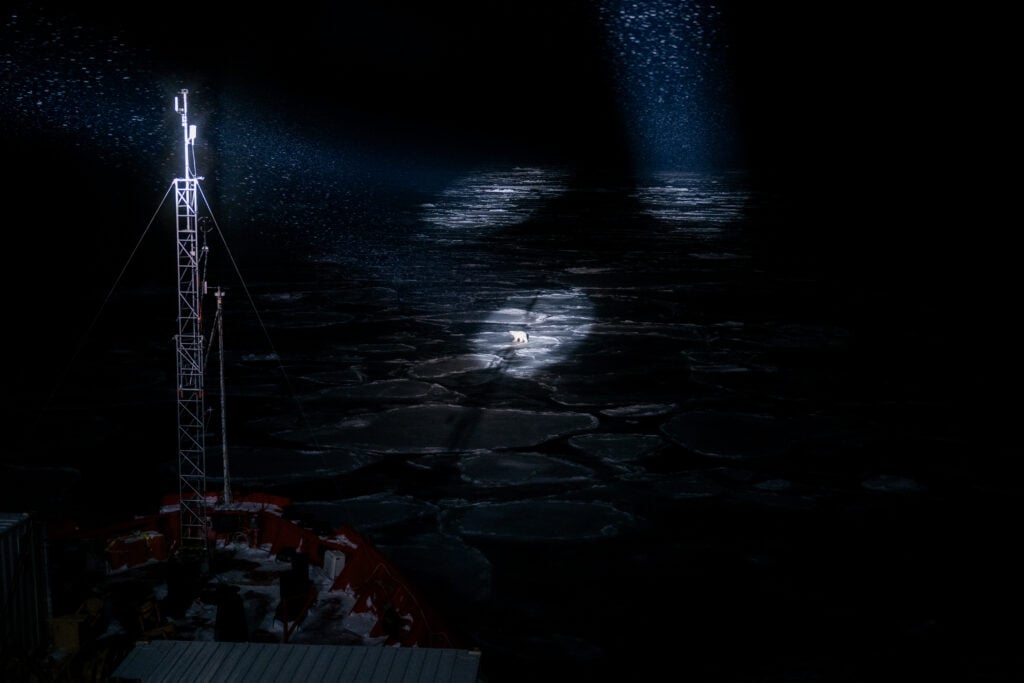
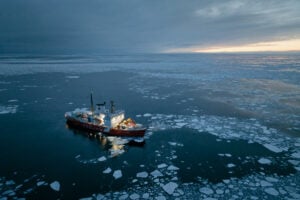
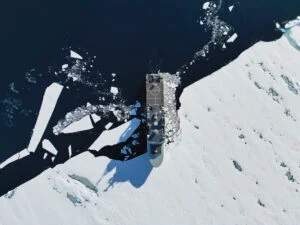
Over the next 15 days, the eight research teams onboard Amundsen will study what is called the “marginal ice zone,” an area that can be defined as where open water and ice meet. As we venture further into the ice pack, the effects of wind and waves are reduced and the ice changes from loose crystals on the water’s surface to ice floes measuring kilometres across and metres thick. As the ice changes, so does the exchange of energy between the ocean and the atmosphere. This is why we’re here.
Some on board are investigating the physical properties of ice — how it forms, moves and shears — and how ice is affected by waves in the marginal ice zone. Drones equipped with thermal cameras and specialized sensors (like LiDAR) are flown from the ship’s helicopter pad multiple times a day, while an autonomous catamaran outfitted with cameras and sensors wanders, collecting ocean, ice and atmospheric data all at once. This data will be essential for improving ice monitoring and forecasting.
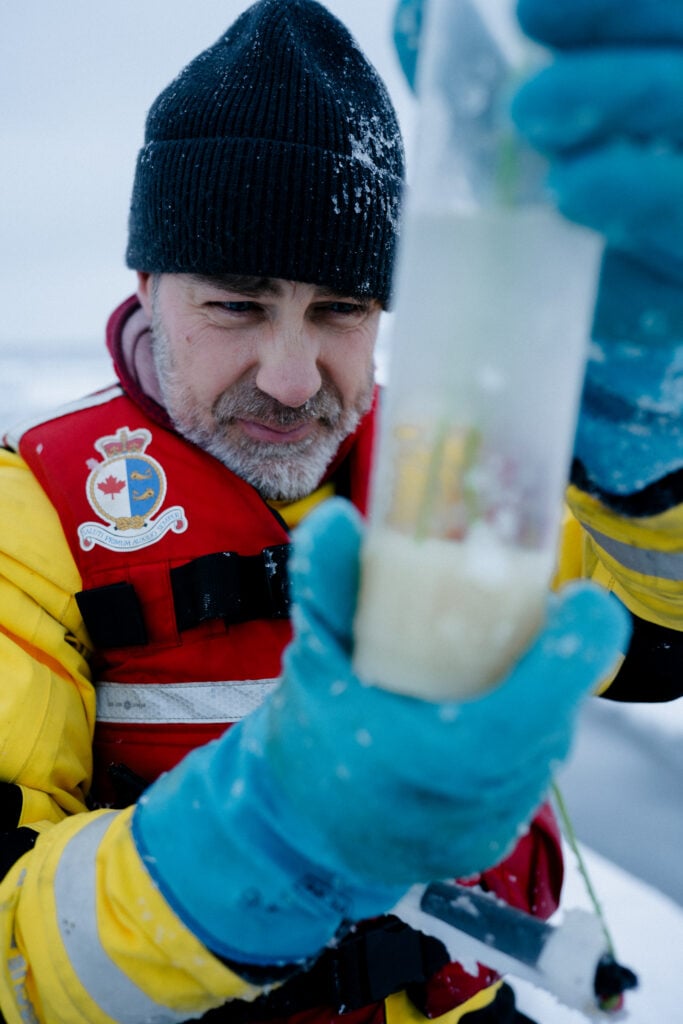
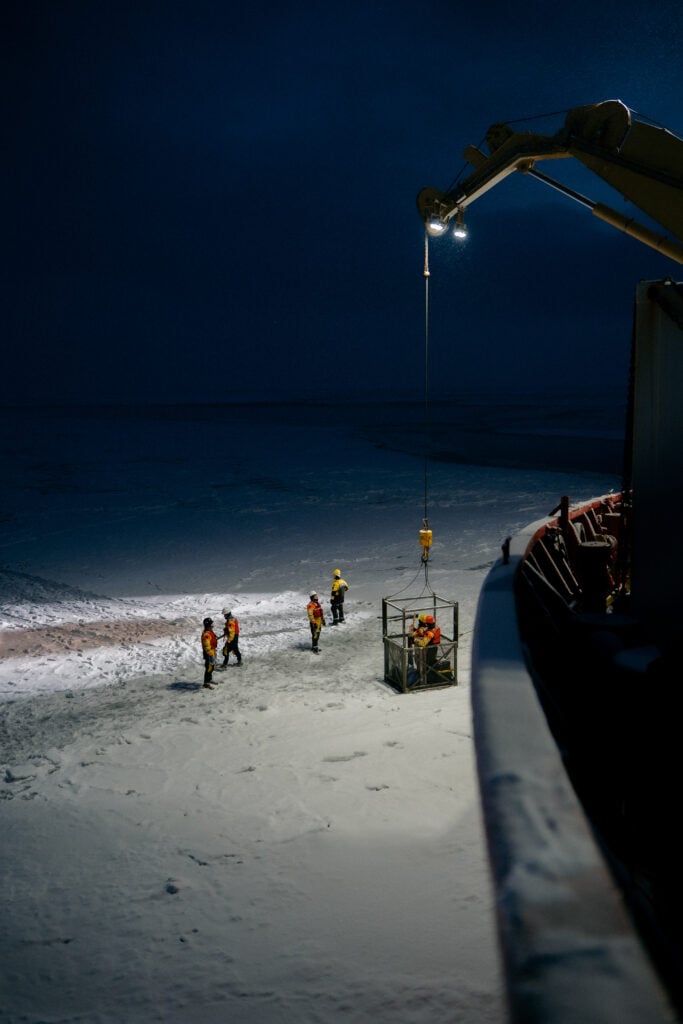
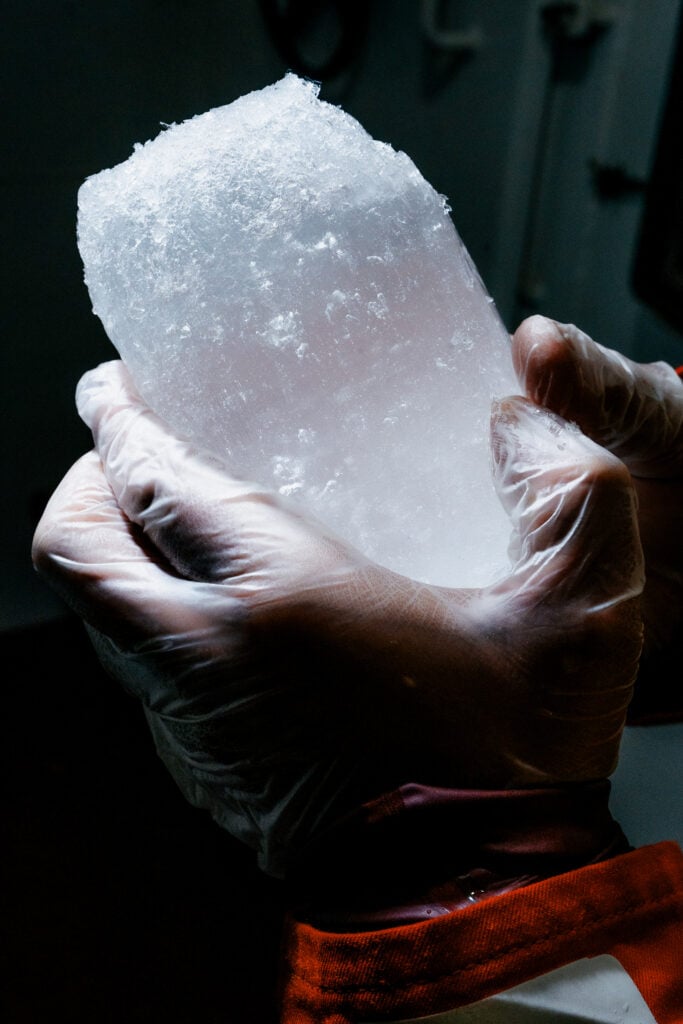
Others are interested in understanding what is inside the ice. Disembarking directly onto the ice floes, they will collect samples by drilling cores or by skimming frazil (new ice) off of the water’s surface. These samples will be brought back to Amundsen’s on-board laboratories, where the ice will be melted and tested for algae and trace metals, which are foundational to Arctic ecosystems.
That’s the plan, at least.
The ice here is dynamic, shifting and growing so quickly that you can watch it happen in real time. Everyone needs to be able to adapt their science plans, sometimes on an hourly basis. The more each team knows about the conditions, the more likely it is they will be able to do what they came here to do.
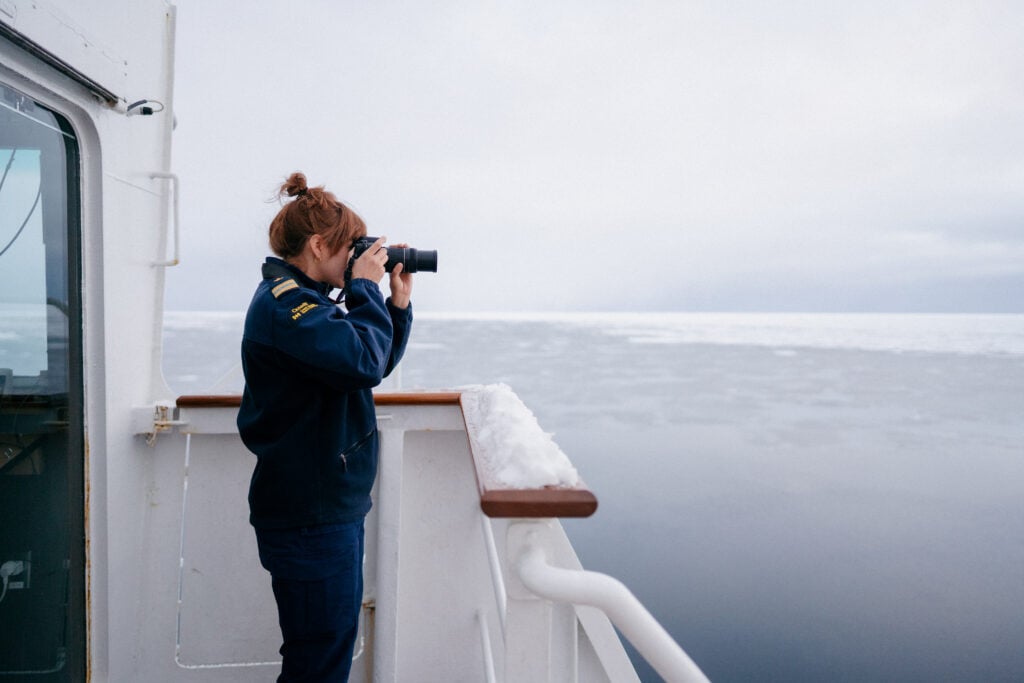
On Amundsen’s bridge, Pelletier checks the latest satellite image while preparing one of her daily briefings, which she will present to the teams later in the evening. Tomorrow is a new day here in the Arctic and we will need to be prepared for anything.