Exploration
Updates from the 2026 Heroic Age Expedition
Follow along as an international team led by the Royal Canadian Geographical Society surveys the wrecks of Quest and Terra Nova in the Labrador Sea
- 5021 words
- 21 minutes
The cod are the first sign that we’re close to the wreck. In the lights of the remotely operated vehicle, their racing-striped flanks flash silvery blue as Falcon cruises along the silty bottom of the Labrador Sea. They seem confounded by the sudden illumination of their dark ocean home; they bump into Falcon’s cameras, then dart away, guiding the vehicle through marine snow.
At the surface, in the main lab of the research vessel Atlantis, I’m sitting in anxious silence among a group of shipwreck hunters. It’s midnight, but sleep is the last thing on our minds. Our eyes are glued to a monitor displaying the live feed from the ocean floor nearly 400 metres below.
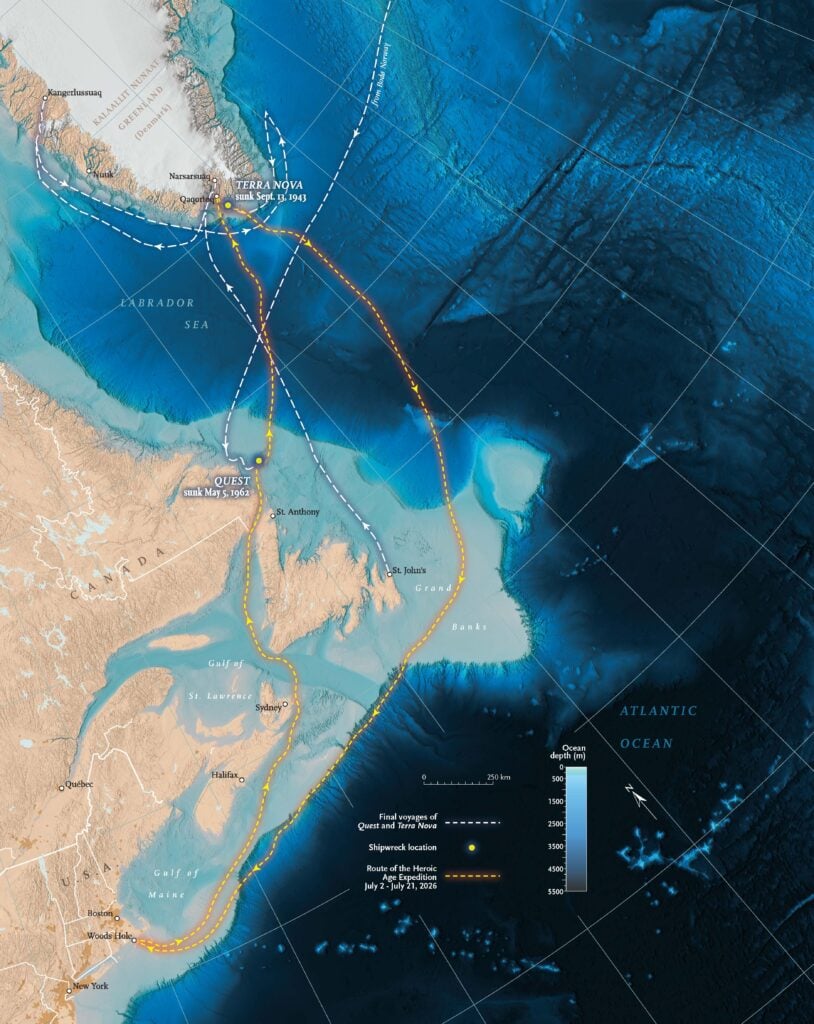
The scene feels familiar. A little over two years ago, in June 2024, we watched monitors on a different ship as it cruised slowly over this exact spot. After almost 18 agonizing hours, the sonar finally returned an echo of what we desperately wanted to find. It was Quest, a humble wooden-hulled seal-hunting ship that moonlighted as a polar exploration vessel, most famously as the final expedition ship of legendary Antarctic explorer Ernest Shackleton — the ship he died on in 1922. She sank off the Labrador coast in 1962 after being crushed by ice floes. With only the cod for company, Quest laid there, mostly forgotten, until John Geiger, CEO of the Royal Canadian Geographical Society, decided the Society should find her remains.
In the end, echoes were all we got. It was enough to identify her as Quest, but her true condition remained unknown.
Until now. Wanting more than the pixelated sonar images from the previous expedition, Geiger has spent the past two years pulling together another.
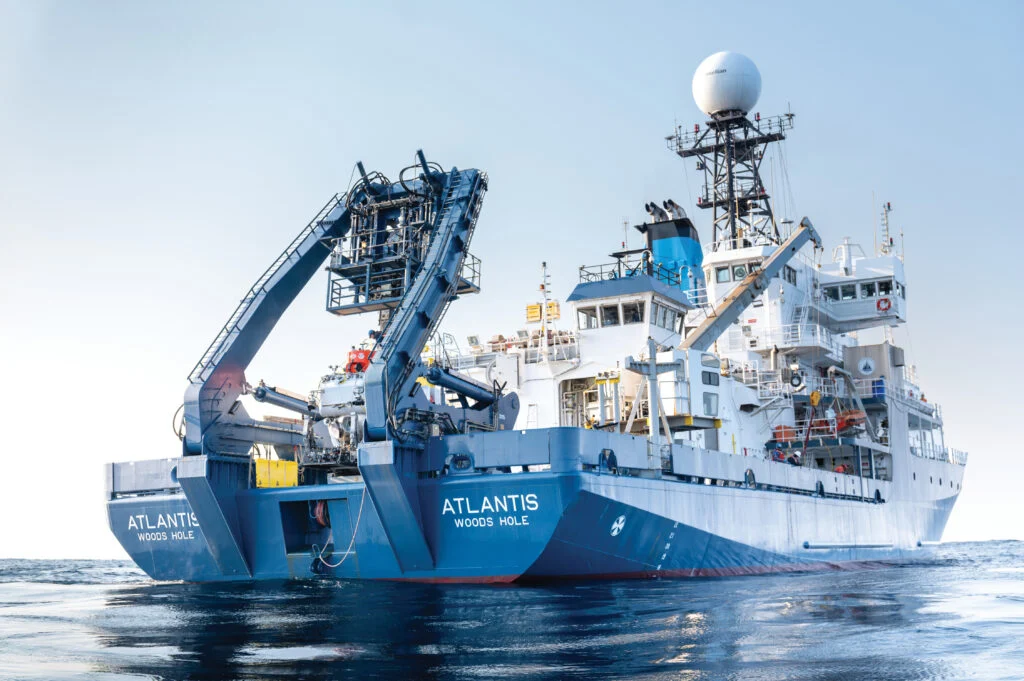
At the very least, the effort needed a remotely operated vehicle to put eyes on the wreck. Thanks to wreck hunter David Mearns, who was instrumental in the initial discovery of Quest, the Society is working alongside experts from Woods Hole Oceanographic Institution. This time, there is not only Falcon but also the world’s most famous human-occupied submersible, Alvin. Our vessel, Atlantis, is a serious science platform, owned by the U.S. navy and designed to launch Woods Hole’s fleet of deep exploration vehicles.
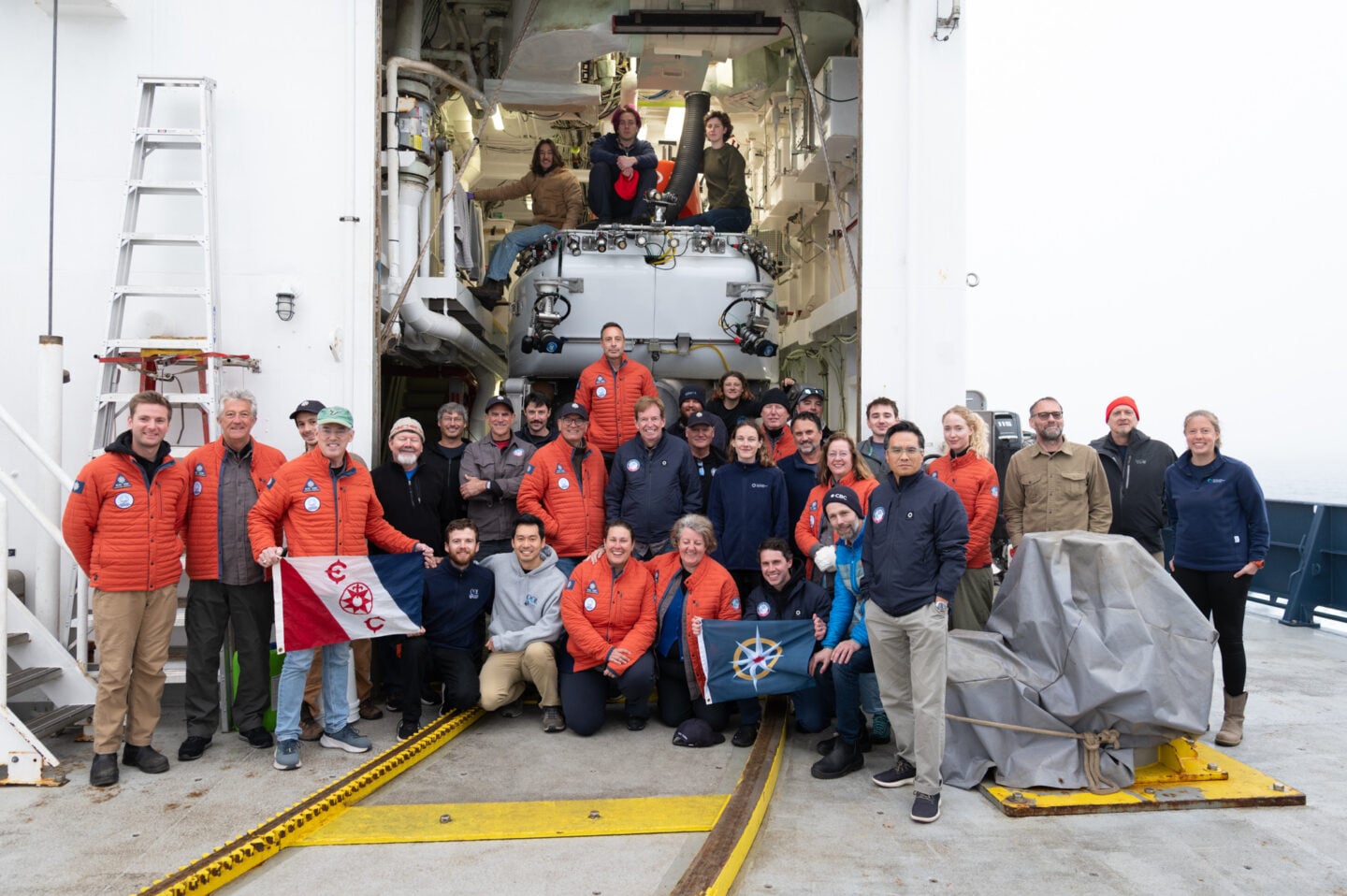
And Quest is not the only wreck that will finally get her closeup: within a two-day sail lies Terra Nova, the last ship commanded by British Antarctic explorer — and Shackleton’s greatest rival — Capt. Robert Falcon Scott. Ironically, though both ships are best known for their adventures in Antarctica, both met their end in northern waters, a testament to their past lives as sealing vessels working in the pack ice off Newfoundland and Labrador. We’re calling it the Heroic Age Expedition: a chance to revisit the triumphs and tragedies of the international race to discover the Earth’s last uncharted land while completing the first comprehensive visual and archeological survey of the wrecks.
Over the course of three weeks, Falcon will image the wrecks in exquisite detail using cutting-edge Canadian technology. The Woods Hole team will then use that imagery to create accurate 3D digital reconstructions of the wrecks. Meanwhile, Alvin will carry a series of observers to the sea floor to view the wrecks directly, capturing baseline data and ultra-high-definition video for future study and storytelling.
The return to Quest means something slightly different to each of us.
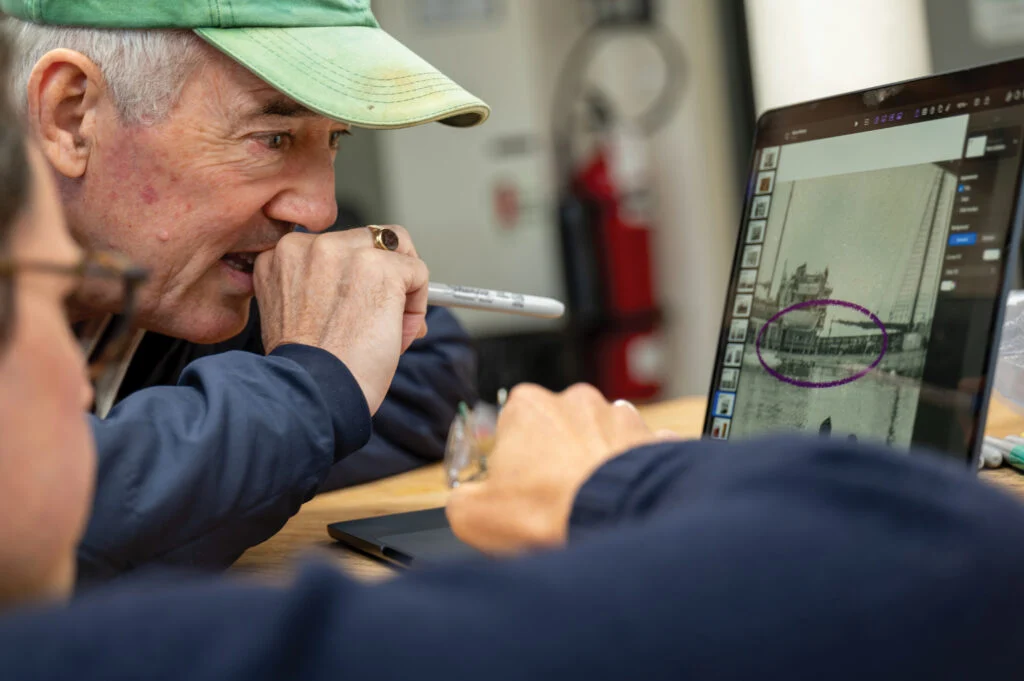
Jan Chojecki, seated behind me at a plywood-topped worktable, has a family connection to the ship — his grandfather, John Quiller Rowett, was a school chum of Shackleton’s and financed the explorer’s final expedition. A lanky Brit with a mop of silver hair, Chojecki kissed the wharf at St. Anthony, N.L., on the 2024 expedition to secure divine intervention in the search. For Geir Kløver, director of Norway’s Fram Museum, this is compelling fodder for new exhibitions on the complicated figures of early 20th-century polar exploration.
As for me, I just want to see her. Finding a shipwreck was not on my journalism career bingo card, and I knew only the most basic facts about Shackleton prior to 2024. But finding Quest fuelled my own hunger for adventure, and the stories of those who travelled on her have loomed large in my imagination ever since.
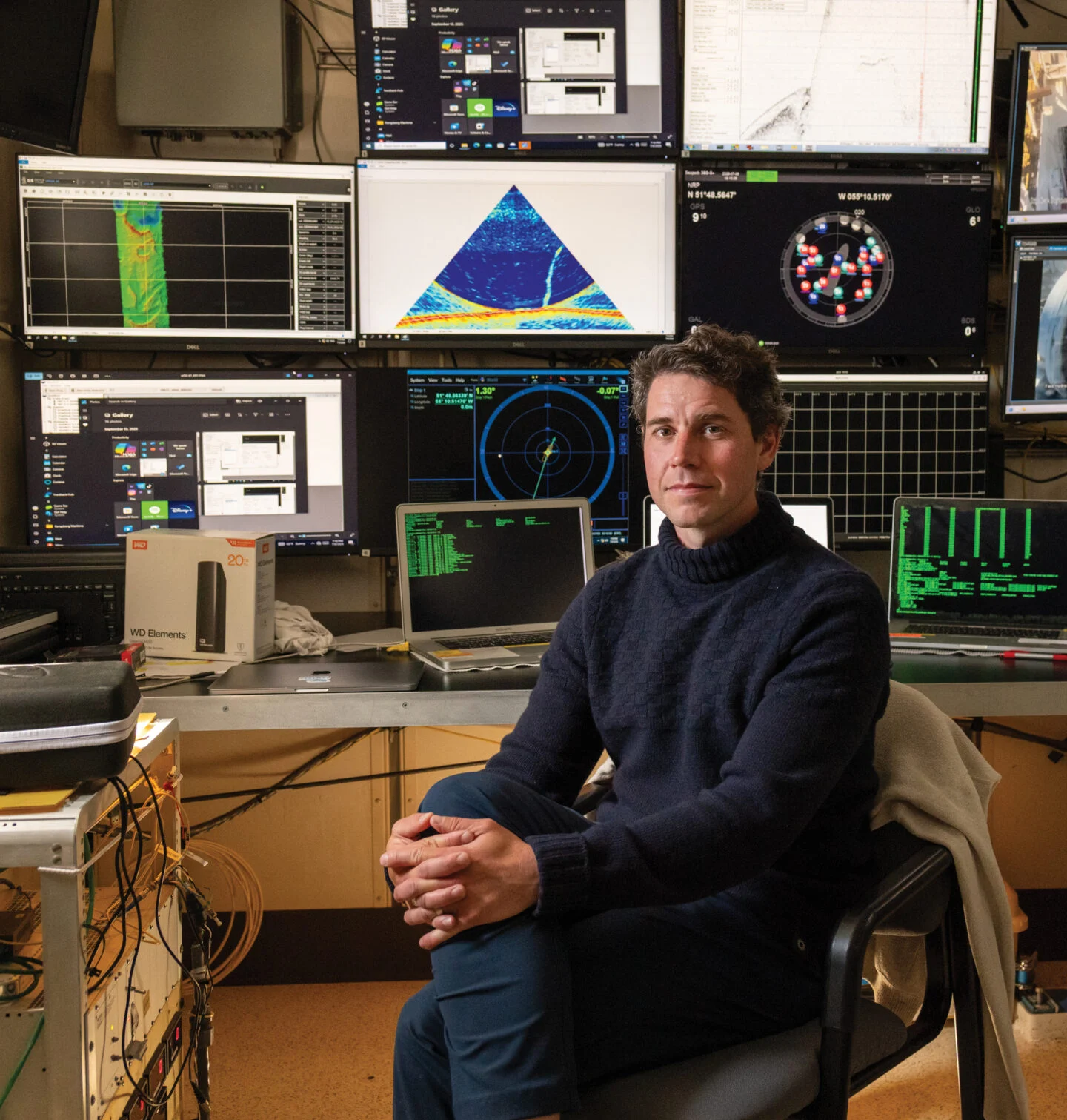
SPEEDING THROUGH the clouds of cod, Falcon encounters a piece of rope. Then a pile of rope. And then, suddenly, a huge wooden wall draped with a twisted net looms out of the darkness.
“What’s that?” I ask.
“It’s a wreck,” says Chojecki. “We found a wreck.”
“Again,” quips Kløver.
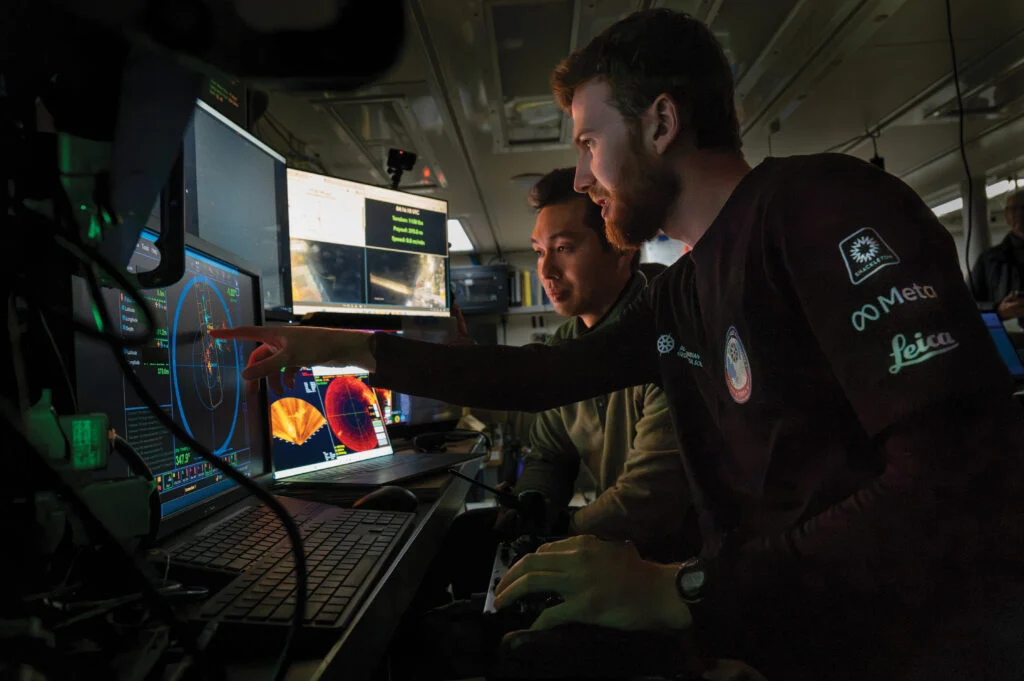
Down the hall in the darkened hydro lab, Falcon pilots Andy Robinson and James Kuo sit in front of a bank of monitors, surrounded by a small crowd of onlookers, including Mearns and Antoine Normandin, whose research and probability analysis enabled Quest’s initial discovery.
They’re joined by Kirstin Meyer-Kaiser, a benthic ecologist with the Woods Hole Oceanographic Institution who studies the biological communities that form on shipwrecks, and Danish marine archeologist Annamaiya Norling, who will assess how well these historical artifacts have held up in the harsh subsea environment.
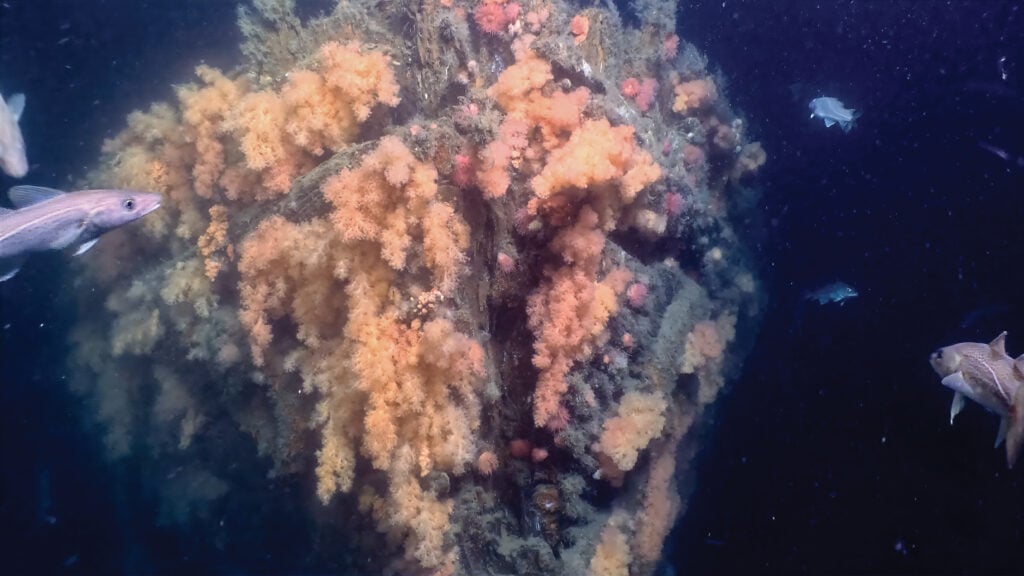
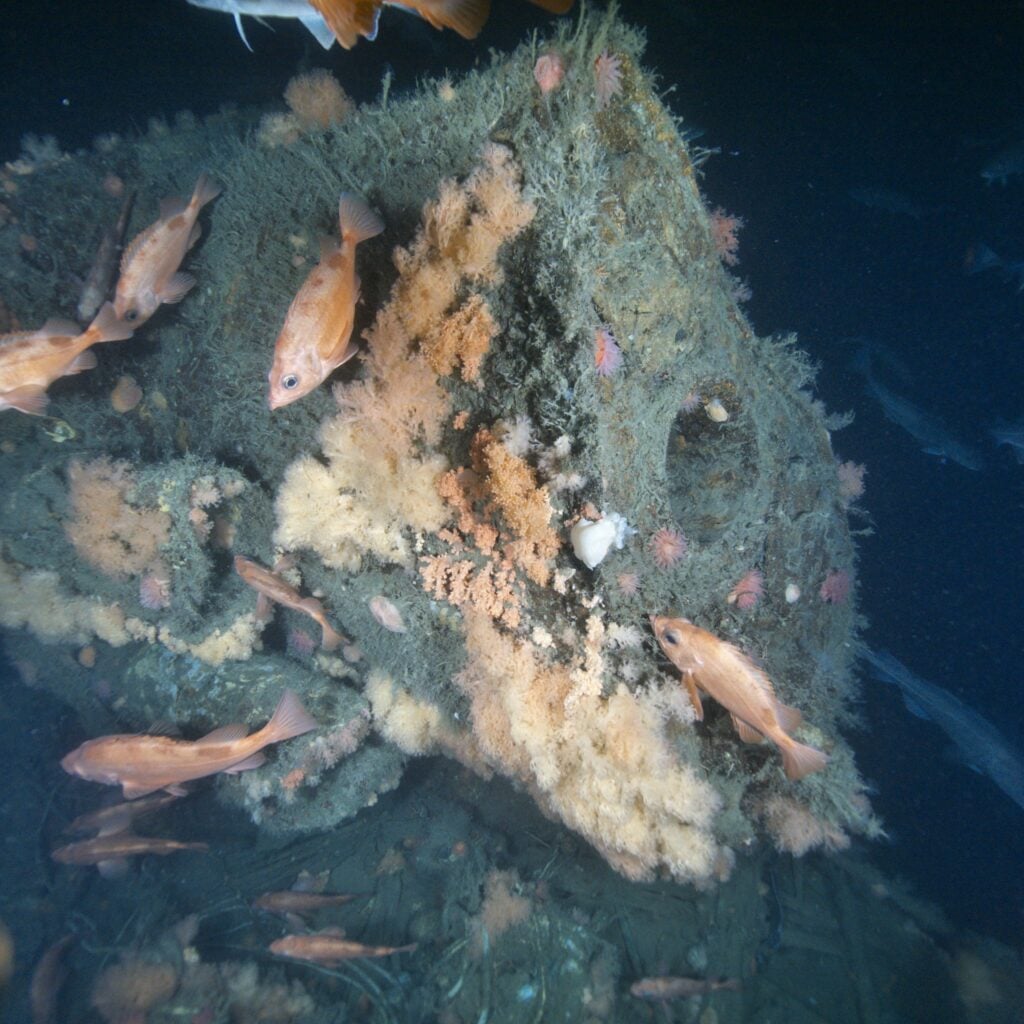
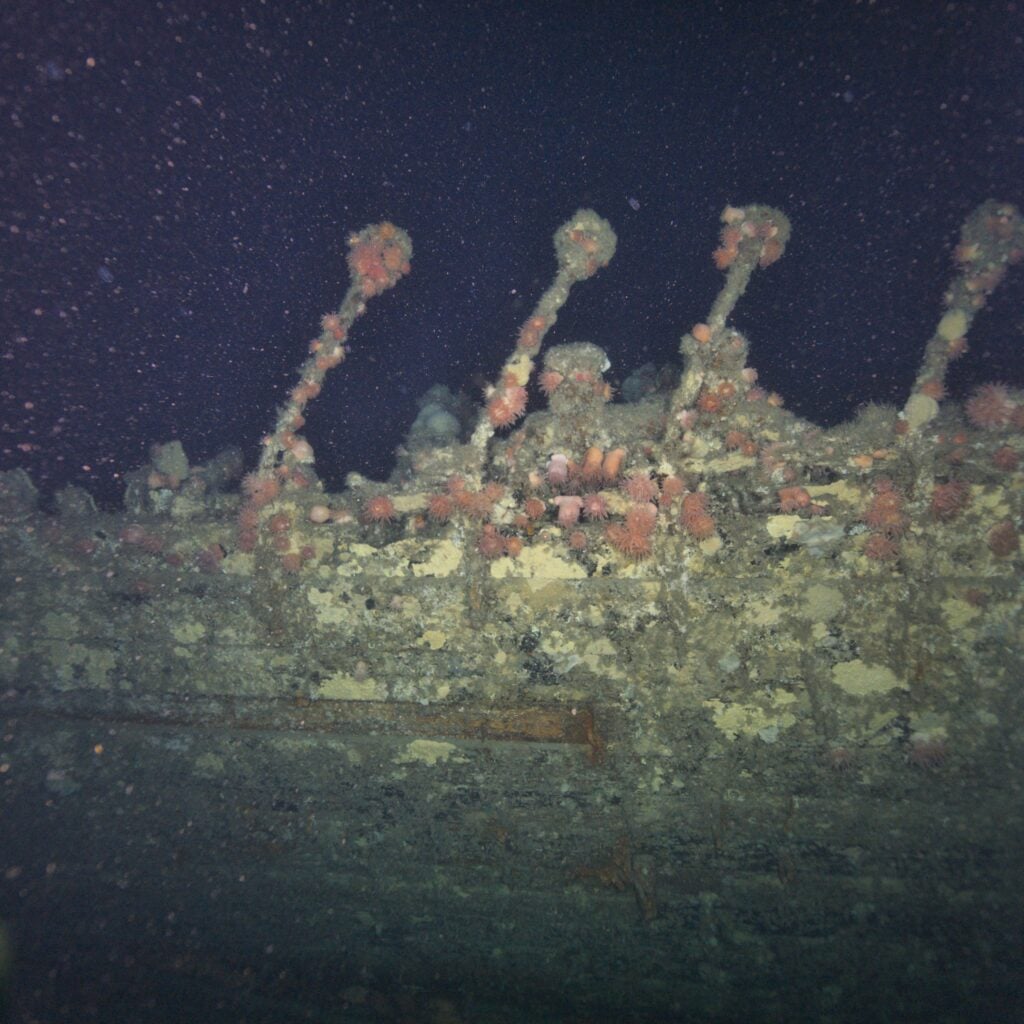
Their voices never rise above a whisper as Falcon pulls back, adjusts course and approaches what can only be the bow of Quest. It is as though she is not a ship but an altar. She is adorned with what passes, in the ocean, for flowers: pink anemones and enormous bunches of peachy soft corals sprout from the timbers of her hull and what remains of her upper decking.
A collective gasp goes up from the group as Falcon’s lights land on an aluminum structure topped with a pile of debris. The twin portholes staring blindly back at us mark it as one of the few pieces of Quest unchanged since Shackleton’s day.
As Falcon continues its reconnaissance, the excitement dims as we realize that the ship’s bridge superstructure, which once proudly bore the name Quest, is gone. The stern and more than 70 per cent of the vessel’s starboard side are buried beneath nets, likely cut from fishing vessels snagged on the wreck. More abandoned gear, including weights, floats and trawl doors, is strewn around the surrounding seabed. It’s a stark reminder of humanity’s impact on the ocean, although Quest lies in an area that has been closed to bottom trawling for nearly 25 years.
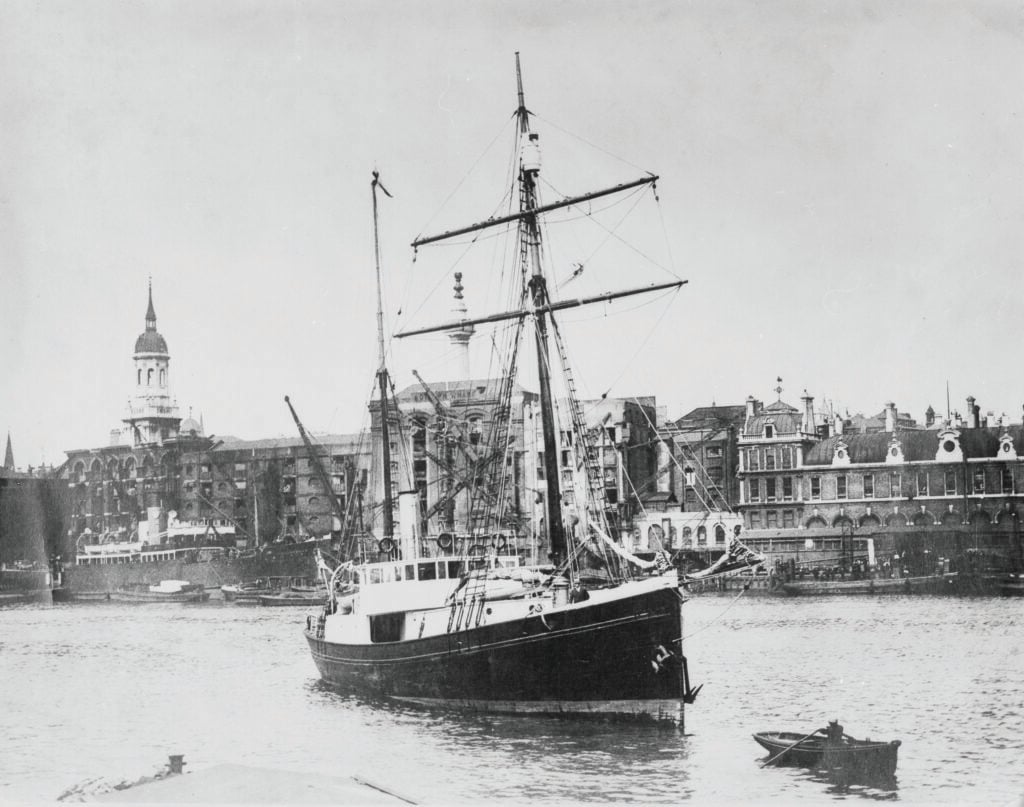
“That is what the seabed looks like in an area that has been actively fished,” says Mearns with characteristic impatience. Then he softens. “We wanted it to look like Quest,” he admits. He means Quest as Shackleton knew her, as we’ve seen her in photos and film reels, sailing proudly down the Thames to the cheers of crowds, a little ship bound on her date with destiny, not this decaying hulk smothered by nets.
Meyer-Kaiser’s undimmed enthusiasm offers a new perspective. The wreck may not be the Quest of our daydreaming, but her story is far from over. She is no longer a ship; she’s an oasis of life in the desert of the open ocean. She’s a garden, waiting to be explored.
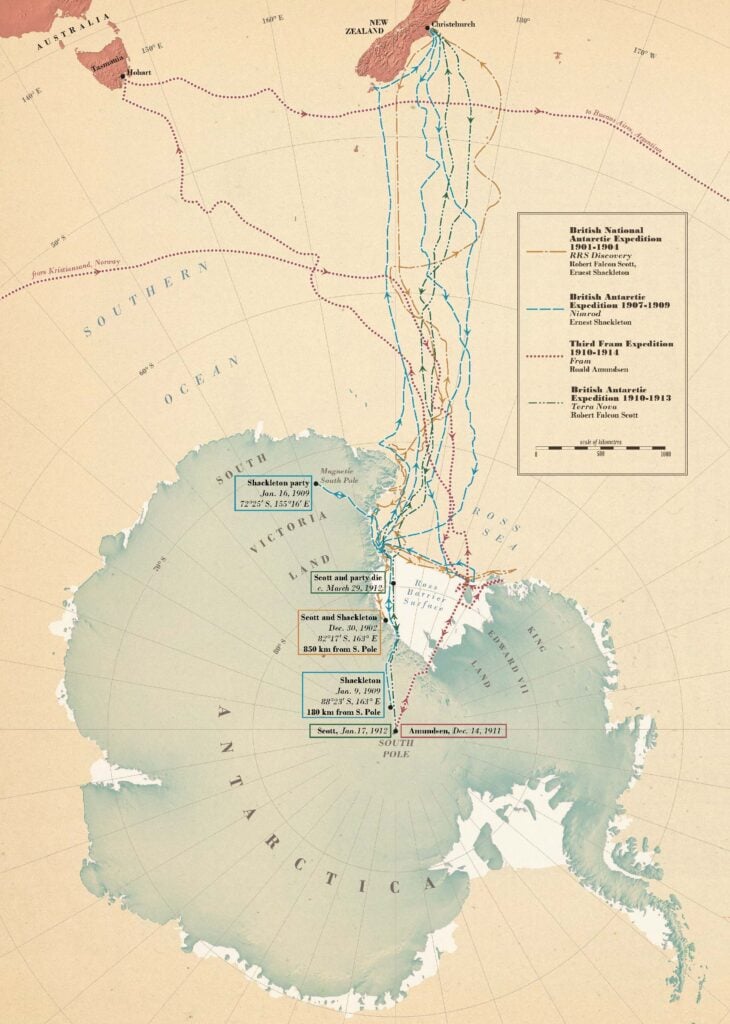
AS THE 20TH CENTURY DAWNED, reaching the poles became an obsession among European and North American explorers. The so-called Heroic Age of Antarctic Exploration was marked by a series of ambitious expeditions to explore and collect scientific data about the virtually unknown southern continent. Expedition parties travelled by steam, sail and sledge, risking their lives for the chance to make new discoveries.
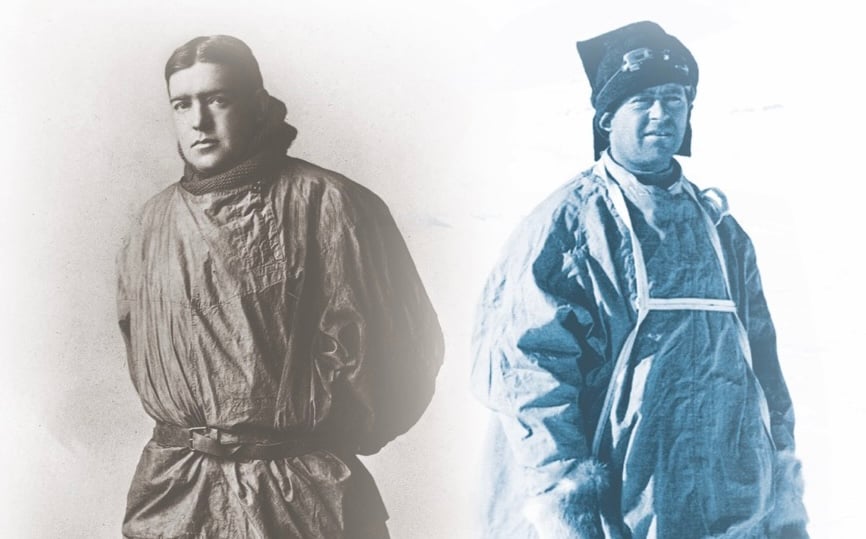
Ernest Shackleton and Robert Falcon Scott were two towering figures of the age, initially united as colleagues on Scott’s Discovery expedition of 1901-1904, but thereafter bitter rivals.
“Shackleton was a very determined and charismatic guy, and he was able to get himself in a position to be not only a member of the expedition but part of the South Polar party,” says Geiger. The three-man party, consisting of Scott, Shackleton and zoologist Edward Wilson, set a new “farthest south” record on their march to the pole, but were hampered by diminishing supplies and a lack of experience driving sled dogs. By the time they turned back, Shackleton was seriously ill with symptoms of scurvy.
Although Shackleton recovered upon their return to Discovery, Scott invalided him home early — a humiliation Shackleton never forgave.
The race to the pole was on. Shackleton attempted it again on his Nimrod expedition of 1907-1909, this time coming within 180 kilometres of the pole. With the party’s food running out, Shackleton made the difficult decision to turn back rather than risk the lives of any of his men, already demonstrating the leadership qualities for which he is celebrated today.
“Shackleton probably could have made the pole,” says Geiger, “but I doubt very much that all of them would have returned safely. So, he made the decision to put human life over glory.”
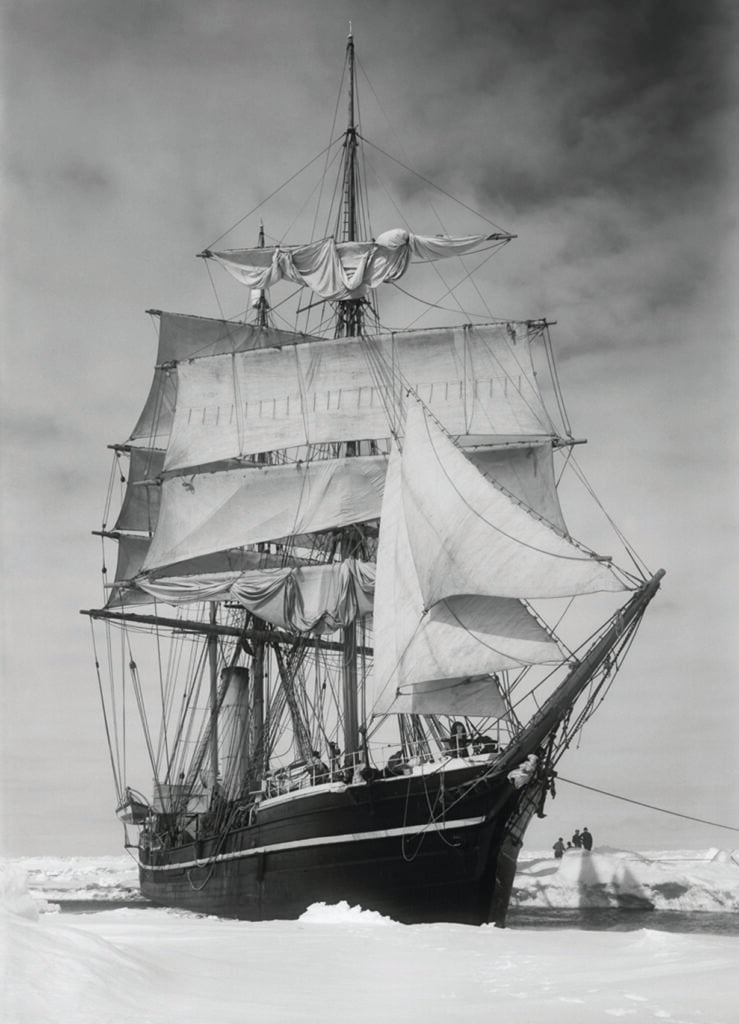
In January 1911, Scott arrived at Ross Island in Terra Nova on the expedition that would ultimately claim his life. While en route to Antarctica, Scott learned a new challenger had entered the race: Norwegian explorer Roald Amundsen, who by then had already successfully transited the Northwest Passage and was armed with valuable knowledge and skills gleaned from two winters with the Inuit on King William Island.
Scott’s party reached the pole on Jan. 17, 1912 — five weeks behind Amundsen, who marked the spot with the Norwegian flag and a small tent containing a letter for the king of Norway, with a request for Scott to deliver it.
“Imagine the blow that would be,” says Geiger. “You might think that being number two would not be a great indignity for a feat of that kind. But their morale would have been completely destroyed.”
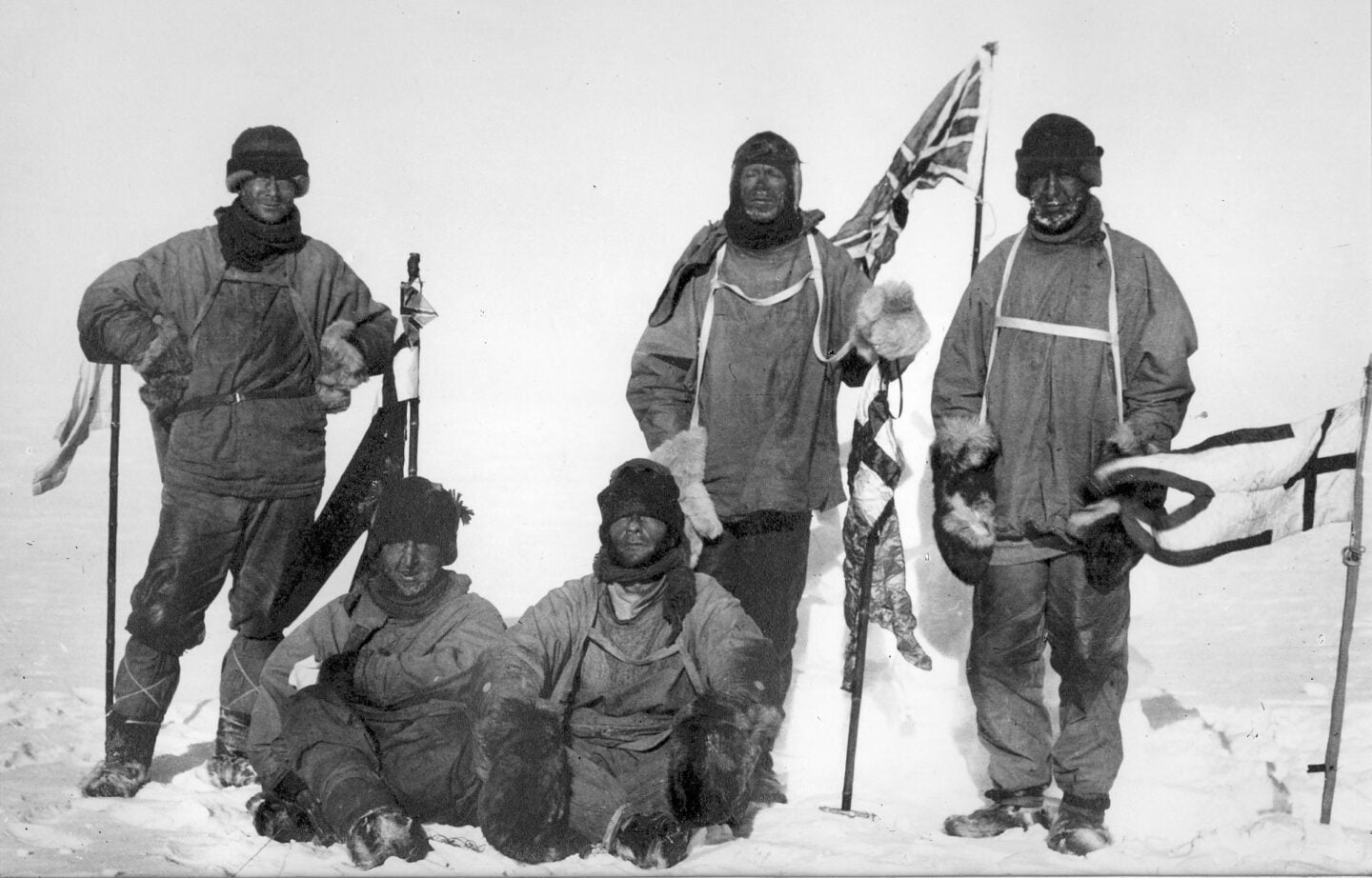
Beset by near-constant blizzard conditions on the march back to Cape Evans at Ross Island, Scott and his companions ultimately succumbed to hunger and exhaustion just 20 kilometres from their next supply depot. Terra Nova brought the news of Scott’s death to the world.
Shackleton, too, would meet his end having almost reached the place that had long held his heart and ultimately defined his life. In 1922, while en route to Antarctica on what was planned to be his final expedition, Shackleton suffered a massive heart attack and died in his cabin aboard Quest.
His death ended the Heroic Age of Antarctic Exploration. The subsequent decades were marked by rapid improvements in technology that made exploration easier, more accessible and considerably less dangerous for participants.
Later feats of exploration, such as James Cameron’s 2012 descent to the deepest point in the ocean in DEEPSEA CHALLENGER, the Artemis II lunar flyby, or even Bob Ballard’s 1986 visit to Titanic’s wreck in Alvin would be virtually inconceivable to explorers like Scott and Shackleton, says Geiger. But were they alive today, “they would be pushing boundaries; there’s no question of that.”
“They would be pushing boundaries; there’s no question of that.”
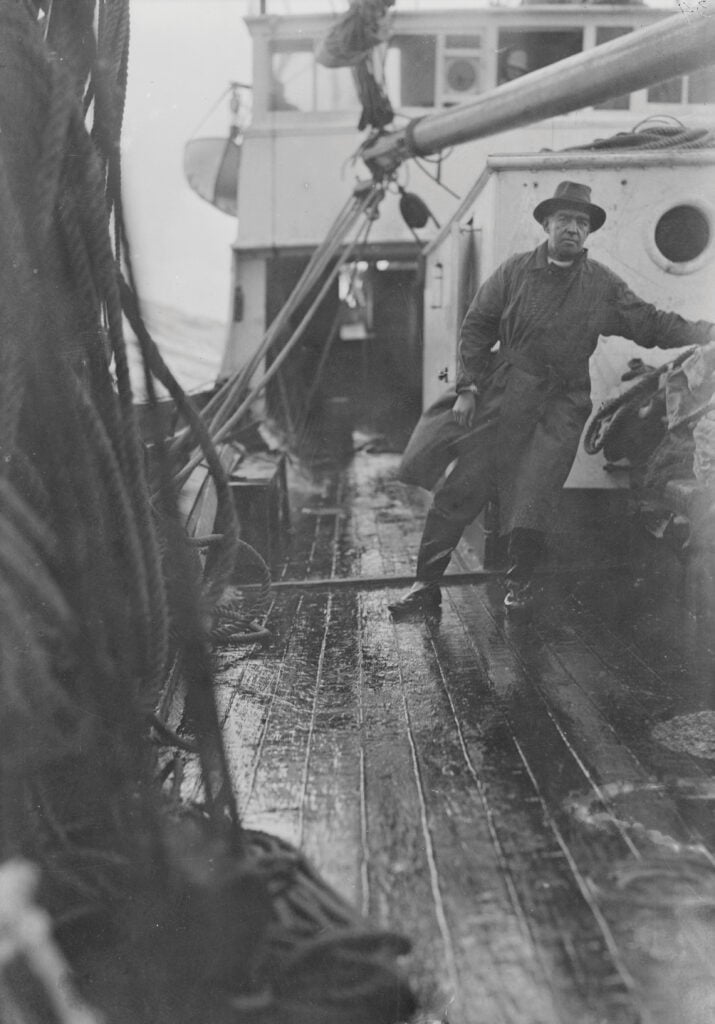
IF POLAR EXPLORERS were the astronauts of the early 20th century, ships like Quest and Terra Nova were their space shuttles.
Because of the layers of history and meaning they hold, shipwrecks can be a powerful tool for engaging an indifferent public in ocean research, says Dwight Coleman, director of ocean imaging at Woods Hole. His job is to standardize the imaging systems across his organization’s various deep-submergence vehicles, including Alvin.
“The interaction of the ship with the environment and the environment with the ship is all very interesting from an oceanographic perspective,” he says. “But from an archeological perspective and a historical perspective, studying shipwrecks [tells] a story, and that provides the human connection to our science.”
When the WHOI team was approached to partner with the Royal Canadian Geographical Society, they jumped at the opportunity to dive on two historic wrecks. “I got incredibly excited,” says Coleman, who is working as co-chief scientist alongside Mearns, ensuring that Falcon and Alvin deliver high-quality imagery and data.
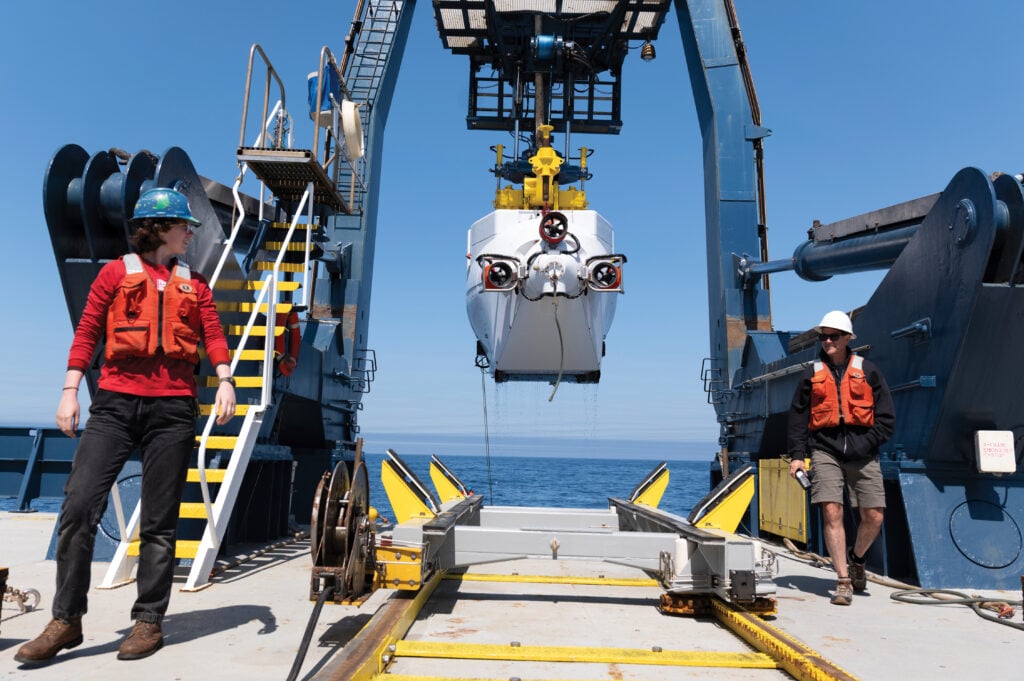
Not long after Falcon has been pulled from the water in the wee hours of the morning, a carefully choreographed routine begins on the aft deck of Atlantis, where Alvin rests in its hangar. Pilot Bruce Strickrott climbs inside the sub and begins a series of checks to ensure all navigation, communication and life support systems are functioning as expected. Outside, the Alvin ops team runs through a similar assessment of the sub’s batteries, thrusters, manipulator arms and ballast tanks.
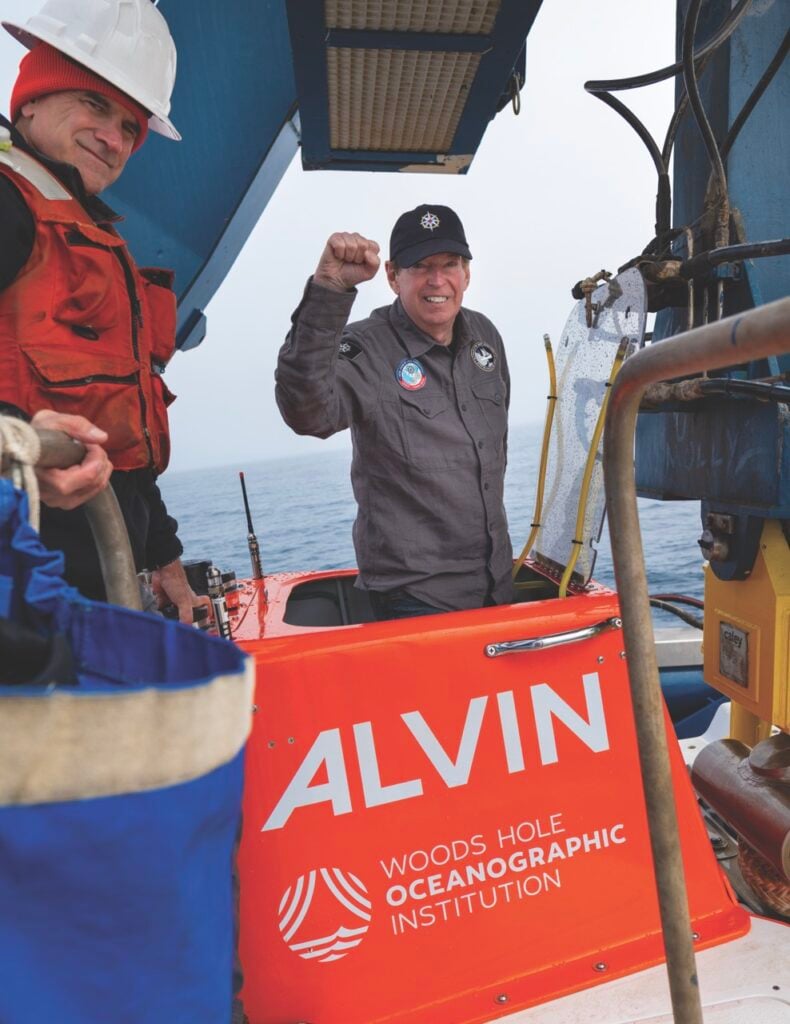
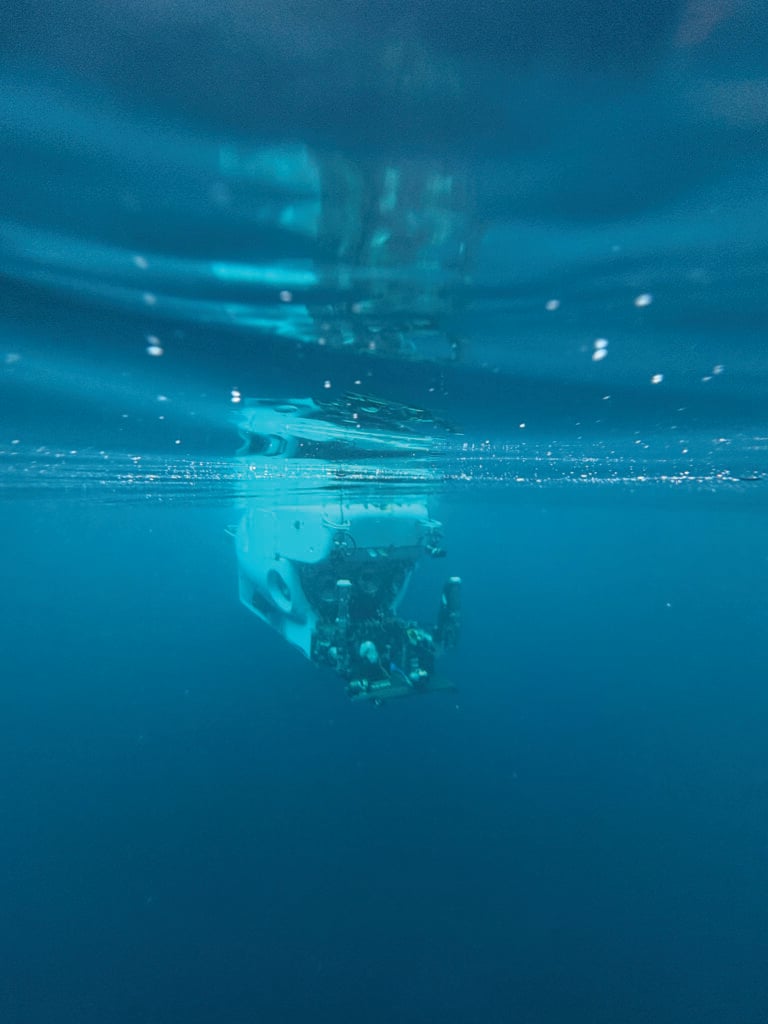
By the time the RCGS team assembles on deck after breakfast to see off our first divers, Alvin has been rolled out beneath Atlantis’s enormous A-frame. Its gleaming white hull envelopes a machine that would be utterly incomprehensible to Scott and Shackleton: a human-occupied submersible capable of carrying a pilot and two observers to depths of 6,500 metres and staying submerged for up to 10 hours.
Since it was commissioned in 1964, Alvin has explored hydrothermal vent fields, discovered new deep-living species and dived to the wreck of Titanic.
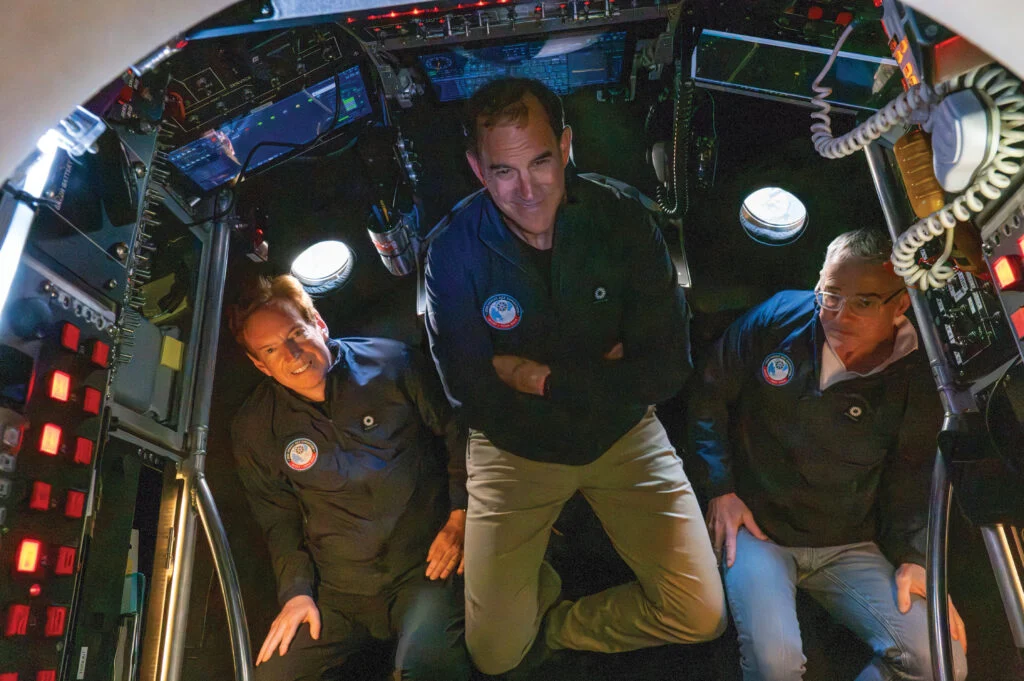
Moments from now, it will make history again by carrying the first humans — Strickrott, Geiger and chief mission specialist Mark Pathy — to the wreck of Quest.
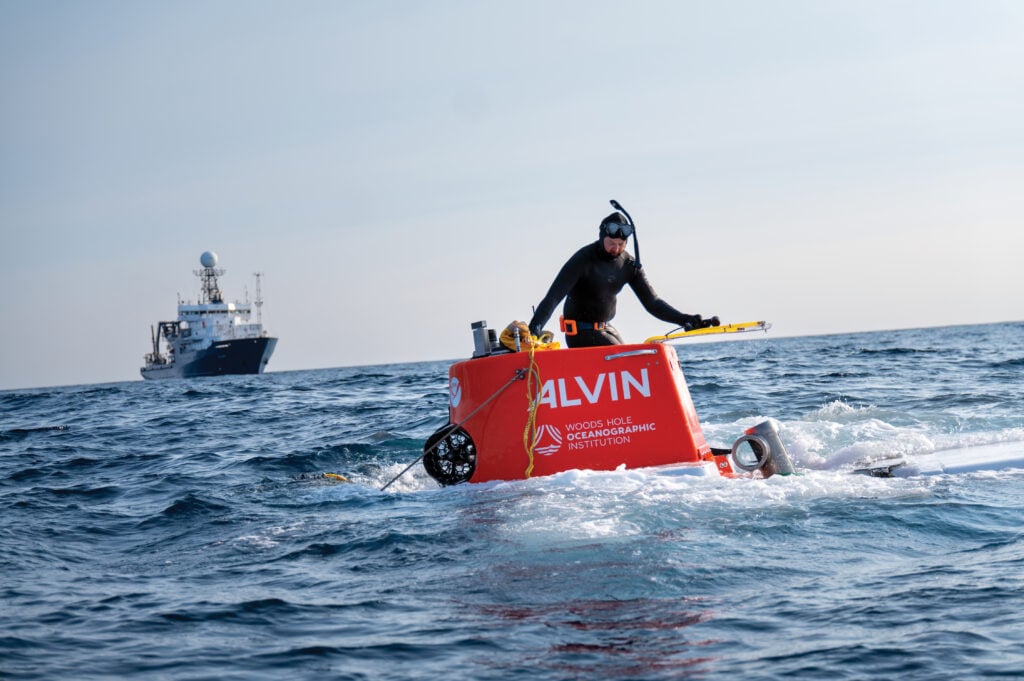
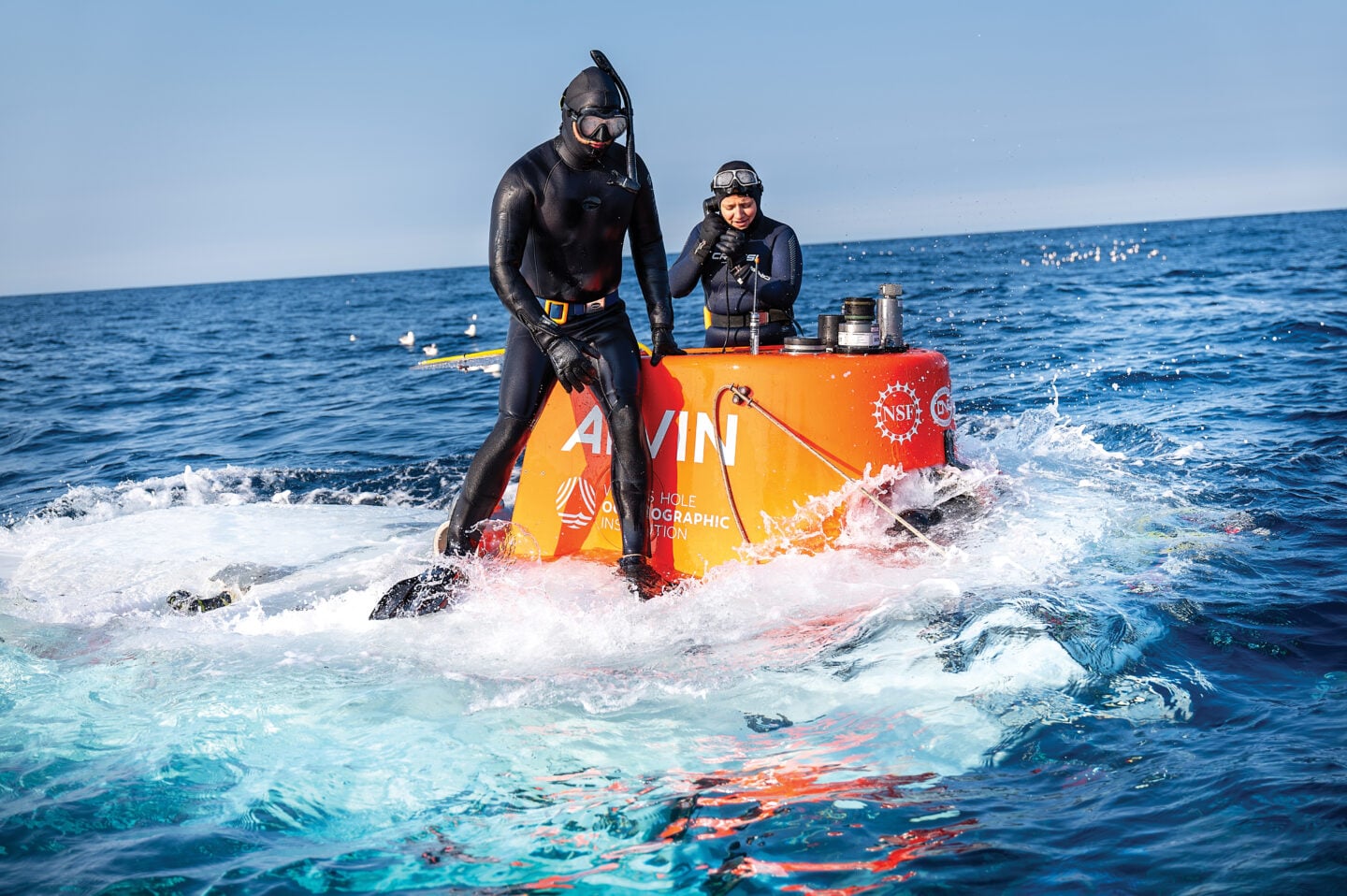
“Swimmers” Molly Smith and Wren Sakai — Atlantis’s chief mate and an Alvin pilot-in-training, respectively — wear thick, full-body wetsuits to protect against the frigid North Atlantic water.
Gripping rails attached to Alvin’s distinctive orange sail, they ride along as the A-frame lowers it into the swell. Their job is to unhook the ropes tethering the sub to the ship and, with the pilot’s go-ahead, seal the hatch and open the vent valves that will expel air and allow Alvin to sink.
(Over the course of the expedition, the rotating cast of swimmers become celebrities around Atlantis; after our first dives on Terra Nova, someone scrawls a message on the whiteboard in the galley: “Have you loved your swimmer today?”)
Strickrott, an Alvin veteran of almost 30 years, has given each prospective diver a thorough safety briefing. At 61, tanned and muscular, with barely a hint of grey in his short black hair, he exudes the serene confidence of an astronaut as he walks us through the list of rules for observers: No personal phones or cameras. No perfume. No polyester clothing — natural fibres only, in case of fire. And most importantly: pee before you go.
Getting a closer look at specific features of Quest’s wreck, as well as several targets identified on the sonar images from 2024, is the team’s first goal. Mearns is particularly interested in finding the “plunge point,” where Quest first slipped beneath the waves and where she likely shed loose items. The ultimate find would be her bell, which we have permission from the Newfoundland and Labrador government to recover.
Our job as observers is to control Alvin’s external cameras and log interesting sights for further review. But Strickrott also advises us, as first-time divers, to try to be present in the moment. “You are going to have an experience you will remember for the rest of your life,” he says. “Really enjoy the view out there.”
That advice rings in my ears as I walk out to the working deck for my turn in Alvin, on our second afternoon at the Quest site. I’ve dressed for the occasion in a set of wool long johns and a grey knit toque. In my hand is a cotton pillowcase containing a copy of the November/December 2024 issue of Canadian Geographic with Quest on the cover, a replica of Shackleton’s sledging flag, a couple of expedition patches and a package of Skittles for my six-year-old.
I’m not nervous at all; in fact, I’m having a hard time believing this is real life, even as I exchange hugs with Geiger and Chojecki, my fellow observer, and climb the stairs to the loading bridge.
Grinning from ear to ear, Chojecki and I assume our places inside Alvin’s snug titanium sphere, kneeling on flat cushions on either side of pilot Rick Sanger. Sanger opens a gauge on one of a dozen tanks to start the flow of oxygen into the sphere. This will be his 82nd dive, and Alvin’s 5,358th.
The A-frame lifts Alvin off the deck and out over the water. Then, like lurching over the first hill of a roller coaster, we plunge into the sea. Tiny organisms resembling winged peppercorns, which I later learn are a type of free-swimming pelagic snail, bob past my viewport as the swimmers unhitch us. Final checks completed, Sanger radios Atlantis and requests permission to dive.
We descend. In the aquamarine murk of the twilight zone, I spot glittering comb jellies and the odd siphonophore, which resemble spiralling strands of translucent gemstones and are not one organism but a colony.
Light disappears at 230 metres. In less than 20 minutes, we are on the bottom among the cod. Sanger narrates their inner monologue: “This is our wreck. Get your own wreck!”
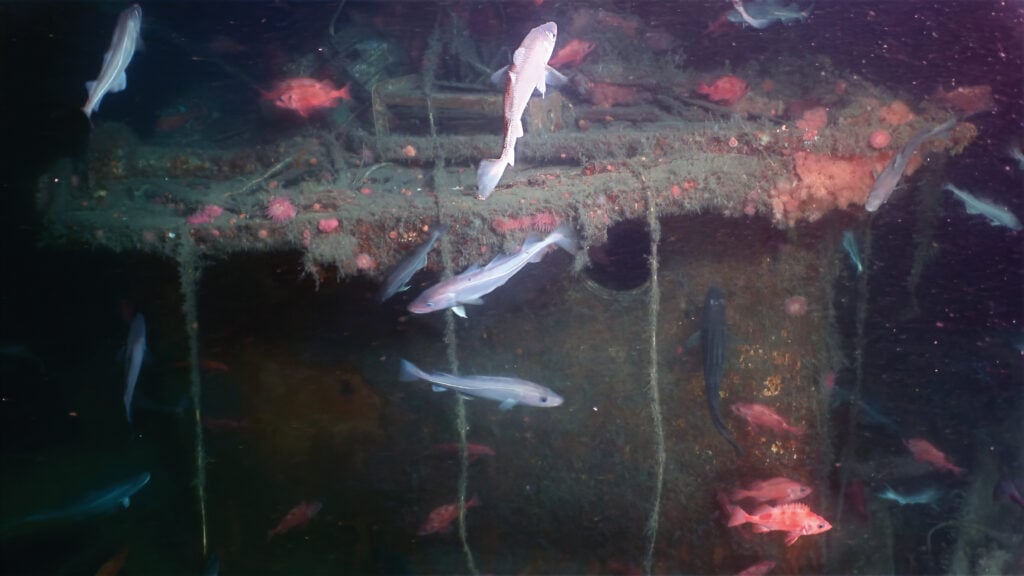
The bow comes into view, a biological riot. Alvin’s thrusters keep up a steady, inhuman whine as Sanger flies up over the port side, battling the current, and brings us to rest on the gunwale. My eyes are almost level with the rotting timbers, close enough to touch through the thick plexiglass I’m fogging up with my eager breath. I look toward the aluminum “house” with its empty portholes, and try to imagine Shackleton striding confidently about the deck, but the view is too alien, the experience itself too overwhelming, to allow for romantic daydreams. I have to periodically remind myself that I am actually on the ocean’s bottom.
On his dive with Sanger earlier in the day, Normandin observed it was like peering into an aquarium.
“No,” Sanger reminded him, “you’re in the aquarium.”
All too soon, it is time to drop weights and return to the sunlight world.
The following day dawns stormy, and the Alvin dives are cancelled, to everyone’s disappointment. I spend the afternoon reviewing the footage from my dive. Strangely, it is here, in a dim corner of the main lab that echoes with the booming of the waves on Atlantis’s hull, that I feel Shackleton’s presence.
Lulled by the pitching of the ship, my mind wanders the span of a century and reconstructs the Quest I’ve seen in countless photos. There is the deck where an impatient Shackleton bathed the expedition’s mascot, a German shepherd named Query. There is the “house” that once bore a brass plaque engraved with three verses from one of Shack’s favourite poems, Rudyard Kipling’s “If—.” The poem consists of a father’s advice to his son, or that of a leader to an acolyte. For Shackleton, perhaps, it was a daily reminder to look for the hero within.
I wave Normandin over from the table where he is busy poring over Terra Nova’s deck plans and point out an oxidized brass doorknob and latch plate lying near the splintered remains of what was presumably a door. “She’s a mess, but she’s our mess,” he says, with something like love.
Two days later, after five Alvin dives and three consecutive nights of operations with Falcon, it is time to move on from Quest. We haven’t turned up any evidence of the plunge point or the large debris we hoped to find, including a lifeboat visible in photos of the ship’s final moments. There is no sign of her masts or bell. Still, we’ve achieved our primary objective: to digitally preserve Quest as she appears today. The ocean will continue to do what it does, slowly but surely breaking her down, but she will live on, inspiring a new generation of scientists and would-be explorers.
As Atlantis steams north away from Quest, relief settles over the ship. The weather, too, has lightened up. Under a cool blue sky streaked with cirrus clouds, a few of us, including Geiger and Normandin, sprawl between the ribs of the bow, reading, journalling and chatting. But for the smartphones, our modern clothing and the absence of hand-rolled cigarettes or pipes, it could be a scene from any of the sea voyages of Quest or Terra Nova.
“We finished the job,” Geiger reflects. “Ever since the discovery, I’ve felt like it was half done.”
“Onward and downward,” Normandin replies.
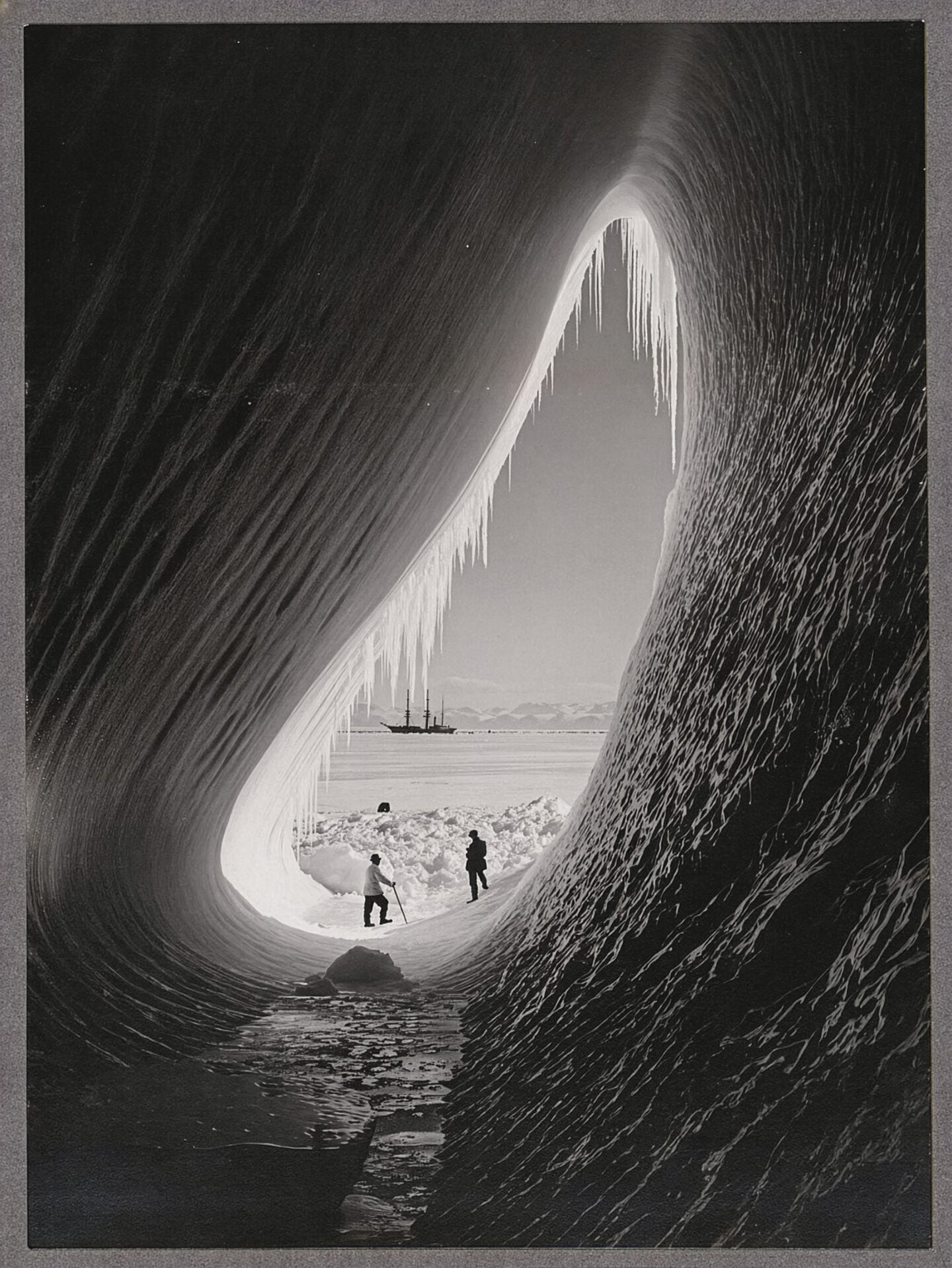
TERRA NOVA’S FINAL moments were punctuated by gunfire. The exact details are a little murky, but what is known is that in September 1943, Terra Nova had just wrapped up a supply run to Allied bases in Greenland and was beginning the long journey back to St. John’s, where she was based.
Earlier in the summer, she had been badly damaged by ice in heavy seas and sailed to what is now the town of Qaqortoq. With no dry dock available, a diver did what he could to repair the hull beneath the waterline with a caulking gun and tarpaulin, but Terra Nova didn’t get far. On the evening of Sept. 12, with the vessel taking on water, her defeated captain gave the order to send a distress call.
The U.S. Coast Guard cutter Atak responded and rescued the crew. Early the next morning, according to Atak’s log, Terra Nova “burst into flames.”
Exactly how the fire started is not clear; a different document claims Terra Nova’s own captain set the fire deliberately to scuttle her, though crew accounts dispute this. Either way, with the “burning hulk” now adrift and at risk of becoming a navigational hazard, Atak finished her off with 22 rounds from a three-inch gun.
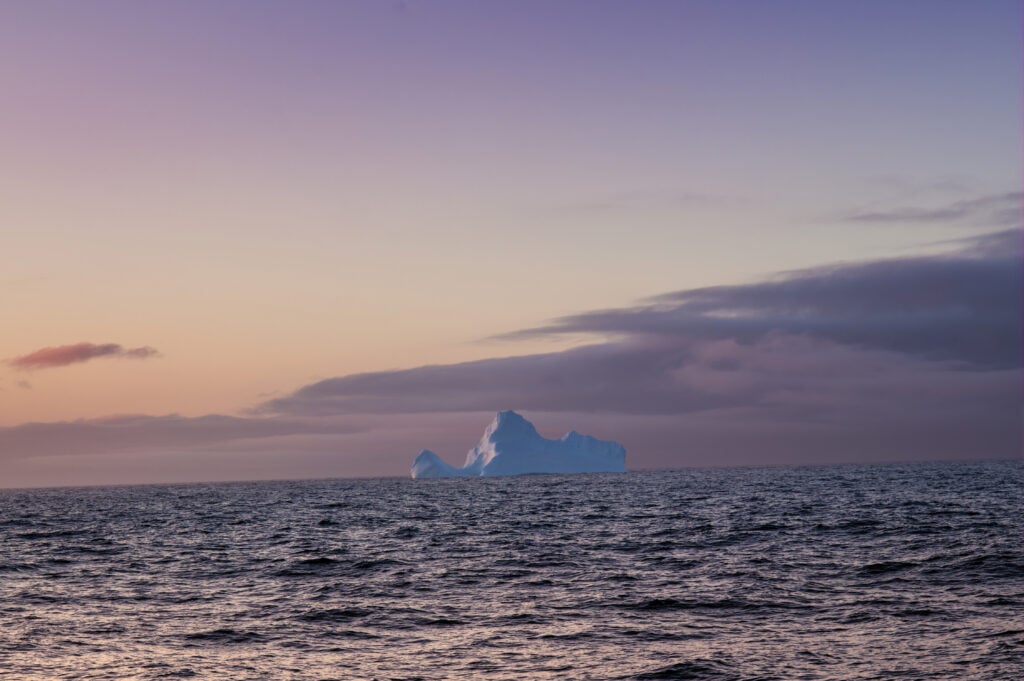
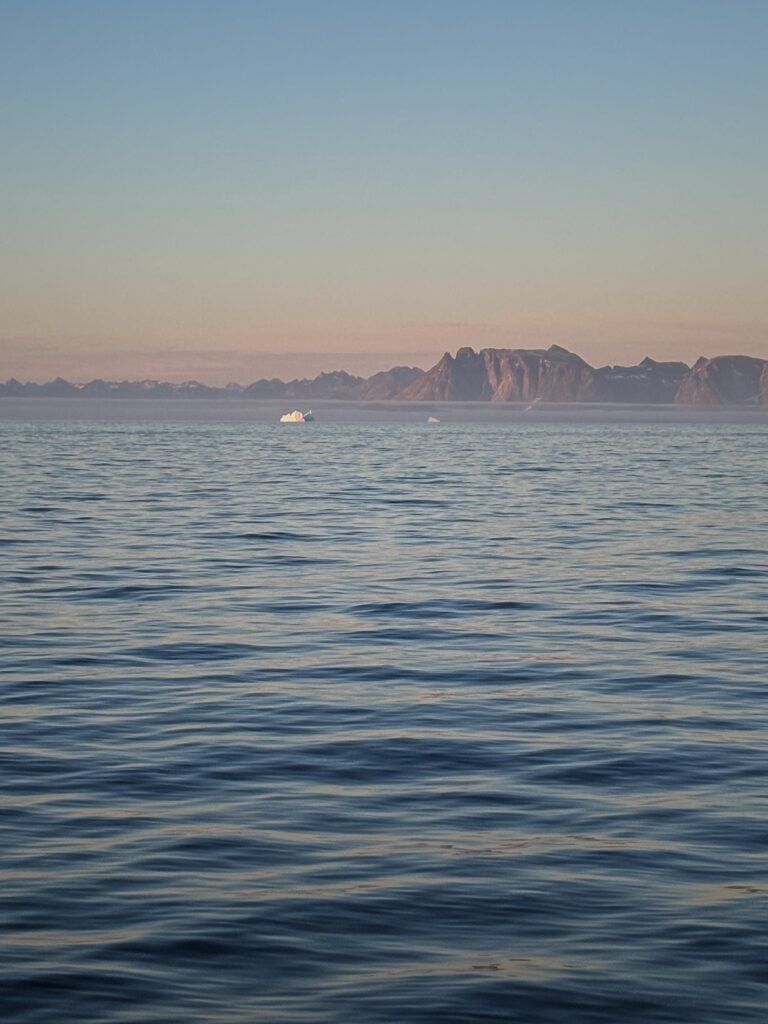
Thirty-six hours after leaving Quest, Atlantis draws near to Greenland’s southwestern coast. Fog obscures the mountainous icebergs beginning their long drift south, setting nerves on edge. But every so often, the clouds part, revealing glimpses of the steep fiords and jagged granite spires that bore witness to Terra Nova’s dramatic end.
Any hopes that her wreck, which was discovered by the Schmidt Ocean Institute in 2012, would immediately clarify the ship’s final moments are dashed by the first Alvin dive. The vessel has laid on the seabed for 20 years longer than Quest and is in an advanced state of deterioration. Even still, it’s a “prettier” wreck than Quest and easier to explore.
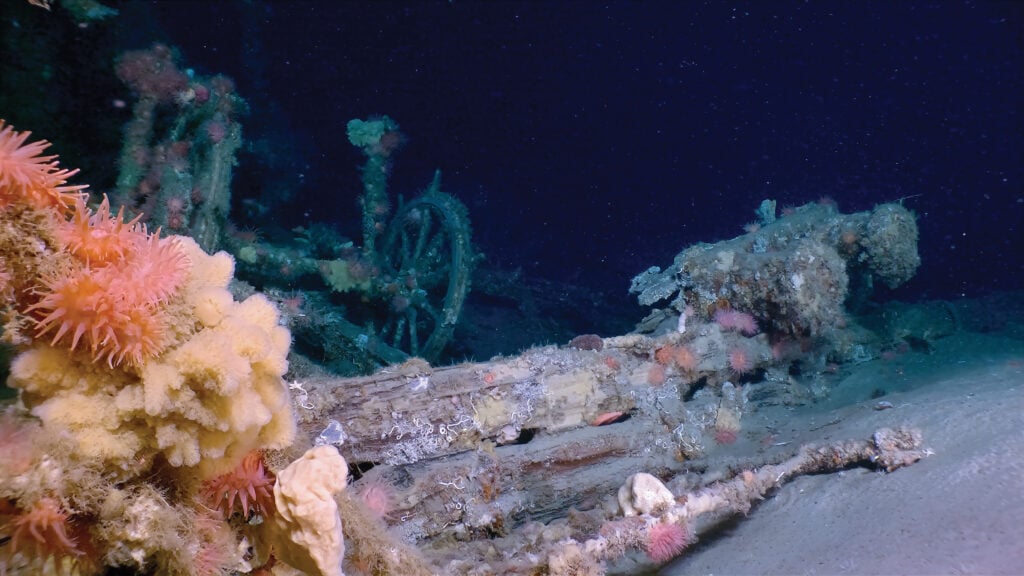
There are no agitated cod guarding their prize, no nets waiting to ensnare the sub. The decks and wooden superstructures have completely rotted away, exposing metal innards, including her boiler, rudder and propeller. Her iconic double helm still sits proud amid the jumble of her crushed stern. Her reinforced bow is buried deep in the sandy sea floor, split open like a corn husk — wide enough for Alvin to fly right inside. “It’s like an open book,” says Normandin. “She’s going to tell us a lot.”
As at Quest, we lose half a day of Alvin dives to the conditions, though this time the culprit is not wind and waves but an iceberg the height of a 10-storey building that drifts directly over Terra Nova’s final resting place.
My thoughts turn to Scott as Atlantis churns the black water, waiting. Earlier in the voyage, Kløver placed small plaster busts of Scott and Shackleton on a bookshelf in Atlantis’s library, where they have watched over several spirited debates about the two explorers’ legacies. Scott’s bust wears a worried expression, as well it might; in the latter 20th century, just as Shackleton was coming to be regarded as an exemplar of leadership, several books systematically destroyed Scott’s reputation, painting him as a bungler who needlessly sacrificed himself and his men through his refusal to use dogs and skis to reach the South Pole.
The question of what makes a polar explorer a hero is complicated, wrapped up in contemporaneous ideals of masculinity, class and nationalism that seem outdated to us in 2026. An ability to self-mythologize was critical for any explorer who hoped to keep exploring, dependent as they were on public interest in their books and lectures and on patronage from wealthy backers. Expedition leaders often edited their own diaries to remove any hints of homesickness and self-doubt that could undermine the heroic narrative.
Their men could be — and were — much more candid, says Kløver, who has dedicated much of his career to transcribing and publishing expedition members’ diaries. “The crew diaries are much more interesting because they tell me [what is] not in the books about how it is to be out on an expedition — the hard work and the immense sacrifices these men made to achieve the goals of the expedition.”
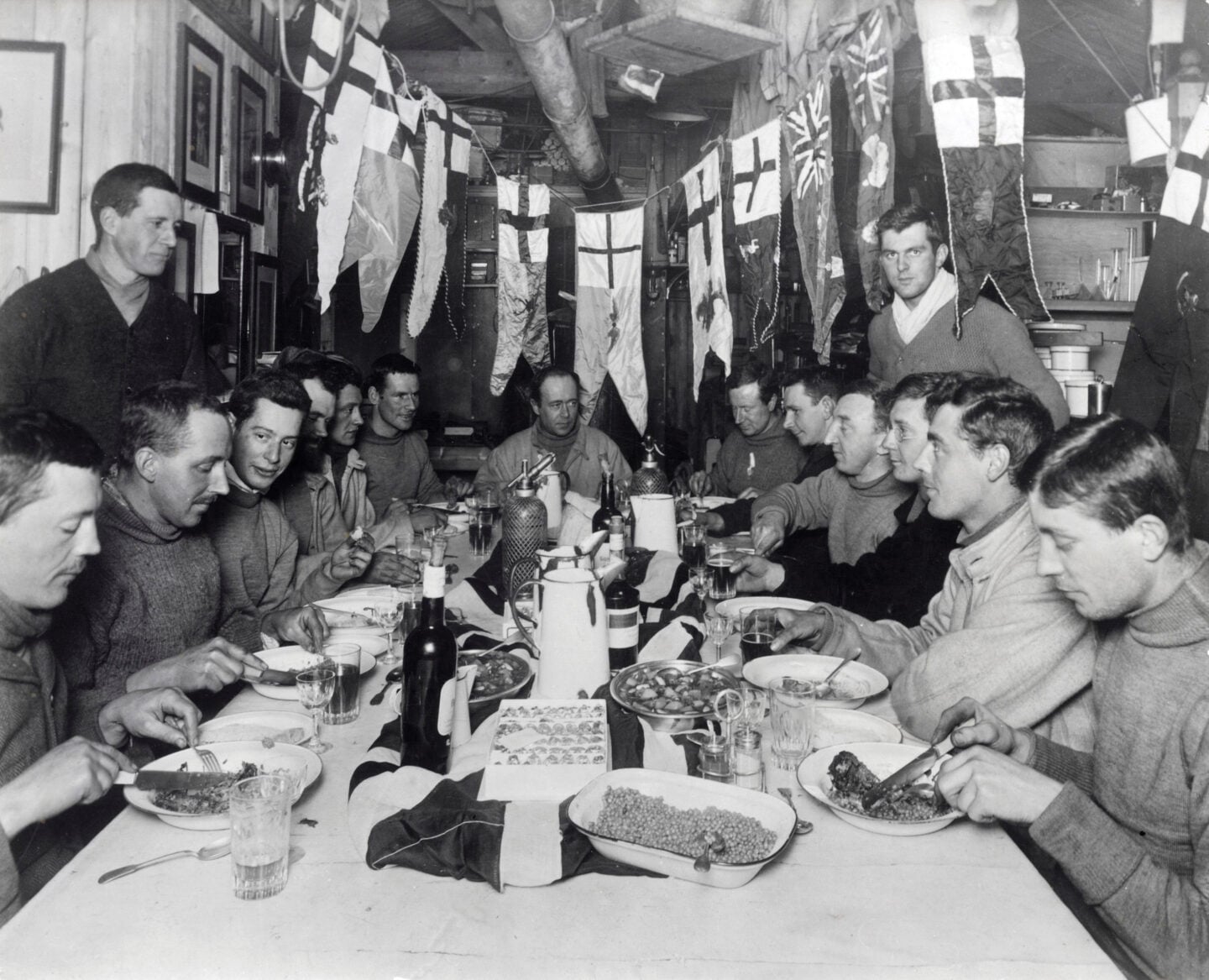
It is thanks to the diaries of Apsley Cherry-Garrard and other survivors of Scott’s final expedition that we know that Terra Nova could “roll as few ships can” (a frequent complaint about Quest as well) but that she proved “a wonderfully fine ice ship”; that the discovery that Norwegian explorer Roald Amundsen intended to challenge them for the pole broke the men’s hearts; that Scott was “the strongest combination of a strong mind in a strong body” that some of them had ever known. Cherry-Garrard’s assessment of Scott is particularly moving in light of the expedition’s outcome: “His triumphs [were] many — but the Pole was not by any means the greatest of them. Surely the greatest was that by which he conquered his weaker self, and became the strong leader whom we went to follow and came to love.”
For Kløver, documenting the wrecks is a powerful way to ensure the men’s legacies and countless contributions to our understanding of Earth’s polar regions are not forgotten.
“That’s why we’re here on this expedition: to give credit to the men and ships and not just let them be buried on the bottom of the sea floor,” he says. “We’re bringing the stories back up.”
Over the next two days, Alvin pilots and observers all return from their dives elated. Strickrott, who is no stranger to the wonders of the abyssal zone, describes his visit to Terra Nova at 170 metres as “one of my top 10 [dives], easy.” Geiger’s word is “epic.” Even Mearns is all smiles.
When the fog lifts on our second evening at the wreck site, revealing a coastline of ancient rock and ice set aglow by the midnight sun, everyone who is not working or resting in preparation for the night shift runs outside to take in the scene. We are giddy, uninhibited, flush with our success and the novelty of being at sea. We are explorers.
“We had pierced the veneer of outside things,” Shackleton wrote of his journey across open ocean and uncharted mountains to seek rescue after losing Endurance in the Weddell Sea. He never felt more alive than when facing down peril — largely of his own making. As he often did, he reached for the words of another to express what he could not, in this case, the Yukon poet Robert Service: “We had … ‘grown bigger in the bigness of the whole.’”
“That’s why we’re here on this expedition: to give credit to the men and ships and not just let them be buried on the bottom of the sea floor. We’re bringing the stories back up.”
DATA COLLECTED and dives logged, it is time to begin the week-long trip back to Woods Hole. As if to hurry us on our way, the sea, which has been flat as a lake the entire time we’ve been in Greenland waters, begins to build. The captain warns we are in for an uncomfortable couple of days.
Atlantis’ common spaces fall quiet as people retreat to corners of the ship to catch up on sleep, emails and laundry. To pass the time, there are daily lectures and ping-pong in the main lab, World Cup match viewing parties and a Pirates of the Caribbean marathon in the lounge. Our thrice-daily mealtimes are highly anticipated, both for the food and the camaraderie that has grown between the Royal Canadian Geographical Society and Woods Hole teams. There is a shared feeling of wanting to prolong our exploration joy, even though the expedition is technically over.
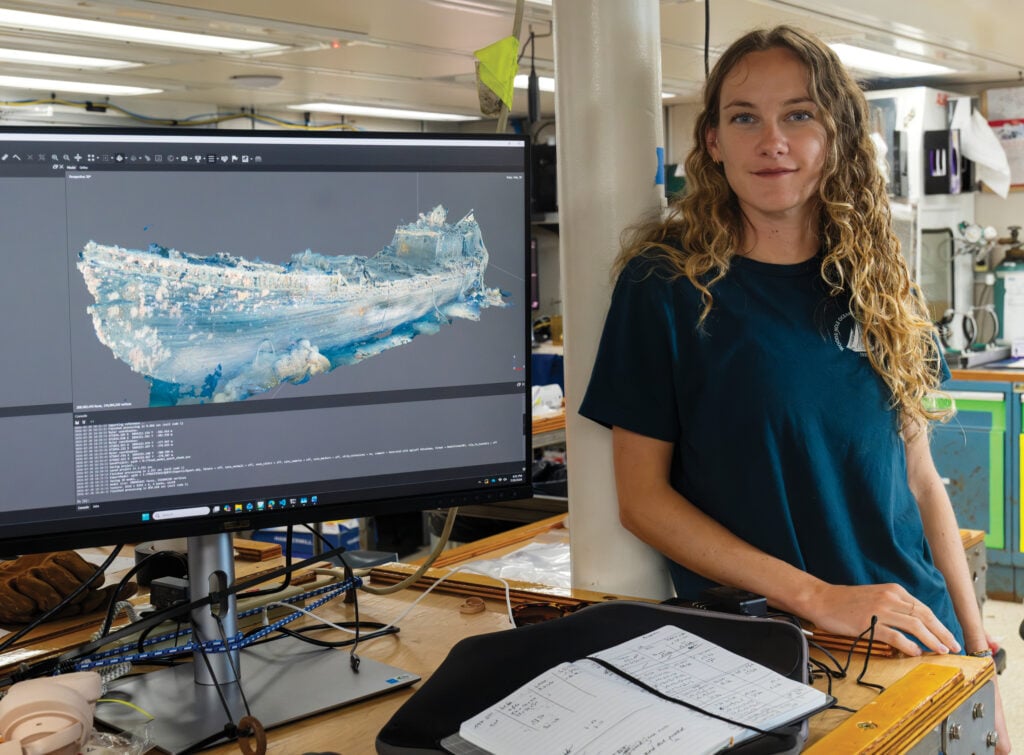
Fortunately, there is plenty of grist for that mill. Woods Hole imaging specialist Zoë Daheron has begun rendering the 3D models from the data gathered by the imaging system on Falcon and is happy to share sneak peeks with excited team members. There are books, exhibits and films to plan, retelling the stories of the ships and explorers. Normandin, Meyer-Kaiser and Norling eagerly discuss the papers they’re hoping to publish.
But try as we might, we can’t keep the real world from encroaching on our bubble. At dinner one evening, I find myself sitting next to Janna Gilleman, a young Alvin engineer. We discuss the news from home — unrelenting heat, out-of-control wildfires, Trump’s absurd threats to tariff Canadian wildfire smoke — when Gilleman remarks, a touch sadly, that “Alvin is like the last good thing.” I ask what they mean.
“It’s the last, best thing that exists purely for the sake of seeking knowledge,” they explain. “Are we really out here for any other reason than to see what’s happening in the ocean?”
In this time of escalating climate crisis, seeing what’s happening in the ocean — Earth’s largest carbon sink — has arguably never been more important, and it gives me hope to know that organizations like Woods Hole are out there doing that work. But I’m struck by Gilleman’s emphasis on seeking knowledge for its own sake — on exploring the ocean because we can, because it’s there, and because if not us, then who? Perhaps in our cynical age, the new heroes are those capable of uncoupling exploration from notions of geopolitical advantage or personal glory, those willing to simply bear witness to whatever it is nature wants to reveal.
A few days later, as Atlantis waits for a pilot in Vineyard Sound, Chojecki finds me on deck to say farewell. I realize that we’ve never properly debriefed our Alvin dive, so I ask him what his most memorable moment was from the journey. To my surprise, he says it was leaving Quest behind in her watery grave.
For a moment, we sit there, holding back the tears that inevitably come.
“At least we got to see her,” Chojecki says finally. “We know she’s there.”
Exploration
Follow along as an international team led by the Royal Canadian Geographical Society surveys the wrecks of Quest and Terra Nova in the Labrador Sea
Exploration
An international team led by the Royal Canadian Geographical Society in partnership with Woods Hole Oceanographic Institution is heading to the North Atlantic to examine iconic ships of the Heroic Age of Antarctic Exploration

Exploration
Inside the expedition that found famed explorer Sir Ernest Shackleton’s last ship
Exploration
An expedition led by the Royal Canadian Geographical Society found the vessel intact and upright at a depth of 390 metres