History

A half-baked plan, a failed herd, and the price Newfoundland still pays

In an excerpt from her new book, Reindeer: A Tale of Nature and Survival in a Changing North, historian Nancy Langston shares the story of a disastrous reindeer herding experiment on Canada’s Atlantic coast

  • Published Oct 06, 2026
  • Updated Oct 07
  • 2,540 words
  • 11 minutes
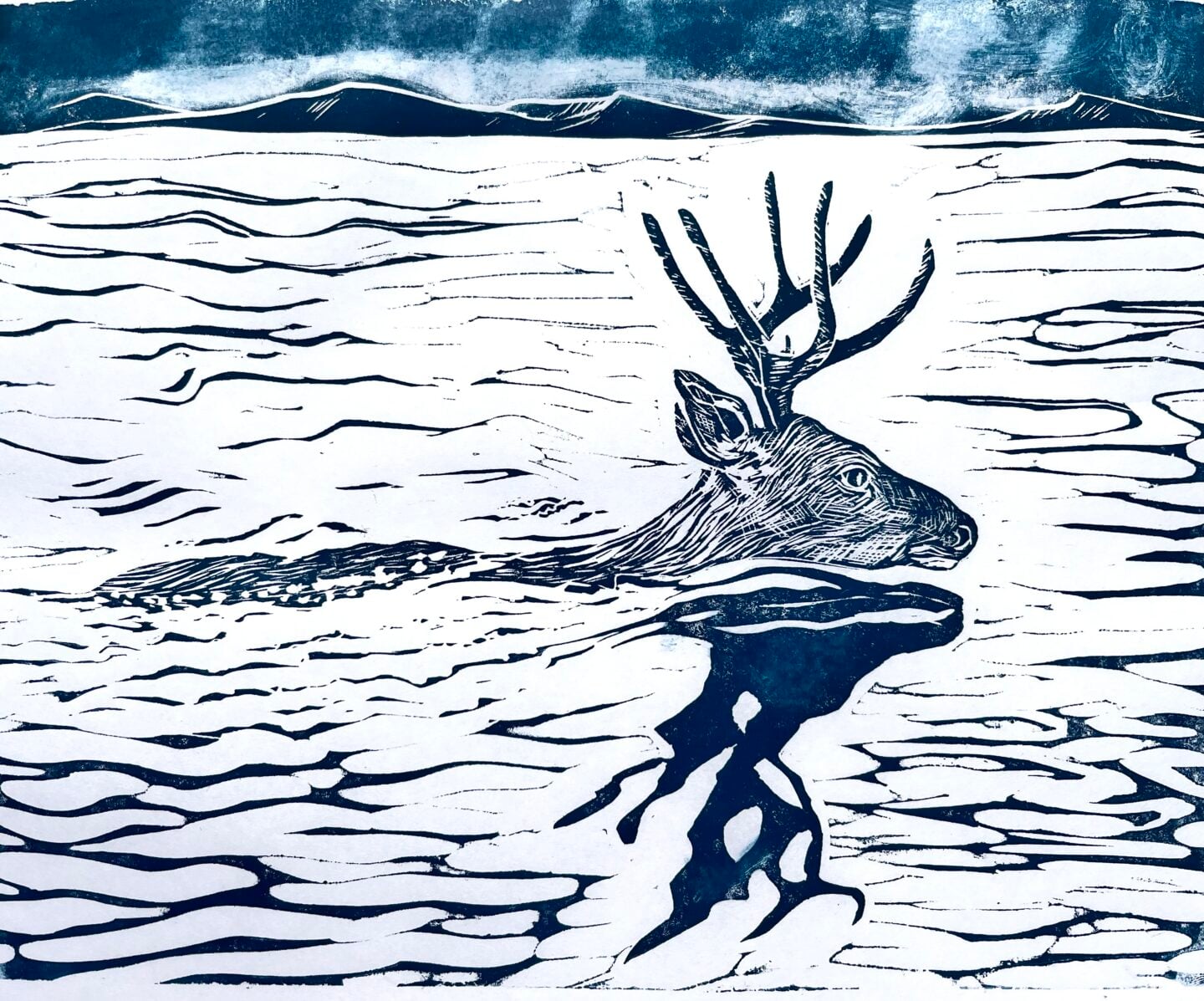
A reindeer swims through icy water. (Art: Nancy Langston)
Expand Image
Advertisement
Advertisement

One April morning in 1908, a British doctor named Wilfred Grenfell left his newly acquired reindeer at a Newfoundland mission station, setting out with sled dogs to amputate the leg of a young man dying of sepsis. As he took a shortcut across sea ice, a sudden shift in the wind cracked the ice.

Grenfell and his dogs plunged into the icy slob—a Newfoundland term for a messy mixture of sea ice and water. The sled with all its survival gear vanished, but Grenfell managed to drag himself and all but one of his dogs onto a drifting floe. Moments later, that began to fall apart, so Grenfell swam to a slightly larger floe that began spinning out to the open sea. There he was, in frozen garments, his survival gear lost with the sled under the waves, and a strong current pulling him away from shore. No clear line of water allowed him to attempt a swim to shore. The wind cut through his sodden clothes, and he began to shiver.

The next morning, Jessie Luther, an occupational therapist from the United States who worked with Grenfell at his mission, woke to the news that Grenfell had been lost at sea. She wrote in her diary: “The most terrible thing that could happen nearly happened. I awoke this morning at 5:30 with the roar of the sea in my ears. . . . It seemed as if some great and awful creature had suddenly awakened from its sleep and roared hungrily.” A reindeer herder at the mission ran to Jessie and called out: “Th’ Doctor’s adrift on a pan o’ ice out in th’ bay!” They ran down to the shore, where men told them that the night before, Grenfell had been seen falling through the ice, but “before a crew could launch a boat it was too dark to see him. . . . There was so little anyone could do.”

Sometime that night, Grenfell realized he would die of hypothermia if he didn’t do something. He had a knife buried beneath his frozen clothing, so he sliced open three dogs’ throats, wrestling them to the floe as they bit at his arms trying to save themselves. He wrapped himself in their bloody pelts and waited for the night to pass, growing steadily weaker with the cold.

In the morning, as Jessie and others from the mission gathered along the shore, Grenfell pulled the frozen leg bones from one dog carcass and tied his shirt to the bones. He waved this gruesome flag above his head although he had little hope of attracting anyone’s attention. The wind was pushing him farther toward the open North Atlantic, and he couldn’t see past the waves that were breaking over his ice floe. 

But one man on shore saw Grenfell’s flag waving. He and his friends hacked a boat free from the shore ice and launched into the waves, risking their own lives. They reached Grenfell’s shrinking ice floe, hauled him aboard their boat, and rowed him and the surviving dogs back to shore.

After more than twenty-four hours adrift, Grenfell was barely alive. He was covered with ice rime and hypothermic. When he recovered his strength (minus a few toes lost to frostbite), he constructed a memorial to his beloved dogs.

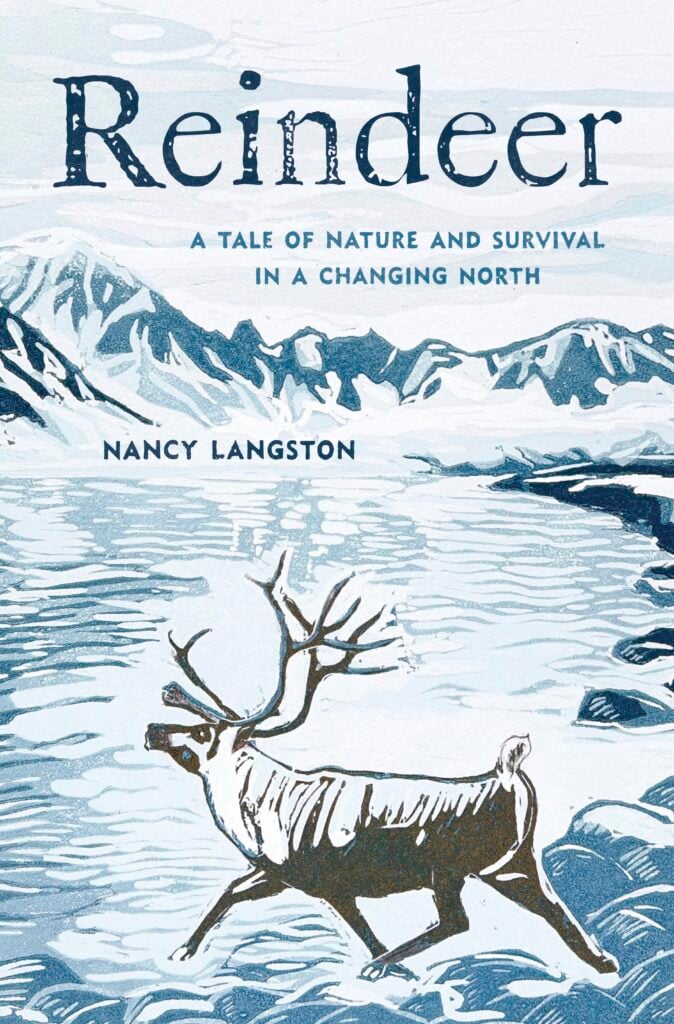
Reindeer: A Tale of Nature and Survival in a Changing North, by Nancy Langston, published October 6, 2026. (Courtesy Yale University Press)
Expand Image

This episode exemplifies the character of Wilfred Grenfell, a curious mixture of courage matched by an impulsiveness that had led him to introduce a herd of domesticated reindeer and Sámi herders to Newfoundland just months earlier. As Luther noted in her journal, Grenfell was “full of plans of all kinds with sometimes little regard for details.” Luther’s assessment captures not just the man but his reindeer project, one of many well-intentioned but ecologically disastrous attempts to impose colonial solutions across North America.

Grenfell was a medical missionary who, inspired by the example of Sheldon Jackson in Alaska, became convinced that reindeer would alleviate tuberculosis, malnutrition, and infant mortality among fishing communities in Newfoundland and Labrador. Rather than converting the ‘savages’ to Christian civilization, Grenfell hoped to use reindeer to combat poverty, prostitution, and malnutrition among Europeans settlers struggling to survive along the North Atlantic coast.

The Dictionary of Canadian Biography describes Grenfell as “one of the last of the spiritual adventurers, the manly Christians who carried the code of service into the remote places of the earth.” He had grown up in England, son of a schoolmaster who eventually committed suicide “under the stresses of school life.” Dennis Halsted, a school friend, noted, “He always aimed at the big things in life” but the details “he left to others less competent.”

Despite failing his medical exam, Grenfell decided to put his training to use as a physician with the Royal National Mission to Deep Sea Fishermen. He made his way onto a hospital ship sailing for Labrador, where he was horrified by the wretched living conditions in the migratory Labrador fishery. The “livyers”—approximately twenty-five thousand men, women, and children who participated in the fishery—faced extreme hardship. Norman Duncan, a contemporary admirer of Grenfell, described them as dwelling in huts “in lonely coves of the bays, remote even from neighbours as ill-cased as themselves; there they live and laugh and love and suffer and die and bury their dead—alone.”

Living in isolation, the livyers survived harsh winters by trapping and relying on limited supplies of salt, flour, and molasses. Wild caribou had once sustained them through the winter, but those populations were dwindling. The livyers needed to buy food instead, but they became locked into unfavorable financial relationships with their fish buyers, selling an entire season’s worth of fish for barely enough supplies to carry their family through the winter. Many families fell deeper into debt every year. Medical journalist Louisa Blair reported, “They lived in mud-and-board huts and wore clothes made out of flour sacks.” Because they lacked vegetables and fresh meat, scurvy was common. Grenfell estimated that one out of three children died from tuberculosis, whereas others died of sepsis, botched amputations, and malnutrition. To feed their families, fishermen’s wives relied on “seasonal prostitution on the schooners in exchange for food.”

Grenfell treated what illnesses he could. But he soon became convinced that doctoring alone could never alleviate the suffering among the fishing communities. He appealed to Europe for funds to build demonstration farms, schools, clinics, and craft cooperatives that could provide women alternatives to prostitution. His major focus, however, was food security—and when he learned of the Alaska Reindeer Project, he wondered if reindeer could solve Canadian food security problems as well.

Grenfell was reckless, impatient with detail, careless at doctoring, but brave when needed. He set up cooperatives that “put an entire generation of traders out of business,” stimulating the fury of the elite in Newfoundland who considered him a “menace to honest trade.” When he came upon a burned man, he cut skin from his own body to perform grafts. But he was remarkably stingy at paying his herders. The elites loathed him, but “to the fishermen, Grenfell could do no wrong. A colleague remarked that he was not a particularly good surgeon, but ‘when you were talking to him it was as if nobody in the world existed but you.’”

Grenfell believed milk was essential for children, and he was horrified that Labrador mothers were too malnourished to produce breast milk and too poor to purchase canned milk. Instead, they resorted to chewing stale bread “into a pulpy mass to fill the infant’s mouth.” Cows died quickly in Labrador given the lack of hay, and roaming packs of dogs. Grenfell noted, “With a mob of dogs in every village, a mob actuated most of the time by an insatiable hunger . . . it has been impossible in most places to keep a cow or a goat.” Reindeer, he hoped, might be milked instead, becoming “the cow of Labrador.” Grenfell’s vision of reindeer as salvation for children reflected his broader approach to northern poverty—a combination of genuine compassion, missionary zeal, and colonial certainty that he knew what was best for the region’s inhabitants.

*

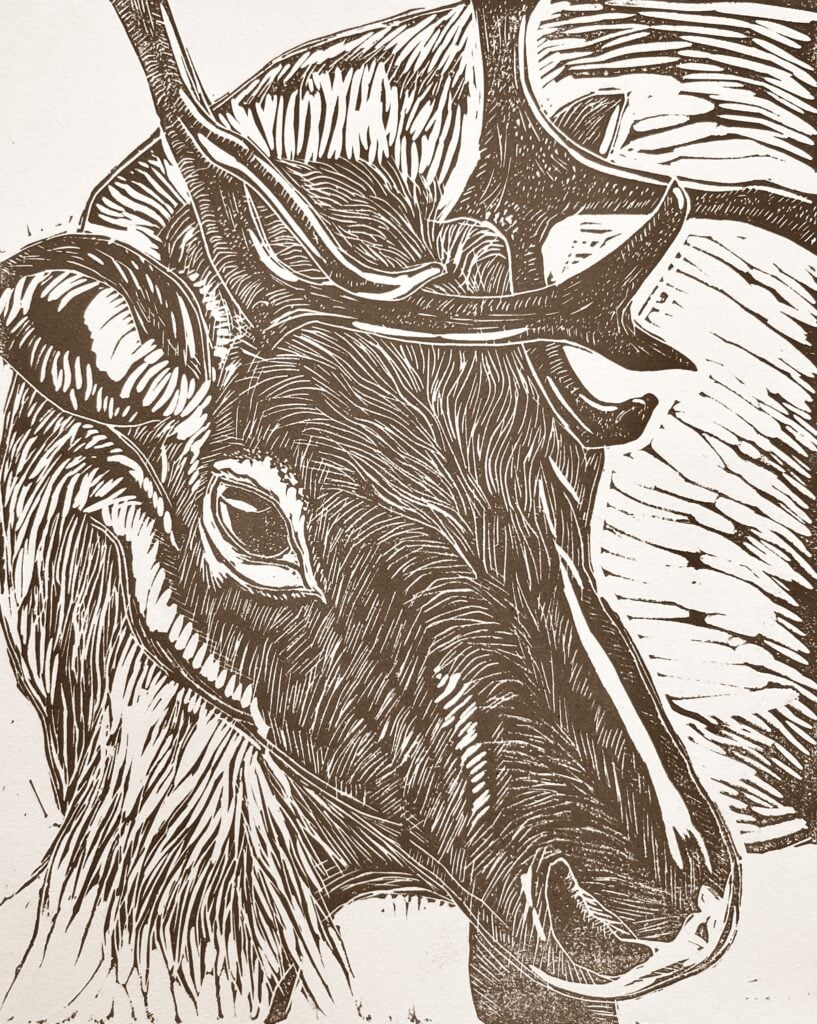
A reindeer's gaze. (Art: Nancy Langston)
Expand Image

After reading about Sheldon Jackson’s reindeer project and initiating a correspondence with him in 1905, Grenfell met with Jackson, pleading for help in establishing a similar project in Newfoundland among the European settlers. Jackson turned to William Kjellmann, the Kven reindeer consultant who had worked with him in Alaska.

Grenfell complained to Jackson about the cost of hiring experienced herders from the Kvens, who had returned to Michigan. In response, Kjellmann expressed frustration with Grenfell’s penny-pinching, writing to Jackson: “I have to-day answered him asking to know for what purpose he intends to bring this herd of deer over to Newfoundland and also some other questions in regard to the probabilities of such a herd being cared for in the proper way and finding sufficient moss in Newfoundland to make the enterprise a success. You know that I will not and cannot afford to be identified with any failing enterprise.” Kjellman demanded that Grenfell produce proof that the reindeer could find the food they needed in Newfoundland and Labrador. Grenfell replied that he “believes there is sufficient moss,” and Kjellmann retorted that Grenfell “must not believe; he must know.”

Kjellmann reminded Jackson that, in Alaska, the two had made an unfortunate mistake: they had failed to personally inspect the tundra at one mission station before bringing reindeer there. Without hands-on experience on the ground and local knowledge, their herders were dismayed to discover that the promised lichens to support reindeer had been misidentified and reindeer starved. Kjellmann refused to make the same mistake twice. He told Jackson that before assisting Grenfell’s Newfoundland project, he needed to “inspect the field and look for moss.”

Grenfell instead sent a sample of moss to the Kew Gardens in Britain and appealed to the Canadian Department of Agriculture for funding. On December 19, 1907, Grenfell wrote triumphantly to Jackson: “You will rejoice to hear that the reindeer were successfully started on their voyage across the Atlantic.”

Kjellmann’s warnings about the importance of suitable lichen pasture would prove prophetic, but Grenfell pressed forward. In January 1908, with only a minimal ecological assessment completed, Grenfell’s hired ship approached the Canadian coast bearing three hundred Norwegian reindeer and several families of Sámi herders. What followed was a chaotic landing rescued by Sámi knowledge.

Grenfell had planned for the ship to land in Labrador in a location safe from village dogs. But, unable to push through the pack ice to Labrador, the ship dropped the reindeer instead near St. Anthony on the northern peninsula of Newfoundland, where dogs abounded. Luther wrote in her diary: “January 6th, 1908. This has been another day of excitement. Everyone who could possibly get off has been to Crémaillière to see the reindeer landing.” The reindeer bolted once they were lowered from the ship, plunging into the slob ice. Luther wrote: “Some swam off in all directions, some of them far out to sea, as though heading back home to Lapland. But miraculously none were lost.” Echoing his own mishap adrift upon an ice floe, Grenfell described the reindeer’s struggle to shore: “For a long time, the deer were seen floundering over the heaving ice. Suddenly, one disappeared, then the others vanished. We thought they had gone down between the chunks of ice. But in a minute, all four reappeared, scrambling onto another block.”

A few reindeer reached shore, but others swam to an island a mile and a half away. Grenfell despaired of rowing them to the mainland. The Sámi herders managed the situation by walking along shore with tethered reindeer wearing bells, drawing the lost animals back. “By the middle of the week,” Grenfell noted, “the Lapps located and assembled 285 deer, and the next day, reported the whole 300 safe and sound in one herd.” Despite the chaotic landing, rough handling, and freezing plunges beneath pack ice, not a single reindeer was lost.

At first, Grenfell’s experiment showed promise. Under Sámi care, the herd grew. In 1911, Grenfell sold fifty of the reindeer for an experimental introduction at Fort Smith, Northwest Territory. By 1913, the herd in Newfoundland had grown to approximately thirteen hundred. However, the Sámi families were frustrated by the low pay Grenfell offered and equally frustrated by racial antagonism among the livyer community. After being denied raises, they returned to Norway.

Without close Sámi herding, village dogs began attacking reindeer. After Grenfell shot some of the dogs, “hard feeling was aroused” against his project among locals. Grenfell suspected that the traders whose monopolies were being threatened by his cooperatives were stirring up tension. He wrote, “We know that some few of the traders raised the talk against the deer. It pleased their dealers, and one at least thought that the experiment threatened his winter hunting.”

Poaching presented an even greater threat. As Grenfell noted, hungry livyers saw no reason to “let tame reindeer wandering close to their villages alone, when they had long been able to hunt wild caribou.” Locals also believed that “reindeer have driven out their [wild] deer, eaten all the berries, and driven out the foxes.”

When World War I broke out, Grenfell’s attention shifted elsewhere. He enlisted with a Harvard medical regiment and served in France, leaving his reindeer experiment largely unattended. Without the Sámi herders, the knowledge necessary to maintain the herd vanished. Poaching and general indifference sealed the herd’s fate. As scholars Gregory Wood and Jose Lam write, “Shortly after the loss of Norwegian [Sámi] herders, the local people became very hostile towards the reindeer. They had experienced difficulties restraining their dogs, which attacked the reindeer. The Government of Newfoundland did not offer the herds any protection against being killed, for political reasons.”

By the time Grenfell returned from Europe, he was saddened to witness the collapse of his dreams for food security. In 1918, at Grenfell’s request, the surviving 126 reindeer were transferred by the Department of Indian Affairs to the vicinity of Saint-Augustin, on the north shore of the St. Lawrence River in northeastern Quebec. Without trained herders, most of those individuals soon died. A few years later, the survivors were moved to Anticosti Island in the Gulf of St. Lawrence. By 1940, only eleven remained.

Grenfell’s failure to heed Kjellmann’s ecological warnings, respect Sámi knowledge, or secure community support transformed a promising project into an ecological tragedy whose consequences persist a century later. The introduced reindeer brought to wild caribou in Newfoundland a lungworm parasite called Elaphostrongylus rangiferi, which causes paralysis in caribou and reindeer. Though the paralytic disease was known among Sámi herders in Sápmi, scientists learned in the 1960s that the parasite spreads when caribou or reindeer eat vegetation contaminated by slugs that had ingested larvae from feces left behind by other reindeer or caribou. Over time, it devastated native caribou herds, with one local population dropping from seven thousand to one thousand individuals. “We’ll never eradicate this worm,” notes Shane Mahoney, a Newfoundland caribou biologist.

This article has been excerpted from Reindeer by Nancy Langston, new from Yale University Press. Copyright © 2026 by Nancy Langston. Published by permission. All rights reserved.
Advertisement

Help us tell Canada’s story

You can support Canadian Geographic in 3 ways:

Related Content

Two caribou silhouetted against a dark, rainy landscape

Wildlife

Caribou are vanishing at an alarming rate. Is it too late to save them?

After more than a million years on Earth, the caribou is under threat of global extinction. The precipitous decline of the once mighty herds is a tragedy that is hard to watch — and even harder to reverse.

  • 4559 words
  • 19 minutes

Wildlife

Caribou people: The story of conserving the Porcupine caribou herd is a story about working together

Amid oil and gas threats to the ancient calving grounds of the Porcupine caribou herd and startling population declines, people on both sides of the border are coming together to protect them

  • 3940 words
  • 16 minutes

Wildlife

The (re)naming of caribou

The failure to recognize distinct species and subspecies of caribou is hampering efforts to conserve them. So, I revised their taxonomy.

  • 1540 words
  • 7 minutes

People & Culture

Walking with the herd

An immersive Yukon art installation brings caribou — and conservation — into focus

  • 1560 words
  • 7 minutes
Advertisement
Advertisement