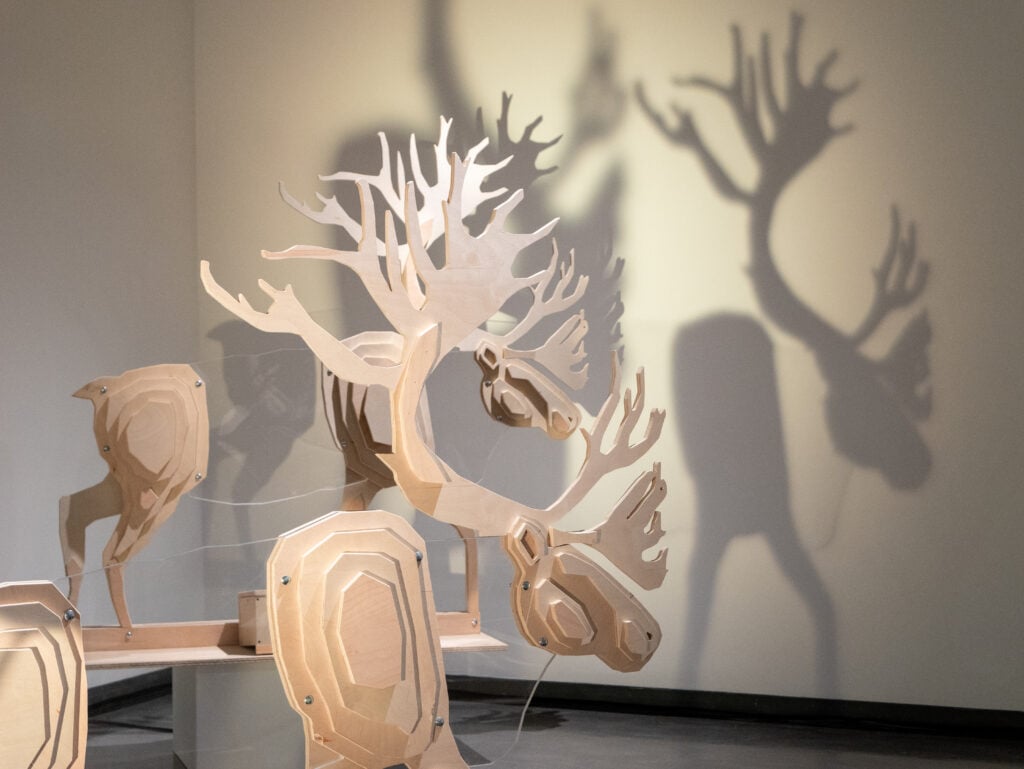
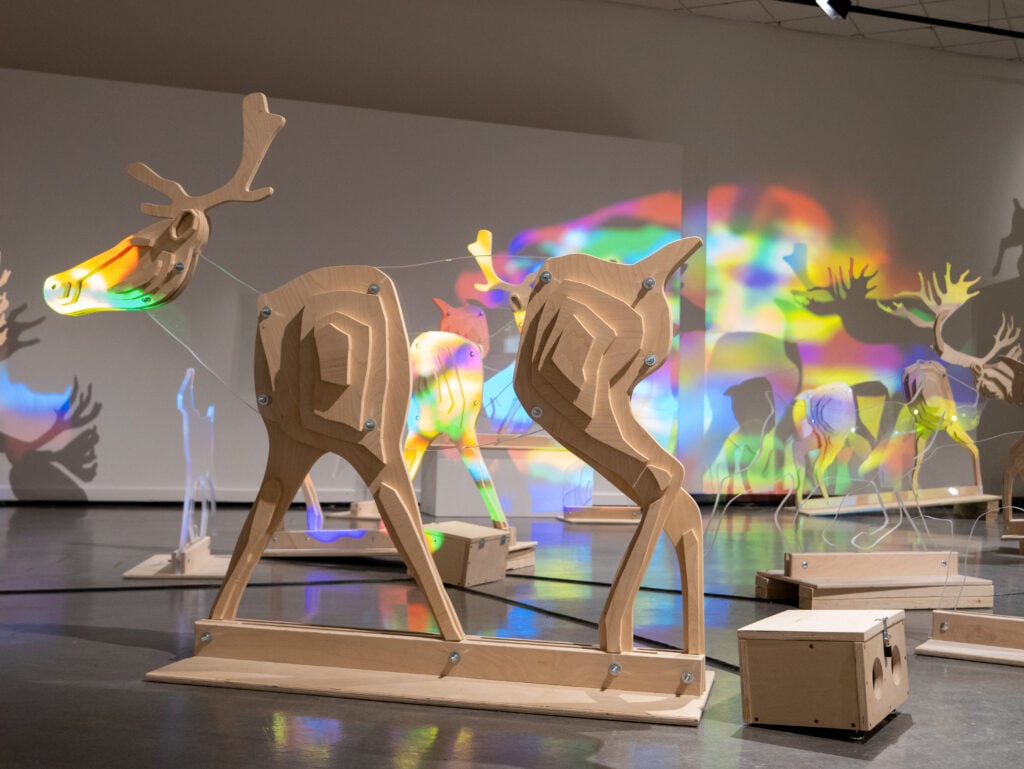
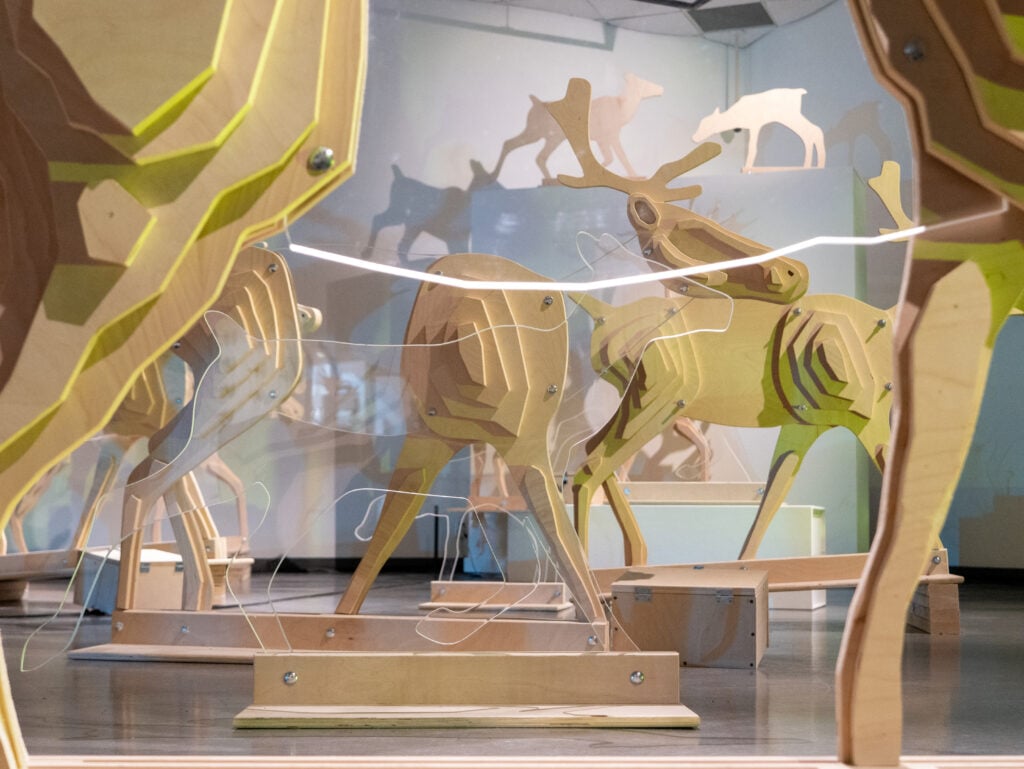
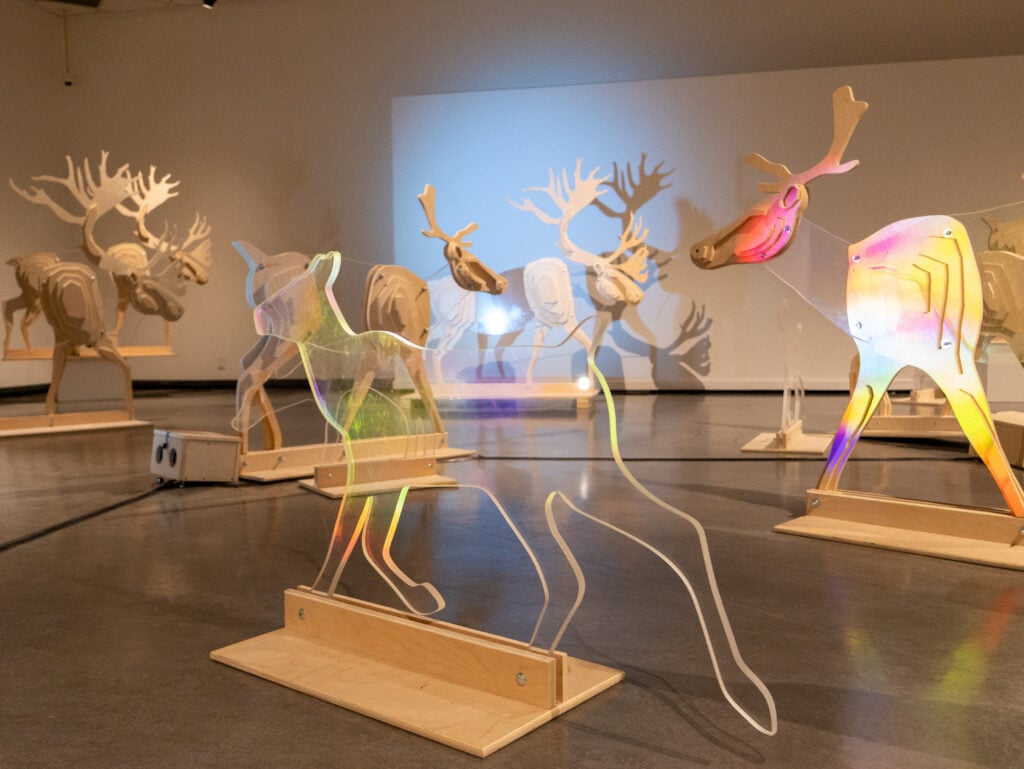
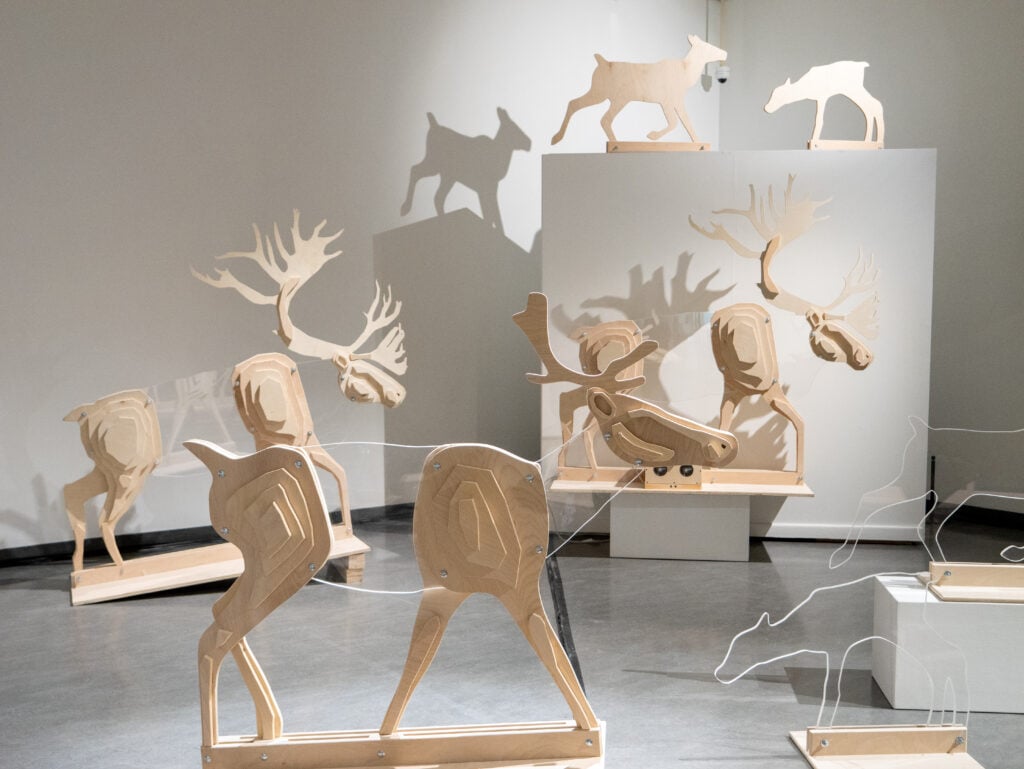
“I think the invitation to be intimate is one of the core parts of this,” says Hyatt. “Many human beings have never been so close to a caribou.”
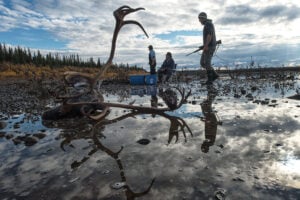
Hyatt, who participated in one of the hunts included in the audio narrative, describes the experience with emotion: the physical touch of the heat emanating from a freshly harvested animal, learning to finely slice dry meat, the crackling, whistling sounds of a caribou head roasting over a fire and witnessing the joy that the flavours and ritual bring out in people. The art project is meant to inspire a sense of “true reciprocity” between people and caribou, and learning from people who’ve lived with caribou for thousands of years, Hyatt says.
Where will the caribou herd migrate next?
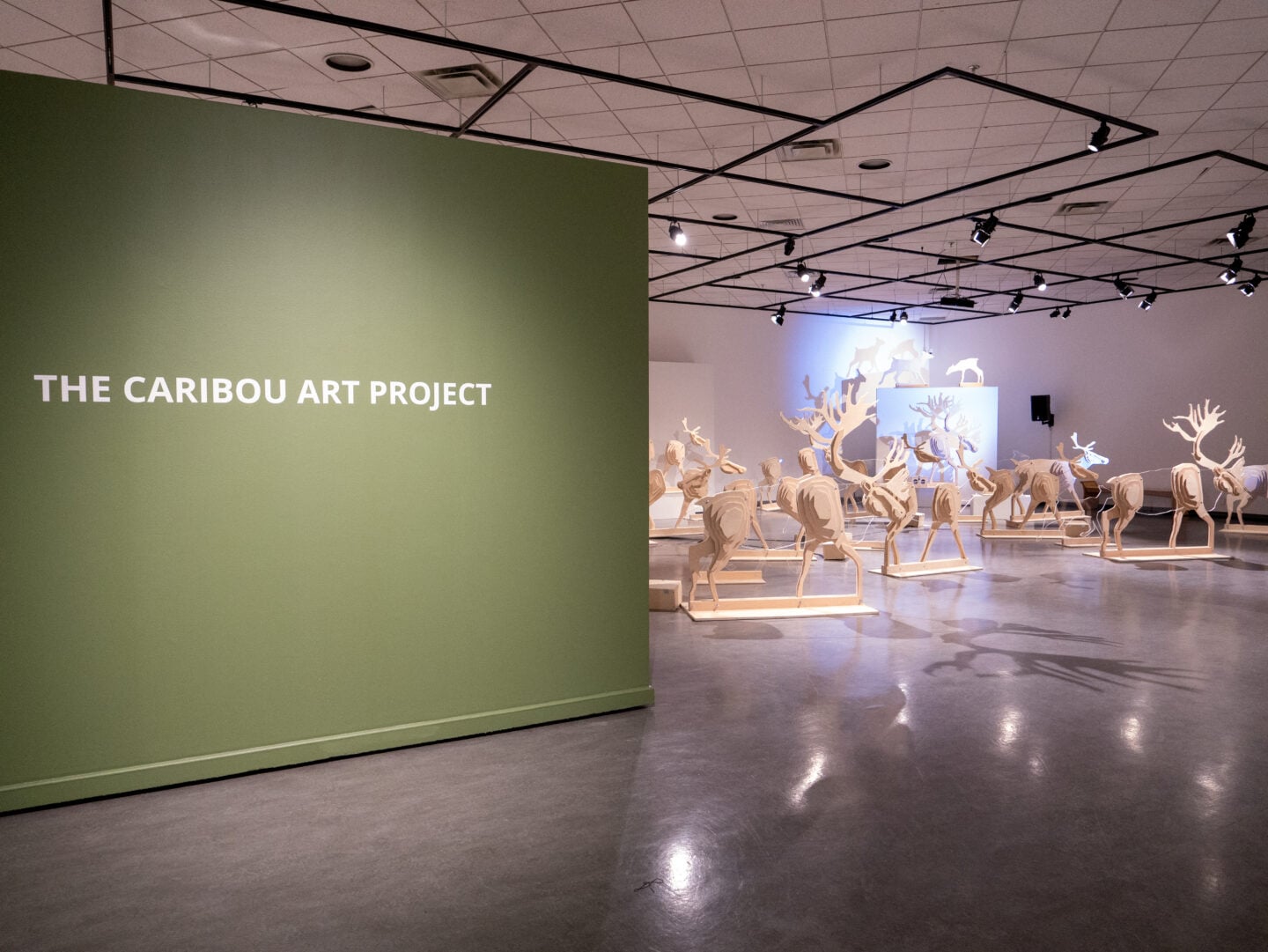
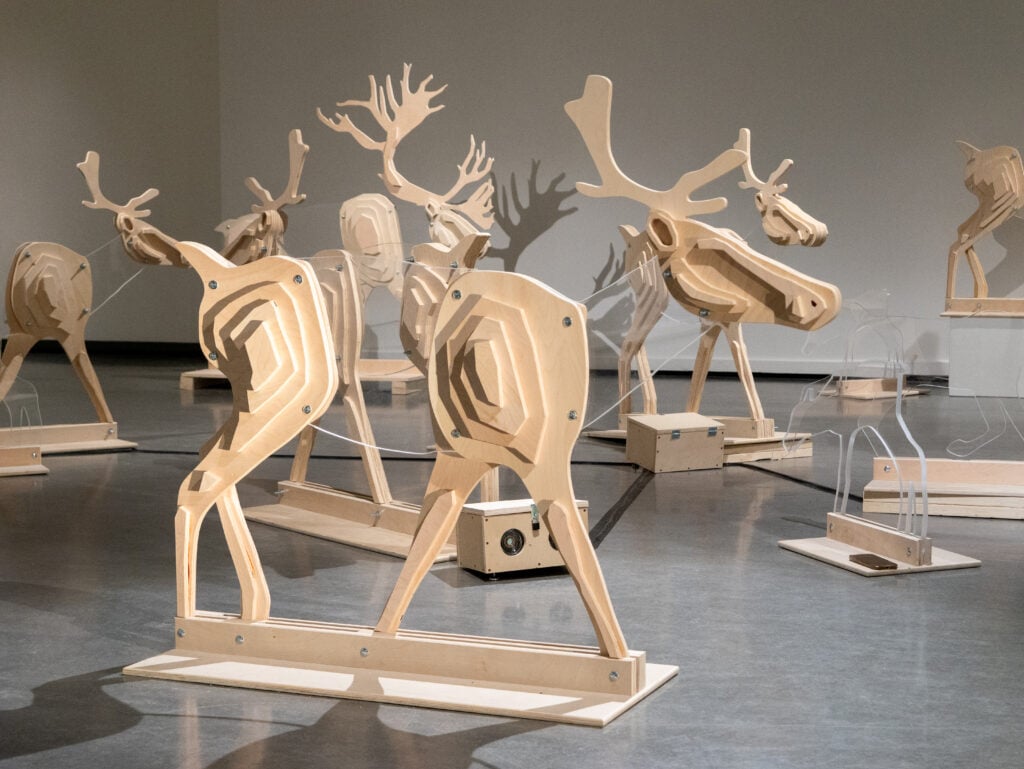
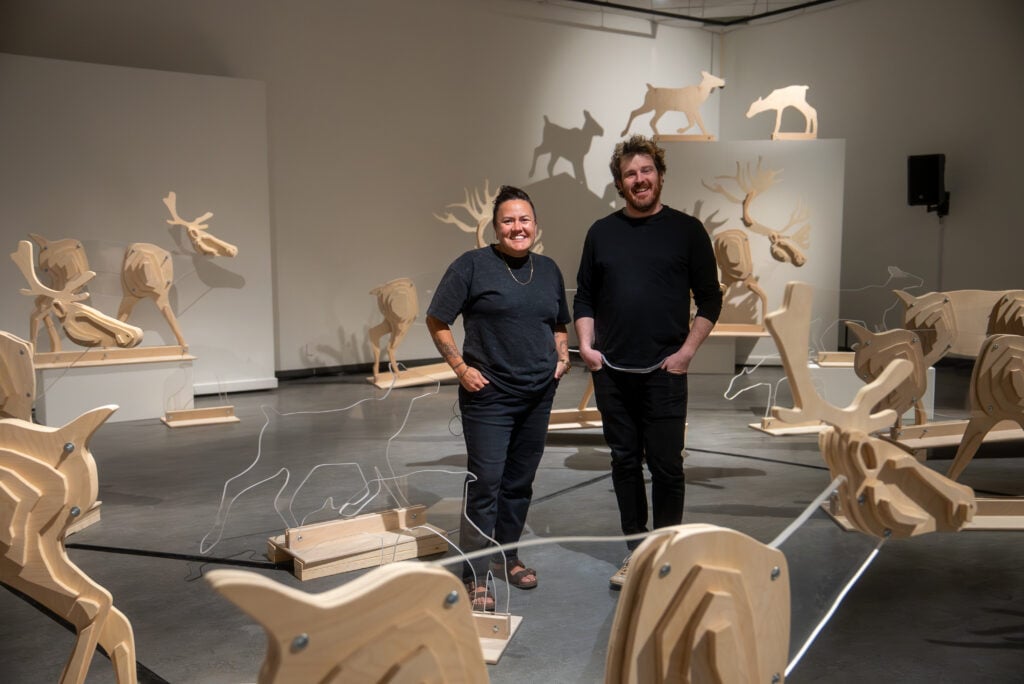
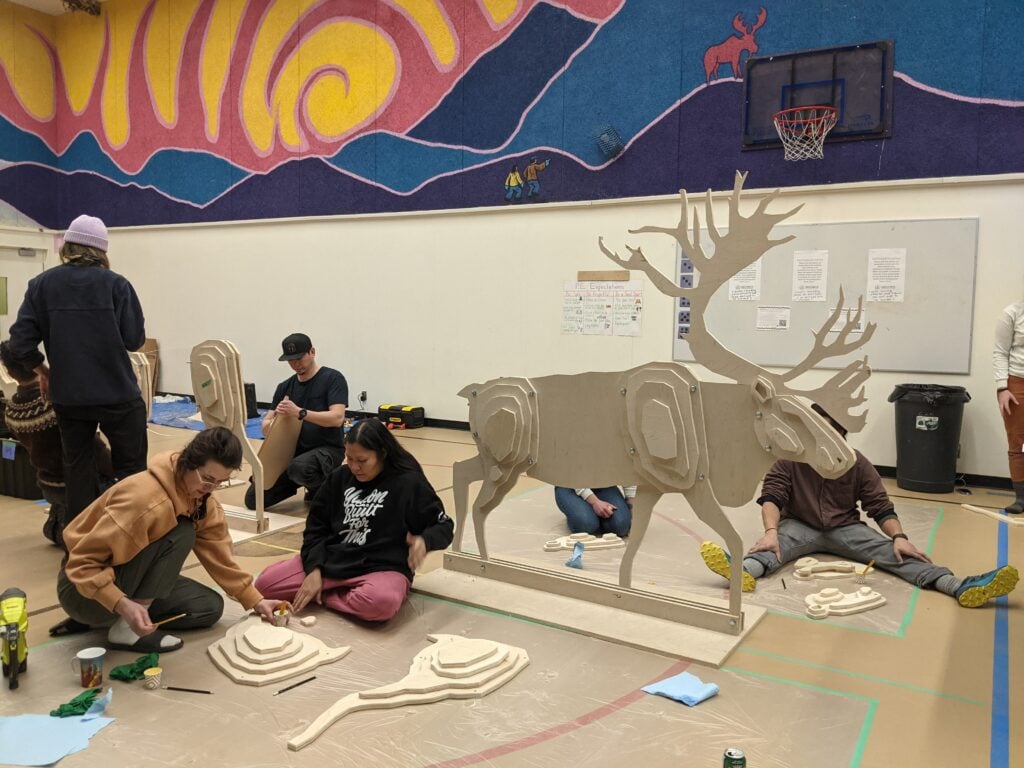
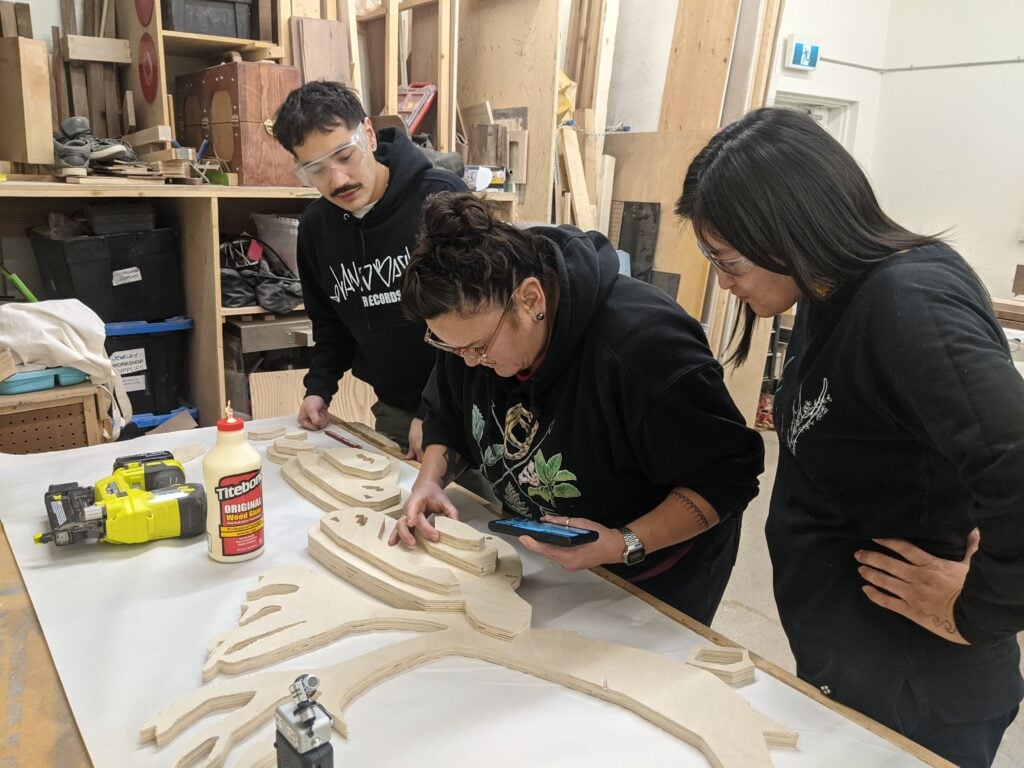
Charlie and Hyatt created the caribou with the intention for them to be packed up into the back of a U-Haul and brought to other communities, or to show up in the streets, guerrilla art style, when needed.
“The idea around a migration was to drive from Dawson City, Yukon, all the way to Yellowknife, N.W.T., and stop along the way,” says Charlie. While there are no firm dates yet for that to occur, there are plans in the works.
The artists hope that the migrating installation will help bring Canadians closer to a species that most will never lay eyes on in the flesh — and to understand what’s at stake for the many Indigenous communities who call caribou kin.