Environment
Inside the fight to protect the Arctic’s “Water Heart”
How the Sahtuto’ine Dene of Délı̨nę created the Tsá Tué Biosphere Reserve, the world’s first such UNESCO site managed by an Indigenous community
- 1663 words
- 7 minutes
Wildlife
Amid oil and gas threats to the ancient calving grounds of the Porcupine caribou herd and startling population declines, people on both sides of the border are coming together to protect them
Come May in northwestern Yukon and northeastern Alaska, as the land loosens from winter’s grip — snowpack shrinking in the valleys, lily pads of river ice rushing downstream — the Porcupine caribou herd receives an ancient cue: time to move. For millennia, caribou have been drawn north, calves cradled in utero, towards the Arctic National Wildlife Refuge, a 19.6-million-acre designated wilderness in northeastern Alaska. A refuge, created in 1980, that was meant to be protected. A refuge that the Trump administration has legally clawed open for oil and gas development.
Caribou don’t care about human-drawn borders. Depending on the snowpack, some stop on the Canadian side in Ivvavik National Park, Yukon — “Ivvavik,” in Inuvialuktun, means “a place for giving birth.” Here, the calving grounds are protected from roads and resource extraction. In the Arctic Refuge, there are no guarantees.
Regardless of politics, caribou know where they want to be. In early June, when females reach the edge of snowmelt, they camouflage their bodies among mottled patches of snow and earth. They feast on the cottongrass flowers, gleaning nutrients to produce milk for their soon-to-be-born calves. Caribou are so selective, they’re the only ungulate evolved to survive on lichen. Every bite matters.
Caribou are built for movement: elongated, flattened backs; powerful legs for trudging through deep snow; hooves that broaden in winter like snowshoes, with stiff hair bristles that act as crampons, then sharpen in summer for navigating rocky ground. Even their eyes adapt to extremes of light and darkness, their eye colour shifting from gold to blue. As caribou move, a clicking sound can be heard — a tendon slipping over bone — which is believed to help them communicate, especially in storms: stay together.
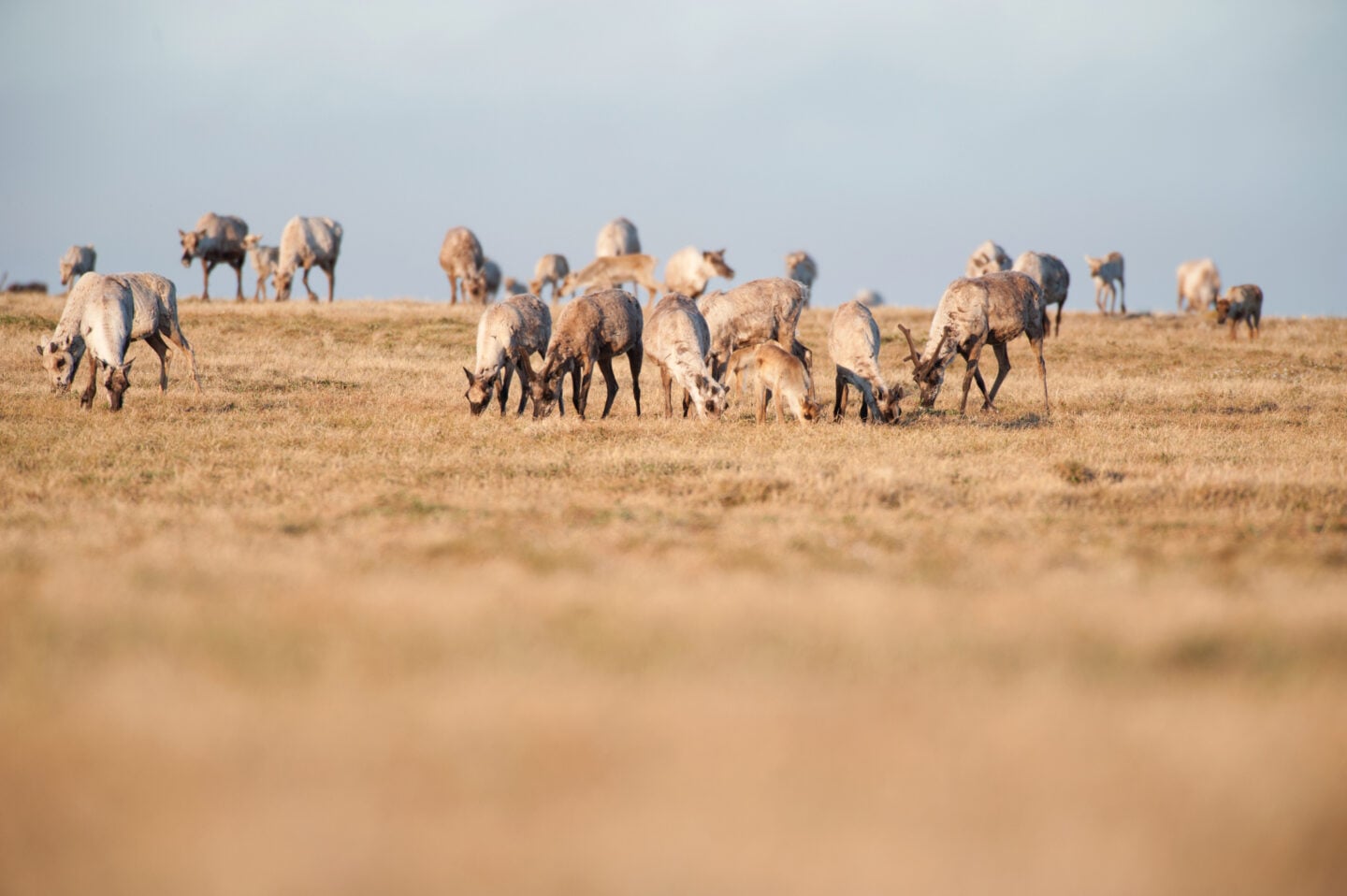
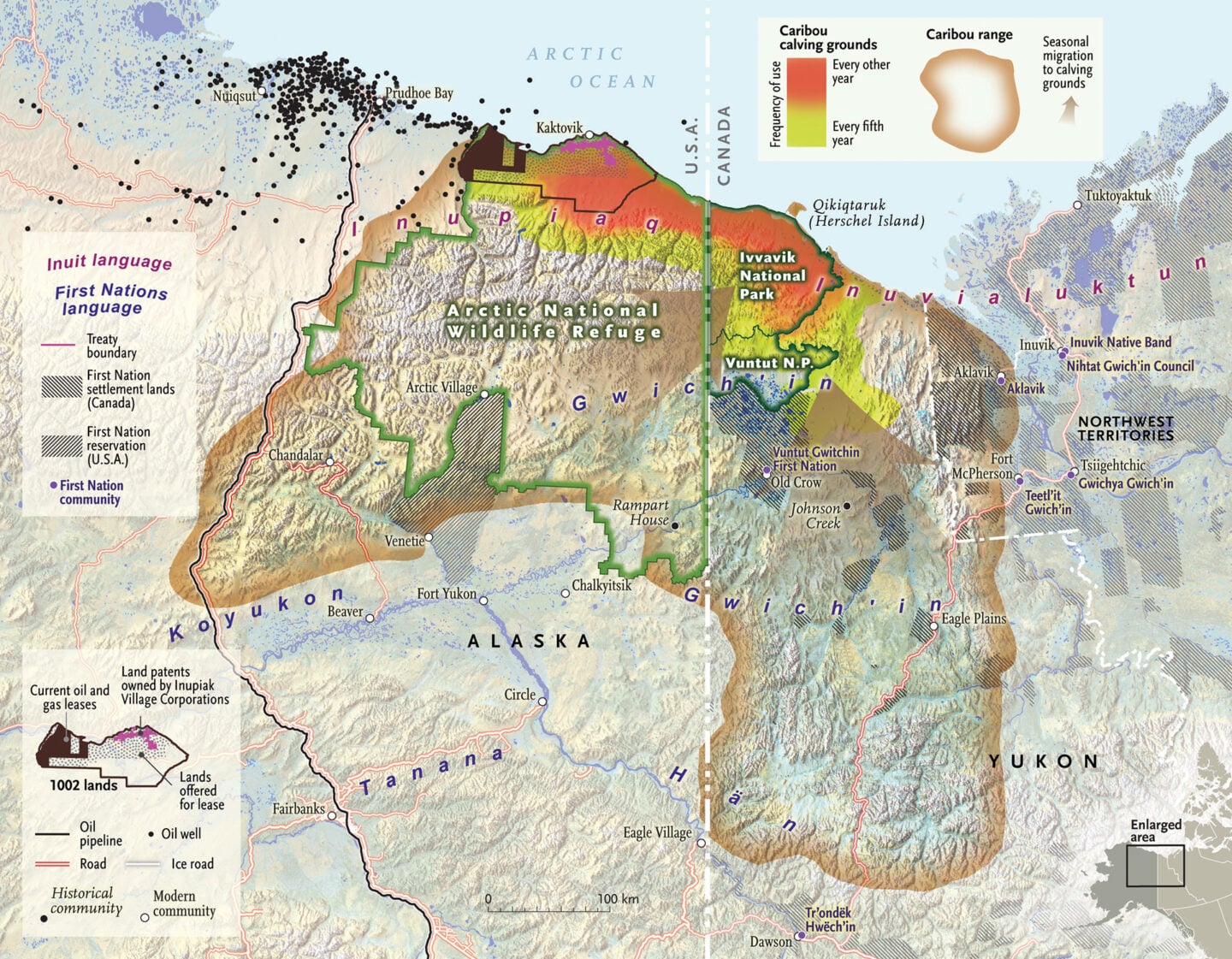
The Porcupine caribou undertake one of the longest land migrations on Earth, travelling roughly 4,000 kilometres. Their hooves pound out undulating paths across their 250,000-square-kilometre range, moving between communities across the Yukon, Northwest Territories and Alaska. There are multiple words for caribou across Indigenous languages: vadzaih in Gwich’in, tuktu in Inuvialuktun, wëdzey in Hän. In Gwich’in tradition, one creation story tells how people and caribou exchanged half their hearts, an understanding that speaks to something far deeper than sustenance or food security. They refer to the calving grounds as Iizhik Gwats’an Gwandaii Goodlit, or “the sacred place where life begins.”
Caribou give birth collectively, one after the other, their young tumbling headfirst onto the tundra. Within hours, calves stand on shaky legs and suckle for milk. Within days, they can sprint faster than most people. Within weeks, they move with an endurance that will carry them across the tundra for the rest of their lives.
THE GWICH’IN PEOPLE are born into a sacred relationship with caribou. “It starts when you’re a baby,” says Harold Frost Jr., a councillor with the Vuntut Gwitchin First Nation who lives in Old Crow, Yukon, a fly-in community on the banks of the Porcupine River. Frost’s earliest memories are rooted in land and family; he remembers his grandmother taking dry meat from their food cache and “chewing on caribou and putting it in your mouth as a child.”
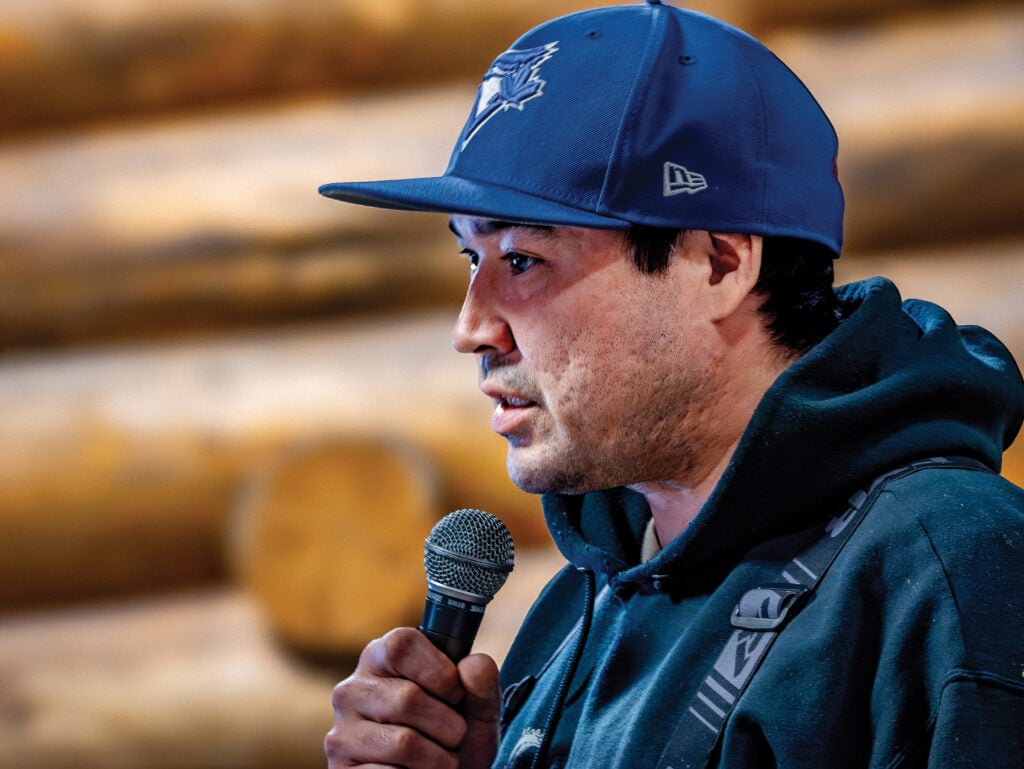
Before colonization, the Vuntut Gwitchin people were nomadic, travelling between camps in what used to be Rampart House, Alaska, to Johnson Creek, Yukon, south of Old Crow. Like the Porcupine caribou, they didn’t know political borders, “moving with the caribou and the caribou fences,” Frost says.
Caribou fences, built with spruce logs, were designed into U-shaped traps, or corrals, around 300 metres long and 15 metres wide. Small herds of caribou were funnelled into the corrals, where they were snared and harvested. The oldest surviving caribou fences in Yukon date back to the early 1800s, but the technology has existed for thousands of years, according to Gwich’in oral history. Elders told stories about 10,000 Vuntut Gwitchin moving from fence to fence; this was before the arrival of Europeans who brought with them diseases that spread through camps, says Frost.
“It’s been just over one hundred years of being introduced to western culture, but things [have happened] quickly in that time,” Frost says. The residential school system, which forcibly removed children from their families and communities, attempted to destroy language and culture. Only a handful of Elders and individuals speak Gwich’in today, says Frost. “All we have is our connection to the land and the animals.”
The Vuntut Gwitchin’s relationship with the Porcupine caribou herd — and the imperative to protect their sacred bond — has remained intact. In 1993, the nation signed a land-claim agreement, securing their rights to self-governance. Shortly after, they created Vuntut National Park, designating 4,345 square kilometres to protect the herd’s spring and fall migration route.
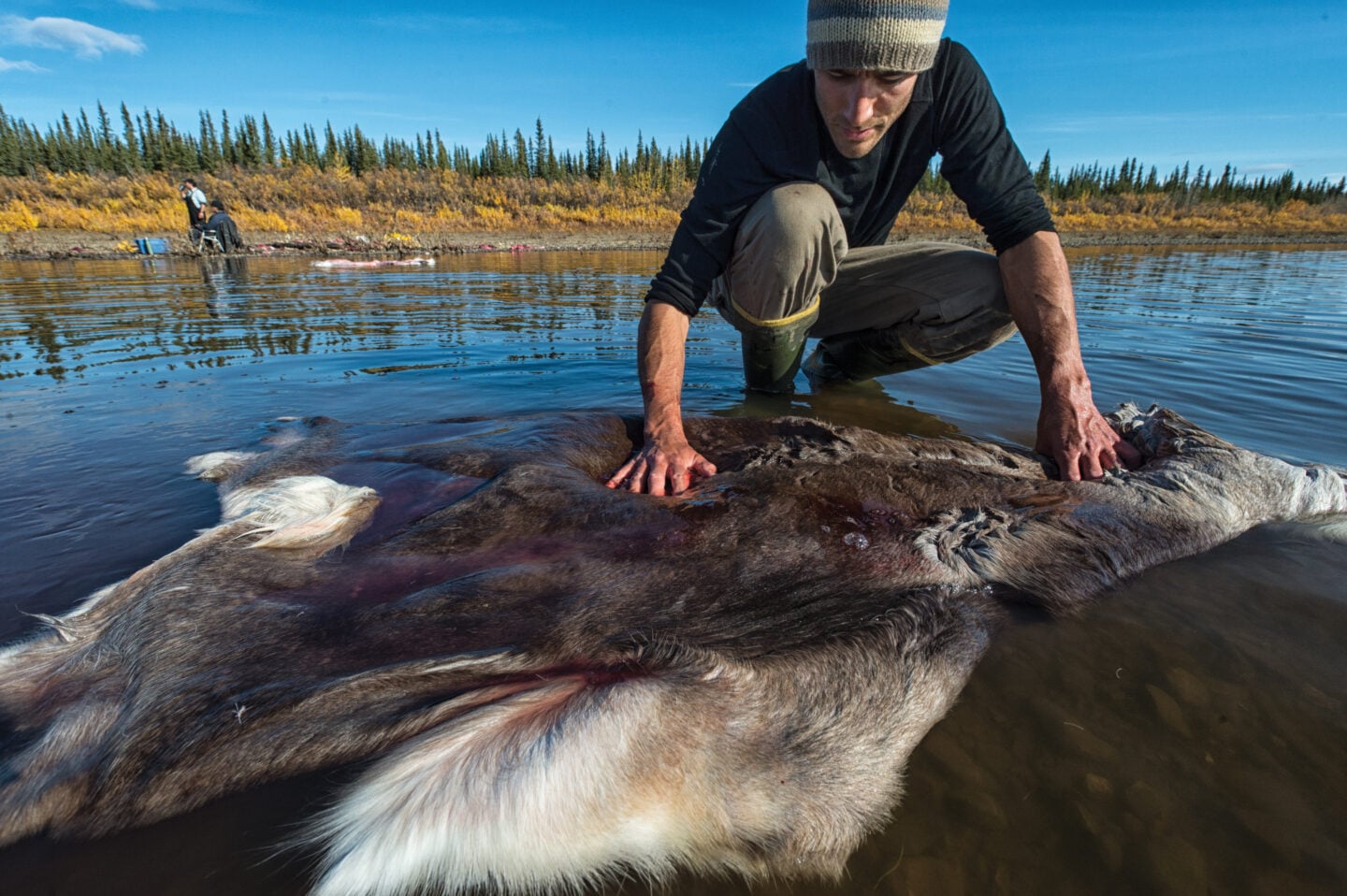
But habitat protections are more tenuous in the U.S., specifically within the Arctic Refuge, where the caribou give birth. In 1980, when the Arctic National Wildlife Refuge was designated, Section 1002 of the act deferred on whether or not to allow oil and gas development in 1.5 million acres along the coast. These are the “1002 lands” — the “biological heart” of the refuge and also where caribou prefer to give birth.
Since then, Frost and his community, alongside Gwich’in relatives in Alaska, have advocated to keep oil and gas drilling out of the 1002 lands — and to permanently protect the calving grounds. They point to research showing how disturbance from oil and gas activity could have devastating consequences on calf mortality — and lead to further herd declines.
In 1987, the Reagan administration recommended opening the 1002 lands for oil and gas development. Gwich’in communities rallied across the border, forming the Gwich’in Steering Committee in 1988 — Frost’s grandmother, Alice Frost, was a founding member. It’s been a multigenerational campaign to keep oil and gas at bay, and until recently, it’s been successful.
But in 2017, the Trump administration legally opened the 1002 lands and mandated oil and gas lease sales. Since then, the fate of the calving grounds has been in flux, yo-yoing between the Republicans and Democrats. The Biden administration halted the oil and gas leases in 2021, cancelling them all by 2023; Trump reinstated them in early 2025, doubling the number of lease sales that legally must be held over the next decade. The first sale is slated to take place June 5.
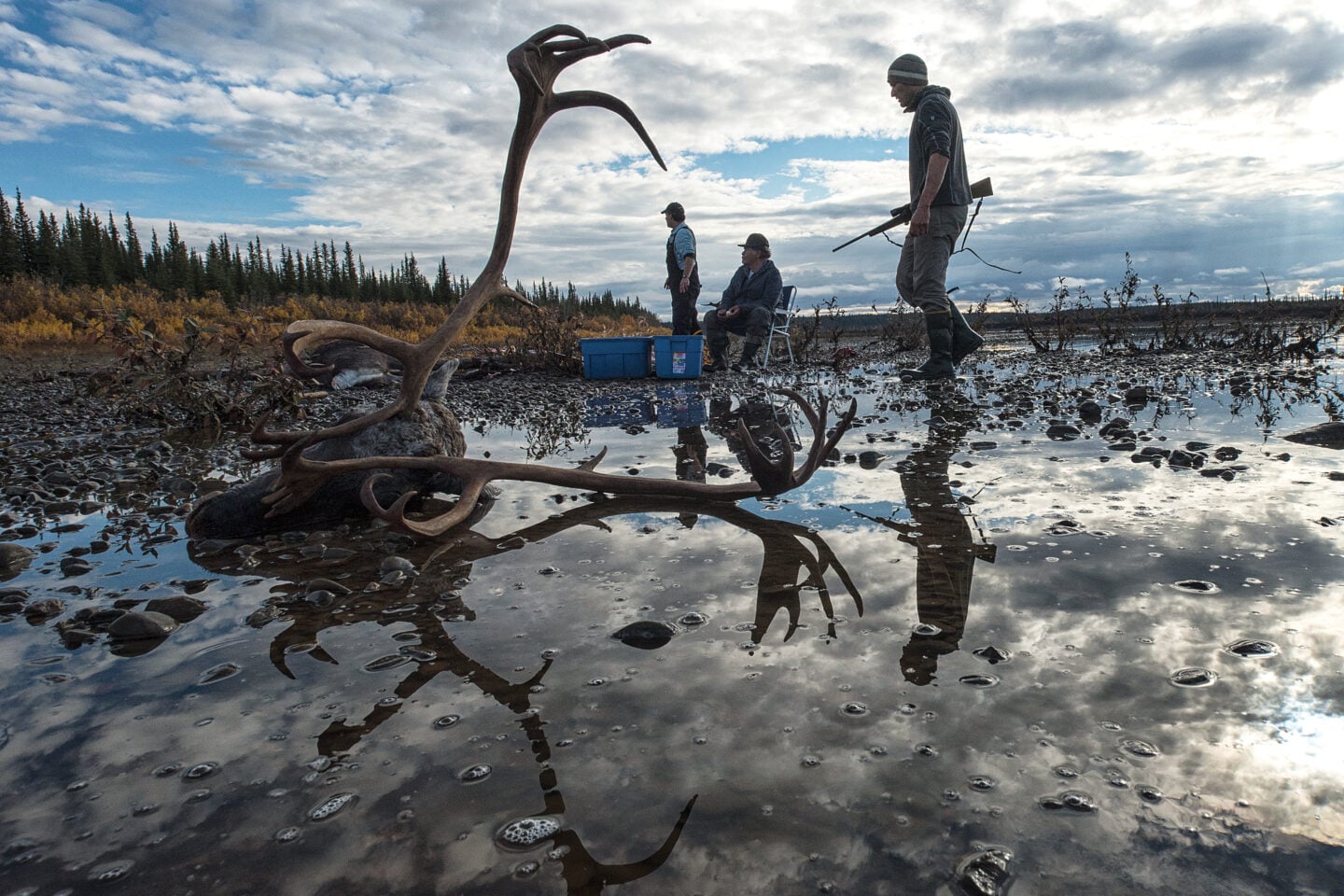
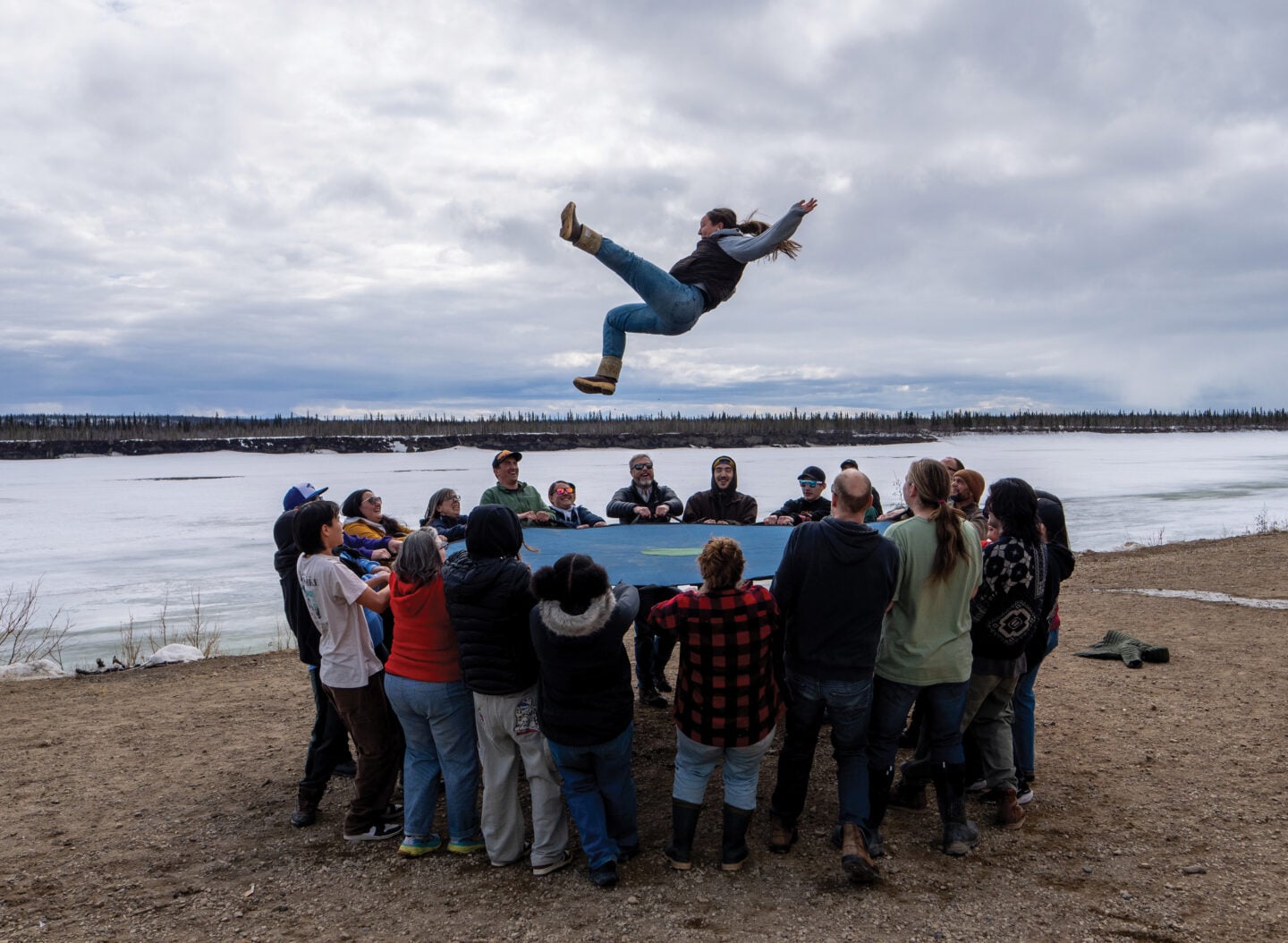
The threat to the herd has never been more imminent. And caribou remains essential to people’s diet in Old Crow, says Frost. The remote community contends with some of the most expensive food prices in Canada — a four-litre jug of milk costs upwards of $24. Like other families, Frost hunts caribou and moose for his family and community. Every May, the community gathers to celebrate Vadzaih Choo Drin, or Big Caribou Days, with food, games and dance, marking the return of the Porcupine caribou herd to Old Crow as they migrate towards the calving grounds. But over the past several years, hunters have seen changes in the herd and their habitat, says Frost. Most concerning: they’re seeing fewer calves.
In January, results from an aerial photo-census — carried out by biologists on both sides of the border — brought unsettling news: the Porcupine caribou herd dwindled from 218,000 indiduals in 2017, an all-time high since counting began in the 1970s, to 143,000 in 2025.
The advance of oil and gas development, along with herd declines, has spurred the Vuntut Gwitchin — with a network of communities and environmental organizations in Canada and Alaska — to take legal and advocacy actions to seek permanent protection of the calving grounds. Unity has never mattered more, says Frost.
“We as a people have been fighting for caribou because we lived with caribou for thousands of years. It has sustained us. It’s why we’re here today,” says Frost.
They’re drawing inspiration from caribou: stay together.
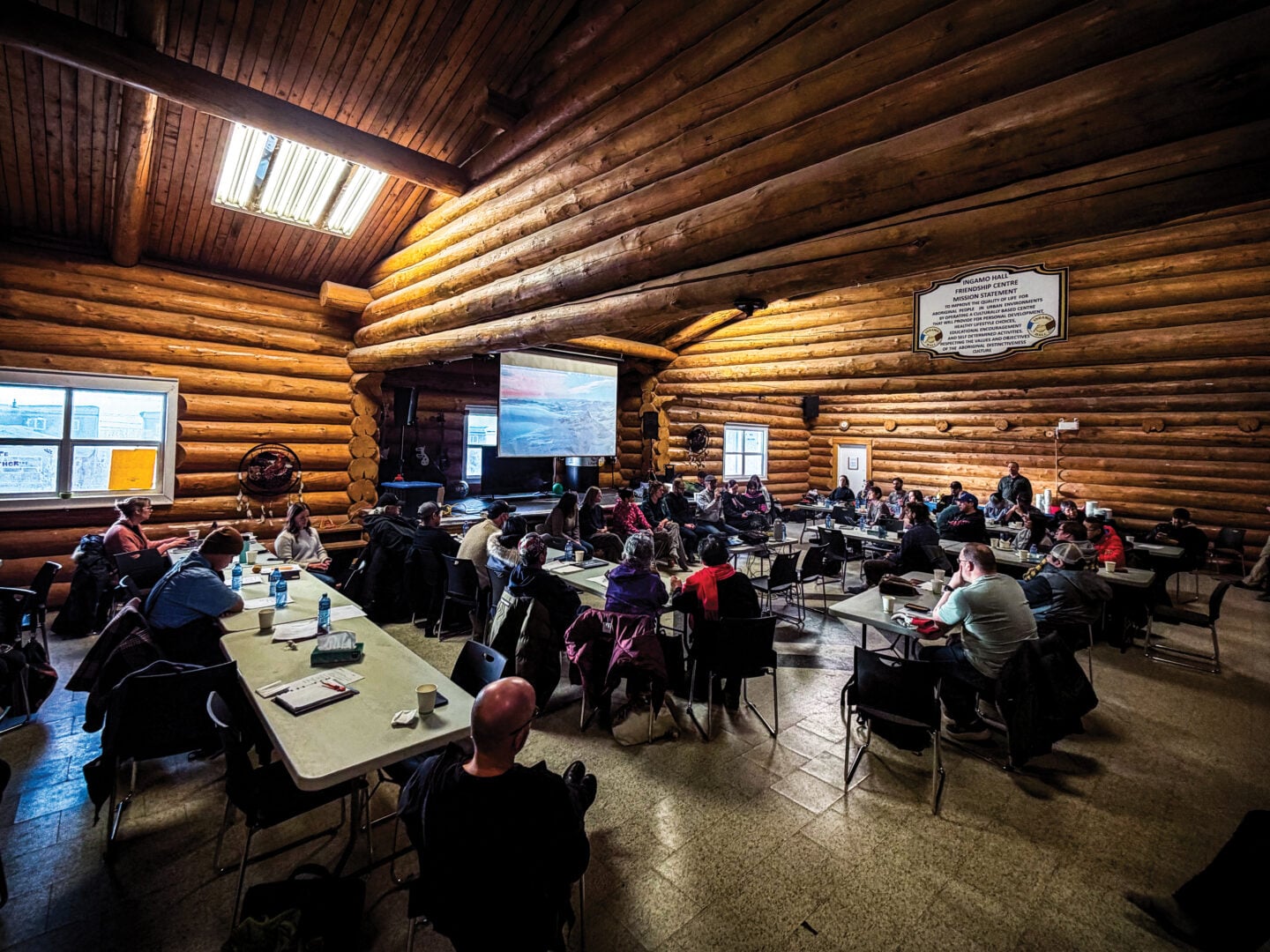
IT’S -38 C IN INUVIK, N.W.T. Exhaust plumes hang in the frigid air like cotton. It’s mid-February, so the sun won’t breach the horizon until late morning, but inside, the community centre floods with laughter and conversation.
First Nations leaders, Elders, youth, land guardians, scientists and wildlife managers have come together for the Porcupine Caribou Management Board’s annual harvest meeting to listen to presentations from Indigenous communities and scientists and discuss the future of the herd. The week before, the U.S. government announced it would open up 115 tracts of land in the Arctic Refuge for “nomination,” offering companies the opportunity to identify land they’d like to see in the oil and gas lease sale, which is scheduled for June 5.
The Vuntut Gwitchin have denounced the call for nominations; many communities scrambled to submit their comments (which were due March 5) on why extraction shouldn’t be allowed. Since 2020, the U.S. government halved the comment period from 60 to 30 days. “Any company considering development of these sacred lands must recognize the serious legal, financial, and reputational risks,” says Frost. “Industrializing these lands violates the rights of the Gwich’in Nation, ignores decades of clear opposition, and disregards the broader public interest.”
Despite what’s at stake today, delegations from eight communities across northern Yukon and N.W.T. greet one another like old friends.
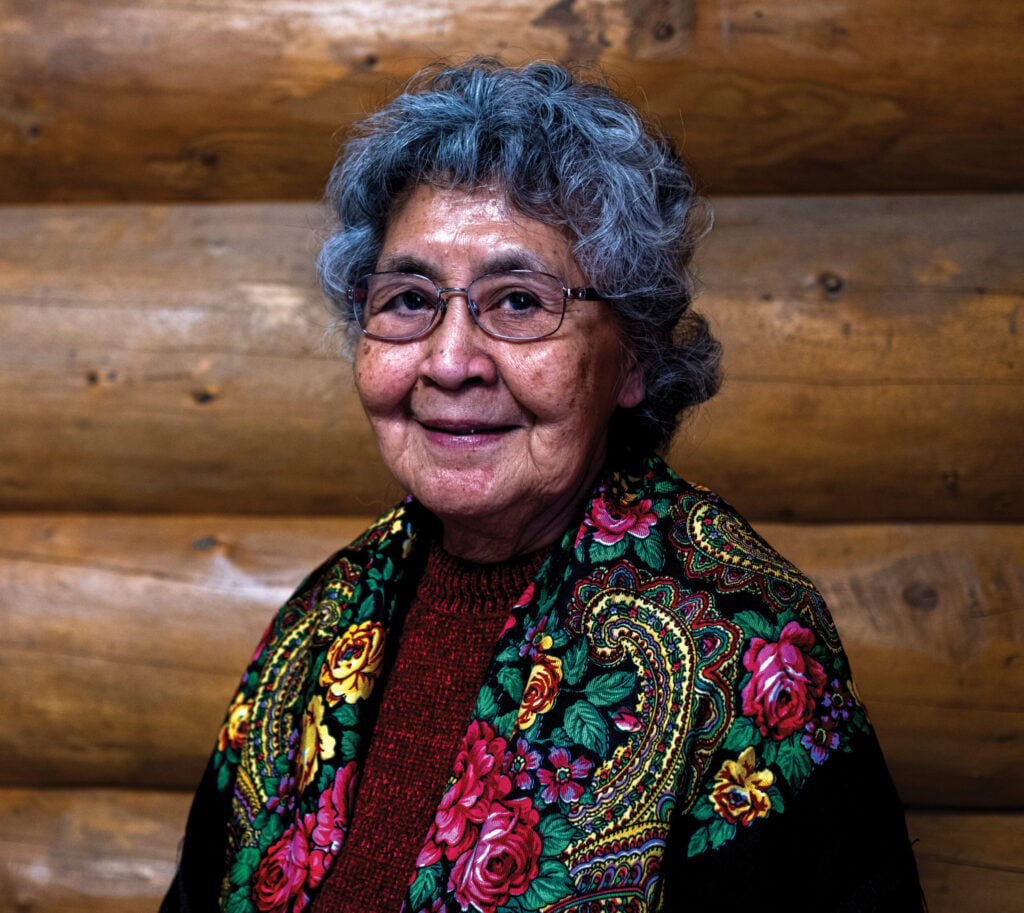
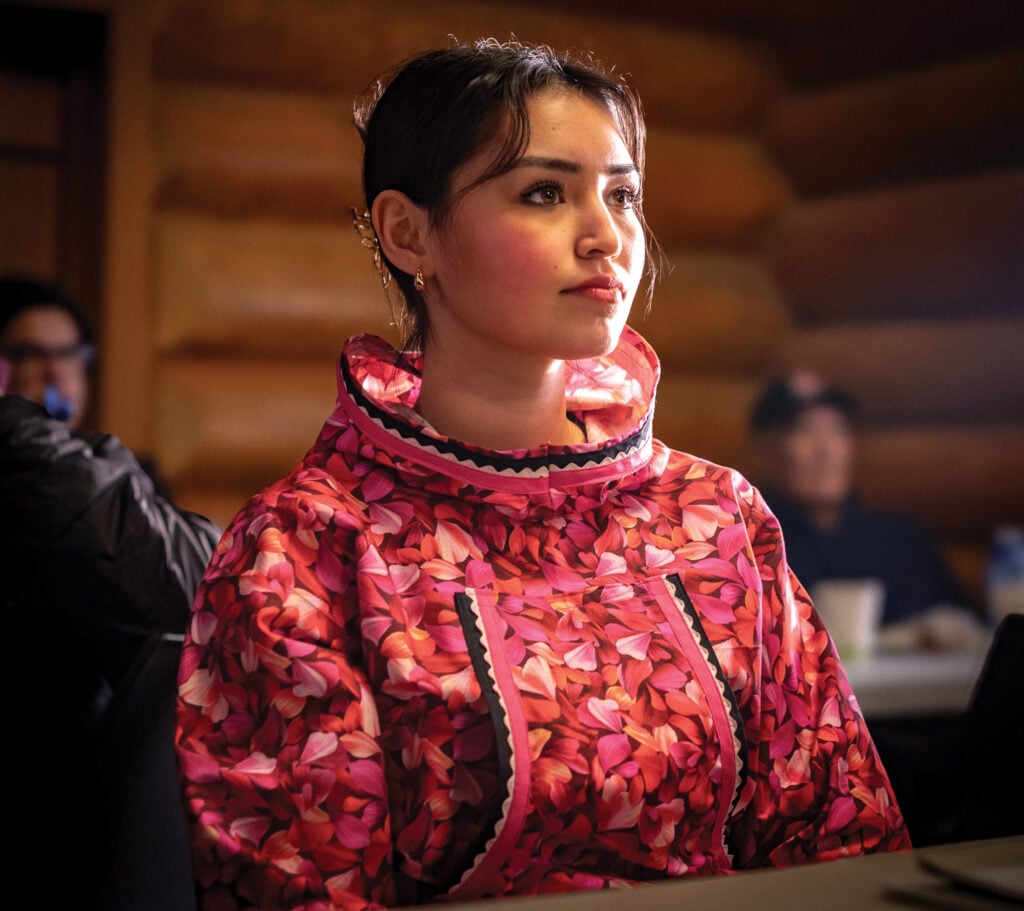
For Elder Sarah Jerome, a member of the Tetlit Gwich’in who grew up in Fort McPherson, N.W.T., and lives in Inuvik, memories of being on the land with her family, harvesting caribou, represent the “happiest years” of her life. “We were healthy — physically, mentally and spiritually,” says Jerome. Recently, her brother gave her some caribou backstrap — the muscle running along the animal’s spine — which she dried to share with family. Jerome has come to the meeting to learn about the herd status; she plans to report what she learns on Nantaii, a Gwich’in language radio program.
Youth leaders have come, too, including Talina Storr, an 18-year-old Inuvialuit, who travelled two hours on the winter road from her community of Aklavik. Caribou has been a part of her diet ever since she was a baby, Storr says. “It keeps you connected to your culture … and keeps our people together.” As a young leader sitting on Aklavik’s resource board, Storr believes the caribou should be protected.
“We want caribou for future generations,” Joe Tetlichi, a member of the Tetlit Gwich’in and chair of the Porcupine Caribou Management Board, says in his opening address. “We all agree on that.”
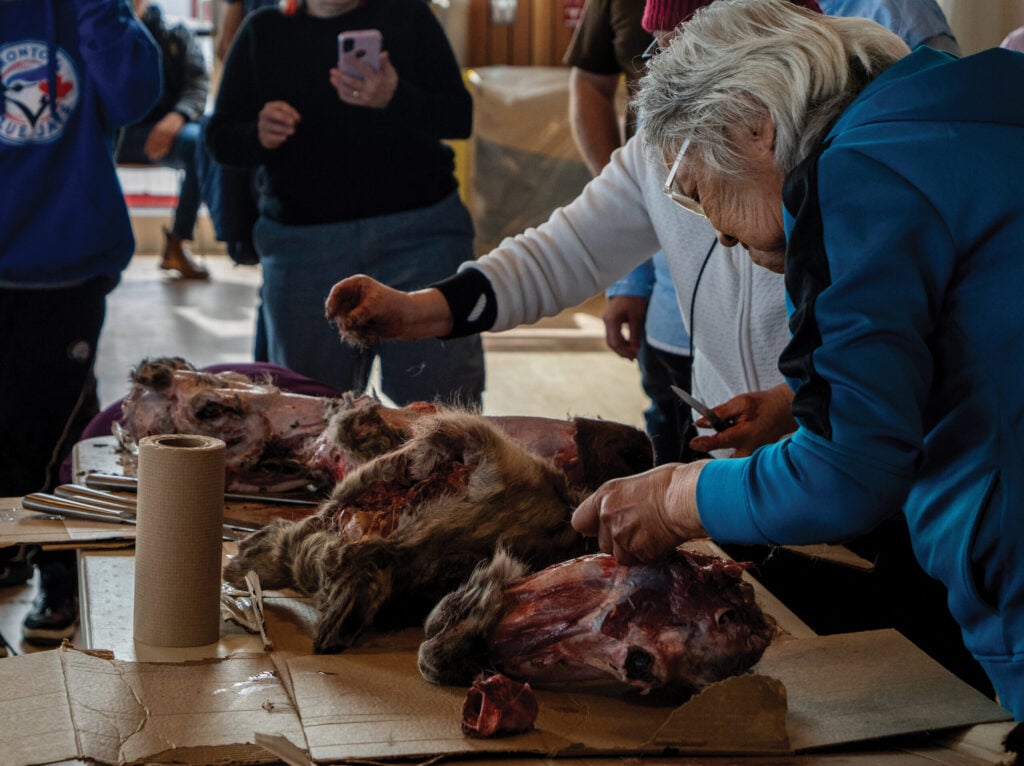
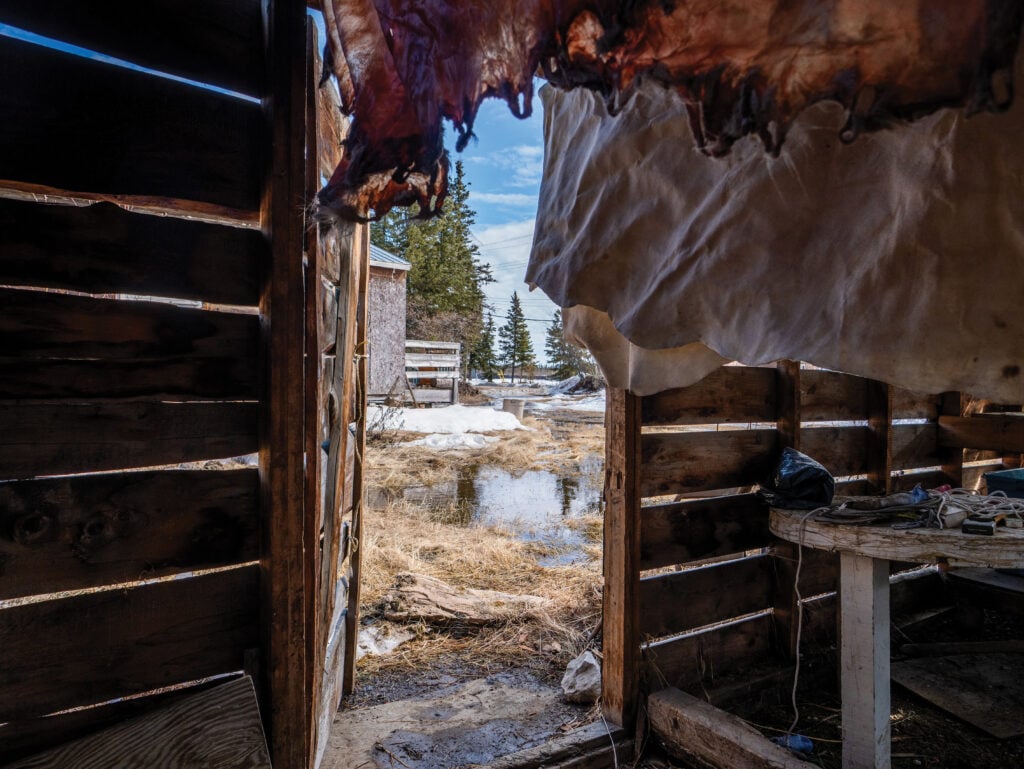
The story of conserving the Porcupine caribou herd is one of collaboration. In many ways, it’s a transboundary conservation success story. While other great caribou herds have dwindled in recent decades, the Porcupine caribou herd had remained a good news story. One of the herd’s greatest assets: people power.
For millennia, Indigenous communities have shared knowledge about the herd, while Canadian and U.S. scientists have worked across borders for nearly 50 years. In 1985, the federal and territorial governments, along with First Nations and Inuvialuit, first signed the Porcupine Caribou Management Agreement. The International Porcupine Caribou Agreement, signed by Canada and the U.S., followed in 1987 to promote conservation of the Porcupine caribou herd across borders. It’s one of Canada’s most important frameworks for advocating for the herd.
The cross-border agreement was shaped by Canadian and U.S. biologists who formed a research committee, which still meets regularly and plays a vital role in the herd’s management. The focus of their research is steered by Indigenous observations and questions.
People are drawing inspiration from caribou: stay together.
“Regardless of [politics], we all work together,” says Mike Suitor, a Yukon government migratory caribou biologist who also sits on the research committee. Since 2013, Suitor has helped to lead Canadian research and monitoring of the Porcupine caribou herd, or “Porkies,” as he calls them.
Collaboration between Canadian and Alaskan biologists is essential to studying and monitoring transboundary caribou herds, he says. In the 1970s, biologists exchanged letters to share observations on caribou movements and behaviour — Suitor still has a stack of them.
Today, information moves infinitely faster: researchers track the herd’s movements via GPS collars fitted to more than 100 caribou. Some of the collars even had cameras, so researchers could see what the caribou were doing: foraging, fleeing from predators and insects, and giving birth.
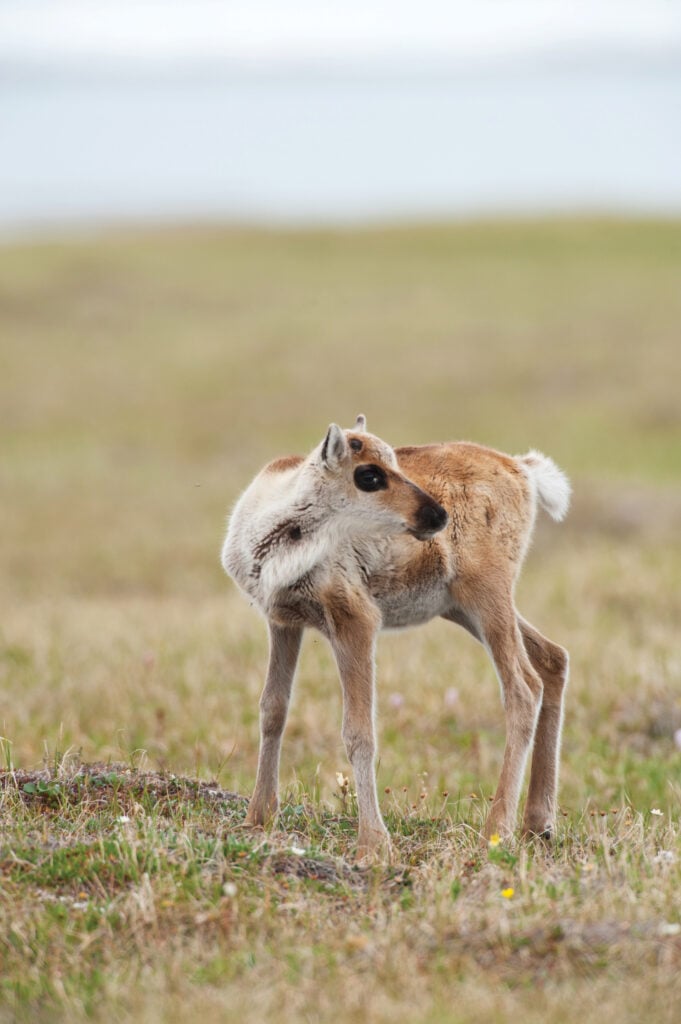
When the herd’s numbers reached an all-time high in 2017, researchers and communities expected a decline. Barren-ground caribou herds have always naturally fluctuated with environmental pressures. Since monitoring work began in the 1970s, the Porcupine caribou herd has oscillated between an average of 200,000 and 100,000 animals.
“We knew it was happening — and last year we had confirmation,” says Suitor, referring to the photo-census. Declines in the herd are normal, but “this one right now seems to be more substantial.” And there is other troubling evidence that all is not well with the herd. In 2024, only 80 per cent of radio-collared adult females survived the winter, falling below a herd stability threshold. For several years, hunters sent Suitor photographs of cows they’d harvested in late fall without any back fat. While it’s not uncommon for caribou body condition to seasonally deteriorate and improve, females should typically have one to two inches of fat, says Suitor. No back fat, several winters in a row, triggered concern.
More worrisome still: fewer calves are surviving, as Frost and other Gwich’in hunters have seen. This may have to do with their size at birth. Poor adult female body condition leads to poor milk quality, potentially resulting in smaller calves. “When they’re [born] lighter, they just don’t survive as long — they’re vulnerable for a longer period,” Suitor says. He points to research from capture surveys of nine-month-old calves that found calves today weigh five kilograms less than they did 20 years ago.
Everyone gathered here in Inuvik is looking for answers: what’s causing the Porcupine caribou herd’s decline?
IT ISN’T ALWAYS straightforward studying the ebbs and flows of a species that’s been around for so long, says Suitor, which is why Indigenous knowledge is vital. “First Nations and Inuvialuit have a memory that stretches longer than western science,” he says.
The world’s oldest known remains of caribou were uncovered in central Yukon, dating back 1.6 million years. Caribou are survivors in the truest sense of the word, says Suitor — they’ve survived multiple ice ages. Adult females are particularly good at “buffering themselves” against shifts, but they’re also sensitive: just because they’re good at surviving doesn’t mean they’re thriving.
While wolves and grizzly bears are often blamed for caribou declines, in the case of the Porcupine herd, the primary drivers are climate and energy. Natural climate cycles that influence atmospheric pressure and weather patterns have always existed, Suitor says, but their effects are now much harder to predict, likely because climate change is intensifying or disrupting them.
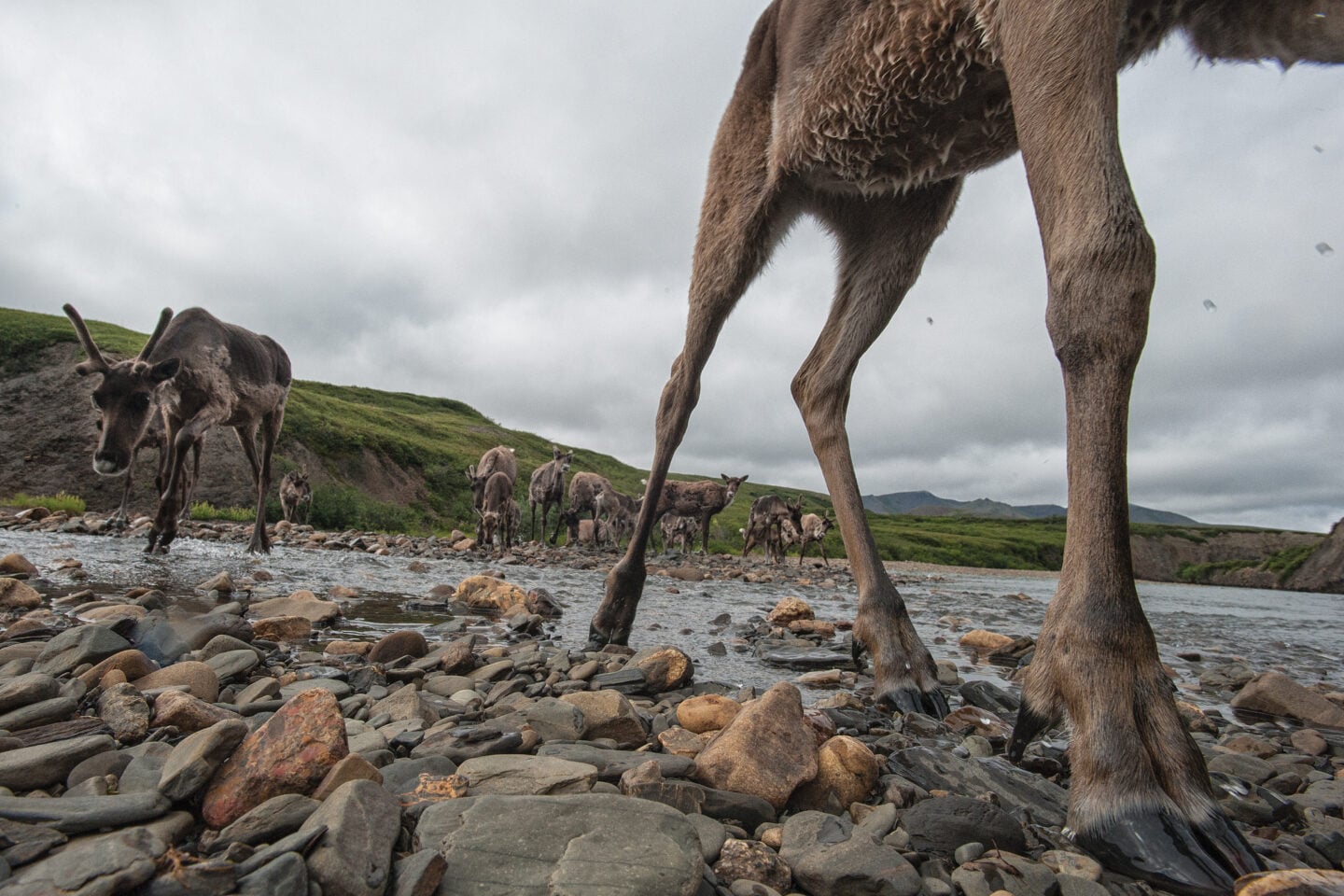
In the spring of 2018, winter lingered late in parts of the herd’s wintering range. Over the last several decades, snow in these areas has gotten deeper, says Suitor. Previously, the snow was more “continental” — dry, sugary snow that the caribou could easily travel through and paw beneath the surface for lichen. But climate change is resulting in a deeper, heavier, more layered snowpack. With the rising incidence of warm air masses pushing into the Yukon, there’s also the risk of rain.
“Imagine as a person moving through that snow… ice crusts are cutting into your shins. [Caribou] are experiencing that same issue,” Suitor says. That means caribou burn more energy just moving around.
In the last five years, summer temperatures spiked — sometimes exceeding 30 C. “That is not normal,” says Suitor. His team has analyzed 70,000 video clips from camera-mounted collars to study how warmer weather, higher precipitation and earlier snowmelt could be driving increased insect harassment from mosquitoes and from warble flies and nasal bots — parasitic flies that embed in caribou and lay eggs. In 2025, insect harassment was the highest it’s been in 76 years of research. Community members have also reported more larvae in the nasal passages of harvested animals, as well as pockmarks left by warble flies in hides. To escape the insects, caribou expend enormous energy, often abandoning valleys rich with fresh green plants for higher, rocky terrain.
Isla Myers-Smith, a northern ecologist at the University of British Columbia, is working closely with Inuvialuit park rangers on Qikiqtaruk, Herschel Island, to study how climate change is affecting tundra ecosystems. She explains how permafrost freeze-thaw cycles are causing cryoturbation, or “frost boils,” which mix organic-rich topsoil into deeper layers. Over time, this creates circular patches of bare earth.
These disturbances across the Arctic have led to greening, or “shrubification,” because “plants love bare ground. That’s where their seeds want to grow,” Myers-Smith says. But slow-growing ground lichen may get left behind in the competition. And caribou rely heavily on that lichen for much of the year.
Indigenous communities also report that moose are moving into habitat once predominantly used by caribou, drawing more predation. “We’re ‘moose people’ now,” Elders have quipped to Suitor in recent years.
Some communities in the Yukon and N.W.T. haven’t been able to reliably harvest caribou from the Porcupine caribou herd for over a decade. The herd’s migratory route, particularly in the wintering grounds, has shifted dramatically. Researchers aren’t sure why but suggest the herd might be avoiding warmer weather down south. The Tr’ondëk Hwëch’in haven’t seen the herd on their traditional territory around Dawson City, Yukon, since 2014; the herd hasn’t migrated south of the Arctic Circle since 2015. “Before 2010, you would have seen half the herd in that area,” says Suitor.
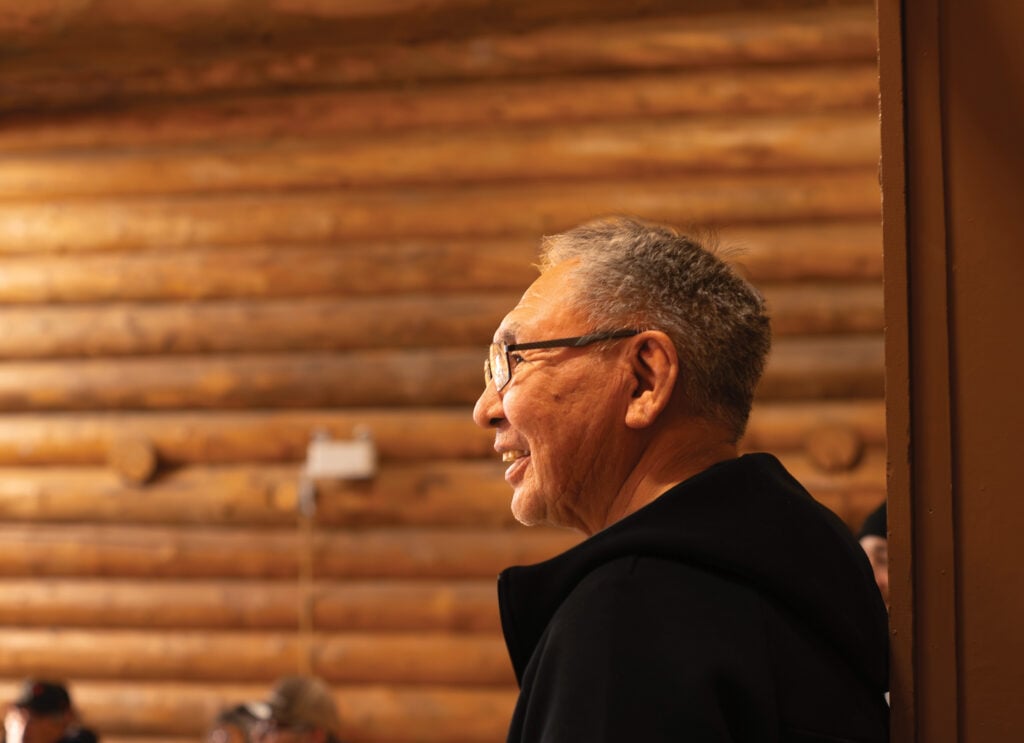
After watching other caribou herds across North America plummet over the last few decades, communities started working on their own harvest management plan in 2006. “We have no control over climate change. But what we do have control over is harvesting,” says Tetlichi.
What may sound like a stark reality is a plan to give the herd a better chance. Communities may not have caused the declines, but they are ready for them to continue. If the current rates of calf and adult survival continue, communities will alter their hunting practices. If the population falls to the “yellow zone,” they’ll harvest only bulls. Below that, in the “orange zone,” tags will be distributed across communities.
It’s worth pointing out the number of caribou now harvested by communities is low. These are mainly small communities with populations ranging from 151 to 536 people. The herd’s decline is not due to overhunting, yet communities are adjusting their practices to help.
“We’re all in this together, we’re not trying to scare anybody,” says Tetlichi, reassuring the room. “It’s just a concern … so that people can start thinking about what we need to do.”
For Tamara Kaglik, a 20-year-old Inuvialuit youth from Inuvik, caribou was always a part of her diet and culture as a child. The taste is one she knows so intimately that she can tell where and when the caribou was harvested. “Sometimes it tastes more willowy — it depends on the land that they’re on,” she says.
Kaglik remembers hunters travelling a short distance to harvest the herd. But today, it’s costly — in terms of time and money to fuel snowmobiles — to reach the animals. As a result, she eats more moose than caribou. “I haven’t even [harvested] a caribou yet,” Kaglik says remorsefully. “A lot can happen in a decade.” The young leader wants people to understand the real impacts of climate change on the Arctic. “I don’t know how the Inuvialuit people would be without caribou. It’s losing the history if we lose the caribou.”
“I don’t know how the Inuvialuit people would be without caribou. It’s losing the history if we lose the caribou.”
IN LATE FEBRUARY, the Porcupine caribou herd paws for lichen beneath the snow, wintering near Arctic Village, Alaska. The herd is relatively sedentary during the winter; they don’t make any major moves — not yet.
Meanwhile, communities and organizations on both sides of the U.S.-Canadian border are busy preparing to submit their comments on the negative impacts of oil and gas development in the calving grounds to the U.S. Bureau of Land Management. Frost says the U.S. government is intentionally fast-tracking the review process. The purpose “is to cut regulations, not meet with Indigenous groups … not going into the community to look at environmental and cultural impacts,” he says.
But the Vuntut Gwitchin and their allies, including the Gwich’in Steering Committee, are not backing down. In mid-January, the steering committee, along with 11 other environmental organizations, including Canadian Parks and Wilderness Society Yukon, announced a lawsuit against the U.S. administration for advancing “an unlawful leasing program” in the Arctic Refuge. The newly amended lawsuit — originally filed in 2020 but paused during the Biden administration — claims the U.S. government is violating multiple U.S. environmental laws and policy.
“We have to use every tool available to us,” says Frost, who emphasizes the need to maintain pressure on the Canadian and territorial governments.
That effort is already taking shape. On Dec. 17, 2025, Vuntut Gwitchin MLA Debra-Leigh Reti introduced a motion for the Yukon government to formally oppose oil and gas development in the Arctic Refuge, in recognition of the traditional rights of First Nations groups who depend on the Porcupine caribou herd. MLAs voted unanimously in favour.
“We on this side will keep working with the U.S. agencies and the State of Alaska to reduce the track impacts from development,” Wade Istchenko, environment minister with the Yukon government, said during the legislative session.
When people learn that the Gwich’in and caribou share half a heart, will they speak up for the herd?
However, there are challenges with the current political framework. Canada has formerly used the International Porcupine Caribou Board — created from the agreement between Canada and the U.S. — to advocate for conservation. But the international board hasn’t convened for six years. During the last meeting, hosted in Whitehorse in February 2020, a majority of U.S. board members argued providing formal advice on oil and gas leasing in the Arctic Refuge wasn’t part of the board’s mandate. Canadian members unanimously disagreed. Ultimately, no recommendations were made.
The Vuntut Gwitchin and CPAWS Yukon are urging the international board to reconvene — and calling on Canada to uphold its commitments.
“The Arctic Refuge isn’t just land. It’s our homeland, our responsibility and our future. What gets decided in months will be felt by our people for generations,” Frost says. “Caribou are important not only to the Gwich’in, but to all of Canada.”
When people learn that the Gwich’in and caribou share half a heart, will they speak up for the herd?
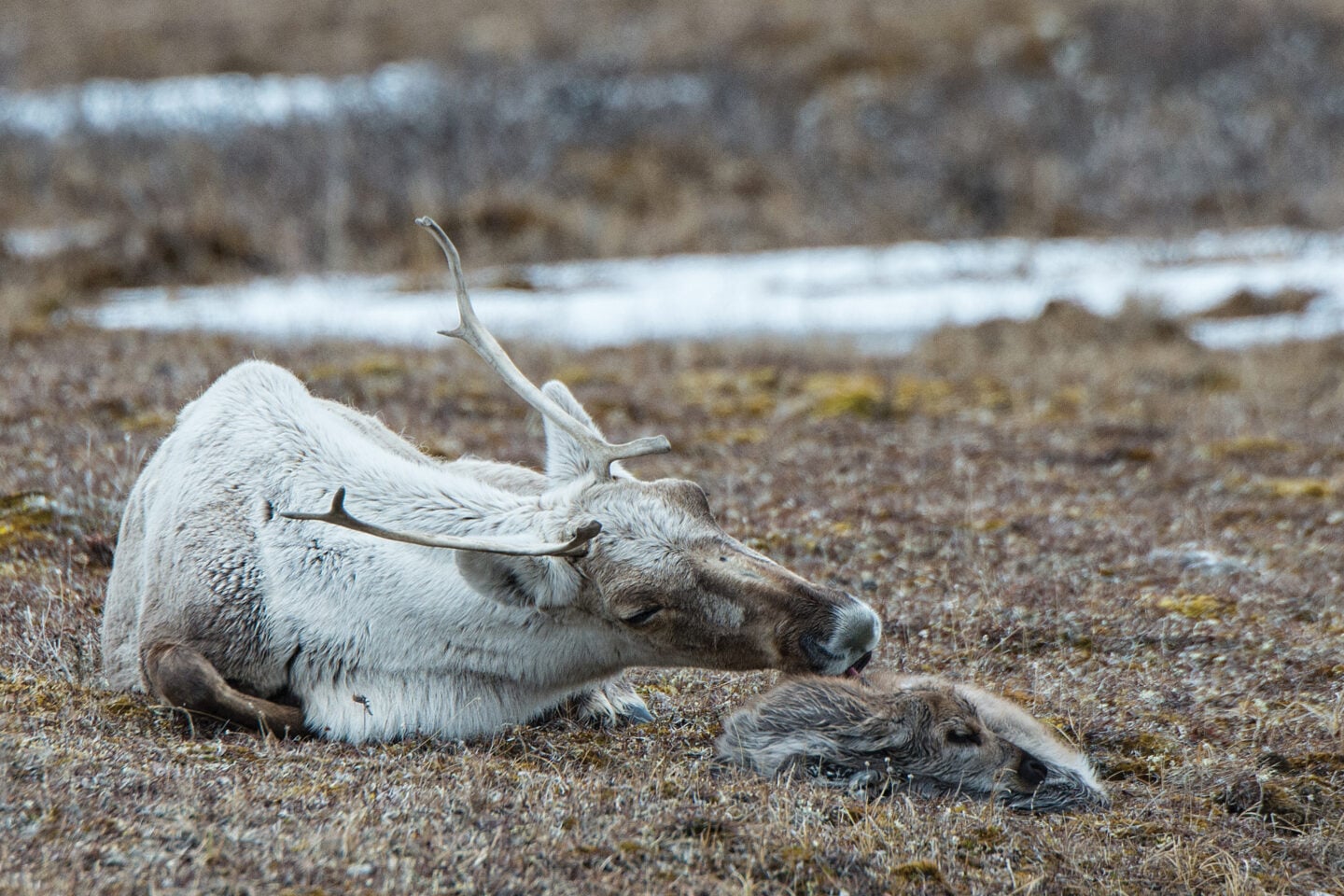
DAYS AFTER THE CARIBOU give birth on the coastal plain, the females shed their antlers, leaving behind a kind of proof of life: we are still here. The antlers hold memories about the herd’s deep ties to the calving grounds of the Arctic Refuge. The oldest antler fragment found by researchers has been carbon dated to 3,100 years.
It’s not too late for the Porcupine caribou herd. The herd can rebound again, as it has for millennia. Especially if its calving grounds and wider habitat are left alone, undisturbed, and protected for future generations.
The caribou can come back to the people again. Will the people come back to the caribou?
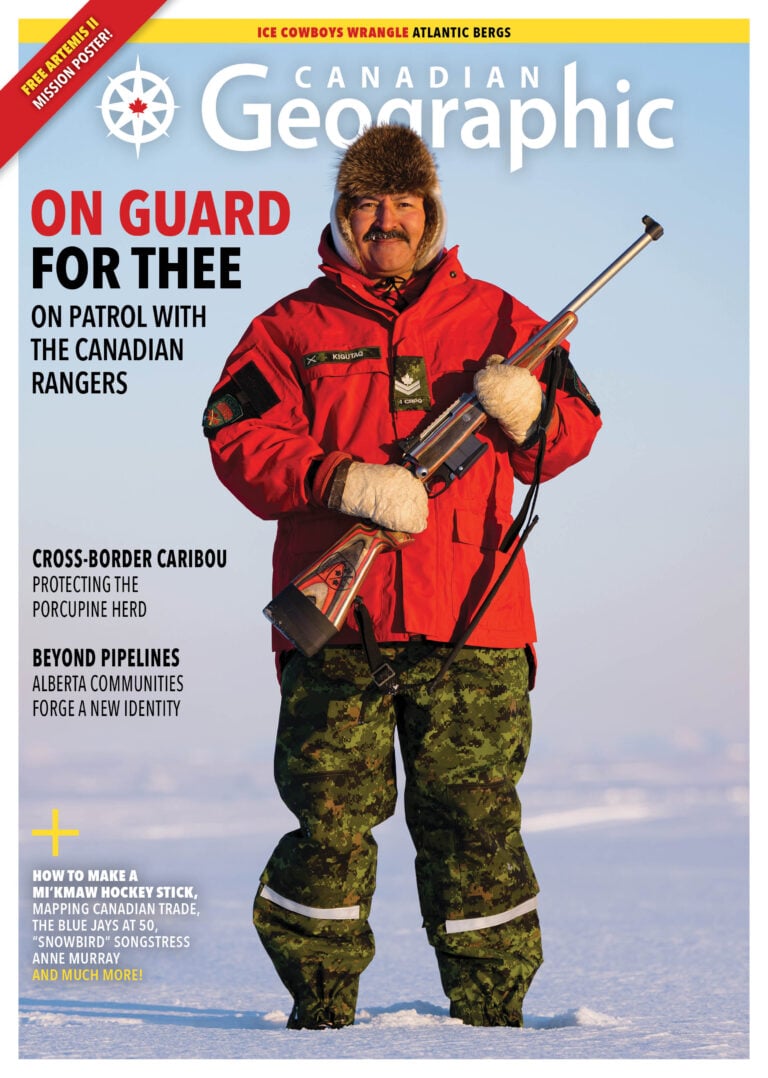
This story is from the July/August 2026 Issue
Environment
How the Sahtuto’ine Dene of Délı̨nę created the Tsá Tué Biosphere Reserve, the world’s first such UNESCO site managed by an Indigenous community
Wildlife
After more than a million years on Earth, the caribou is under threat of global extinction. The precipitous decline of the once mighty herds is a tragedy that is hard to watch — and even harder to reverse.
People & Culture
An immersive Yukon art installation brings caribou — and conservation — into focus
Wildlife
The failure to recognize distinct species and subspecies of caribou is hampering efforts to conserve them. So, I revised their taxonomy.