
Environment
The great turning
Another reckoning is coming with climate change. How do we deal with our mental health — and ultimately find hope?
- 3646 words
- 15 minutes
People & Culture
Facing wildfires, permafrost thaw and flooding, some Northern community leaders say security announcements by the federal government will support adaptation and mitigation on the ground
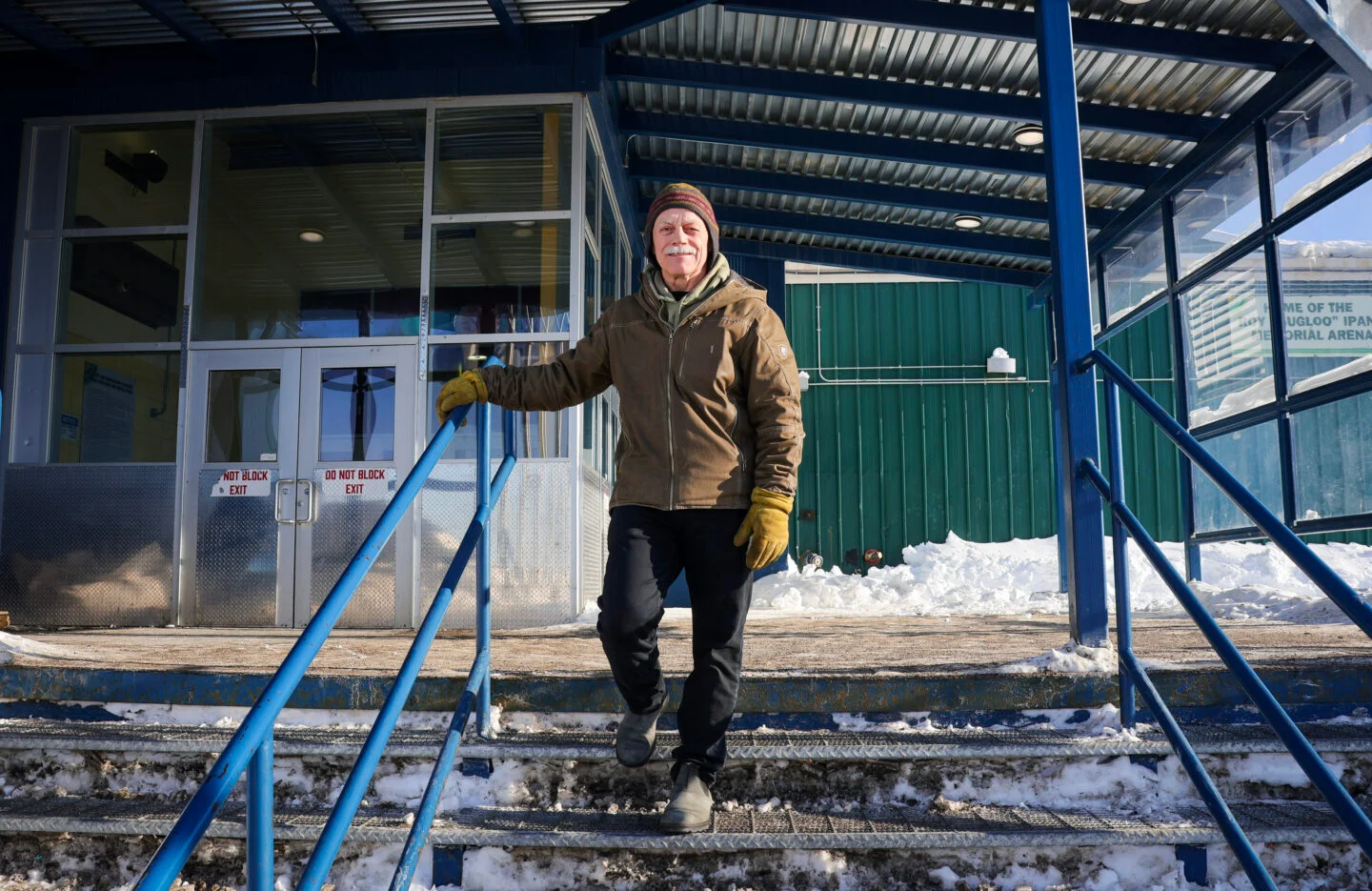
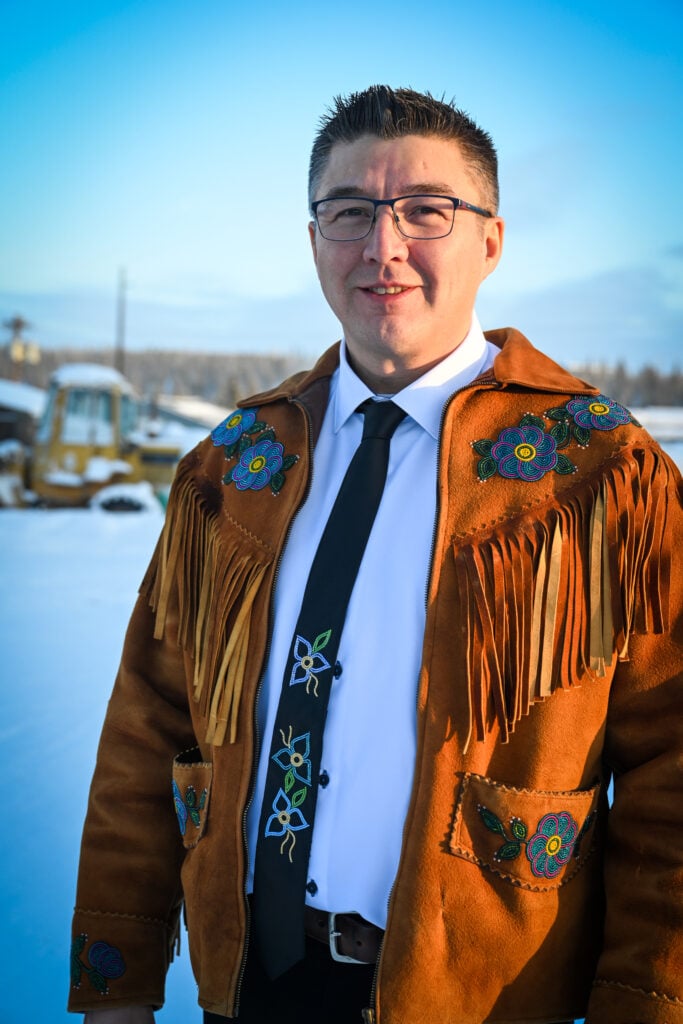
Peter Clarkson has been the mayor of the town of Inuvik twice.
His first term was between 2000 and 2006. He had moved to the community, in the Inuvialuit Settlement Region of the Northwest Territories, over two decades prior to work as a wildlife biologist, focusing on wolves, caribou and grizzly bears. In that role, he supported the development of a co-management system for both the Inuvialuit and Gwich’in following their land claims settlements in the region.
He also worked as the director of the Gwich’in Renewable Resource Board during this time and with the territorial government in the years following. In the community, he helped launch key initiatives including the development of the local greenhouse and getting the Mackenzie Valley fibre off the ground.
Roughly 40 years after he first moved the town, Clarkson was elected mayor for a second term in October 2024. In the time since, he says he has found himself in discussions about development in Inuvik of a different nature: infrastructure announcements supporting the federal government and the military in their plans for Arctic security.
In Inuvik, this includes airport upgrades, including extending the runway to support the military, and the Mackenzie Valley highway.
The federal government has also announced investments in the Talston Hydro Expansion Project, the Arctic Economic and Security Corridor and the Grays Bay Road and Port Project.
Inuvik and Yellowknife are also among the communities receiving money for airfield upgrades, new or repurposed hangars, and other construction meant to support operations by the Canadian Armed Forces.
All of this is part of Prime Minister Mark Carney’s commitment to “transform the North” through “new, generational investments and initiatives to defend, connect, and transform Canada’s Arctic and Northern region.”
“Arctic security is very much a part of what Inuvik is doing right now,” Clarkson said about his participation in these developments.
The climate challenges we know
Discussions about Arctic security and related infrastructure developments are not taking place in a vacuum. Instead, they are taking place alongside memories of climate and socio-economic challenges such as wildfire threats, permafrost thaw and lack of employment.
The impacts of permafrost thaw in particular, which Clarkson said is the biggest climate challenge facing Inuvik, are already well-known. According to a 2017 CBC article and data presented by the Northwest Territories’ Association of Communities, thawing permafrost is causing approximately $51 million worth of damage to the territory’s public infrastructure every year.
In 2022, a report published by the territorial government also noted that an estimated 40 to 75 per cent of the buildings “are likely to incur foundation damage” due to thawing permafrost across the NWT.
These effects are likely to keep growing in the coming years, according to researchers at Toronto Metropolitan University.
“Permafrost does not fail suddenly. Instead, it responds slowly and cumulatively, storing the heat of warm summers year after year,” Mohammadamin Ahmadfard, Ibrahim Ghalayini and Seth Dworkin wrote in an article published in The Conversation in December 2025.
“Long-term borehole measurements across northern Canada confirm that permafrost temperatures continue to rise even in places where the ground surface still refreezes each winter.”
The implications extend far beyond individual buildings, with airstrips, water treatment plants and road systems in the North all dependent on stable ground. For infrastructure expected to remain in service over many decades, the team said the damage ripples outward, increasing isolation, raising costs and limiting access to essential services.
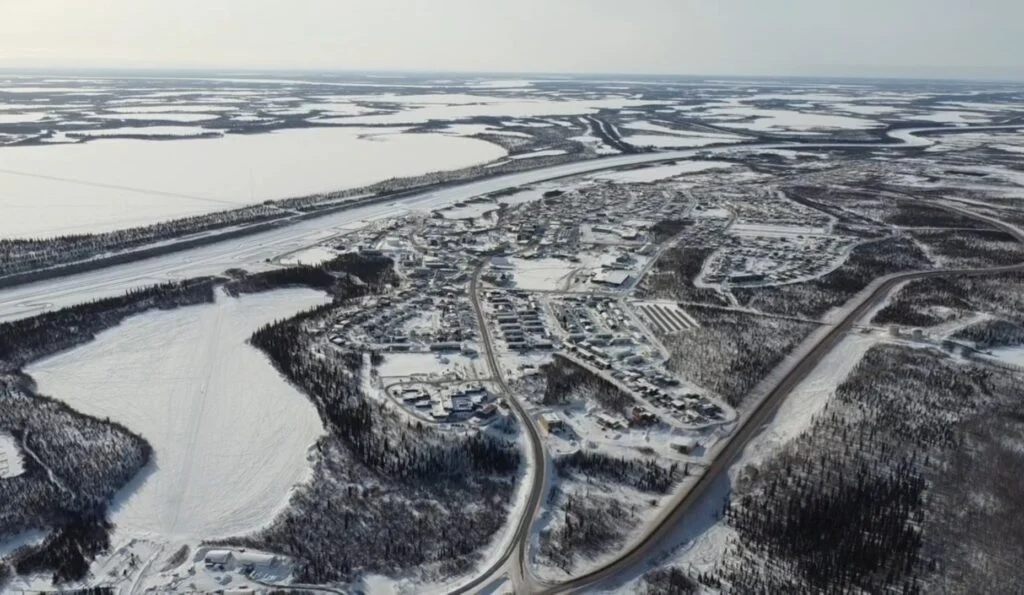
While permafrost is top of mind in the Mackenzie Delta, other areas of the territory have other priorities: In Yellowknife, the threat of wildfires continues to loom large given the unprecedented three-week evacuation of around 20,000 residents in 2023.
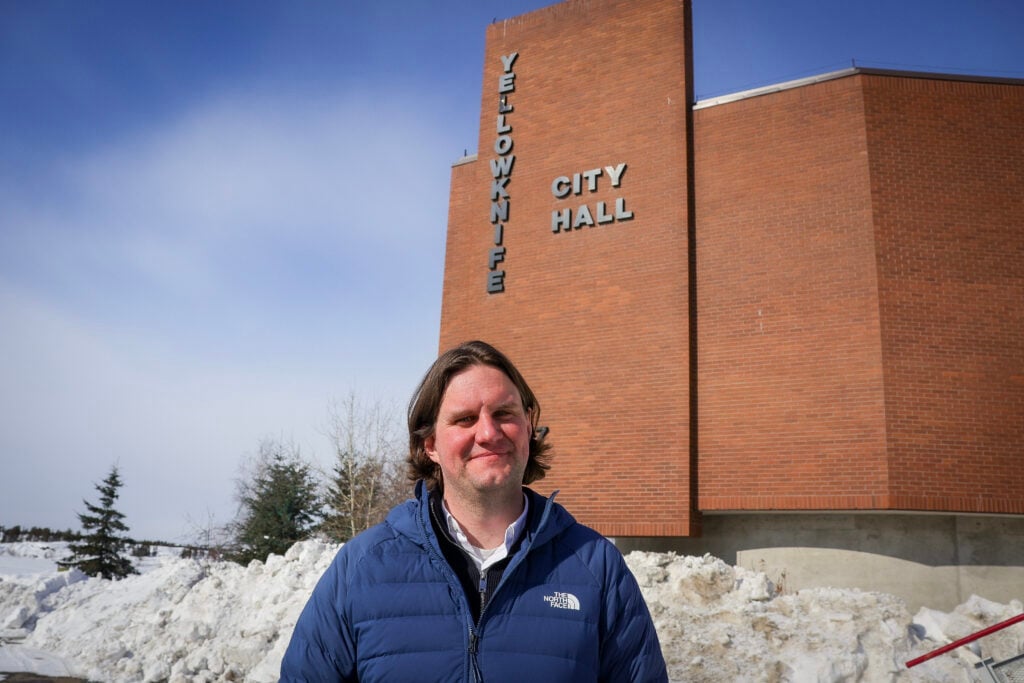
It’s why Yellowknife mayor Ben Henriksen said climate action remains a key part of his work.
“My focus is always, what can we control versus what can’t we control, and how do we respond to things,” Hendriksen said. “It’s always that mitigation and adaptation balance.”
A July 2026 report by Statistics Canada found that across Canada, Indigenous communities were disproportionately impacted by the 2023 wildfire season. According to the report, 42 per cent of evacuations took place in communities where more than half the population was Indigenous.
As well, Indigenous people were often evacuated to places far from their home communities, with families separated, causing psychological stress. Wildfires were among the top four extreme weather events most frequently reported by Indigenous people in 2023.
This past summer, Yellowknife was once again housing fire evacuees from Fort Simpson and Wrigley.
Rebecca Alty, the member of parliament for the Northwest Territories and the minister for Crown-Indigenous relations, said the federal government understands that new infrastructure developments, particularly the Mackenzie Valley Highway, are “interconnected with climate change.” The goal, she says, is for the road to connect communities and also act as a climate solution.
“Winter roads are becoming challenging for the winter resupply and the low water levels are challenging in the summer for the barge,” she said. A highway would address both seasonal concerns.
The work moving forward
Climate change may be the biggest problem facing communities across Canada’s North, according to Zachary Zimmermann, a researcher with the North American Arctic Security and Defence Network, or NAADSN.
Born in Inuvik and raised in Whitehorse, Yukon, Zimmermann says there is a tendency to focus on “imagined threats” way more than other, more pressing issues.
“If you actually look at what is affecting communities on a day-to-day basis, it’s climate change. And I point to the evacuation of Yellowknife as a prime example of that [because] there’s no other threat that has caused an entire community of 25,000 people to evacuate,” he said. “No military threat has done that.”
At the same time, Zimmermann said the climate preparedness of communities such as Inuvik, Yellowknife and Iqaluit remains “very low.”
“I know in the N.W.T., for example, that communities are mandated to have community evacuation plans,” he said. “Those plans exist, but it’s a question of how well informed is the public about it, and you know, how well could it be implemented in the event of an emergency.”
In Yellowknife, Hendriksen said the community has mixed perspectives on the latest federal announcements, with a few people skeptical because they have “been around long enough in their life to have seen the big announcements come and go and nothing really changed.
“Then you see the people who are more like myself, who go, ‘these are big opportunities, and it’s our job to now do the work and to make sure that investments that happen to Yellowknife are done with ourselves informing other decision makers.’”
Hendriksen said his priority is ensuring the federal government’s decision to spend money in the North is done by asking, “how do we make the best of this scenario? “
“The federal government is spending money and you can do things in two ways. You can do it in spite of us and on the edge of us, in which case that community buy-in won’t be there, that social license won’t be there. Or you can do it alongside us, and we’ll be able to do something really interesting for the North.”
The history of Inuvik, meanwhile, involves adapting to the environment. The town was built by the federal government to replace Aklavik, a nearby community prone to flooding and erosion. While Aklavik still exists today, many Gwich’in and Inuvialuit families have moved to Inuvik, making it the largest community and administrative centre in the Inuvialuit Settlement Region.
Today, Clarkson said he has been working to address local challenges in Inuvik through the creation and implementation of a community energy plan.
At the same time, the connection between Arctic security and climate change has not been a priority for the community. This is because, like many Canadians and citizens in other countries around the world, Clarkson said Inuvik residents find themselves focused on what it would mean to be taken over by China or Russia or, this past year, the United States.
Such threats are real for the community given its history and location, Clarkson said, adding that the main concern for the community is that “we don’t want to be part of the U.S., and we don’t want to be part of China or Russia.”
“What people also don’t realize is that because the Earth is round or semi-round … we are 10 degrees west of Vancouver, which puts us very close to Russia and China or anybody approaching from the western side, which are the two big threats,” he said.
“But also because we have an all-season road — and then with the Mackenzie Valley highway being constructed — we’ll have a second all-season road, so it just makes Inuvik very strategic from an Arctic defence standpoint.”
Improved emergency response
Clarkson said the community in Inuvik understands that Arctic security is a major way to secure federal infrastructure investments that are lacking and would greatly benefit the community.
“People understand that if we’re going to spend billions of dollars in the Arctic, probably new schools, housing, hospitals, health centres — all of those things would be great to have … so we realize spending money on securing the Arctic is important [for us].”
“I think that’s a challenge, but that’s just the reality we’re faced with right now, and until we see a change in some of the global leadership, that’s the world we’re in.”
According to Gwich’in Tribal Council Grand Chief Frederick Blake Jr., the NWT’s Gwich’in communities share this sentiment: while he didn’t confirm if defence — especially in terms of supporting Canada against foreign actors — is a priority, he said communities believe the infrastructure announced will lower the cost of living and build the local workforce.
“It’s been quite a while since we’ve seen any major announcements in [our communities] in the North here,” he said.
“It’s just a matter of ensuring that the communities are well prepared … and making sure the workforce is ready for all the opportunities.”
Blake Jr. also suggested the new infrastructure may make it possible for there to be improved assistance with climate challenges moving forward.
“The [Mackenzie Valley highway] will improve emergency response with natural disasters like forest fires,” he said.
“Right now it’s a challenge, especially for the isolated communities in the Sahtu, for example. Once the highway is built, it would be much safer for communities to evacuate if they have to.”
According to Zimmermann, Canada is unique in having a military that helps with climate emergencies regularly, but the success it will have in doing so in the North moving forward will also depend on other, “less flashy” infrastructure upgrades taking place alongside the large-scale developments announced.
“The military needs good electrical grid connection, they need solid transportation routes, whether that’s a port or roads or airfields, they need good telecommunication capabilities, and they need some good healthcare infrastructure,” he said.
“I think there is a good opportunity for these sorts of things to be tackled with this increase in military investments in the North [because] if the military needs better grid connections, then that’s something that can benefit the military presence but also the community … it’s really that base critical infrastructure that I think an increased military presence can be beneficial towards a community.”
At the same time, Zimmermann added that even such upgrades are but “one piece” of a larger puzzle that involves balancing the needs and aspirations of communities when it comes to the environment, the economy and Arctic security.
“Climate security is the basis of all other types of security. It’s the basis of economic security, the basis of food security …,” Zimmermann reflected, adding that “if your community no longer exists because of a climate disaster like a wildfire, then you have to be displaced and that’s going to affect every aspect of your life.”
“I think, then, it’s more a question about what’s our climate policy as a country? What are we going to do to solve climate change and adapt to climate change?”
Environment
Another reckoning is coming with climate change. How do we deal with our mental health — and ultimately find hope?
History
Veteran journalist and governor-general spouse Whit Fraser recalls diplomatic row with U.S. over 1980s naval excursion into Canada’s High Arctic in excerpt from latest book
People & Culture
As the climate heats up, so do talks over land ownership in the Arctic. What does Canadian Arctic Sovereignty look like as the ice melts?

Travel
Spotting the northern lights may be hit-or-miss, but the city’s culture, characters and hands-on experiences offer far more reliable rewards