
Travel
Chasing auroras in Yellowknife
With solar activity expected to peak in 2024, there’s never been a better time to see the northern lights. Here’s how to do it in the “aurora capital of North America.”
- 1711 words
- 7 minutes
Travel
Spotting the northern lights may be hit-or-miss, but the city’s culture, characters and hands-on experiences offer far more reliable rewards

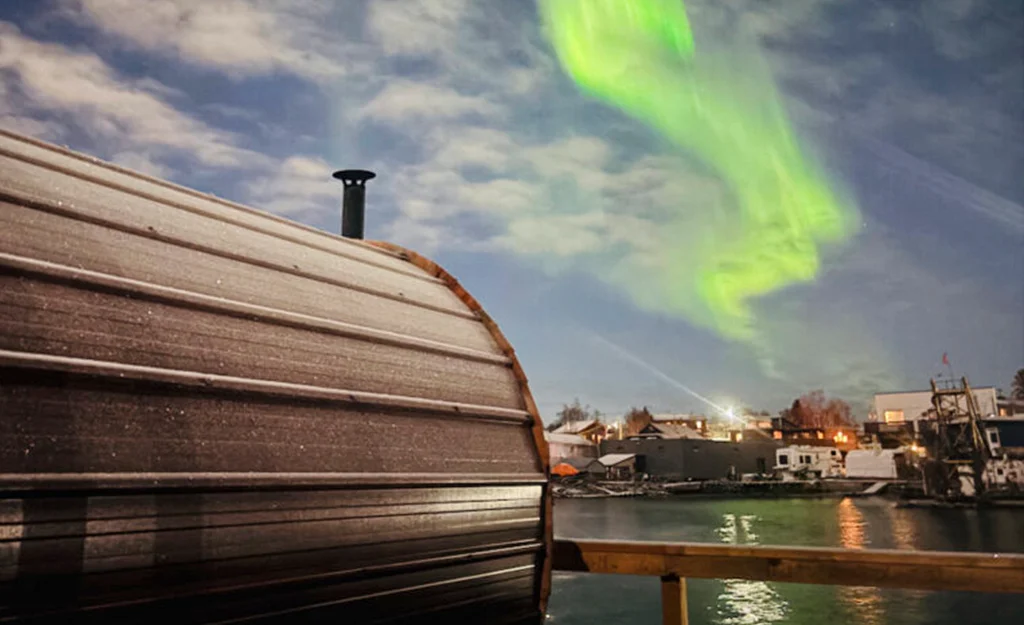
When it comes to the northern lights, a safari, whale-watching or a ski trip, it’s hit-or-miss whether nature will comply.
The first time I visited Yellowknife during peak aurora-viewing season, it rained for a week. Sometimes we’ll get lucky, but very often we won’t, missing out on a natural spectacle like a lion kill, a breaching whale, fresh powder on the slopes, or glowing lights in the night sky. To avoid disappointment, look into more reliable local experiences, and leave the unpredictable stuff to the cosmic gods. Whatever happens, you’ll still leave with memorable stories, especially when visiting the capital of the Northwest Territories.
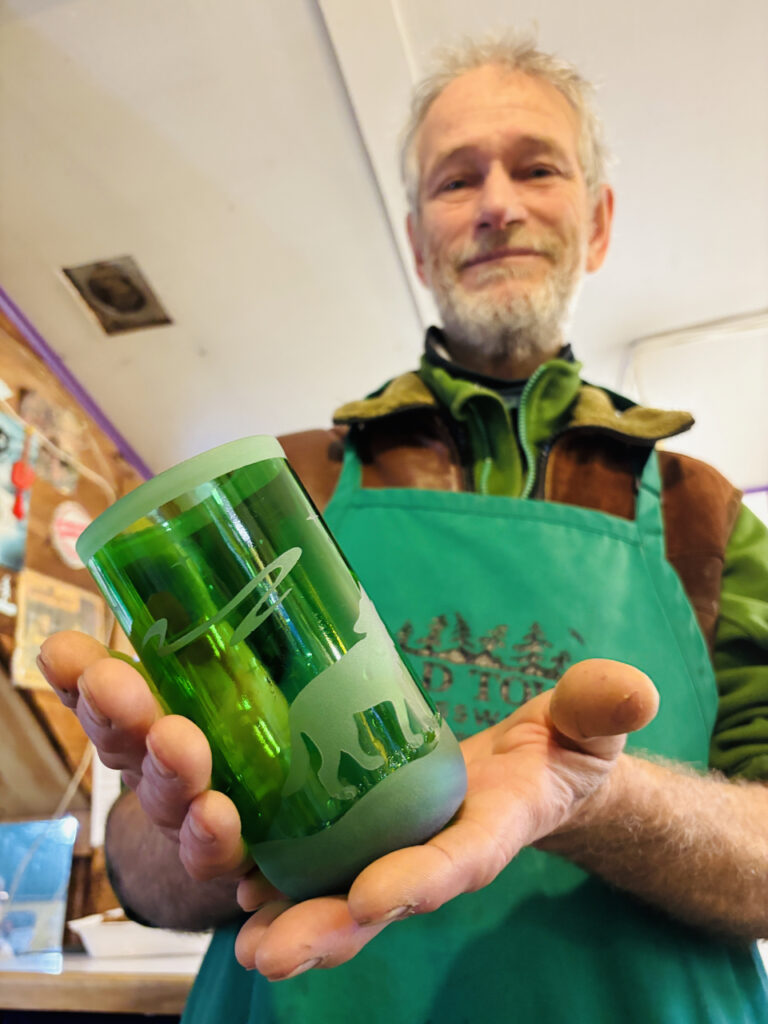
“When guests hold their glass in their hands, you just see their faces light up,” says Matthew Grogono, his own face lighting up at the memories.
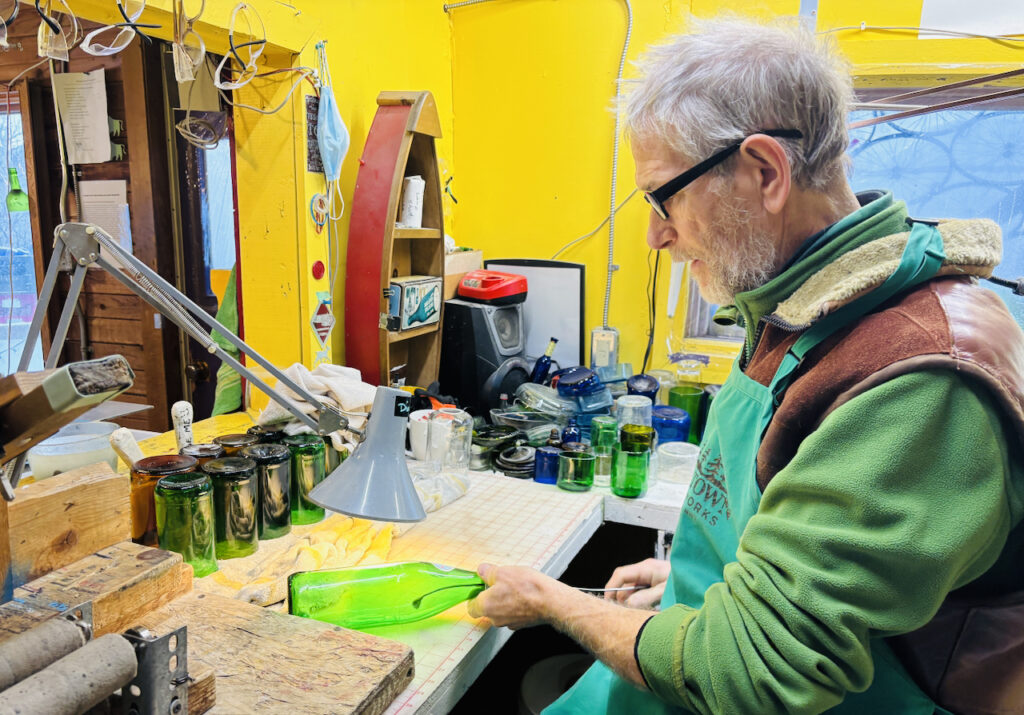
Since 1994, Grogono’s Old Town Glassworks has delighted visitors with a creative workshop steeped in ingenuity, storytelling, and long before it was fashionable, upcycling. The retired, energetic engineer built his colourful studio as a protest against waste — most notably, the bottles and bicycles that ended up in Yellowknife’s landfill.
“The mayor told me that we’re a mining town, so we make it, break it, and throw it away,” explains Grogono. Surely there had to be a better way, like experimenting with trashed bicycle wheels to create a geodesic dome for repair equipment, or turning glass wine, beer and water bottles into a unique Yellowknife souvenir.
Grogono hosts daily workshops at his studio, and explains how he MacGyvered ingenious solutions to the challenge of water recycling, heating, glass cutting, sanding, and stencilling. Enthusiastic and resourceful, he’s the guy you want to be around if the zombies attack. Grogono is also full of great stories, like the Yellowknife beauty queen who briefly became the most wanted woman in Canada, and how he came to win an expensive glass-blaster machine.
Years of experimenting with machine parts have resulted in a fully sustainable operation, inviting you to make your own unique glassware imprinted with iconic images of the north. I sandblast a wolf howling at the northern lights on a green vessel, completed with a stencil of “I made this at Old Town Glassworks” on the bottom. It’s one of the more memorable souvenirs I’ve picked up on my journeys across Canada, and certainly among the most useful.
Old Town Glassworks is a hands-on, family-friendly experience with a positive message about reusing, recycling, reducing, and relearning. Glassware workshops operate five days a week and run approximately two hours.
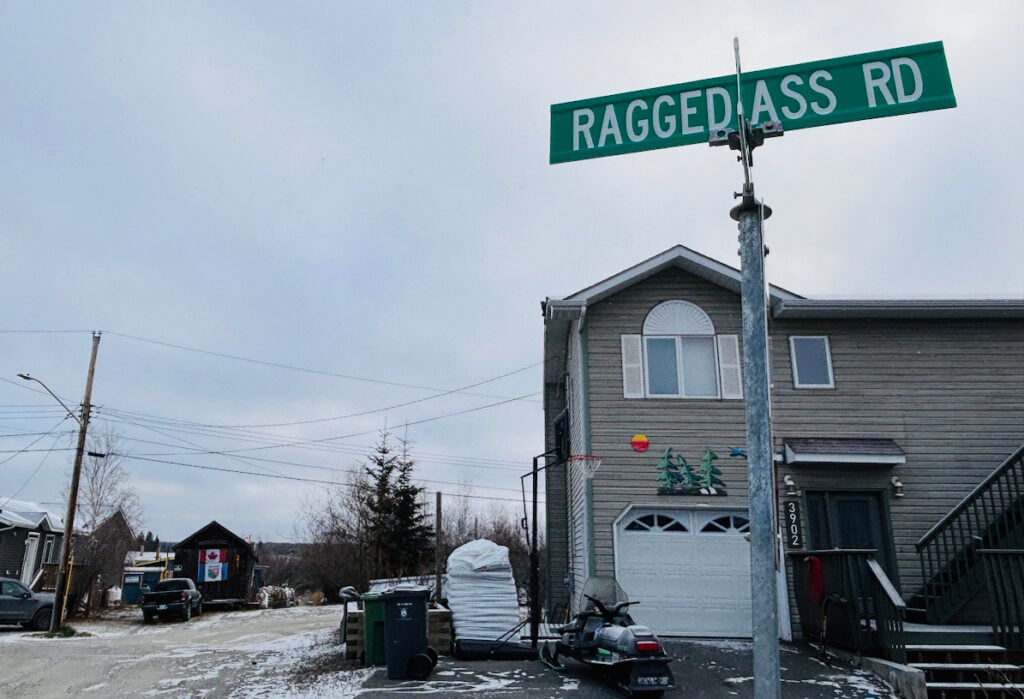
“You’ll need a lot of screwdrivers for that one,” laughs Bucket List Tour’s Tracy Therrien. She’s pointing to what might well be the most stolen street sign in the country: Ragged Ass Road.
We’re in Old Town Yellowknife, where the northern capital was founded on the shores of Great Slave Lake in 1934. The city has since grown into a dynamic and diverse community that epitomizes modern Canada: Indigenous Dene, white settlers, Filipino workers, Armenian diamond polishers, hardy miners, creative artists, young families, and hardworking arrivals increasingly from Asia and Africa. But it all started with some hardy pioneers, living in rickety wooden houses against rocky outcrops on the lakeshore.
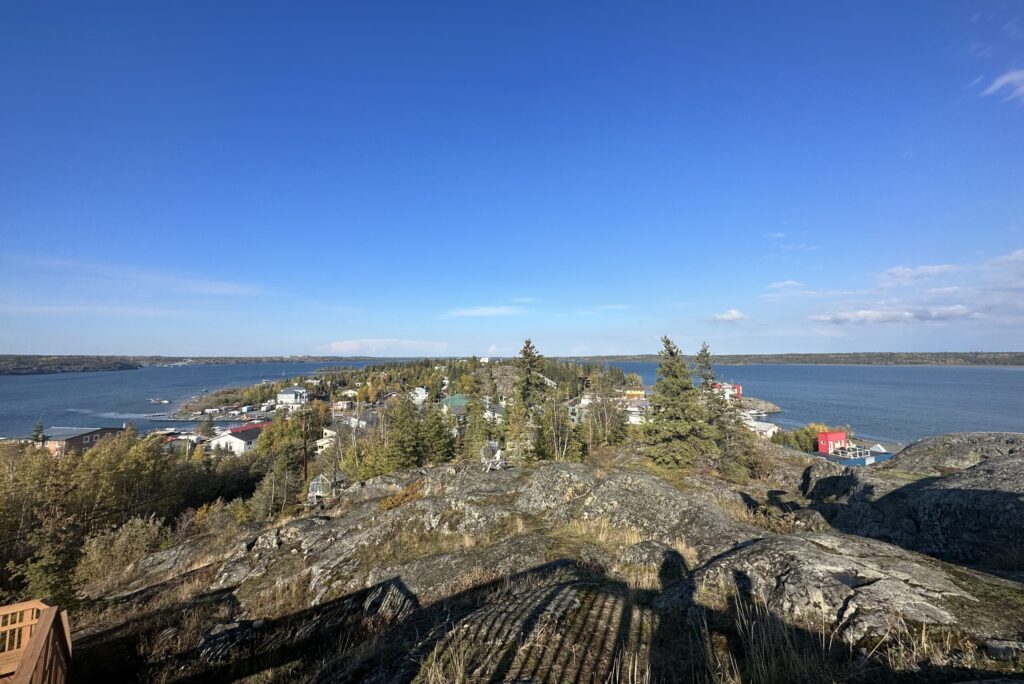
Old Town Yellowknife remains an eclectic and scattershot neighbourhood with colourful houses, heritage shacks and log cabins. The rock prevents underground piping, so water and sewerage are still trucked in for residents, who include political leaders and local celebrities like Mikey McBryan from the hit TV series Ice Pilots NWT. Therrien has been involved in Yellowknife tourism for a quarter of a century, having run the visitor centre before pivoting to her successful tour company.
Originally from Hay River, N.W.T., Therrien is a wealth of local information, full of stories, and is a fantastic ambassador for life in the North.
“That’s Margot Kidder’s house,” she says. Who knew the original and best Lois Lane was raised right here on Ragged Ass Road? Therrien offers tours of Yellowknife, Cameron Waterfall, the Bison Highway, as well as coach rentals and a cozy cabin for aurora viewing.
When you visit the North, you’ll need to recalibrate the phrase “abundant wildlife.”
Yes, there are tens of thousands of bears, caribou, foxes, lynx, muskox, and moose in the Northwest Territories, but we’re talking about an area that is roughly the size of the UK, France, Portugal and Spain combined! Also worth noting: the population of those four European nations is around 195 million, while the Northwest Territories is approximately 46,000 — nearly half reside in Yellowknife.
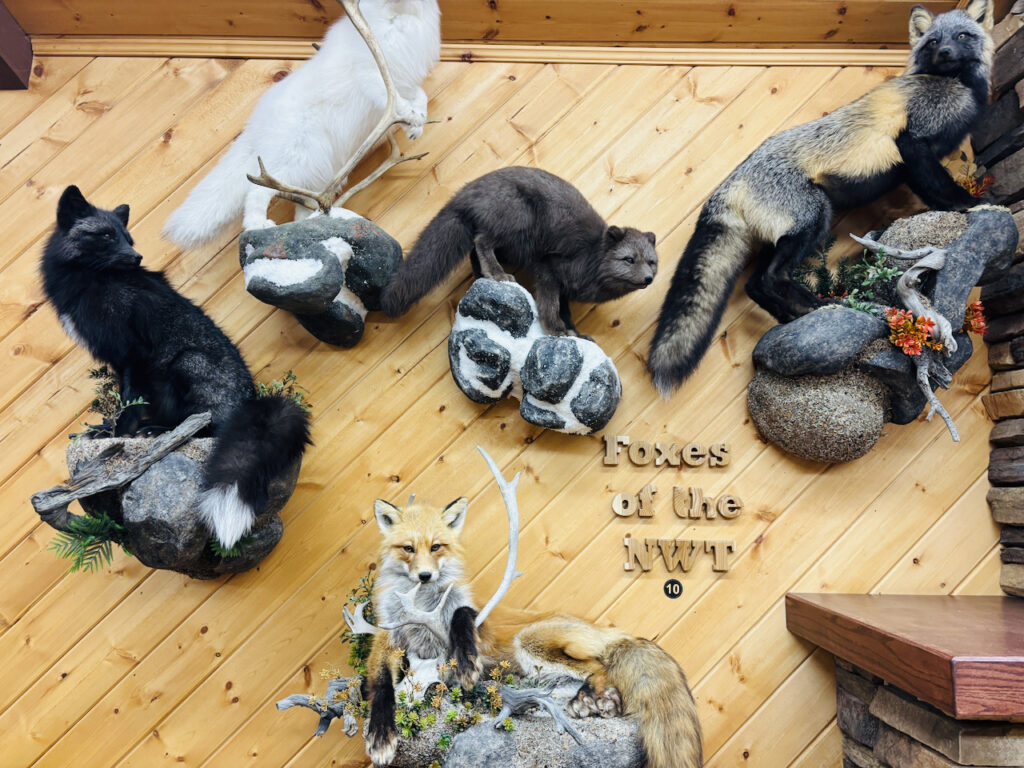
Having been hunted for furs and meat over millennia, animals of the North are understandably shy and naturally wary of humans. All to say: you might see northern wildlife — I saw a healthy fox run across the street in Old Town — but you might not, and you certainly won’t get close if you do.
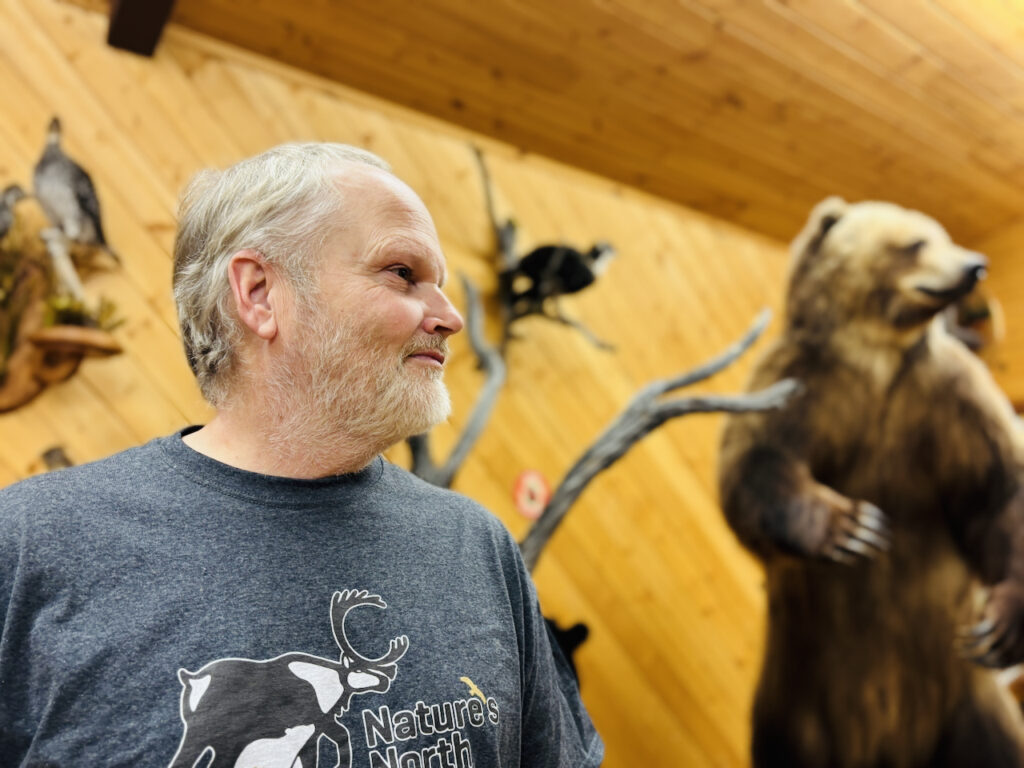
“No animal’s life was taken for the purpose of our displays,” explains master taxidermist Greg Robertson at his Nature’s North Wildlife Gallery. Robertson is a talented artist with a very unusual canvas, one that is both morbid and completely fascinating. You’ll see his work on arrival at Yellowknife’s airport, where a large polar bear chases a seal beneath the ice. It’s a taste of what to expect at his taxidermy gallery, featuring a who’s who of iconic Canadian wildlife.
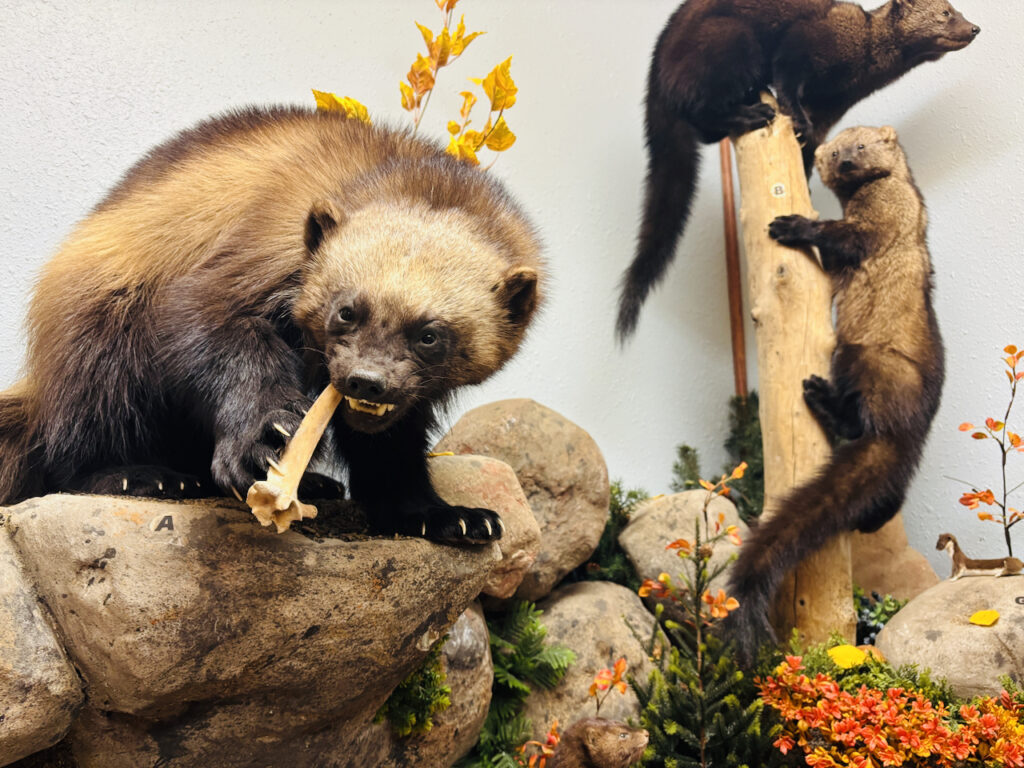
The animals appear as if they’re frozen in life, arranged and displayed with natural movement: a bear chasing honey, lynx kittens in play, beavers constructing a dam, a wolverine chewing a bone, a pack of wolves, a skunk spritzing an overzealous coyote. Some animals were trapped by First Nations as part of their fur and meat quotas, others were donated by wildlife departments or found as roadkill. It’s all presented as respectfully as possible, allowing the animals to live on for compelling educational and storytelling purposes.
The gallery took seven years to complete, and the exhibits involve a complicated process of tanning furs, plastering mannequins, and building wooden frames and prosthetics. Glass eyes, sourced from a taxidermy supplier, are astonishingly realistic.
Robertson shows me how the animals are literally put together, a glimpse behind the curtain into the creative world of taxidermy. It’s probably the closest you’ll ever get to these iconic northern creatures, and while everyone involved would prefer to see them alive in their natural habitats, their legacy lives in educating young and old about the importance of their conservation.
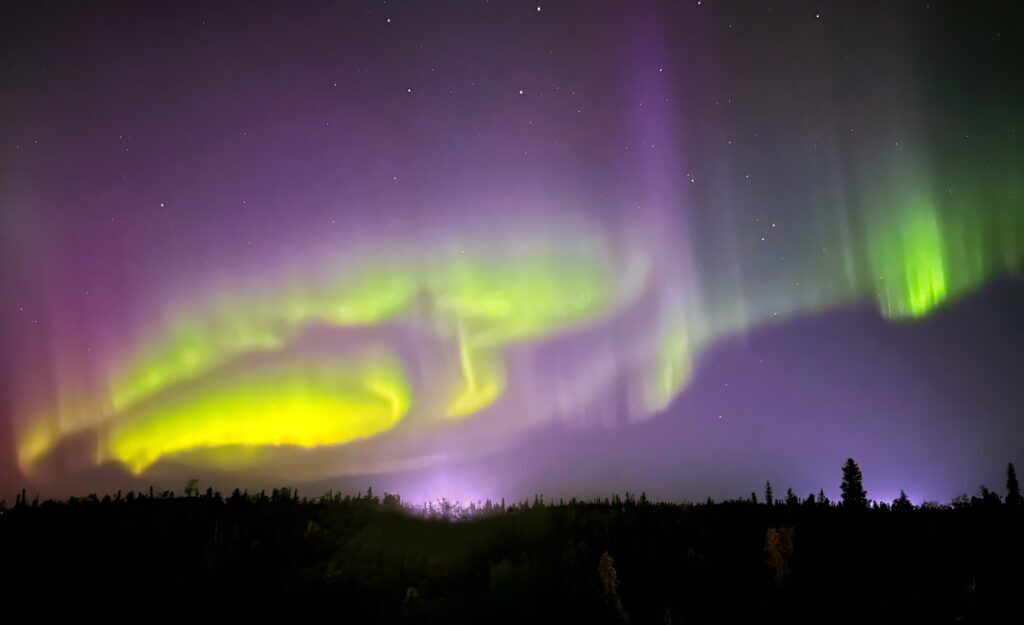
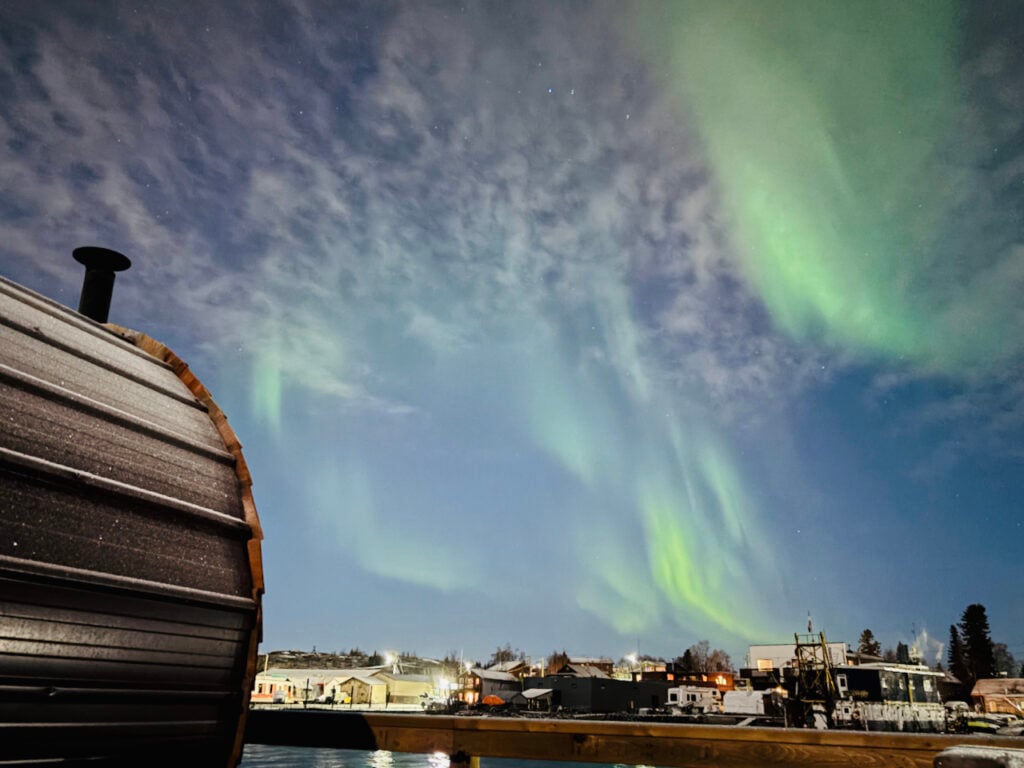
The north breeds resilience, a can-do Canadian attitude, and a certain kind of character.
Everyone seems to know Yellowknife native Jake Olsen — although, in this part of the world, everyone seems to know everyone. Through his award-winning Arctic Duchess Adventures, Olsen has built a floating barge of essence-infused saunas for guests to heat up under the lights, and in winter, and take the iciest of cold plunges in Great Slave Lake.
Olsen’s hand-built circular wood saunas have a large window, and a lemongrass-cedar scent is deeply relaxing. We cool off outside beneath unexpected bands of green and red lights that take my breath away. I came here for a sauna, and got the best aurora show I’ve seen yet. Olsen laughs when I tell him that if I came for the lights, it would probably be raining.
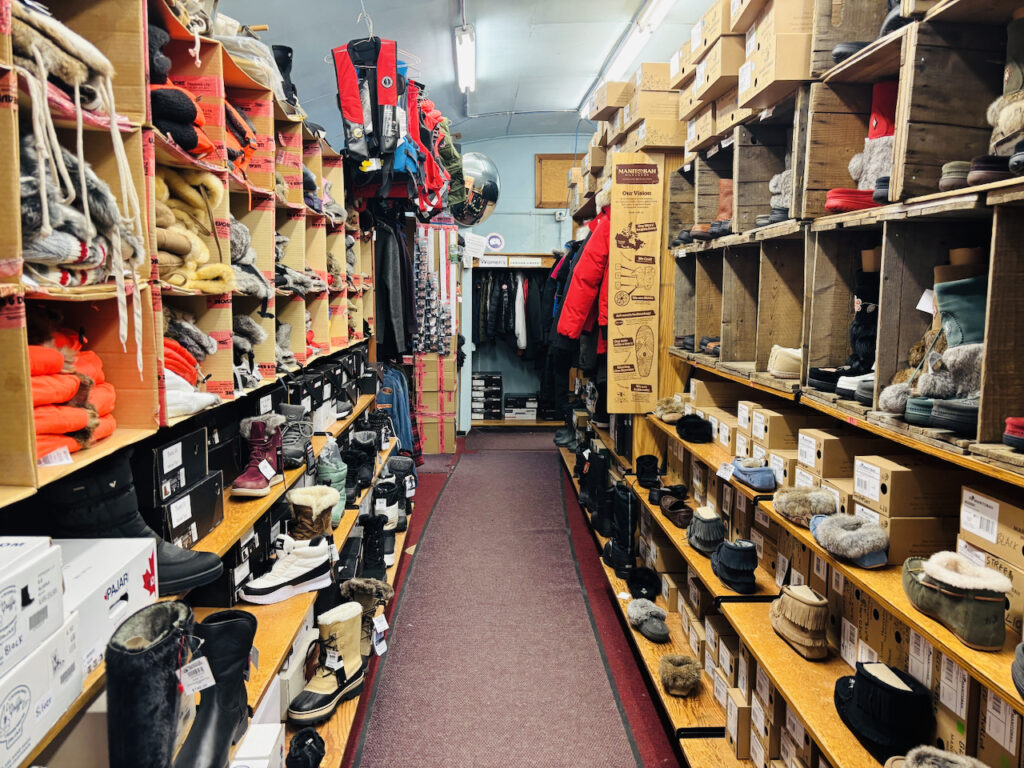
Beyond aurora watching tours, Yellowknife also offers Indigenous dogsledding tours, lake or ice fishing, tours along the Bison Highway, snowmobiling, Dene cultural experiences, and guided nature or city tours. Shoppers will find time well spent in northern outfitter stores like Weaver & Devore Trading Ltd and the terrific Yellowknife Book Cellar, while the city’s Visitor Centre offers a wealth of information. Yes, nature doesn’t always cooperate, and it took repeated visits to the north before I finally saw the lights. Yet, my most memorable aurora, safari, whale-watching and skiing experiences all happened when I stopped obsessing about what might happen, and simply showed up for what did.
Travel
With solar activity expected to peak in 2024, there’s never been a better time to see the northern lights. Here’s how to do it in the “aurora capital of North America.”

Science & Tech
For scientists and northern lights rubberneckers, 2013 promises to be a once-in-a-decade opportunity to experience the sun’s magnetic power at its height.

Science & Tech
“One of the best weeks of my life,” says Matt Melnyk about his once-in-a-lifetime encounter

Environment
Brush up on your aurora borealis trivia