
Travel
Cycling the Loire Valley, home to châteaux and chenin blanc
Discover the highlights of this UNESCO-protected gem known as the cradle of French wine and cuisine
- 719 words
- 3 minutes
Travel
A journey through three Relais & Châteaux properties brings one writer closer to her ancestry

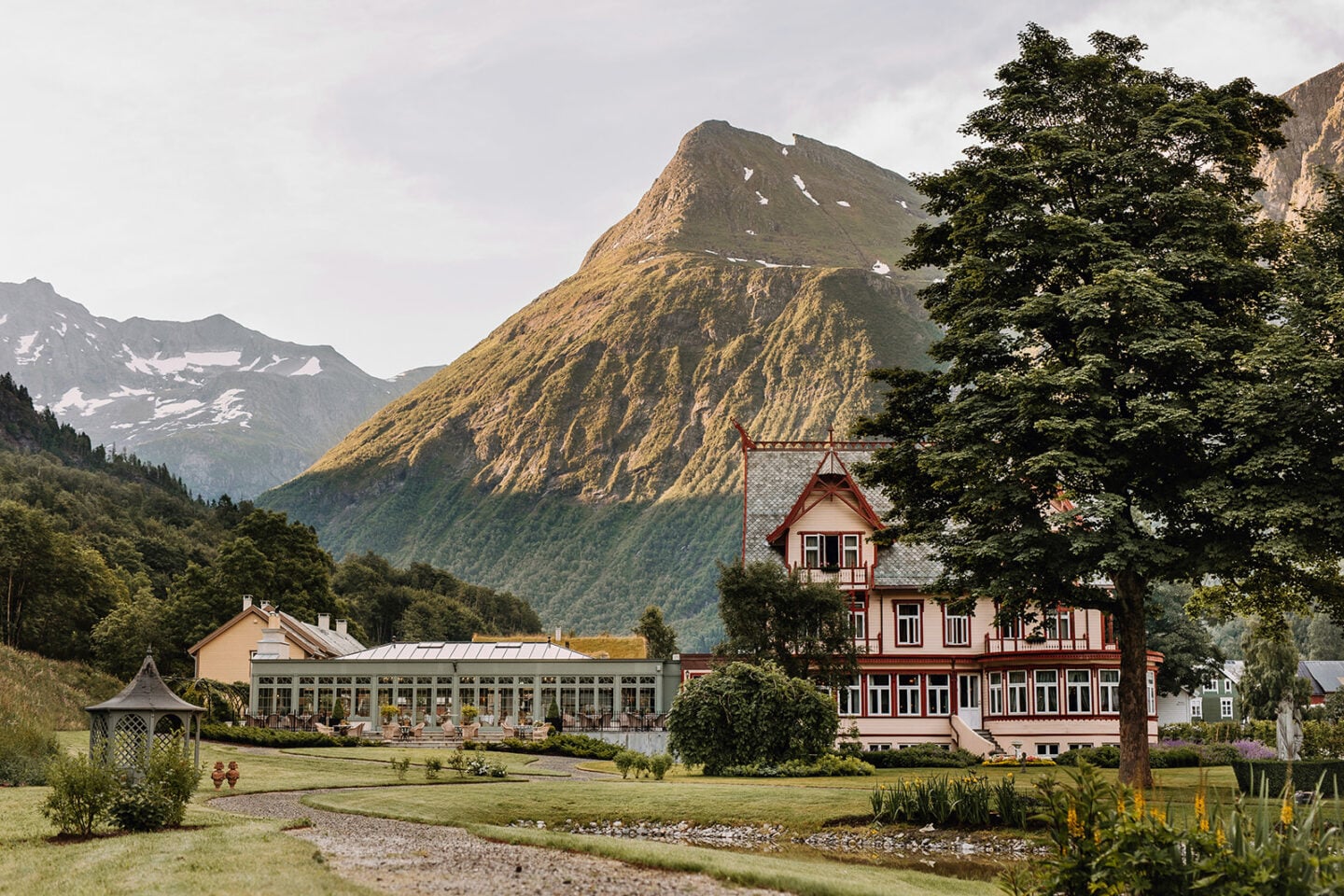
Inside a tiny museum on Husøya Island in Norway’s remote Træna archipelago, I spot a colourful embroidered wall hanging and immediately feel at home.
It reminds me of rosemaling, a Norwegian folk art embodied by joyful sprays of painted leaves, flowers and scrolly bits that have swirled over my grandmother’s house for as long as I can remember. The rosemaling she brought with her to Canada from her native Norway is more than just decoration. Each brush stroke speaks to a specific region and an individual artist. For me, the swirling designs, along with her father’s paintings that cover nearly every wall in her home, have always been a window into my heritage. When I had the chance to visit Norway again, the “yes” was out of my mouth before I opened it.
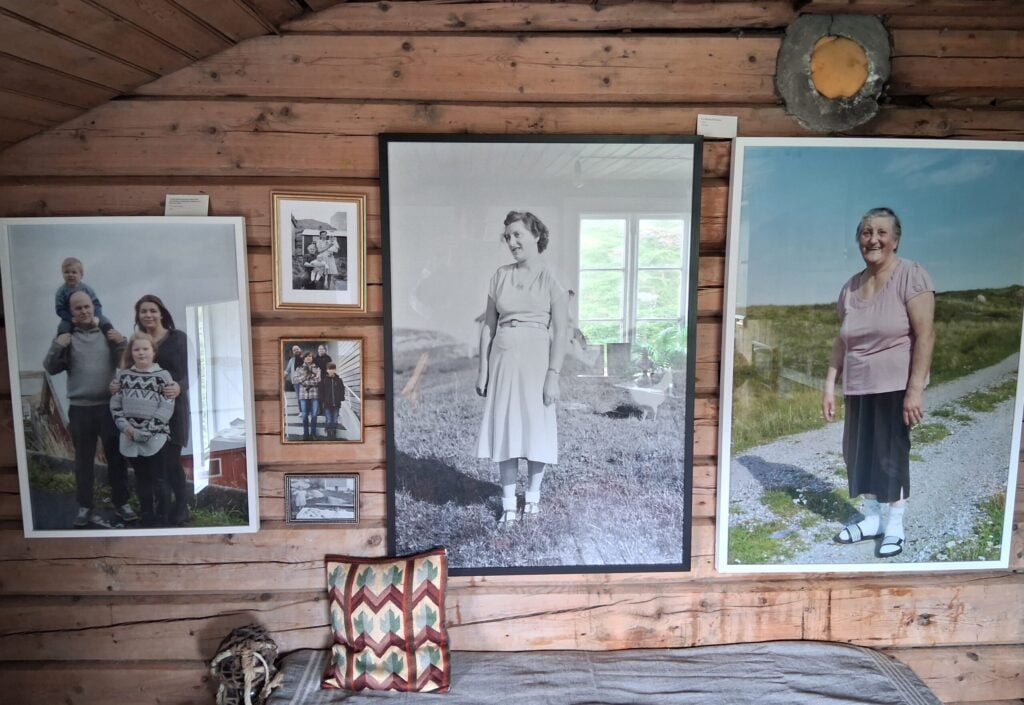
In the next room of the Træna Museum are framed photographs of an island family: a matriarch in black and white, a family portrait with a mother and a little girl. I spend time looking at them, their smiles.
But now, it’s time to get back to the hotel. After a quick stop a few doors down to broker the purchase of a handmade sweater, our group of travel journalists and editors return to Ytri.
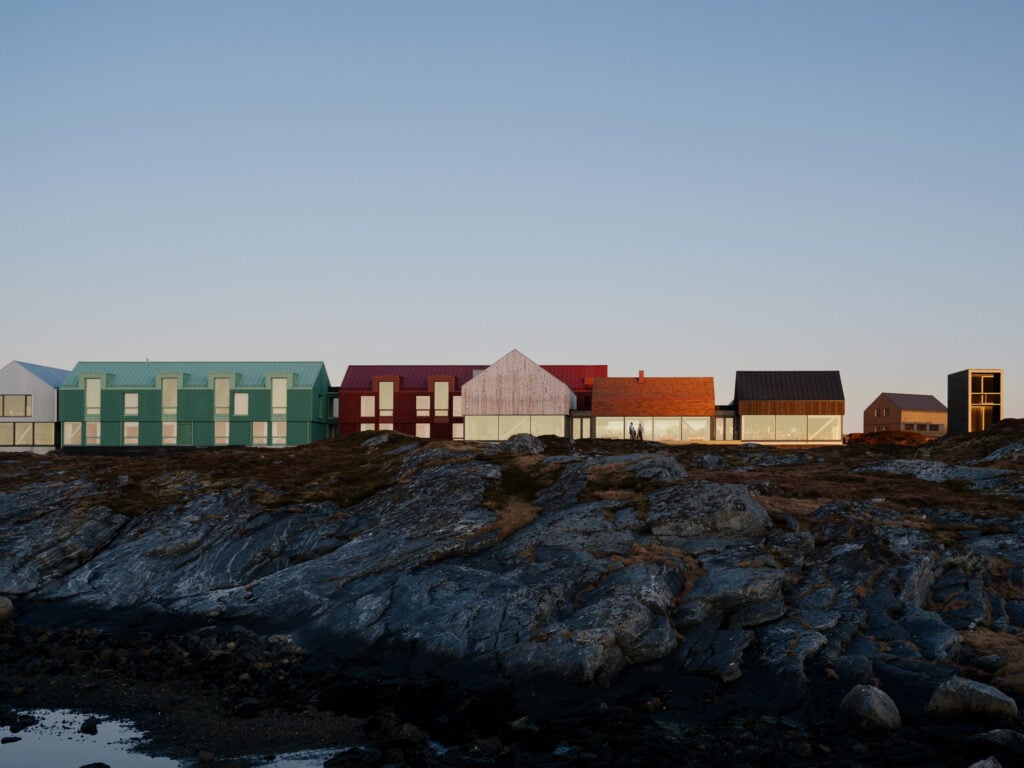
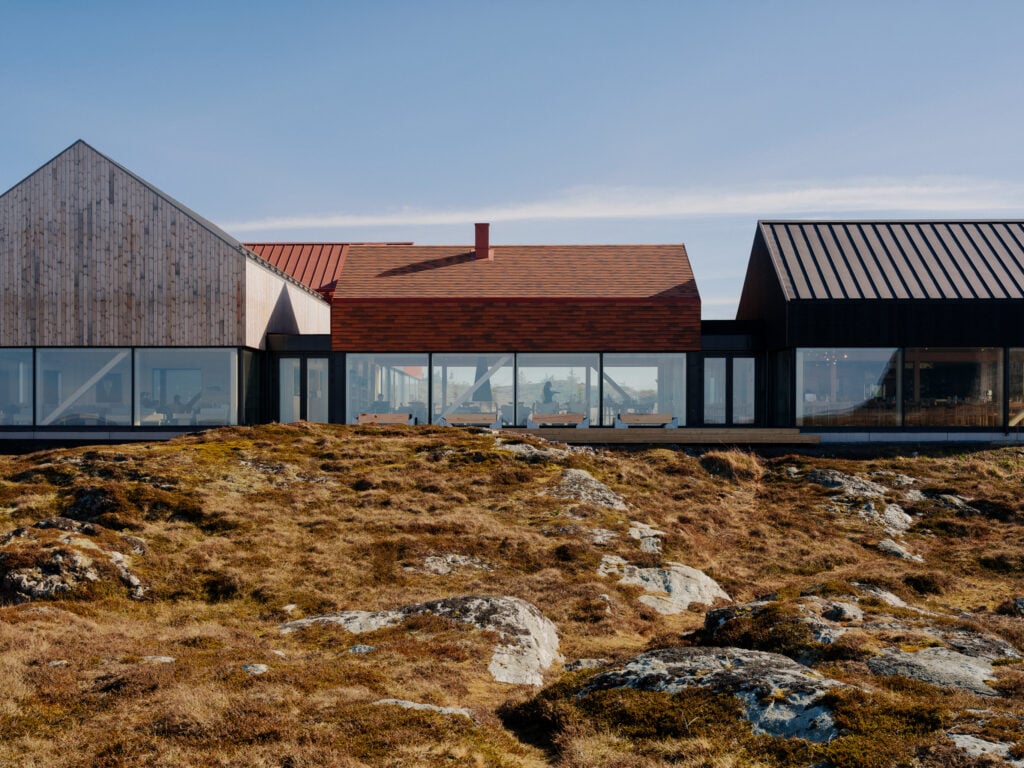
Part of the Relais & Châteaux family, a brand of luxe, independently owned hotels known for high-quality cuisine, calm atmosphere and off-the-beaten-path locales, Ytri Island Retreat is the first stop on my week-long tour of the brand’s Norwegian properties.
The remote hotel, perched on Husøya’s northeastern coast, opened just a few weeks before my visit in May and draws inspiration from the archipelago’s stunning natural beauty and its charming, but dwindling, fishing villages. The name Ytri — Old Norse for “the outer point” — speaks to the region’s jaw-dropping geography, roughly 60 kilometres from the mainland, on the edge of the Arctic Circle, in a smattering of islands that look as if they fell from Asgard.
Standing on the back deck of Ytri’s main building that evening, I watch the midnight sun high in the sky, casting a white light over the spongy, green tundra. Cottongrass dances in the ocean breeze. Just beyond their fluttering, on a neighbouring island, five vertical peaks erupt from the deep blue water like fangs.
The seed for the luxury hotel on an island of just over 400 residents was planted in 2015, as the municipality searched for ways to keep people living in Husøya amid a drastic decline in fish stocks, due to climate change and other factors, that have sustained the community for centuries. The idea for Ytri, bringing new life and money to the island, did well at an open forum, but locals wanted to ensure the property remained small, with minimal impact on the nature that makes this place unique.
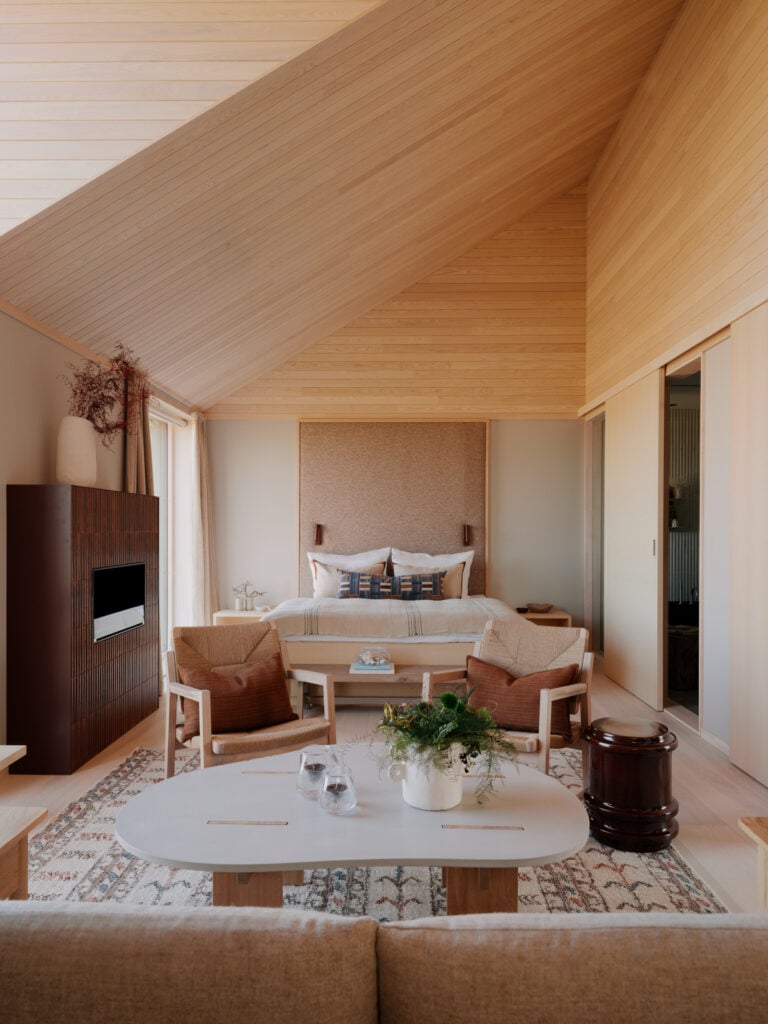
The hotel’s series of brightly coloured buildings with palatial windows house just 38 rooms and suites, along with a dining room, a lounge, saunas, a small greenhouse, a gym and, of course, docks — as most guests arrive by boat.
Outside, aside from a driveway and connecting pathways, nature is left raw. And it’s brought into every aspect of the hotel, from its harmonious architecture and interiors — including a lounge floor made from the island’s sand and shells — to experiences on the land and cuisine inspired by Træna’s ingredients.
“They are so proud, the local community. They say ‘wow, our dream came true,’” says Helen Møgster, Ytri’s booking and revenue manager. Although she lives farther south on the mainland, Møgster has spent the last few weeks on Ytri preparing for the hotel’s opening. She says that the community is the property’s most important and best ambassadors. “For us working here. We feel it’s a project with meaning.”
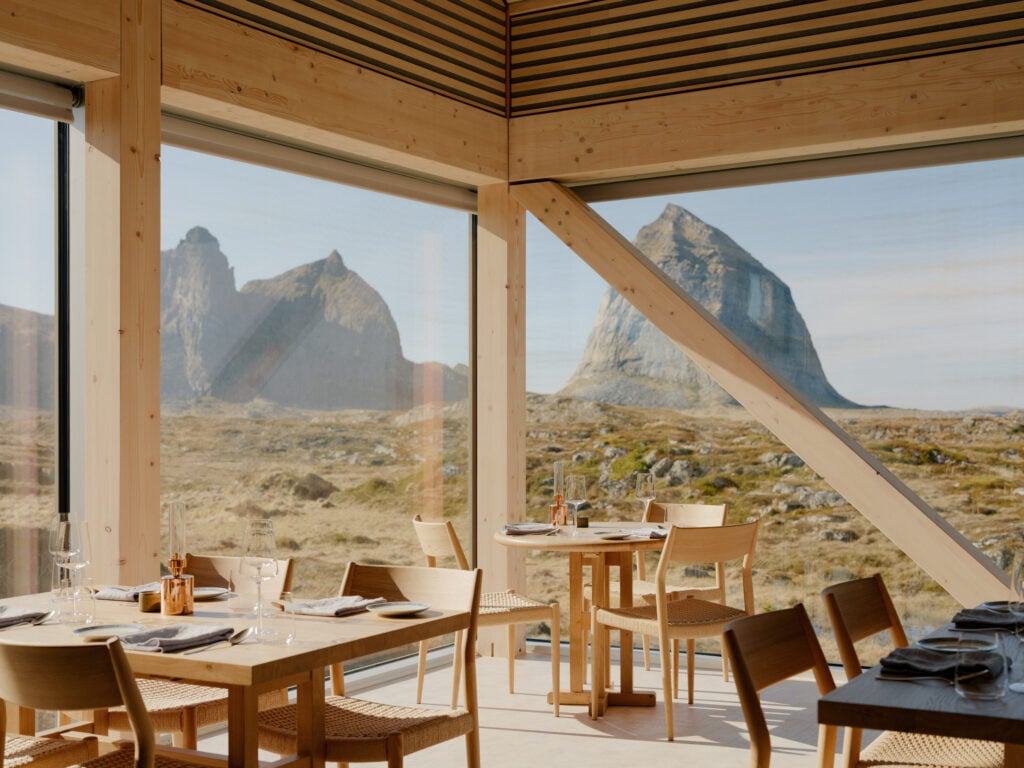
“This is a barefoot luxury. Not a luxury to be seen, but to be felt,” adds Møgster. “A place to land, a place to breathe. Leave your problems on the mainland and just be present and feel.”
I’m told later that Husøya is Norway’s oldest fishing village, with human history dating back more than 9,000 years. The next day, we take a short trek on adjacent Sanna Island to see where the first evidence of that history was uncovered.
Our guide, archeologist Anders Budde, leads us from Sanna’s dock down a well-worn stone path to Kirkehelleren, a cathedral-like cave parting one of those dramatic peaks we’ve been admiring from Ytri.
“They found a fishing hook made of bone, of antlers,” Budde says of the early cave excavations. Three years ago, he took part in the first dig at Kirkehelleren since the site was originally excavated in the 1930s and ‘40s.
Standing at the cave’s entrance, Budde explains that it had “been in continuous use for [roughly] 10,000 years. We found no break of a thousand years or even a few hundred years in the layers [of soil].”
Once the most populated island in the archipelago, Sanna is now home to just two year-round residents: a pair of brothers. Kirkehelleren, however, remains in use. Each July, the island serves as one of the venues for a popular summer music festival.
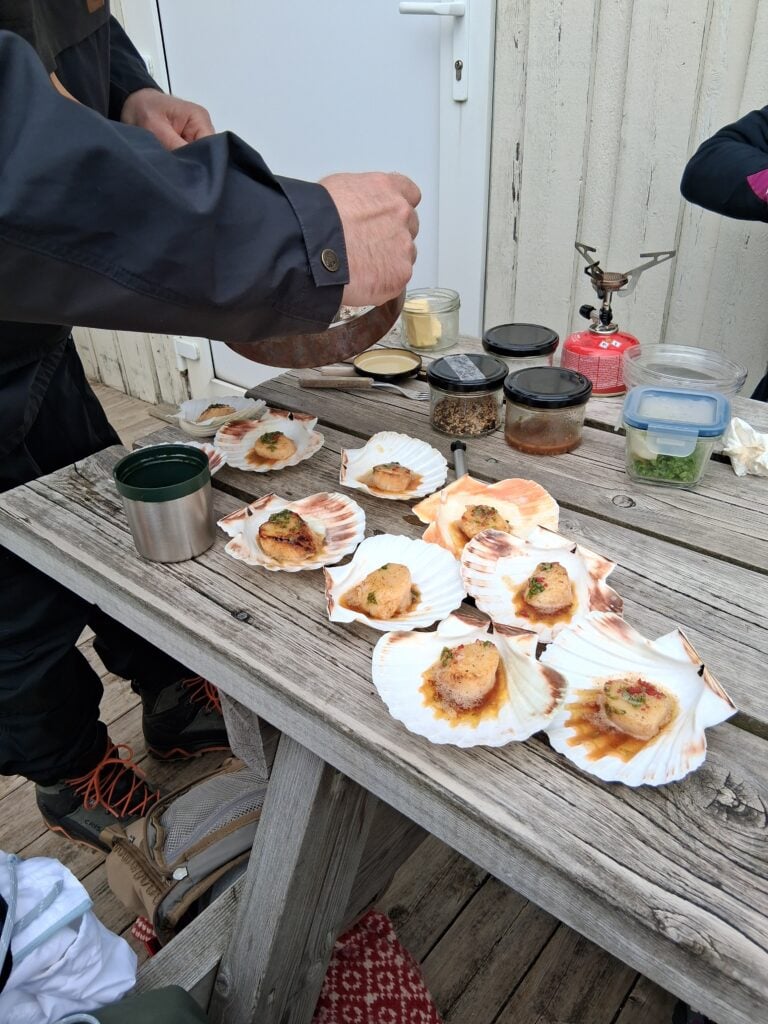
After our morning trek, we stop outside a small community house on Sanna, now a summer vacation spot for locals. While we snack on homemade lefse, a potato flatbread topped with butter and cinnamon sugar, Budde pulls a frying pan and burner out of his backpack and cooks the most delicious scallops I’ve ever tasted. Better yet, he harvested them that morning.
When we return to Ytri, general manager Kine Willumsen greeted us at the dock wearing her bunad, a traditional Norwegian folk costume, and waving a tiny Norwegian flag. Today is Syttende Mai, Norway’s Constitution Day, and the local children have just finished their customary parade across the island.
That evening, Ytri’s dining room is filled with local families celebrating Syttende Mai. Chef Sean Ryan and his team have prepared a special dining experience of our own: a 12-course tasting menu featuring more freshly caught scallops, charred leeks paired with a sumptuous locally produced honey mead, sustainably caught whale — a traditional food in parts of Norway — and a twist on fårikål, another traditional dish of lamb and cabbage. Every course is prepared with fresh, local, in-season ingredients, with minimal waste.
Stuffed and a little drunk (12 wine pairings will do that), I wobble back to my spacious suite. I sink into the bed and marvel at the floor-to-ceiling view of Trænstaven, Sanna’s tallest peak. Outside, the midnight sun still blazes.
The sea is mercifully calm, like glass, the morning we leave Ytri. It’s early, and the rest of the group is dozing aboard the hotel’s private boat to Bodø, where we’ll catch our flight south. I sit with the hum of the engine, watching gentle ripples on the dark water as we pass small islands, homes perched on shorelines, birds searching for a meal. I snap a few shaky photos hoping to preserve the view — not even close.
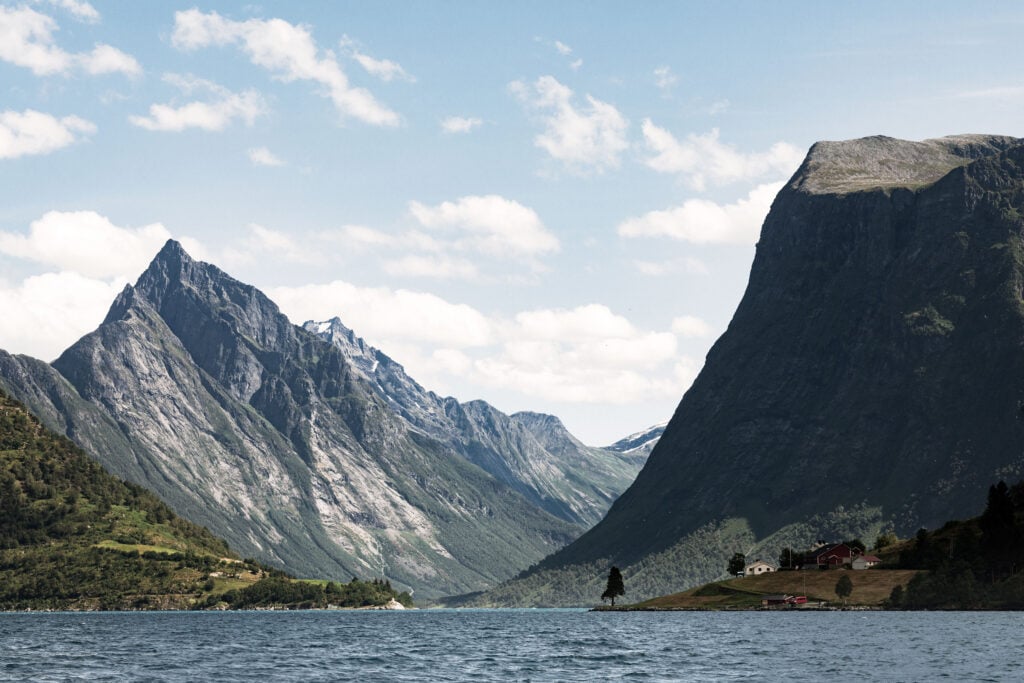
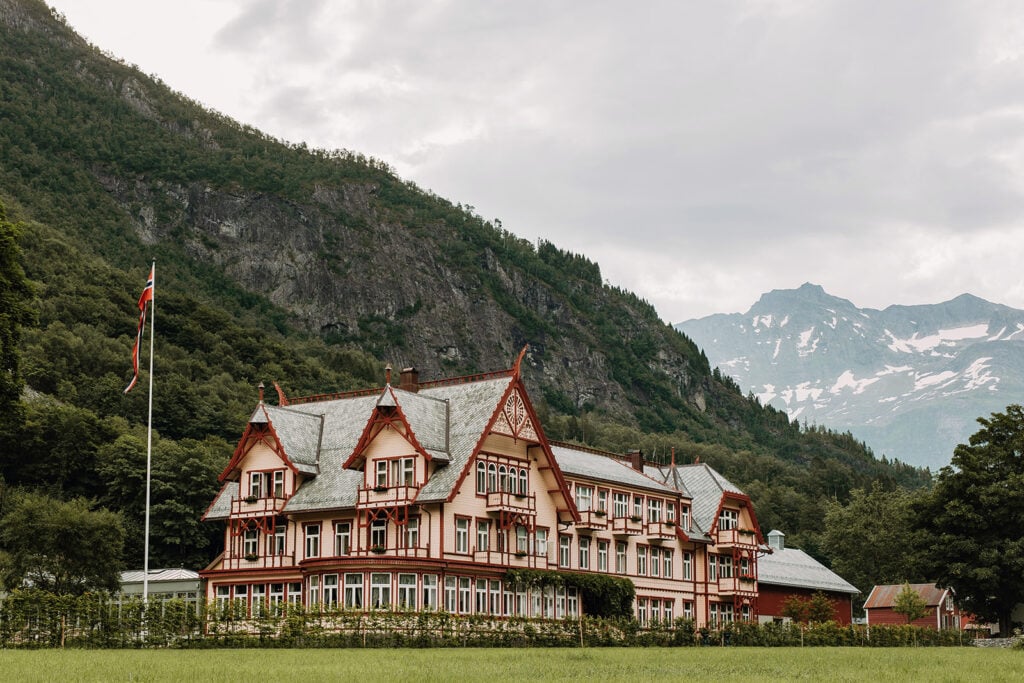
Our destination is Hotel Union Øye, nearly 1,000 kilometres south in a different terrain entirely, where the Atlantic’s long fingers grasp Western Norway’s snow-capped mountains in a network of fiords. It’s also the soil where my Norwegian roots are planted.
My grandmother, Greta, was born in Ålesund, a stunning coastal town north of Union Øye, set on a series of islands. Growing up, she’d tell me stories about her town and family: her father, Jonas Peson, an artist whose paintings of their life I’ve studied closely; her mother, Ruth, an artist in her own right, who brewed her own gin and fished from the pier in a fur and heels; getting into trouble with her best friend, Turid, whom she’s spoken to regularly since she left more than 60 years ago; the dark times of her childhood during the Second World War.
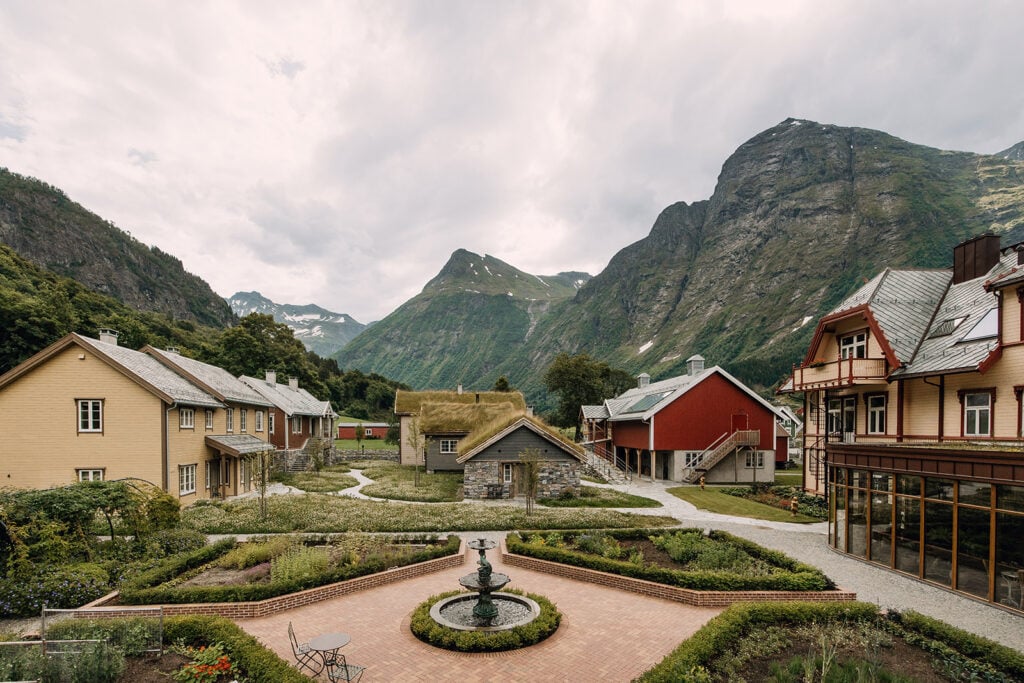
Just beyond Mount Saksa, a short distance from Ålesund as the crow flies, is Hotel Union Øye in the tiny hamlet of the same name. Situated at the terminus of Norangsfjord and cradled by mountains known as the Sunnmøre Alps, this circa-1891 half-timbered hotel is right out of a fairytale.
The smell of cinnamon and freshly cut wood permeates the lobby. The hotel’s 135-year history is equally tangible: ornate tapestries and wallpaper, a suit of armour next to a crackling fire and a spiral staircase fit for a queen. Union Øye has literally welcomed royalty, explorers, writers — Arthur Conan Doyle purportedly wrote many pages of his Sherlock Holmes mysteries here — and other notable figures seeking quiet seclusion or wild adventure in the surrounding mountains.
“I’m from a farm two kilometres up from the village and I’ve been running in the hallways of the hotel since I was around three years old,” general manager Mariann Øye tells us in the library. Her father and three other locals purchased the property in 1989 after it had fallen into disrepair. In 2009, he sold it to the Flakk family from Ålesund, though he still keeps busy maintaining the property.
“We were farmers,” she says of her family’s history in the Norang Valley, an area that has called to international climbers and expeditioners since before the hotel was constructed.
“My great-grandfather saw a lot of guiding in the mountains,” says Øye, before noting that in western Norway at that time, many locals avoided hiking in the mountains because it was dangerous. “Then the farmers saw people coming here hiking the mountains,” she adds. “It was more easy to guide them up the safe way, then bring them down after it’s too late. That’s how my family’s hospitality story started [here].”
“I guess I will probably haunt the place,” she says with a laugh.
Øye leads us through the property into the lounges where climbers would record their day’s exploits. Now, it’s where guests gather for evening storytelling over a drink. We visit a dining room where Kaiser Wilhelm II (the last German emperor) dined before fleeing to the Netherlands following the First World War.
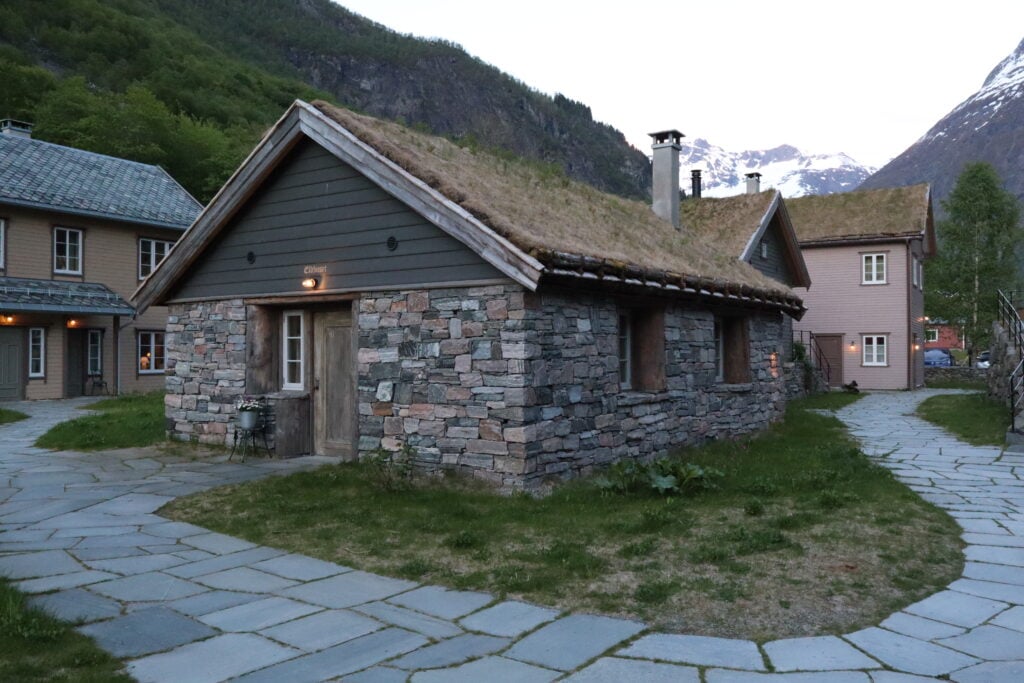
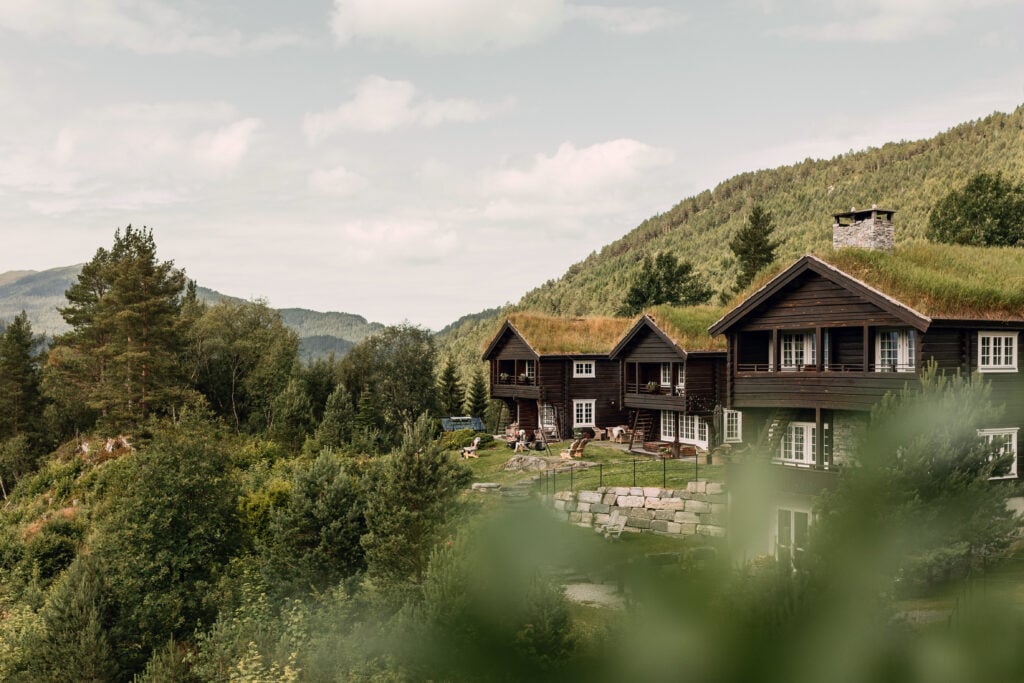
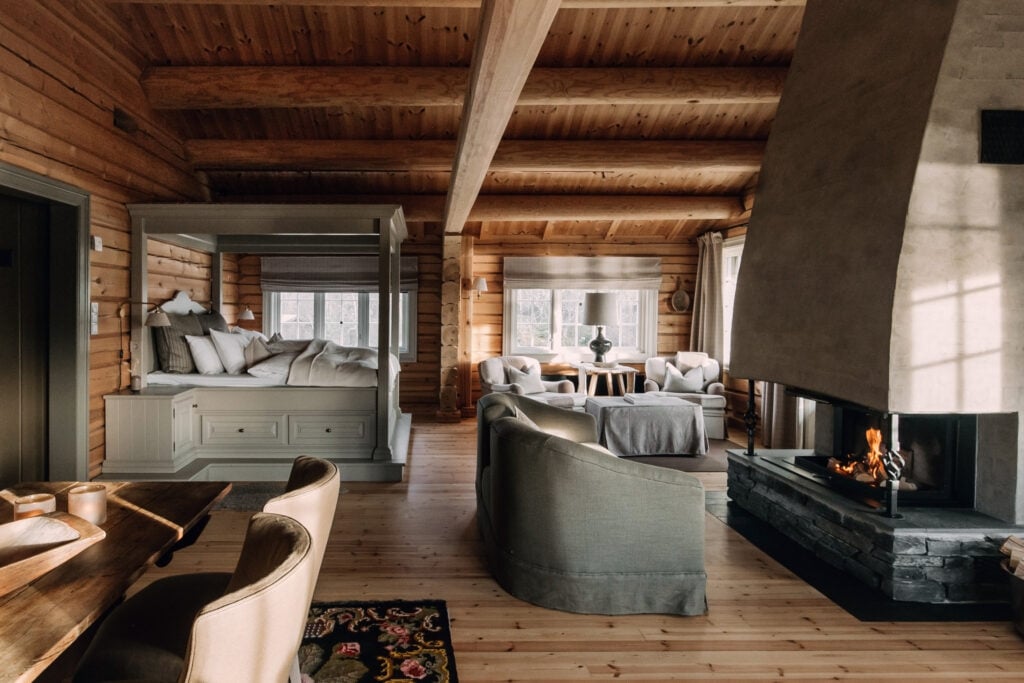
A recent $300-million-kroner (about C$44 million) renovation has breathed new life to the hotel, adding a conservatory, bar, wine cellar and additional suites, one of which, a cosy living-roof cottage overlooking the formal garden, is where I get to rest my head. In 2025, the hotel was awarded a coveted Michelin Key in recognition of its outstanding hospitality.
My cottage mimics the green-roof structures peeking out from the mountainside as we explore the valley on e-bikes. The small huts were the summer homes of bygone farmers as they grazed their livestock in the valley.
“You hear all the stories from the mountain farms,” says Oscar Almgren, founder of expedition company Uteguiden, standing in front of the line of tiny dwellings. “And for sure, it was a hard life. But in 2026, we are doing a lot of things in our lives that they didn’t have to bother [with].”
In one of these huts is a guestbook for travellers passing through. “Live like a hermit” reads a note.
Outside, anemones blow in the wind and fields of dandelions highlight blue-green mountains draped in thin ribbons of cascading water. As we ride back toward the hotel, our group spreads out and I find myself alone. I bomb a hill faster than I have in years. The mountains, my only witness.
Rosemaling follows me to our last hotel. Once again, the water is calm for the nearly two-hour-long boat transfer. The deep teal fiord is still enough to reveal plump sea stars lining the rocks below Union Øye’s dock as we board the boat bound for Storfjord Hotel.
About 45 minutes into the journey, we make a quick stop in Trandal to visit Christian Gaard Bygdetun, a remote restaurant and music venue accessible only by boat, ferry or, as its website suggests, “on foot over the mountain.”
Concert posters and photographs of bands’ performances from the blues festival hosted here each summer line the walls. In a little alcove, rosemaling swirls over a fireplace bellows. Home is here, too.
By the time we arrive at Storfjord that afternoon, overcast skies loom above the dark timber chalet-style hotel, its green roof surrounded by towering pines. A small bonfire sends the smell of smoke into the air.
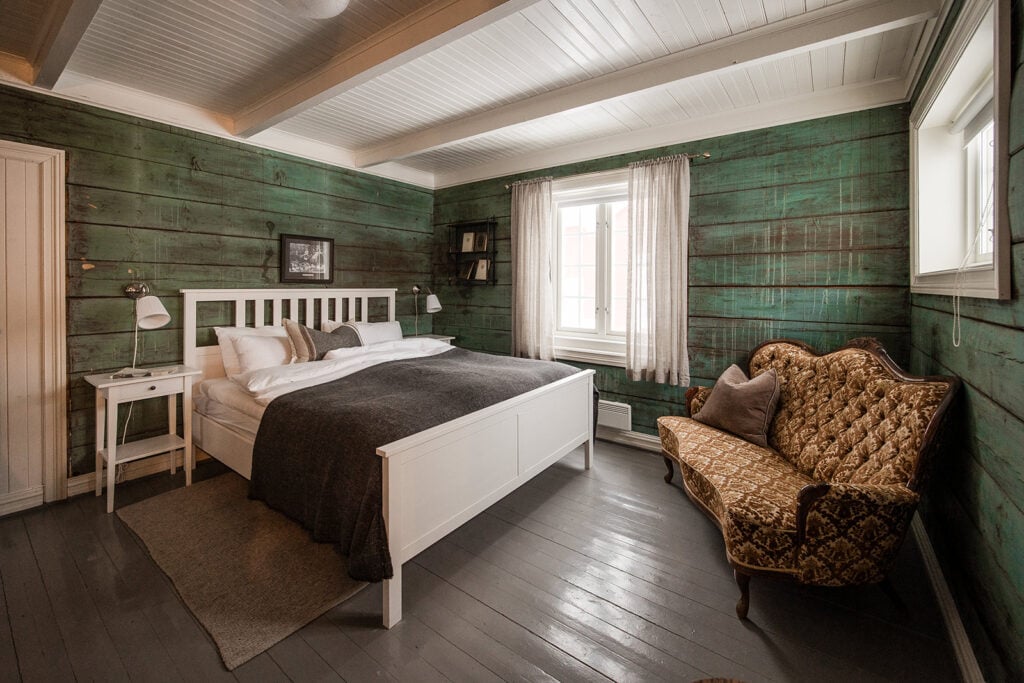
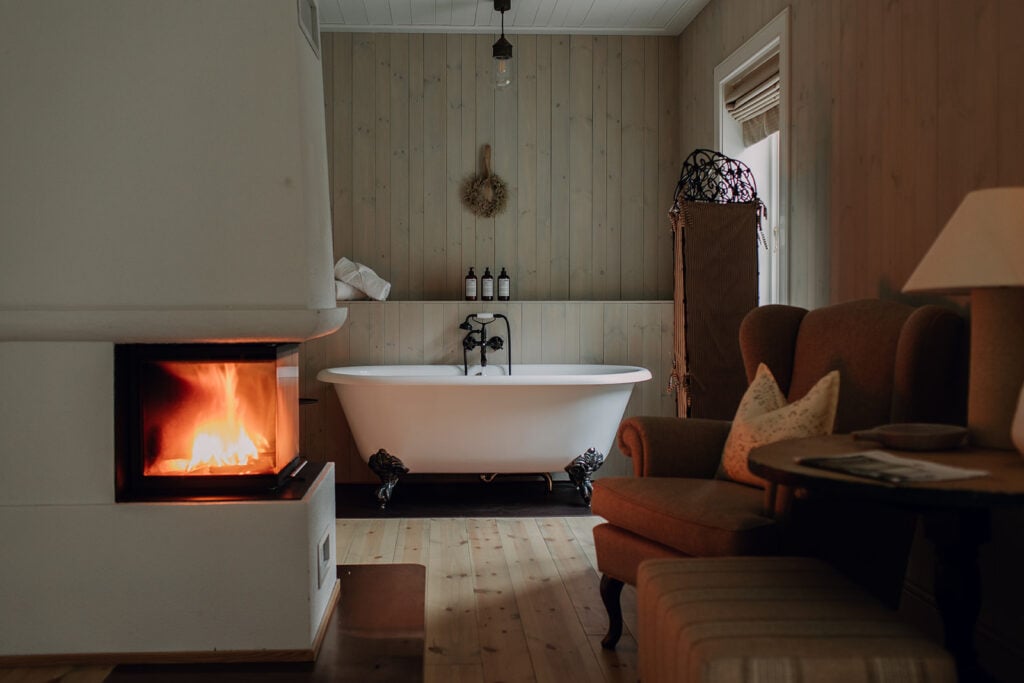
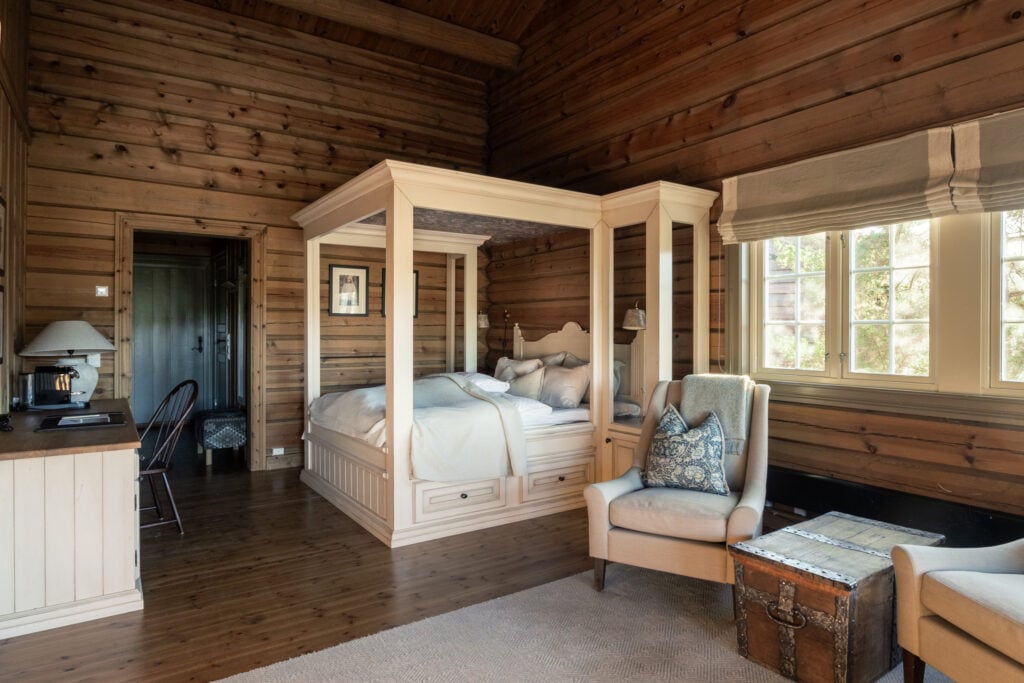
The forest hideaway above the fiord of the same name offers 30 rooms in four timber buildings. In my suite, wood-panelled walls meet wide fiord-focused windows. I sink into the four-post bed here too and look up at the tapestried canopy blooming with roses. Inside the hotel’s main building, which proudly boasts two Michelin Keys, guests play puzzles and read in a series of cosy lounges. We’re here for only one night. After that, my time touring Relais & Châteaux’s Norwegian properties ends, and soon, my time in the country, too.
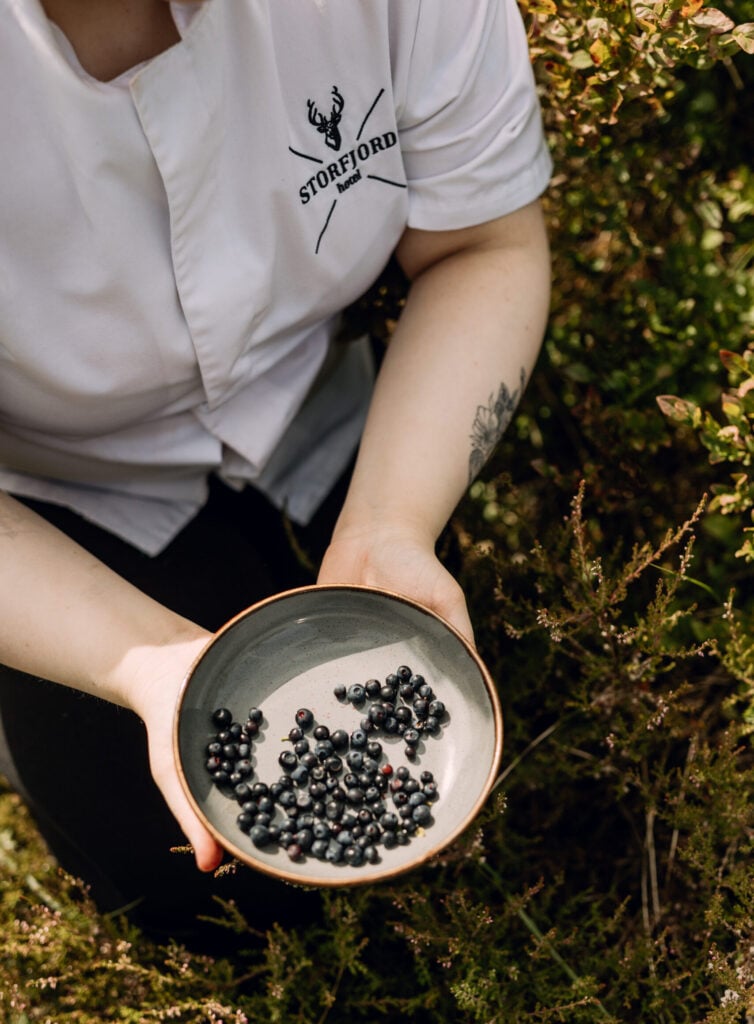
That evening, we take the shuttle down to the hotel’s waterfront dining experience, the boathouse.
“These are the only peaches [grown] in Norway,” chef Florian Hanisch says as he presents the first courses in a spectacular dinner: oysters with peaches and caviar, duck liver pâté on toast, salmon mousse with smoked egg yolk. Later come succulent langoustine and grilled reindeer.
Between courses, I step out to look at the water. A misty, treed ridge sits over the fiord. The water is glass again.
After dinner, I linger in the fresh air before heading to my room. The sky has cleared to a soft pink. From the Storfjord’s high vantage point, I can see directly across the fiord now to a place called Sykkylven, where my grandmother spent summers at her family’s cottage.
She once told me a story about learning to swim there in the coldest water, with eels swirling at her feet. My great-grandfather painted some scenes there, too. My favourite hangs in my dining room at home in Ottawa: a dirt road leading through the forest, my grandmother as a child, side by side with a friend, walking from the deep blue water. The other side of the fiord, maybe where I am now, hangs in the distance.
Travel
Discover the highlights of this UNESCO-protected gem known as the cradle of French wine and cuisine
Travel
Discover the French Caribbean archipelago through an interactive map highlighting the islands’ best adventures, from below the waves to above the clouds

Travel
Susan Nerberg embarks on a deeply personal tour of Tromsø, taking part in Sámi Week as a means to better understand her own Sámi roots and culture

Travel
Do your time in these revamped prisons, from refined rooms and luxury spas to former Soviet military lockups and the site of Canada’s last public execution