Exploration
Searching for hope on deep coral reefs in Guadeloupe
How research on little-known “marine animal forests” could shine a light on ocean hope spots — and why they need protecting
- 2393 words
- 10 minutes
Travel
An explorer’s guide to Guadeloupe
At exactly 6 a.m., the sky above the Caribbean Sea shifts from violet to pale blue, almost as if someone has flipped a switch above the terrace of my hotel room on the island of Basse-Terre. Mourning doves coo in the trees, roosters crow in the distance and gentle waves lap the shore below. In Guadeloupe, the day begins with a chorus of sound and colour, a fitting welcome to the French Caribbean archipelago of Guadeloupe, where rainforest-covered volcanoes rise above coral reefs, and adventure awaits around every bend.
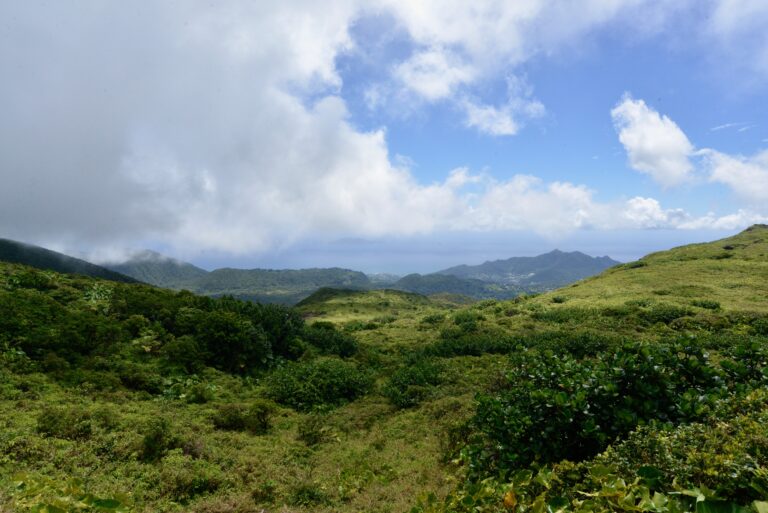
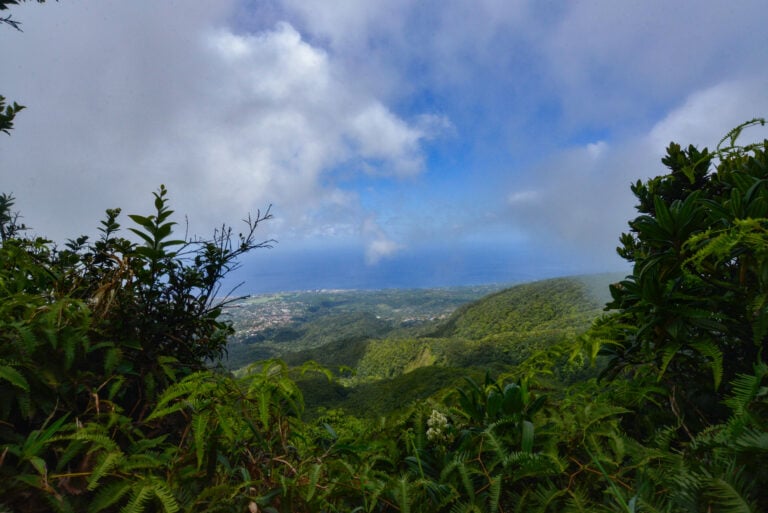
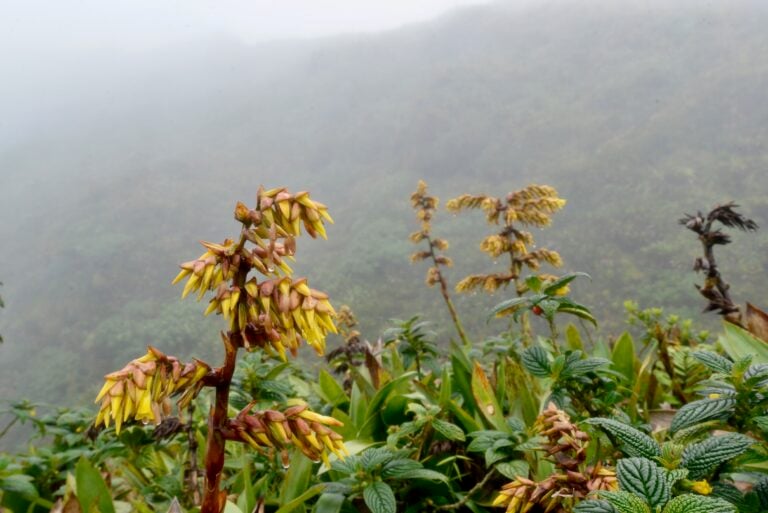
In less than three hours, I will be standing at the misty summit of La Grande Soufrière, the island’s highest point (1,467 m), surrounded by sulfuric gases and buffeted by 100 km/hr winds. Everything here is affected by the 100 per cent humidity — the air feels heavy, the rocks slippery and the trails ever so muddy. By afternoon, I’ll be back at sea level under sunny skies, wandering the artisanal shops that line the streets of Bouillante on the west coast of the Basse-Terre before checking out the lively beaches.
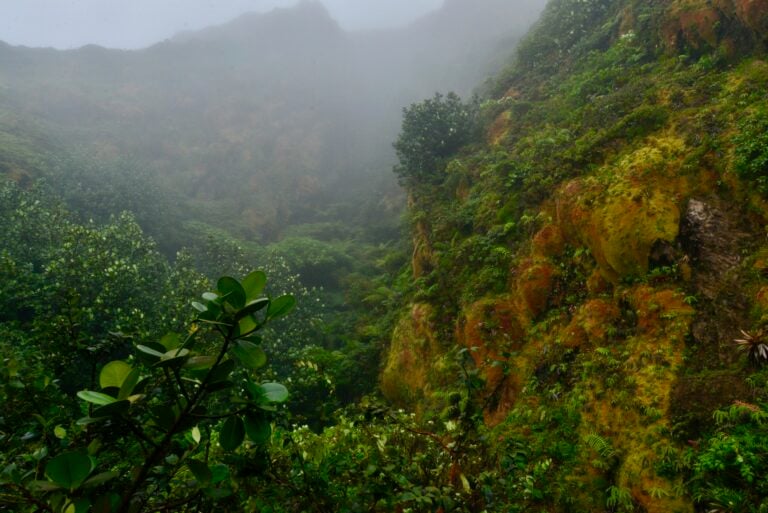
An overseas region of France, Guadeloupe is renowned for its lush forests, charming Creole villages, mountainous backdrops and, of course, its beaches. Made up of a series of six main islands, the archipelago blends French sophistication, evident in its distinctive colonial architecture and the availability of freshly baked baguettes, with a laid-back Creole-inspired culture shaped by the rhythms of the Caribbean.
The two main islands are Basse-Terre and Grande-Terre, divided by the Rivière Salée (Salty River). The islands, which, when viewed from above resemble butterfly wings, have distinct origins and landscapes. Grande-Terre is flatter, boasting white-sand beaches and charming seaside resorts, while Basse-Terre features volcanic, mountainous terrain and makes an ideal base for hikers and nature lovers. To truly experience all Guadeloupe has to offer, travellers should dedicate time to exploring both regions. Day trips to smaller islands, like Marie-Galante and La Désirade, offer an even fuller picture of the archipelago.
Whether trekking above the clouds, diving beneath the waves or simply relaxing at the beach, Guadeloupe offers something for everyone. Start planning your journey with this interactive map, highlighting some of the archipelago’s most unforgettable adventures and places to visit.
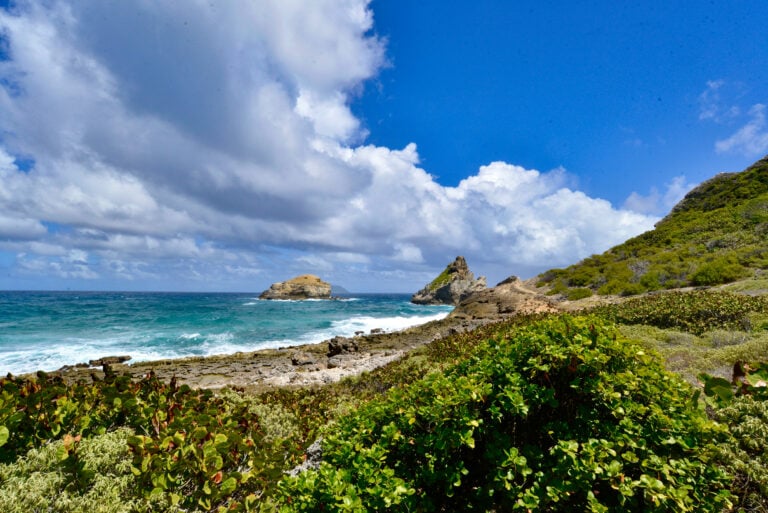
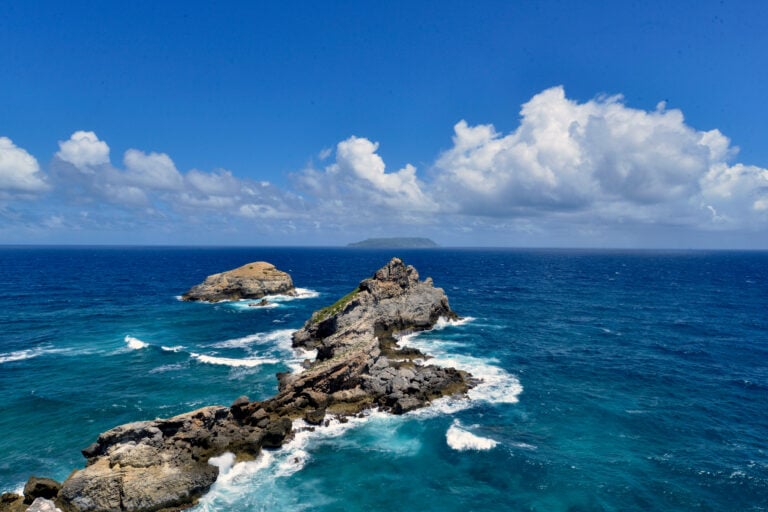
“I’ve seen whales from here before,” says my guide Jean-Louis, gazing out over the Atlantic from the windswept viewpoint at La Pointe des Châteaux. “Thousands of people come here each year. You can see why.”
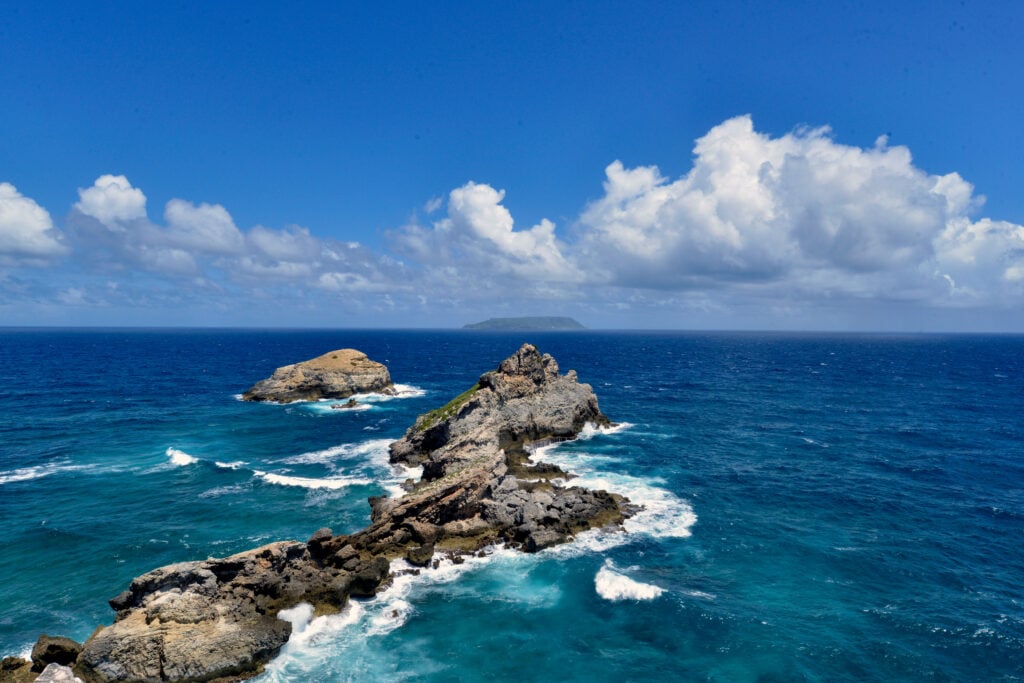
With sweeping views across the eastern edge of Grande-Terre, Pointe des Châteaux is one of Guadeloupe’s most iconic landscapes. Located less than 12 kilometres from the centre of Saint-François, the short hike (about 15 minutes one way) follows a rugged, sunbaked trail to the base of the towering Grande Croix. From the summit, the horizon stretches endlessly: La Désirade rises to the east, the islets of Petite Terre sit to the southeast, and, on clear days, Marie-Galante and the Les Saintes archipelago appear to the south.
“I think everyone should visit here,” says Jean-Louis.
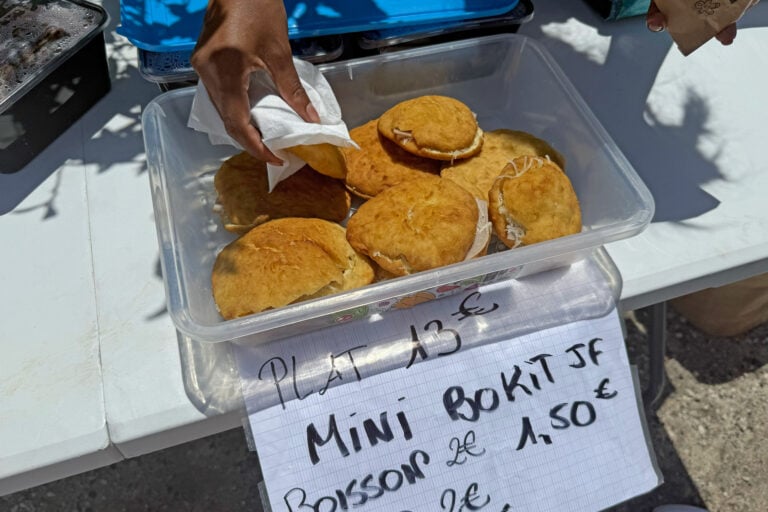
TIP: After taking in the views, stop by one of the nearby street vendors for some traditional Guadeloupean street food. The coconut sorbet is light and refreshing, while a bokit (a fried sandwich) is the perfect post-hike reward.
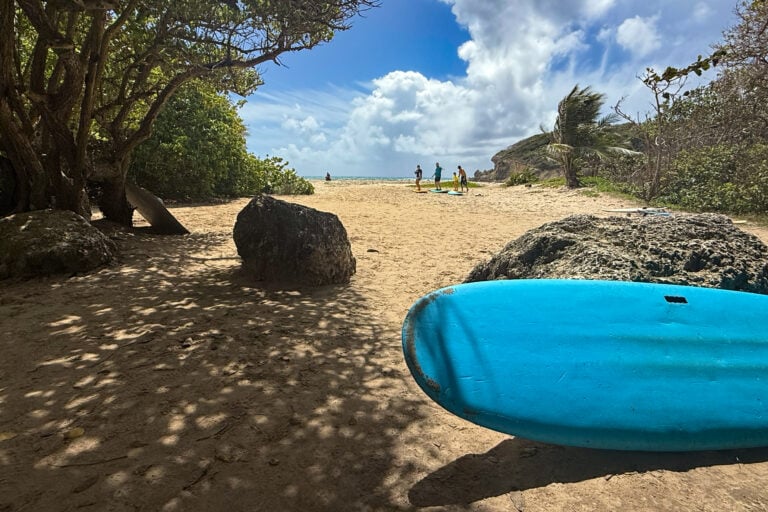
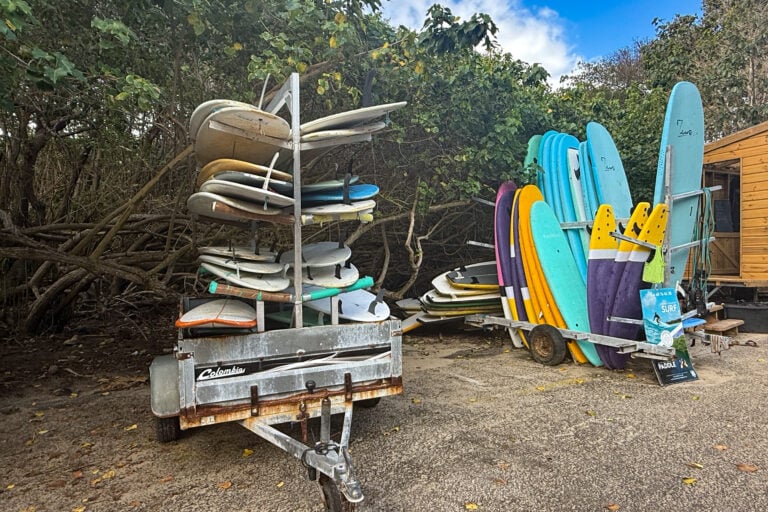
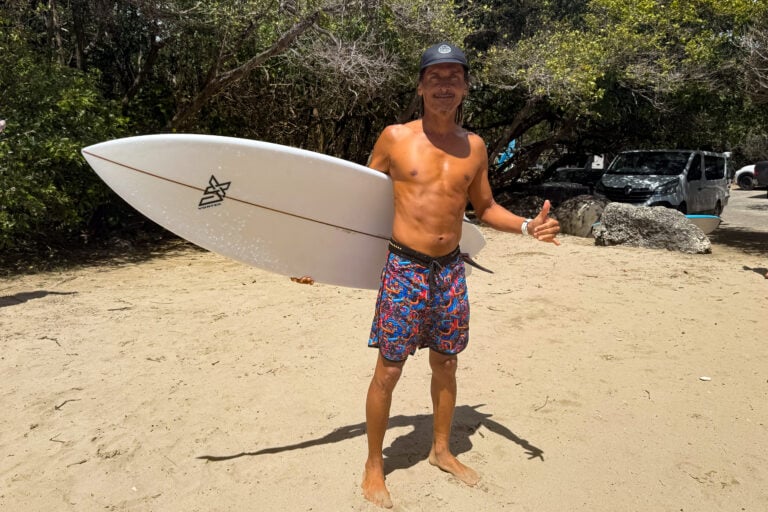
Although it flies under the radar, Guadeloupe has an active surf culture with waters that are warm year-round and a variety of beaches that boast ideal surfing conditions. Most of the best surf spots are found in Grande-Terre, which has something for everyone — from accessible swells for beginners to more powerful waves for advanced riders. At Helleux beach in Sainte-Anne, just a few metres from Petit Havre beach, Arawak Surf Club offers surfing tours for travellers of all levels, and on the day I visit, the conditions couldn’t be better.
“This is my office,” says my instructor, Aaron, as we bob in the ocean waiting for our next wave. “It’s the best job in the world.” For more than four decades, Aaron has been riding waves across the world. He now spends his days teaching surfers of all levels, including athletes on competitive French and Guadeloupian teams. “I want people to feel joy and enjoy life,” he says as we float on our boards beneath the Caribbean sun. Aaron certainly enjoys life to the fullest. As we wait for the next wave, he tells me that in his spare time he’s also a naturopath, bassist, taekwondo master, fascia therapist and computer repairer.
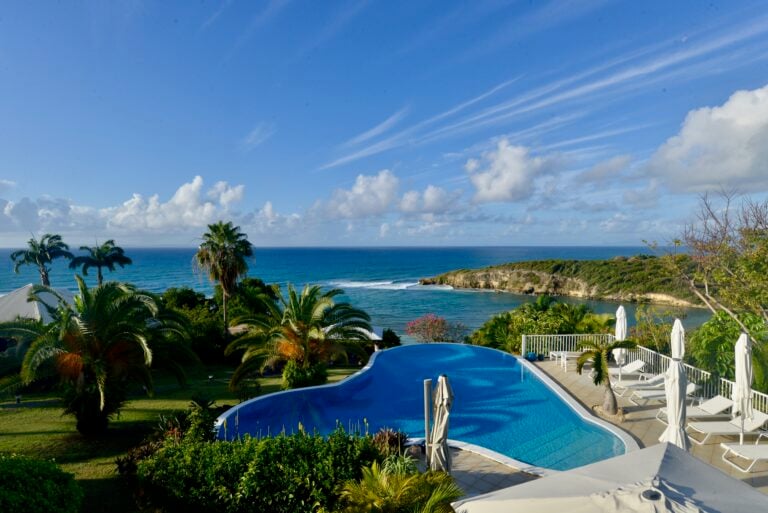
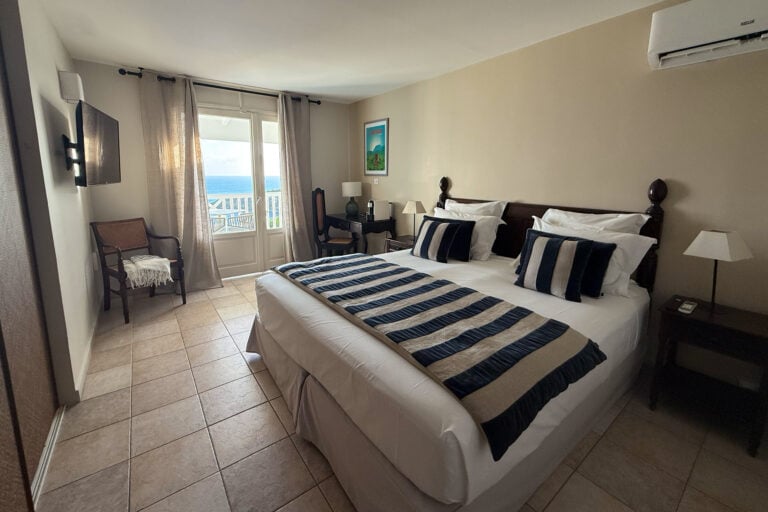
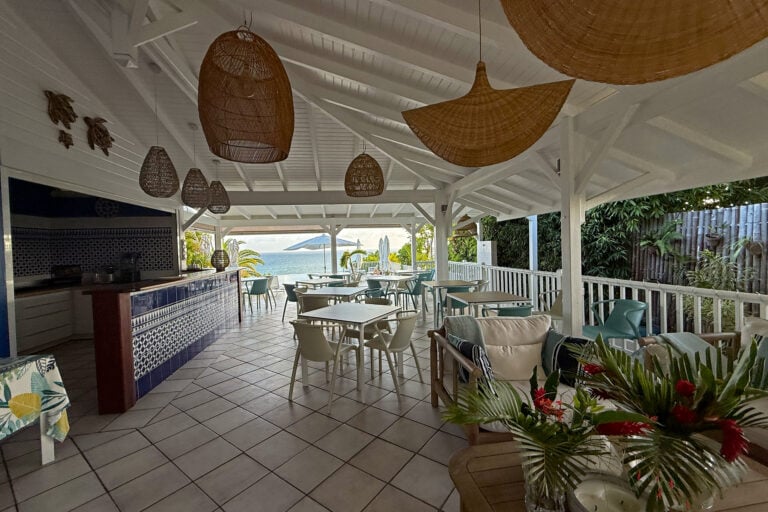
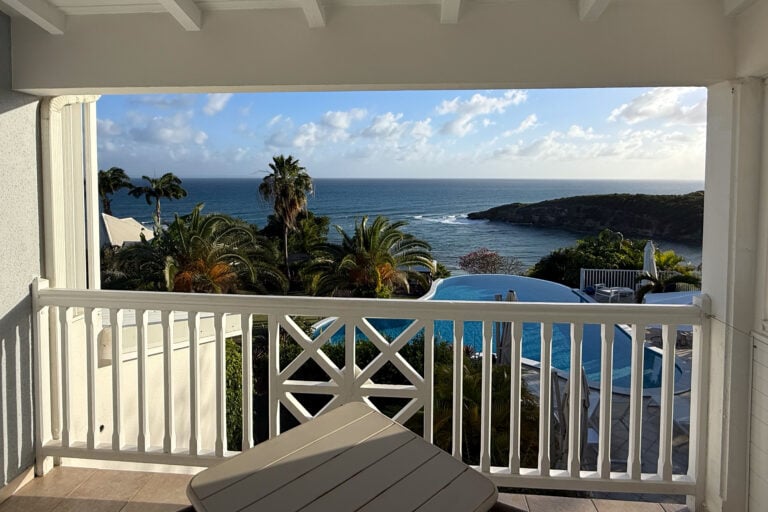
“This is the room with the best view,” says Stephanie, the receptionist and one of only five employees of Hôtel Amaudo. “You’re going to love this,” she says, opening the door to my room. We walk over to the balcony where I’m greeted by exceptional views of Anse à la Barque, a scenic bay in the Caribbean Sea. In the distance, I spot the islands of Marie-Galante, Dominica and the volcanic archipelago of Les Saintes composed of nine tiny islands.
A truly boutique experience, Hôtel Amaudo is a Creole-inspired accommodation in Grande-Terre, located just a short drive from the seaside resort of Saint-François. Charming, quiet and laid-back, the hotel has only 14 rooms, making for an intimate and friendly experience. “It’s a hotel, of course, but it’s also more than a hotel,” says owner Philippe Trehan.
Originally from Brittany, France, Trehan purchased this property five years ago after falling in love with the region. In the years since, he has transformed the space, upgrading its ranking from three stars to four. An infinity pool with panoramic views over the sea and charming gardens make Hôtel Amaudo a perfect base for your Grande-Terre adventure — and a welcoming place to return to at the end of each busy day.
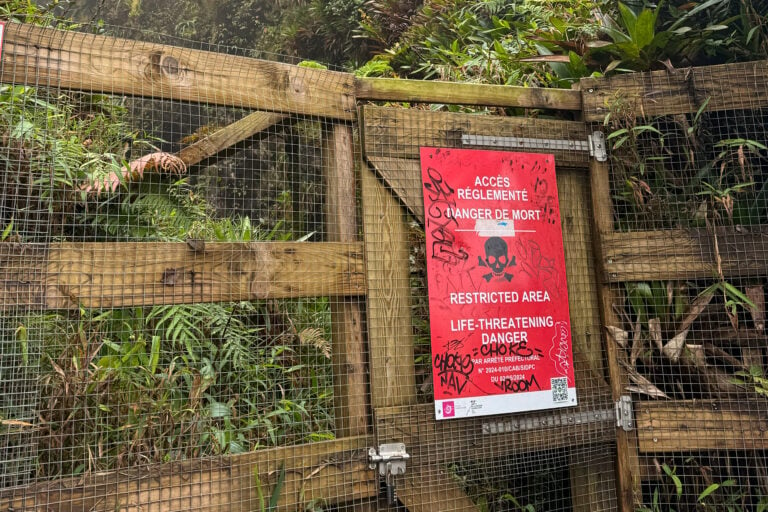
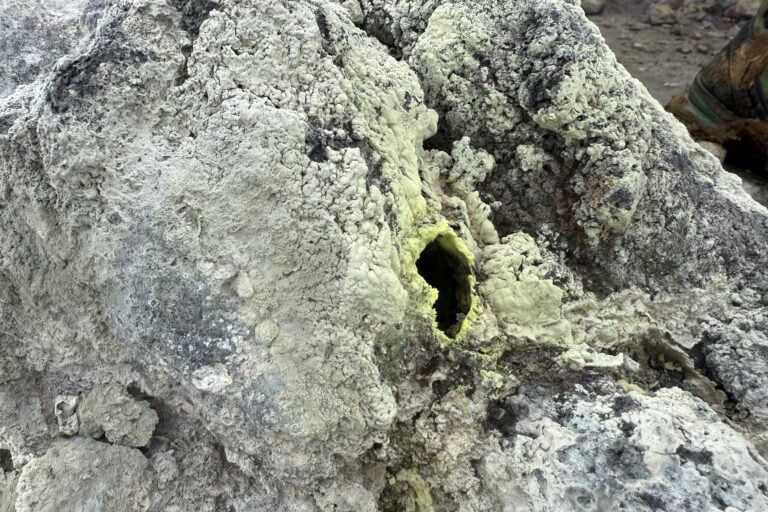
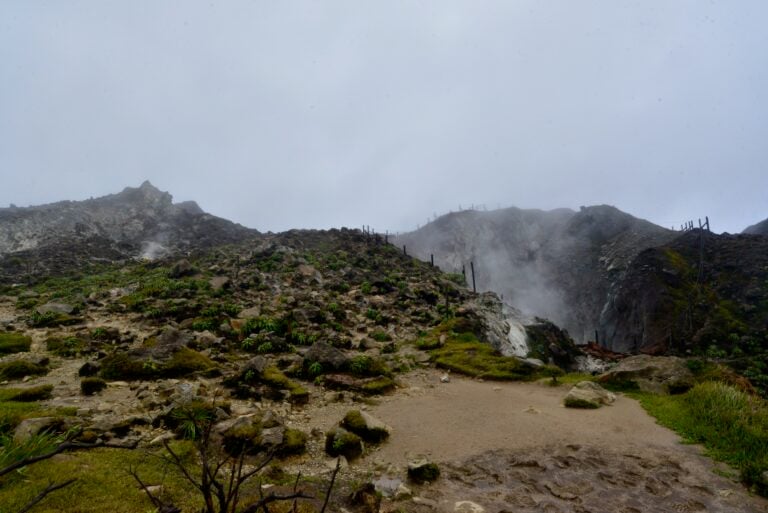
Restricted Area. Life-Threatening Danger reads the bright red sign marked with a skull and crossbones. We walk through, entering the final stretch of our hike up La Grande Soufrière, Guadeloupe’s highest point (1467m). From here, toxic sulphur fumes fill the air — gas masks required.
“The last eruption was in 1976,” says my guide, Kevin Faleme, with Verte Intense. “Before that, it was 1956.” He points to a small, steaming volcanic chimney in the ground. “Ten years ago, there were 80 chimneys. Now there are about 500.” These chimneys, which range from the size of a toonie to giant craters, allow gases like sulphur to rise and escape. We can feel the heat as we approach them, though Faleme assures us that the Volcano Observatory monitors conditions daily at this active site.
Over the five-hour hike, the trail slowly shifts from dense rainforest to a stark, lunar-like summit. There, we push through 100 km/h winds and near-total humidity before descending via the Chemin des Dames trail on the volcano’s eastern side.
For travellers seeking Guadeloupe’s ultimate adventure, hiking La Soufrière is non-negotiable. “It’s beautiful,” says Faleme. “But you will get wet.”
TIP: Having a durable, high-quality rain jacket is essential for this hike, as travellers will be trekking through terrain with 100 per cent humidity. Arc’teryx’s Beta AR Jacket proved to be the perfect choice. Made with a mix of GORE-TEX PRO ePE fabrics, this jacket kept me bone-dry, even when rain was coming from all directions.
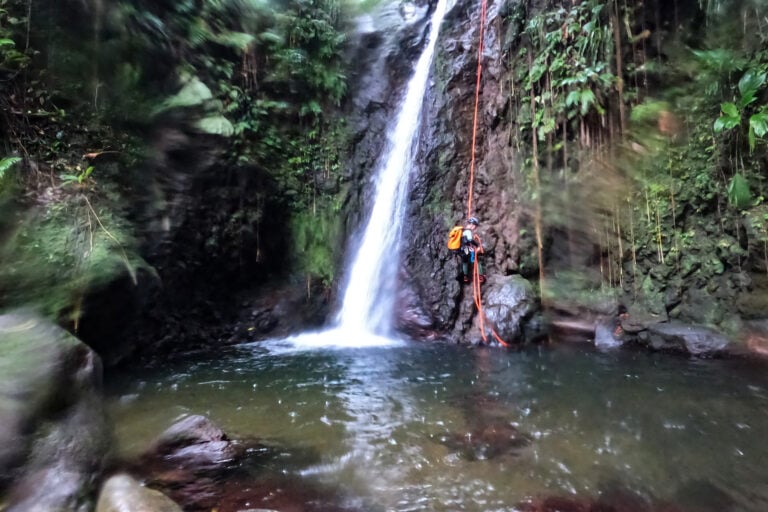
In Guadeloupe, you do go chasing waterfalls — specifically, rappelling down them. Set in lush rainforest, Vert Intense canyoning adventures are a high-energy way to experience the island’s wild side, with seven routes ranging from beginner to advanced. Each takes from three to five hours.
“On the count of three, jump!” says my guide, Melan, as we reach the final challenge — a three-metre leap into a basin below. I don’t think, I just jump, plunging into the cool water.
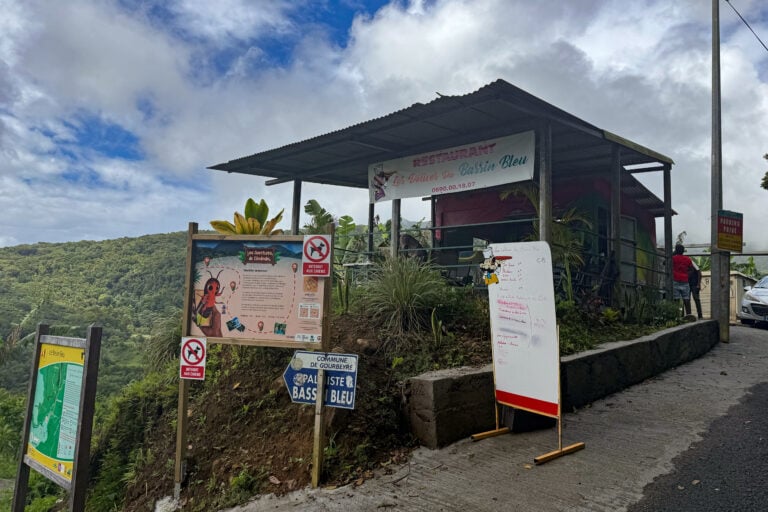
Over four hours, our group traverses through Ti-Canyon, rappelling, sliding and wading through the river. The gateway to the Guadeloupe National Park, Ti-Canyon is located near La Soufrière and pairs perfectly with the volcano hike, which is also offered by Vert-Intense. TIP: After completing your adventure, stop in at Restaurant Les Délices du Bassin Bleu, owned by Elain Laquitaine. The Accra (fried fritters traditionally made with salted cod) are a must-try.
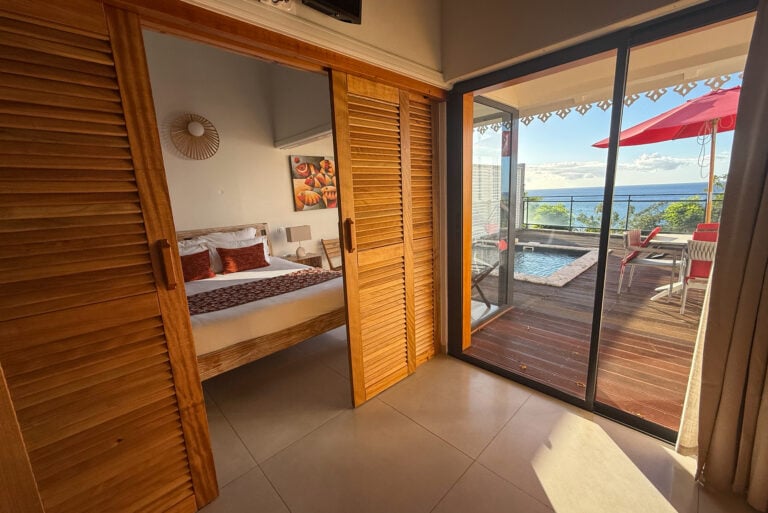
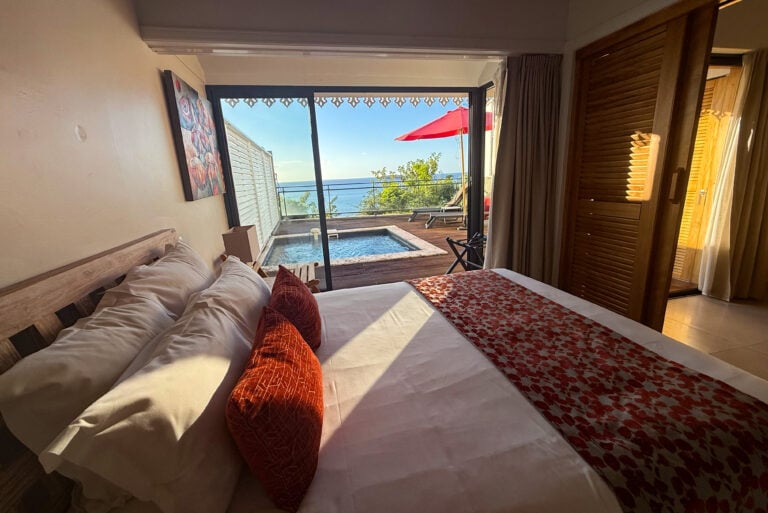
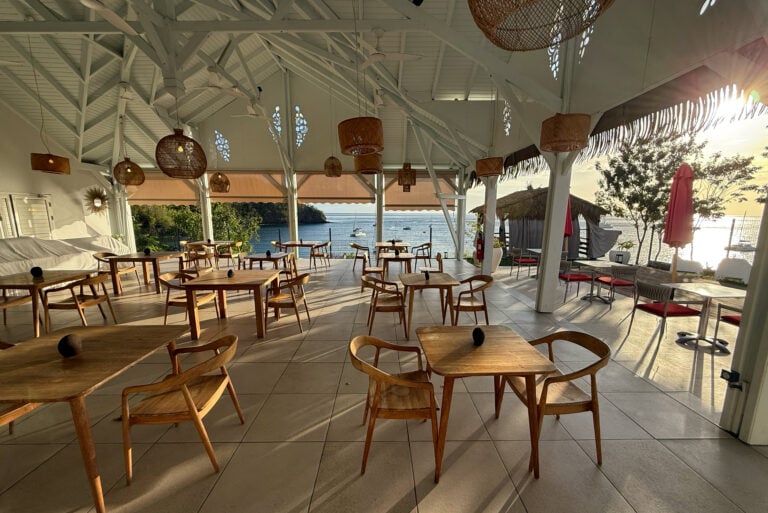
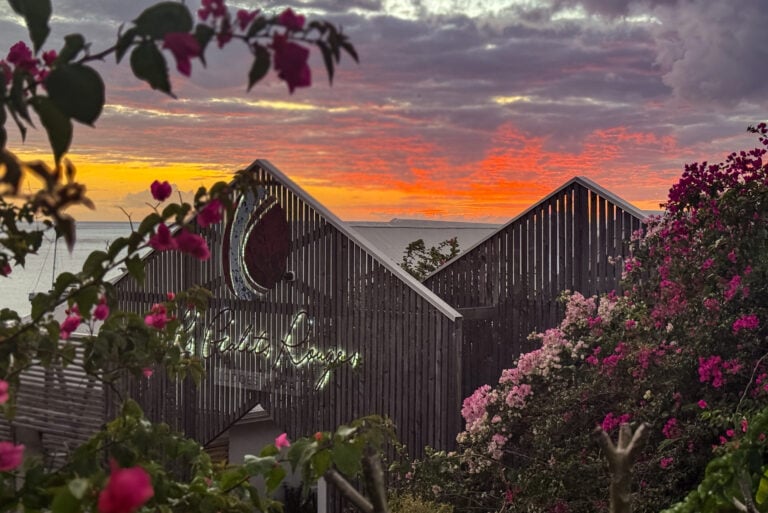
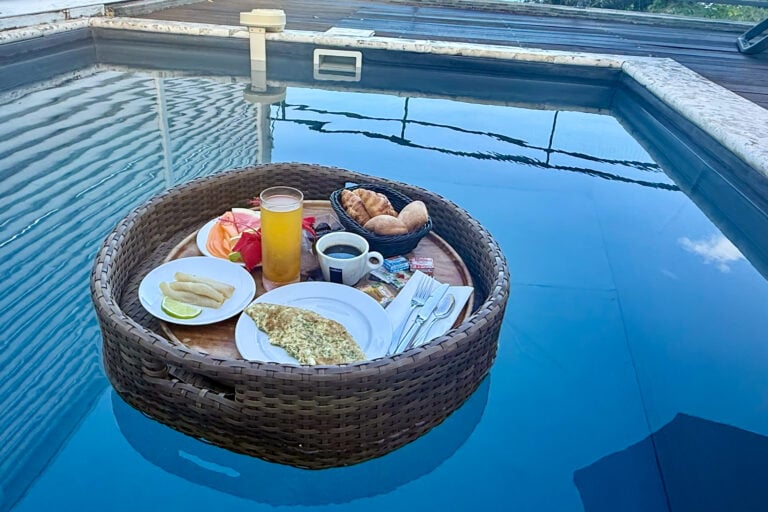
From the terrace of my room at Les Galets Rouges, a four-star boutique hotel and spa in Bouillante, I spot at least five large iguanas in the trees just metres from where I stand. Beyond them, panoramic views stretch across an impossibly blue Caribbean Sea.
“Good afternoon, Ms. Cotterill,” says Camille, one of the hotel’s receptionists. “How has your day been?” I express my appreciation for my private pool and terrace, and the dinner I enjoyed at the hotel’s seaside restaurant the night before. Tucked away from the busier streets of Bouillante and with just two dozen or so rooms, Les Galets Rouges feels intimate — more like a retreat than a traditional resort.
Set between the mountains and the sea, the hotel offers uninterrupted views of the nearby Îlets Pigeon and the famed Cousteau Reserve. Sunny rooms open out onto expansive private terraces, some of which boast their own private pools. Mornings can be spent listening to doves and roosters, while evenings are reserved for enjoying slow sunsets over the Caribbean Sea.
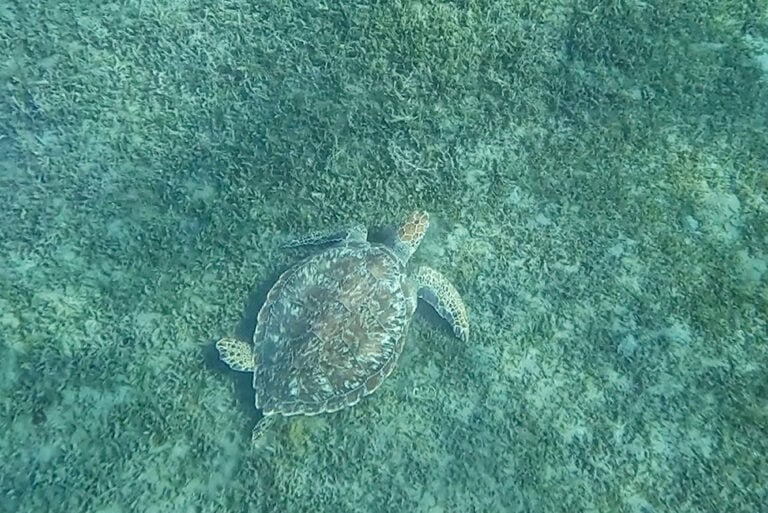
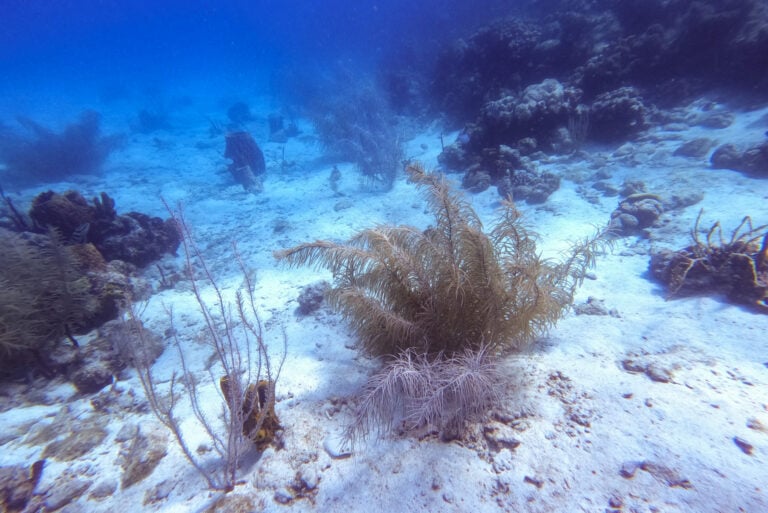
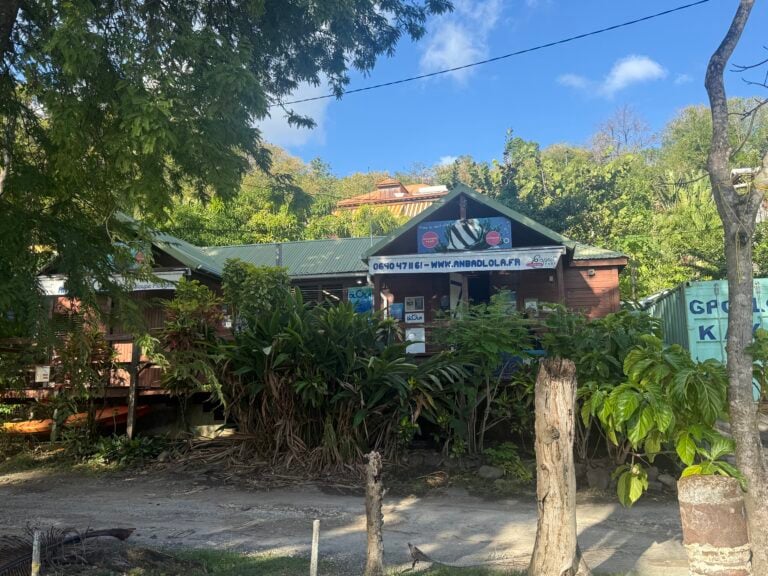
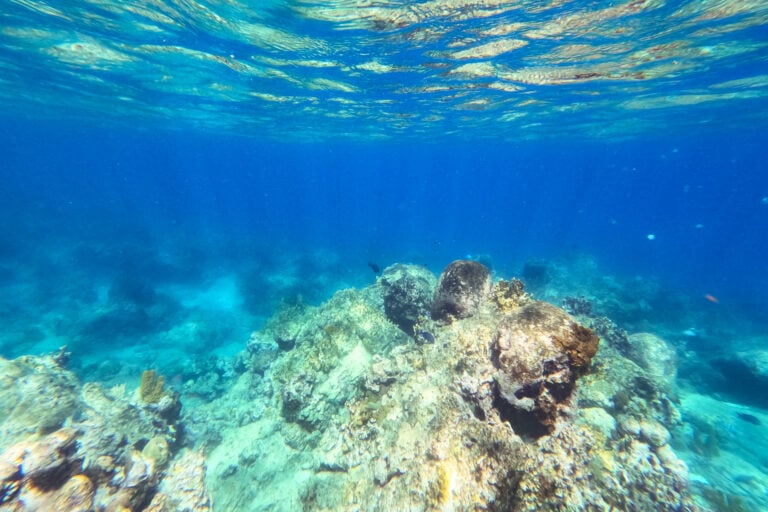
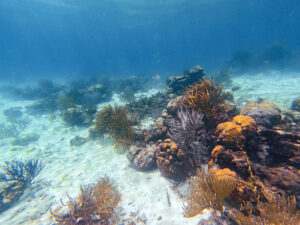
Guadeloupe is just as beautiful below the waves as it is above. And the best place to experience the undersea world is in the 400-hectare Cousteau Reserve, which surrounds the Îlets Pigeon off Bouillante. Fishing and hunting has been banned here since the 1970s, but the region was only officially integrated into the Guadeloupe National Park in 2009 to enhance its protection status. The reserve is home to hundreds of marine species, including tropical parrotfish, trumpetfish, barracudas and angelfish, as well as turtles, coral reef sponges, and more. But for Cathy Lacourbas, a guide with Anbadlola, snorkelling is about more than the chance to spot colourful fish. “I think if people understand, they will protect for sure,” she says.
Originally from just outside Paris, Lacourbas has spent more than two decades in Guadeloupe, using each excursion as an opportunity to teach. Rather than letting guests drift freely, she identifies species and explains their role in the ecosystem, turning each snorkelling trip into an opportunity to impart a deeper understanding of the marine world.
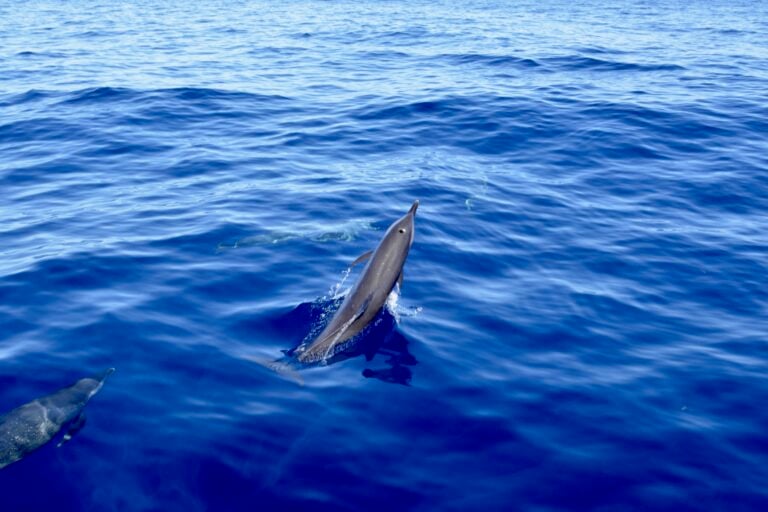
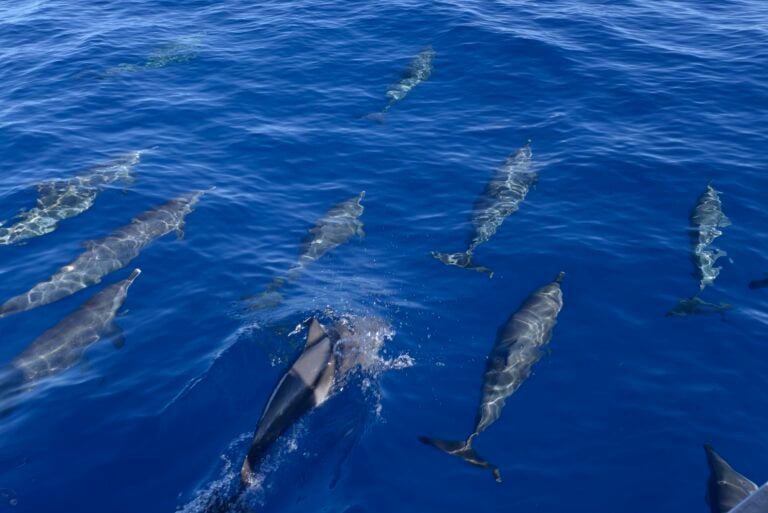
Aside from the iconic “blow” of a whale, the telltale sign that cetaceans are nearby is the presence of birds soaring overhead. And sure enough, minutes after noticing a frigate bird hovering above our Vie Marine Caribéenne catamaran, I spot a pod of spotted dolphins. (Large predators like dolphins chase small fish to the surface so that frigate bird was confident of an easy meal.)
Across Guadeloupe, about two dozen cetacean species can be observed, from humpback whales and bottlenose dolphins to the extremely rare orca. But for the family-run Vie Marine Caribéenne, every species is important.
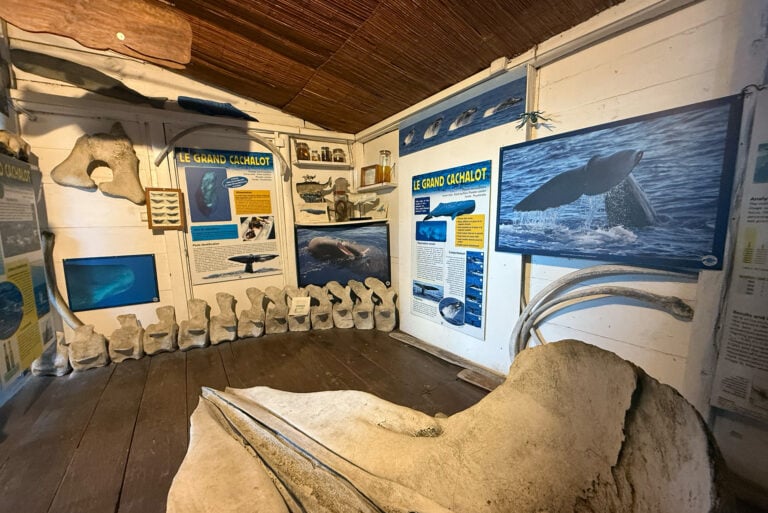
Vie Marine Caribéenne’s operations are overseen by Évasion Tropicale, an association dedicated to protecting cetaceans since 1992, and staff are committed to ensuring that wildlife encounters are paired with education. At its Blowing Whale Museum, visitors can learn about local marine species through displays before heading out to sea.
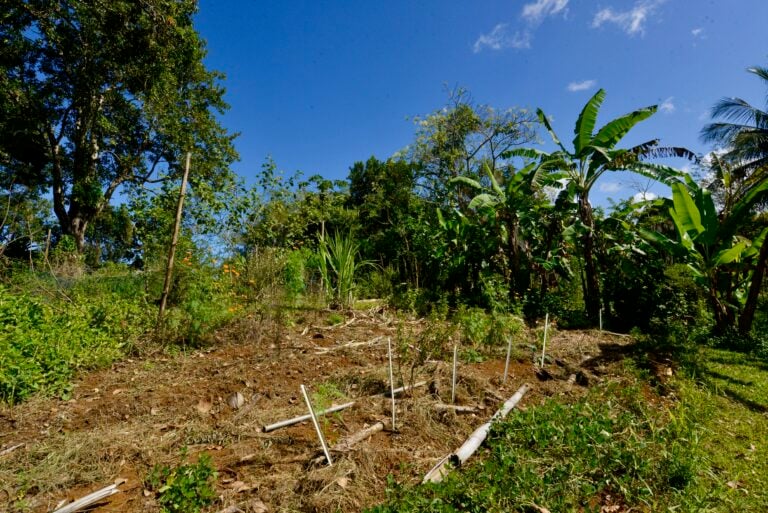
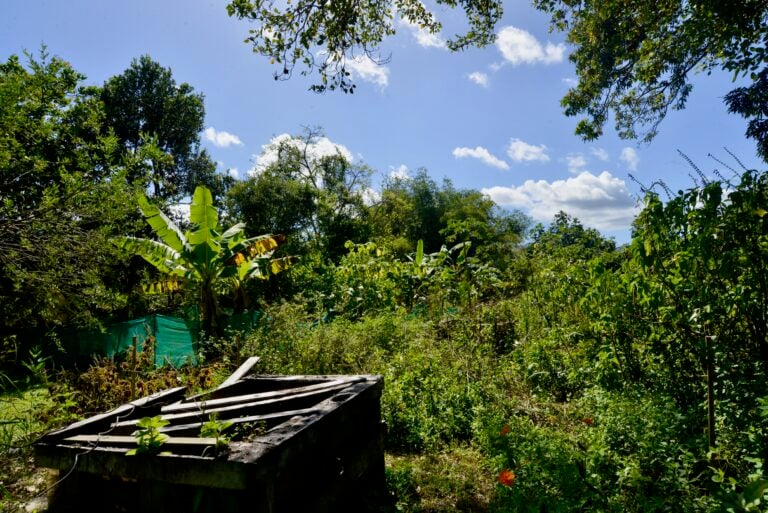
“The beauty of the Creole garden is that there is no useless plant,” says Yoan Cabidoche. “Every part of this one is useful,” he adds as he picks a flower from an atoumo plant. The roots of an atoumo plant aid digestion, while the leaves and flowers strengthen the immune system. Indeed, atoumo is a contraction of the French “à-tous-maux,” which roughly translates as “for all ills.” This cure-all is just one of hundreds of plants in Sweet Om, a family-run Creole garden in the heart of Guadeloupe’s Lamentin countryside cared for meticulously by Yoan and his mother, Thérèse.
Using only organic farming methods, they follow the Creole garden method — cultivating a variety of plants, from medicinal herbs to fruit trees and vegetables, in a multi-layered approach. It is a sustainable approach to planting, with everything processed by hand according to the seasons.
Upon arriving at Sweet Om, travellers are warmly welcomed by the mother-son duo, who identify the plants, their uses and the importance of each species as they guide guests through their garden. “We are growing a garden in a natural way,” says Yoan. “It demands resilience and observation. But the principle is to grow something that is natural. Nature always goes from the simple to the complex.”
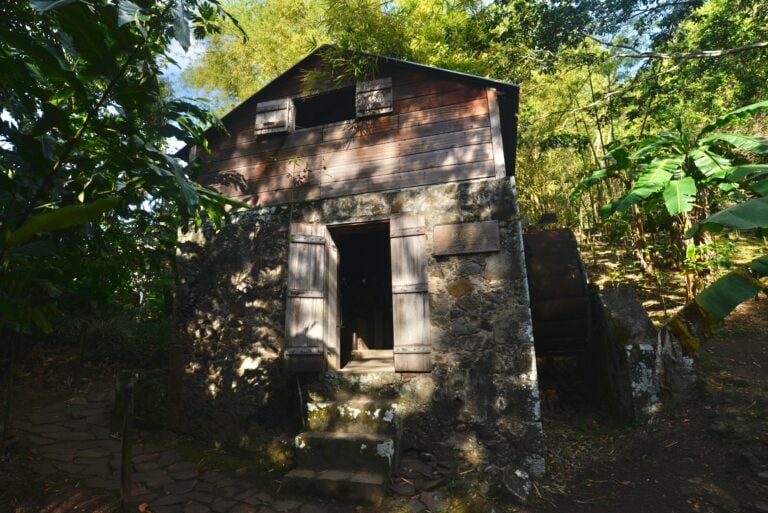
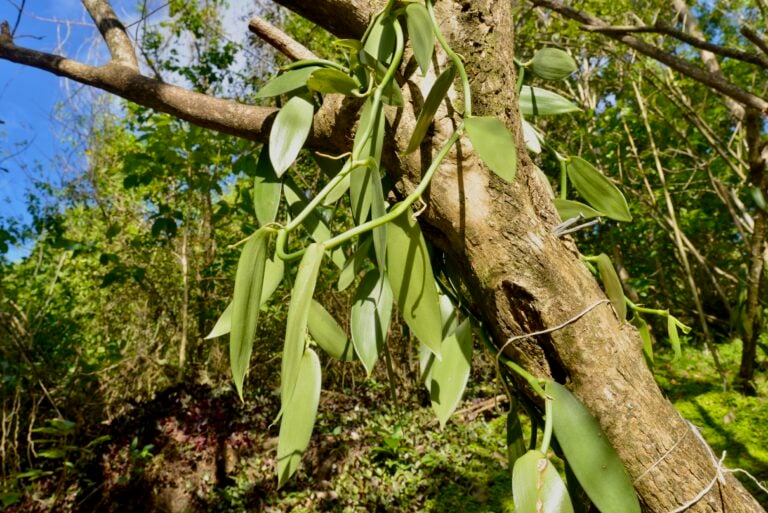
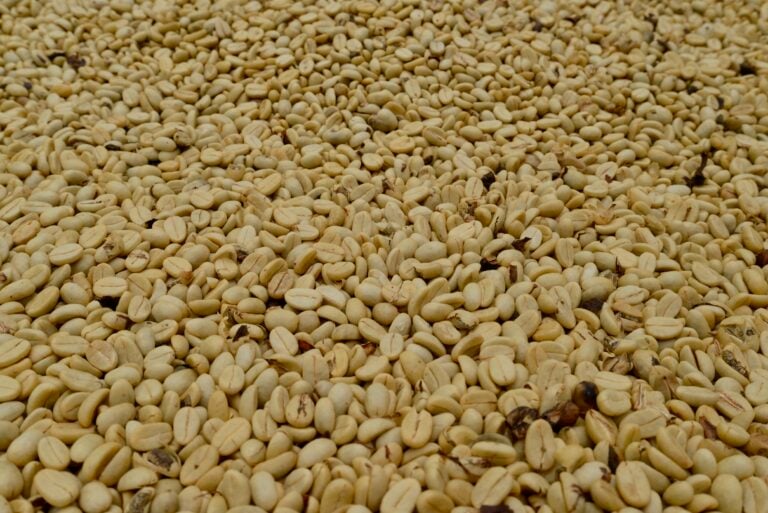
Joel Nelson doesn’t like coffee. Yet, 15 of the 28 hectares of his farm are dedicated to growing Guadeloupe’s historic Arabica coffee. Despite the irony, Joel has dedicated much of his life to cultivating one of Guadeloupe’s most historic crops at Domaine de Vanibel, a family-run farm nestled in the rainforest foothills of Basse-Terre. The property has been in his family since 1974, when his parents first purchased the land. At first, coffee covered just a single hectare. Today, under the Nelson family’s stewardship, the farm has grown to encompass 15 hectares of coffee, two hectares of cocoa and one hectare of vanilla. The family has also built bungalows for rent.
Coffee first arrived in Guadeloupe in the 18th century and the region quickly gained a reputation for producing some of the world’s best coffee. At Vanibel, Joel is working to revive that legacy. On guided tours of the farm, visitors learn about the process — from planting to roasting to brewing the perfect cup. I now know it takes five years for a coffee tree to produce its first harvest.
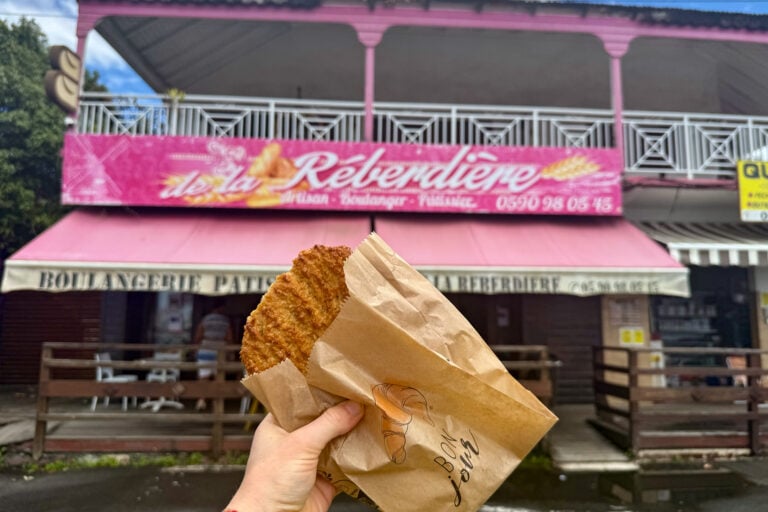
A trip to “France” isn’t complete without pastries: croissants, pain au chocolat, beignets, tarts, and more. For a truly local experience, and to avoid tourist prices, head to Pointe-Noire, a lesser-known town on the west coast of Basse-Terre, nestled between Bouillante and Deshaies.
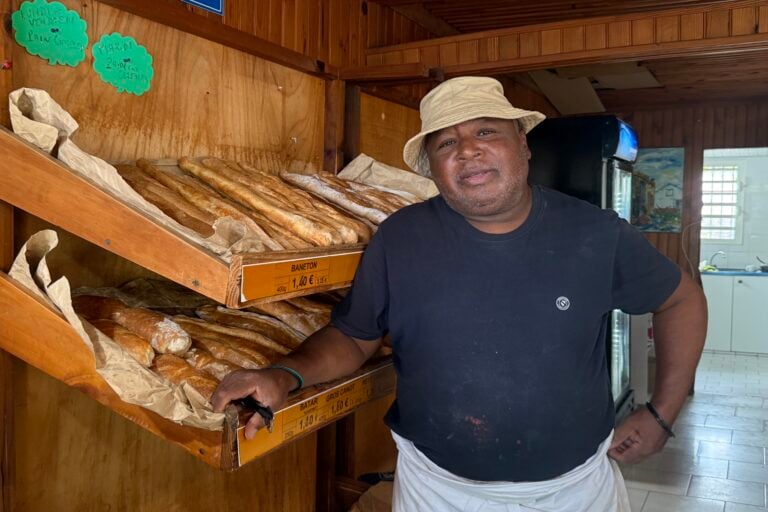
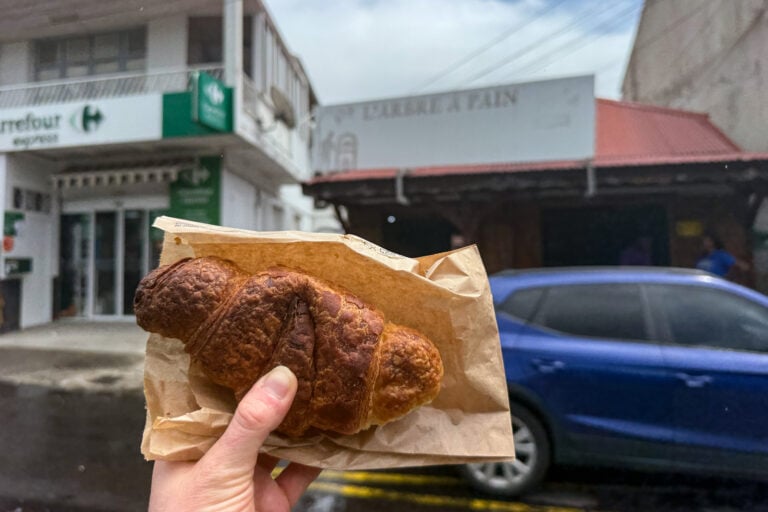
“All tourists will likely pass through Point-Noire,” says my guide, Jean-Louis. “Other cities are more attractive, but Point-Noire is authentic.” Jean-Louis takes me to L’Arbre à Pain. Its faded sign and dark exterior make it easy to overlook — until the aroma of freshly baked, wood-fired bread gives it away.
This family-run bakery whose name translates as “breadfruit tree,” a popular fruit found throughout Guadeloupe, has been crafting delicious pastries, breads and sandwiches since 1985. Behind the counter, George Obertan, who runs the store with his brother, greets us warmly and offers up one of the bakery’s must-try croissants.
Just a few minutes down the road is the more tourist-oriented Boulangerie Patisserie de la Réberdière, its bubblegum-pink sign impossible to miss. Inside, a case filled with handmade offerings makes my mouth water — everything from sausage rolls and beef pastries to tarts and madeleines. I try coconut chikki, a soft, baked cookie with the essence of a macaron.
Exploration
How research on little-known “marine animal forests” could shine a light on ocean hope spots — and why they need protecting
Exploration
2019 North American Rolex scholar Neha Acharya-Patel shares insights from her work (and that of other Canadians) in assisting the Florida-based Coral Restoration Foundation to rebuild beleaguered reefs
Travel
Explore this Central American nation’s top dive sites, where visitors can witness thriving marine ecosystems and learn about sustainable reef protection

Exploration
Something melted a hole through the glacier above the Mount Meager Volcano in 2016. A perilous expedition ventured deep inside the cave to find out, did the volcano wake up?