Exploration

From Labrador to Luna: Training future moon explorers

With the Artemis II mission set to blast off next spring, humanity is one step closer to returning to the moon. In the meantime, astronauts are honing their skills in a Labrador meteorite crater.

  • Sep 02, 2025
  • 2,203 words
  • 9 minutes
Canadian Space Agency astronauts Jeremy Hansen, left, and Jenni Gibbons, right, get a primer in geology from Gordon Osinski. (Photo courtesy Canadian Space Agency)
Expand Image
Advertisement
Advertisement
Advertisement

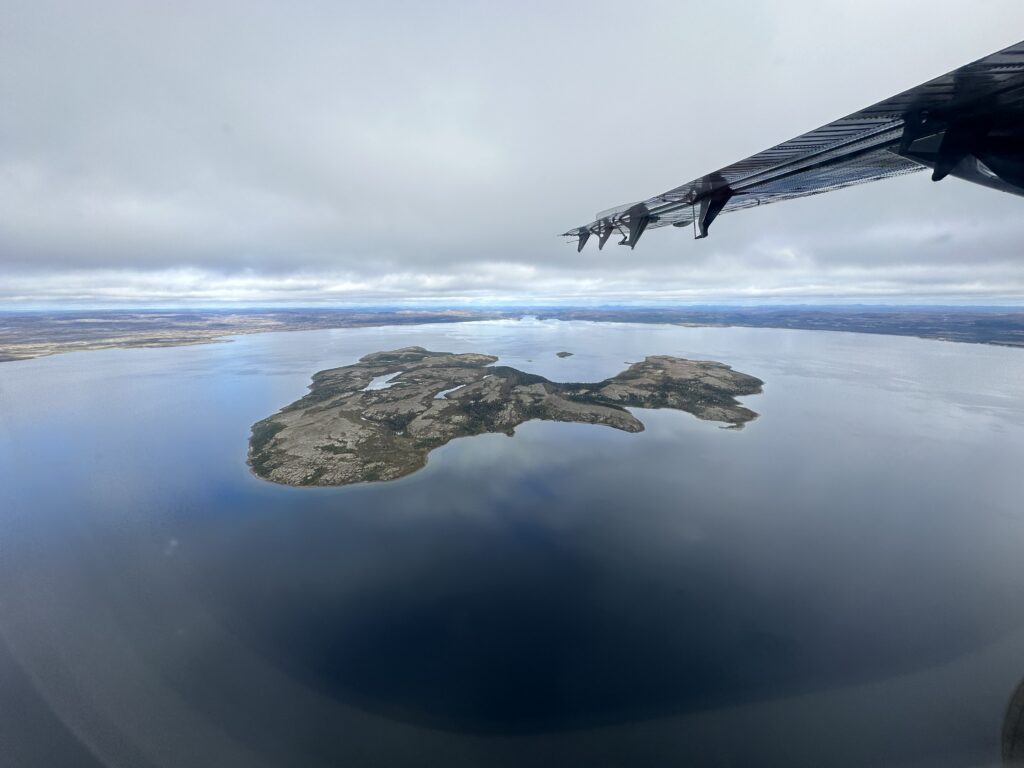
It’s hard not to be in awe as the Twin Otter aircraft climbs over a series of barren rocky hills, then banks sharply to the left to begin its descent onto the western shore of Kamestastin Lake. The lake is one of the largest in northern Labrador at 16 kilometres across and easily identifiable on maps and in satellite images due to its odd shape — roughly circular, whereas most nearby lakes are long and linear — and the crescent-shaped island at its centre.

A few minutes later, I’m on the tundra. I’ve been exploring remote parts of Canada by bush plane for over two decades, but it never loses its thrill — a combination of the remoteness and the challenge of never quite knowing what to expect. The plane will make three more trips to Goose Bay and back, delivering all the equipment and supplies we need for the next two weeks.

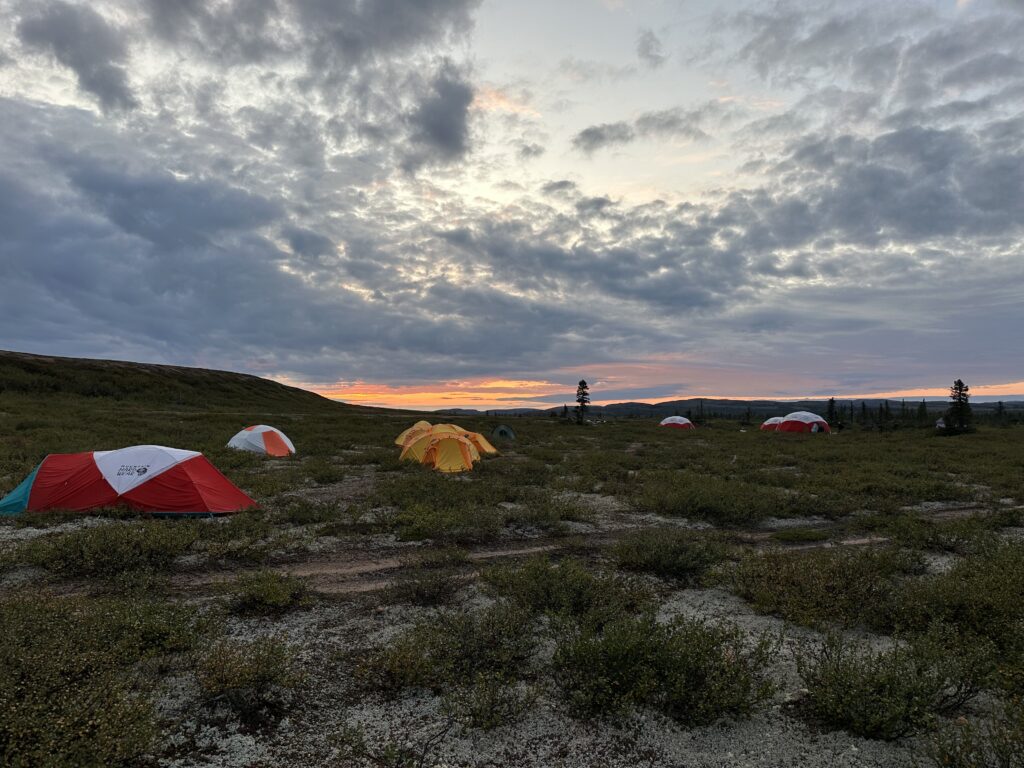
Our base camp consists of three large dome tents — one for our kitchen, one for all the science and safety equipment, and one for meeting and eating — and individual tents for sleeping, pitched 50 metres away to distance ourselves from the food. As I remind my team, there are black bears in the area.

This is my third scientific expedition to Kamestastin Lake and my 24th year doing fieldwork in the Canadian north, but this trip feels different, mostly because the rest of the field team have come from the NASA Johnson Space Center in Houston, Texas — the epicentre of human spaceflight in North America. I have been helping to train astronauts in field geology for a decade now, but usually one astronaut at a time and mostly with the Canadian Space Agency (CSA). Joining us in two days at Kamestastin Lake will be 11 members of NASA and the CSA, including four astronauts. Among them are two members of the Artemis II crew: Canadian astronaut Jeremy Hansen and U.S. astronaut Christina Koch. In spring 2026, these two astronauts will blast off on a historic flight around the moon. They and the other NASA and CSA team members are coming to Kamestastin Lake to assess its suitability as a site for training astronauts for future missions to the lunar surface. Falling asleep in my tent that first night, I still can’t quite believe this is real.

Flying over Kamestastin Lake. The crescent-shaped island in its centre is made up of rocks thrust up from two kilometres below Earth’s surface by a violent meteorite impact. (Photo: Gordon Osinski)
Expand Image
Base camp. (Photo: Gordon Osinski)
Expand Image

Back to the moon

It has been over 50 years since humans last walked on the Moon. Since then, astronauts have not ventured beyond the International Space Station, which resides in low Earth orbit at an altitude of 400 kilometres. But we are going back: led by the United States and NASA, the Artemis program aims to establish the first long-term presence on the Moon — think of the scientific research stations that many countries currently operate in Antarctica — and then to send the first astronauts to Mars. NASA also plans to send the first woman and first person of colour to the lunar surface.

It’s important to recognize that this is an international effort: Canada was one of the original eight signatories of the Artemis Accords, which lay out a common set of principles on everything from the sharing of scientific data to space mining. The number of countries that have signed the accords has since grown to 56, making this one of the largest international endeavours of its kind. A core principle of the Artemis Accords is to enhance peaceful relationships between nations, which is needed more now than at perhaps any time since the Cold War.

The Artemis program — named for the mythological daughter of Zeus and twin sister of Apollo — consists of a series of missions of increasing complexity to get humans back to the surface of the moon. The first mission, Artemis I, launched in late 2022, was the first demonstration of much of the technology needed to return humans to the moon. That mission had no astronauts onboard.

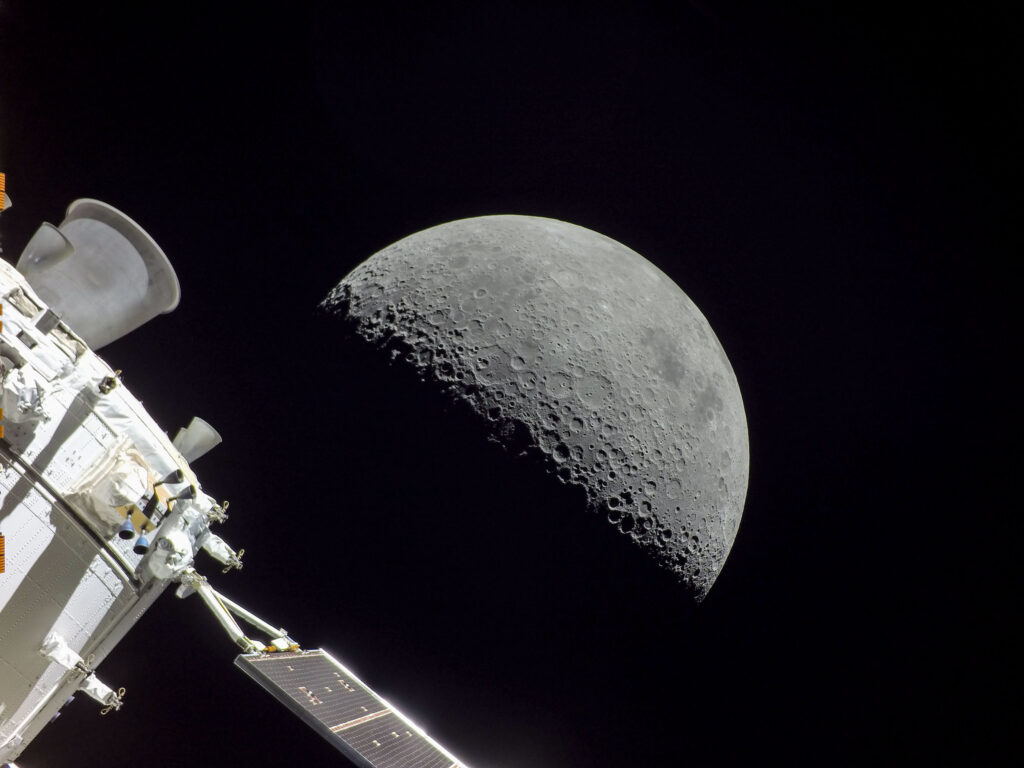
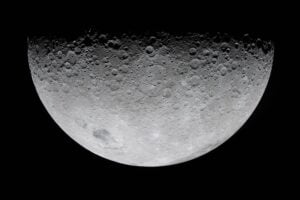
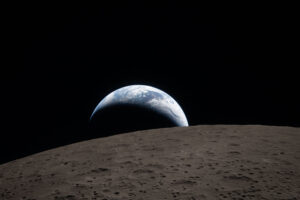
Artemis I was an uncrewed test flight of the Orion spacecraft, which will ultimately carry humans to the moon for the first time in more than 50 years. Orion captured this image of itself and our moon on day 20 of the 25-day mission in 2022. (Photo: NASA)
Expand Image

Artemis II, originally scheduled for September 2024, is now expected to launch in April 2026. This is an incredibly exciting mission for our country, as Canadian astronaut Jeremy Hansen will be onboard. While this mission will not land on the moon, it will still be historic: it will be the first time that astronauts will fly in NASA’s Orion spacecraft and, as it flies past the moon, it will break the record for the farthest distance humans have ever travelled from Earth — over 450,000 kilometres. Jeremy’s participation will also make Canada only the second country in the world to send a human to what we refer to as “deep space.” The return of humans to the surface of the moon for the first time since 1972 will occur with Artemis III, currently scheduled for sometime in 2027.

Unsurprisingly, training for the Artemis astronauts has focused largely on the aspects of the mission that will keep them alive: operating the spacecraft that will fly them to the moon and back, learning to moonwalk in their space suits, and so on. However, like the Apollo program before it, a major goal of the Artemis program is advancing lunar science.

Artemis III, along with at least the next two human missions and countless preceding robotic missions, are going the south pole of the moon. Just like polar explorers here on Earth, astronauts exploring this region will face greater challenges than the pioneers who flew the Apollo missions. Not only is it much harder to get to and communicate with the poles, these explorers will be doing fieldwork in a place where the sun never rises more than a few degrees above the horizon and where temperatures can reach an unfathomable -200 degrees Celsius.

The south polar region of the moon is also incredibly geologically complex, potentially harbouring deposits of water ice. It is the site of the largest impact crater in the solar system, the South Pole-Aitken Basin, measuring a whopping 2,500 kilometres in diameter. We think this crater formed over four billion years ago, but to know its exact age, we need astronauts to conduct geological fieldwork and collect samples to bring back to Earth.

The only way to prepare astronauts to do geology on the moon is to train them in similar environments on Earth — namely, meteorite impact craters.
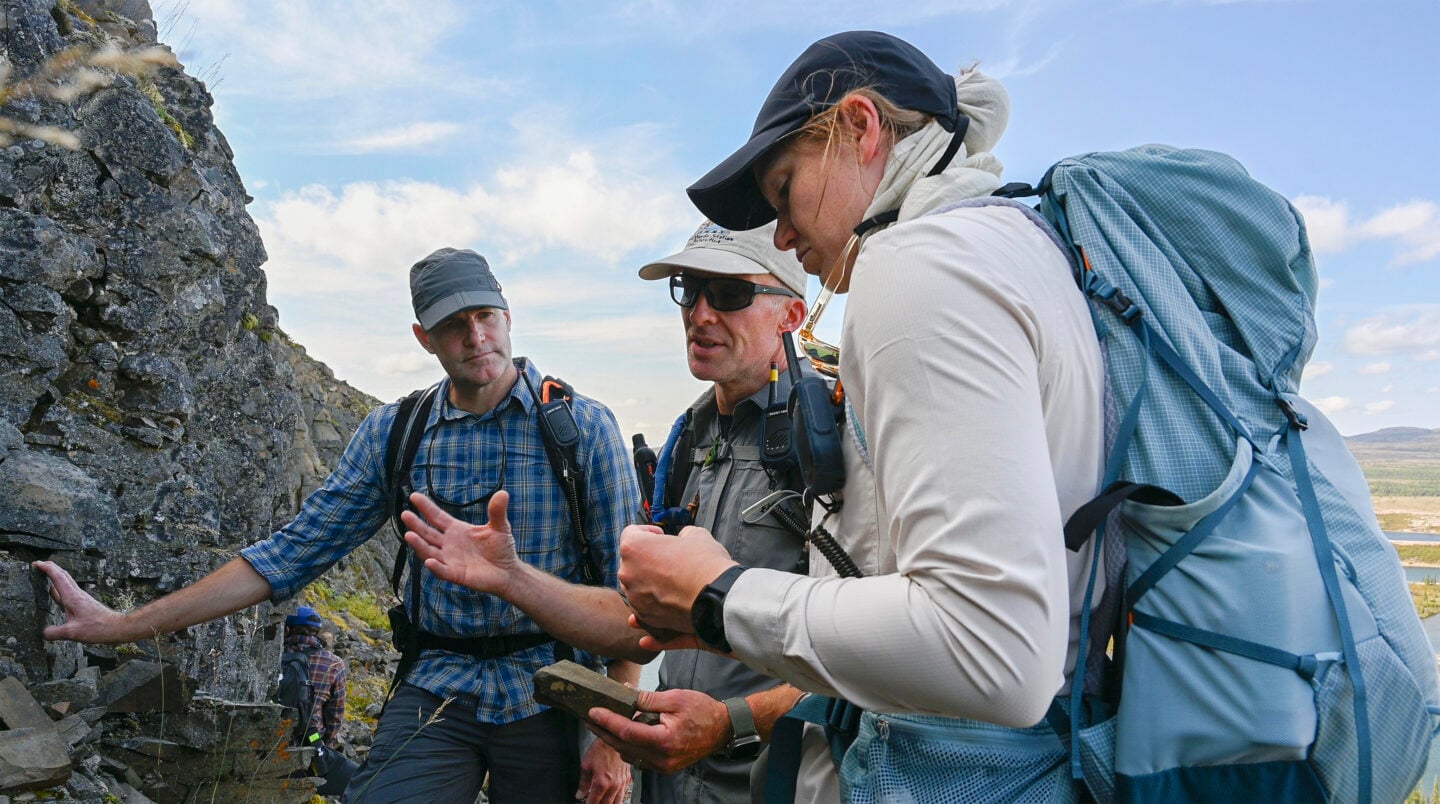
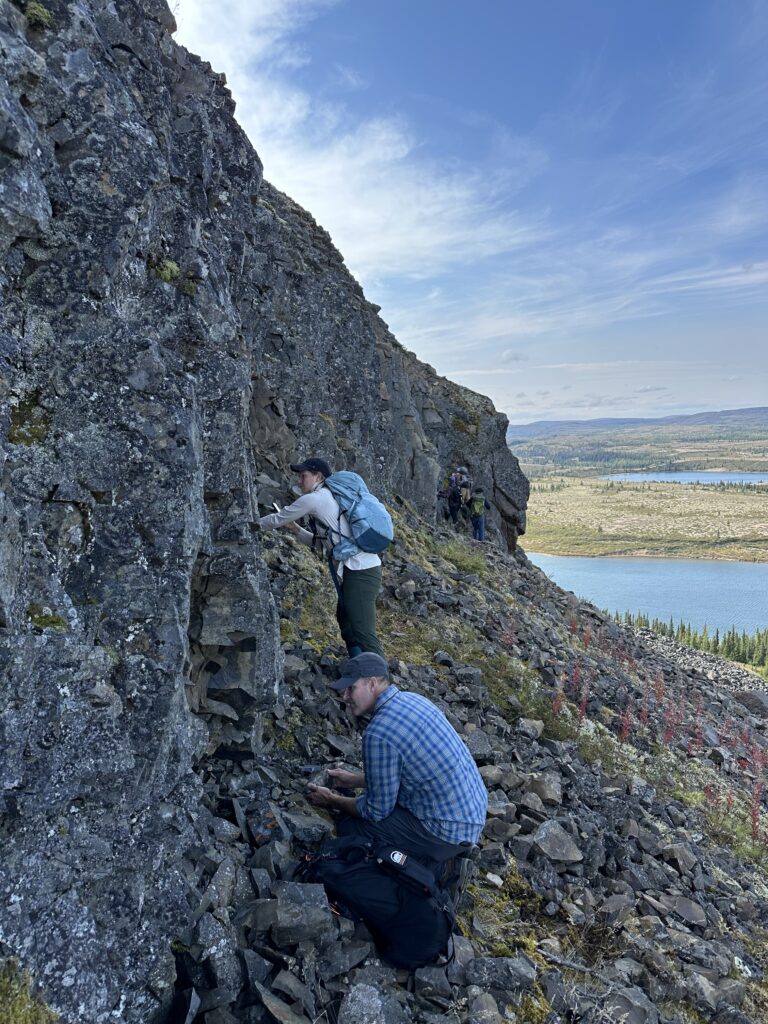
Hansen and Gibbons search for “impactites” in an 80-metre cliff beside the lake. (Photo: Gordon Osinski)
Expand Image

Kamestastin Lake: A unique analog for the moon

Four days after the full group convenes at Kamestastin, we venture across the lake to the central crescent-shaped island, where any remaining doubts that this is one of the best sites in the world for providing geology training for Artemis are dispelled. The astronauts get to witness scientific discovery for themselves when we literally stumble across some rocks that do not appear on any known map. Being able to combine hands-on teaching at known locations with exploratory research makes Kamestastin truly unique.

The Kamestastin Lake crater was formed approximately 35 million years ago by an asteroid between one and two kilometres in diameter. The impact released energy equivalent to around one million nuclear bombs. This sheer explosive power makes meteorite impacts different from any other geological process. Even the most powerful volcanic eruptions don’t come anywhere close to releasing as much energy.

Because of the geological history and climate of northern Labrador, the crater is relatively well preserved. Indeed, it possesses everything Artemis astronauts might encounter on the moon: an uplifted rim and a “central peak” — the crescent-shaped island in the middle of the lake, which is made up of rocks thrust up from more than two kilometres below Earth’s crust by the force of the impact.

Present on this island and all around the lakeshore are rocks that we call “impactites.” These are rocks that were either deformed or formed anew by the extreme pressures and temperatures of the impact event. The latter are some of the most impressive rocks around Kamestastin Lake: at one location, there is an 80-metre-high cliff of rock that melted on impact and then solidified like a lava flow, producing vertical fractures called columnar joints as it cooled. We call these impact melt rocks.

Advertisement
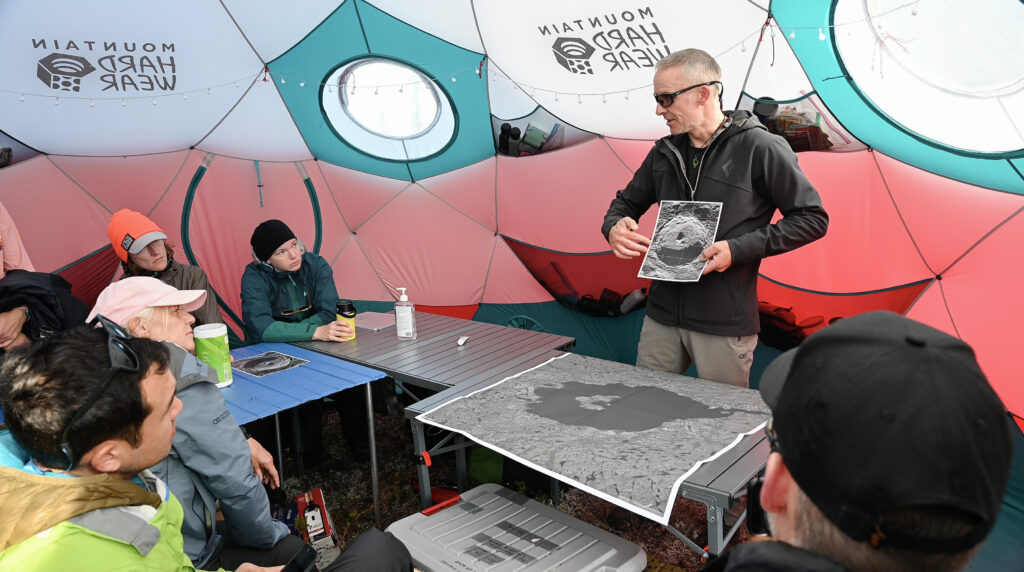
The author describes the similarities between the Tycho crater on the moon and the Kamestastin Lake impact site. (Photo courtesy Canadian Space Agency)
Expand Image

Then there are breccias. Derived from an old Germanic word meaning ‘to break,’ impact breccias are the most common product of impact events. Together, impact breccias and melt rocks are the two most common types of rock brought back from the moon by the Apollo astronauts, but they are incredibly rare on Earth.

To top it all off, one of the major rock types in which the Kamestastin Lake crater formed is called anorthosite. This rock is uncommon on Earth but, thanks to the Apollo missions, we know that this is what all the white areas of the moon are made of. Much of Kamestastin’s central peak comprises these ancient anorthosite rocks. This unique combination of traits cannot be found anywhere else on Earth.

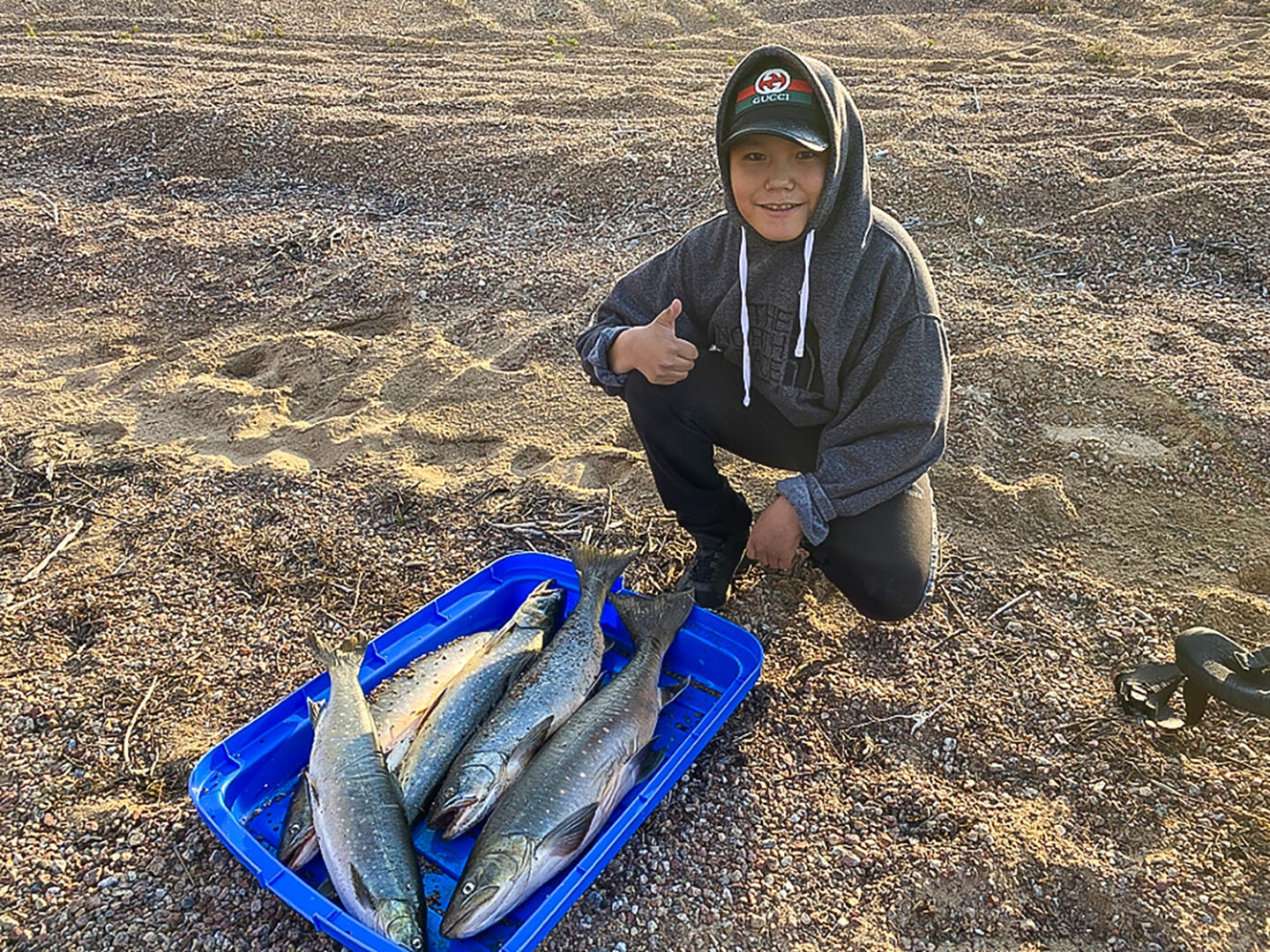
Of course, people recognized the uniqueness of Kamestastin Lake long before the history-making lunar missions of the late 60s and early 70s. The lake and surrounding region are on the territory of the Innu Nation. Today, it is a seasonal destination for hunting and fishing, but the work of archeologists has shown that Kamestastin Lake has been visited and frequently inhabited by the Innu and their ancestors for millennia. We learn how good the fishing is one afternoon when Jacob, a young Innu kid from Natuashish, brings us several amazing Arctic char that he caught in Kamestastin Lake.

Jacob with his catch of Arctic char from Kamestastin Lake. (Photo courtesy Canadian Space Agency)
Expand Image

Just like space — well, almost

Joining Jeremy Hansen and Christina Koch from the Artemis II crew are CSA astronaut Jenni Gibbons – who is on the back-up crew for Artemis II – and NASA astronaut Raja Chari. In addition to providing geology training to the four astronauts, the goal of our expedition is to scout out sites and put together detailed plans for the Artemis III crew. As such, we are also joined by six team members from NASA JSC, including people from the planetary science training team, the EVA (Extra-Vehicular Activity) or “spacewalk” group, and from the flight director’s office. Rounding out our group are three Innu Guardians from Natuashish – David Nui, Hank Rich, and Sebastian Piwas – and some of David’s family.

We spend our time visiting key sites around the lakeshore and the central island, coming up with a shortlist of locations where we can take the Artemis III crew. We travel by foot and by zodiac boat, through sun, wind and rain. We also refine our recommended equipment and clothing list after one particularly cold, wet, and windy boat ride back to camp. Just because it says waterproof on the label doesn’t mean to say you’ll stay dry in a zodiac boat on a rough lake in Labrador in September! But this also highlights one of the other reasons why I started bringing Canadian astronauts with me on expeditions to the Canadian north in the first place. While science was, and is, the major driver, doing fieldwork in a remote and often challenging environment also prepares astronauts in other ways. For example, learning how to work in a small team, often in harsh conditions, where help could be hours or days away — just like space. Well, almost.

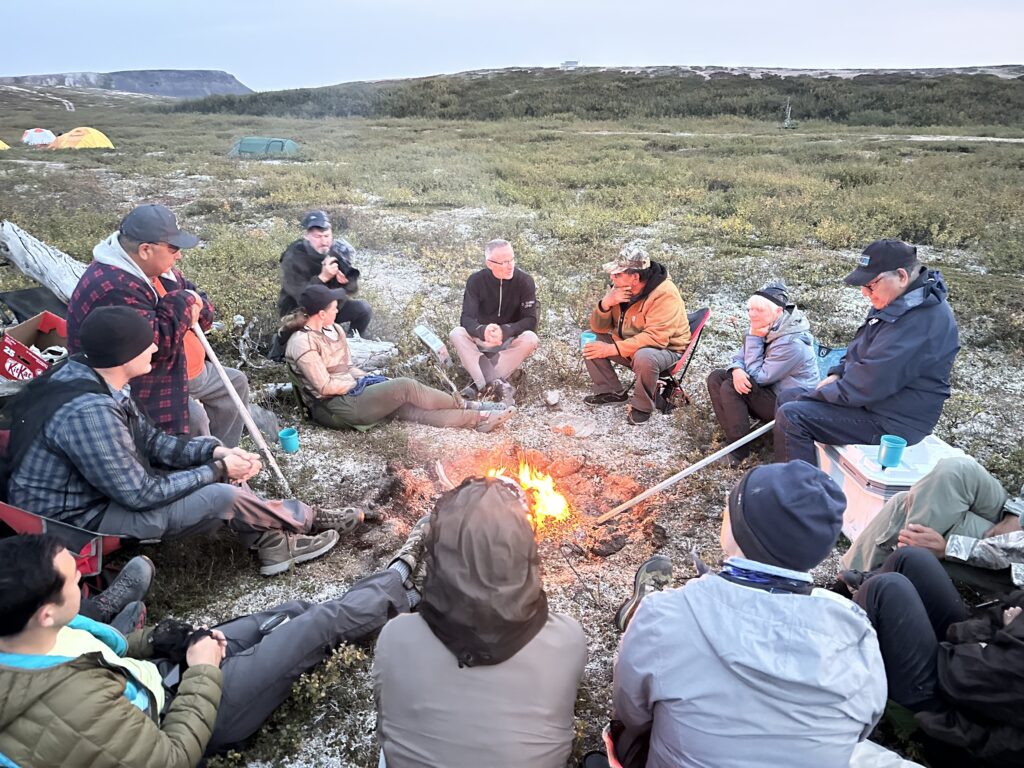
Sharing stories around the campfire. (Photo: Gordon Osinski)
Expand Image

A highlight of the expedition is the opportunity to share our findings and discuss our future plans for astronaut training with our Innu Guardians. We learn from them and seek their input and guidance about possible sites to explore, the best ways to get there, and places of cultural or spiritual significance that should not be disturbed. On one of our final nights, the predominantly cold, windy weather eases enough that we are able to sit around a campfire together. After sharing news of our discoveries on the central island, we listen to our Innu friends until the stars come out, learning about the history of the Innu, their culture, and the challenges that the two Labrador Innu communities of Natuashish and Sheshatshiu still face today.

As the moon appears in the sky, our conversation turns to the future, with David, Hank, and Sebastian quizzing the astronauts about how they will get to the moon, what they will do there, and how they will protect it. The moon is sacred to the Innu and many Indigenous peoples around the world. David tells us the story of Tshakepesh, an Innu hero who teaches that with courage, hard work and perseverance one can always overcome difficulties, and who went to live out his days on the moon. It is a fitting end to our expedition.

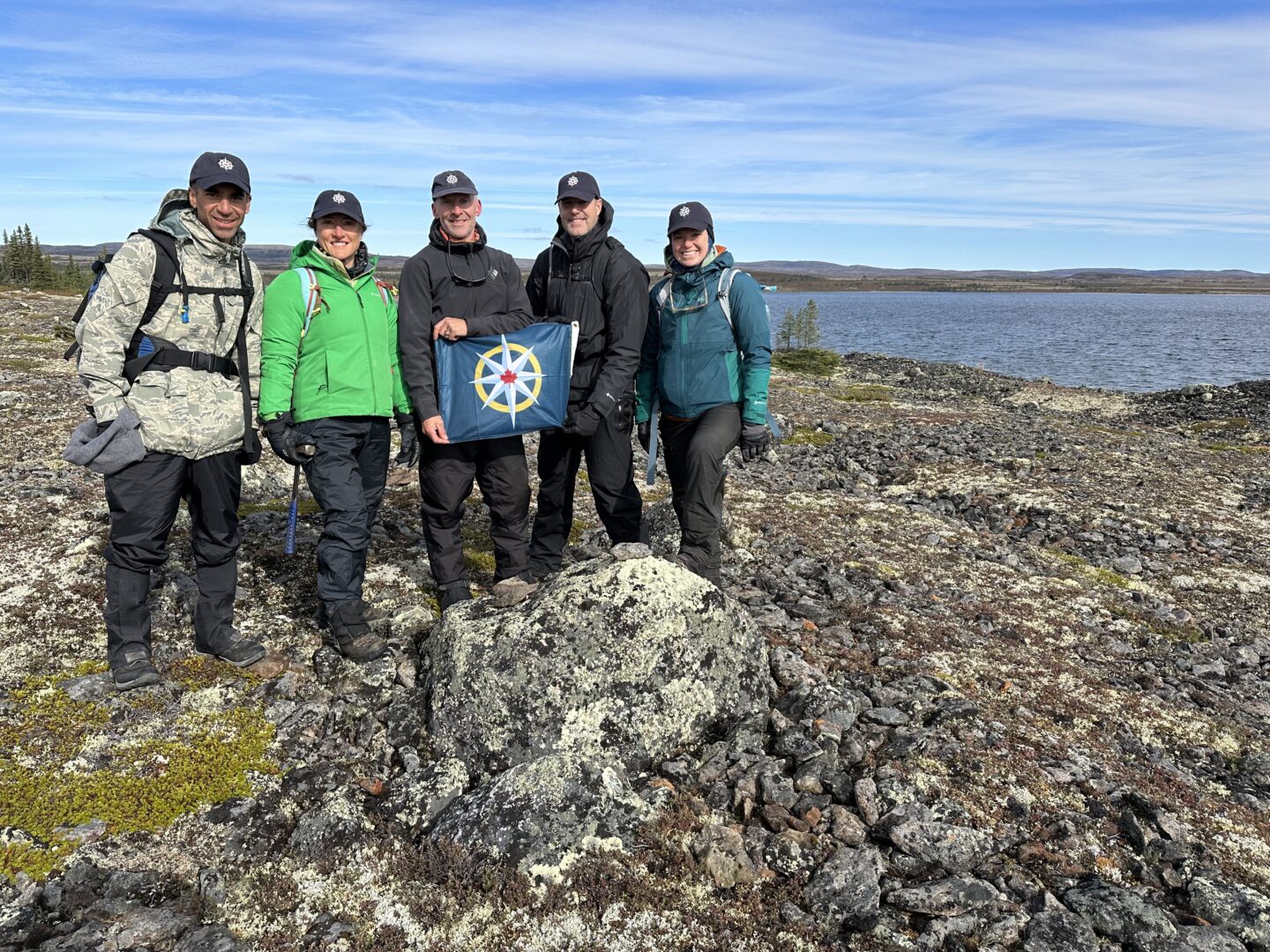
Left to right: NASA astronauts Raja Chari and Christina Koch, Gordon Osinski, and Canadian Space Agency astronauts Jeremy Hansen and Jenni Gibbons with the flag of the Royal Canadian Geographical Society. (Photo courtesy Gordon Osinski)
Expand Image

The author is grateful to the Innu Nation for granting permission for this training to take place at Kamestastin Lake. In addition to Innu Guardians David Nui, Hank Rich, and Sebastian Piwas, special thanks go to Jodie Ashini, who worked tirelessly to make this expedition happen. Air Borealis and the Polar Continental Shelf Program are also thanked for their logistical support, without which this expedition would not have been possible.

Advertisement

Help us tell Canada’s story

You can support Canadian Geographic in 3 ways:

Related Content

Science & Tech

Artemis II astronauts have returned safely to Earth following historic mission around the moon

Canadian Geographic is following this history-making mission, which saw Canadian Space Agency astronaut Jeremy Hansen become the first Canadian to fly around the moon

  • 5285 words
  • 22 minutes

Science & Tech

Canada’s ‘moon joy’ will continue long past Artemis II. Here’s what’s next for our space program

While Jeremy Hansen’s mission is complete, Canadian scientists and astronauts will be involved in future space missions – including to the moon

  • 857 words
  • 4 minutes

Exploration

Iconic moments from the Artemis II mission to the moon and back

Canadian Geographic and RCGS staff and Fellows share their favourite moments, images and videos from the 10-day mission that changed how we view the moon — and ourselves

  • 1477 words
  • 6 minutes

Science & Tech

Canadian astronaut Jeremy Hansen will be among the next humans to fly to the moon

Hansen will be part of the NASA crew for Artemis II, which will see the astronauts spending up to three weeks on a flyby trip to the moon in 2024

  • 1231 words
  • 5 minutes
Advertisement
Advertisement