

Exploration

Iconic moments from the Artemis II mission to the moon and back

Canadian Geographic and RCGS staff and Fellows share their favourite moments, images and videos from the 10-day mission that changed how we view the moon — and ourselves

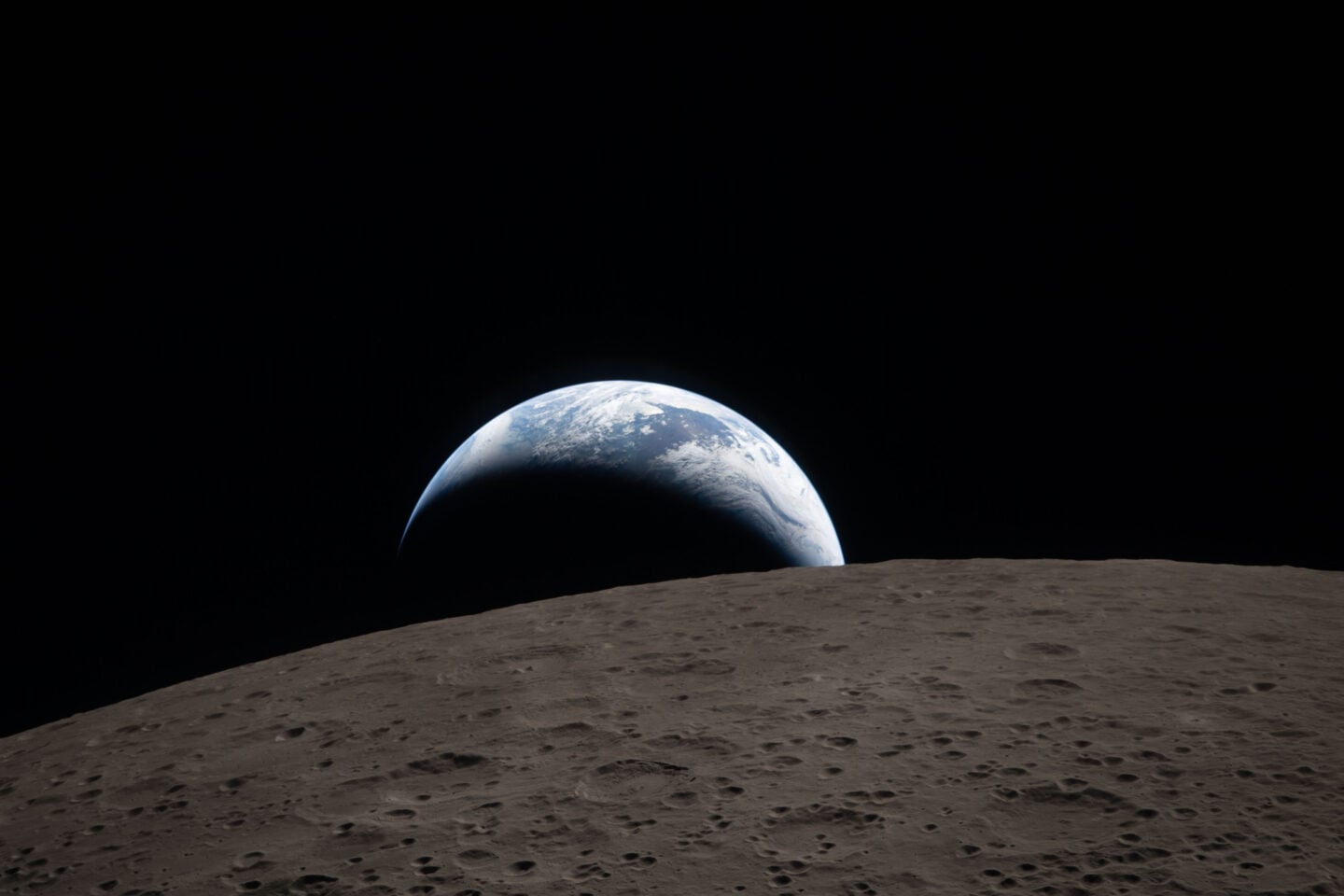
In one of the most iconic images to come out of the Artemis II mission, Earthset was captured through the Orion spacecraft window at 6:41 p.m. EDT, April 6, 2026, during the crew’s flyby of the Moon. A muted blue Earth with bright white clouds sets behind the cratered lunar surface. The dark portion of Earth is experiencing nighttime. On Earth’s day side, swirling clouds are visible over the Australia and Oceania region. In the foreground, Ohm crater has terraced edges and a flat floor interrupted by central peaks. (Photo: NASA)
Expand Image
Advertisement
Advertisement
Advertisement

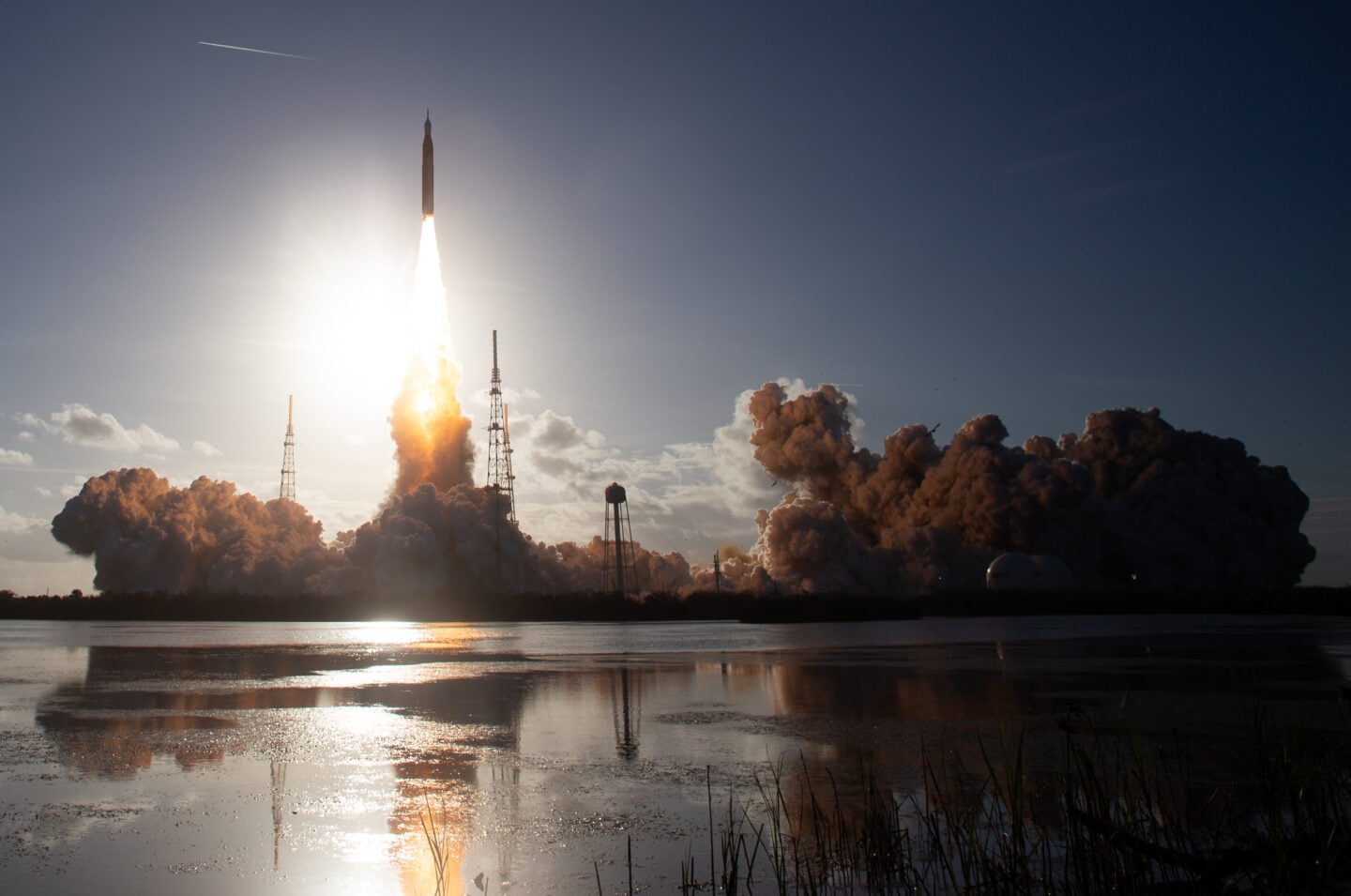
From the moment the solid rocket boosters ignited beneath the Space Launch System rocket and began to lift it off the pad at Kennedy Space Center in Florida at 6:35 p.m. EDT on April 1, the eyes of the world were glued to the history-making flight of NASA’s Artemis II mission. The mission, crewed by NASA astronauts Reid Wiseman, Victor Glover and Christina Koch, and Canadian Space Agency astronaut Jeremy Hansen, marked the first time humans have travelled beyond Earth’s orbit in more than 50 years, among numerous other firsts. Glover was the first person of colour to fly to the moon; Koch the first woman; Hansen the first Canadian and first non-American. 

The mission set a new record for the farthest human spaceflight, travelling 406,771 kilometres from Earth, capturing never-before-seen images of the far side of the moon, new views of our beautiful blue home, and even a total lunar eclipse. Yet beyond the impressive technical achievements of Artemis II, some of the most captivating moments of the mission were also the most human: moments when the astronauts expressed wonder at the views outside the Integrity spacecraft, joked back and forth with mission control, and even shared a zero-gravity embrace. Their “moon joy” was palpable, and we will never forget the images of ourselves that they reflected back to us. Here are some of the top moments of the mission, as chosen by the staff and Fellows of the Royal Canadian Geographical Society. 

The flawless launch

NASA’s Space Launch System rocket carrying the Orion spacecraft with NASA astronauts Reid Wiseman, commander; Victor Glover, pilot; Christina Koch, mission specialist; and CSA (Canadian Space Agency) astronaut Jeremy Hansen, mission specialist onboard launches on the Artemis II mission, Wednesday, April 1, 2026, from Launch Complex 39B at NASA’s Kennedy Space Center in Florida. (Photo: NASA/Joel Kowsky)
Expand Image

Caroline Workman, Can Geo’s digital marketing manager, who was onsite at Kennedy Space Center for the launch of Artemis II on April 1, shares that the moment was “quite literally out of this world.” 

“It is a moment impossible to forget,” Workman says, adding it was not just the sensory spectacle of echoing blast and orange sky that made it so, but the emotional impact as well. “When I fondly go back in time to this moment, I will first remember the excited phone calls from my brother; the tears, dropped jaw and look of pride on my colleague’s face as she watched the rocket disappear into the open sky; the pictures and voice memos from friends back home watching live. For me, the opportunity to witness and participate in a moment so punctuated by community and connection — especially at a time when those things can feel almost as rare as sending people to the Moon — was my favourite part of this mission.”

The small crowd that gathered at Canada’s Centre for Geography and Exploration to watch the launch together clearly agreed, judging by the faces in these photos!

Rosemary Thompson, left, VP External for the Royal Canadian Geographical Society, and a guest at the Society’s Artemis II launch watch party check out the March/April issue of Canadian Geographic, featuring Canadian Space Agency astronaut and Artemis crew member Jeremy Hansen on the cover. (Photo: Charlie Woolf/Can Geo)
Expand Image
Spectators at the Royal Canadian Geographical Society’s Ottawa headquarters applaud the successful launch of the Artemis II mission on April 1, 2026. (Photo: Charlie Woolf/Can Geo)
Expand Image

A very Canadian in-joke

Hansen’s Canadian Space Agency colleague, astronaut Jenni Gibbons, served as a Capcom for the Artemis II mission, communicating regularly with the crew inside the Integrity capsule. At one point, as the crew began a new lunar observation shift during their flyby of the moon, Gibbons relayed some information about the capsule’s distance in miles from the moon and Earth. 

“The crew really wants to ask for that in kilometres and parsecs, but … thanks for that update,” Hansen quipped, prompting a laugh from Gibbons. 

“It’s a favourite moment for me because of its subtle impact,” says Riley Schnurr, director of the office of the CEO for the RCGS. “American hegemony, presented here via the communication of vital statistics in imperial units, is challenged in a distinctly Canadian style — softly but presently, with humility and humour.”

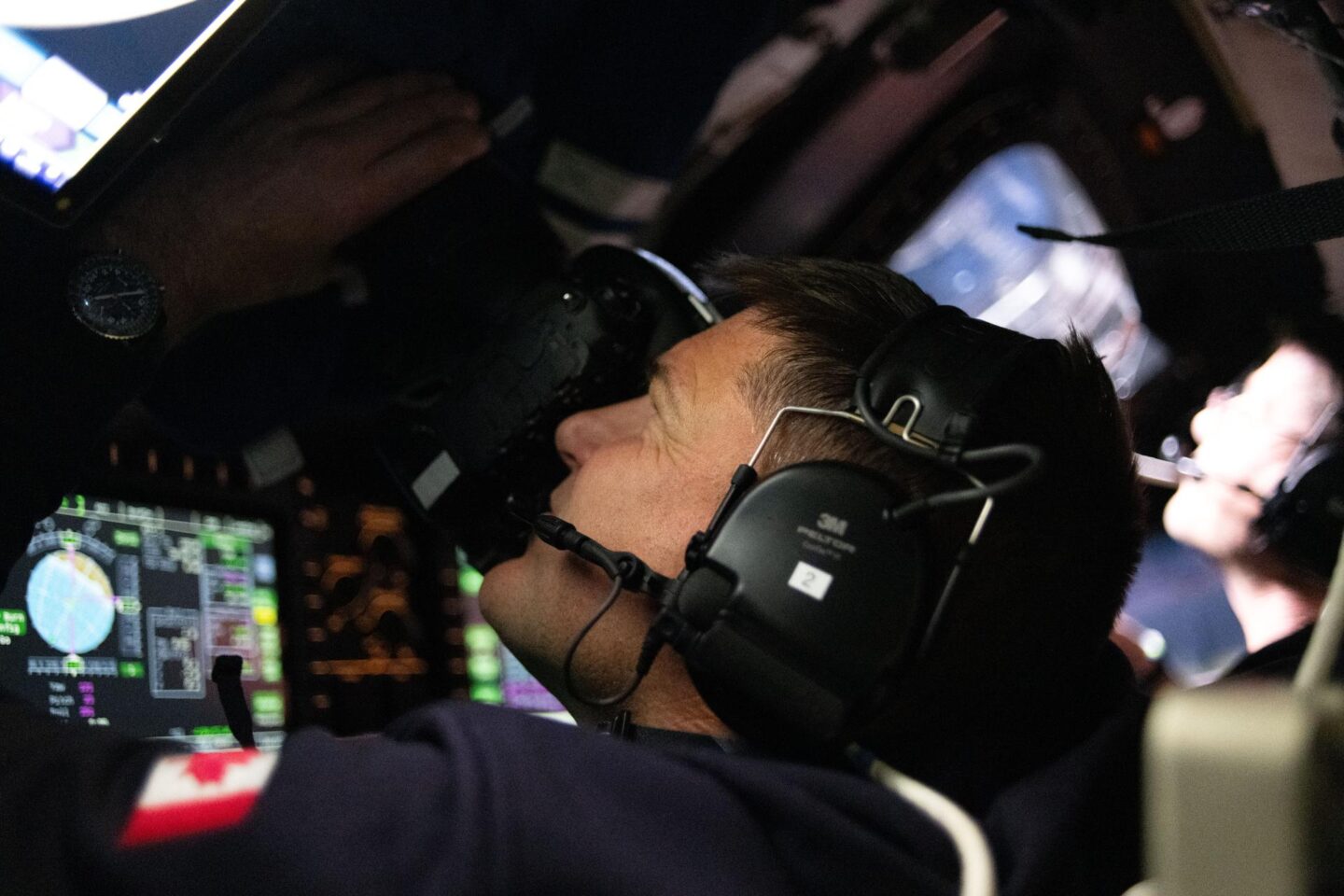
Canadian Space Agency astronaut and Artemis II Mission Specialist Jeremy Hansen is seen taking images through the Orion spacecraft window early in the Artemis II lunar flyby. Hansen and his fellow crewmates spent approximately seven hours taking turns at the Orion windows capturing science data to share with their team back on Earth. (Photo: NASA)
Expand Image

That viral zero-gravity Nutella moment

Moments before the Artemis II crew broke the record for the farthest distance humans have ever travelled from Earth, a jar of Nutella drifted weightlessly across the capsule. Can Geo director of Indigenous content and connections Jude Gerrard caught the instantly-iconic moment live on NASA’s stream April 6 and immediately uploaded it to TikTok:

Advertisement

Coincidentally, the chocolate hazelnut spread was manufactured in Brantford, Ont. — another proud moment for Canada.

The gorgeous new images of our blue marble

I never tire of seeing Earth from space. Contrasted with the dry, grey moon, it is a great reminder that water is life. — Meredith Brown, director of water and land relations, RCGS 

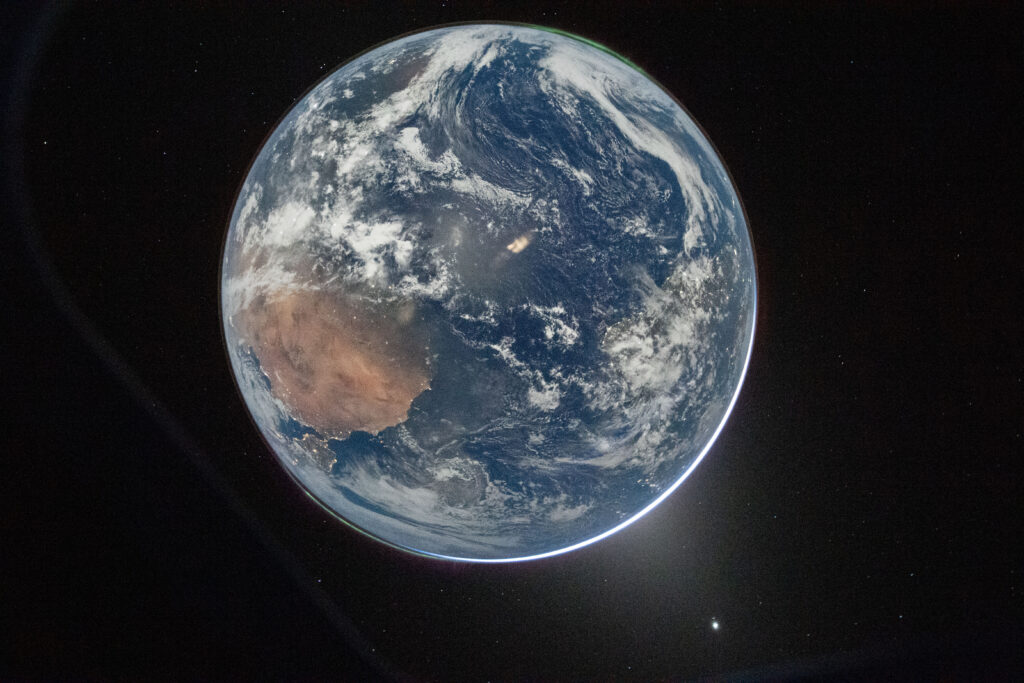
NASA astronaut and Artemis II Commander Reid Wiseman took this picture of Earth from the Orion spacecraft's window on April 2, 2026, after completing the translunar injection burn.
Expand Image
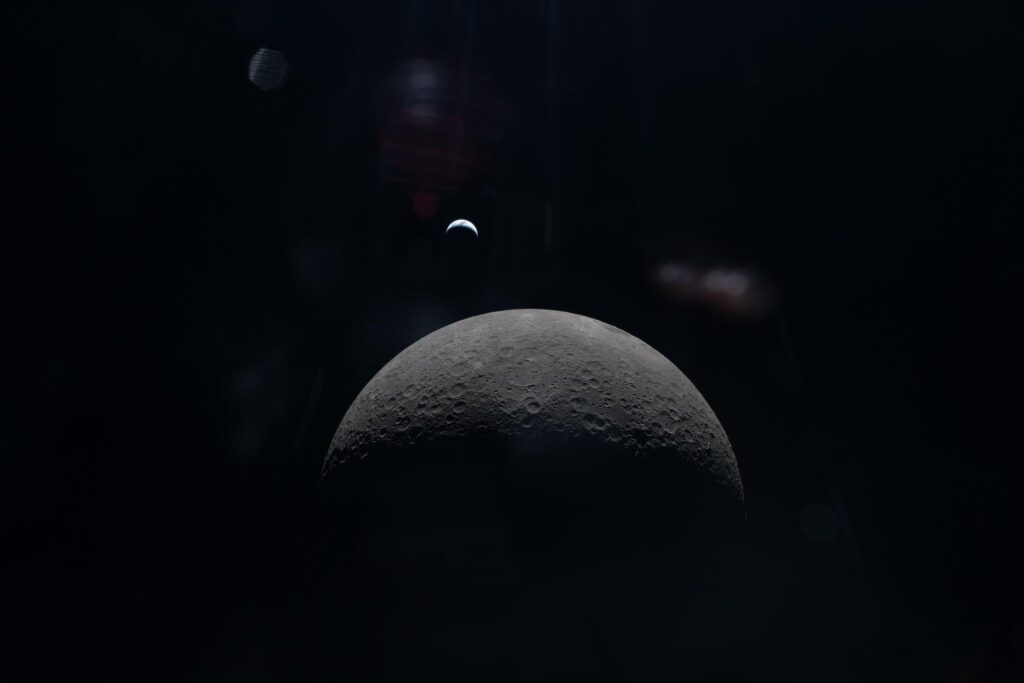
The Artemis II crew captures a faint view of a crescent Earth above the horizon on the Moon’s far side.
Expand Image

The closeups of our “heavily cratered” moon

“It’s really difficult to pick a favourite moment from the mission, as it’s been so exciting from start to finish,” says Gordon Osinski, a planetary scientist and professor at Western University in London, Ont. who has trained NASA and CSA astronauts in geological fieldwork, “but if I must, it was the lunar flyby. I have studied the moon for years and looked at satellite images of large areas of the surface of the Moon. But the images captured by the Artemis II crew of the surface are simply amazing and really emphasize what a heavily cratered planetary body it is.” 

The lunar flyby — and the crew’s enthusiasm — was also a favourite moment for retired CSA astronaut and RCGS Honorary Vice-President Roberta Bondar, who notes they were “running out of hues and superlatives” to describe the features they were observing. 

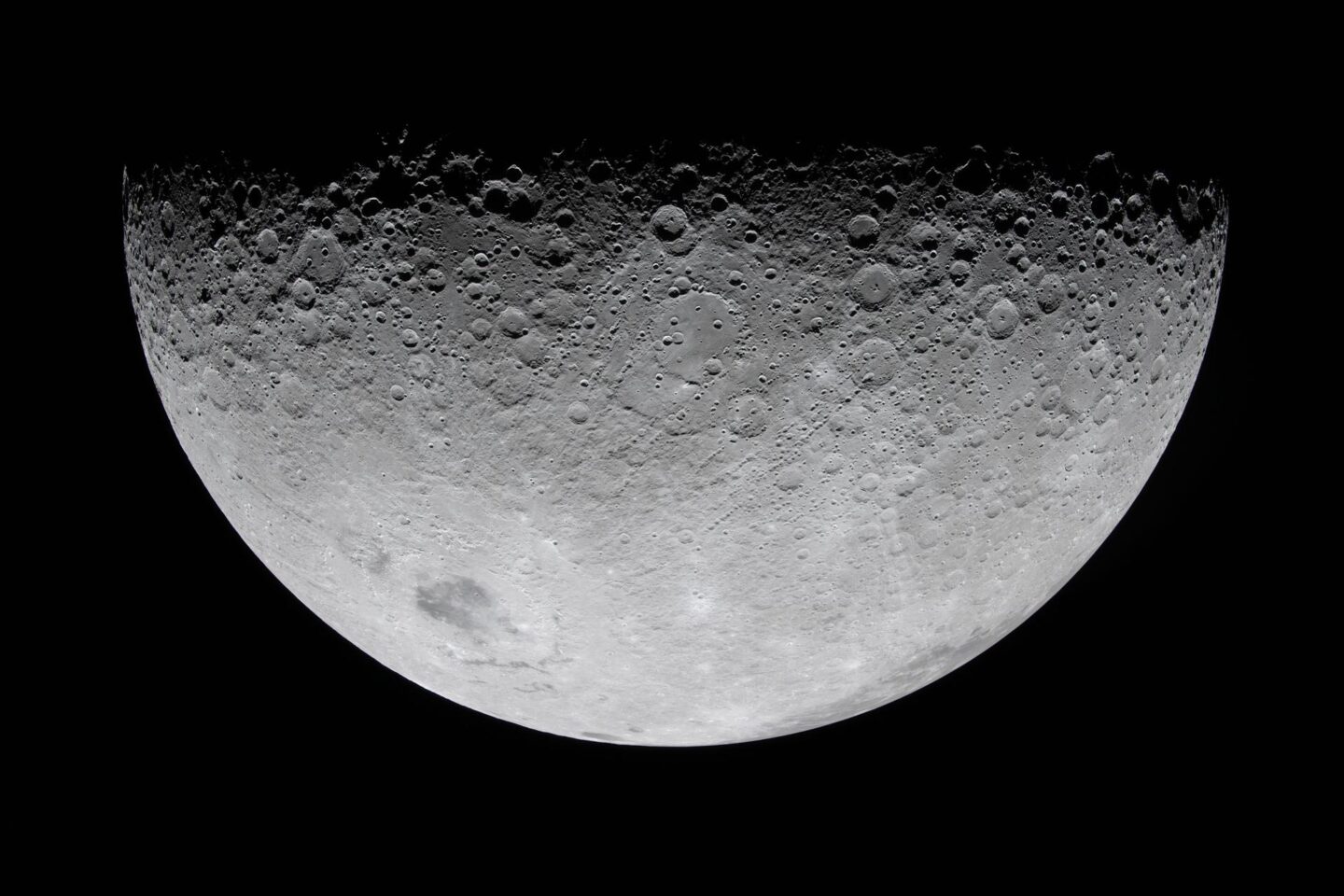
As the Artemis II crew flew over the terminator, the astronauts described this boundary between day and night as "anything but a straight line." Crater rims along the terminator stand out as "islands" in the night. Giant chains of craters emanating from the 3.7-billion-year-old Orientale basin can be seen scouring the surface, stretching almost to the terminator. This tells a geologic story: these crater chains produced by the Orientale impact event mar the surface of the relatively flat Hertzsprung Basin (center of this image), which means that Hertzsprung Basin must be even older than Orientale! (Photo: NASA)
Expand Image

The naming of “Carroll” 

The most emotional moment of the mission came April 6 as the astronauts drew near to the moon and reported their chosen names for two previously unnamed features of the lunar surface. One massive impact crater was named “Integrity” — the name also given to the Orion spacecraft that carried them to the moon — while the other was named “Carroll” in honour of mission commander Reid Wiseman’s late wife. 

“A number of years ago, we started this journey [with] our close-knit astronaut family, and we lost a loved one,” Hansen said, referring to Carroll, a nurse and mother of two who passed away in 2020 from cancer. His voice broke with emotion as he explained that this lunar feature will sometimes be visible from Earth as “a bright spot on the moon.” 

The astronauts then wiped away tears and moved to hug each other — a remarkable display of humanity so far from home. “I find it hard to imagine there was ever a moment so human, so beautiful, as when Canadian astronaut Jeremy Hansen named [the Carroll crater],” says RCGS CEO John Geiger.

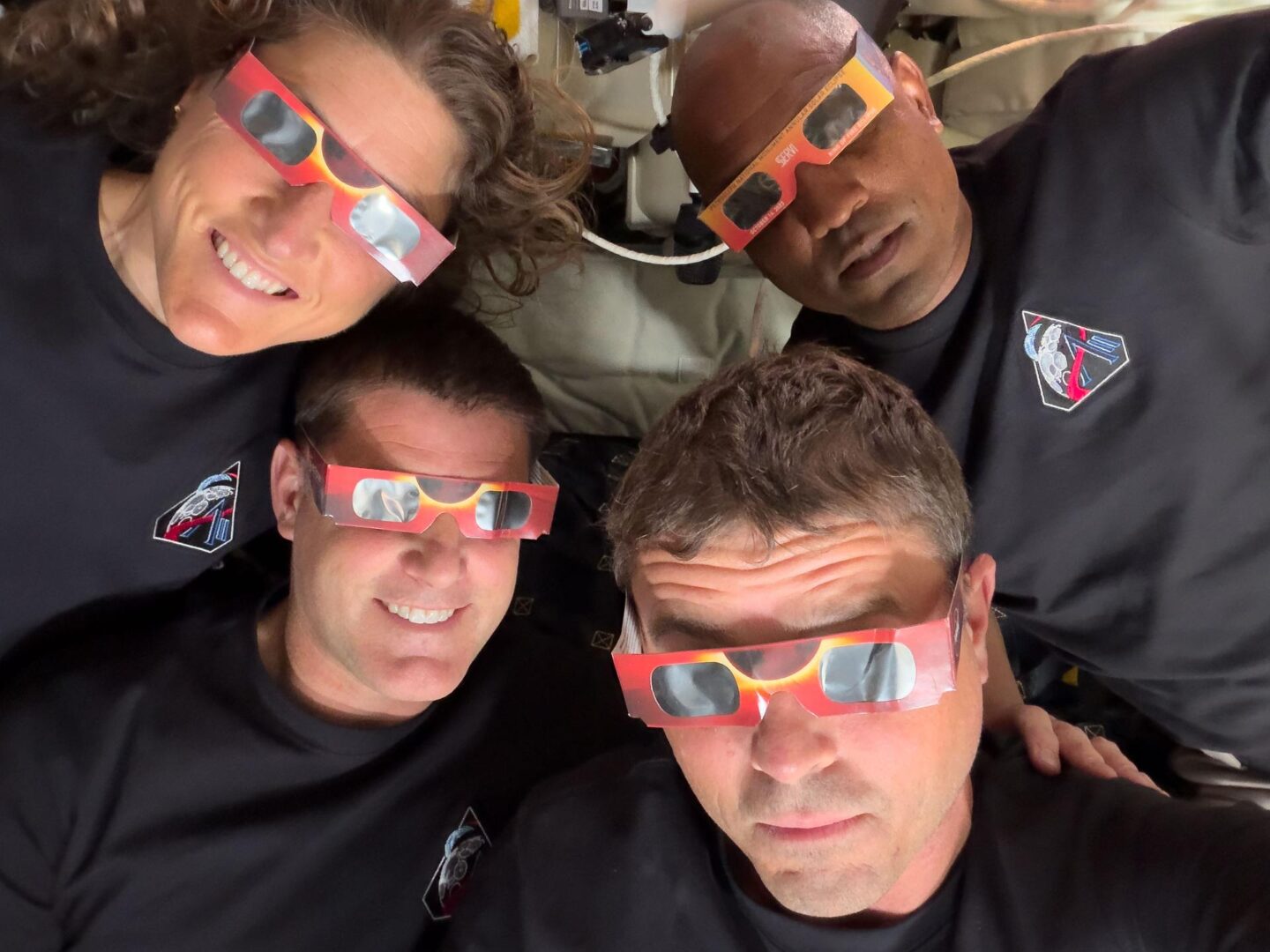
The Artemis II crew – Mission Specialist Christina Koch (top left), Mission Specialist Jeremy Hansen (bottom left), Commander Reid Wiseman (bottom right), and Pilot Victor Glover (top right) – uses eclipse viewers, identical to what NASA produced for the 2023 annular eclipse and 2024 total solar eclipse, to protect their eyes at key moments during the solar eclipse they experienced during their lunar flyby. This was the first use of eclipse glasses at the Moon to safely view a solar eclipse. (Photo: NASA)
Expand Image

The visible bond between the astronauts

For Canadian Geographic managing editor Mike Bryant, the evident camaraderie of the flight crew in their messages back home was striking. “There’s been so much negativity in the world over the past year and a bit — questions about international alliances and whether they are working or not,” he says. “These four individuals have all put politics aside, focusing on the benefits the Artemis II mission promises to bring for all of humanity. We should all take some inspiration from the teamwork and magnanimity of this team.”

“[Artemis II] reminded us that at the very centre of exploration is teams of people who experience, interpret, and joyfully share discovery with the world, and in doing so, make it meaningful for humanity,” adds cave explorer and RCGS Fellow Christian Stenner. “This concept of humanity is not bound by place. Done with intention, it can travel with us across cultures and countries, and even beyond Earth, into space.”

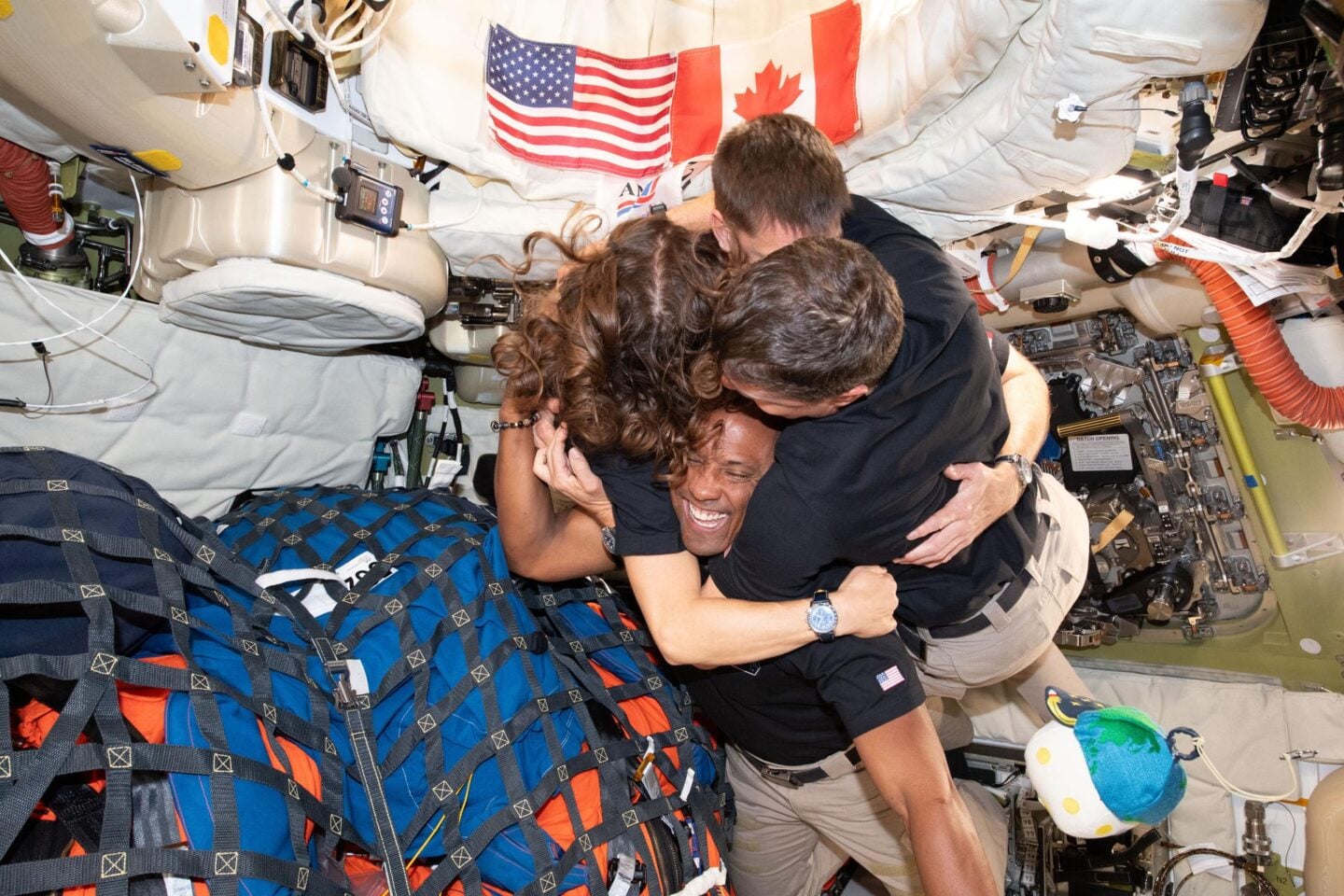
The Artemis II crew – (clockwise from left) Mission Specialist Christina Koch, Mission Specialist Jeremy Hansen, Commander Reid Wiseman, and Pilot Victor Glover – take time out for a group hug inside the Orion spacecraft on their way home. (Photo: NASA)
Expand Image

The crew’s emphasis on love

Over the past 10 days, we have witnessed some of the best and worst of humanity. Down here on Earth, it has felt pretty bleak lately, as world leaders have threatened entire civilizations and bombs have rained down on innocents. But, gazing skywards, I’ve found a glimmer of hope in four awestruck humans — their integrity, bravery, friendship and love. The moment that moved me most on the Artemis II expedition was what Victor Glover said just before astronauts lost communication on the far side of the moon. “As we get close to the nearest point to the moon and the farthest point from Earth — as we continue to unlock the mysteries of the cosmos — I would like to remind you of one of the most important mysteries there on Earth, and that’s love,” Glover said. “To all of you down there on Earth and around Earth — we love you from the moon.” This reminder of love — for each other and the Earth — is one we should all hold close to our hearts. — Abi Hayward, senior editor, Canadian Geographic

Advertisement

Help us tell Canada’s story

You can support Canadian Geographic in 3 ways:

Related Content

Science & Tech

Artemis II astronauts have returned safely to Earth following historic mission around the moon

Canadian Geographic is following this history-making mission, which saw Canadian Space Agency astronaut Jeremy Hansen become the first Canadian to fly around the moon

  • 5285 words
  • 22 minutes

Science & Tech

Who is Jeremy Hansen, the Canadian tapped by NASA to fly around the moon?

Canadian Space Agency astronaut Jeremy Hansen will soon be blasting off on NASA’s Artemis II mission. How did he get from an imaginary treehouse spaceship in rural Ontario to the real thing? 

  • 3607 words
  • 15 minutes

Exploration

From Labrador to Luna: Training future moon explorers

With the Artemis II mission set to blast off next spring, humanity is one step closer to returning to the moon. In the meantime, astronauts are honing their skills in a Labrador meteorite crater.

  • 2203 words
  • 9 minutes

Science & Tech

Canadian astronaut Jeremy Hansen will be among the next humans to fly to the moon

Hansen will be part of the NASA crew for Artemis II, which will see the astronauts spending up to three weeks on a flyby trip to the moon in 2024

  • 1231 words
  • 5 minutes
Advertisement
Advertisement