A Family Embraces Year-Round Cycling in Yellowknife

Live Net Zero Email Service

Becca Denley, Yellowknife, Northwest Territories (1st Prize Winner: How We Get Around)

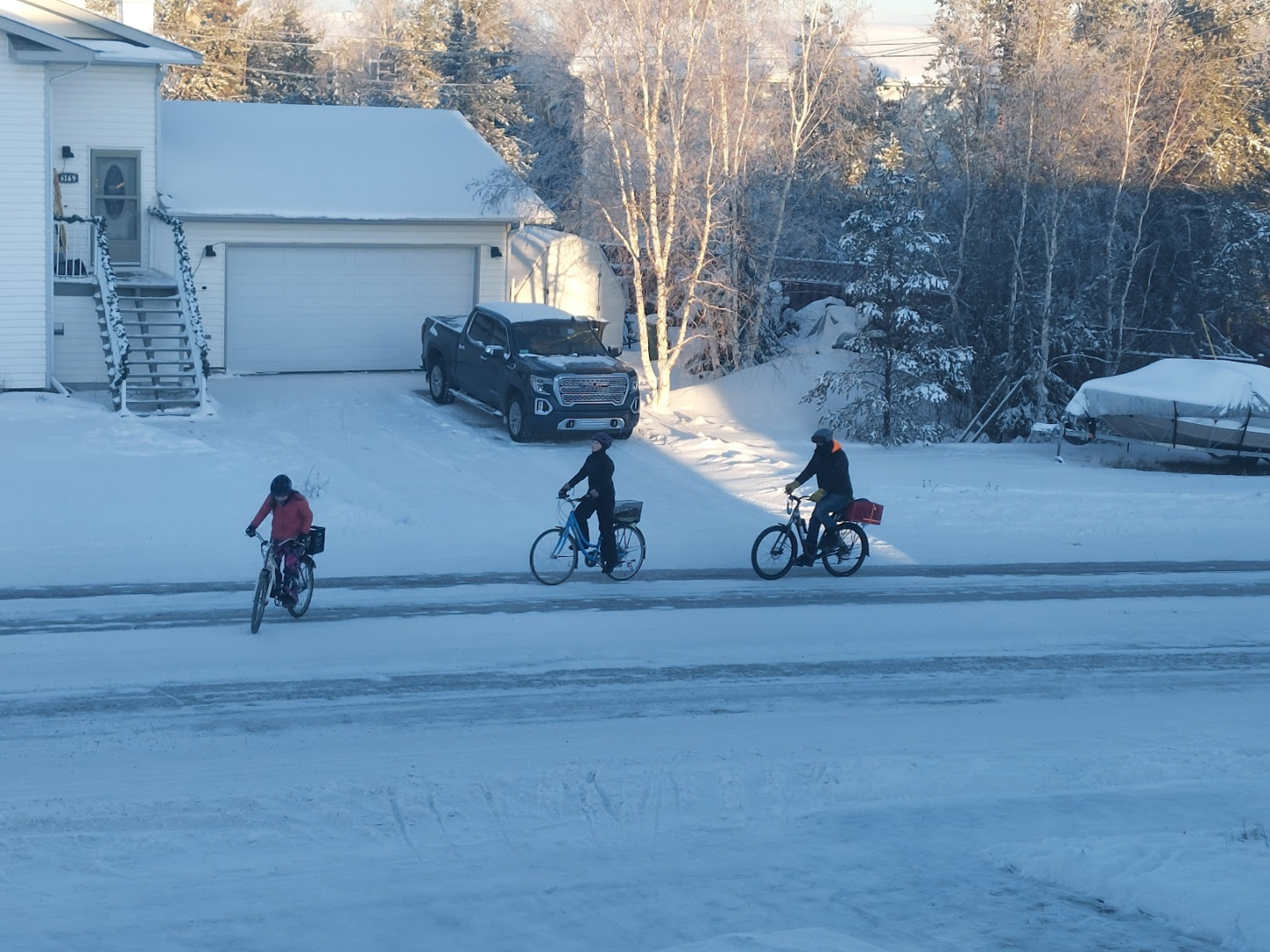
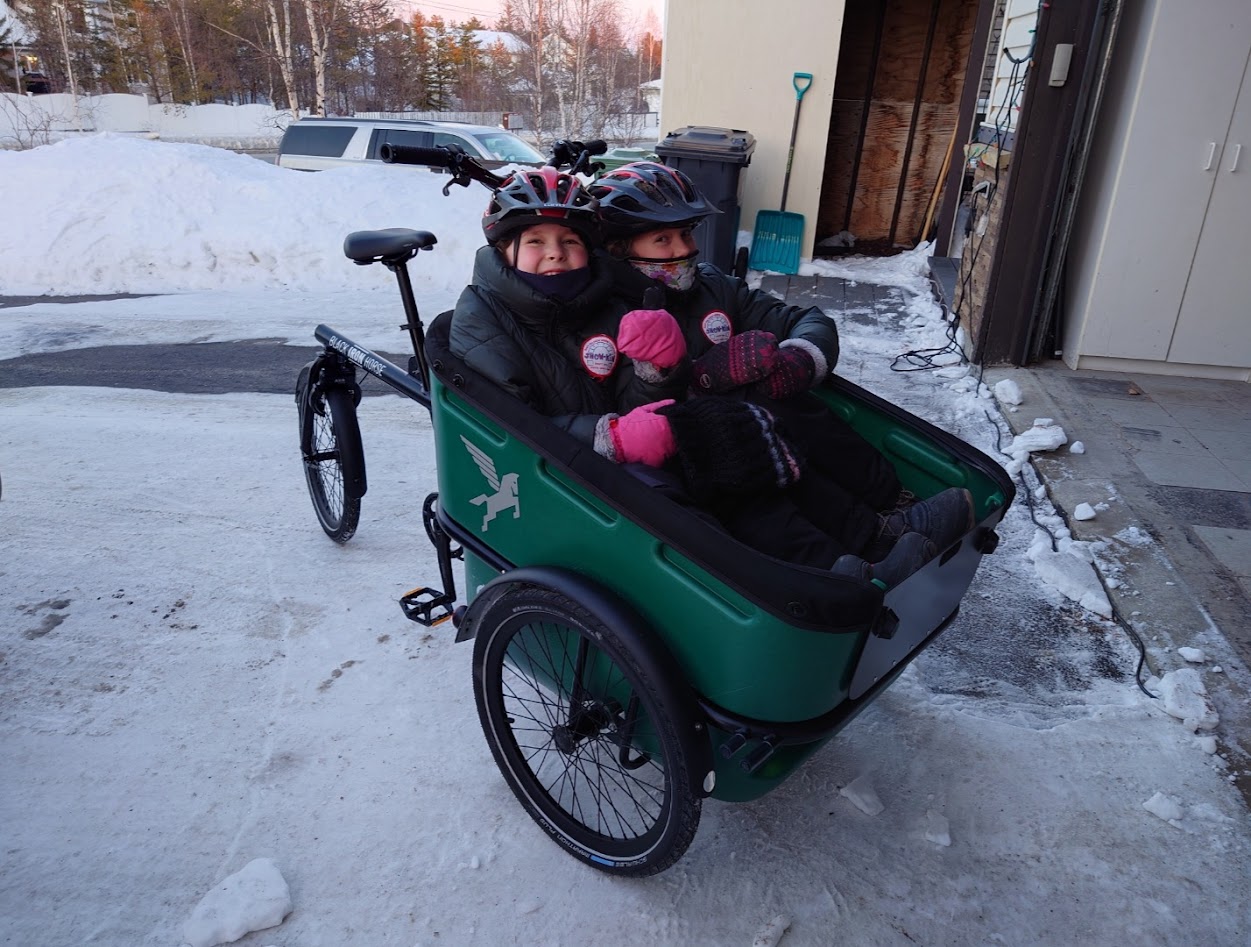
In Yellowknife, where winter temperatures regularly drop to -30°C and even -40°C, Becca Denley and her family ride bikes year-round as their main form of transportation. Becca lives in a detached home with her husband Adam and two daughters, balancing full-time work and everyday family life. The Denleys choose active mobility as their default way of getting to work, school, groceries and activities – and what began as a family decision has grown into a community movement.

Becca won 1st Prize in the “How We Get Around” category of the 2025 Live Net Zero Household Challenge for showing that climate-friendly transportation isn’t limited by geography or weather. Her entry demonstrated how households can pair daily, consistent action with systems-level thinking. 

The Denleys didn’t want to conform to what Becca calls the “typical North American way” of getting from point A to point B. Instead, they committed to continuing active transport and advocating for safer infrastructure in their small northern city. In addition to modelling how to bike in extreme cold, Becca and Adam launched SHIFT NWT, a free bike share program that allows residents to borrow bikes to test them out. It is about to enter its 3rd year of operation.

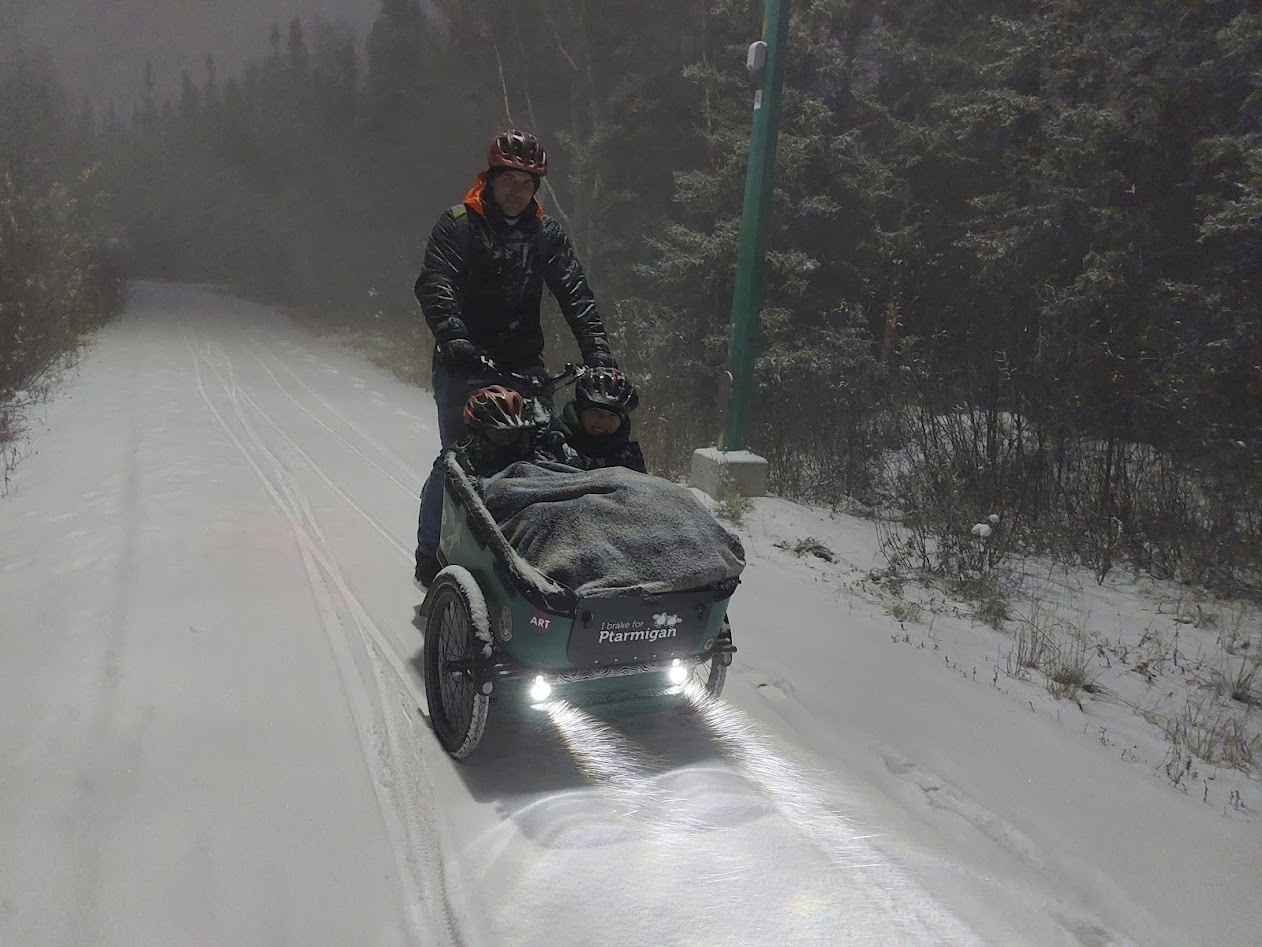
The question “Would you consider using a bike to get to and from work / school in your everyday?” inspired Becca to take this wider step. Rather than simply talking about transportation alternatives, she took action to create access to them. SHIFT NWT allows residents to borrow a bike, e-bike, cargo bike or e-trike for free for two weeks at a time. The volunteer-run program is time consuming but deeply fulfilling. “I like to imagine that with every person we talk about our transportation habits, it helps to tip the scales towards more Canadians choosing and supporting active options,” Becca says.

Becca is often told that she’s brave for winter riding. “I think it’s interesting that people say ‘you’re so brave for riding to work when it’s -40C out”. And I just respond that it’s actually much easier for me to dress well and hop on a bike than it is to plug in my vehicle, start it early to let it warm up, scrape ice off the windows, drive through traffic, fight to find a parking spot, and then finally get to work, only to have to start the vehicle part-way through the work day, and then repeat for the return home. That sounds exhausting! Instead, I ride my bike to and from work – it takes only 20 minutes.”

For Becca and Adam, biking isn’t only about emissions, but about autonomy, joy and connection. “The greatest gift we gave our family is the encouragement to start riding bikes in our everyday. Now we feel healthy, we are more connected, and have saved up funds that we can use for a family vacation every year. A bonus is that it also has a positive impact on the environment, and that feels good!”

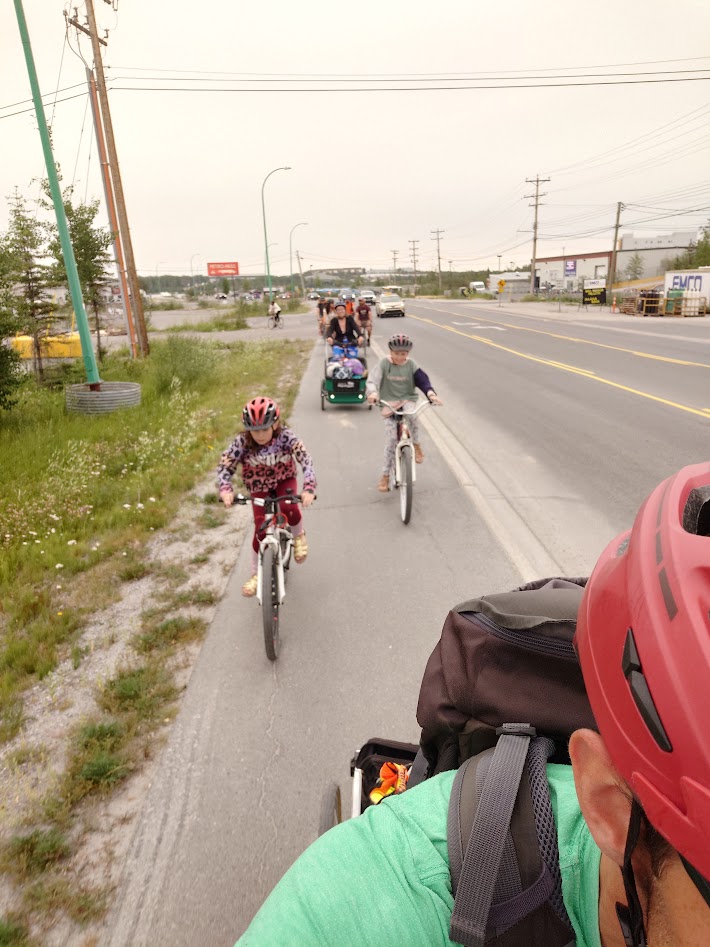
Still, she is candid about infrastructure challenges. “The reality is that whenever I hop on my bike, there is unfortunately still a lot of bravery involved, because the streets are very unwelcoming and even worse in winter. And although we ride with our kids in winter, we don’t feel comfortable letting them go on their own.”

Becca reminds people that active mobility is about equity. “One third of our populations can’t, won’t, or shouldn’t drive – so why are our streets designed the way that they are?” She believes that a key deterrent against bikes is inadequate urban design. “I think the greatest barrier for people choosing active mobility is that our streets are not designed for people,” she explains.

For Becca, storytelling is a big part of the work, and visibility matters. When others see a family riding daily, year-round, it shifts what feels possible. She’s also proud of her kids: “It is interesting that our children have started to become mini advocates for active mobility – asking meaningful questions about what they see in the world around them… it gives us hope for the future.” 

Becca’s story combines strong commitment, community leadership and a powerful challenge to how our streets are designed. She demonstrates that climate action on transportation is both personal and political. In one of Canada’s coldest cities, she shows that with studded tires, layered clothing, and persistence, winter is not necessarily the barrier – street design is. And fortunately, design can change.

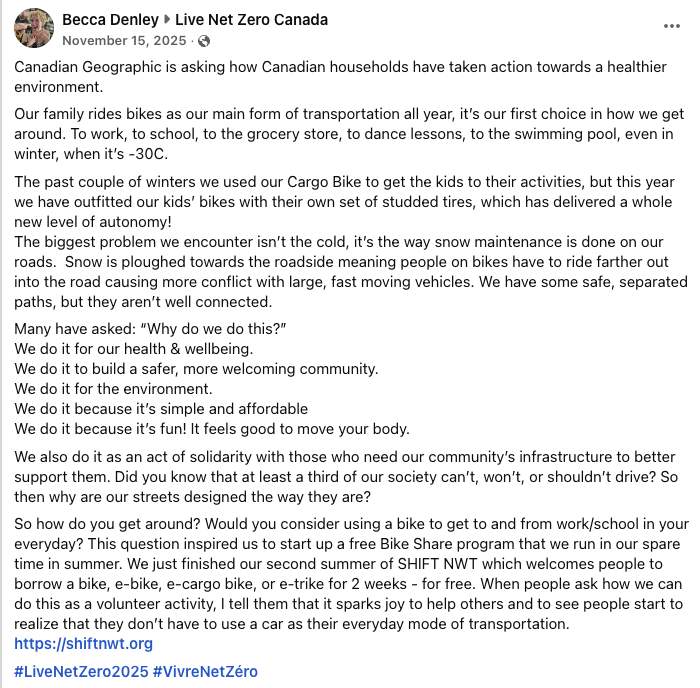
See Becca’s entry on the Live Net Zero Canada Facebook page here.


Becca’s entry:

Reflections from Becca

Below, Becca shares why she entered, what motivated her decision and how sustainable living shows up in her daily life.

Why did you enter the Live Net Zero Household Challenge?

Our family is constantly thinking about how we and our community move in our everyday – and believe we have a role in helping others in changing how they move. If other people see it, maybe they’ll consider it. Entering in the Household Challenge created an opportunity to tell our story, which we think is pretty unique.

What motivated your family to choose biking as your main form of transportation?

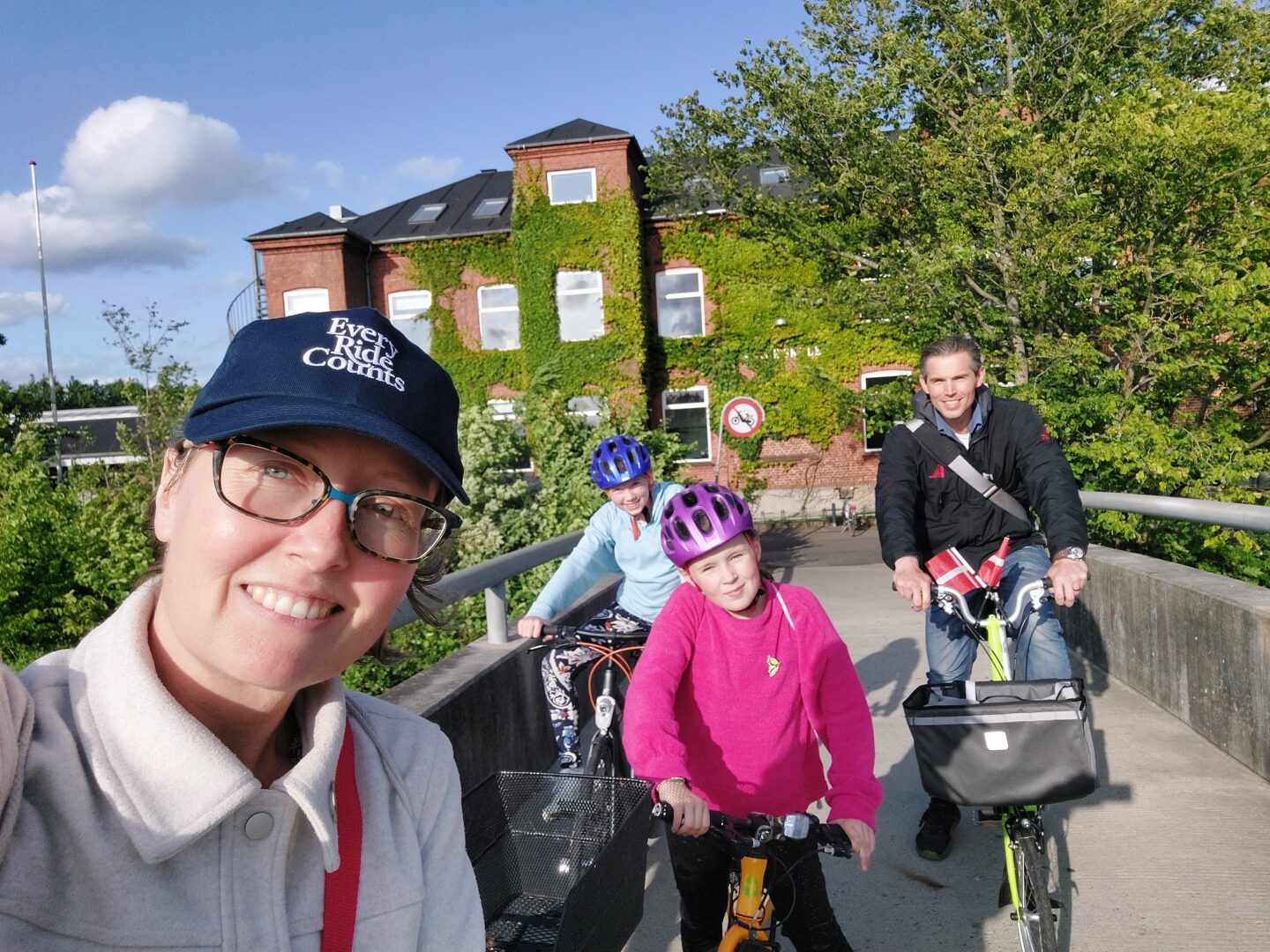
My husband and I were fretting about moving back to Canada after a few years living in Denmark, as our children had been living pretty autonomous lives, walking and biking everywhere. We were concerned about the big trucks and SUVs – and whether or not our kids would continue to be able to move with freedom to school/activities.

Overall, we did not want to HAVE to conform to the typical North American way of getting from point A to point B… we knew that our small city could be better designed to welcome alternative ways of moving – which also encourages people to live a healthier and more connected life. But then you can’t just tell people about better ways, we had to continue doing. But we also went to the next level and started a Bike Share program that lends out bikes, cargo bikes for two weeks at a time for free. That has been a very time-consuming endeavor, but also very fulfilling. 

What other sustainable actions are part of your life?

We strive for using second hand, repairing things, etc. With regards to active mobility, we use that option daily, all year. If we get an injury, we opt for the bus. Riding in -40C – no problem! Studded tires are our friends. We also try to only purchase smaller amounts of food on our way home from work so that we are wasting less. If we must do a bigger bulk shop, we use our cargo bike to load up.

What would you say to Canadians considering a change?

Do it for your health, for increased community connection, for your kids, for your budget, oh – and a bonus is that it helps the environment. 

Back to top