Travel

Travel is booming, but can the industry keep up?

As international travel continues to boom, tourism leaders gather in Malta to discuss the innovations, opportunities and challenges facing the industry

  • Nov 05, 2026
  • 1,349 words
  • 6 minutes
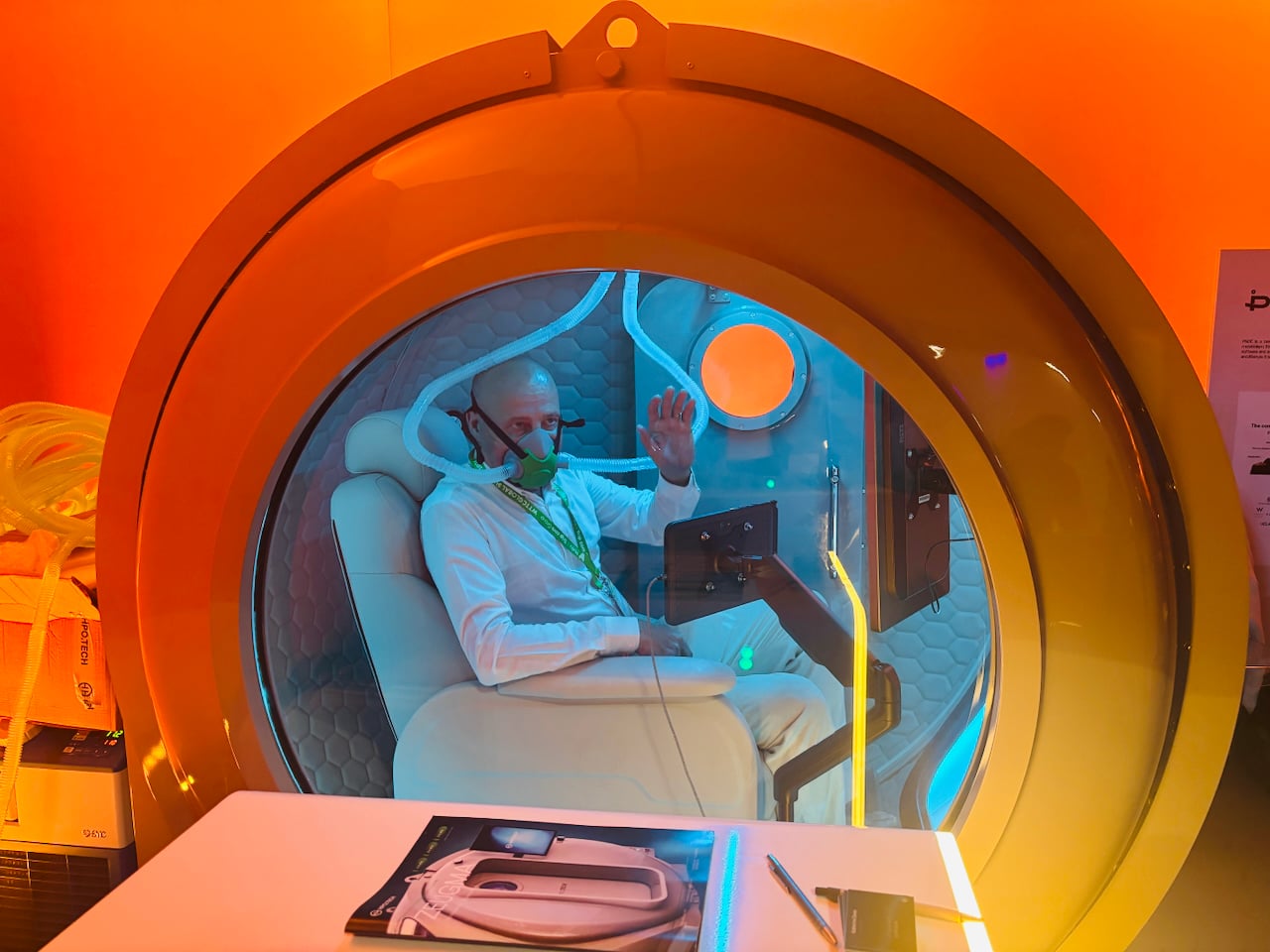
A delegate tests the hyperbaric chamber in Iniala's Longevity Lounge. (Photo: Robin Esrock)
Expand Image
Advertisement
Advertisement

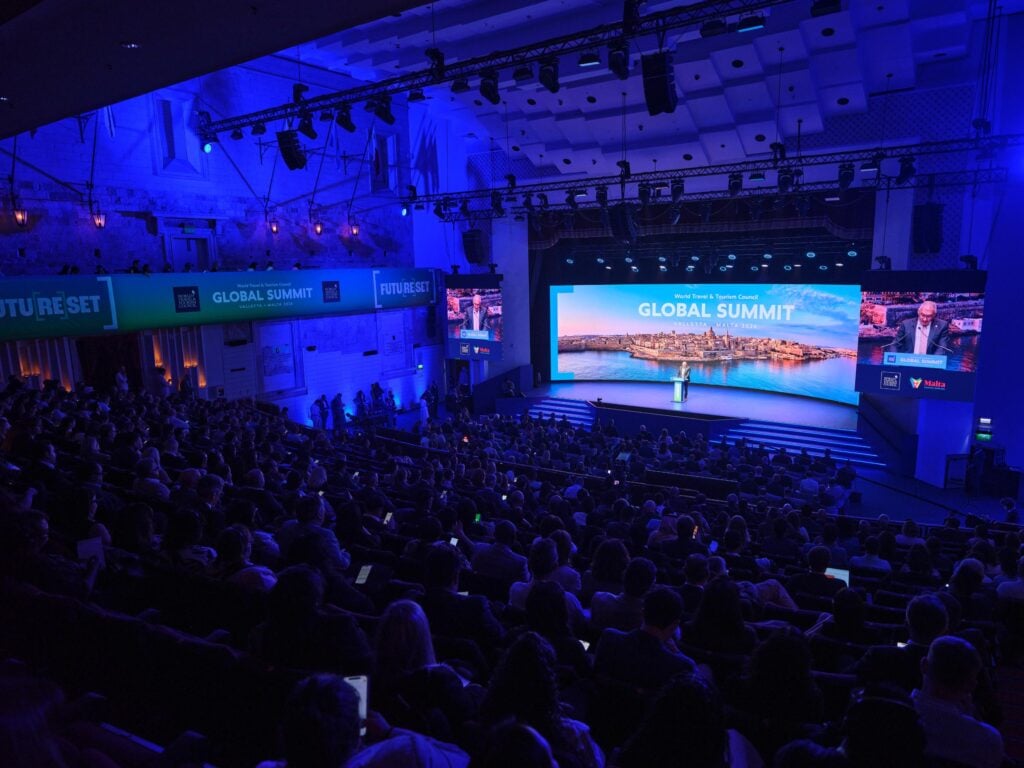
I’m sitting in the upstairs peanut gallery of the Malta Convention Centre, observing titans of industry at the so-called “Davos of Tourism.” Every year, the World Travel and Tourism Council holds a global summit for dozens of tourism ministers, CEOs, executives, experts, media and a thousand other movers and shakers. The annual theme changes with snappy titles. This year, it was FUTU[RE]SET, but the goal is always the same: take stock of where tourism stands, and where it should be going.

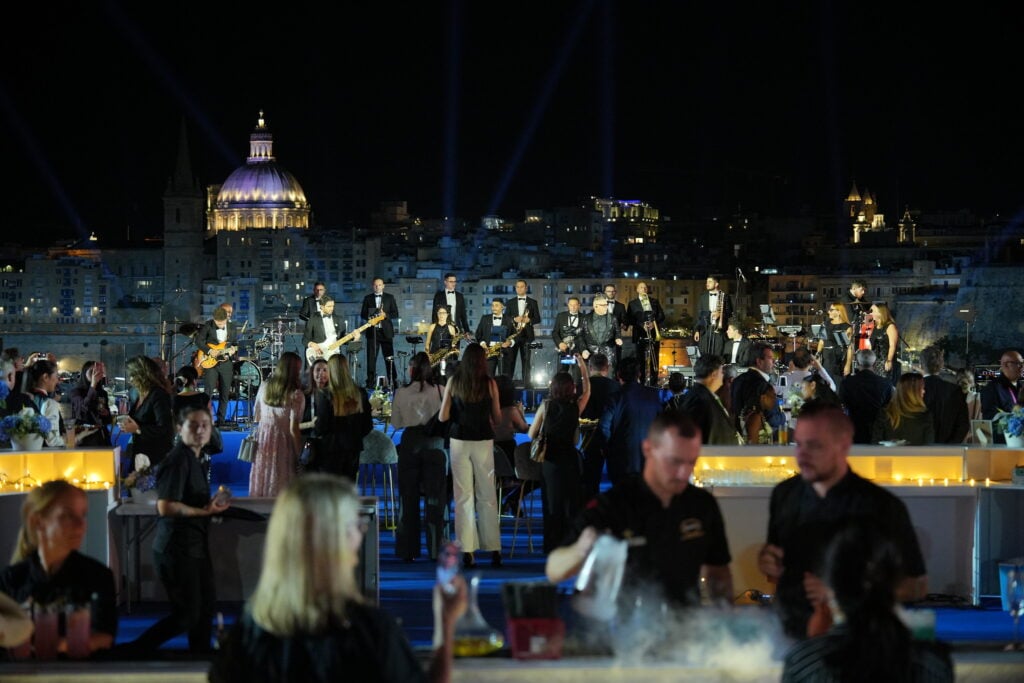
A band entertains delegates in Valletta (Malta's capital). Host cities put on a show to raise their profile and attract investment. (Photo courtesy the World Travel and Tourism Council)
Expand Image

What you might call a holiday, the World Travel and Tourism Council calls a US$11.6 trillion industry that contributes 9.8 per cent to global GDP, while supporting one out of every nine jobs. These and many other numbers were discussed this week in Malta, in sessions titled “Where Will Future Growth Come From?”, “AI Unlocked: The New Era of Travel,” and “The Next Great Travel Investment.”

I’m aware that an industry conference outside your personal interest can be as dull as an infant’s practice scissors, except travel is in all our personal interest, whether or not we care about the industry behind it.

Chances are you’ve been on one of the estimated 100,000-plus flights that take off every day, booked a room in one of approximately 180,000-plus hotels, or a table at one of millions of restaurants worldwide. Tourism encompasses leisure and recreation, as well as business, conferences, and trade. We travel for adventure, for food, culture, history, sport, religion, wellness, wildlife, academic pursuits, professional opportunities and family reunions. UN Tourism reports that an estimated 1.52 billion international arrivals were recorded in 2025, continuing significant year-over-year growth as travel booms following the pandemic shutdown. Most of us have skin in the tourism game, and everyone benefits when the industry that supports it plays better.

Paul Griffiths, the CEO of Dubai Airports, discusses the friction of international travel with other panelists. (Photo courtesy the World Travel and Tourism Council)
Expand Image

After waiting patiently for more than an hour, I watch the line to be fingerprinted and photographed at Frankfurt Airport grow longer. It haphazardly snakes alongside a Duty-Free store and halfway down a narrow departure hall, with passengers seething in frustration as they’re politely told to stay in line. Many know there’s no way they’ll make their connecting flights, and airport security just shrugs at desperate pleas to skip to the front. It’s one reason booking a connection with less than two hours is a risky bet these days, and why I recommend avoiding travel through Frankfurt Airport in general. Along with tighter plane configurations, complicated visas, and increasing weather upheavals, it’s enough to keep anyone glued to the couch.

Two days later, I’m listening to Paul Griffiths, the CEO of Dubai Airports, discuss this common experience in a panel discussion called “Digital Identity: Resetting the Border Experience.” With all the latest technology available, why the holdup? Griffiths explains that authorities really only need to verify two things: (1) you are who you say you are; and (2) you are where you’re supposed to be. If we can make secure international bank transfers in milliseconds, this surely isn’t a technological issue. Rather, the panel concludes, it’s a matter of governance, policies, and slow industry adoption. Griffiths adds that passports could be phased out for biometrics within five years, which will either delight or horrify you depending on where you sit on the spectrum between privacy and security. Still, in this world devoid of little paper books and frustrating line-ups, several travel pain points suddenly disappear.

Tourism ministers, CEOs, executives, experts and media gather for the annual World Travel and Tourism Council Summit in Malta. (Photo courtesy the World Travel and Tourism Council)
Expand Image
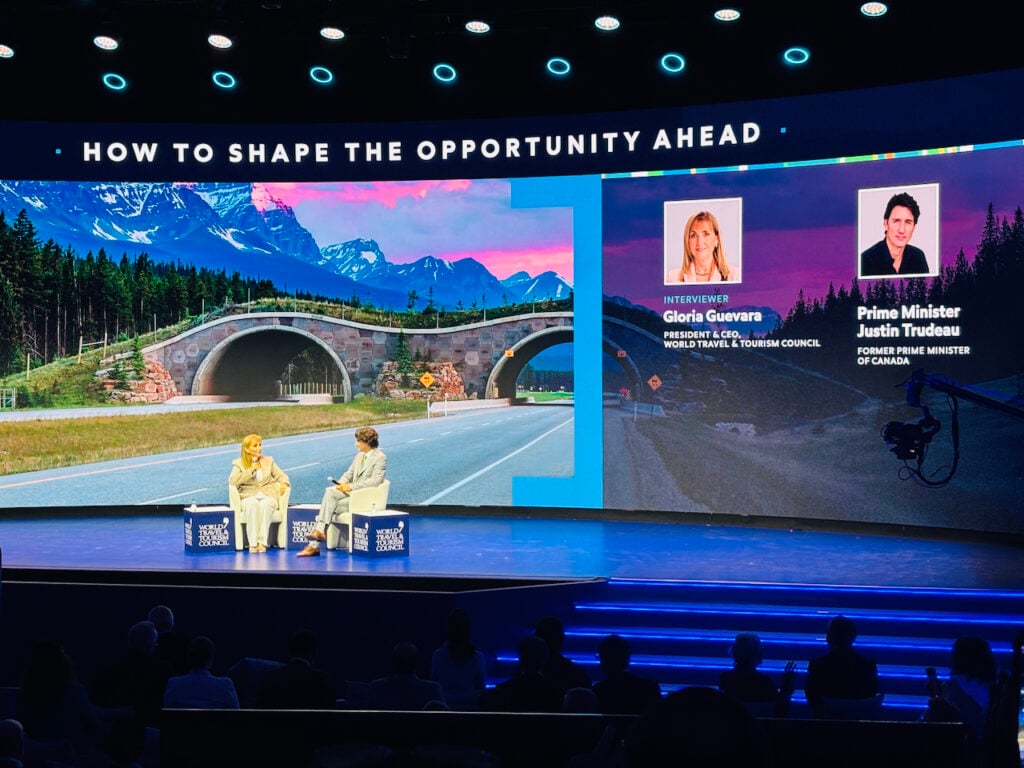
Former Canadian Prime Minister Justin Trudeau on stage with World Travel and Tourism Council President and CEO Gloria Guevara. (Photo: Robin Esrock)
Expand Image

The imposing 16th-century fortress walls, gold-plated Baroque churches, and narrow limestone streets of Valletta provide their own compelling reason to get on a plane. Malta’s historical capital is awash in Mediterranean sunshine, and its coastal boulevards sparkle. This week’s visiting dignitaries are getting a strong sales pitch for the small island nation.

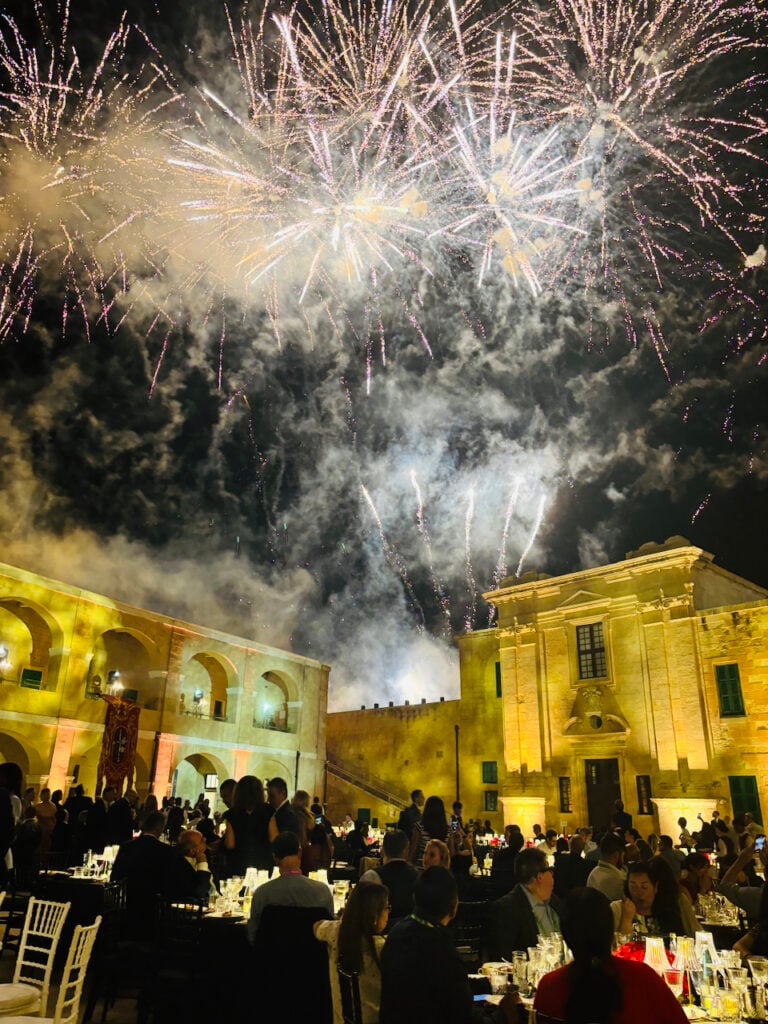
Fireworks explode low overhead at a delegate gala in Fort St Elmo in Valletta, Malta. (Photo: Robin Esrock)
Expand Image

Shortly after the conference concludes, the World Travel and Tourism Council announces a collective commitment by its members of US$2 billion in new tourism investment in Malta. This is why countries bid for the expensive but prestigious opportunity to showcase local tourism at the annual World Travel and Tourism Council summit, receiving valuable promotional airtime for their efforts. Cannons boom over the harbour following an opening press conference for media attending from dozens of countries. Twenty-five reporters are from Mexico and three of us are from Canada.

It’s not all talking heads on a panel. A 24-piece band plays hits under the stars with Valletta’s illuminated medieval skyline as a backdrop, entertaining hundreds of delegates clutching sweet cocktails and small bites of rabbit from the buffet. The following evening sees a lavish gala in the historic courtyard of Fort St Elmo, where I find myself sharing a table with the vigilant security detail of Türkiye’s Minister of Tourism. It adds an exotic James Bond flourish to the evening, crowned by fireworks exploding alarmingly low overhead. On the subject of fireworks, there’s a persistent yet unfounded rumour that Katy Perry will make an appearance tonight, because her famous boyfriend is in town.

It’s the first question lobbed at former Canadian prime minister Justin Trudeau when he settles in for a one-on-one interview with World Travel and Tourism Council President and CEO (and former minister of tourism for Mexico) Gloria Guevara. Trudeau replies that, unfortunately, he’s on his own for this visit, although he did visit Malta with Katy a few months ago. Trudeau remains a political pop star on the global stage, commanding hefty appearance fees to regale audiences with wisdom and tales of his time in office. Today, he sings the sweet and welcoming tunes of Canada’s tourism industry, and also addresses the Canadian boycott of U.S. travel, which he calls a consumer choice and a cultural reaction to U.S. tariff policies. When he starts revving up about his personal experience with the Trump administration, Guevara diplomatically steers him onto another topic. President Trump is friendly to big business after all, and big business is well represented in the room.

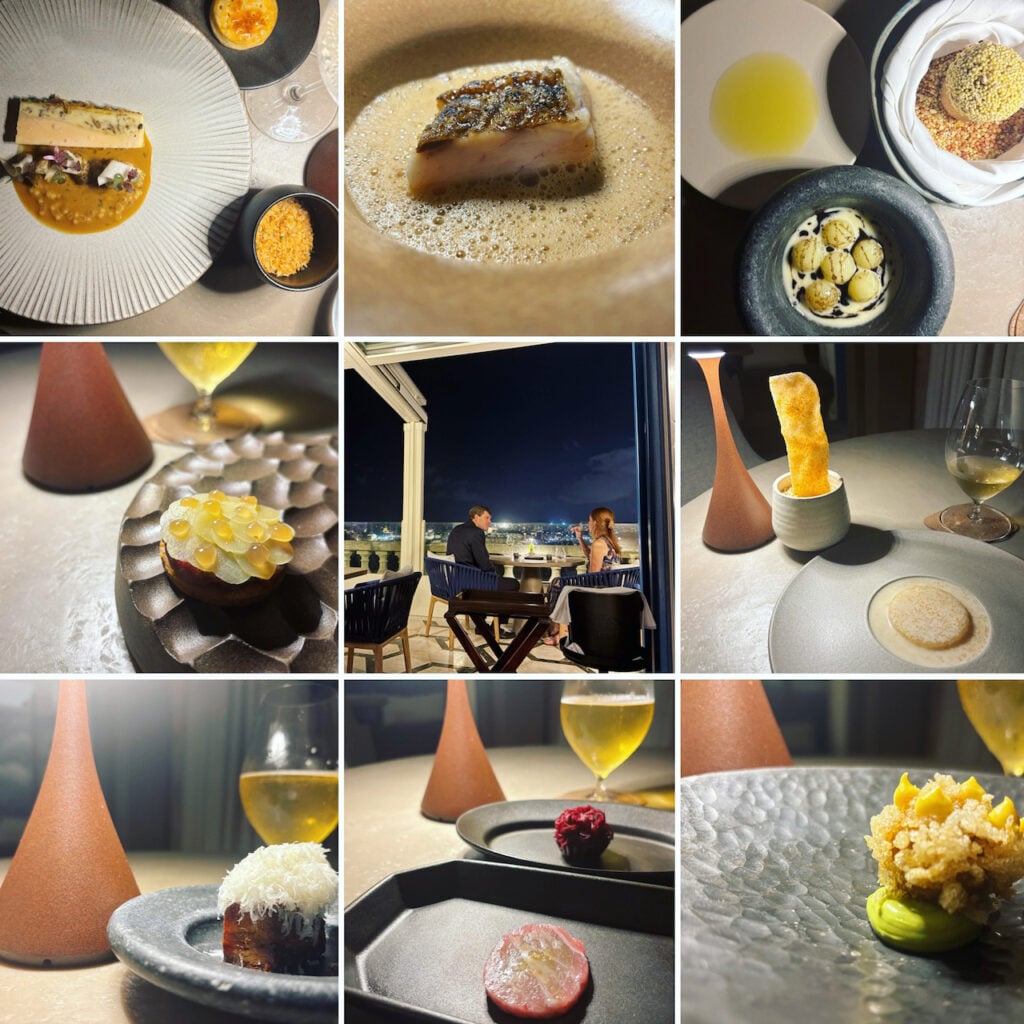
Longevity and fine food — various courses at Simon Rogan's ION Harbour. (Photo and collage: Robin Esrock)
Expand Image

I do get an opportunity to have an informal chat with Nick Adams, the U.S. Presidential Envoy for American Tourism, Exceptionalism & Values. He tells me he’s also motivated by his bucket list, loves to travel, and is committed to healing the wounds. For all the heated rhetoric in the news, I’m reminded that when people sit down, act civil, and actually listen to each other, the world can feel a lot less polarizing. We extend mutual invitations to Vancouver and Washington, DC, and look optimistically ahead to brighter days.

Longevity is another major theme of the conference, with a panel convened to discuss how travellers are increasingly seeking a wellness experience to live better and stay healthy. Spearheading this trend is a boutique hotel group called Iniala, which has developed a 12-step program for guests that includes innovative new technologies like hyperbaric chambers, dry float therapy, biohacking, and even bioactive chocolate. Alex Tarnava, a Canadian who founded INH₂ALE, introduces me to the cellular benefits of safe hydrogen inhalation therapy. I try it all out with the hope I’ll dial back the years, or at least combat my jet lag.

Media for a press conference and to watch canons fire over Valletta harbour. (Photo courtesy World Travel and Tourism Council)
Expand Image

Tellingly, an advanced 3D body scanner and body composition analyzer confirms I’m in terrible shape, with the posture of an overripe banana. I console myself with a 12-course meal at Iniala’s 2-Michelin-starred restaurant ION Harbour, overlooking the historic harbour. Rockstar chef Simon Rogan’s bucket list culinary experience immediately makes everything feel much better. Granted, both the restaurant and Iniala’s wellness therapies are not cheap, but in a luxury travel market that Globe Market Research values at US$1.06 trillion, the wealthy have to spend their money somewhere.

After a dozen more panels on perennial issues such as sustainability and destination stewardship, building resilience and cross-border cooperation to protect children, the Global Summit wraps with the announcement that next year’s event will take place in Delhi. It will draw many of the same global CEOs, executives and experts, gathered like ingredients in an elaborate curry, inching forward towards the future of tourism. With any luck, those long airport queues will diminish along with it.

Advertisement

Help us tell Canada’s story

You can support Canadian Geographic in 3 ways:

Related Content

Travel

Malta’s military history: A Mediterranean stronghold of Knights, WWII bombardment and ancient siege

The limestone cities and harbours of Malta are layered with fortifications, underground wartime shelters, and centuries of conflict that continue to define everyday life

  • 2102 words
  • 9 minutes

Travel

How to stop a gold rush

The new movement building flourishing tourism hubs across Canada – one sustainable example at a time

  • 3297 words
  • 14 minutes

Travel

The return of The Great Canadian Bucket List in a new era of Canadian travel

Canadian Geographic’s Bucket Listed columnist Robin Esrock explores domestic tourism, national pride and the evolution of Canadian travel in the third edition of his bestselling book, The Great Canadian Bucket List

  • 1453 words
  • 6 minutes
The Centre for Interactive Research on Sustainability at UBC

Environment

Canada’s greenest prof

Vancouver might just be home to the greenest building in the world. Meet the geography professor who brought it to life.

  • 2598 words
  • 11 minutes
Advertisement
Advertisement