Exploration

Shooting for the moon: David Saint-Jacques on the upcoming Artemis II mission

The Canadian astronaut discusses his friend, Jeremy Hansen, and the excitement of the impending lunar expedition.

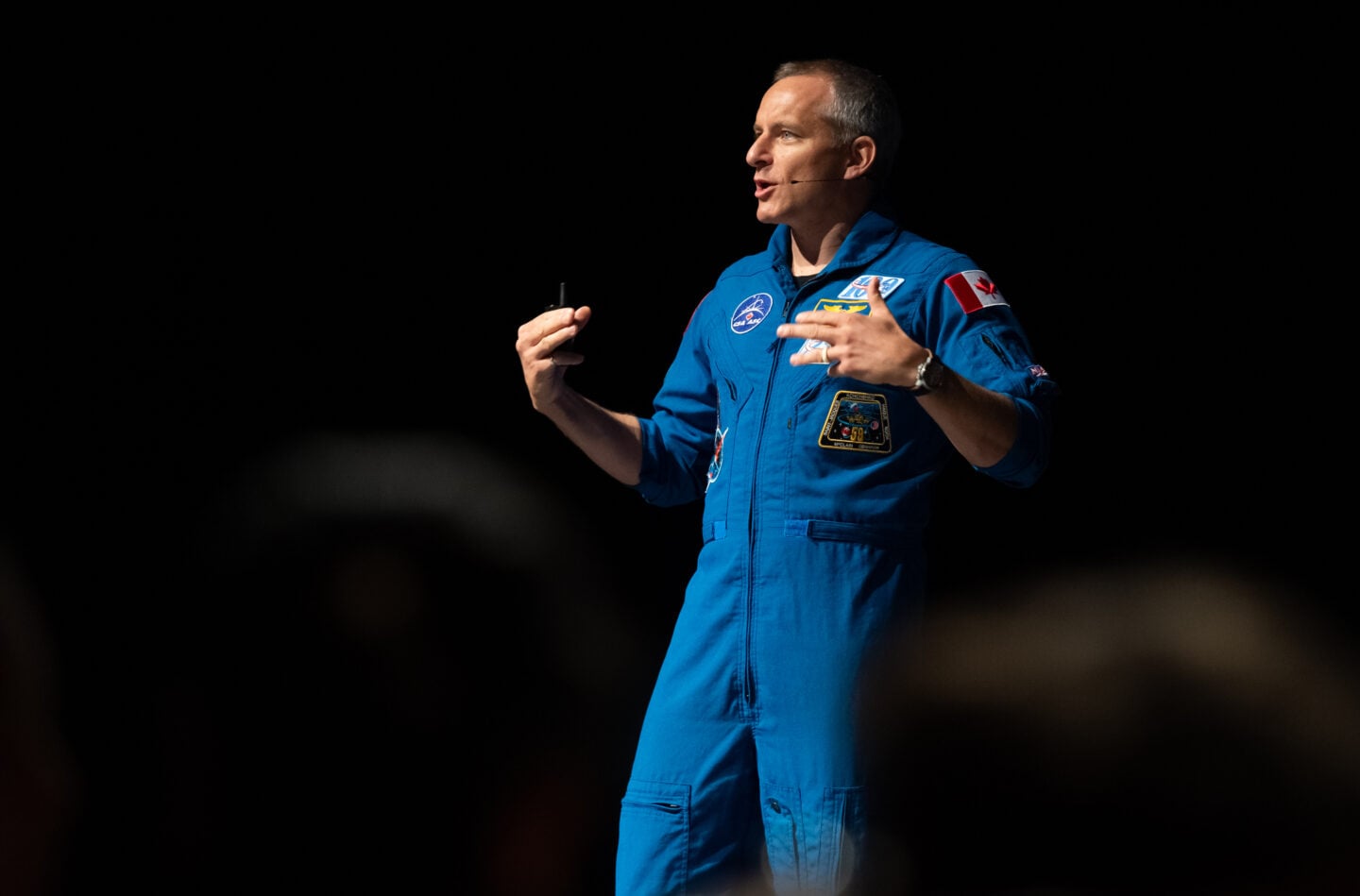
Astronaut David Saint-Jacques speaks in a dark room while wearing a blue CSA uniform.
CSA astronaut David Saint-Jacques speaks at an event at Ottawa's Canada Aviation and Space Museum in 2019. (Photo: Canadian Space Agency)
Expand Image
Advertisement
Advertisement
Advertisement

David Saint-Jacques doesn’t need to wonder what it feels like to spend 204 days living and working on the International Space Station. He’s already done it. Now at 56 years old, the astronaut, engineer, astrophysicist and physician originally from Saint-Lambert, Que., has a CV worthy of a double take. 

A father of three, the Royal Canadian Geographical Society Gold Medal and Order of Canada recipient was only the fourth Canadian Space Agency astronaut to conduct a spacewalk and the first CSA astronaut to use Canadarm2. He also helped design Canadarm3 before becoming the CSA’s deputy director of their lunar exploration program.

While Saint-Jacques won’t be soaring through the galaxy anytime soon, space travel is once again in the limelight as the launch window for NASA’s Artemis II mission approaches. Artemis II will be the second mission, and first manned mission, in a series of steps to push human exploration to the moon and, eventually, to Mars. 

A group of four astronauts, including Saint-Jacques’ friend and fellow Canadian astronaut, Jeremy Hansen, will set out on a 10-day mission aboard the Orion capsule to circumnavigate the moon. The journey will take them the furthest from Earth any human has ever been.

Saint-Jacques sat down with Canadian Geographic’s David McGuffin to discuss what the Artemis II mission means for the world, his relationship with Jeremy Hansen and the value of working together.

On going back to the moon

I did not see the Apollo landings, but I’m definitely of the Apollo generation. We were motivated by the mystery, the allure, the appeal of space exploration. It was, I think for a whole generation, a great source of inspiration and pride in doing something collectively. 

My kids, our kids, they’re going to be the Artemis generation, and I think this is going to be incredibly uplifting. In these sometimes-troubled days, the Artemis campaign falls at the right time to bring people together with this collective dream, this incredible power that space exploration has to uplift people and bring them together towards a common, very difficult and very worthy goal. 

We need to get back in the saddle. There’s a lot of good reasons [to go back to the moon], but there’s nothing wrong with the reason: we want to go because it’s there — and we like to dream big.
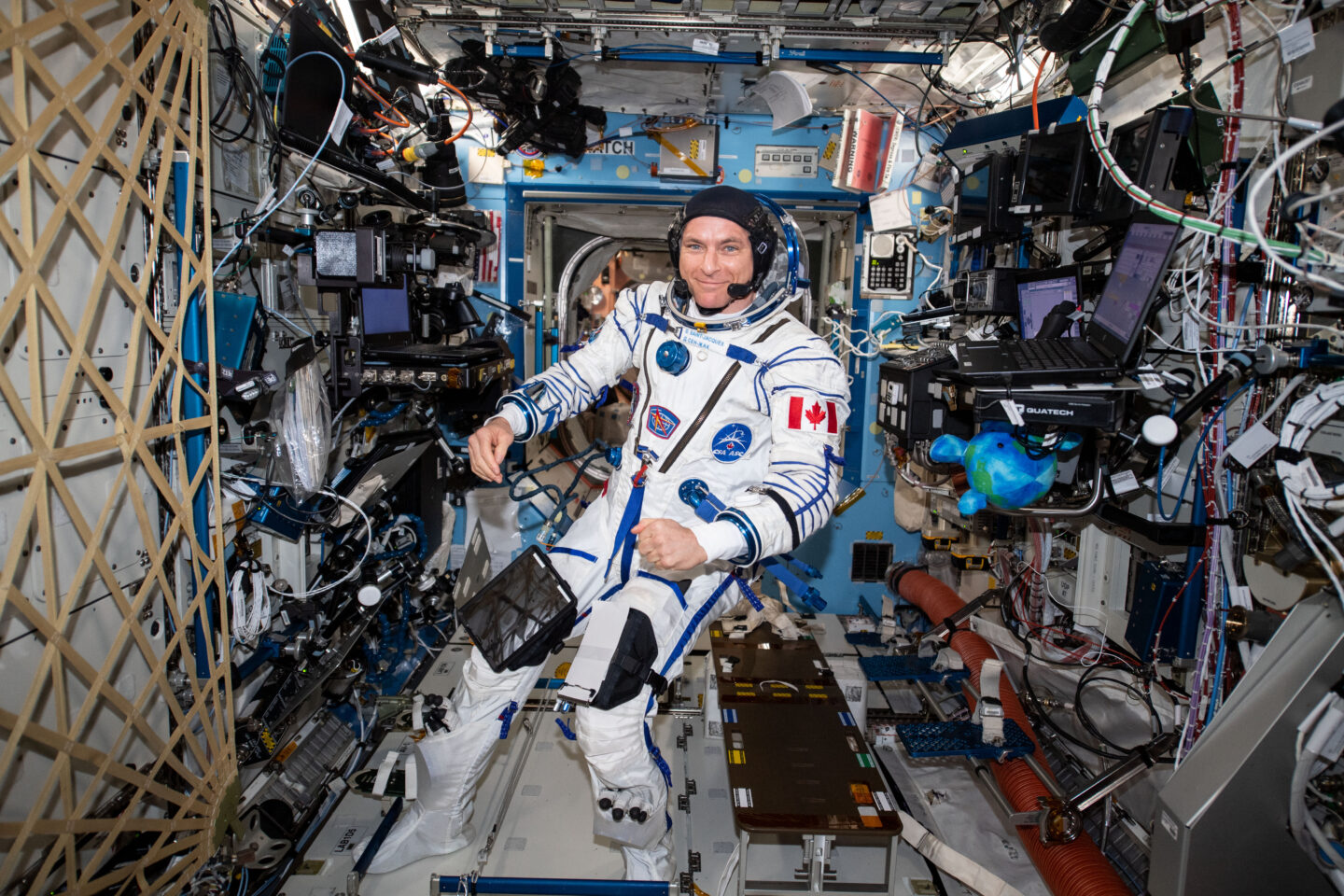
Astronaut David Saint-Jacques in a white pressure suit surrounded by a multitude of wires and space equipment.
David Saint-Jacques' 204 day mission on the International Space Station is the longest Canadian space mission to date. (Photo: Canadian Space Agency/NASA)
Expand Image
Advertisement

On the exciting aspects of Artemis II

There’s a bunch of technical questions that the nerdy engineer in me is really excited about. The re-entry into the atmosphere is one technical aspect that really drove the Artemis I mission [in 2022]. When you go to the moon, you basically fall back from the moon [at] 13 kilometers per second. It’s a different ball game in terms of the requirements on the heat shield [which protects astronauts from extreme heat on re-entry]. So much so that we can’t even simulate those temperatures on Earth in laboratories. That’s why we had the Artemis I mission uncrewed, with crash test dummies inside, to certify the heat shield was okay to come back to Earth. I’ll be paying attention to that because I know that’s important to Jeremy. 

On Jeremy Hansen

Jeremy and I go back a long time. Back in 2008, during the astronaut selection campaign, [we were doing a] crazy week of tests. They put us in very uncomfortable situations and we had to solve puzzles. We’re exhausted and I remember meeting Jeremy and thinking, “wow, this guy’s got his head screwed on tight and he keeps his calm.” The first time I met him, he filled me with a sense of trustworthiness. Jeremy is someone who always thinks of others. At his core, he’s not an egoist. He’s an altruist and a team player.

We worked together very closely: he was my first flight instructor. I taught him about medicine a little bit. What is asked of astronauts is too much for a normal person. We do it because we work together. We manage because we build on each other’s strength. Jeremy and I have been like brothers who trust each other and are always there for each other. He’s the right guy for this mission and I’m super proud of him. 

A bon voyage message to Jeremy Hansen

I’m obviously a little bit envious of Jeremy for this great opportunity to go around the moon and I will look at the moon very differently during those 10 days. I will try to spot him or at least imagine him. Where is he now? What is he looking at? I’ll wave at him, you know.

I know he’s going to be busy, but I wish for him to be able to clear his mind from time to time and just look outside in complete mindfulness. Just do that for us, please.

Take the time to look outside, breathe it, take it all in so you can describe it to us when you’re back.

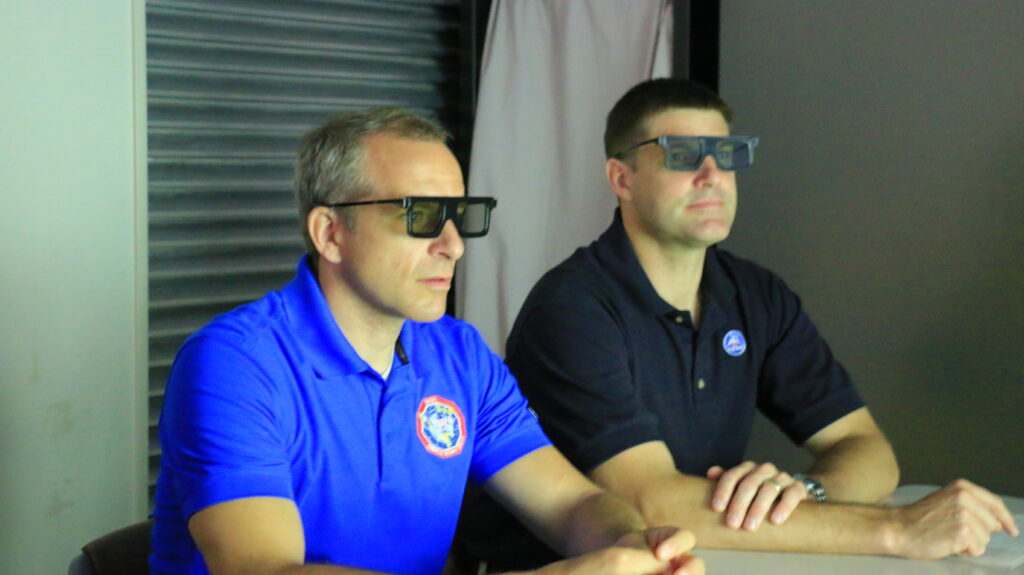
Astronauts, David Saint-Jacques and Jeremy Hansen, sit next to each other wearing dark glasses.
Canadian astronauts, David Saint-Jacques and Jeremy Hansen, training together in 2016 in the Kibo simulator in Japan. (Photo: Japan Aerospace Exploration Agency)
Expand Image
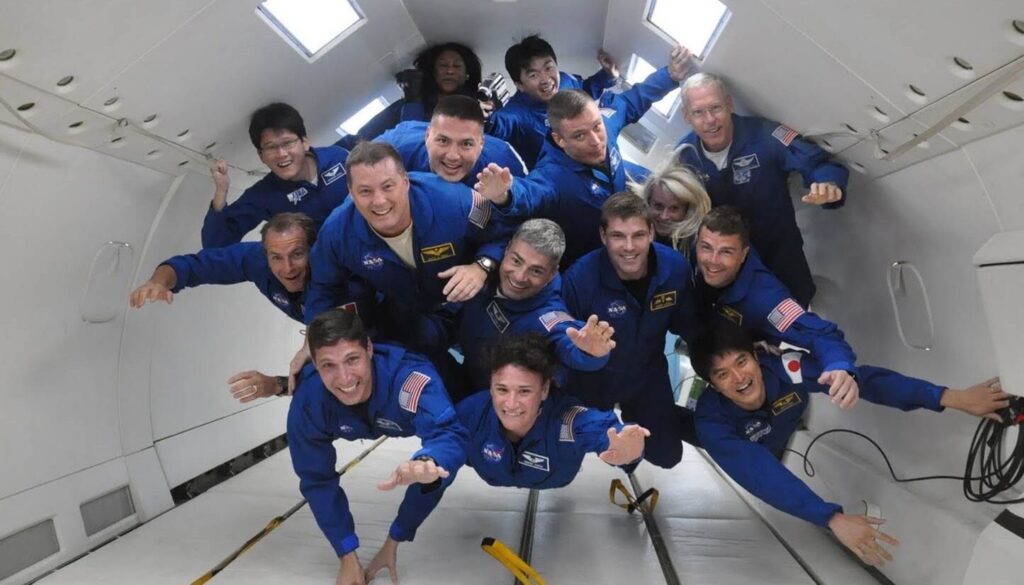
A group of 15 astronauts wearing blue flight uniforms float around in a white room.
David Saint-Jacques and Jeremy Hansen have been friends since they met in 2008 during the astronaut selection campaign. (Photo: NASA)
Expand Image

On the importance of dreaming

Everybody has their own little story on how [the Artemis mission] inspires them, but I think the power of space flight is that it’s clearly something difficult to do that requires a lot of effort and creativity and teamwork. But it’s not a comic book. It’s not a science fiction movie. It’s real. 

I think it sets an upper bound to what’s feasible, what’s possible. And it’s okay to dream of something really crazy and really big. If it’s not impossible, it’s a good dream. This is what I tell my kids. I don’t think you should limit your ambitions only to easy things or things you know for sure you can accomplish. I think there’s value in having dreams that you suspect are barely possible. That’s a good dream.

On the impact of seeing Earth from space

For me, there was a very sobering realization that, yes, the Earth is amazingly beautiful and graceful. But man… we’re in the middle of nowhere [and] there’s a lot of radiation-filled, cold, empty space, wherever you look. There is this sobering realization that this is our home. We’ve got to take care of it.

Resources are finite. To a lot of us stuck on this little planet, you can understand why there’s geopolitical tensions. These are not small problems. We’ve really got to figure environmental geopolitical issues out.  

Space exploration and these great international space programs are shining examples of what humans can do when we put aside our differences and decide to focus on things we have in common and work together. We can do superhuman things.

Advertisement

Help us tell Canada’s story

You can support Canadian Geographic in 3 ways:

Related Content

Science & Tech

Artemis II astronauts have returned safely to Earth following historic mission around the moon

Canadian Geographic is following this history-making mission, which saw Canadian Space Agency astronaut Jeremy Hansen become the first Canadian to fly around the moon

  • 5285 words
  • 22 minutes

Science & Tech

Who is Jeremy Hansen, the Canadian tapped by NASA to fly around the moon?

Canadian Space Agency astronaut Jeremy Hansen will soon be blasting off on NASA’s Artemis II mission. How did he get from an imaginary treehouse spaceship in rural Ontario to the real thing? 

  • 3607 words
  • 15 minutes

Science & Tech

Canadian astronaut Jeremy Hansen will be among the next humans to fly to the moon

Hansen will be part of the NASA crew for Artemis II, which will see the astronauts spending up to three weeks on a flyby trip to the moon in 2024

  • 1231 words
  • 5 minutes

Exploration

From Labrador to Luna: Training future moon explorers

With the Artemis II mission set to blast off next spring, humanity is one step closer to returning to the moon. In the meantime, astronauts are honing their skills in a Labrador meteorite crater.

  • 2203 words
  • 9 minutes
Advertisement
Advertisement