People & Culture
For the love of pronghorns
The story of a biologist’s lifelong study of an endangered species — and its future
- 3025 words
- 13 minutes
Wildlife
Pronghorns used to race across the prairies — until people put up fences. Now, a group of volunteers is working to reconnect this divided landscape.
We tend not to imagine the prairie grasslands as wilderness. The landscape lacks any upward reach. No mountains rise here like they do in western Alberta. No towering black pines or Sitka spruce shadow the terrain. But what grasslands lack in verticality they make up for below the ground. Ninety per cent of grasslands biomass exists as deep-reaching root systems invisible to those of us on the surface. All we see is a vista so flat and featureless you can watch your dog run away for three days, according to a tired joke.
The origin story of Western Canada begins with this myth of prairie emptiness. The Dominion Lands Act of 1872 gave this expanse away for free, parcel by parcel, to European settlers as long as they promised to destroy it. The newcomers earned their property deeds by clearing the grasslands for cropland, plowing under the sagebrush, the purple prairie clover and the western wheatgrass that had always been here.
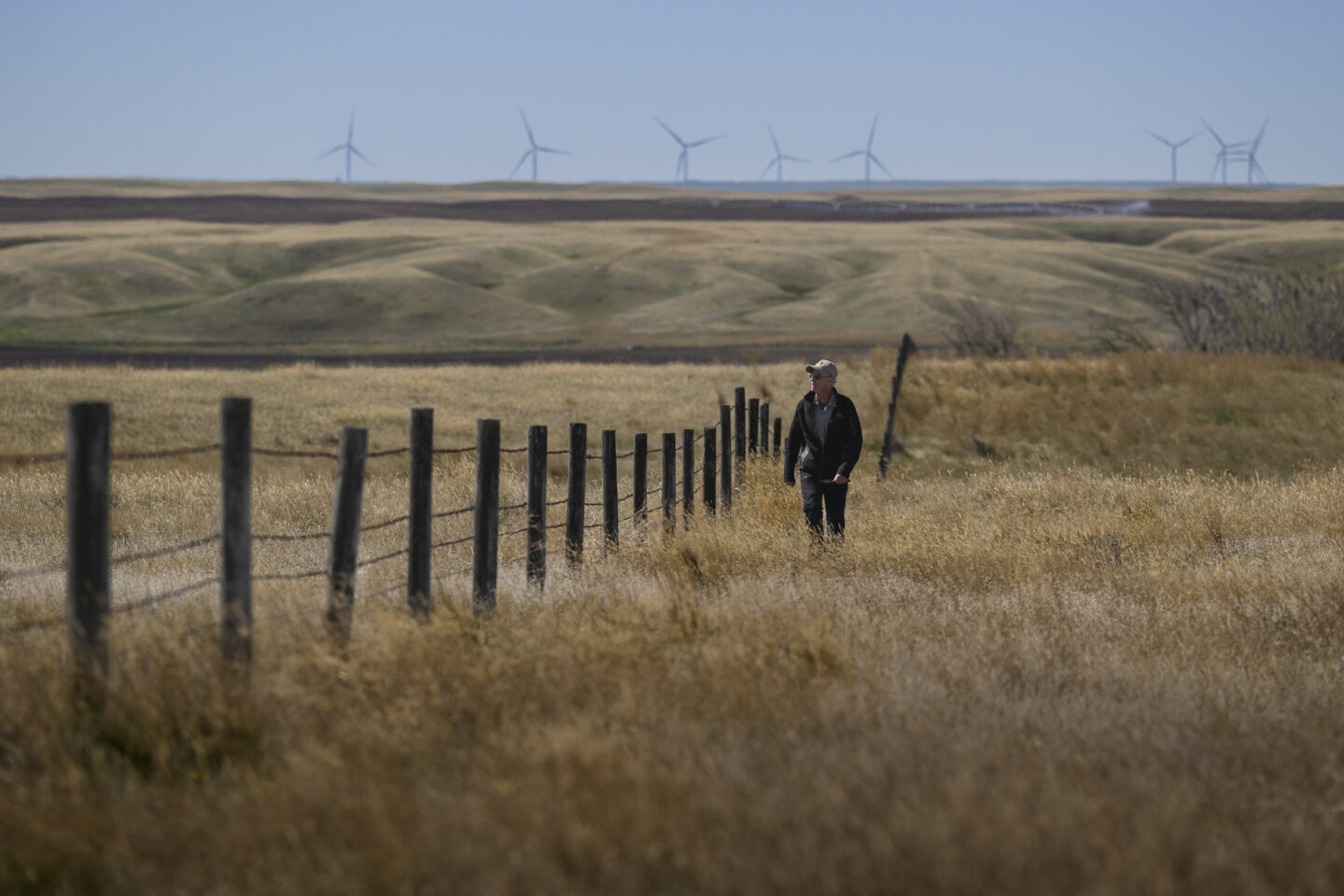
Then they put up the fences. With posts and barbed wire, the settlers divided the prairies into harsh geometries. They drew severe lines on a landscape of gentle curves and imposed simple human order on wild complexity. The fences didn’t as much tame the grasslands as dishonour them. But speeding across the prairies on the Trans-Canada Highway today, few of us notice the wire at all.
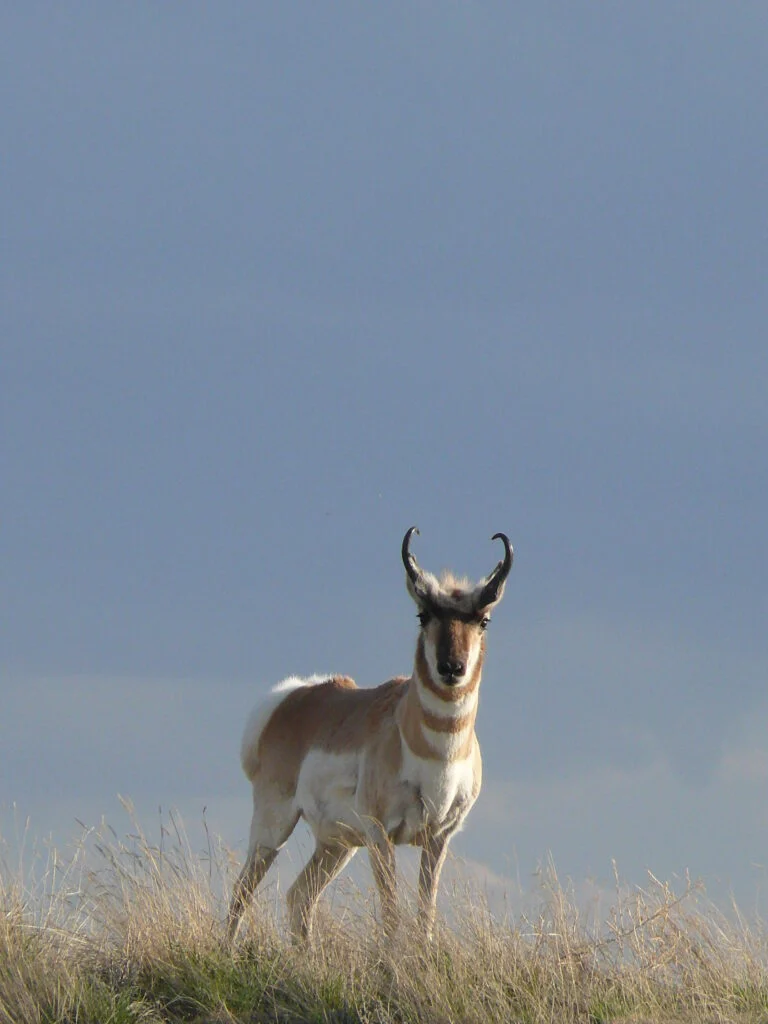
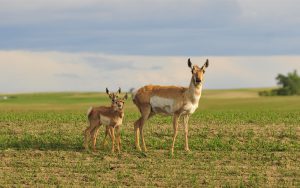
The pronghorn do. Each spring, as the snow melts, nutrient-rich grasses sprout from the thawing prairie. Migrating pronghorn “surf the green wave,” following the emerging grasses from south to north as the weather warms and snow recedes. Months later, after fawning season, the pronghorn will retreat from the impending cold and return south where winters are milder and sagebrush plentiful.
Not all pronghorn make these migrations. A little less than half of all pronghorn tend to stay in one area year-round. Those that do travel, though, travel far. A migratory pronghorn will traverse 200 kilometres or more over the course of a year. Some journey even farther. In the spring of 2004, conservationists monitored a female pronghorn who travelled 445 kilometres from the area around Manyberries, Alta., near the Montana border, north past the Canadian forces base at Suffield and onwards to Macklin, Sask., before doubling back into Alberta to her fawning grounds. She did all of this while pregnant in her third trimester.
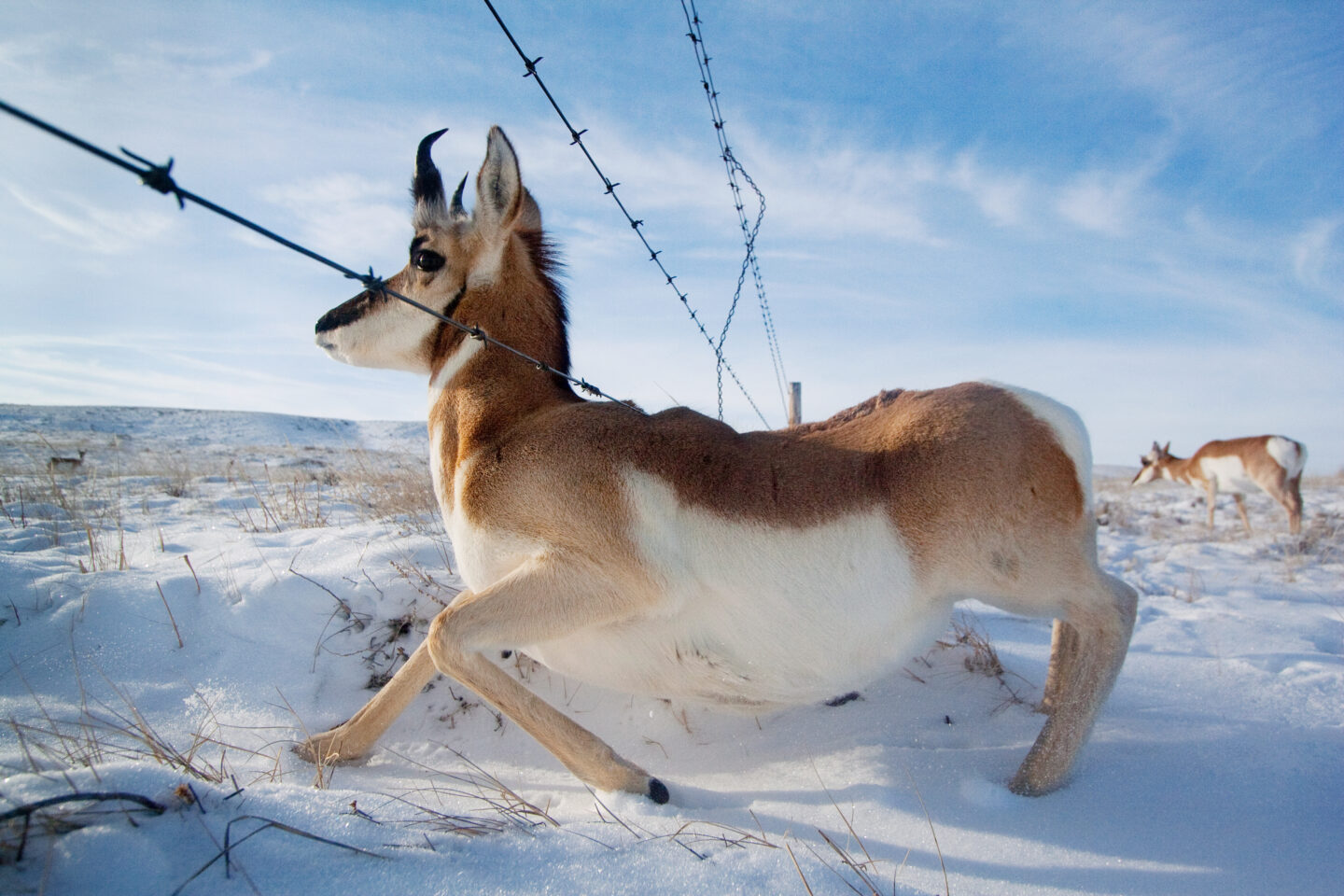
Migrating pronghorn come up against those barbed-wire fences that bisect the landscape. Pronghorn can jump over these fences, but they would rather not. Pronghorn evolved on the prairies, where the tallest thing to navigate was a sagebrush.“They had no idea when Europeans settled and started putting up fences how to deal with it,” says Paul Jones, senior biologist with the Alberta Conservation Association.
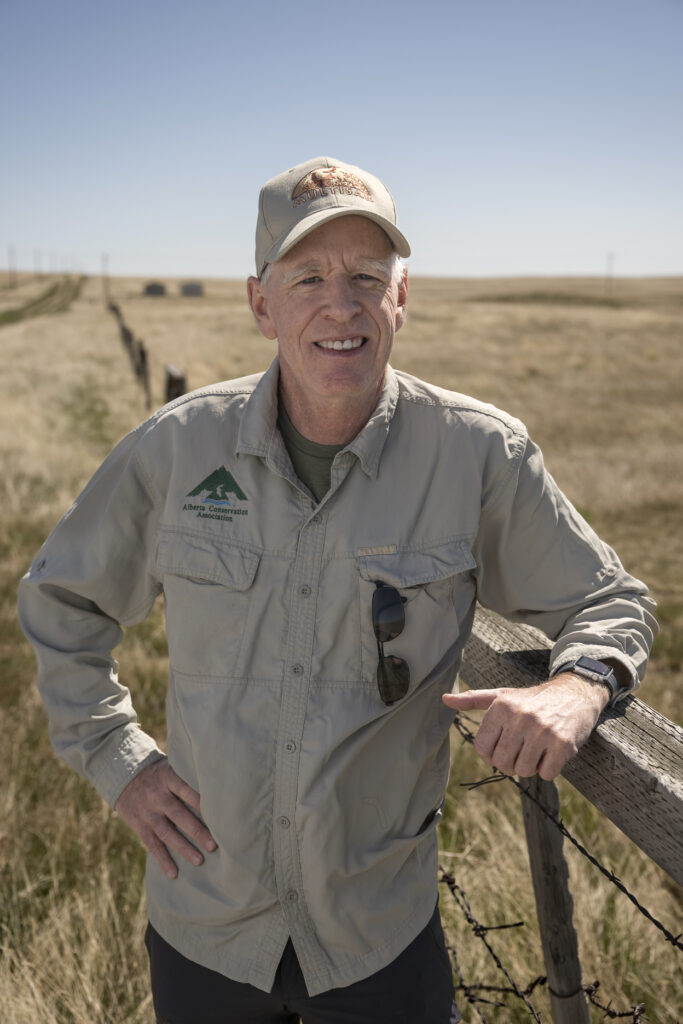
Their tiny leg bones, about the size of a human index finger, are built for speed — not for springing over barbed wire. “Put on a pair of your wife’s stilettos and then jump from three stairs down to the ground,” Jones suggests. “See how that feels when you land. Because I’m assuming that’s kind of what it’s going to be like for a pronghorn.”
And he would know. Jones understands more about pronghorn biology and behaviour than just about anyone. In 2024, the Western Association of Fish and Wildlife Agencies awarded Jones the prestigious, and delightfully specific, Berrendo Award, which recognizes remarkable contributions to pronghorn ecology and management. Jones is the youngest recipient of the Berrendo — Spanish for “pronghorn” — and the first Canadian. The award guarantees Jones’s induction into the association’s Pronghorn Hall of Fame, which is also a real thing, after his eventual retirement.
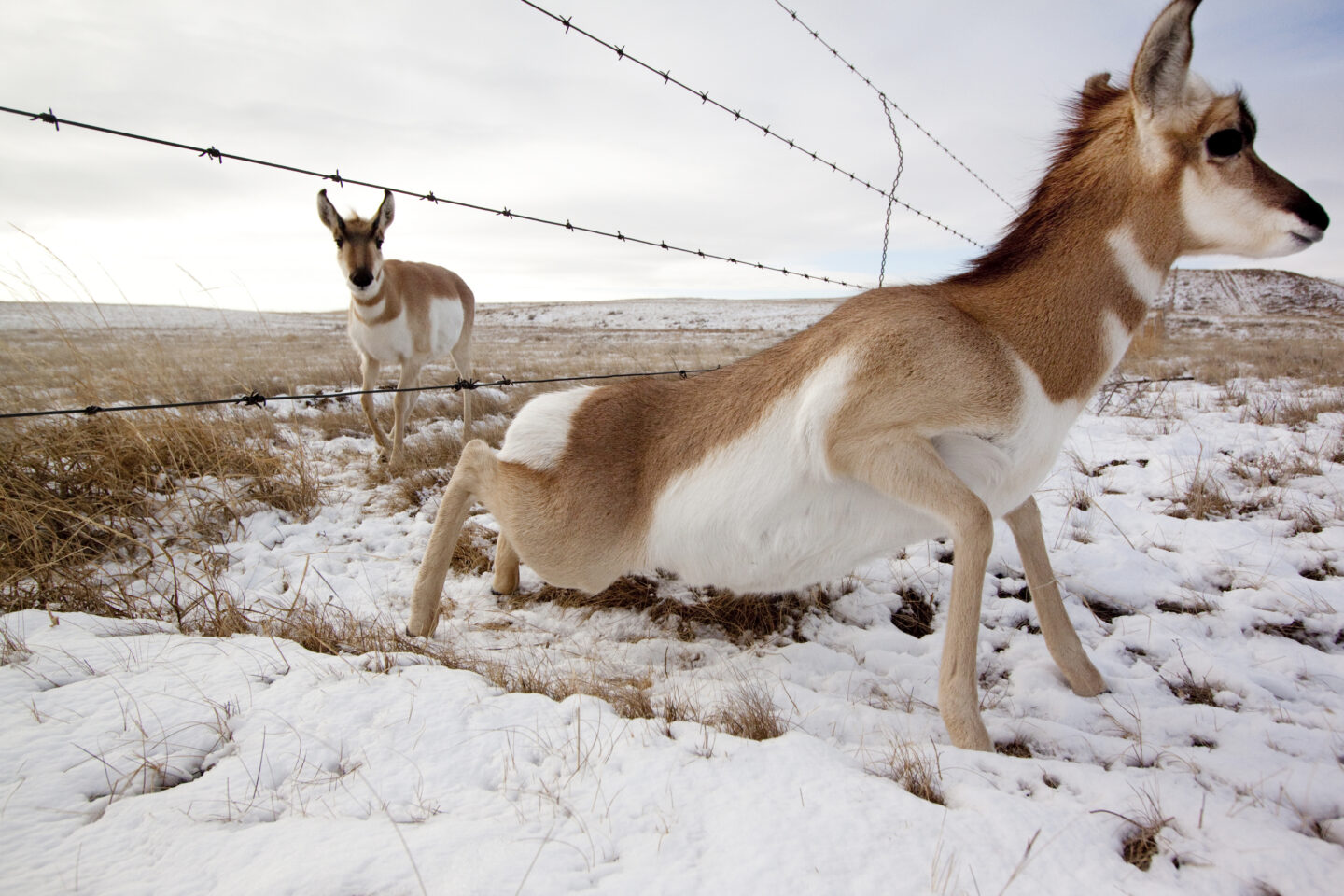
Instead of leaping over the fences and breaking their dainty ankles, pronghorn have adapted to crawl beneath them. But this also risks injury. Jones clearly remembers an Alberta Conservation Association pronghorn capture-and-collar project back in 2004. A member of the helicopter crew photographed a pronghorn whose fur was ripped clean from her neck and rump. The skin beneath was black and toughened like leather, as if it had been frostbitten. “We eventually realized that’s from going underneath fences,” Jones says.
Pronghorn do their best to avoid the barbed wire’s passive violence. They’ll track parallel to a fence line for miles, looking for sections of loose and sagging wire, or where a dip in the ground beneath the bottom strand creates a wider gap for them to pass through. Groups of pronghorn, sometimes 20 or more, will gather at these spots and crawl under the fence in single file, each politely waiting their turn like good Canadians. But finding and navigating safer crossing points costs the pronghorn time and expends precious energy. Pronghorn that cannot find a place to cross can get stuck in literal dead ends where they might starve to death.
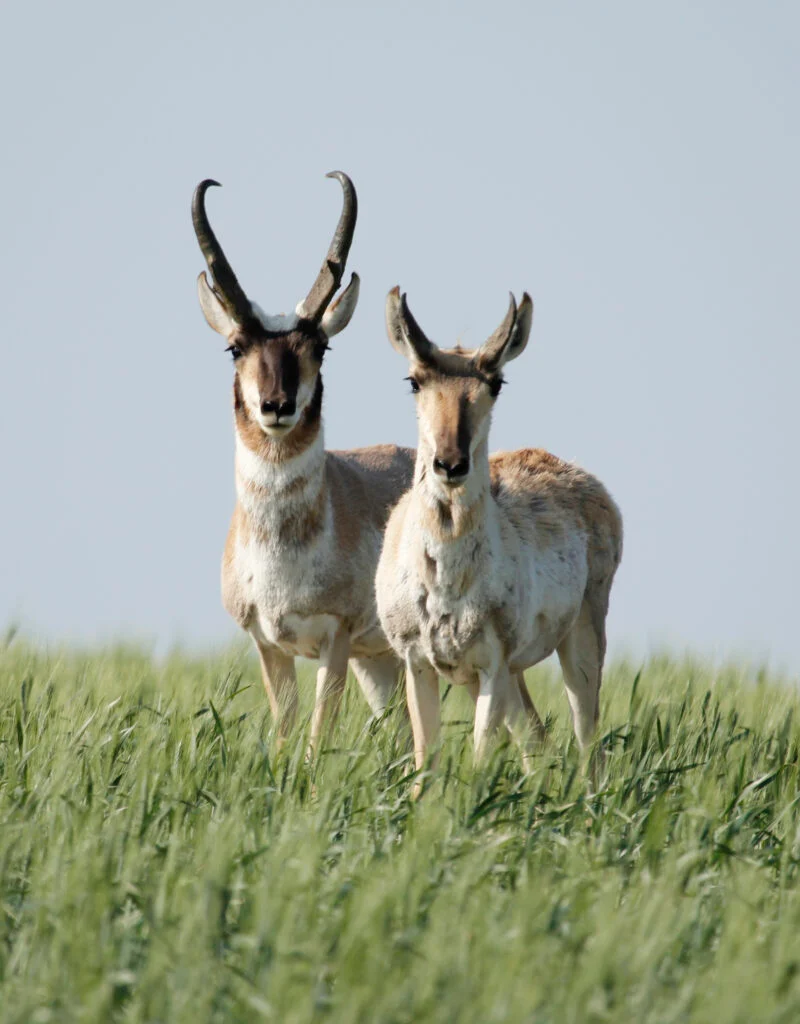
Or be eaten themselves. Pronghorn are the fastest land mammals in North America. They can maintain speeds of up to 60 kilometres per hour for five kilometres or more, and a startled adult pronghorn can burst to 100 kilometres per hour. Biologists believe the pronghorn evolved such quickness to evade the Miracinonyx trumani, a Pleistocene-era cheetah that last sped across the North American plains 13,000 years ago — an extinct predator the pronghorn have evolutionarily outrun. The pronghorn no longer need to be so fast. Nothing on the modern prairie can keep up with them.
Until they run into the fences. The pronghorn’s predators know this, and they know the precise spots where pronghorn like to cross. Packs of coyotes will chase pronghorn along the fence lines towards these points, then take them down when they pause to pass underneath. Golden eagles do the same. They pursue young pronghorn along the wire until the fawns stop to crawl under. Then they swoop down, puncture the fawn’s back with their talons and hover overhead as the fawn bleeds out. Jones has seen photos of a pronghorn with an eagle gripping its back and blood streaming down its sides. The pronghorn’s enemies have adapted to the fences we’ve built far better than the pronghorn have.
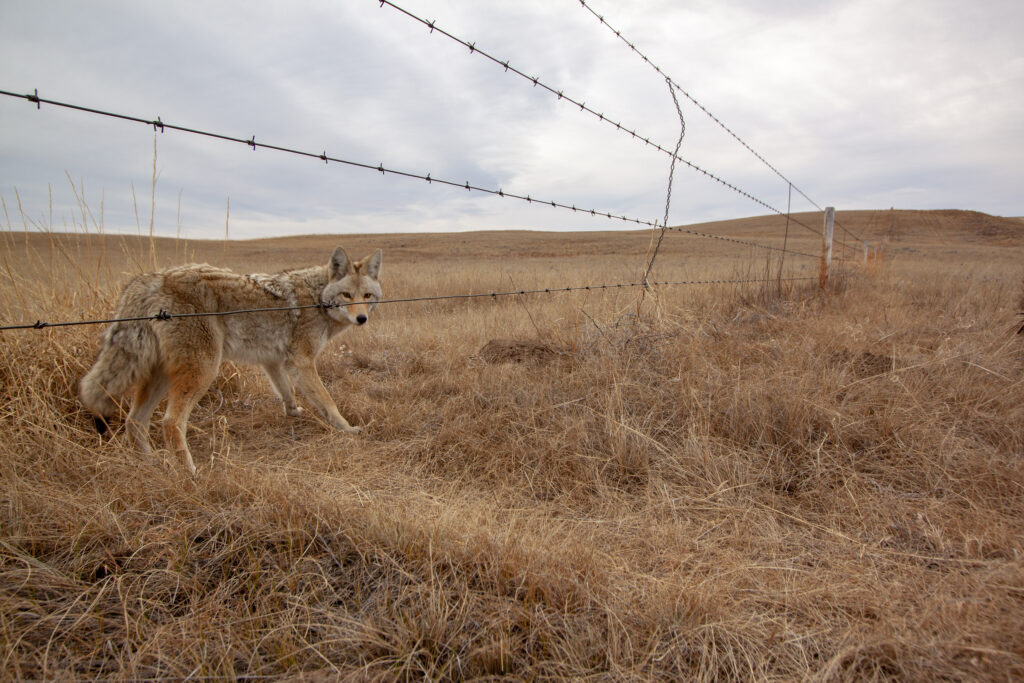
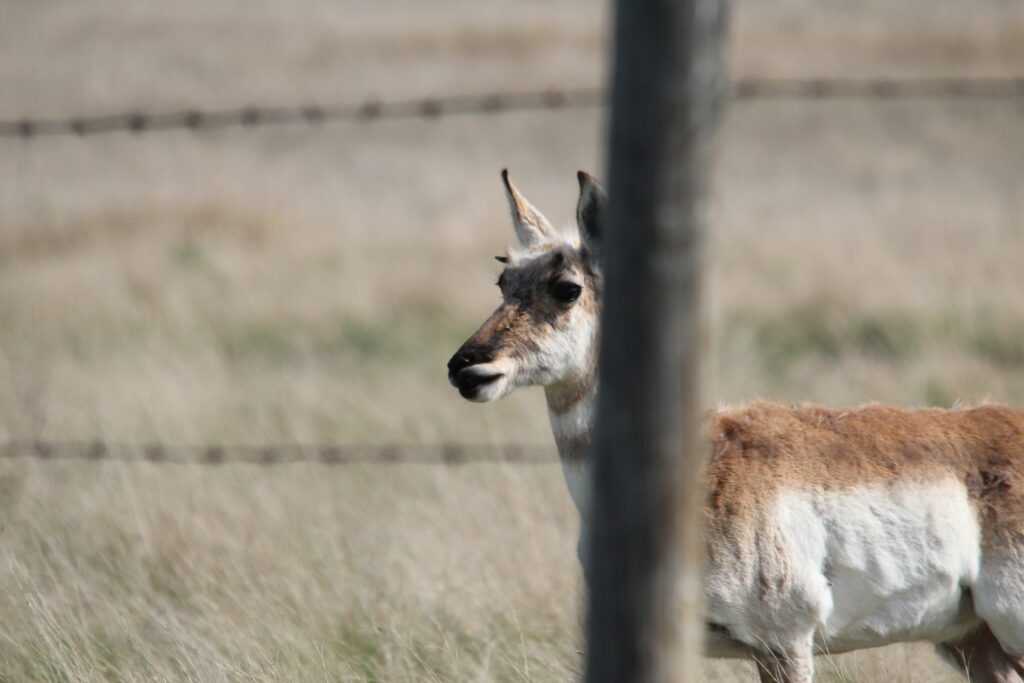
To reconnect the habitat our fences have severed, Alberta conservationists launched a project to improve travel corridors for pronghorn in 2009. The project is a collaboration between the southern Alberta ranching community, the Alberta Conservation Association and the Alberta Wildlife Federation. Grants to finance the project come from the Alberta Conservation Association, the Northern Alberta Chapter of Safari Club International and an Alberta government program to auction special year-long big-game hunting licences.
Three times each summer, the Alberta Wildlife Federation assembles crews of volunteers to restring barbed-wire fences bisecting known migration routes to make them more pronghorn-friendly. Volunteers spend a weekend replacing the bottom strand of barbed wire with donated double-stranded smooth wire that won’t injure pronghorn. They also raise the bottom strand to at least 45 centimetres from the ground — high enough for a pronghorn to swiftly crawl under. The volunteers can restring about 16 kilometres of fence in a weekend and have modified more than 700 kilometres of fencing since the project began.
The project attracts a diverse collection of volunteers. Most come from Alberta’s hunting and fishing communities, some driving in from as far as Grande Prairie in the north of the province to participate. Medicine Hat hunter Ben Hermann has volunteered for the project every year since 2018. He appreciates how his efforts on the wire help keep pronghorn safe. “Maybe they’re not getting ripped up so bad,” he says. Other volunteers come from rather unexpected backgrounds. A Swiss pastry chef appeared at a volunteer campsite one year after driving 450 kilometres from his job at the Chateau Lake Louise hotel. He never told anyone he was coming but ensured his welcome with a huge tray of fresh pastries he brought with him.
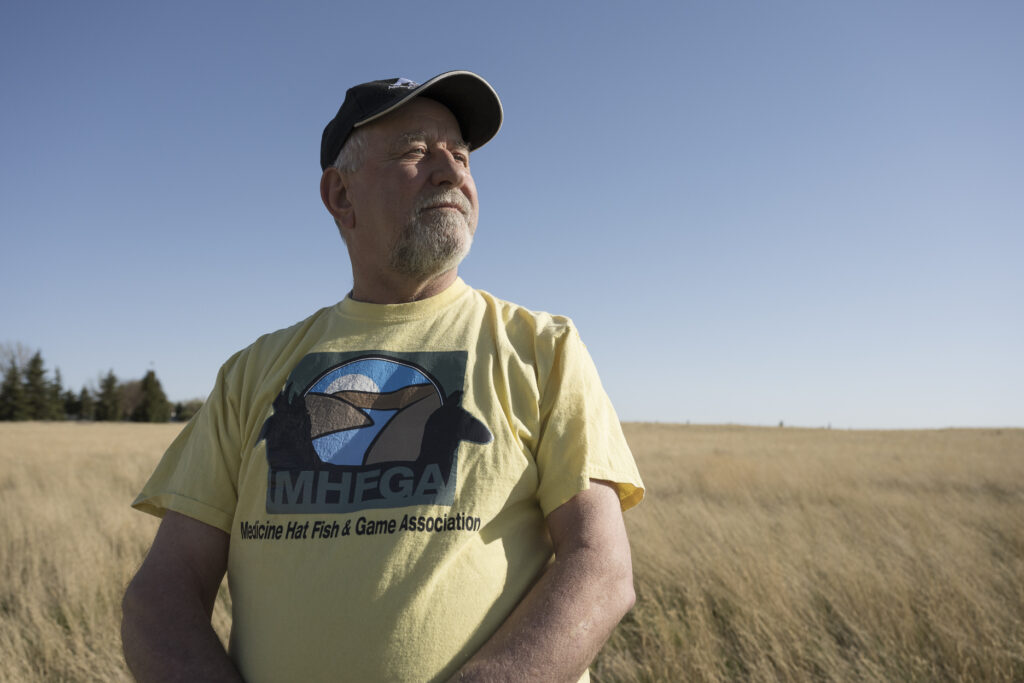
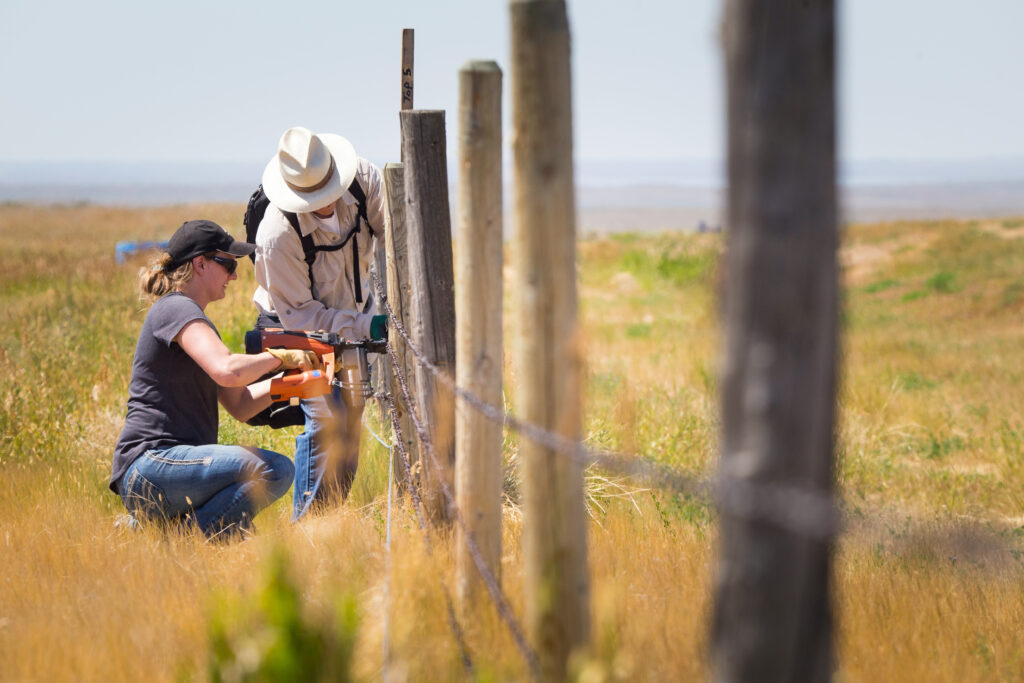
Calgarians Robin McLeod and Brian Peacock have volunteered on the project for 17 years. They’re drawn to the beauty of a wilderness most Canadians never see. “You get on the land, and all of a sudden there’s a really deep coolie,” McLeod says, “and it’s lush and green.” For McLeod, there’s nothing better than hearing the wind blowing through the prairie expanse, glimpsing the Sweet Grass Hills across the border in Montana and eating berries off the prickly pear cactus that grow among the wildflowers.
“And you see the benefit of your work right away,” Peacock says. He recalls replacing wire in places where pronghorn had been jammed up against the fence. “Then we’ll look back from 700 metres away and see a buck coming up, checking the new wire and going under.”
For several summers, an artist collective called the Aeolian Recreational Boundary Institute drove east from Calgary to work the fences. The group formed in 2009 to examine how linear human-made barriers, such as fences, disrupted the natural world. As urban dwellers, the group knew little about the pronghorn or the grasslands they migrated through. As artists, though, they possessed a love of the landscape’s aesthetic and a natural curiosity. “We just wanted to see what was going on down there, and what we could make of it,” says Doug Haslam, the group’s co-founder.
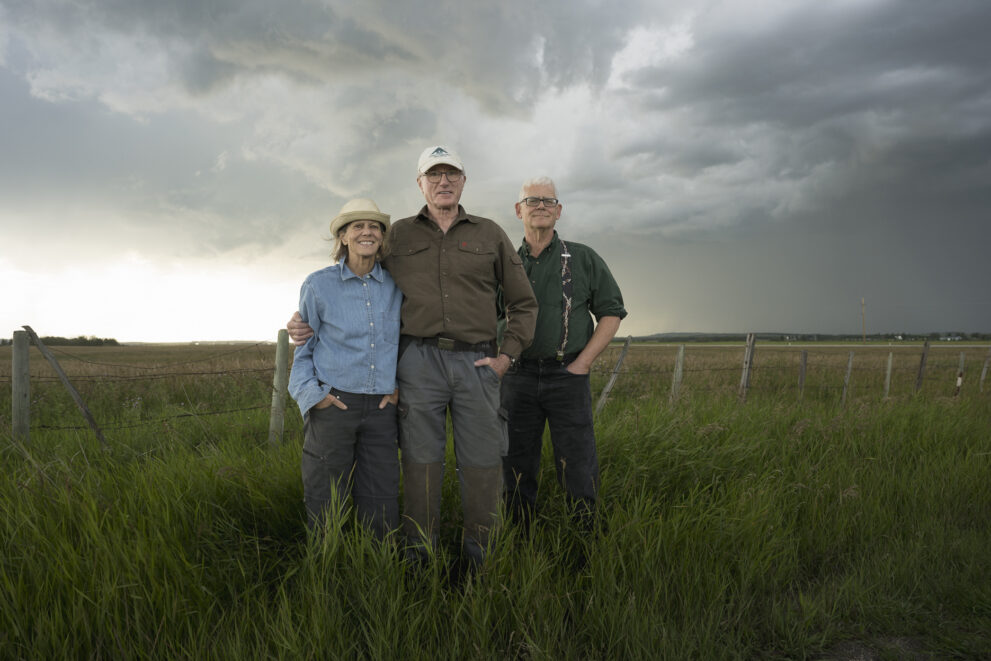
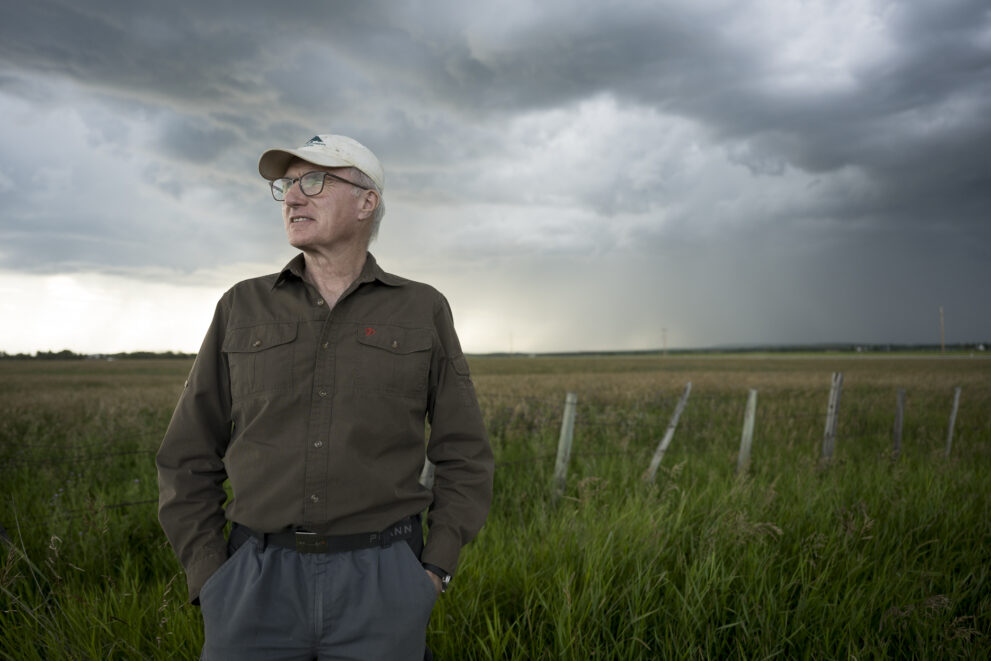

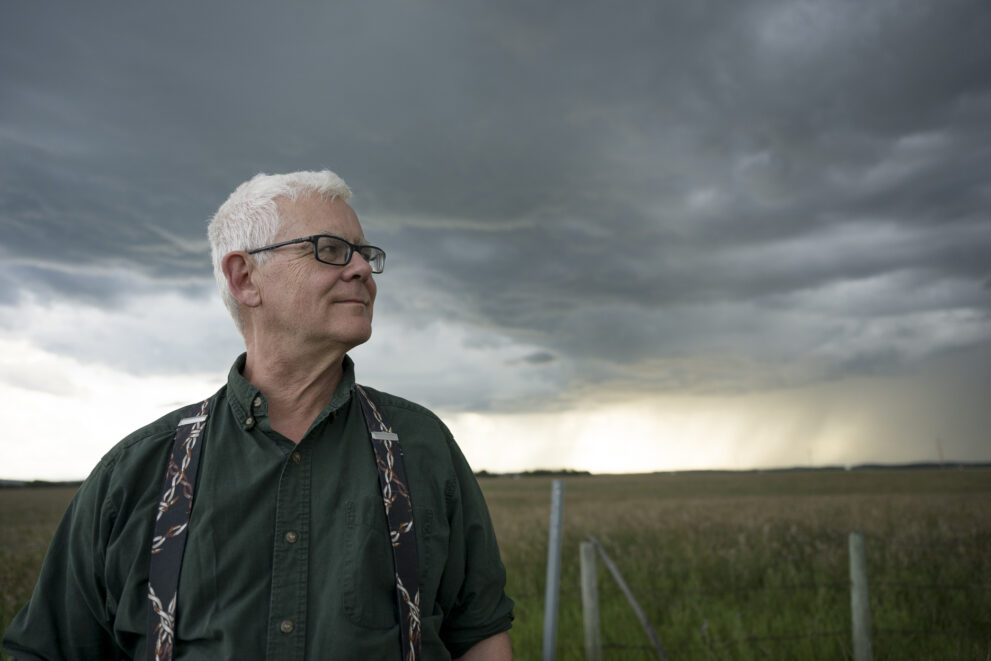
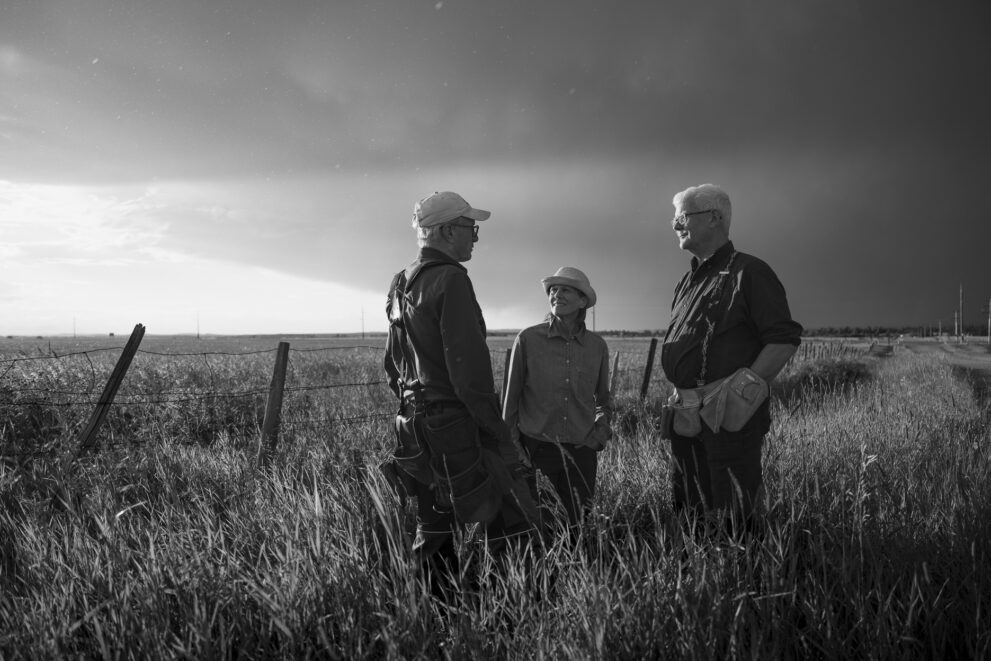
Haslam and his co-conspirators marvelled at the complex aesthetic experience embedded within the banal labour they performed at the fences. Haslan would later write, “The sound of the wire buzzing in the wind, the solid physical arcs of the hammer blow, the smell of sage and wolf willow, rich layers of sensation greeted us with every step.” Haslam translated that experience into an audiovisual art project called “On the Wire.” He affixed contact microphones to the barbed wire and recorded the sound of the hammering and the pulling of staples. The microphones also picked up ambient sounds like birdsong, the voices of the volunteers and the prairie wind vibrating through the barbed wire.
While the refencing aims to connect pronghorn to their ancient migration routes, the project forges bonds among the volunteers themselves. City dwellers and conceptual artists might have little in common with the small-town hunters they work alongside, but their shared labour connects them. In the evenings, once the hammers and staple guns are silenced, the volunteers gather together. They share dinner and beers around campfires, on tailgates or, until it sadly shut down, a famed saloon in Manyberries complete with swinging doors.
In spite of the occasional hunter poking good-natured fun at the big-city vegans, everyone shows respect and curiosity towards each other. “I think they really appreciate us being out there because I don’t think they expected people like us.” Haslam says of his rural co-volunteers. “Having a project that struck a note with all of us was a way of breaking down some of the boundaries.” Each summer, the connection between the volunteers resonates like wind through wire.
The fences aren’t the pronghorn’s only problem. “They are only one of the anthropogenic footprints and linear disturbances that pronghorn have to deal with,” Jones says. Sprawling solar farms impede pronghorn migration, too, while rail lines and the Trans-Canada Highway make north-south journeys dangerous. During the winter months, when the snow is deep and difficult to traverse, pronghorn often travel along the snow-free railroad tracks. “Then they try to outrun a train that’s coming,” Jones says. In the winter of 2010, trains in Montana ran down 200 pronghorn.
Researchers in Wyoming recently observed that pronghorn tend to avoid the area around wind farms, too. Pronghorn will often stop for a day or two in an area to forage and replenish their energy before carrying on. But not in the vicinity of windmills. Jones suspects the slow turning white turbines too closely resemble how frightened pronghorn flare the white fur on their rumps to warn colleagues of danger. Pronghorn won’t pause to feed if they fear something’s wrong. “They haven’t adjusted yet to turbines being on the landscape,” Jones says. Pronghorn are fast, but their adaptation is slow.
And solutions are difficult. To mitigate the solar and wind farm issues, wildlife advocates would have to make the business case for energy companies to locate their turbines and solar panels away from pronghorn migration routes. Building wildlife overpasses would allow pronghorn and other species to cross highways and railways safely. Jones already knows where they should go. Using migration model data, citizen-science data and government animal-vehicle collision statistics, Jones and his colleagues identified “priority sites” along the Trans-Canada where an overpass would best reconnect animals to their habitats. These structures, though, cost millions of dollars. Securing funds for such projects, especially from government, is a struggle.
Such challenges make the pronghorn refencing project, completed by volunteers with donated supplies, all the more important. And the landowners approve. They appreciate the free renovation of their fencing. The volunteers always leave the fences in better shape than they found them, with at least one strand of sparkling new wire. The ranchers don’t object to the pronghorn passing through their pastures, either. Trespassing deer might pilfer their cattle’s stacked feed, but pronghorn tend to eat only the shrubs and dandelions cattle don’t bother with. Besides, ranchers enjoy seeing pronghorn dash across their land. Part of the appeal of living on the grasslands and far from any urban noise is these chance encounters with wildlife.
Those ranchers are perhaps the most important stewards of pronghorn habitat. “Their lifestyle is super important because it maintains these big natural areas,” says Tracy Lee, director of conservation research at Mount Royal University’s Miistakis Institute in Calgary. Grazing prevents the native grasses from being plowed under to make way for wheat and canola or destroyed by industrial and residential development. So while the ranchers erected the fences that interrupt pronghorn migrations, they also preserve the ecosystem pronghorn migrate through. Only about a fifth of Canada’s original grasslands remain; without sustainable ranching there’d be even less. “These working landscapes are probably why we still have pronghorn,” Lee says.
John Wilmshurst, native grassland conservation manager for the Canadian Wildlife Federation, believes more grasslands-dwelling Canadians would protect the ecosystem if incentivized to do so. His organization works alongside the South of the Divide Conservation Action Program to reward organizations, families and individuals who are managing native grasslands to keep them natural. You can “make a lot more money on a canola crop than on a crop of grass,” Wilmshurst says. Offering payouts or tax breaks to landowners who choose to maintain the native landscape might counter their urge to convert it.
Maybe landowners need to be motivated emotionally rather than economically. Wilmshurst wonders if Canadians saw the grasslands differently — as wilderness rather than emptiness — they might be more inclined to preserve them. Wilmshurst did research for his PhD in East Africa and knows how closely Canadian prairies resemble the undoubtedly wild grasslands of the African savannah. Similarly, pronghorn share more genetics with giraffes and okapi than with their elk and mule deer compatriots.
“It is important that we change our mindset a bit and look out on our prairies and say, ‘Wow. This is a wilderness that we’ve converted,’” Wilmshurst says. “The savannah doesn’t look any different than southern Saskatchewan. Except for the fences.”
This story is part of a series about ecological corridors produced with support from Parks Canada. Learn more by visiting the Right of Passage website.
People & Culture
The story of a biologist’s lifelong study of an endangered species — and its future
Places
“All the mischiefs humans and the universe are capable of inflicting on an ecosystem have conspired to attack the prairies.”
Environment
An estimated 29 million mammals are killed each year on European roads

Kids
As the fastest land animal in North America, the pronghorn is a highly migratory animal that has incredible vision and can be identified by the horns on its head. …