Travel

Paul Theroux on road tripping Canada, his love of travel and a transcendental snowstorm in Banff

In a new travel memoir, True North, the celebrated author turns his keen eye on Canada

  • Sep 23, 2026
  • 1,238 words
  • 5 minutes
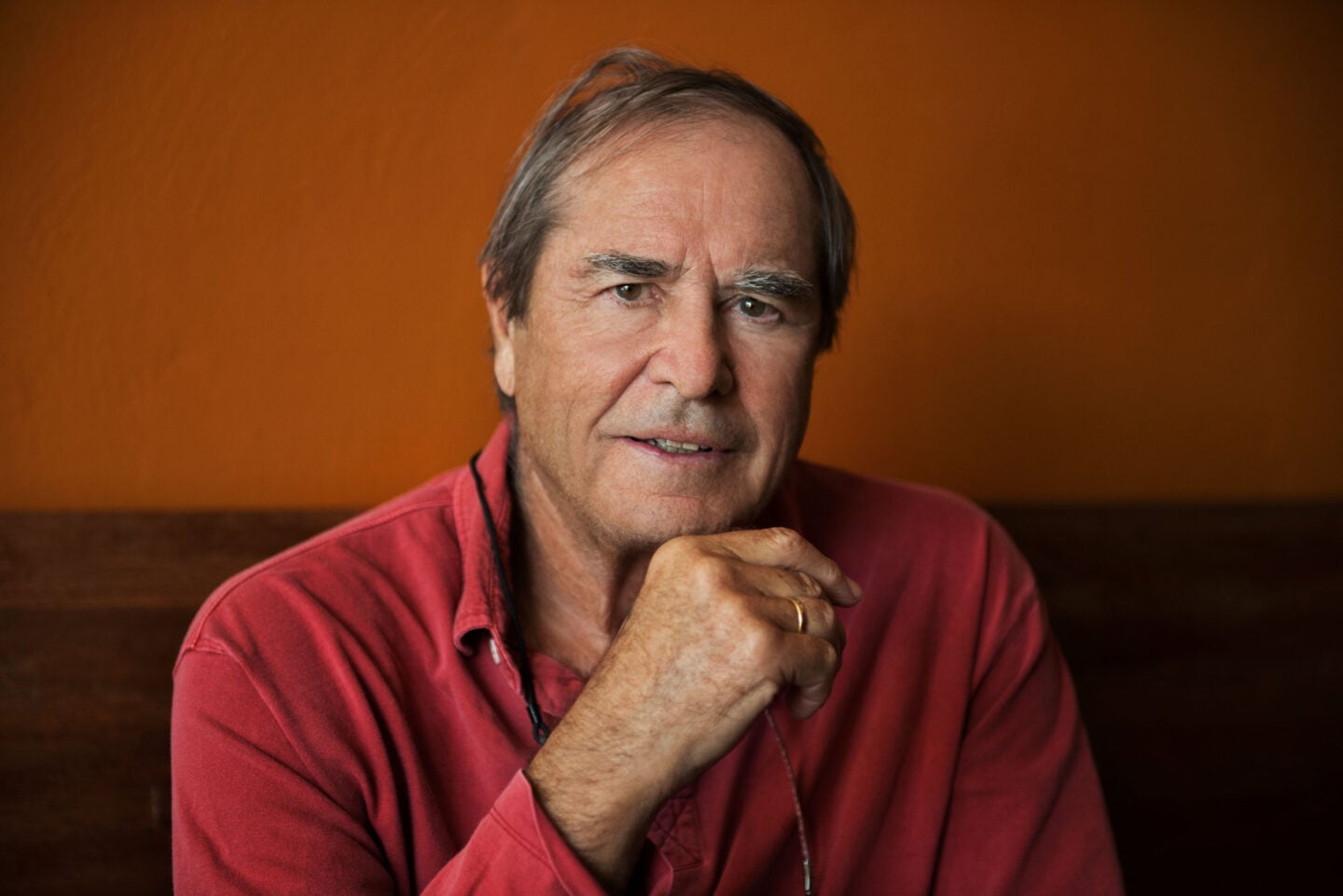
Author Paul Theroux (Photo: Steve McCurry)
Expand Image
Advertisement
Advertisement

“What happens is, the chimpanzee has a great career as a dancer. This happened in London.” Speaking from behind his writing desk at his Cape Cod, Massachusetts, home, Paul Theroux is recapping the plot of John Collier’s 1930 satirical novel, His Monkey Wife, one of his favorites. “It has a happy ending. They consummate their marriage on the last page. One of the greatest last pages in any book.”

In both his writing and in others’, Theroux is drawn to the obscure, the ordeal, the outlandish. An underrated satirist himself, he is best known for his travel writing (though he considers himself a novelist first, and “only now and then an essayist or chronicler of my travels.”). His 1975 book The Great Railway Bazaar, which chronicled his travels by train through Asia, was a bestseller, and helped revitalize the genre. In the years since, he has chronicled his journeys in Europe, Africa, and South America, the Pacific Ocean and beyond. Now 85, he has completed his twelfth travelogue, True North: On the Road in Canada.

“Writing about a place and its problems was always my thing,” he says. His various sojourns into Canada, made during the tumultuous years between early 2022 and early 2025, gave him plenty of knotty subject matter — the Freedom Convoy, Hardeep Singh Nijjar’s assassination, Trudeau’s departure, the 2025 election (“the fairest and the most civilized” he’d ever witnessed) — and showed him a country he did not expect. The book was published earlier this week. Ahead of its publication, Theroux spoke with Canadian Geographic about his Canadian odyssey.

On road trips

The last three books I wrote, which are road trips through Mexico, the [American] South and Canada, have actually been the most enjoyable, and the most revealing, too, because I had the most freedom.

It was that trip in the Deep South that convinced me you can go deeper into a place, meet more people, find out more, if you’re in your own car. As soon as you wake up in the morning, you can get in the car and go. You’re not waiting for a train, a taxi or a plane. You can get off the beaten track; you can go anywhere at any time, to where buses don’t go, where planes don’t go.

In Mexico, I was in the Mixteca Alta, outside of Oaxaca, on gravel roads to little towns in the middle of nowhere, where they seldom see a car. In some places, there were no cars in the village. People would say, “Don’t drive — you’ll get into trouble — the cartels — it’s dangerous.” A lot of people listen to that and they don’t go. But I didn’t have a problem, I just need to study a map or talk to local people. Some countries are just designed for the road trip. The United States is; Mexico’s not bad; Canada’s fantastic for it.

In Canada, you often launch yourself into the unknown. I thought: this is what travel is; this is what a road trip is. And it’s also transformative. At the end of the trip, I had the spirit to do it again, to write again, to travel again, to go on. Because it’s rejuvenating. You feel young when you travel, and you feel happy when you travel. And also, what’s better than leaving home?

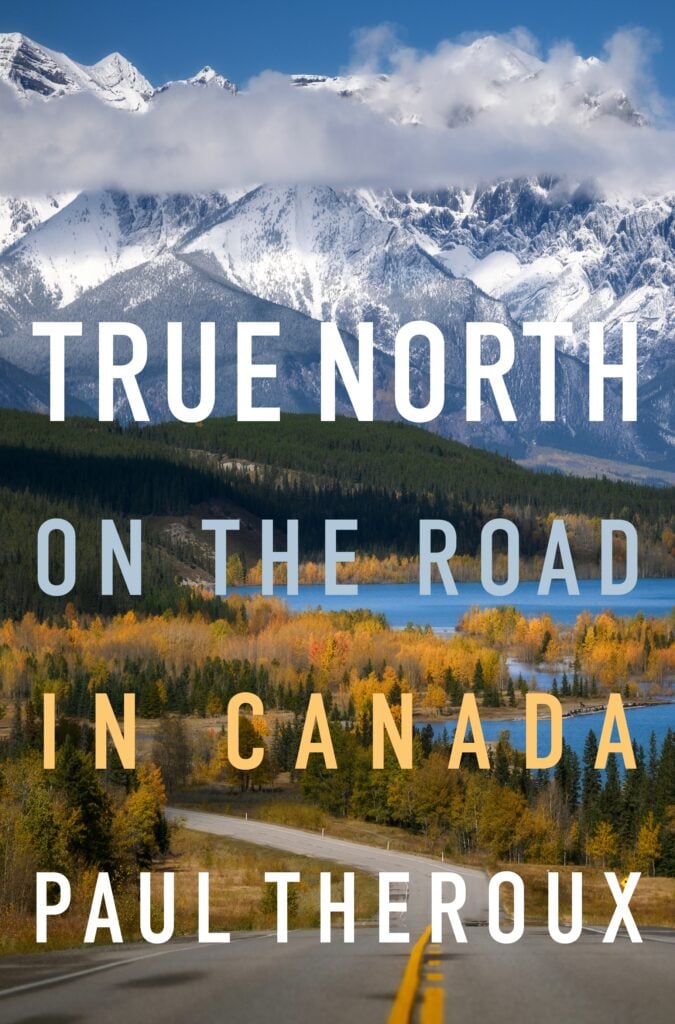
The cover of Theroux's new book, True North (Image: Harper Collins)
Expand Image

On Canada

From the very beginning, I was an anti-sightseer, and I didn’t want to be a tourist. With the Railway Bazaar, I went to India but didn’t see the Taj Mahal! I was interested in people’s stories and talking. I took the line by V.S. Pritchett, where he talks about human architecture. As the years have gone by, I pursued it even more.

I started by looking for landscapes in [Canadian] novels: Newfoundland, the Prairies, the big city. I got very interested in First Nation people, because my grandmother was Anishinaabe. My family was from Quebec, and that was another link. I’ve never travelled in a country where I had relatives. The little town that they migrated to, Yamaska, they went there in 1707. So, talk about a connection! Then I thought: I’m going to go and look for myself, and go to places I’d always wanted to visit: Moose Jaw, Winnipeg, Thunder Bay.

Driving across the prairie, from Winnipeg to Regina or Edmonton, is like traveling over an inland sea. It’s a mistake to think that the prairie is empty. There are little towns, little villages, but they’re like little islands, and the people who live on them live in a kind of insular way, being self-sufficient, being enclosed. I like that.

The natural beauty of Canada is overwhelming and marvellous. And you can only see it at its best when you’re in the middle of it. Driving through Banff in a snowstorm was almost a transcendental experience. Mountains, falling snow, sunlight breaking through. It was kind of a rhapsody, almost a mystical experience, and I’m just a little guy in a car. That really moved me.

Cities don’t move me, whether it’s Winnipeg, New York City, San Francisco, they don’t interest me. They’re too social, they’ve got too many shadows, too many people. Although, I thought Vancouver was an unusual place that had solved a lot of the problems that we’re going to face in the future. It’s a really fascinating place, unlike any other city I’d ever been in. You get a lot of great restaurants, and a multicultural society where people are not hiding, they’re not shadows; they’re out there on the street. And there’s a greater sense of personal identity there than any other place I went in Canada.

On Canadians versus Americans

I travelled [Canada] from one end to the other during the [2025] election, and that was a great benefit. During elections, people take sides, they’re more vocal. Canadians are well aware of what’s happening in terms of their government, the economy, the culture, whereas Americans know nothing.

I crossed the border one time at Houlton, Maine. An [American border guard] there said, ‘I hate it here.’ He was from Virginia. I said, ‘Try crossing the border.’ He said ‘Why would I do that?’ I said, ‘There’s no museum in Houlton. The food is terrible. Fredericton, New Brunswick, is an hour away. Go across! You’ll have a gourmet meal, you’ll meet great people, and there’s a lot to see.’ He didn’t realize there was a huge vibrant culture, just an hour away, a great city with a university, a parliament, a museum — more than one museum, actually. And he didn’t know.

We have a common destiny that [Canadians] are keenly aware of, but Americans don’t care much about it. But we wouldn’t function the same way without Canada. Canada needs the U.S., too. Mexico needs us, and we need Mexico. These three countries are really, really important, and that’s the reason for our common economic policies. But when you have a president like the one we have, who’s not well informed, not a reader, not a traveller — he has no idea of the history or the importance of these three big economies, which are interrelated. We’ll get through it, but in the meantime, it’s difficult, and I’m hoping that my book introduces a Canada that people may not know, and induces them to go there, to cross the border.

Advertisement

Help us tell Canada’s story

You can support Canadian Geographic in 3 ways:

Related Content

A crowd of tourist swarm on a lakeside beach in Banff National Park

Places

Smother Nature: The struggle to protect Banff National Park

In Banff National Park, Alberta, as in protected areas across the country, managers find it difficult to balance the desire of people to experience wilderness with an imperative to conserve it

  • 3508 words
  • 15 minutes

Places

Étouffer la nature : la lutte pour protéger le parc national de Banff

Dans le parc national Banff, en Alberta, comme dans les aires protégées du pays, les gestionnaires ont du mal à concilier le désir des gens de découvrir la nature sauvage et l’impératif de la conserver.

  • 4024 words
  • 17 minutes

Travel

The Essential Itinerary: Springtime in Banff, Alberta

Four siblings take to the Rockies for a pre-summer adventure featuring glaciers, caves, mountains and more

  • 3247 words
  • 13 minutes

Travel

9 reasons why you don’t need skis to enjoy Banff

From forest bathing to historic hotels, Canada’s iconic winter wonderland has more to offer than fresh powder

  • 817 words
  • 4 minutes
Advertisement
Advertisement