People & Culture
Kahkiihtwaam ee-pee-kiiweehtataahk: Bringing it back home again
The story of how a critically endangered Indigenous language can be saved
- 6318 words
- 26 minutes
People & Culture
A nêhiyawêwin (Cree) teacher on her journey from wandering spirit to educator
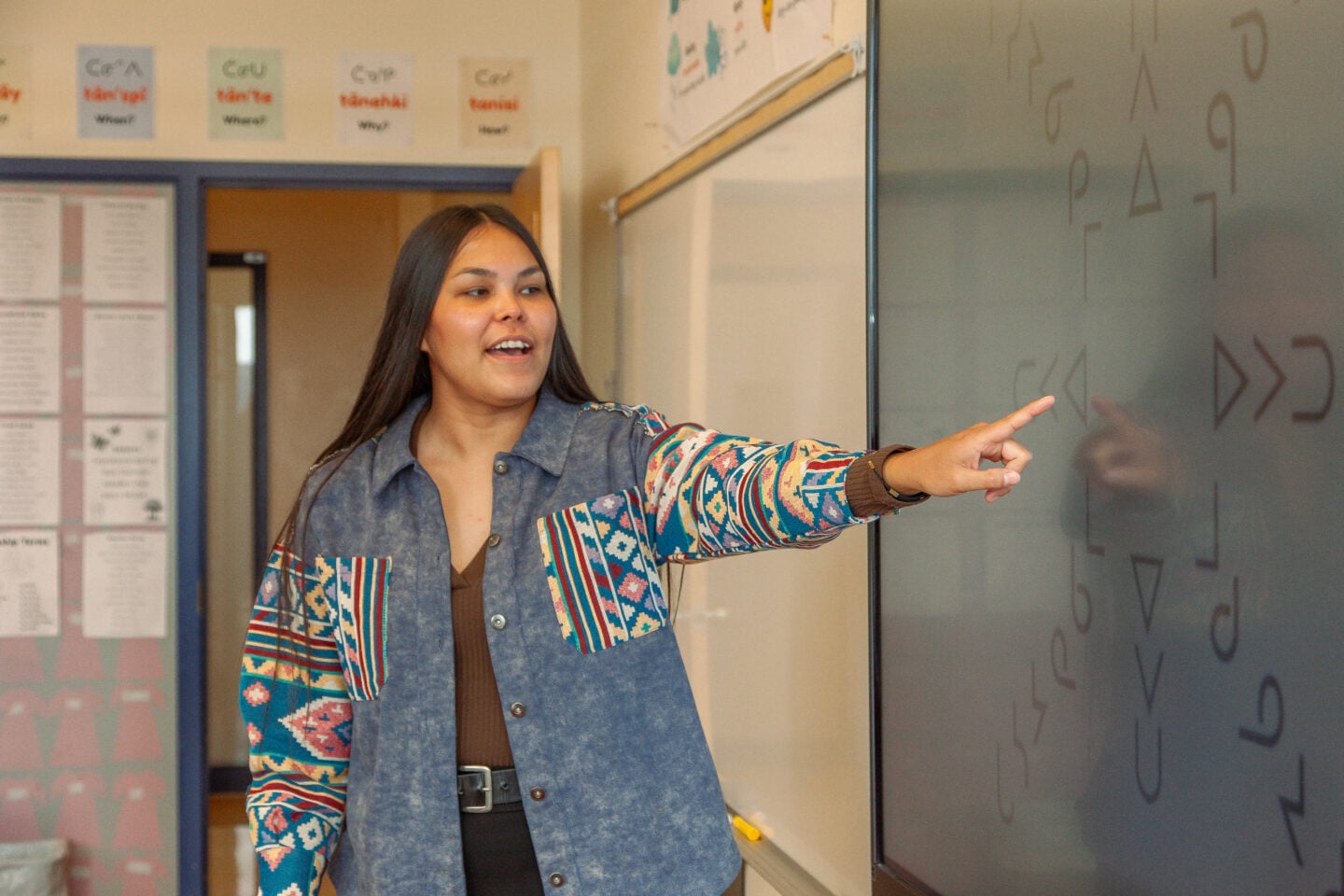
LIFE HAS BEEN incredibly rewarding since learning my Cree language and pursuing the teaching of nêhiyawêwin.
I am Dene Sų́ų́́́łiné and Woodlands Cree. As a child, I never imagined the life I live today. Growing up, I lived an all-too-common story among Indigenous people — one of disconnection. I knew I was First Nations but never understood what that meant. I had no connection to my culture, my grandparents and especially my language. I felt completely different than my peers as a child. In essence, I was like a wandering spirit left to drift in a world I felt did not accept me.
I was the same age as some of the students I teach when my father, whom I hardly knew, died. During my grief I was introduced to substances. That lifestyle led to a cycle of running away, overdosing, and falling to the streets of Prince Albert, Sask., where I lived most of my life.
When I reached adulthood, I started on the path of healing. I remember sitting in a library in downtown Edmonton, a city unfamiliar to me. I sat gazing out the library window, watching people walk by with coffee in hand and a stride in their step, a job to get to, or a home waiting for them. To me, they were people with a purpose in life and I couldn’t help but cry. I felt like I had nothing left in life, no one to turn to due to my shame and self-isolation, no bridges to cross because I had burned many of them, and no idea of where I was or where to go. At that moment, from the depths of my being, I prayed. I begged Creator to help me. Later, I learned the one I cried out to is called kisê-manitow (Creator).
Afterwards, I was gradually guided to where I am today through many supports — one of them being my late mom Joyce Montgrand, who played a huge role in my healing. My mom was a Dene Sų́ų́́́łiné woman from Treaty 10, Buffalo River Dene Nation and her gift was to pray.
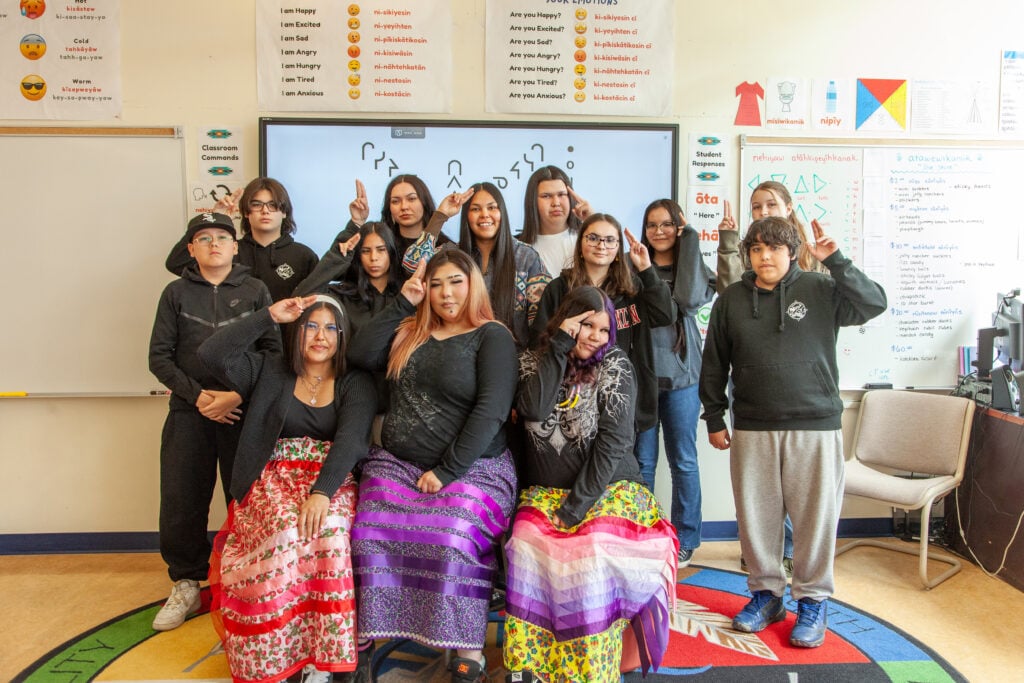
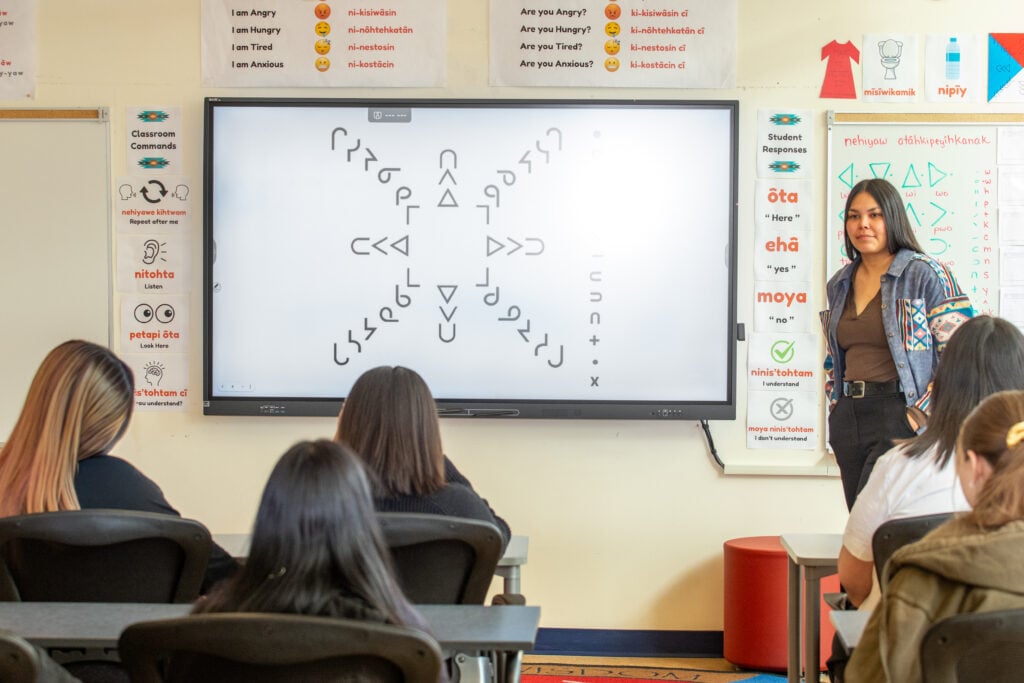
Today, nearly a decade later, I am a nêhiyawêwin teacher at Amiskwaciy Academy in Treaty 6 territory. Here, I teach grades 7 to 12 and currently have 161 students. I like to think kisê-manitow heard my prayer that day and gave me the tools I needed to heal. I am no longer wandering. However, I see that same wandering spirit from time to time in some of my students and others outside of the school — in daily interactions, with family back home and the Indigenous community at large. I truly want to help them by facilitating the learning of nêhiyawêwin. The main challenge for many Indigenous language teachers today is building strategies to help students retain their language.
To address this problem, I was guided and inspired to incorporate the use of American Sign Language (ASL) by Crystal Wolfe, a deaf Cree woman from Maskwacis, Alta. I first met Crystal at my home sweat lodge and, having learned a bit of ASL as a child, we started communicating in sign language. Crystal showed me the sign for “sweat lodge,” which in Cree is matotisân (crying lodge), among many other signs. Today, she is teaching me about Plains Indigenous Sign Language (PISL) and I am deeply grateful for her guidance. Since that first day I met Crystal, I felt inspired to incorporate ASL into my practice as a nêhiyawêwin teacher and have come to see a positive impact in my classroom.
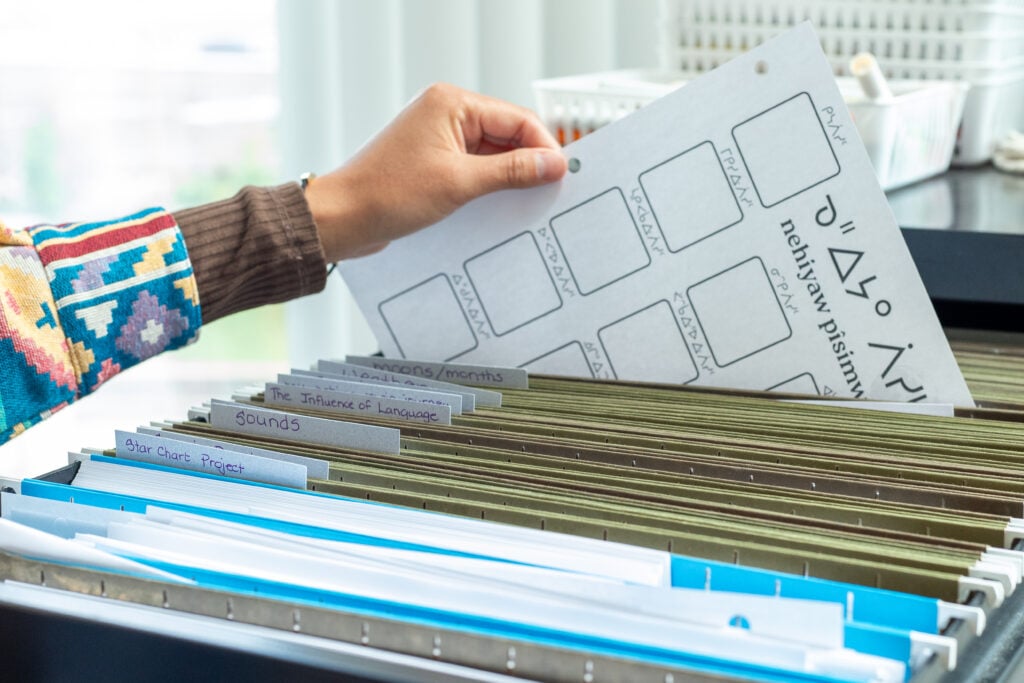
I also teach others through social media by creating short videos which have had thousands of views, likes and shares. I am now very familiar with various strategies to attain a second language. One of them is called “Total Physical Response” (TPR).
TPR is the coordination of language and physical movement of the body that results in reduced anxiety in the learner, which increases one’s ability to attain a second language. When I teach nêhiyawêwin alongside ASL, my students are more engaged, have an increased desire to learn, a better appreciation of the Cree language, and ultimately, spiritual healing takes place.
Participating in language programs as an Indigenous person holds the promise of improved health. When we do not have access to our language or when we are troubled and discouraged in our ability to attain our languages, we are more prone to wander and drift like I did when I was lost. When we learn our language as Indigenous people, we heal. When we learn our languages, we find ourselves. nipîkiskwewin ninanâtawiskâkon (my language is healing me).
Discovery Language is supported by the Office of the Commissioner of Indigenous Languages.
People & Culture
The story of how a critically endangered Indigenous language can be saved
People & Culture
Plains Indian Sign Language was used by generations of Indigenous Peoples to communicate across languages and landscapes. Now, it’s being reclaimed.
People & Culture
A reflection on the life and work of Maggie Hodgson, a champion of improving Indigenous wellbeing in Canada and beyond

People & Culture
A new Canadian Geographic series in print and online will take readers on a linguistic journey across the lands and waters we now call Canada