
Places
Farming the Greenbelt: five farms to visit in Ottawa
Celebrating urban agriculture in Canada’s national capital region
- 1410 words
- 6 minutes
Places
How a small stream in Ottawa provides a refuge for people and wildlife alike
Driving along Ottawa’s St. Joseph Boulevard, with densely packed suburbia on one side and strip malls on the other, it’s easy to get lost in the monotony of concrete. But as you pass under Highway 174, you emerge into a world removed from the straight lines of human construction.
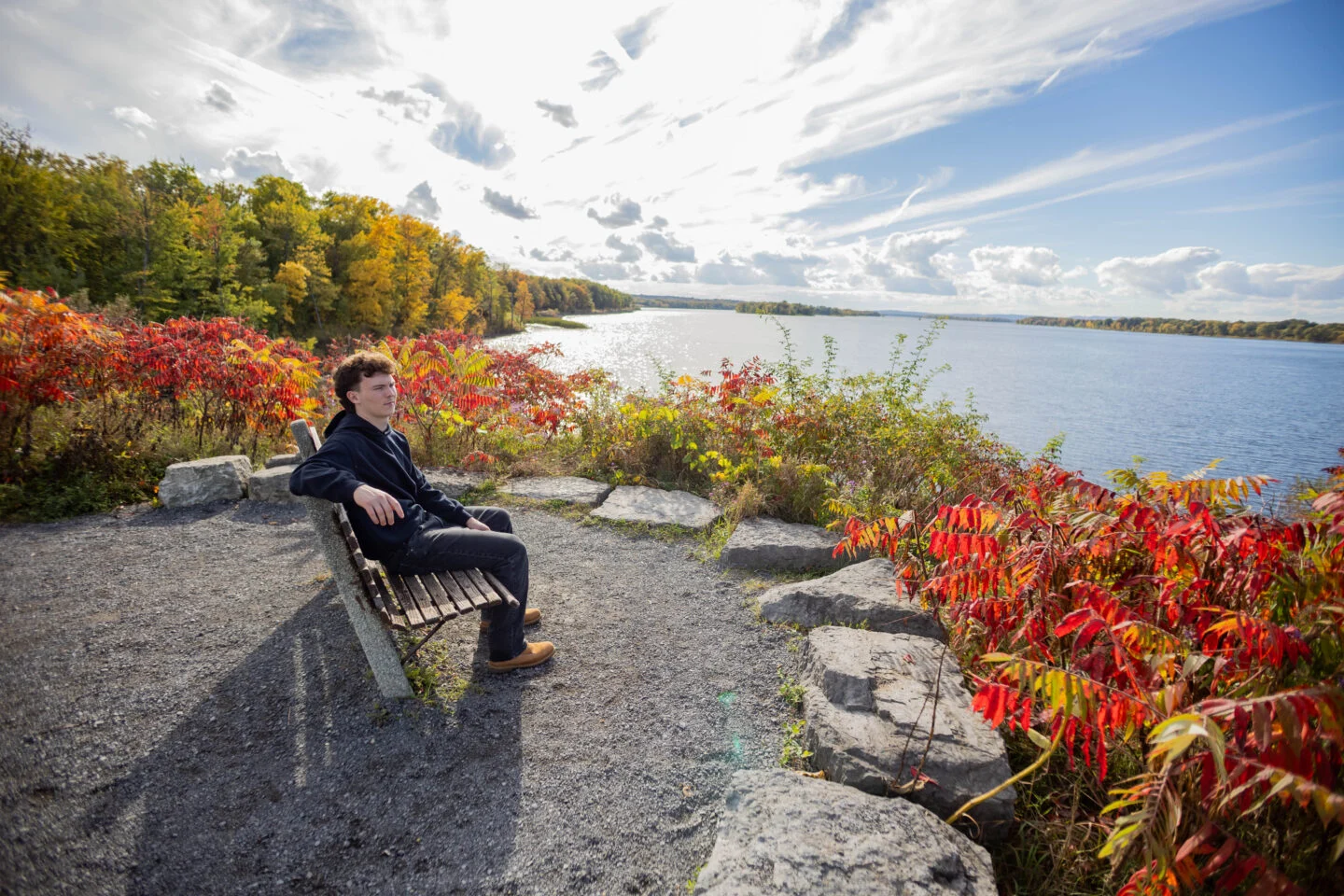
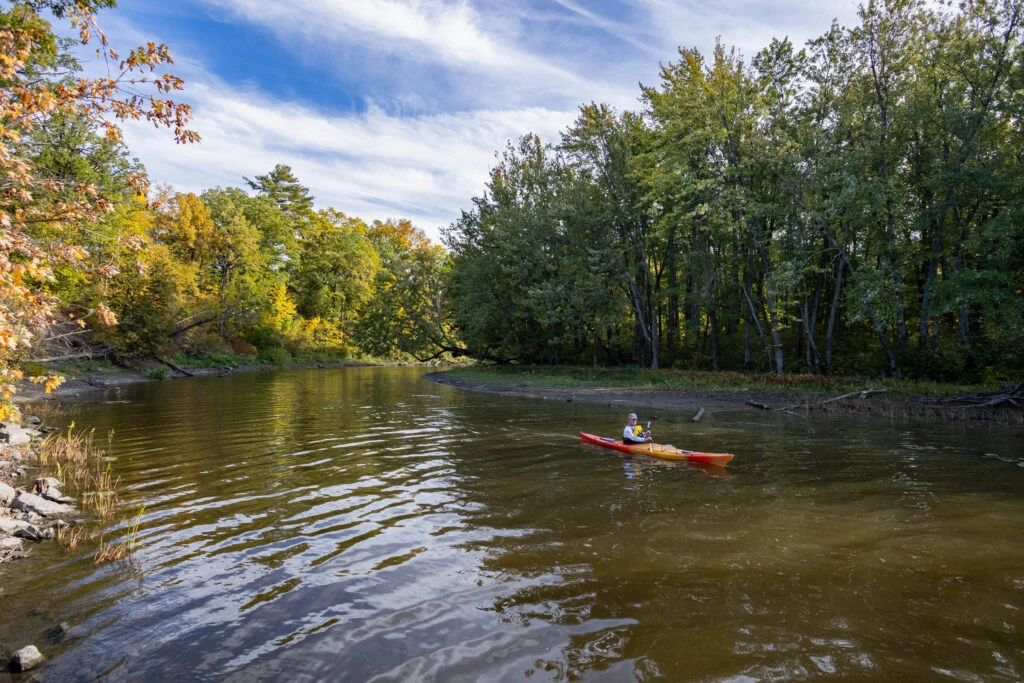
In the city’s east end, a conservation area traces the sinuous curves of Green’s Creek, which begins at Mer Bleue Bog and meanders for 13 kilometres before reaching its confluence with the Ottawa River to the north. This landscape of steep ravines, rolling hills and grassy plateaus offers a safe space for wildlife and exerts a magnetic pull for Ottawa residents.
“It’s a very healing environment,” says Alexander Stone, a biologist for the National Capital Commission, the federal Crown corporation that looks after the National Capital Region and manages a protected greenbelt area comprising seven sectors, one of which is Green’s Creek.
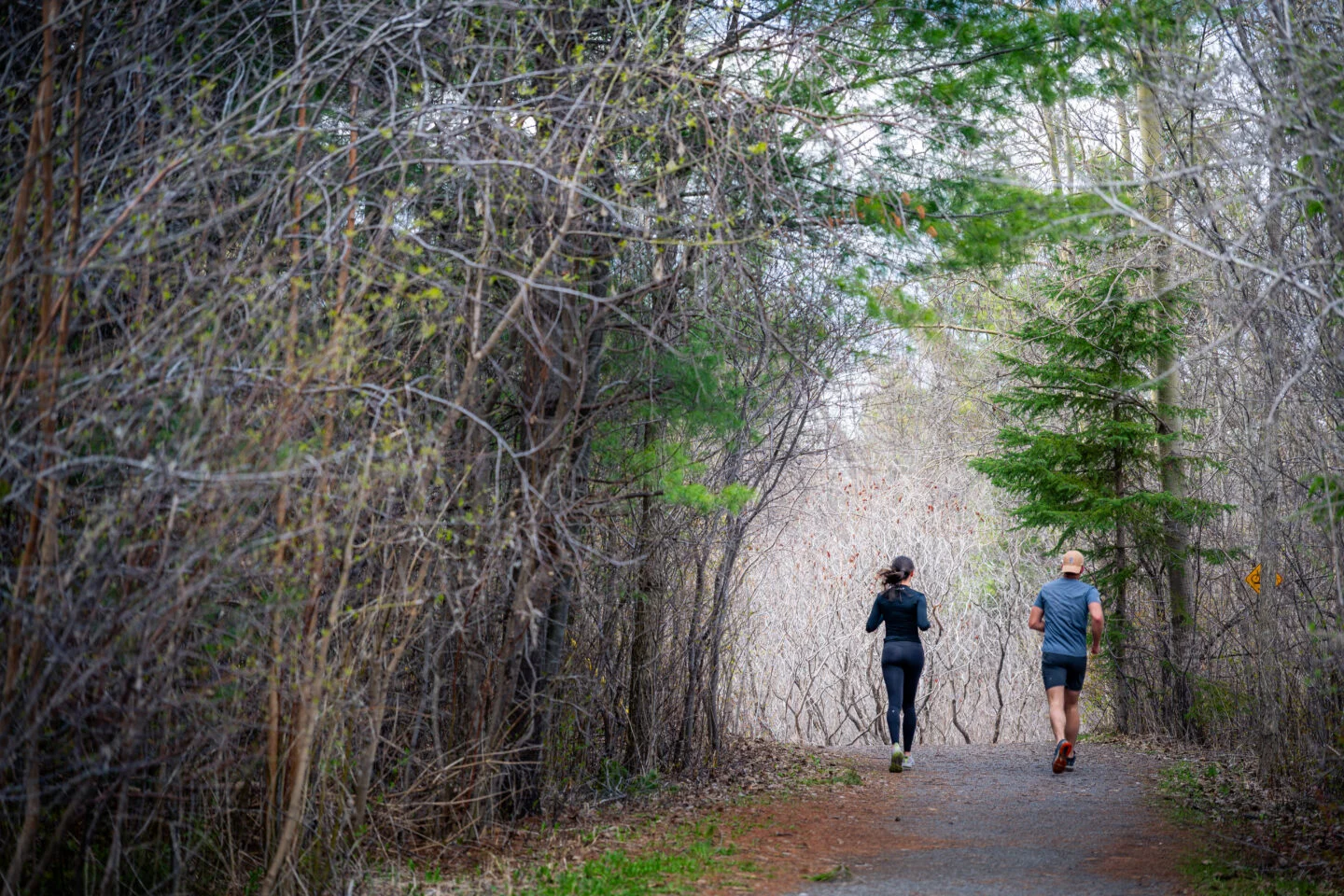
Green’s Creek, named after Robert Green, who established a sawmill on the stream in the 1830s, draws visitors year-round. In the warmer months, the trails — five kilometres of them — are busy with joggers and bicyclists; in the wintertime, parts of the trail network are groomed for cross-country skiing. There is even a giant toboggan hill that dips down towards the creek.
“Living in an urban area, we’re always looking for green space and things to discover,” says Mireille Chaput-Dyer, who lives in Beacon Hill, a neighbourhood abutting Green’s Creek. “To be among the trees and reconnect to that natural environment without technology helps you reflect and relax.”
Chaput-Dyer grew up on a small farm in the Ottawa area and now works for Environment and Climate Change Canada. When her children were young, the family became regular visitors to Green’s Creek. Years later, Chaput-Dyer is still a weekend regular on the trails, hiking with friends or walking her dog.
“As soon as we get out of the car in the parking lot, it’s like a little adventure. It feels like you’re out of the city,” says Chaput-Dyer. “It’s an expansive, more natural space, as opposed to a groomed park.”
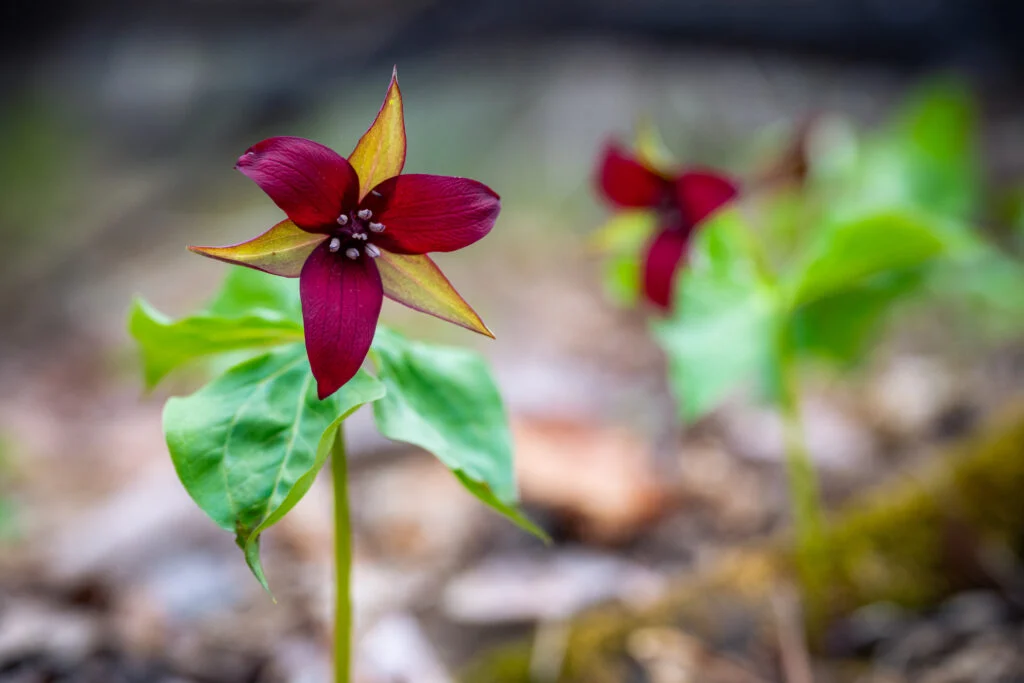

The wilderness of Green’s Creek offers a biodiverse tapestry threaded through with mature forests, grassy marshes and wetlands. There are about 450 species of plants, including regionally rare grasses and sedges like the cattail sedge, as well as species such as white wood asters, round-leaved orchids and wild leeks.
In the thickets and wooded areas, an avian chorus overwhelms the senses. Red-winged blackbirds dart about, looking for the highest perch from which to trill their songs. Their calls compete with the loud cries of bluejays, chirping of black-capped chickadees and melodies of song sparrows. About 150 bird species have been recorded around Green’s Creek, whose streambanks serve as a stage for local regulars and migratory visitors alike.
Green’s Creek is also home to several mammal species. Its dynamic environment sits on postglacial deposits from the ancient Champlain Sea. These marine clays are unstable and prone to landslides, which means there’s little development near the steep ravines. This buffer space for the creek’s riparian zone provides a haven for larger wildlife to move through, such as deer, coyotes, foxes, fishers and skunks.
“It’s an ecological corridor for a lot of different species, and it’s a fragile ecosystem,” says Stone. “A lot of our plants and trees are exposed to things like invasive species. We’ve seen big impacts from emerald ash borer in particular, but we are seeing increases in invasive species both near aquatic and open forest environments.”
The National Capital Commission is in the process of reviewing its greenbelt master plan, which guides decisions about stewardship and conservation. The goal is to address emerging issues and to keep pace with urban and environmental changes. Input from the public will be a key part of that process.
Stone, whose background is in wildlife biology and environmental sustainability, supervises the National Capital Commission’s biodiversity monitoring programs in the greenbelt. This includes identifying species at risk, monitoring for species diversity, improving riparian habitats, restoring wetlands and managing invasive species.
“We also use community science applications to add to our database of species — eBird and iNaturalist are quite powerful tools,” says Stone. “It allows the public to add their observations, and biologists like me will download the data and analyze it.”
Citizen science can fill knowledge gaps in surveys by providing photos or audio clips of species that scientists haven’t recorded before. On iNaturalist alone, there are several thousand observations from the Green’s Creek area, suggesting a genuine curiosity from visitors about the wildlife they encounter. These observations also help track invasive species.
“It’s important to continue to protect Green’s Creek,” says Chaput-Dyer. “It’s important for children who are growing up in an urban environment to be able to grow up with nature.”
The benefits of green spaces, from natural water management and reduced air pollution to improved physical and mental health, have been widely documented. To nurture this connection to nature in her own kids, Chaput-Dyer enrolled them in a nature school called Earth Path, a non-profit organization whose mission is to connect people to nature to raise environmental awareness and foster a sense of stewardship.
“A deep nature connection makes people take care of themselves and their communities better,” says Nikki Horton, Earth Path’s executive director. “When you are devoted to something, you want to protect it.”
Earth Path operates on National Capital Commission land near Green’s Creek, offering educational programming focused on naturalist learning and survival skills. It brings children out onto the land near the creek, guiding them through hands-on activities that follow the changing seasons. A muddy spring day might involve kids learning about tracking and plant identification through a problem-solving game, where an educator pretends to be an animal that they have to follow and help. This approach focuses on inspiring a love for nature through excitement and curiosity.
“We believe that we can make kids passionate about anything by the way we present or teach something,” says Horton. “Hopefully these children grow up to become policymakers, changemakers and people who actually make decisions with the environment and nature in mind.”
From weekend visitors to young explorers, Green’s Creek has no shortage of admirers keen to protect the natural world.
Places
Celebrating urban agriculture in Canada’s national capital region

Places
L’agriculture urbaine à l’honneur dans la région de la capitale nationale du Canada

Places
Once considered too polluted for bathers, the capital’s River House and Dow’s Lake swimming areas give city swimmers new places to beat the heat
Travel
Brian and Dee Keating share their incredible rafting journey in the remote Arctic tundra on a once-in-a-lifetime Canadian Geographic Adventure