Exploration
Updates from the 2026 Heroic Age Expedition
Follow along as an international team led by the Royal Canadian Geographical Society surveys the wrecks of Quest and Terra Nova in the Labrador Sea
- 5021 words
- 21 minutes
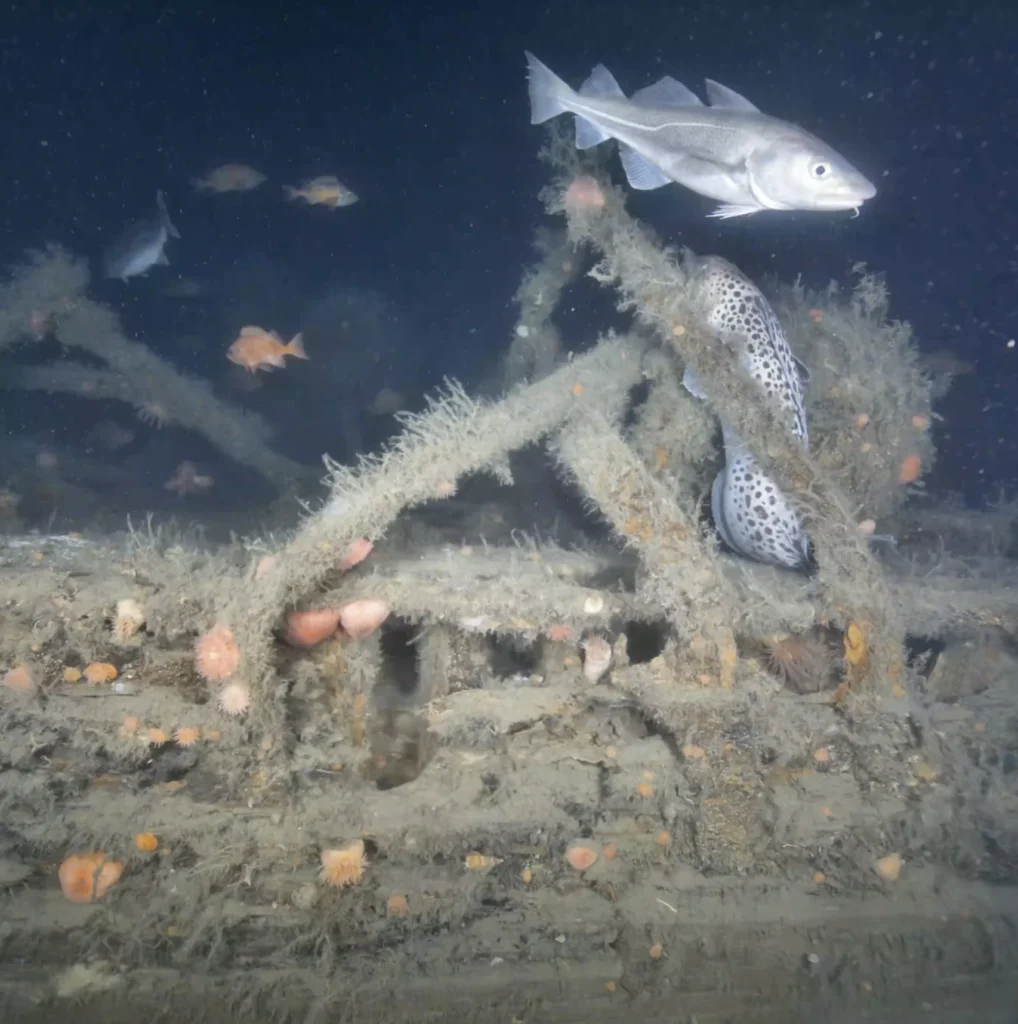
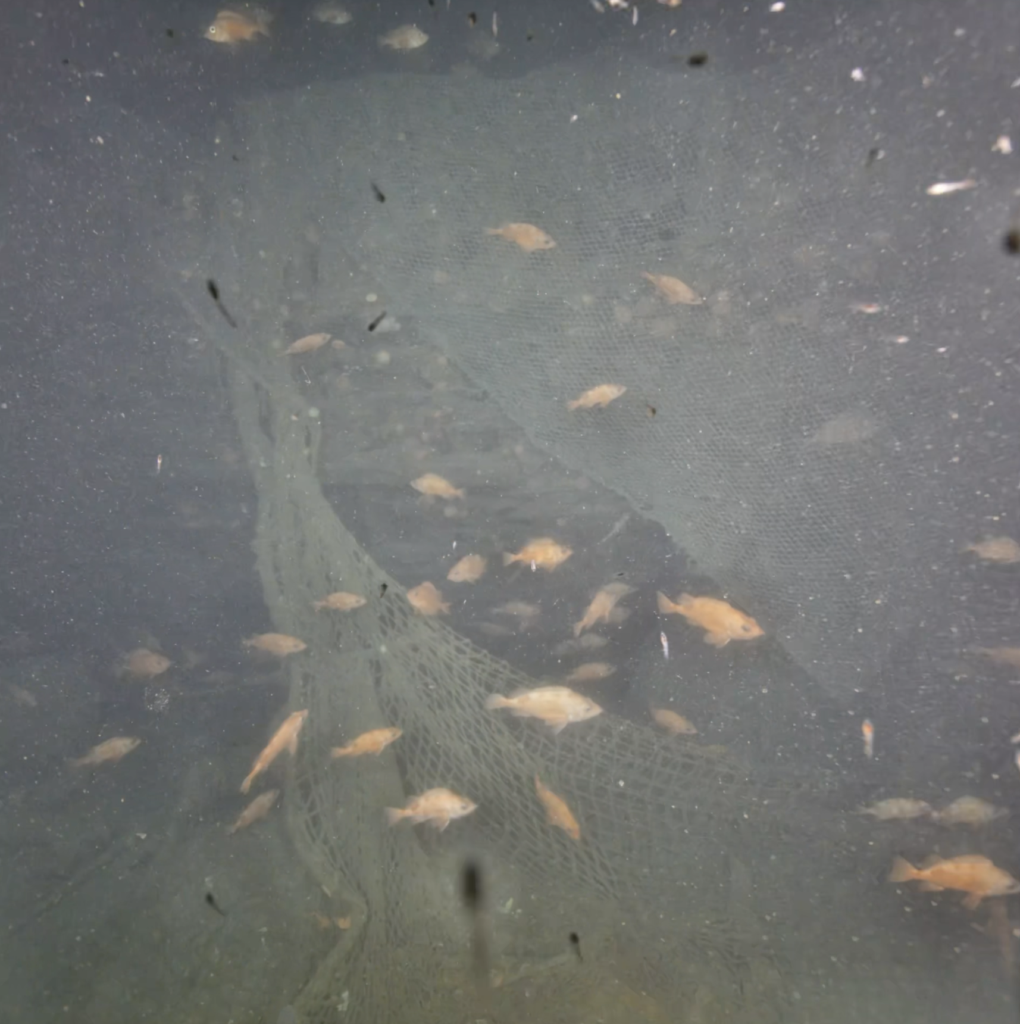
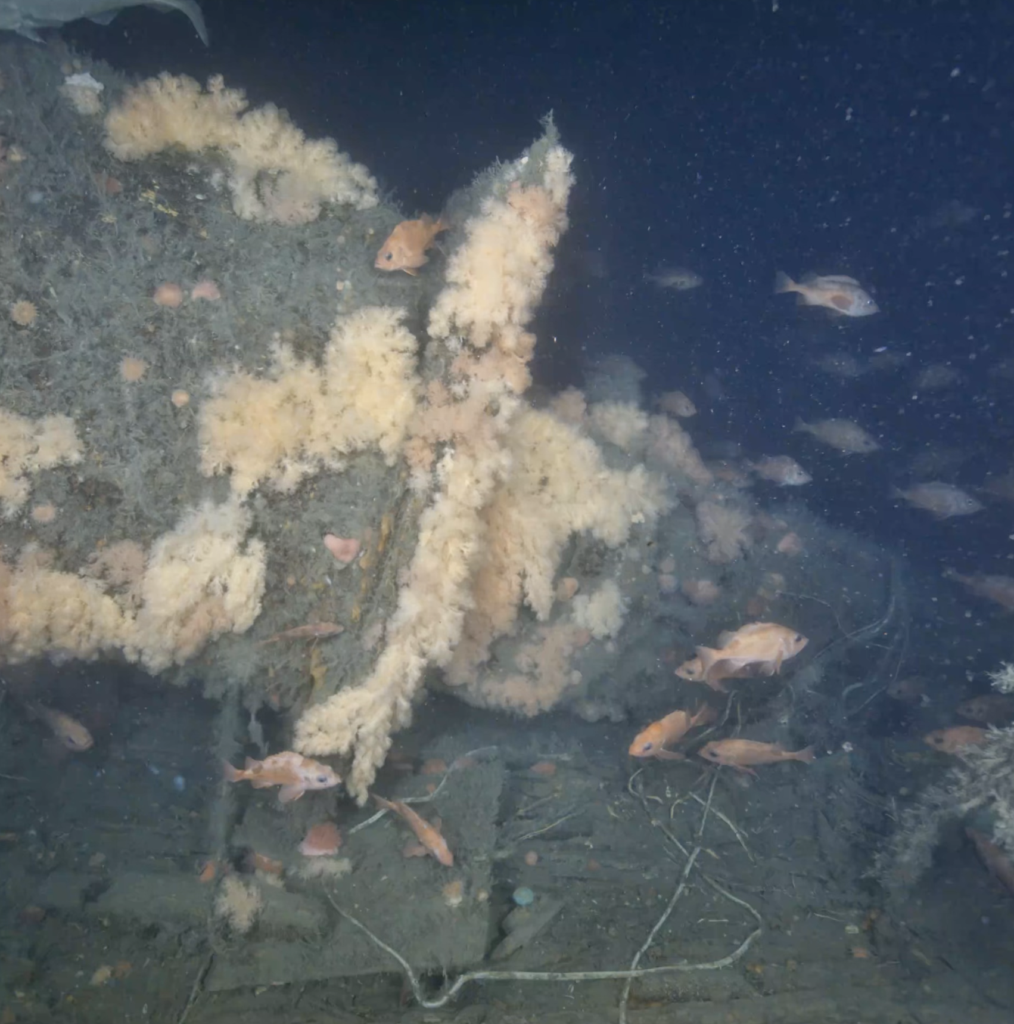
An expedition led by the Royal Canadian Geographical Society (RCGS) has captured the first images of the wreck of Quest on the bottom of the Labrador Sea. Quest was a storied polar exploration ship, best known for her brief interlude as the last expedition ship of famed Antarctic explorer Sir Ernest Shackleton. The images, captured by expedition partner Woods Hole Oceanographic Institution’s Falcon remote-operated vehicle and DSV (deep submergence vehicle) Alvin at a depth of 390 metres, reveal a wreck site that has become a stunning oasis of life on an otherwise barren seafloor, and an unexpected testament to the destructive impact of bottom trawling.
The ship’s stern and much of its starboard side are draped with nets, floats and other pieces of bottom trawling gear, most likely cut loose by fishing vessels on the surface when they became snagged on the wreck. On the port side, a trawl door and chain lie on the silty seafloor. The bridge superstructure, where Quest’s name might have been visible, is gone, ripped off either during the initial sinking or by subsequent trawling.
Yet, she is recognizably Quest, her pronounced bow now festooned with anemones and soft corals, and her aluminum bridge, which in the Shackleton days bore a plaque engraved with three verses from Kipling’s famous poem “If,” still attached and surrounded by clouds of Atlantic cod and redfish.
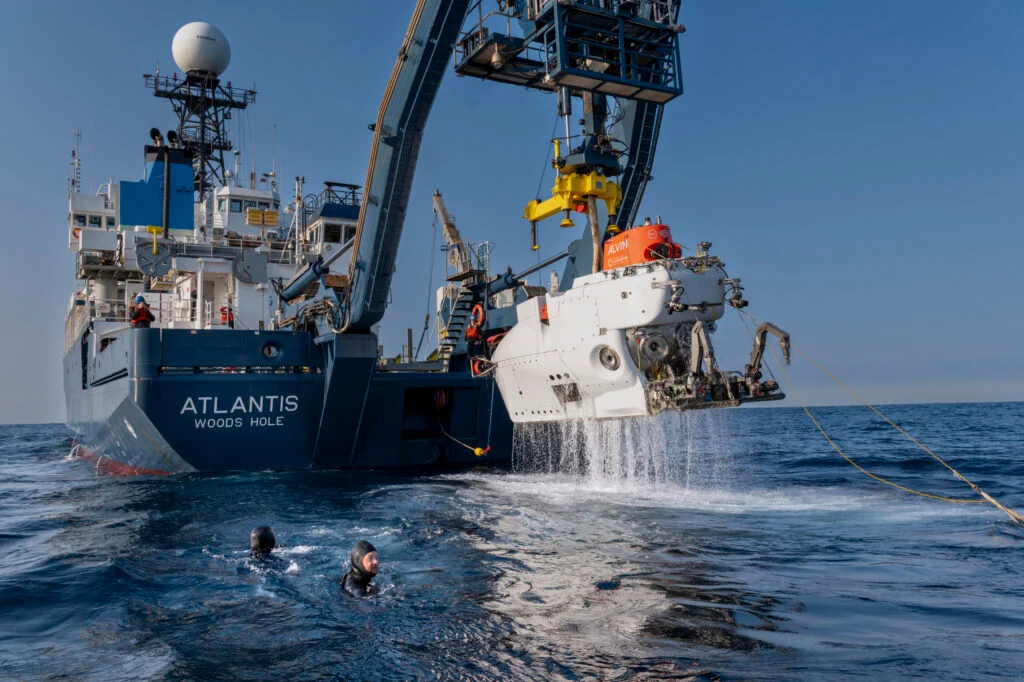
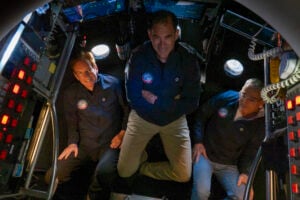
“Quest was not a large ship, but it looked huge to me,” says RCGS CEO John Geiger, who is leading this summer’s Heroic Age Expedition to survey two iconic shipwrecks with ties to early 20th-century Antarctic exploration, and who was the first to dive to Quest in DSV Alvin. “It’s a very moving experience to think that Shackleton was striding around that deck … And to think of the technological evolution represented [by Alvin] was powerful as well.”
Shackleton purchased Quest in 1921 for a planned expedition to the Canadian Arctic, but when the government under prime minister Arthur Meighen pulled its support, he turned his sights south once more. Quest was singularly unsuitable for travel on the open ocean, and Shackleton arrived at South Georgia Island under tremendous strain. Five days into the new year, he died of a massive heart attack in his cabin on board Quest at the age of 47.
Quest was sold to a Norwegian family the following year and spent much of the rest of her life sealing off the coast of Labrador. Occasionally she was hired for Arctic expeditions, including by British explorer Gino Watkins for his 1930 expedition to eastern Greenland. She sank in the Labrador Sea on May 5, 1962, after being crushed by ice floes.
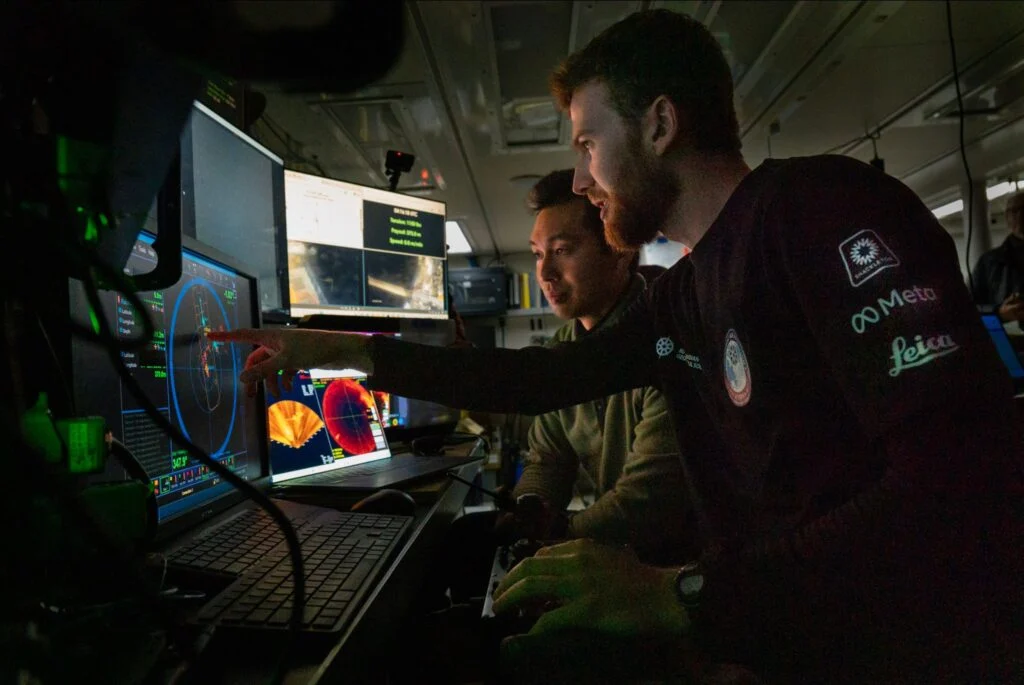
Quest is in worse condition than expected based on side-scan sonar images captured following the Society’s 2024 discovery of the wreck. It’s not the Quest many on the team were hoping to see, admits Antoine Normandin, the expedition’s research director. However, by the time the Falcon ROV had finished its initial reconnaissance in the early hours of July 7, Normandin’s disappointment had turned to excitement about the scientific value of the wreck site.
“Quest in itself is now becoming a science experiment,” he says. The ship underwent many changes and refits over its 45-year lifespan: deck cabins were added and removed, the engine was upgraded from steam to diesel and the bow and stern were completely rebuilt following the Second World War. The different materials present on the ship at the time of her sinking have lent themselves to colonization by different types of marine animals, creating visible layers of biodiversity around the wreck. For instance, soft corals have tended to congregate around the top of the bow, feeding on the plankton carried by the stronger currents above the seabed and dive teams have captured spotted wolffish — a threatened species in Canada — hiding within the structure.
A shipwreck is a brand-new habitat “literally falling out of the sky,” says WHOI biologist Kirstin Meyer-Kaiser, an expert in deep-water ecology. After 60 years on the seabed, Quest has become a thriving ecosystem. “It’s really cool to me that the impact of human history is that we’re creating a habitat. We’re increasing biodiversity on the local scale of the wreck, and maybe also on the regional scale because now it’s a stepping stone for some of those things to spread.”
It’s fitting that Quest, which supported so much geographical research and discovery in her life, “is still a research vessel in a different way,” says Normandin.
The presence of trawling nets is also a stark reminder of the problem of ghost gear, or lost and abandoned fishing gear, which poses an entanglement hazard to wildlife, contributes to plastic pollution in the ocean and interferes with the study and preservation of marine archeological sites. Quest lies within a trawling exclusion zone colloquially known as the Hawke Box, which was designated in 2002 at the request of snow crab fishers in southern Labrador who were concerned about the impacts of intensive shrimp trawling on juvenile crab. “It shows that even if trawling has been stopped [here] for 25 years, the impact on the seabed is still there, and it will be there after 100 years,” says David Mearns, co-chief scientist for the expedition.
More work remains to comprehensively survey Quest over the coming days. The expedition team is using Voyis underwater photogrammetry technology to create a three-dimensional digital twin of the wreck, which will be used for further study and public engagement. And more team members will have the opportunity to descend to the wreck in Alvin, paying their respects to a little ship with a larger-than-life history.
Follow @heroicageexpedition_ and @cangeo on Instagram for live updates from the Heroic Age Expedition.
Exploration
Follow along as an international team led by the Royal Canadian Geographical Society surveys the wrecks of Quest and Terra Nova in the Labrador Sea

Exploration
Inside the expedition that found famed explorer Sir Ernest Shackleton’s last ship
Exploration
An expedition led by the Royal Canadian Geographical Society found the vessel intact and upright at a depth of 390 metres
Exploration
An international team led by the Royal Canadian Geographical Society in partnership with Woods Hole Oceanographic Institution is heading to the North Atlantic to examine iconic ships of the Heroic Age of Antarctic Exploration