People & Culture
The cowboys of Iceberg Alley
Gawking tourists, idealistic humanitarians and the discerningly thirsty all want a piece, but the question remains: who owns the icebergs?
- 2825 words
- 12 minutes
People & Culture
Following a historic dive off a Newfoundland iceberg, the Red Bull athlete reflects on living with anxiety and why she’s encouraging others to embrace vulnerability
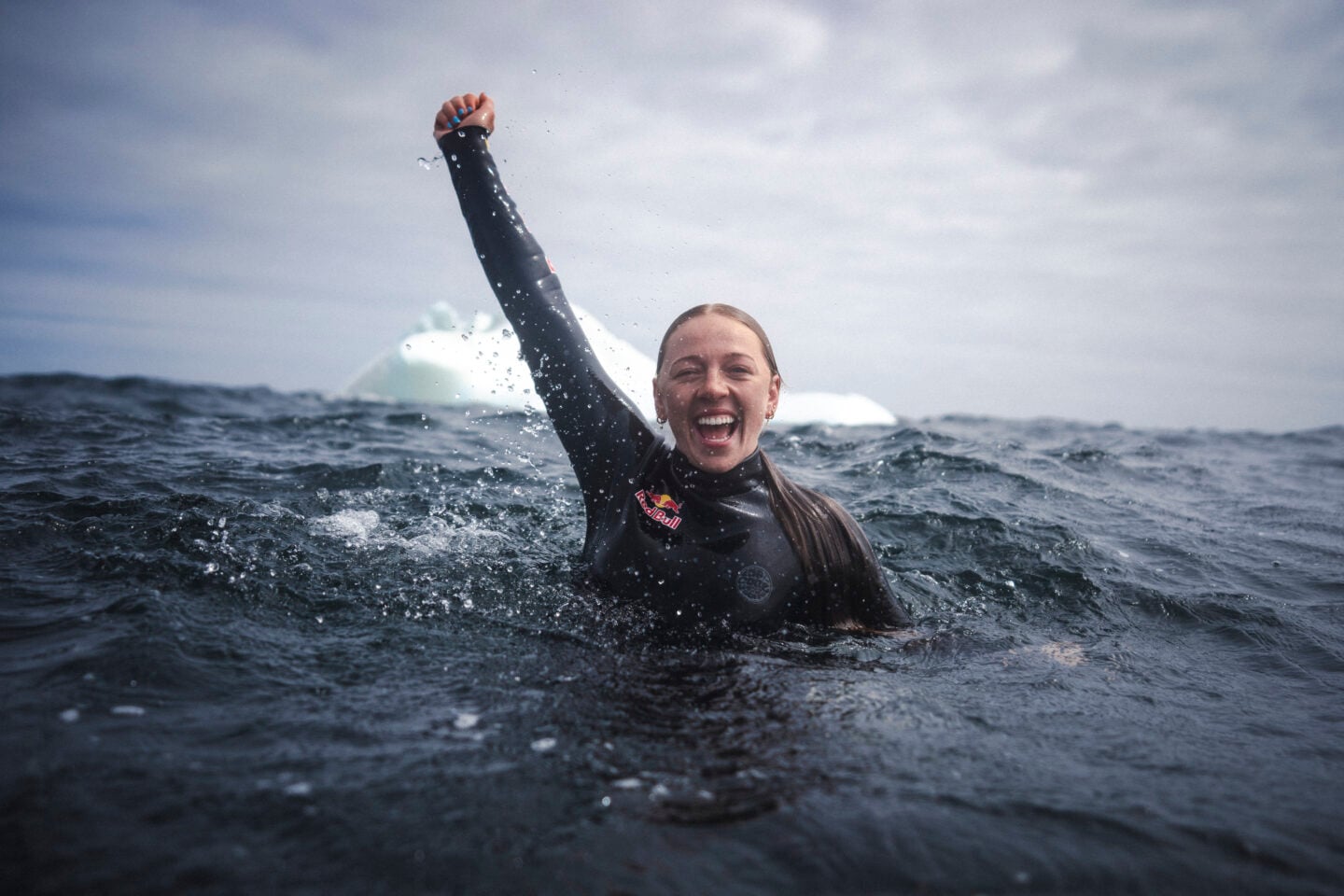
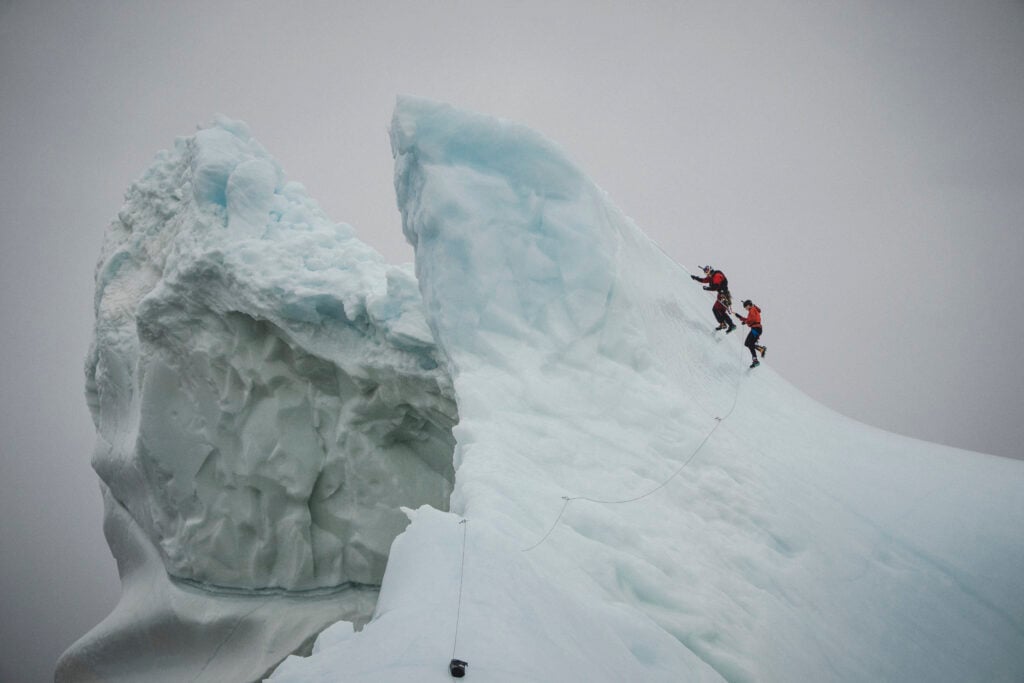
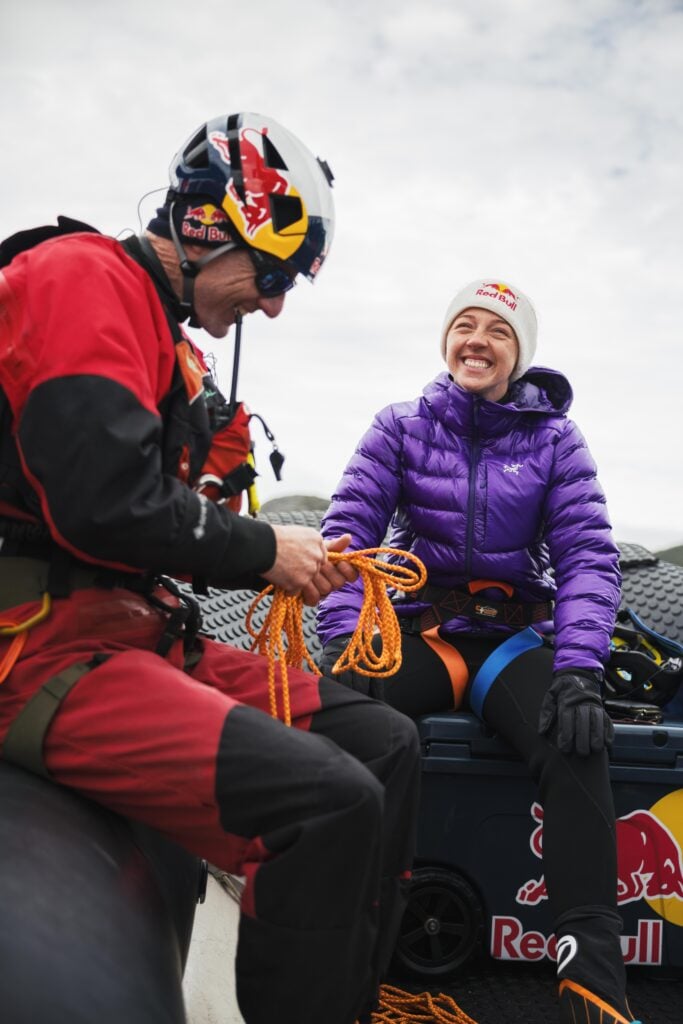
Sitting in a boat off the coast of Newfoundland last June, Molly Carlson watched as renowned ice climber Will Gadd scaled an approximately 14-metre-tall iceberg. She was next, but unlike Gadd, Carlson would be jumping off the iceberg once she reached the top.
Four years ago, the professional high diver came up with the idea of becoming the first woman to dive off an iceberg while brainstorming with a friend at Red Bull about what hadn’t been done in cliff diving. But now, she wasn’t sure she could do it.
“I’m a cliff diver, not an ice climber,” she recalls thinking. “It felt really out of my wheelhouse.”
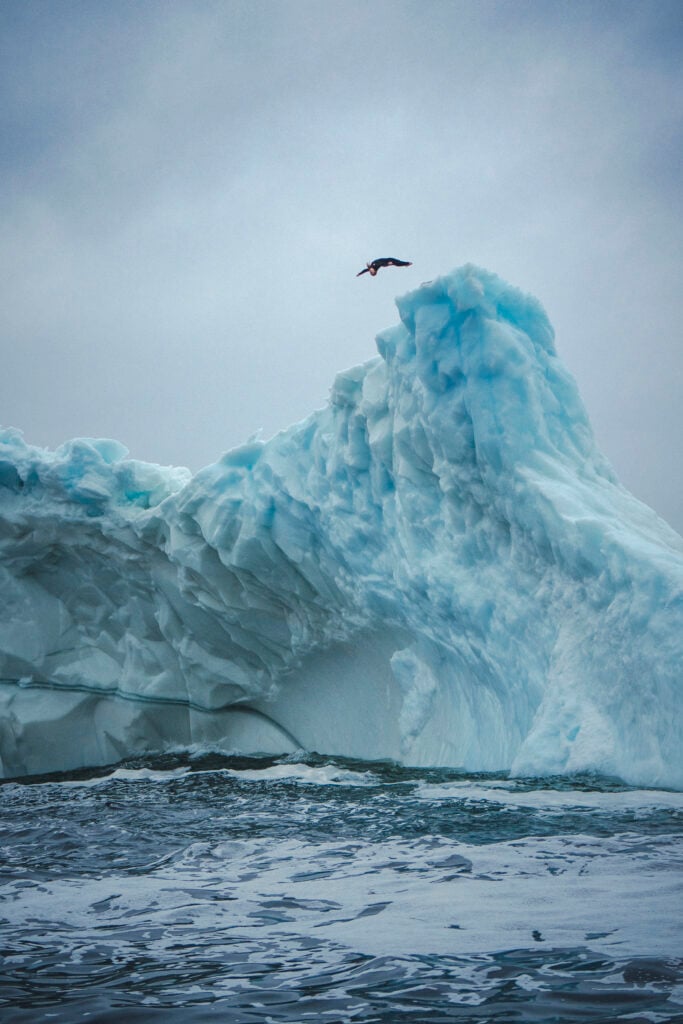
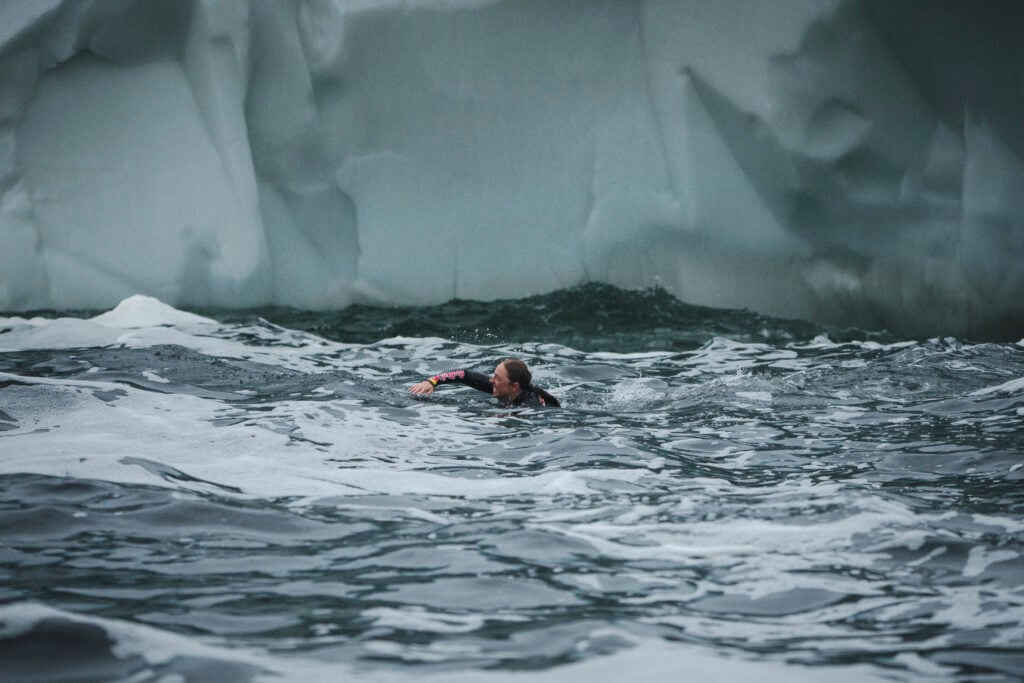
As soon as she stepped onto the ice, Carlson entered her “flow state,” ascending under Gadd’s guidance. At the top, she backflipped into the air, plunging into the black, 1 C water below.
“I felt like a penguin diving off of an iceberg,” she says. “It was this beautiful moment.”
Growing up in Thunder Bay, Ontario, Carlson fell in love with diving as a kid. Now 28, her record-breaking career includes a 27-metre dive in Fort Lauderdale, a jump off a pirate ship in the Bahamas and a leap from a moving helicopter into a shark cage — all in 2026. She also regularly competes for Canada on the international stage.
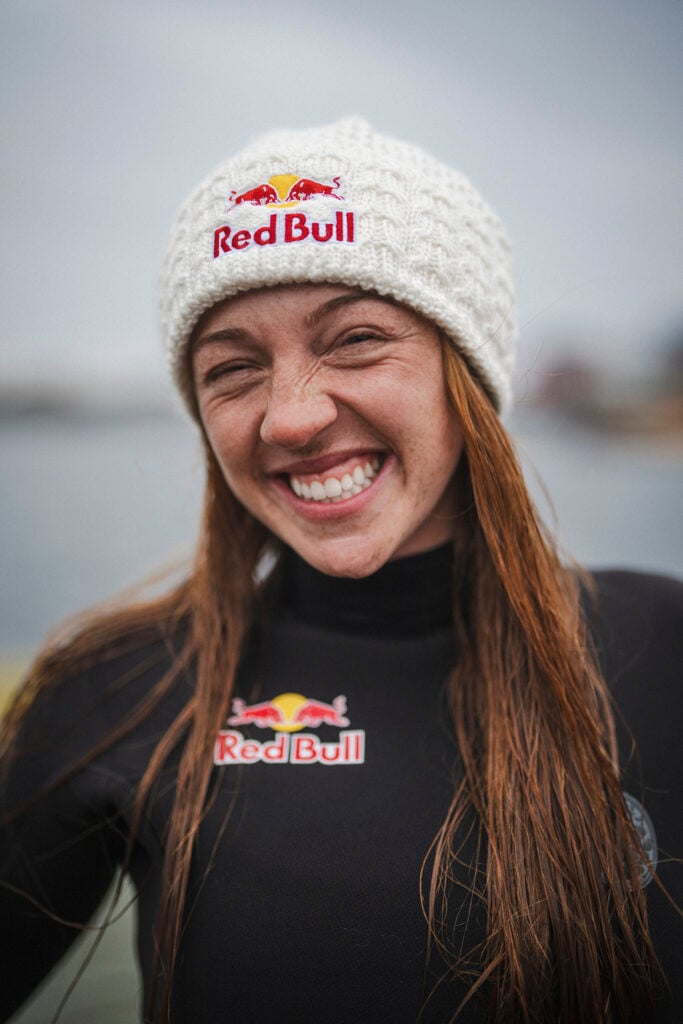
Despite practising an extreme sport that requires literal leaps of faith, Carlson has long struggled with anxiety. She advocates for open conversations about mental health and founded #BraveGang, an online community that invites people to share their moments of bravery using the hashtag. Determined to change the narrative around women in extreme sports, Carlson encourages others to challenge expectations and be unapologetically themselves. Here, she speaks about facing her fears and how she prepared for an icy dive.
I was a gymnast from seven to nine years old. I remember watching my sister at swim practice and thinking it was really boring to just watch her go back and forth. But to the side, there were these kids jumping off really high things — something was drawing me to it.
I then remember going to Canada’s Wonderland and seeing the waterfall show of high divers. I told her, “Mom, I need to join diving.” We couldn’t afford both and I ended up switching full-time to diving. I’m so glad I did.
There’s a lot of physical and mental preparation that goes into performing a successful high dive. I suffer from anxiety every day of my life — my brain is spiralling all the way up to that edge. It’s not until I put my literal tippy toes on the edge that I go into that flow state, and my brain is finally silent.
I think I chase that feeling of simply being still and being in the moment, and unfortunately, I find my stillness [diving] off really high, scary things — but I do love it.
I do a lot of sports psychology, which is helpful for those negative thoughts. My sports psychologist, Stéphane Lapointe, always told me that as long as excitement outweighs fear, it’s going to be magical.
The coolest thing he taught me was that the more energy you put towards pushing away these thoughts, the less energy you have to nail the dive and to be safe and focused. I thought fear wasn’t supposed to be there, and he taught me that fear keeps you safe.
I’ve learned a lot from this crazy anxious brain. [Fear is] allowed to be there, and the more you can just allow it to sit next to you while you really focus on what matters in the moment, then really, really special things can happen.
You know in your gut if you’re not ready for something, and now I have the confidence to walk down and say, “Today is not my day.” I think it’s almost braver to say no in those moments, and that’s been a really cool shift in my career.
So much goes into the physical preparation — it’s truly a balance. We’re doing gymnastic skills, conditioning, trampoline work, weight training, physio… Most of our weeks are four hours of training a day and mixing all of these things. Then, of course, we have the lower height training. We don’t actually jump off 20 metres every day. We are doing the lower heights and getting those reps in. Then when it comes time, you put the pieces together and hope for the best.
My whole life I struggled with seeing perfect, curated social media and felt alone in that. All these Olympians would post their Olympic medals and best dives. And I’m like, ‘girl, I’m flopping every day!’ It just wasn’t relatable.
I wanted to change the narrative when I became a pro athlete. I knew that I wanted to show the highs and the lows. The metaphor of the iceberg for me was extra special because it showed that 10 per cent of what we see on the surface are those accolades. But 90 per cent under the surface was the part I felt like everyone hid from the world. That’s exactly the part that I wanted to show.
About four years ago, a friend at Red Bull and I were thinking about what hasn’t been done in the sport of cliff diving. We’ve seen helicopters, hot air balloons: anything you can think to jump off of that might be man-made has been done. We asked ourselves, “What’s something natural that’s never been done?”
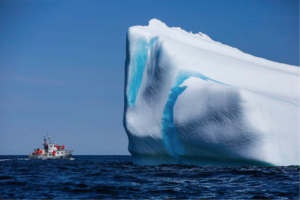
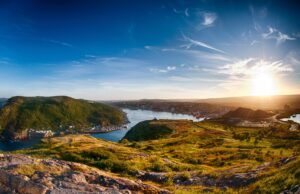
Orlando Duque dove off an iceberg in the Antarctic, becoming the first man to ever do it. I thought, “What if we brought that to Canada? Does Canada have icebergs?” My friend was like, “Have you not heard of the Titanic?” He mentioned Iceberg Alley in Newfoundland and I wondered if it would be possible to become the first woman in the world to dive off an iceberg.
I had five days in Newfoundland to make it possible. There were four days in a row of us showing up and seeing an iceberg, then having it roll over right in front of us or collapse. The absolute feeling of, oh my gosh, this isn’t happening, was so heavy.
On the fifth day, my last day before I had to go to my next competition, this iceberg that was completely upside down the day before had flipped. It was this unicorn iceberg that just came out of nowhere — we needed to get on the boats immediately.
The ocean was pitch black, which was also terrifying, but we didn’t see the iceberg shelf [under the water]. We thought it was deep enough that this could be the spot if we could get on it before it rolled over.
It was bobbing. It was definitely not sturdy, but it’s an iceberg — it’s never going to be sturdy. Will said, “If we look at it long enough, it’s going to roll. So just let me get on it.” You could hear the iceberg cracking under him. It was haunting. This crack will live in my nightmares.
This was a really severe ice climb — one wrong step, and you’re sliding into the Atlantic Ocean. There was a moment where I thought, “Maybe it’s not for me.” But Will believed in me.
As soon as I stood up and my feet hit the iceberg, I was in the flow state.
Will said, “How does it feel to be in a sport that only gives you three seconds of bliss? I get it for as long as I’m climbing.” I was like, “Well, I’m switching sports!” I got this full 20 minutes of beautiful ice climbing, just enjoying the moment with Will. We got to the top, and I remember he said, “You probably will never be on an iceberg again. So, let’s take a moment and enjoy the view.” We looked out for a minute and I swear we saw the blow of a humpback whale.
There was white foam on the surface, which was helpful for my visuals. [Otherwise] I might have gotten lost in the air or thought I had way more time than I did. This white foam helped me know exactly where the surface was.
I remember thinking, you’re on an iceberg, slow backflip, and enjoy it. I had to do this technique where I put my arms out first and just one foot back, because with both tippy toes on a moving object, you don’t have balance. When it was go time, I finally put that second foot back and swung my arms. This dive lasted 10 minutes in my brain. It was just me in the air, flying, soaring. I think if things are getting hard, I can just remember I did that.
Brave Gang was really something my mom and I created in our kitchen one day. We were going viral during COVID — the pool was open during this time, and I got to train. I started taking my phone up to the heights I was training at, and it just started blowing up. At some point, I was at 500,000 followers on TikTok, and I thought, how can I connect with half a million followers? My mom was smart enough to suggest a hashtag that everyone can use when they do something brave.
I think the hashtag is at like 1.1 billion on TikTok [now]. It makes me cry every time I click on this hashtag, because it’s beautiful. I think we truly created this movement of showing all the emotions. I wanted to bring people up [with me] and tell them that this isn’t easy. I’m facing fear head-on and doing it anyways, and I hope that inspires other people to know that they can be scared and still go out there and do brave things.
Now we’re getting tagged on someone’s first cartwheel or people coming out to their parents. These are really big milestones!
Many extreme sports we see online or in the wilderness space are very male-dominated. I think if we as women can come together and keep proving that we can do things too… It’s pretty damn awesome to come together as a group and just show that we belong there.
[My] advice to someone who wants to get out there in a male-dominated space is to do it and do it sparkling. I say show up extra. I love showing up and just being like, I’m going to do this in a hot pink suit because I can. I’m going to show that girls can do it too, and we’re going to be loud about it.
People & Culture
Gawking tourists, idealistic humanitarians and the discerningly thirsty all want a piece, but the question remains: who owns the icebergs?

People & Culture
The province’s remaining river ferries are enduring meeting places, shuttling people and property across this ancient landscape
Travel
Immerse yourself in Viking archaeology and Basque whaling history while taking in Newfoundland’s scenic coastline and incredible geology
People & Culture
The Professional Association of Diving Instructors (PADI) launched a simple idea in 2015 — encourage women to gather together for a day of their own — Women’s Dive Day. In…