Travel
Chasing icebergs in Newfoundland
Newly-revamped “Iceberg Finder” makes it easy for visitors to find the best spots in Newfoundland for iceberg viewing
- 415 words
- 2 minutes
People & Culture
Gawking tourists, idealistic humanitarians and the discerningly thirsty all want a piece, but the question remains: who owns the icebergs?

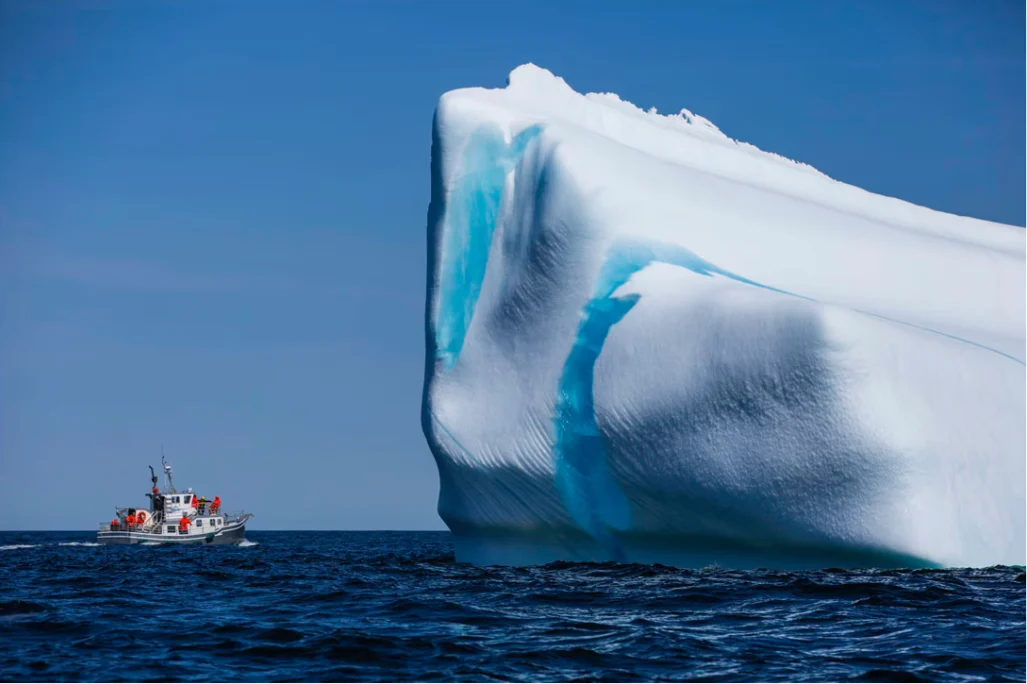
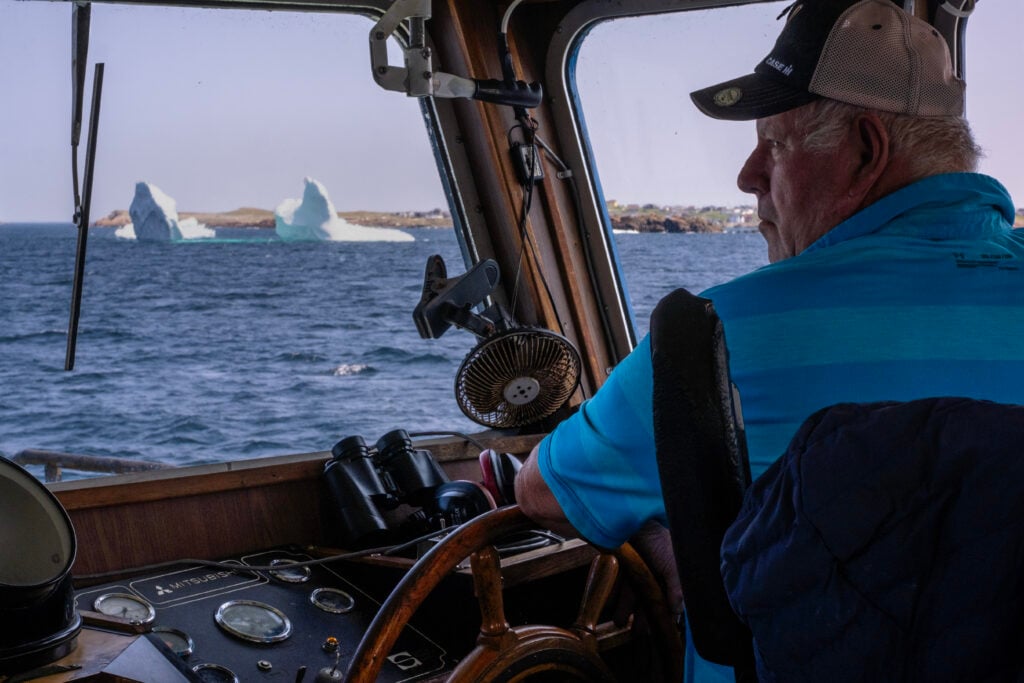
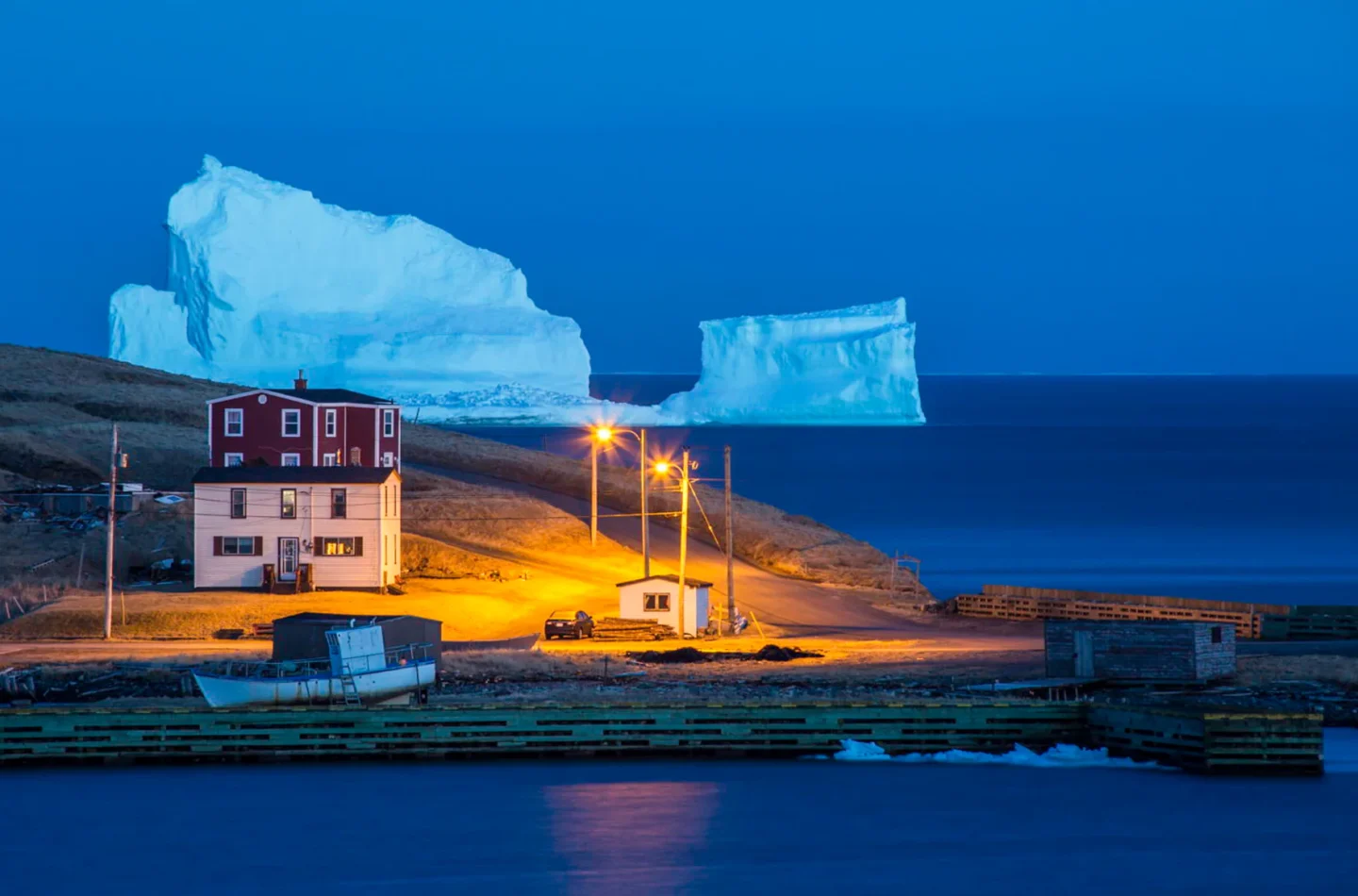
Captain Edward Kean holds a pair of binoculars to his well-practised eyes, surveying the glacial monolith bobbing just offshore of the colourful town of Bonavista, Nfld., and belts out his best Dr. Hook impression. “Wanna see my smilin’ face, on the cover of the Rolling Stone —”
He interrupts his own chorus. While thousands of tourists flock to Newfoundland every year to marvel at the procession of icebergs drifting past the island’s shores, Kean isn’t here to gawk. He’s here to harvest.
“All iceberg harvesters are singers, but not all singers can harvest an iceberg,” Kean says, then sizes up his quarry. “She’s a beauty,” he shouts. “Boat’s not but a pimple next ‘er!”
It’s hard to disagree. A pair of jagged, glittering white towers rise over a nearby sightseeing vessel, easily 10 storeys above the surface. The massive underbelly stretches into the depths, painting the steel-blue chop of the Labrador Current an almost-tropical aquamarine. Angry cracking noises echo forth, punctuating the steady sound of wind and spray.
“Oh, she’s going to let go any time now!”
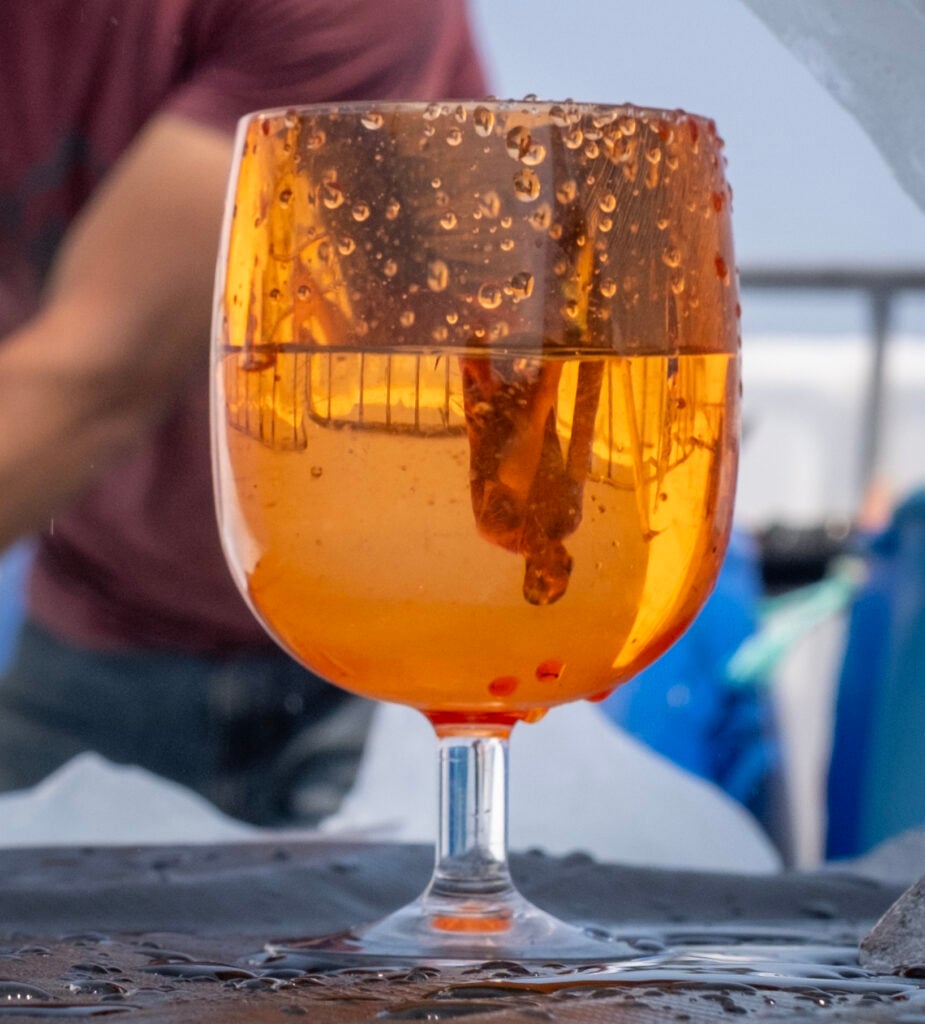
Kean is arguably the most famous “iceberg cowboy” in the world. For over 30 years, he has plied these waters, wrestling chunks of ancient ice from the Atlantic before they dissipate forever. The melted remains make for a compelling pitch: glacially preserved since the stone age and completely untouched by contaminants, this is, ostensibly, Earth’s purest water. Superlatives this glamourous attract diverse clientele: status-conscious socialites wanting to make a splash, starry-eyed philanthropists set on saving the world and, of course, simple passersby curious enough to sample the unconventional beverages these bergs go into — including beer, vodka and wine.
The cowboy moniker doesn’t just come from the hazardous, rope-swinging nature of the work — it mirrors some Wild West lawlessness too. The industry is governed simply, by that age-old creed: finders keepers. So far, this has worked out just fine. Icebergs are plentiful, and harvesters are few — there have been scarcely any issues with losers weepers. Still, some legal experts are highlighting the need to establish a proper framework. Who has authority over this resource? Who really owns an iceberg?
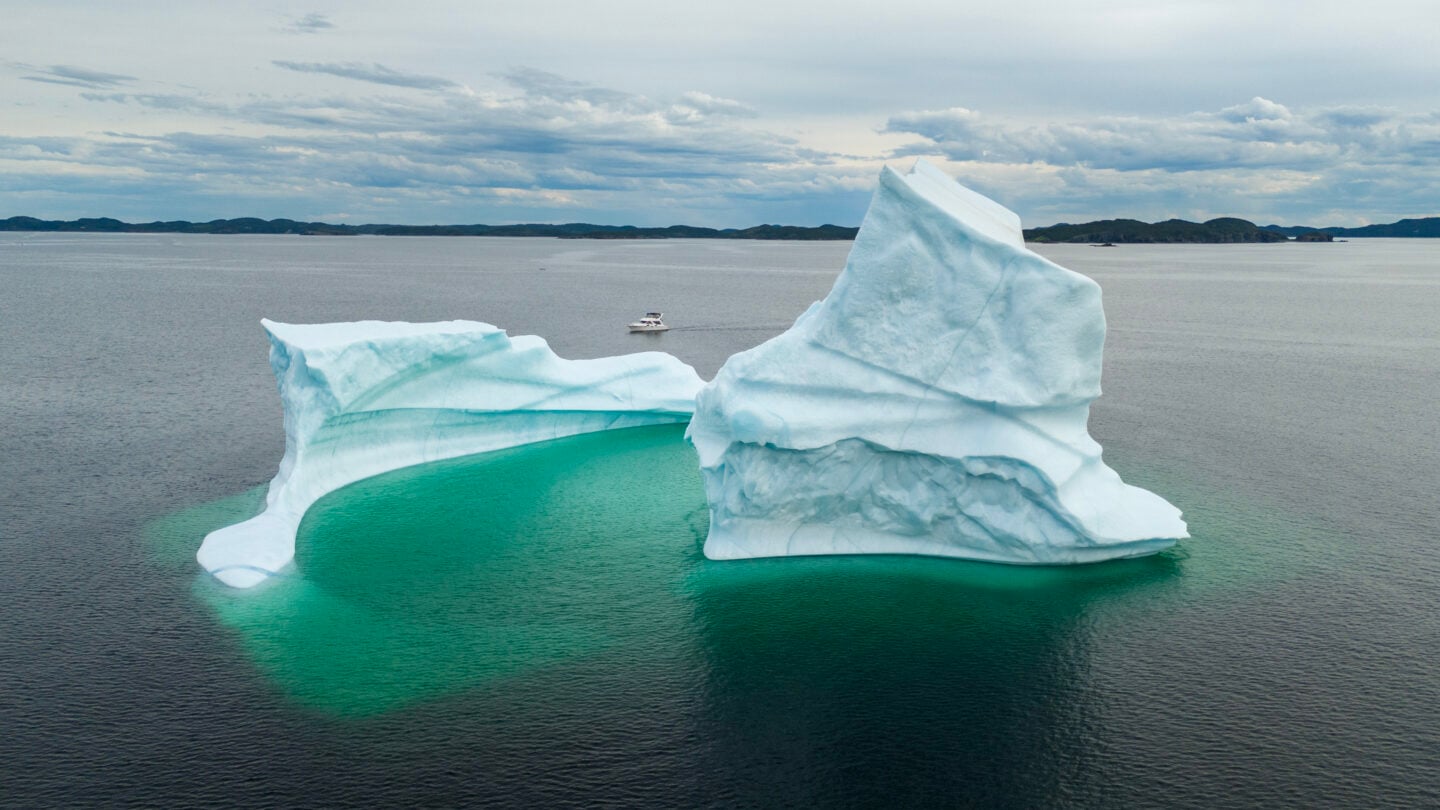
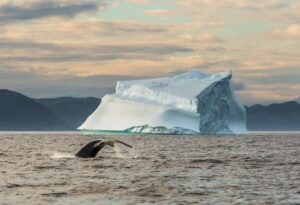
EACH SUMMER, up to 40,000 icebergs calve from the glaciers of Greenland, a fraction of which make their way south through Newfoundland and Labrador’s “Iceberg Alley.” For generations, this strip of ocean — the same one that claimed the RMS Titanic — has been treated with reverence by sailors. It’s a minefield of elusive, constantly moving hazards.
Kean is well aware of the risks. Having travelled this far, the bergs are often ready to “founder,” rolling over or collapsing into smaller pieces as uneven melt shifts their centre of gravity. Officially, bus-sized pieces between five and 15 metres long are classified as “bergy bits,” while their smaller one-to five-metre cousins are “growlers.” The adorable labels don’t change the fact they can be just as dangerous as their parent iceberg. More numerous, half-hidden in breaking seas and almost invisible to radar, bergy bits are at least 10,000 tonnes of rock-hard ice and fully capable of tearing a hole in an unwitting vessel travelling at speed.
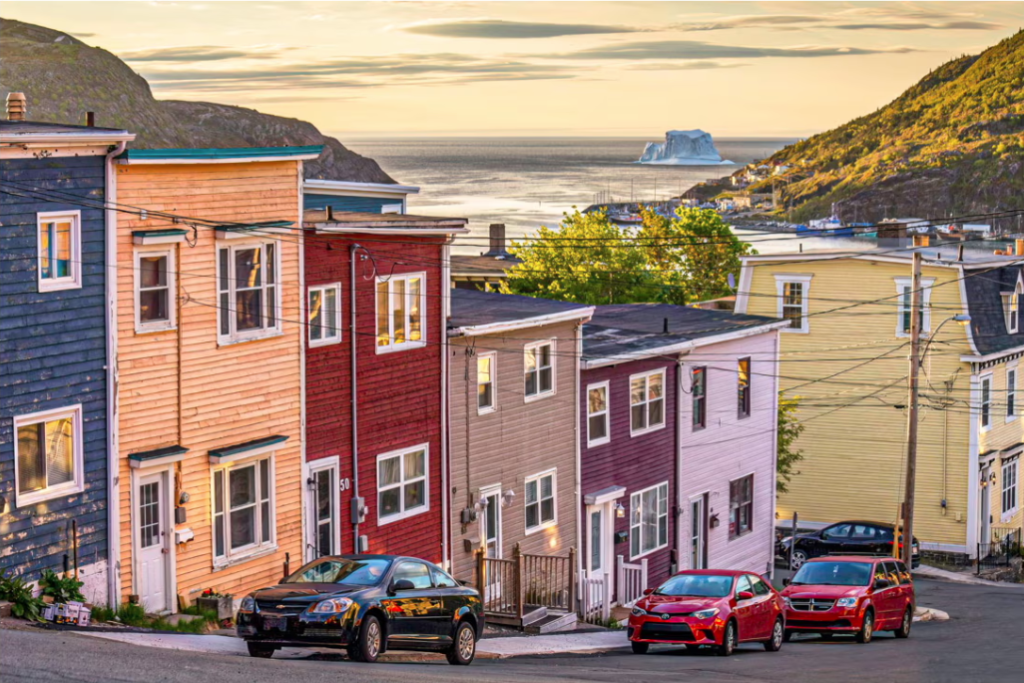
As icebergs melt, they can become top-heavy and suddenly capsize; being caught in a rollover can mean millions of tonnes of ice crashing down on your boat. Underwater “spurs” of ice may jut out from the foundation, so just passing in the vicinity merits extra caution. Excavating directly from the iceberg itself would only increase its instability and amplify these dangers.
Starting before dawn the next day, Kean steers his boat towards the berg. Overnight, it has delivered on his prediction. The crystalline spires are now strewn across the waves — a glittering obstacle course of growlers and bergy bits. The melting shards cause the ocean to boil and hiss like seltzer: bubbles finally being released from their millennia-old prison.
For Kean, this is perfect. The prohibitive danger of getting too close to an intact iceberg makes the debris of a collapsed one fertile ground for iceberg harvesters. Kean manoeuvres his vessel around the larger pieces, selecting a suitable growler off the starboard side. His crew hops to action.
This is, ostensibly, Earth’s purest water.
Lesson one for would-be iceberg cowboys is wrangling a promising chunk, and today, there are plenty of students on board. Among them are a team from Netflix, here to learn directly from the masters: the media juggernaut is in Newfoundland filming a show in which the actor Josh Hartnett plays an iceberg harvester charged with protecting his community from a mysterious sea creature.
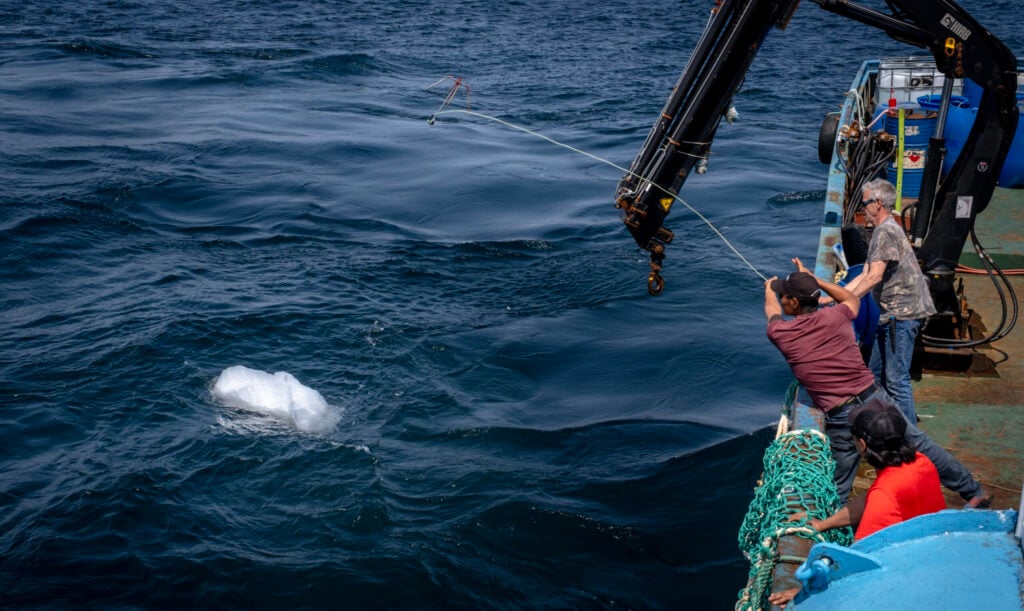
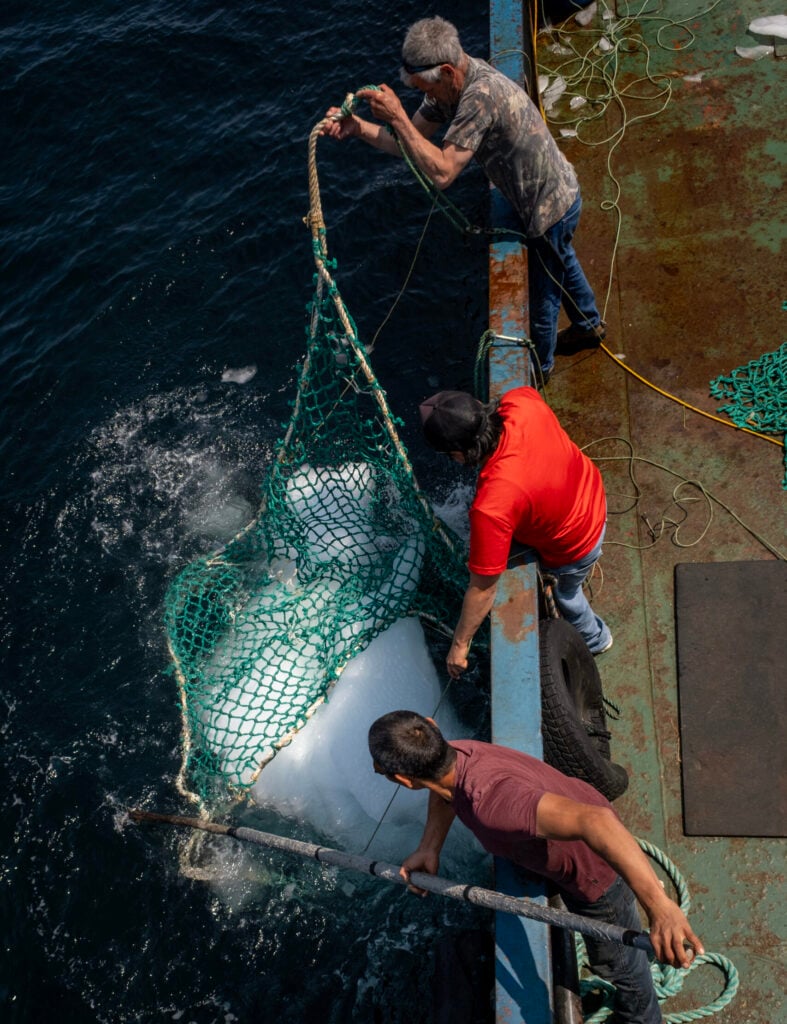
Kean’s first mate swings a grappling hook around his head like a lasso, hurling the rope overboard at the target. Once snagged, a brief tug-of-war with the Atlantic brings the growler alongside the vessel.
It’s at this point that this piece of ice becomes Kean’s — a legal principle called rule of capture. It certifies that the first person to “capture” a resource is the person to own it — however, when it comes to icebergs, this isn’t codified by any authority. In the absence of regulation, it’s simply become the modus operandi. Previously, Kean needed a commercial licence issued by the provincial government to harvest. The requirement was waived in 2021, according to a spokesperson, to provide “an opportunity for growth in a small industry.”
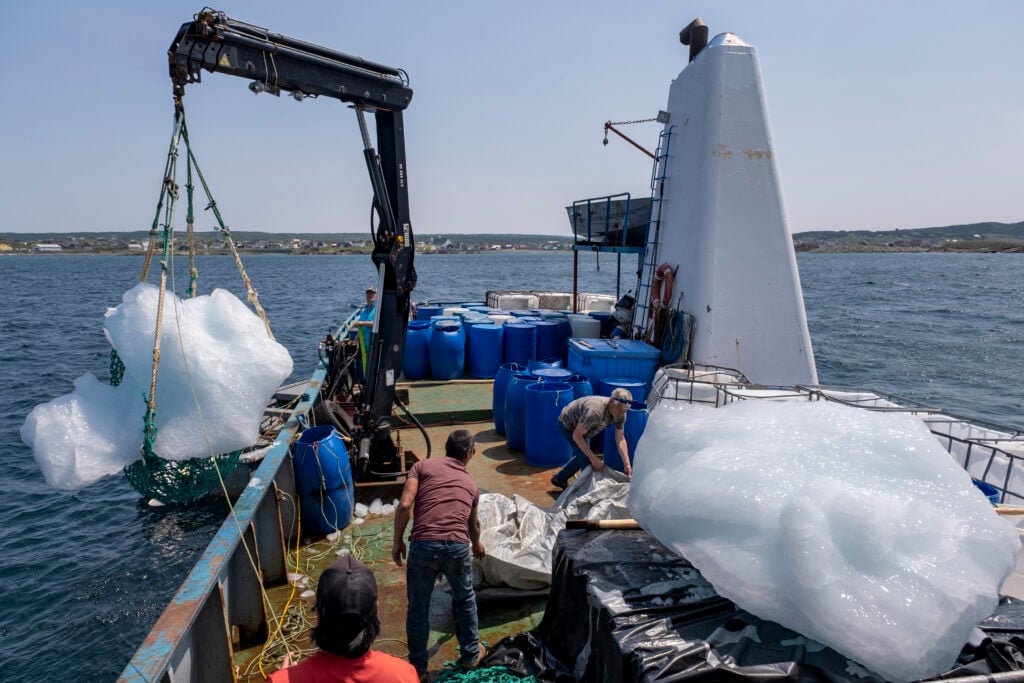
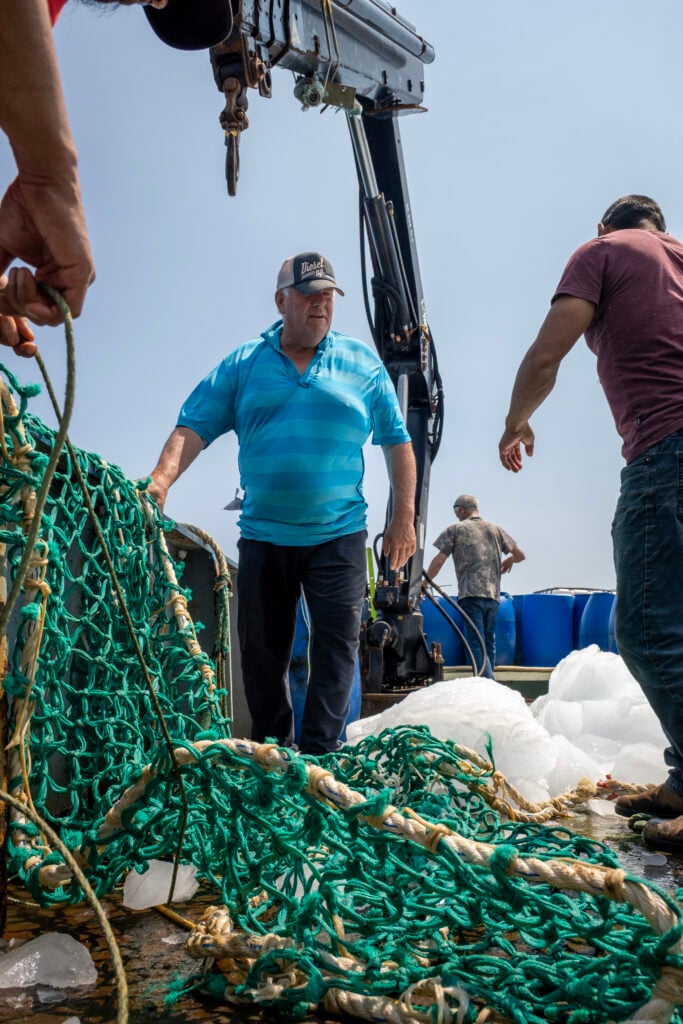
Crew members next use long hook-tipped poles to manoeuvre the ice into a lowered net. Once secure, a mechanical arm hoists the multi-tonne, golf-cart-sized piece aboard.
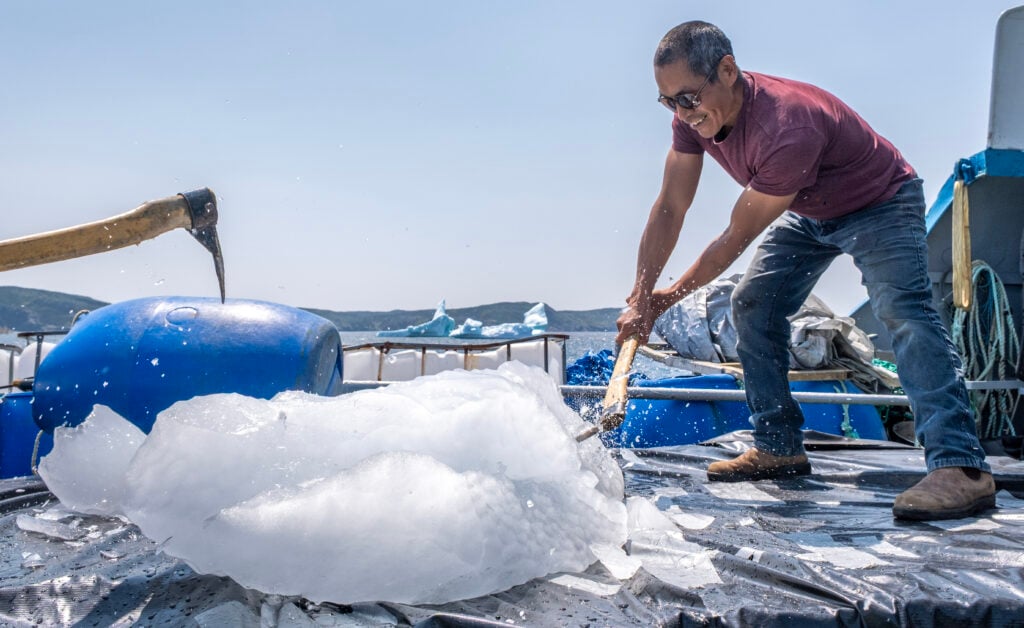
The prize is laid on the deck and immediately hosed off to limit any salty contamination. Now armed with pickaxes and shovels, the crew smashes the growler into more manageable pieces, which are moved into large plastic barrels to melt naturally in the coming days. Once landside, the water will be filtered for delivery to breweries and businesses across the island.
“ICEBERG WOULD BE our number one selling beer,” says Justin Fong, co-owner of Quidi Vidi Brewery in St. John’s. “It’s number one in January when there’s no tours in here, and it’s also number one in August when it’s packed.” Fong is one of many local entrepreneurs offering iceberg products — beer, cider, vodka, wine and even cosmetics have all been made and sold on the island at some point, all capitalizing on the public’s enthusiasm for the icebergs’ mystique. Kean is a keystone of the industry, supplying water to every aforementioned business. Of course, you can also just buy the water itself.
Probably the most famous (or infamous, depending on your perspective) iceberg water was Svalbarði. Founded in the fiords of Norway’s Svalbard archipelago, it looked more like a bottle of premium spirits than water. Each elegant, curved glass bottle was capped with a wooden stopper, individually packaged in a silvery gift tube — and priced at €99.95 per bottle.
The extraordinary price set off a flurry of coverage and debate. To some, it appeared cartoonishly exploitative — the melting scraps of our polar ice, bottled and shipped across our warming planet as a palate cleanser for the world’s elite. Jamal Qureshi, founder of the company, explicitly pushes back on this framing.
“People either loved it or hated it,” he says. “The comparison I always make is to food. Food is a universal human right, but there’s also all kinds of delightful [luxury] foods, right?” Svalbarði also asserted that, by only using soon-to-melt iceberg pieces and funding carbon offset projects, it was net carbon-negative — that each bottle sold translated into preserving a hundred kilos of Arctic ice.
By now, you may have picked up on the past tense. Margins are thin for iceberg cowboys, and Svalbarði closed in 2023. One of the last remaining bottles was sold earlier this year by Fine Liquids, a German water purveyor, for €10,000 (about $16,000).
Svalbarði isn’t the only iceberg water company in the obituaries. Iluliaq, Inland Ice and Glace were similar ventures; all now appear to be defunct.
Berg, also based out of Newfoundland, closed in 2022, but restarted operations two years later and is now periodically purchasable online for around $40 per bottle. The company declined to comment for this story.
While Kean values the water’s purity, its pricing as an indulgent luxury cuts little ice. “It’s only still water,” he laughs. A little reluctantly, he acknowledges “it’s all about the marketing. People want to buy a story.”
A 450 ml bottle of his own water, branded as Kold, is sold for about $5. Hand-bottled, labelled and delivered across the island by Kean himself, it comes in unpretentious bottles or cans — the larger sizes even featuring a practical sports cap. However, using the water as a bottled novelty is — so sorry for this — just the tip of the iceberg. There are some with a more quixotic vision.
CLIMATE CHANGE, water contamination and chronic over-extraction mean water scarcity is projected to affect up to 2.4 billion people in urban areas by 2050. About 68 per cent of the world’s fresh water remains locked in Earth’s glacial ice. In 1977, a Saudi Arabian prince was the first to seriously connect those dots.
Prince Mohammed Al-Faisal sponsored the world’s first International Conference on Iceberg Utilization, proposing the capture of a 100-million-tonne iceberg from Antarctica. Massive paddle wheels powered by mobile nuclear plants attached directly to the iceberg itself would then move it to the Middle East, where it could be melted into clean, potable water. The idea was, to put it mildly, ambitious.
The technological advancements, financial commitments and risk tolerance required to overcome the logistical barriers were orders of magnitude too high. All the same, new generations of iceberg-towing hopefuls periodically make their pitches.
For example, in an animation featuring all the country’s trademark audacity but little of its polish, the UAE Iceberg Project proposes to tow one to the Emirati coast. Triumphant music blasts while rigid polar bears and penguins congregate together on a polygonal island of ice just off the beach (never mind that they inhabit opposite ends of the Earth). Meanwhile, the Southern Ice Project aspires to drag an Antarctic iceberg to Cape Town to resolve the city’s omni-present water crisis. Polewater, based in Germany, envisioned ferrying harvested iceberg water around the world when needed, an on-demand solution for planetary water scarcity. The California legislature even once endorsed a plan to tow a pair of icebergs to the state as a means of mitigating drought. None of these plans have come close to fruition.
“None of the pieces of technology are impossible,” says Stephen Bruneau, an engineering professor at Memorial University of Newfoundland who has studied iceberg mechanics for years. “But, it would be just absurdly impractical.”
“Dreamers and schemers, my b’y,” says Kean affably. He has been asked this question many times, by many people. “We’ve been involved in a couple of them. They were gonna tow a large iceberg to the Azores, for water for their crops. They were going to tow one to Africa and all this kind of stuff.”
When asked if he thinks it’s achievable, his response is succinct: “No.” Pressed, he elaborates: “It’s just too costly. It’s just too everything.
“You know, everybody’s got a dream, I guess. But anyway, it’s beyond me,” he chuckles.

WHETHER THESE MYTHOLOGIZED polar emissaries could ever truly be salvation for our water-starved species is, to put it generously, highly debatable. Regardless, icebergs today are still being bottled and filling tourist boats. They’re a real resource, with real value, and no one knows who actually owns them.
Corine Wood-Donnelly is a professor of international relations and the High North at Norway’s Nord University, with a specific interest in matters of Arctic sovereignty. On Instagram and X, she’s simply @polaricequeen.
“I don’t think anything has changed in the legal setup for how we see ice, mostly because there isn’t a legal setup for how we see ice,” she says. Icebergs fail to fit neatly into any existing international framework.
Technically, icebergs are minerals — solid, naturally occurring inorganic substances. By this logic, Kean’s iceberg should fall under the United Nations Convention on the Law of the Sea. Over 200 pages long, it has been the principal agreement governing maritime activities since 1994.
The ice “minerals” Kean is pulling from the sea are well within Canada’s territorial waters and thus subject to legislation at Canada’s discretion. If icebergs are minerals, then this iceberg is under Canada’s authority, and, for now, Canada still says finders keepers.
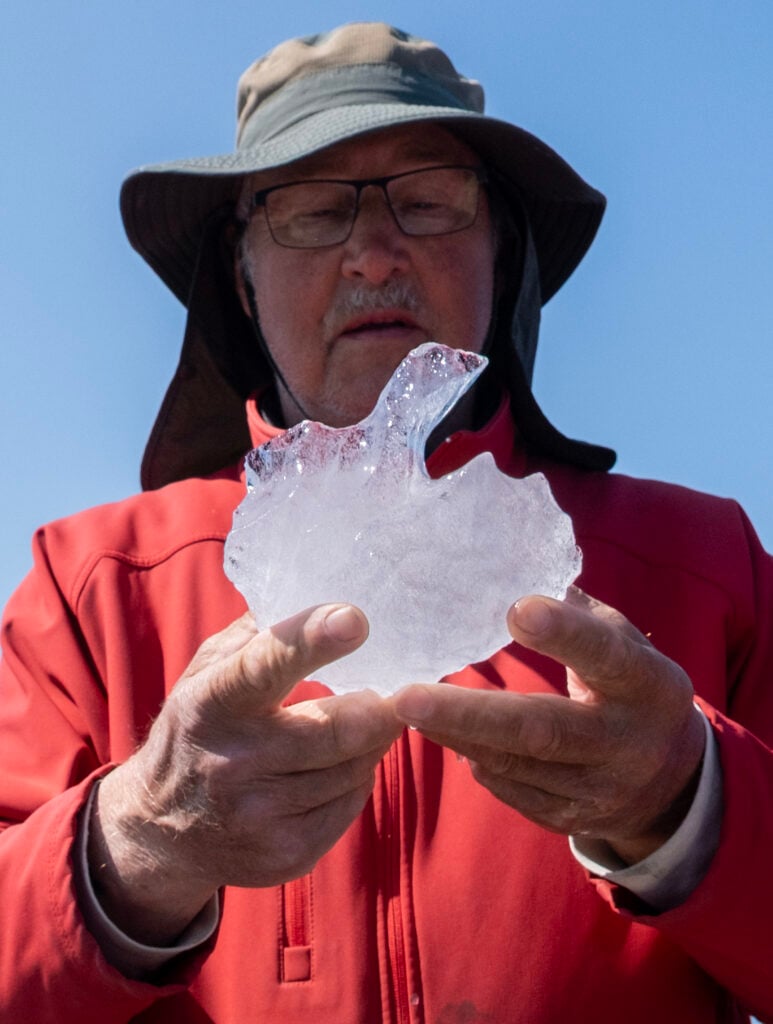
Wood-Donnelly adds a disclaimer to the thought exercise. “I like to say that law, especially international law, it’s not like, ‘rules.’ That’s something I borrow from Pirates of the Caribbean,” she says, sliding into a delightfully passable impression of the villainous Captain Barbossa. “It’s really just guidelines.” She clarifies: that doesn’t mean international law has no force. However, like the pirate code, its power comes from the self-interested participation of states, not an overarching authority to enforce it.
Kean’s iceberg likely calved from a glacier in the sovereign territory of Greenland (Denmark), splashed into its territorial waters, and drifted thousands of kilometres into Canadian seas. You are probably unsurprised to learn this is not typical behaviour for a mineral. Perhaps recognizing it as such is disingenuous.
Instead, maybe icebergs are more like fish. Like the anadromous salmon, icebergs begin life in a terrestrial freshwater system before migrating to sea, eventually dying. In that case, The Law of the Sea dictates it is primarily the responsibility of Greenland, as their birthplace, to manage them, while still cooperating with others that have an established stake in the harvest.
And then, of course, icebergs could simply be fresh water in transit. Just as fresh water flows in a river between sovereign states, icebergs flow on ocean currents between sovereign waters. Existing agreements like the UN Watercourses Convention or the Rio Grande Treaty of 1906 could model the recognition that upstream users need to consider the needs of downstream users.
Antarctic icebergs add an additional layer of complexity. Different norms and treaties reign on the southern continent. If icebergs are legally minerals, fish, water or any other manner of resource, different frameworks apply. But icebergs are none of these things.
As a solution, Wood-Donnelly has suggested the Arctic Council, the primary intergovernmental forum for Arctic affairs, could take the issue under their purview. In expected diplomatic fashion, the Arctic Council declined to comment on the hypothetical.
This iceberg is under Canada’s authority and, for now, Canada still says finders keepers.
Other scholars, such as Matthew Birkhold, have similar ideas. In his book Chasing Icebergs: How Frozen Freshwater Can Save the Planet, Birkhold suggests developing an international iceberg authority modelled on the UN’s International Seabed Authority to address icebergs’ specific legal quirks.
Wood-Donnelly has a more measured take. “The Arctic is kind of … at the edge of the international system,” she says, speaking slowly now. “If you can be persuasive in your communication that you are the authority about decision-making for this space, it means that you can make the decision about what happens with the resources in that space.
“You can see that with how the government of Newfoundland just said ‘Oh, we’re going to issue a licence.’” Like any good educator, she grounds her abstraction in the literal. “But no one made a legal challenge to that. No one questioned that Newfoundland had the authority to do this.”
Questions of authority may soon start to be asked. As polar thermometers creep upwards, an increasingly accessible Arctic is an increasingly coveted one. Between Russian aggression in Europe and American threats to annex Greenland and Canada, friction between northern nations is mounting. Filling the void isn’t about regulating thirst-quenching curios but about establishing Arctic precedent before tensions escalate further.
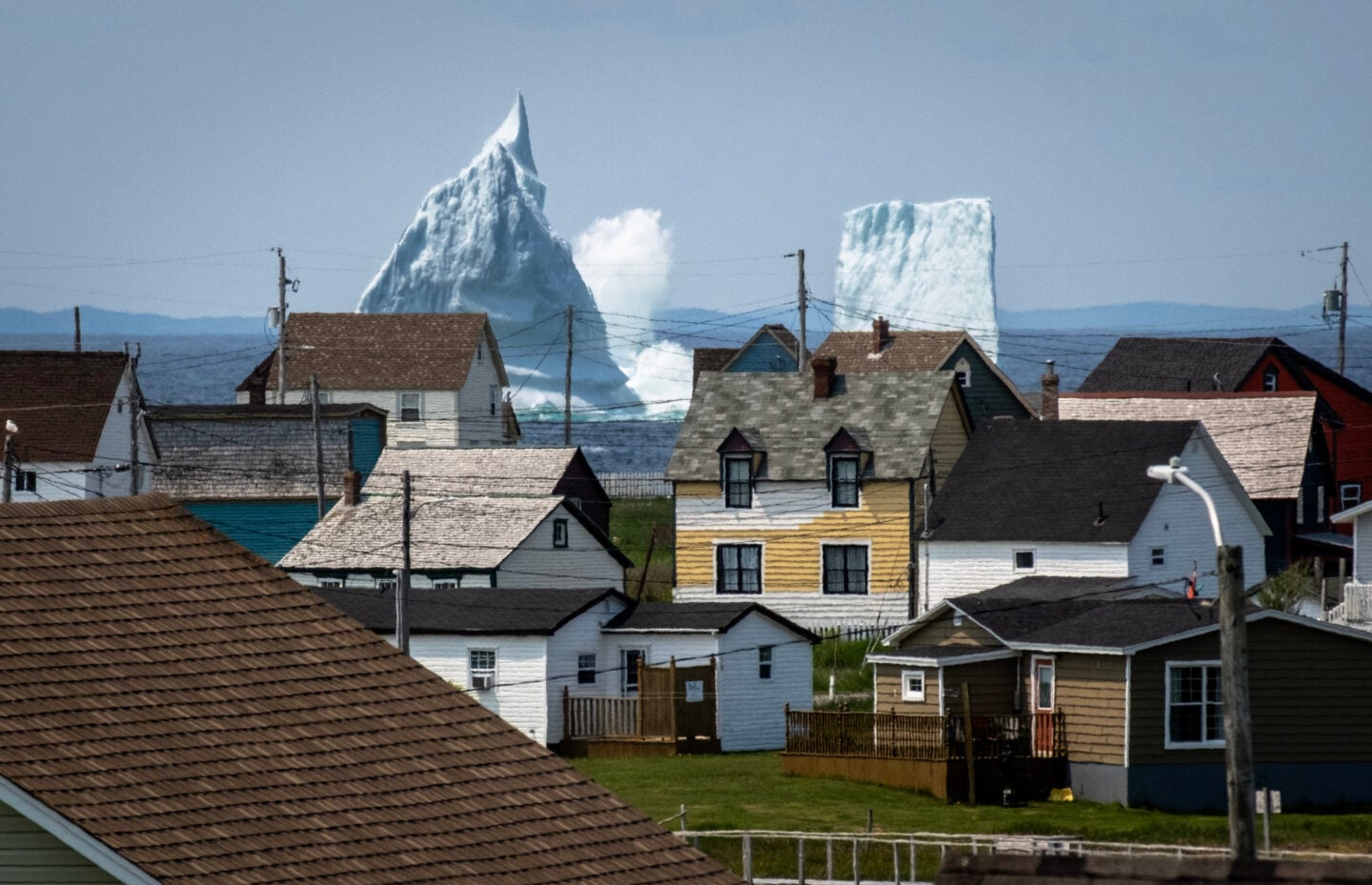
BACK ON SHORE, Kean is testing his iceberg water for dissolved solids. He grunts disapproval and pulls the plug on a tank. Thousands of perfectly drinkable litres gush over the concrete pier and rejoin the sea — even the slightest level of impurity isn’t acceptable. Here, between seagull cries and the slow glug of his emptying tank, conjectural legal debates feel almost laughably distant.
For now, the legal questions remain unanswered and largely unasked. Kean, for his part, is fine with that.
“They call us iceberg cowboys — that’s what caught on,” he muses as he drives to Bonavista to deliver water. “But I like something like ‘iceberg Vikings.’”
Vikings, those first Europeans in Newfoundland and infamously expert sailors, bucking international norms and sailing between the legal margins, taking what they liked along the way.
Kean laughs. “I think it suits us better.”

This story is from the July/August 2026 Issue
Travel
Newly-revamped “Iceberg Finder” makes it easy for visitors to find the best spots in Newfoundland for iceberg viewing
Travel
Immerse yourself in Viking archaeology and Basque whaling history while taking in Newfoundland’s scenic coastline and incredible geology

Travel
Quirpon Island has long been a favourite off-grid getaway for in-the-know travellers. Now, the Quirpon Lighthouse Inn is doubling down on its biggest draws: whales and icebergs.
Exploration
Ahead of her the new documentary The Berg, underwater explorer and RCGS Explorer-in-Residence Jill Heinerth reflects on diving beneath icebergs, working with James Cameron, and the science of exploration