Exploration

Canadian astronaut Joshua Kutryk steps out into “pitch black” for critical spacewalk

Kutryk became the fifth Canadian spacewalker on Oct. 29, installing an external power upgrade on the International Space Station

  • Nov 04, 2026
  • 1,028 words
  • 5 minutes
531A2816.NEF
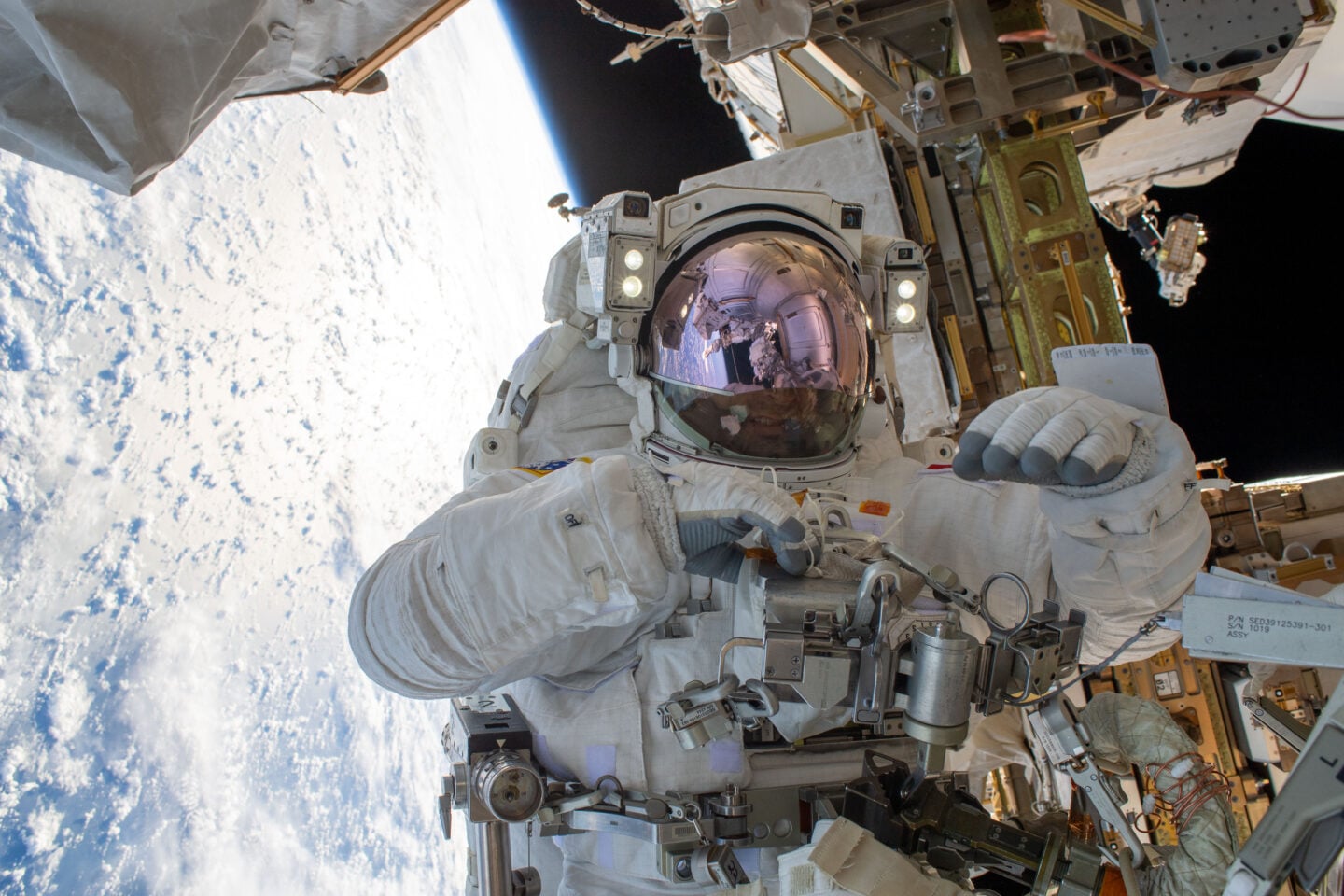
Canadian Space Agency astronaut Joshua Kutryk on his seven-hour spacewalk Oct. 29. (Photo: Canadian Space Agency)
Expand Image
Advertisement
Advertisement

Canadian Space Agency astronaut Joshua Kutryk, Canada’s first spacewalker in seven years, had to force himself not to look at his home planet. 

Kutryk, who is on a half-year mission at the International Space Station, stepped outside and into the black expanse of space on Thursday, Oct. 29, to install a new solar array on the station. One of the greatest challenges, he later told reporters, was not getting distracted by the beautiful view of Earth while on a seven-hour, 11-minute spacewalk with NASA astronaut Anil Menon.

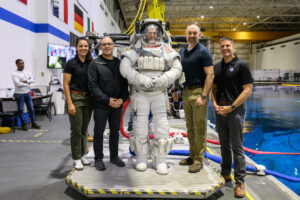
“It’s just a sensory overload. Your mind doesn’t know what to do with that image,” Kutryk said during a media broadcast to Canadian Space Agency headquarters on Friday. He had spent hundreds of hours training in a pool — the Neutral Buoyancy Laboratory near the Johnson Space Center in Houston, where astronauts practise in spacesuits — building to this moment.

248A9014.NEF
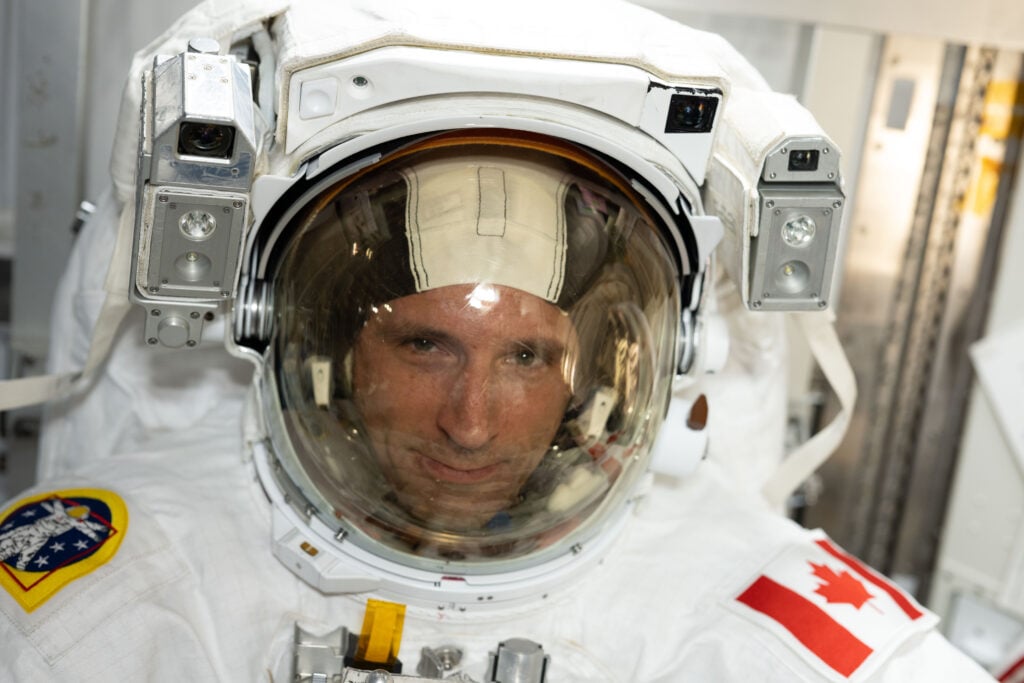
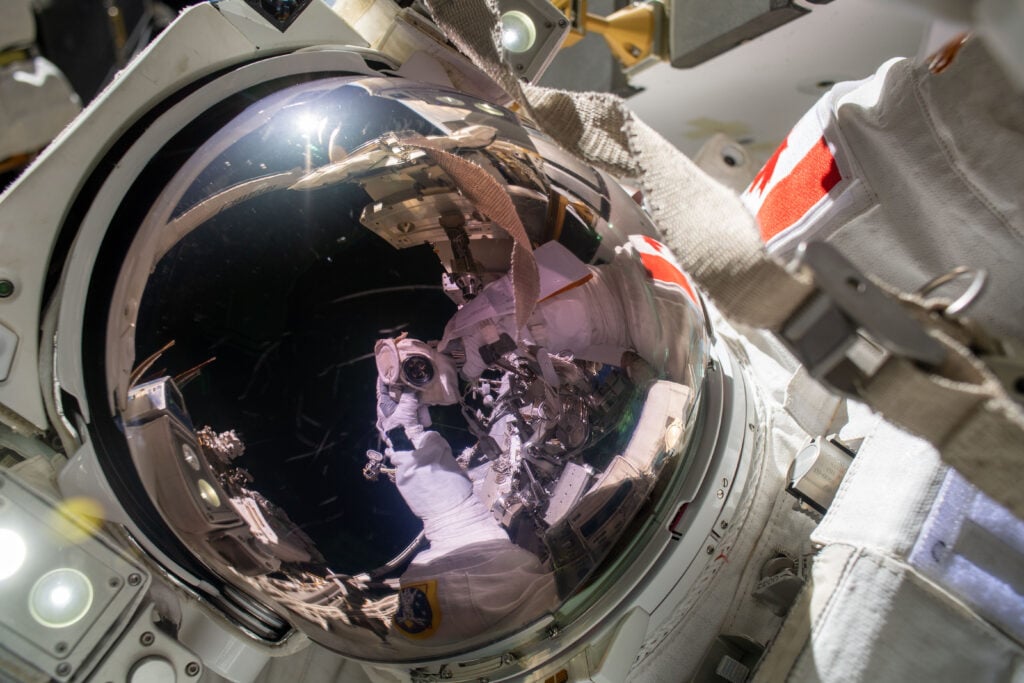
Kutryk takes a “space selfie” during his spacewalk. (Photo: NASA)
Expand Image

Emerging from the International Space Station into the “pitch black, darkness of space… was fairly intimidating for me, it being my first time,” Kutryk said, but his training allowed him to “reach instinctively” for the right handholds and manipulate his tools as he moved around his new environment. “I couldn’t see them, but they were there. And that just speaks to how well NASA does this, the training.”

He did make sure to take in the view — when it was appropriate. But his attention was on installing the solar array. “I had to just really focus on doing the task, on not messing anything up, losing tools, etc. Everything you touch disappears; everything has to be tethered. So it’s quite a handful, but we train a long time to do it, and it feels really good when it goes well.”

Spacewalking is one of the most dangerous things astronauts can do, as they’re protected from radiation, extreme temperatures and stray micrometeorites by only a few layers of fabric. NASA takes many precautions to keep astronauts safe, including checking their spacesuits during the spacewalk for tears or possible coolant leaks.

Kutryk wasn’t the only Canadian working outside the station. Canadarm2 — the robotic arm used on the space station for maintenance — brought Menon and the folded-up solar array to the installation site. Menon stood on a platform attached to the arm and held the 320-kilogram array in his hands as astronauts in the space station directed Canadarm2 to hoist him to the right area. Kutryk, walking hand-over-hand along the station’s exterior, met his colleague to unfurl the array and power it up with cables.

012F0842.NEF
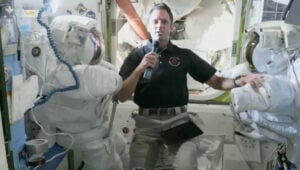
Kutryk tries on his spacesuit in the International Space Station airlock. (Photo: NASA/Anil Menon)
Expand Image

Kutryk and Menon are finishing a five-year upgrade spree installing eight roll-out solar arrays on top of the decades-old arrays already on the station, to counteract the weakening effects of age. They will once again venture outside the airlock on Nov. 5 to put one last solar array on the space station. Once completed, the upgrades will collectively boost station power supplies by 30 per cent.

“This is something that’s been very important to NASA for a long time now, to get this job done, because it’s going to help [the] space station go farther — and it’s going to help us to put more power into [the] space station so we can run even more of the laboratories and science experiments,” Kutryk told reporters.

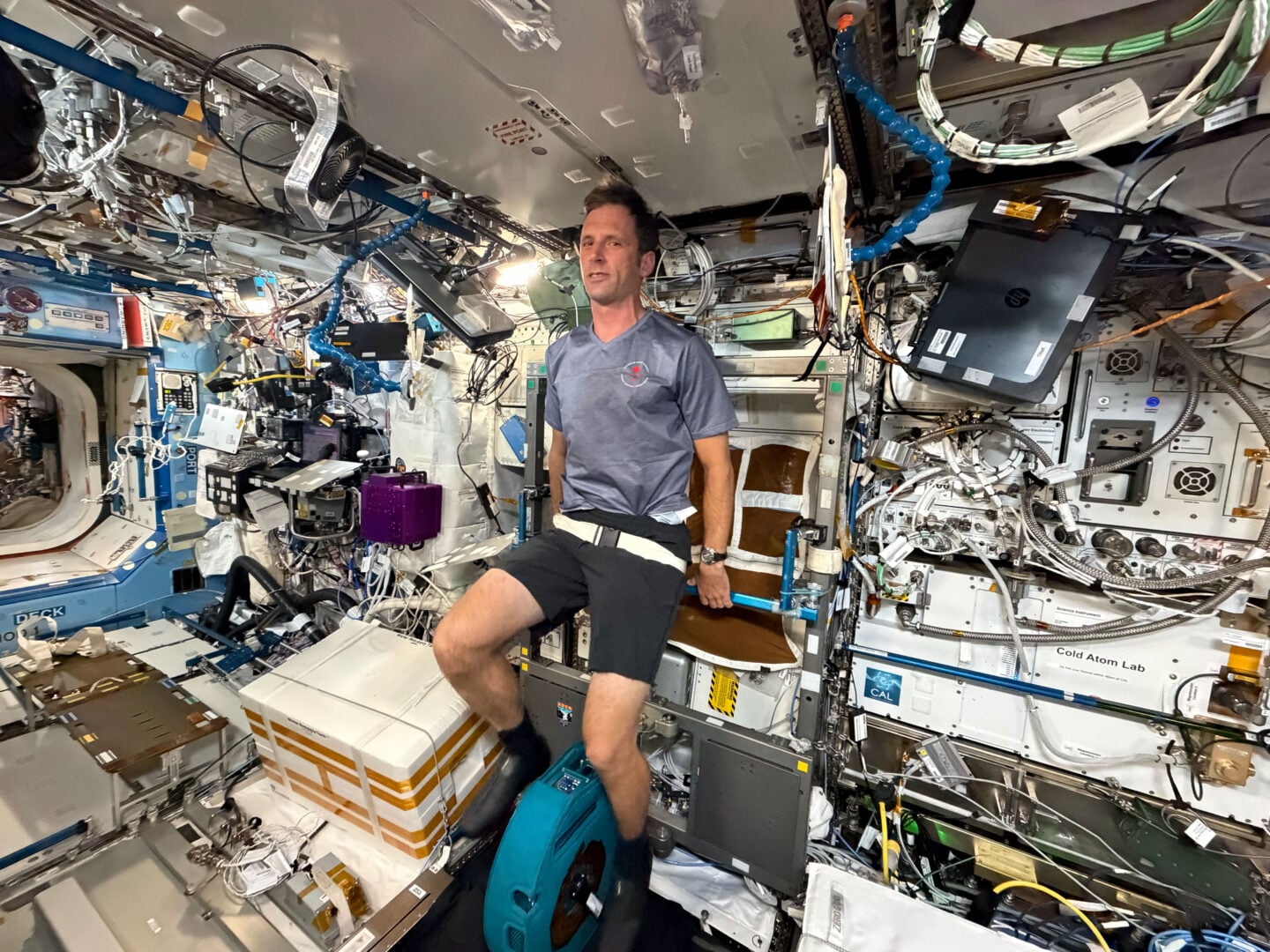
Gesturing to the Destiny orbital lab around him, Kutryk said some of the experiments nearest to him would be among those benefitting from the power boost. Kutryk has already conducted dozens of experiments since launching to space for a half-year mission on Oct. 1. His research includes studies on mental well-being, eye health and anemia — experiments that could help Canadians back home as well as future astronauts.

Kutryk became the fifth Canadian astronaut to spacewalk and the first since 2019, when his friend David Saint-Jacques made his own journey out of the space station. “It’s one of the most challenging and complex tasks for astronauts,” said Saint-Jacques at the media event on Oct. 30. “It’s an incredible experience, and I can assure you that it changes you.” 

Asked what message Kutryk would share with young people who have big dreams, Kutryk showed reporters a pocket watch that his great-grandfather John brought with him when he immigrated to Canada from Ukraine in 1910.

“It’s been in my family since we homesteaded our property in Alberta. It’s been passed down to me, and now it’s in space,” Kutryk said. “I think of how far humanity has come… It’s incredible. So there should be no limits on your dreams.”
iPhone-K6K96QXQ6K-IMG_0257.JPG
Kutryk rides an exercise cycle inside the International Space Station’s Destiny laboratory. (Photo: Canadian Space Agency)
Expand Image

As Kutryk fulfills his lifelong dream of a spaceflight, his family is hitting another milestone back on Earth. Kutryk has two young children, Peter and Anna, and his wife, Heather, is pregnant with their third. She is expected to give birth in about a month.

“It’s very touching to see your spouse, you know, on their way to a dream,” Saint-Jacques told Canadian Geographic on Oct. 29. Saint-Jacques is close to the Kutryks, having served as astronaut escort to the family in Florida during Kutryk’s launch, assisting with travel logistics and providing emotional support. Saint-Jacques’s children were also young when he flew to space from Kazakhstan in 2018. “We’re very lucid about the risks, obviously, so they’re kind of mixed emotions, in a way. But [the Kutryks] are strong.”

Heather, he added, is continuing to do well in the last weeks of her pregnancy. Kutryk, who will still be in space during the birth, will be able to get in touch by video. There are also discussions about how to give him remote parental leave while he’s in space. 

In the meantime, Kutryk has one more spacewalk to do — and this time, he’s hoping to see a bit more of the scenery. “I’m going to try to take more photos and take in the view of that planet Earth as much as I can.”

The January/February issue of Canadian Geographic will feature more about Kutryk’s journey and mission. Watch for it on newsstands starting Dec. 14, or better yet, subscribe and never miss an issue.

Advertisement

Help us tell Canada’s story

You can support Canadian Geographic in 3 ways:

Related Content

Science & Tech

Artemis II astronauts have returned safely to Earth following historic mission around the moon

Canadian Geographic is following this history-making mission, which saw Canadian Space Agency astronaut Jeremy Hansen become the first Canadian to fly around the moon

  • 5285 words
  • 22 minutes

Science & Tech

Canadian astronaut Joshua Kutryk launches on long-term mission to International Space Station

Months after Jeremy Hansen flew to the moon on the Artemis II mission, another Canadian astronaut has achieved his spaceflight dream

  • 841 words
  • 4 minutes

Exploration

From moon joy to space-station joy: Astronaut Josh Kutryk speaks about his upcoming mission

Kutryk says Canada has a crucial role to play in the ‘new ocean’ of space

  • 922 words
  • 4 minutes

Exploration

‘It is important for Canada to be here’

Canadian astronaut Joshua Kutryk touts Canadian contributions to space travel aboard International Space Station

  • 897 words
  • 4 minutes
Advertisement
Advertisement