
Travel
Belize from above and below — plus scuba diving with kids!
Discovering beauty and resilience on the world’s second-largest barrier reef
- 1881 words
- 8 minutes
Exploration
After years of chasing warm-water reefs abroad, learning to dive in a drysuit off B.C.’s coast reshaped how I see Canada’s seasonal underwater ecosystems

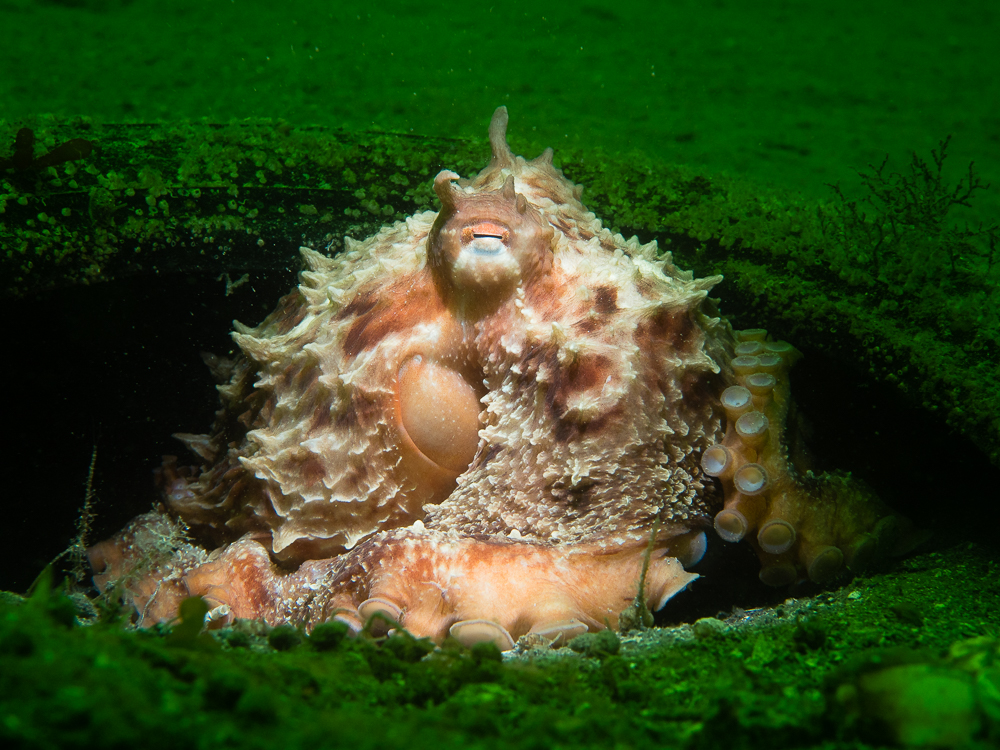
The trick to locating the den of a giant Pacific octopus is to look for empty shells in clusters on the sea floor — “octopus gardens” of debris.
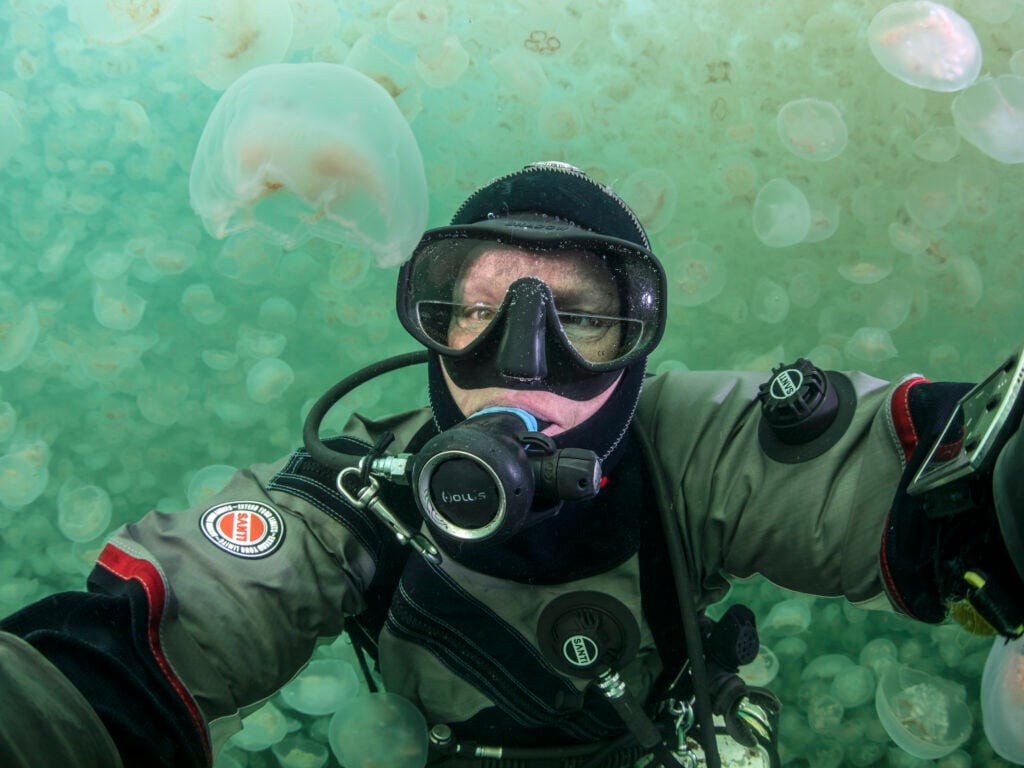
I’m used to scanning coral reefs in a shorty (a cropped thin wetsuit), drifting through 28°C Caribbean waters with the confidence to turn, flip and rotate in any direction. Today, however, I’m layered in my warmest thermal undergarments (Arc’teryx’s merino wool bottoms and top), a Thinsulate liner, and sealed into a trilaminate drysuit. Only my forehead and cheeks are exposed to the roughly 10°C water off Vancouver’s Whytecliff Park.
I’ve been a certified PADI Advanced Open Water diver for more than a decade and thought I had mastered buoyancy. When I’m diving in warm water, I maintain control through a combination of my breathing and a BCD (buoyancy control device), a vest with an inflatable bladder that assists with adding and releasing air. Small inhales help me rise, while slow exhales help me descend. After years of practice, these movements become intuitive.
A drysuit changes everything.
Suddenly, I am no longer relying solely on the BCD for buoyancy. The suit itself becomes part of the equation — air is added directly into the suit to prevent it from compressing at depth, then vented through a valve near the left shoulder. This air travels throughout the suit, which means if a diver’s head tilts down, the air rushes upwards toward their feet. On the other hand, if a diver is too upright, the air pools toward their chest. Encased in the drysuit, it doesn’t take me long to realize that staying horizontal is essential, and any movement becomes all about form and control.
Early in the dive, rather than scanning for marine life and turning my head in every direction as I usually do, I find myself overwhelmingly preoccupied with managing invisible pockets of air as I struggle to stay level.
“It’s like being in a skydiving position,” explains Fabiola Ruiz Aguilar, my drysuit instructor. “This position allows you to maintain control and manage the air in your suit so you stay neutrally buoyant.” In theory, it’s all very straightforward. In practice, maintaining the ideal skydiving motion is easier said than done.
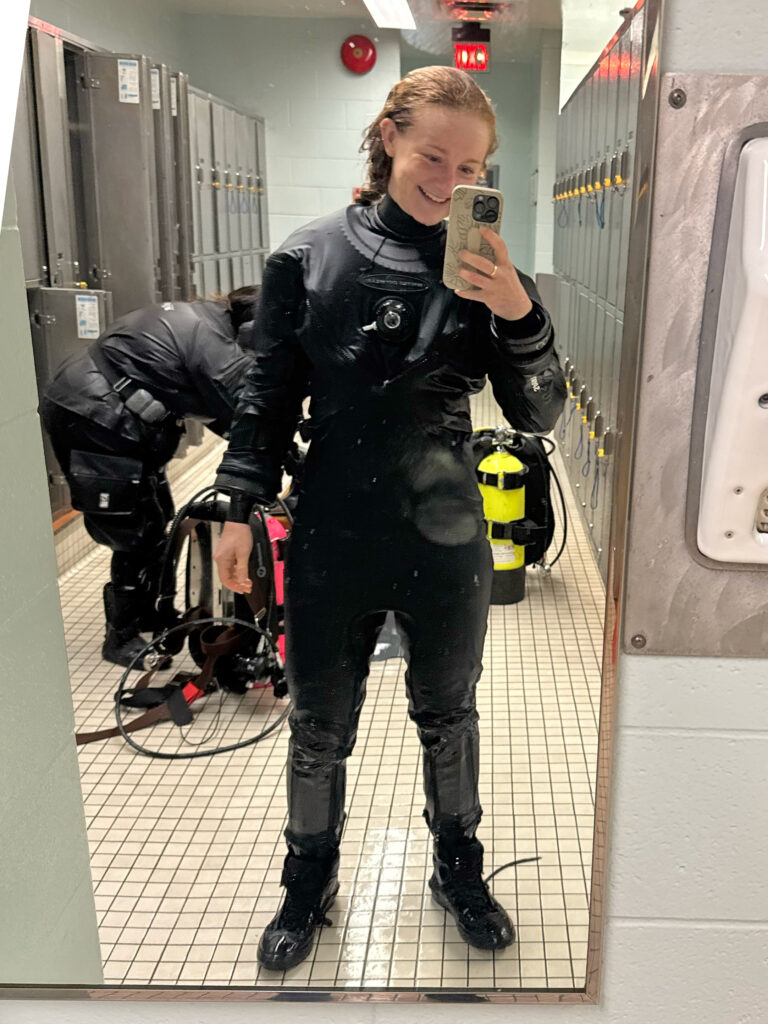
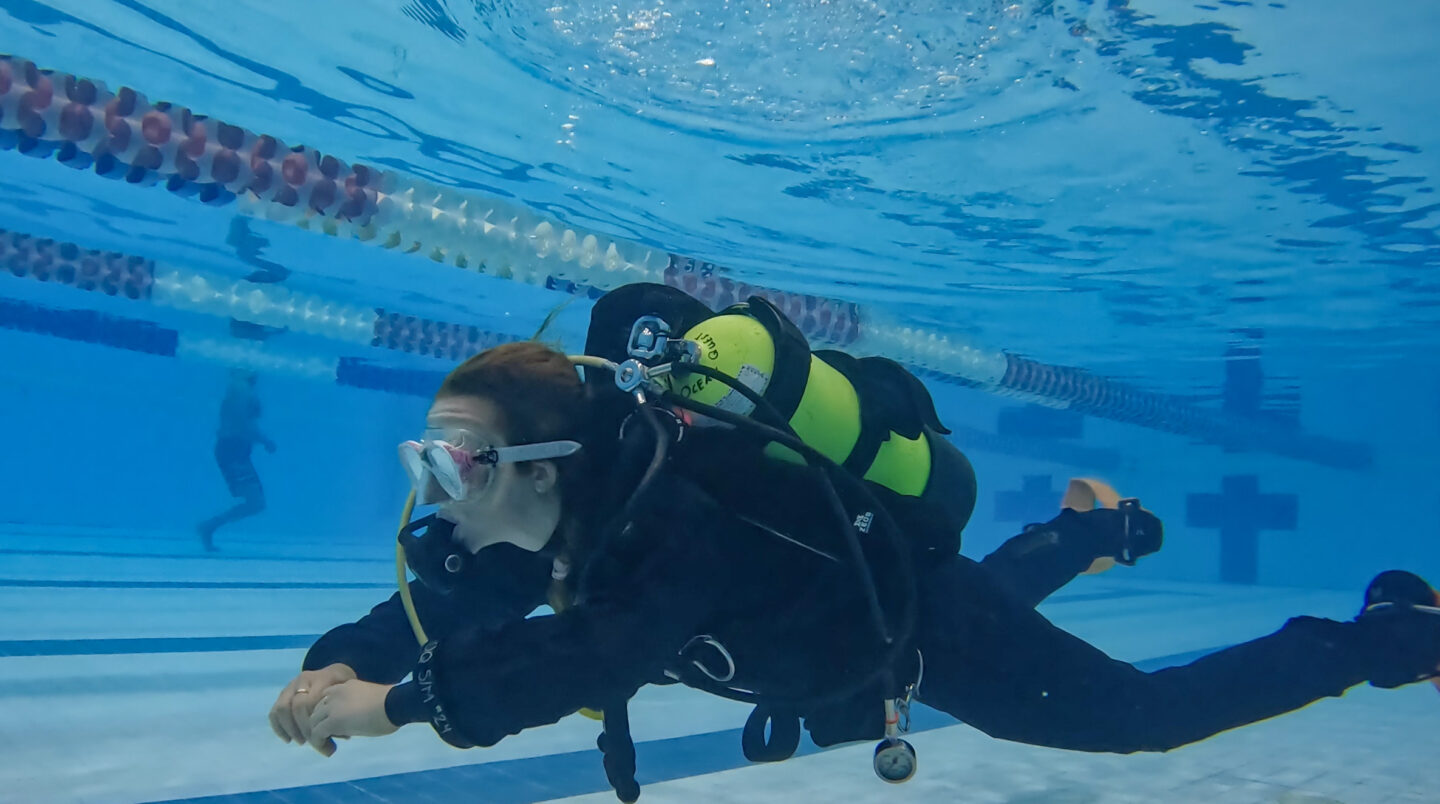
I had met up with Ruiz Aguilar the previous day at a recreation centre in Burnaby, B.C., where she coached me through the process of assembling my gear and becoming comfortable with the cumbersome process of getting into a drysuit and entering the water — in this case the predictably flat and warm indoor pool. I had completed the online understand-your-drysuit coursework beforehand, but theory only goes so far.
In a slightly surreal scene, I practiced adding and venting air, removing and replacing my tank and rehearsed what to do if air bunched up at my feet — all while swimmers doing lengths passed above us.
Today, feels very different. Now we’re in open water, descending into the cold Pacific on my first official drysuit dive in Canadian waters.
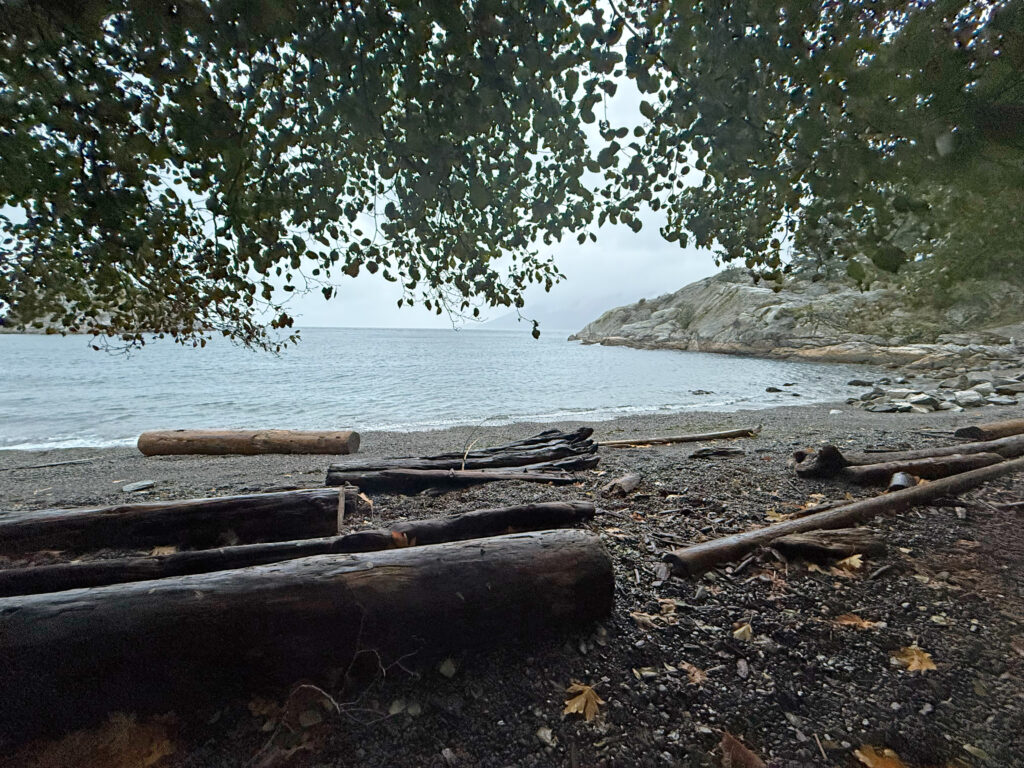
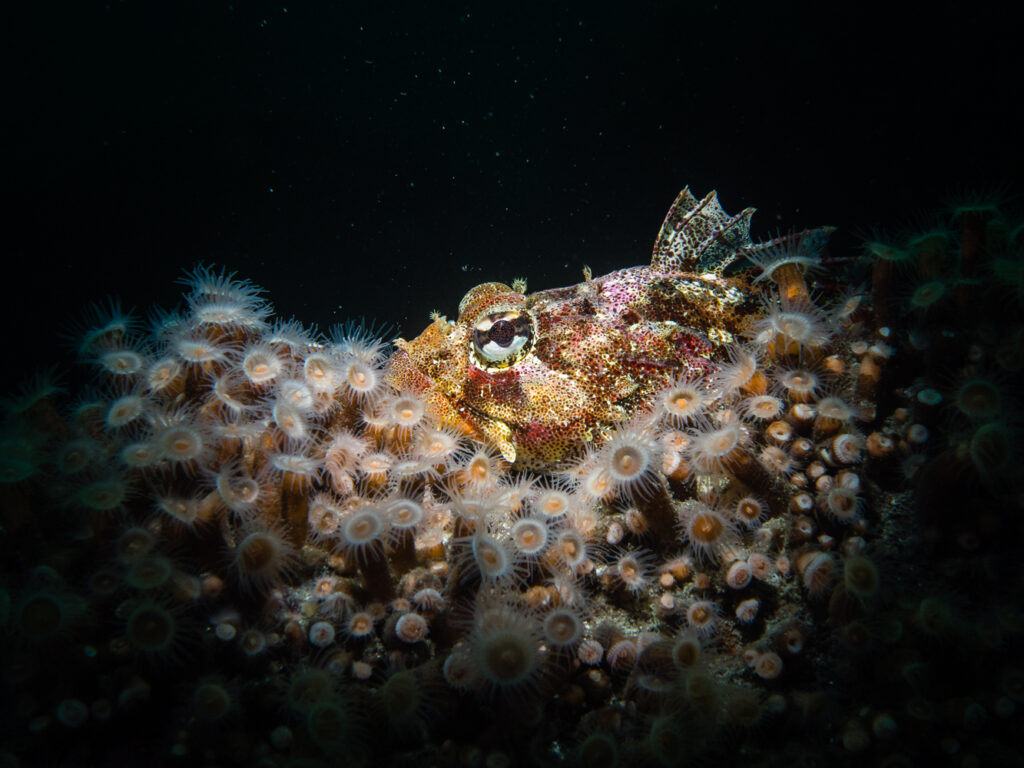
A premier dive spot and one of Canada’s first designated Marine Protected Areas, Whytecliff Park is a popular site for divers of all levels thanks to its easy shore access and abundant marine life. Wolf eels, nudibranchs, sculpins and octopuses are just a few of the species I’m hoping to encounter.
And sure enough, within minutes of descending, Ruiz Aguilar signals toward a scatter of broken shells on the sea floor. As I inch closer, I make out the iconic red shade of a giant Pacific octopus tucked between boulders just metres from the shore. Over the next 40 minutes of my first real drysuit dive, we spot three more.
On my second dive, Ruiz Aguilar guides me to a dreamlike scene. Towering walls of anemones sway gently in the current — a snow-white garden hidden beneath the waves. Even as I juggle neutral buoyancy, frog-kicking, breathing, and handling all the other new aspects of drysuit diving, I have just enough extra capacity to appreciate the wonder of it all. It’s hard to believe this scene is in Canada.
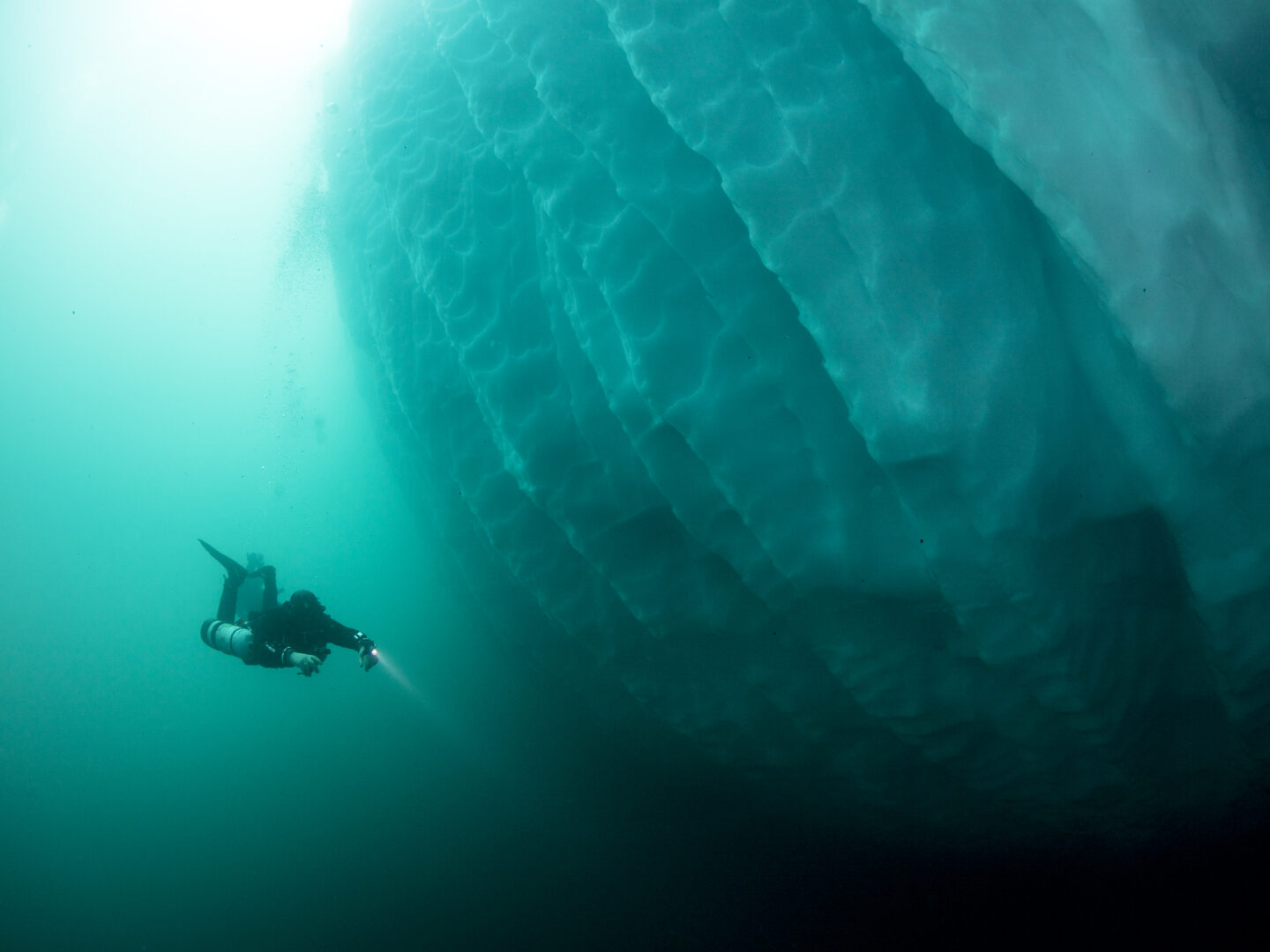
“If I could choose just one country to dive in for the rest of my life, it would be Canada,” shares Jill Heinerth, a renowned Canadian cave diver, underwater explorer, writer, photographer, filmmaker and first Explorer-in-Residence for the Royal Canadian Geographical Society. “From the world’s freshwater shipwreck capital to the vibrant marine life on the west coast, and the East Coast’s blend of historic wrecks, icebergs and whales, Canada’s waters offer it all.”
But despite having the longest coastline in the world and holding roughly 68 per cent of the world’s lakes, Canada remains a relatively unknown diving destination — even among Canadian divers. Rather than embracing the cold or learning to dive in the summer months, many board flights to the Caribbean, Central America and Asia, where they can complete their entry-level Open Water certifications in warmer, less daunting waters.
In a break with convention, Heinerth made the logical decision to start her diving journey in Canada. “I was very fortunate to start drysuit diving in my first few dives,” explains Heinerth. Determined to make diving a lifestyle, she quickly decided that the path forward was to invest in warmth so she could dive at home.
Also an avid advocate of the Canadian diving scene is my drysuit instructor, Ruiz Aguilar, who experienced her first Discover Scuba Dive in the temperate waters off Argentina’s Valdes Peninsula. At first, the novice diver struggled to equalize. As her instructor tried to assist, Ruiz Aguilar remembers feeling a sudden vibration move through her chest. “It was this really weird feeling,” she says. “Then my instructor pointed, and a blue whale swam by. I could hardly believe what was happening.” In that moment, she knew she wanted to spend the rest of her life in the water.
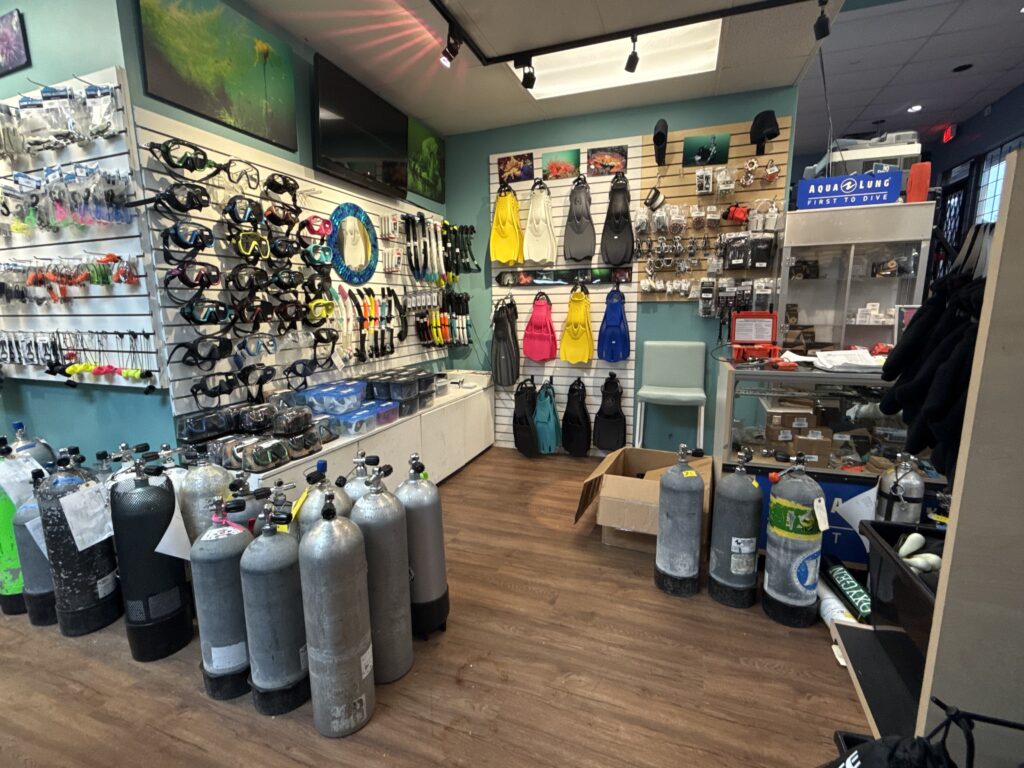
Today, she is living that dream. Ruiz Aguilar works as a dive safety officer with the University of British Columbia and a PADI course director and technical diving instructor at Ocean Quest Dive Centre in Burnaby, B.C.
But she admits that diving in the cold waters of Canada was a shock at first. “In the beginning, I was like, ‘What am I doing here?’” she says. “The equipment was heavy, and I didn’t find the drysuit to be that comfortable.” But she persevered after realizing the breadth and beauty of Canadian dive sites.
“Canada surprised me. Especially the marine life,” she says, explaining that one of the biggest attractions, for her, is that, just like on land, Canada boasts four seasons beneath the waves. In the tropics, with their relatively stable temperature, marine life remains relatively consistent year-round. In Canada, seasonal temperature shifts above the surface precipitate dramatic shifts in water temperatures, and with them, marine life.
In the winter, divers can enjoy good visibility with the trade-off being that there is less marine life. But when spring rolls around the focus turns to eggs being laid and babies being born. Large mammals like sea lions and whales return to feed, and as summer takes hold, the seas are filled with creatures great and small making the most of the bounty.
Having lived in Canada on and off since 2000, Ruiz Aguilar has observed everything from a dogfish eating an octopus to a raft of sea lions playing in the current. On one special occasion, she spotted a sixgill shark, a species typically found in much deeper water. There are unusual looking fish like the red Irish lord, nudibranchs in every colour of the rainbow, massive lion’s mane jellyfish and ever more massive marine mammals.“I don’t think Canada does a great job at showcasing what’s under the water,” Ruiz Aguilar says. “But [diving here] is so worth it.”
“We have some species here that you don’t see anywhere else on Earth. From the surface, the ocean here looks really dark. Then you start diving, and it’s amazing.”
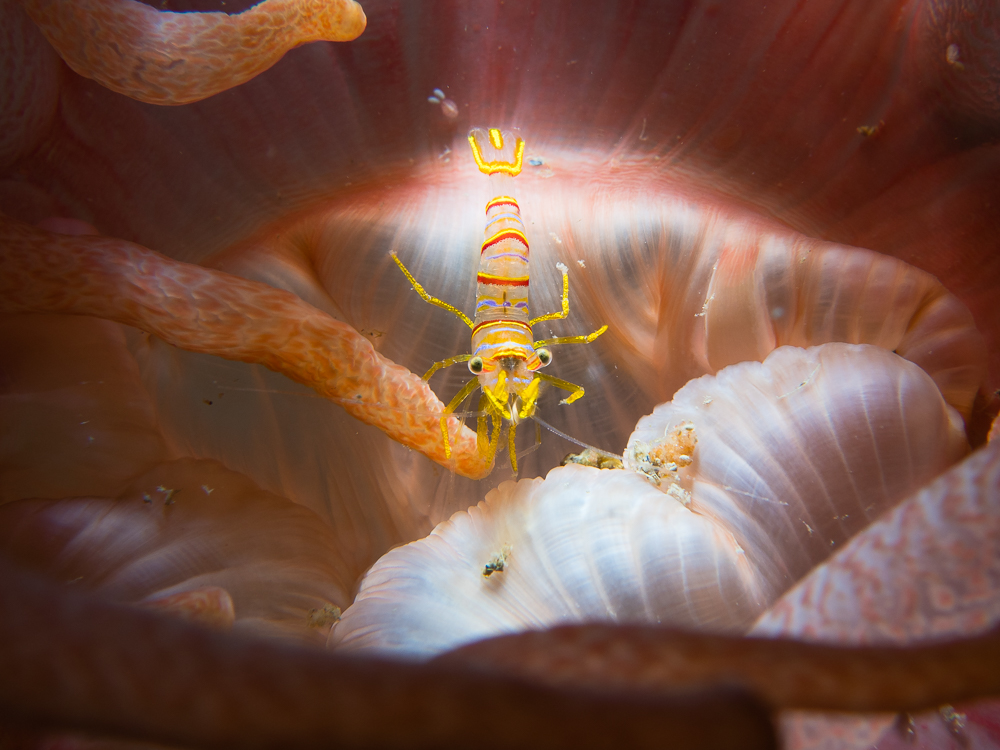
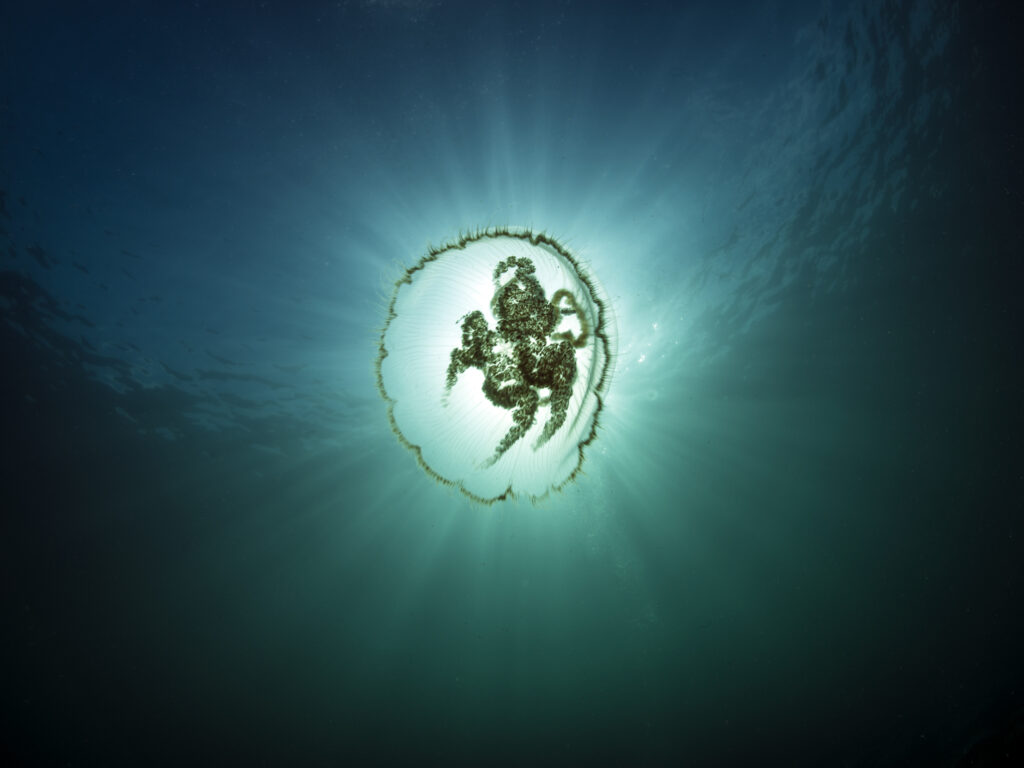
Completing the PADI Drysuit Diver eLearning course takes approximately four hours and covers all the basics, including the different types of drysuits, how to make repairs, safety precautions and diving guidelines. Once that is done, divers will get their feet wet (pun intended) with a pool dive before moving on to two open-water dives.
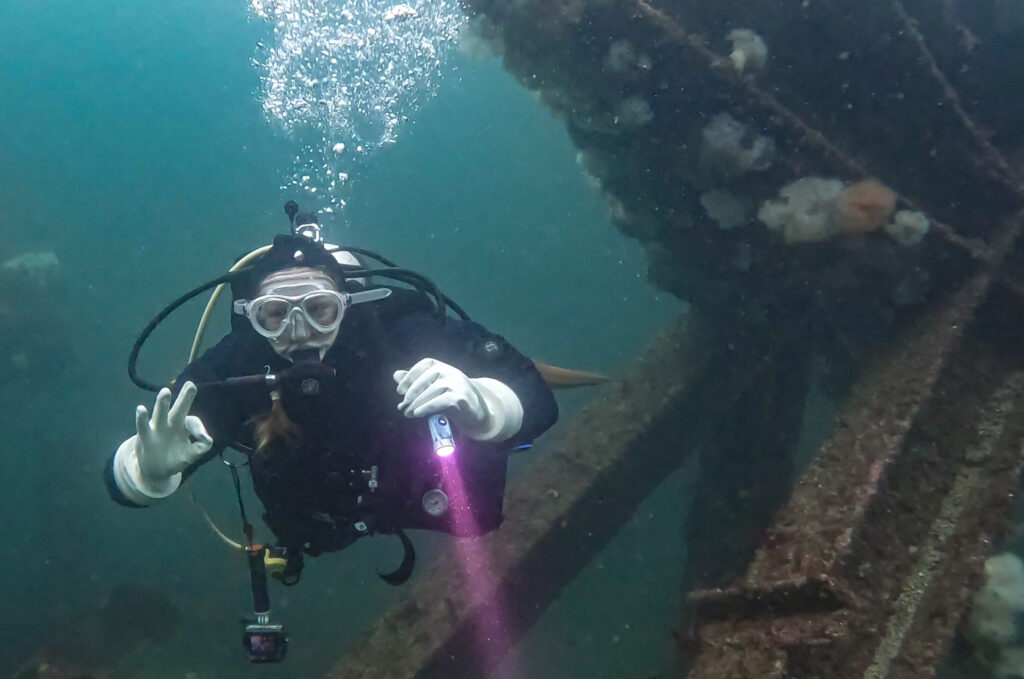
The process can be daunting, especially for someone learning to dive for the first time. “Sometimes just entering and exiting the water can be hard for people because the weight can be unexpected,” says Ruiz Aguilar. “Staying horizontal can also be hard because we can’t be going upside down or be going in loops because of the bubbles of air.”
During my own drysuit training, I struggled to stay horizontal. On several occasions, I noticed air pooling at my feet, causing my body to tilt. But Ruiz Aguilar taught me how to resolve the issue by performing a “Swimming U” to shift the air toward the exhaust valve so I could then dump it to restore control. Like with many things, becoming confident diving in a drysuit is all about practice and experience. But Ruiz Aguilar assures me that it’s a quick learning curve. “Once you get the feeling of it and start to build confidence, you can really start to have fun with it.” She’s right.
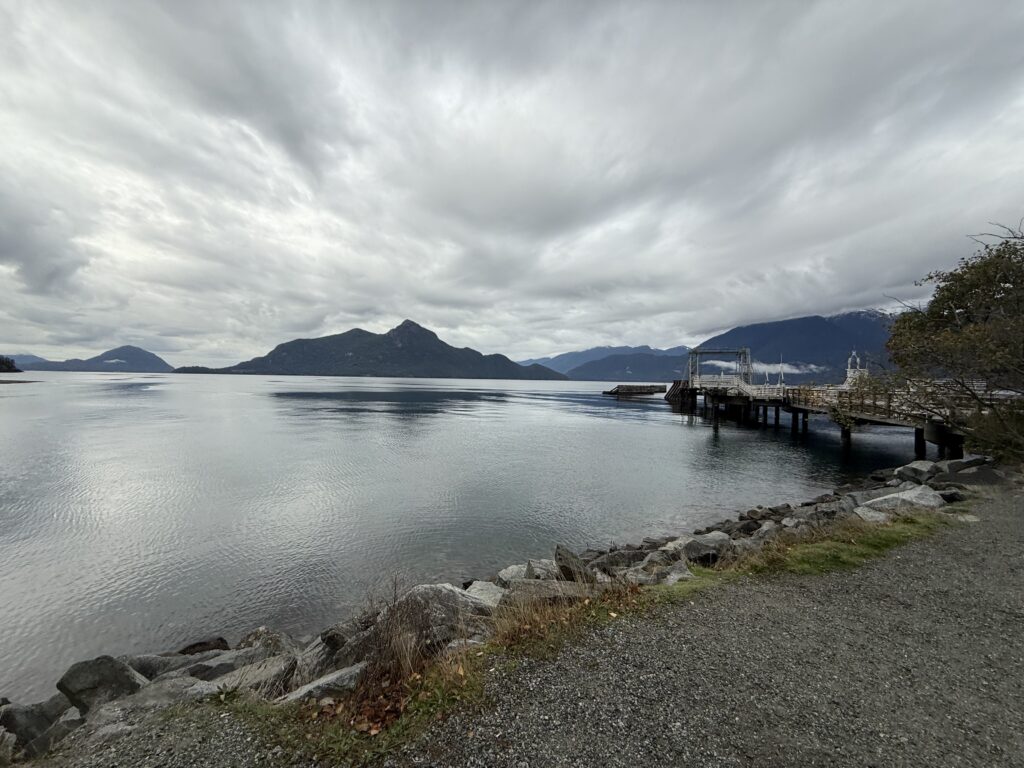
On my final day with Ruiz Aguilar, we head to Porteau Cove, another popular shore dive site along the eastern shore of Howe Sound, complete with artificially sunken shipwrecks and a surprising amount of marine life. Though my first pool dive was only two days ago, I already feel much more secure in my skills as I follow Ruiz Aguilar, pausing along the way to admire buffalo sculpin, wrecks and more giant Pacific octopuses.
It is sites like these that inspire Jill Heinerth to advocate tirelessly for Canadian waters. An accomplished explorer, storyteller, and advocate for underwater conservation, Heinerth is always looking at how best to deepen human connections to underwater environments, motivating us to better understand how these ecosystems are changing — work made possible through drysuit diving.
In The Berg, a new documentary presented by CBC’s The Nature of Things and hosted by Sarika Suzuki, Heinerth has used her camera skills to capture the life cycle of icebergs, showcasing the beauty and resilience of these behemoths and the ecosystems around them. Canada’s iceberg alley in Twillingate, N.L., is featured prominently, but this documentary also includes undersea footage captured by Heinerth, who dives beneath these frozen landscapes to showcase the lesser-seen beauty.
For Heinerth, storytelling allows her to deepen people’s connection to Earth’s underwater worlds. The drysuit makes it all possible. “Drysuit diving opens the door to places few would ever visit, allowing those moments to be shared. When we bring back images and stories from these experiences, we spark curiosity, share knowledge, and invite others to be part of the journey.”
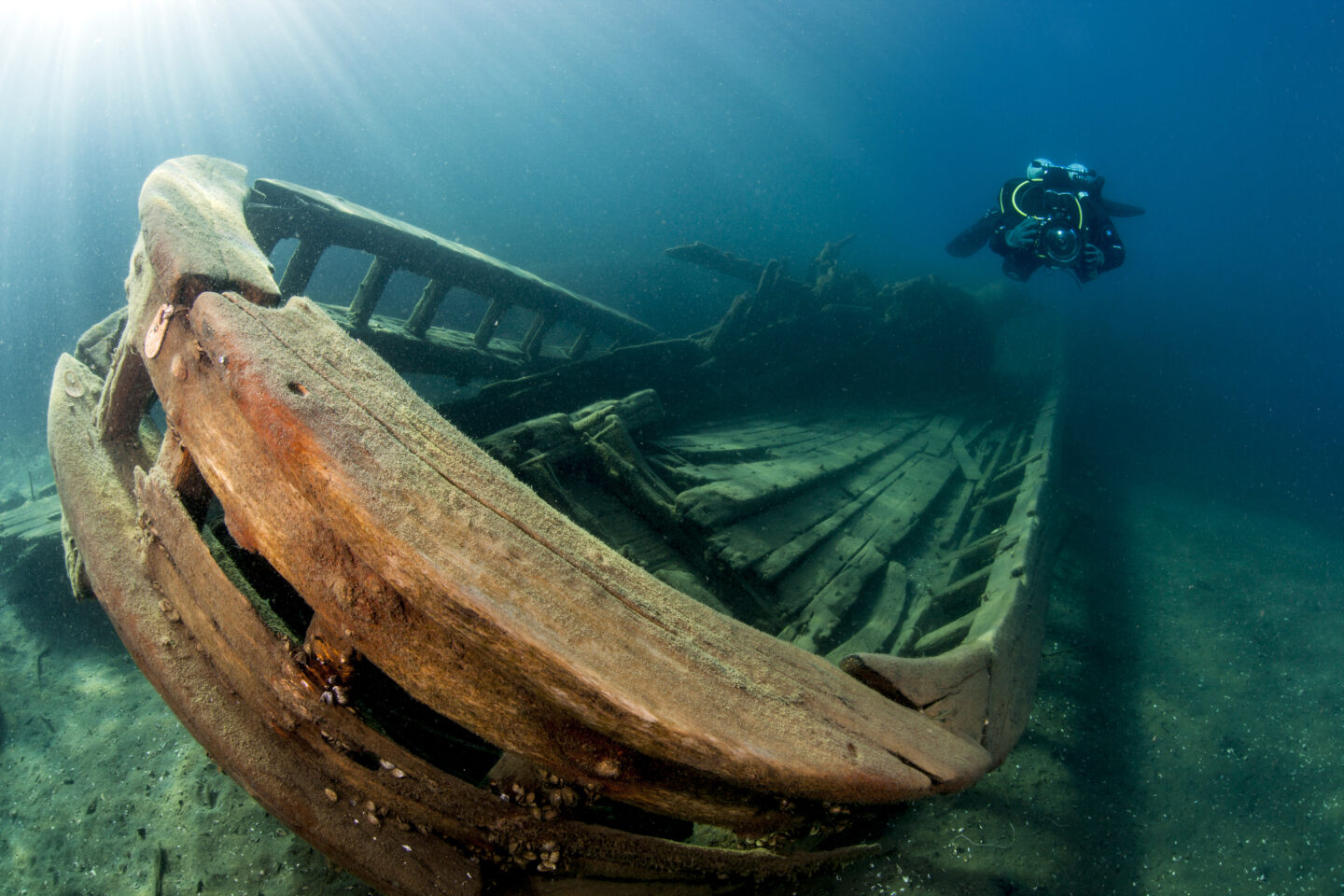
My first scuba diving experience was in Canada in 2015, specifically Lake Ontario in May. But instead of exploring 10°C water in a warm drysuit, I was miserable and shivering, sealed in a 7mm wetsuit. Snow still lingered along the shoreline, and I remember being the “last one standing” after the three other participants in my PADI Open Water Certification course dropped out after our first dive due to the cold.
Aside from being absolutely frozen, all I remember from that initial dive in Toronto’s Humber Bay Park is the poor visibility and hundreds of zebra mussels. After completing the two mandatory certification dives, I was convinced I would never dive in Canada again. Canada’s waters are cold, ugly, and boring, I thought.
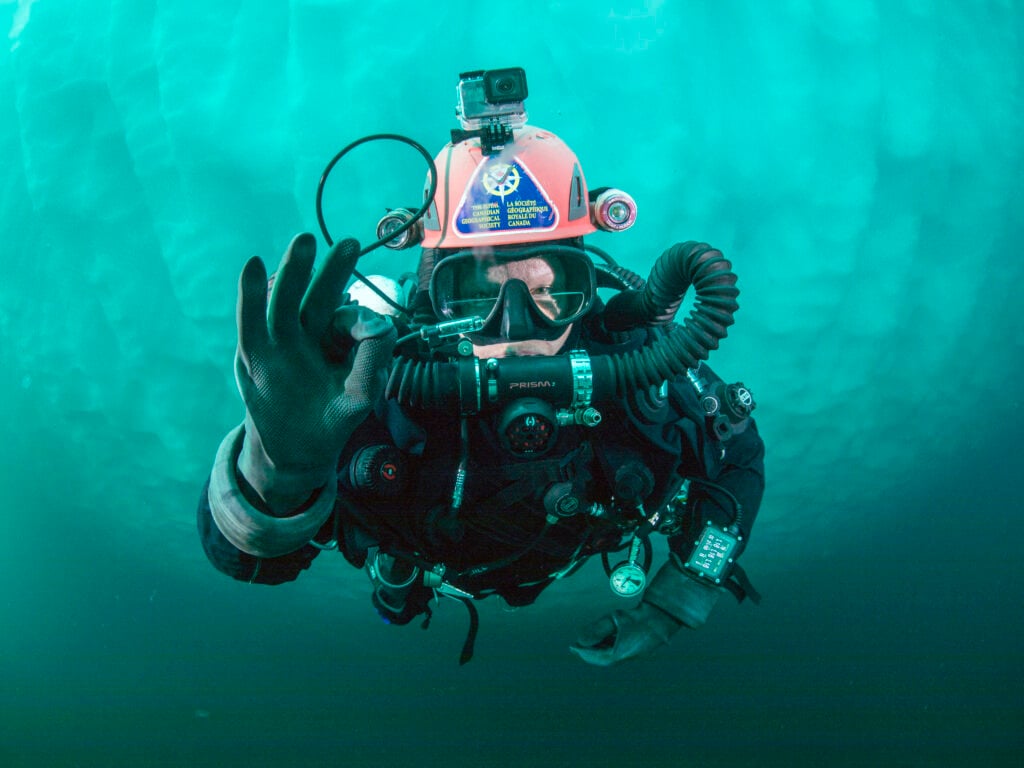
But a decade later, descending into the Pacific in a drysuit, I’ve realized how wrong I was. Like anywhere in the world, some sites are better than others as conditions vary and seasons shift.
“Oftentimes, new divers are not going to see the best we have to offer,” shares Heinerth.
“They need to perform skills for an instructor and don’t have the mental bandwidth to truly enjoy the environment.” That was exactly my experience. After becoming certified, I immediately gravitated toward renowned dive sites as far away as I could get from chilly Lake Ontario. From Belize’s Great Blue Hole to the reefs of Koh Tao, Thailand, for years, I believed I needed to board a plane to truly appreciate the underwater world.
But earning my drysuit certification has shifted my perspective. Comfort in cold water changes everything. It turns a dive from something to endure into something to experience. It allows for stillness and appreciation.
Canada’s waters may require more preparation, more layers and a willingness to adapt. But beneath the surface lies a dynamic, seasonal ecosystem shaped by three oceans and countless inland lakes. Our waters aren’t tropical, and exploring them may not always be easy, but they are well worth the effort, breathtaking and teeming with life.
Travel
Discovering beauty and resilience on the world’s second-largest barrier reef
Travel
Taking a closer look at Kingston’s museums below the surface
People & Culture
The Professional Association of Diving Instructors (PADI) launched a simple idea in 2015 — encourage women to gather together for a day of their own — Women’s Dive Day. In…
Exploration
How research on little-known “marine animal forests” could shine a light on ocean hope spots — and why they need protecting