
People & Culture
Thirty years of Neskantaga First Nation’s boil water advisory
The trauma of an entire generation without access to safe drinking water has left its mark
- 4630 words
- 19 minutes
People & Culture
Edmonton’s north side has sustained both appetite and tradition for more than half a century
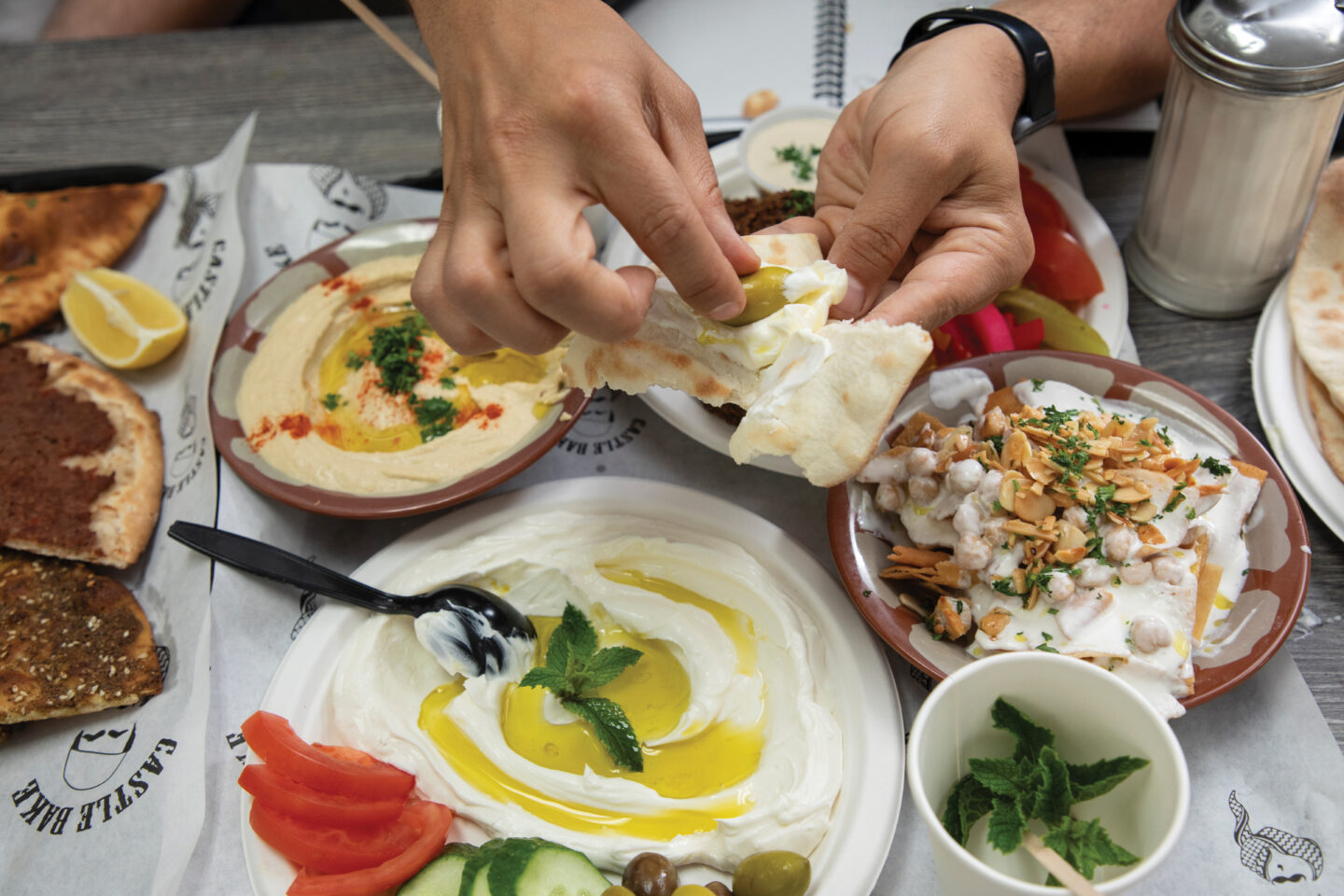
Hidden among the nondescript 1970s cul-de-sacs and strip malls of Edmonton’s north side is a culinary enclave locals lovingly call Little Lebanon. You won’t find white tablecloths or reservation lines here. This is casual, counter-service dining — family-run bakeries, grocers and kitchens where the garlic is punchy, the pita is warm and the food tastes like home.
At the heart of it all is Canada’s his- toric Al Rashid Mosque, which relocated here in 1982 after nearly 50 years downtown. In the 1970s and ’80s, the Lebanese Civil War triggered a wave of migration, and Edmonton’s small but established Lebanese community played a vital role in helping relatives flee the violence — sponsoring them, finding them work and helping them resettle. As these new arrivals joined the growing community, many made their homes in what were then new suburban neighbourhoods on the north side — and with them came the businesses that sustained their traditions. Over the decades, their numbers swelled from a few hundred to more than 15,000. Today, the strip malls around Al Rashid bustle with the food, services and spirit of the old country.
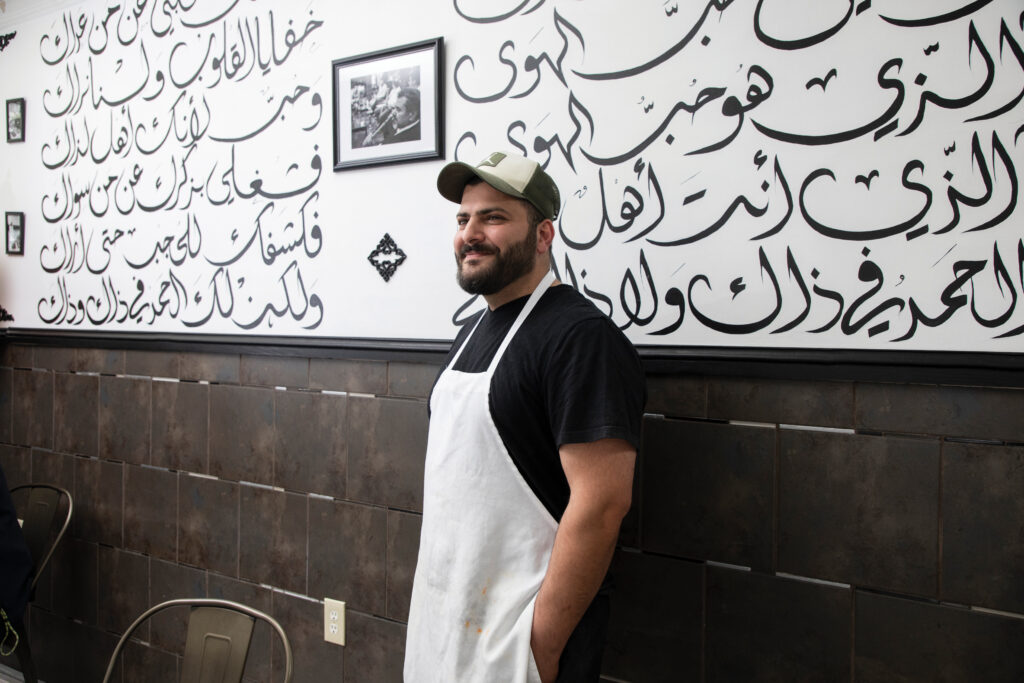
I start at Castle Bake, tucked beside a daycare in a quiet suburban plaza. From the outside, it’s unassuming, but inside feels like a small Levantine palace. Arabic calligraphy adorns the walls — verses from an eighth-century poem — alongside black-and- white family portraits of the Haymour clan and images of Old Sana’a, Yemen (the family proudly traces its origins to the ancient Himyarite Kingdom). The Haymours — 11 siblings strong — opened Castle Bake in 2010, but their story stretches back decades, to when their late father, Hamad, immigrated to Edmonton and eventually ran a burger joint called Baron Burger — a shameless knock-off of Burger Baron, the quirky Alberta chain with its own legacy of Lebanese entrepreneurship. Like many families of that era, they leaned into western-style fast food because it was easier to sell than toum and tabbouleh. Castle Bake, though, became their way of returning to the flavours of home.
I meet co-owner Saif Haymour over a platter of man’eesh flatbreads and feteh — a layered dish of toasted pita, chickpeas, garlic yogurt and toasted nuts. You rarely see it on menus, even though it’s a staple of Lebanese homes. During Ramadan, people often come here for suhoor, the pre-dawn meal, before heading to the mosque for Fajr prayer, which marks the start of the fast. “I remembered how in Lebanon every bakery was open in the middle of the night, so we decided to bring that here in Edmonton,” Haymour tells me. “It’s packed every night from 10 p.m. to 4 a.m.”
From Castle Bake, I head to the places that really feed the community: the grocery stores. The fact is, most Lebanese families still cook at home, so there aren’t as many authentic Middle Eastern restaurants in the community as one would wish. The grocery stores are the true hubs of social and cultural life.
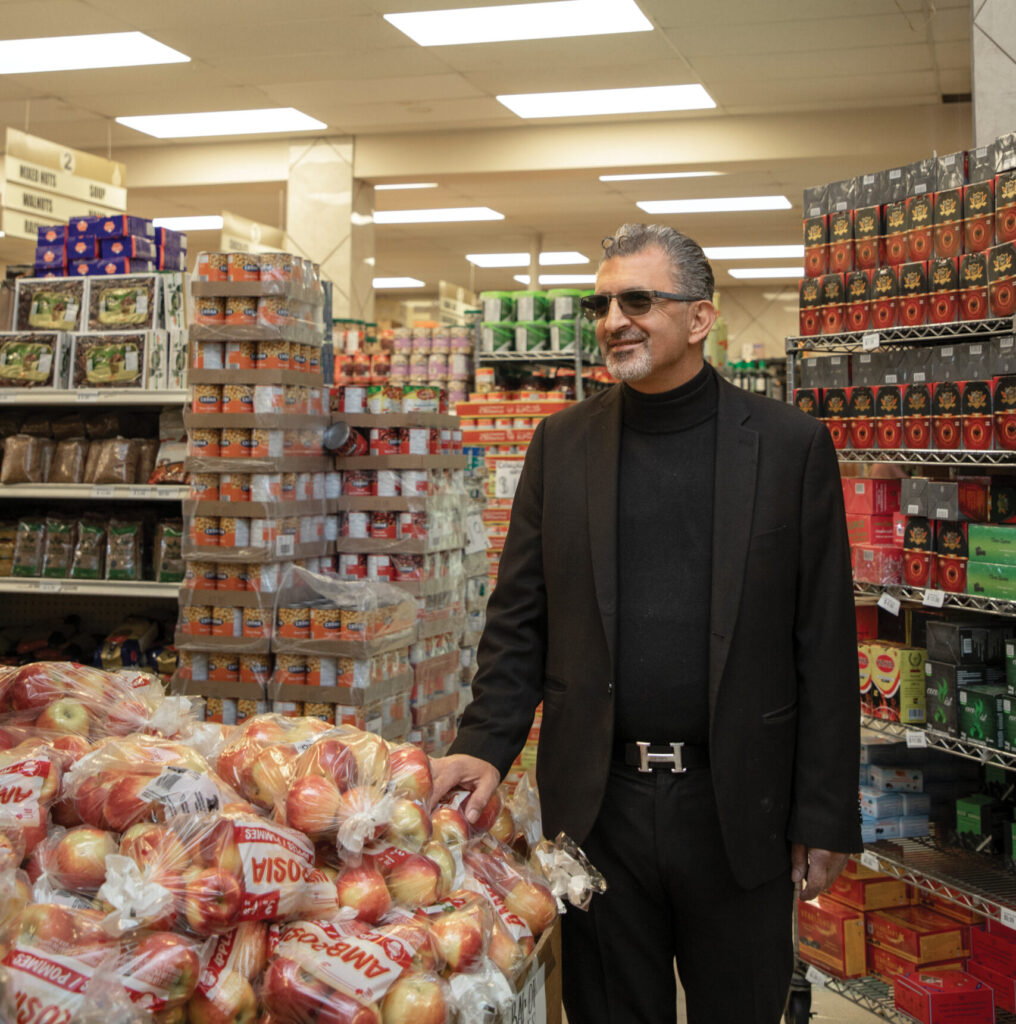
The undisputed grocery king of Little Lebanon is Elsafadi Brothers. Walk through its front doors, and it’s like being teleported to a Beirut supermarket. At the deli counter, I eye soft baladi cheese and oily labneh balls. Owner Waleed Elsafadi explains that his father started by peddling produce and Middle Eastern imports out of a truck back in the 1950s. His sons built on that legacy with the first of two (soon to be three) supermarkets in 1985. Now, they stock over 15 exclusive product lines — everything from makdous (preserved stuffed baby eggplants) to halal marshmallows. “We manufacture our own products strictly for our stores,” he tells me. “It’s like our version of President’s Choice.”
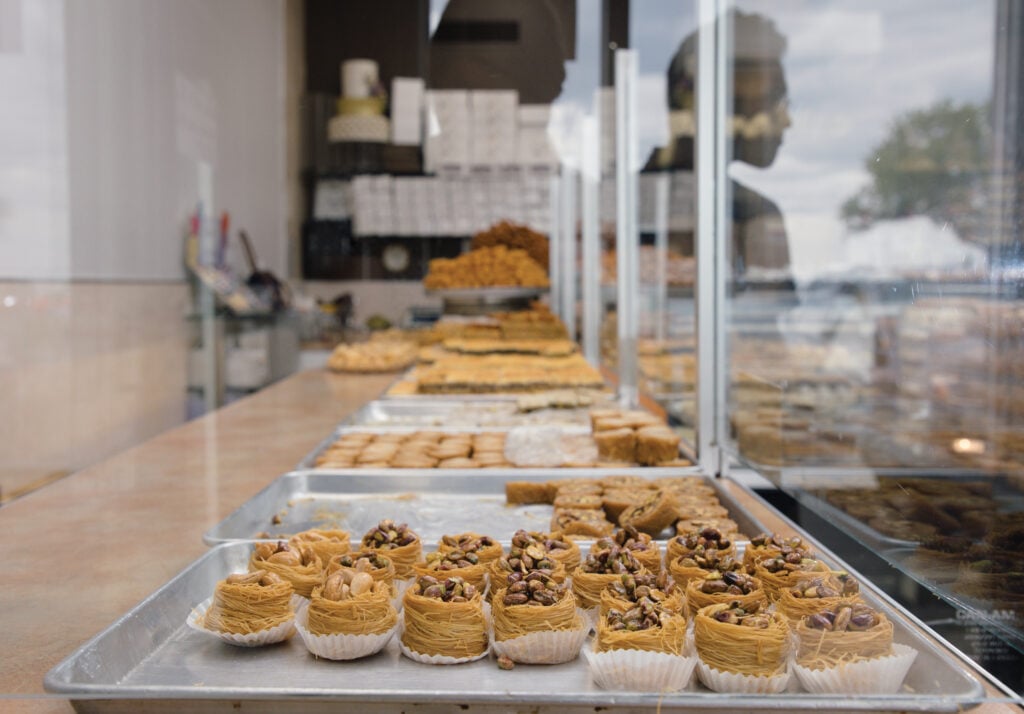
Right next door is Paradiso Pastries, a longtime staple known for its daily made baklava. The pieces are chewy, syrupy and sold by the box or individually wrapped like jewels. But I never leave without my real favourite: the knafeh sandwich. If you’ve never had knafeh, imagine warm, stretchy cheese under a crispy layer of semolina or shredded phyllo, soaked in rosewater syrup. When stuffed inside thin sesame bread and eaten on the go, it becomes the Lebanese version of a breakfast sandwich. Growing up, we’d eat knafeh for dessert after Ramadan feasts — then again the next morning, pressed between pita. Decadent? Yes. But somehow still breakfast.
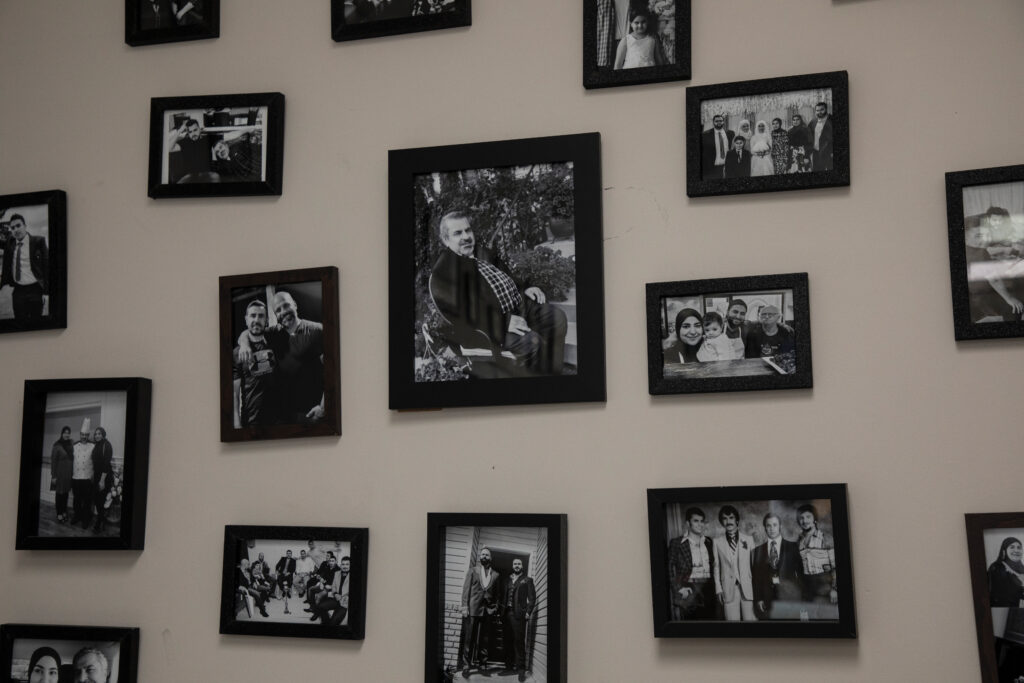
Just down the block, a strip mall near Al Rashid Mosque hums with Lebanese businesses: an Islamic fashion shop, a hookah store, a halal butcher and even a halal pizzeria. At Cedar Sweets, I pop in for a taste of booza — Arabic ice cream. Its silky, stretchy texture comes from salep, a flour made from wild orchid tubers. I always go for the rolled ashta flavour, the rich clotted cream offset by a dusting of pistachios and rose petal flakes.
I end up at Sunbake Pita Bakery, where brothers Abdallah and Gehad Mouallem (yes, we’re related) walk me through the newly renovated kitchen. Known as Alberta’s top pita supplier, Sunbake is also the spot for man’eesh — flatbreads topped with za’atar, salty cheese or minced meat. They churn out hundreds every hour from a flaming rotary pizza oven imported from Italy. Behind the scenes, women fold dozens of fatayer — meat and spinach pies — filled with lemony tart greens or savoury spiced beef.
New on the menu is rotisserie chicken: butterflied, marinated for three days, turned over in a rotisserie oven, then smoked over coals to order. As I leave with one tucked under my arm, along with a sack of spiced Lebanese nuts, my car fills with the smell of garlic, cumin and charcoal. The smell of the homeland — even if you’ve never been.

This story is from the September/October 2025 Issue
People & Culture
The trauma of an entire generation without access to safe drinking water has left its mark
People & Culture
Uprooted repeatedly by development projects, the Oujé-Bougoumou Cree wandered boreal Quebec for 70 years before finding a permanent home. For some, the journey continues.
People & Culture
Throughout the Great Lakes, Anishinaabeg communities work together to sow the seeds of success for wild rice
Travel
Robin Esrock investigates the growing trend of alcohol-free wine, beer and spirits