
People & Culture
The Grey Cup turns 100
With the 100th Grey Cup set to kick off this November, the Canadian Football League and its rough-around-the-edges charm is winning converts
- 4212 words
- 17 minutes
History
Toronto welcomes the FIFA World Cup to Canada, after a century and a half of the beautiful game

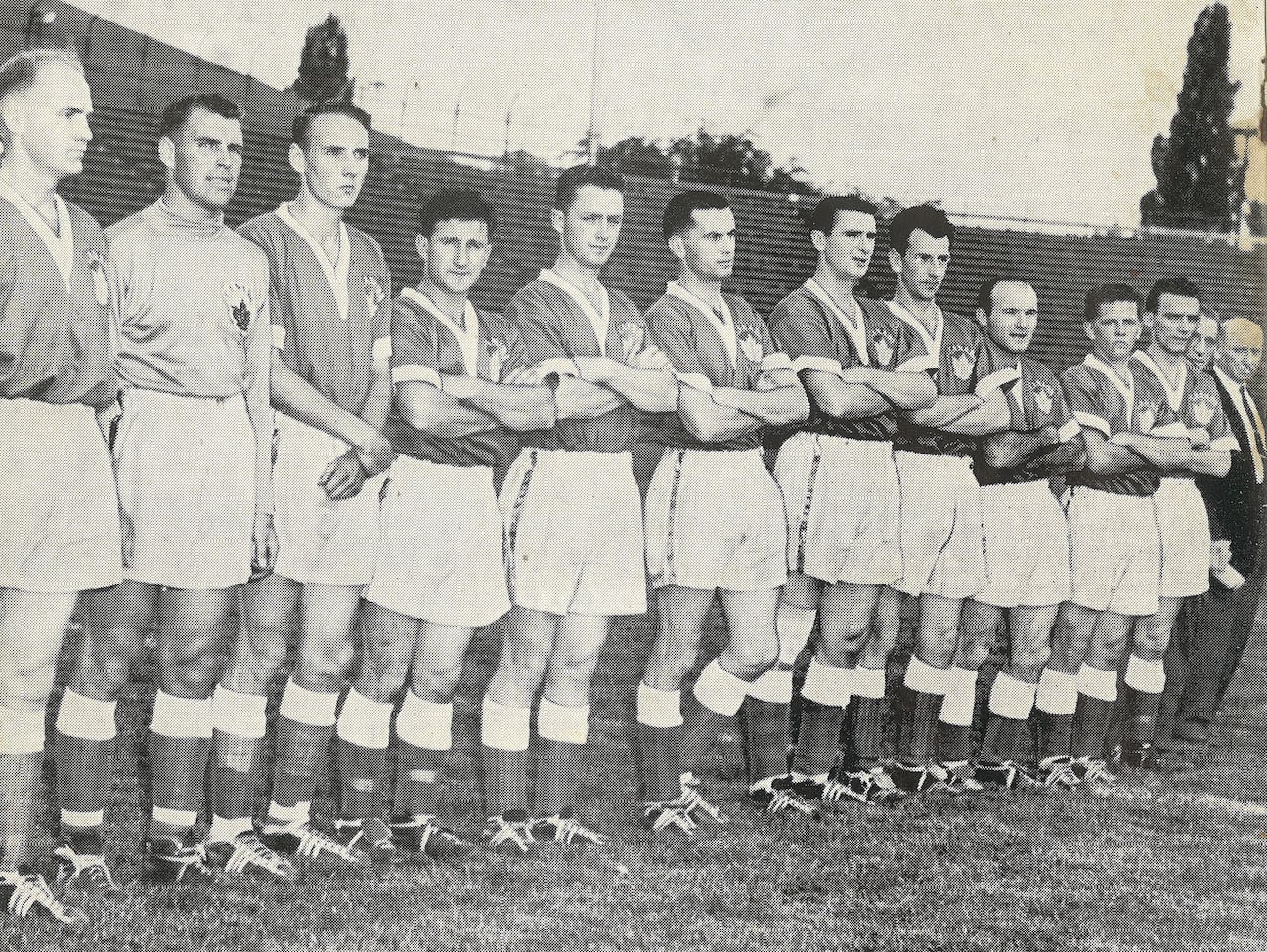
On a Saturday afternoon in fall 1876, two teams of 11 young men take to the field to play a game with unusual rules — the ball has to be kicked across the field, and no one, except the goalkeepers, can use their hands.
It was the first-ever game of soccer in Canada, played October 21, on Winchester Street in Cabbagetown, Toronto. This recreational match, which ended in a tie, pitted the Carlton Cricket Club against the Toronto Lacrosse Club, two clubs interested in the sport that had recently become popular in Britain. Originally called “association football,” the shortened form “soccer” (from the “soc” in the word “association”) eventually caught on in North America to differentiate it from other kinds of football.
Fittingly, 150 years after that first game, Toronto will host the first-ever FIFA Men’s World Cup game in Canada, with Canada playing Bosnia and Herzegovina on Friday, June 12.
“Soccer has had a special place in the heart of the city of Toronto for a long, long time,” says Richard Scott, staff lead of Canada Soccer’s heritage and hall of fame committee.
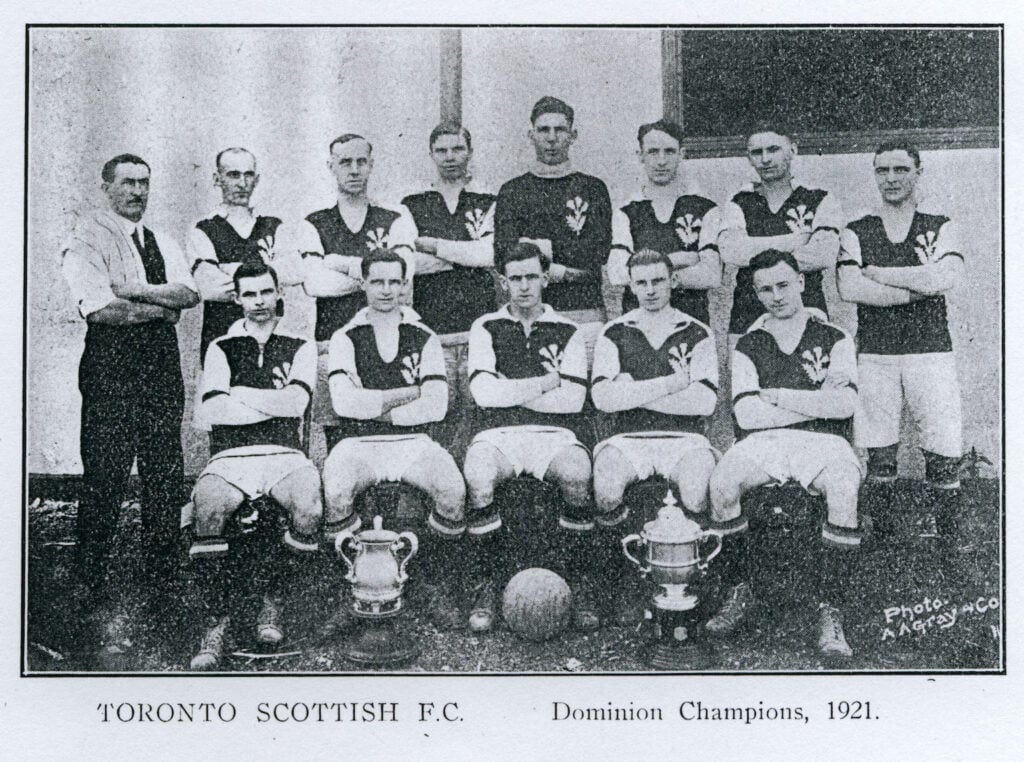
By 1912, when the Dominion of Canada Football Association (today known as Canada Soccer) was formed, local leagues and associations had popped up across the country. The association established an annual club championship across Canada, soon to feature teams from coast to coast. The first winners from Toronto were Toronto Scottish FC, who beat Vancouver Island’s Ladysmith FC in the 1921 final.
Clubs were sometimes formed by groups of athletes from the same home country, such as Toronto Scottish FC, founded by Scottish immigrants in 1917. Immigrants from soccer-playing countries have always helped to grow the game in Canada, Scott says. “People from all over have historically brought that interest, a contribution to the game.”
The rest of the 20th century was full of stops and starts — teams in Toronto formed and disbanded, due to financial issues or lack of support.
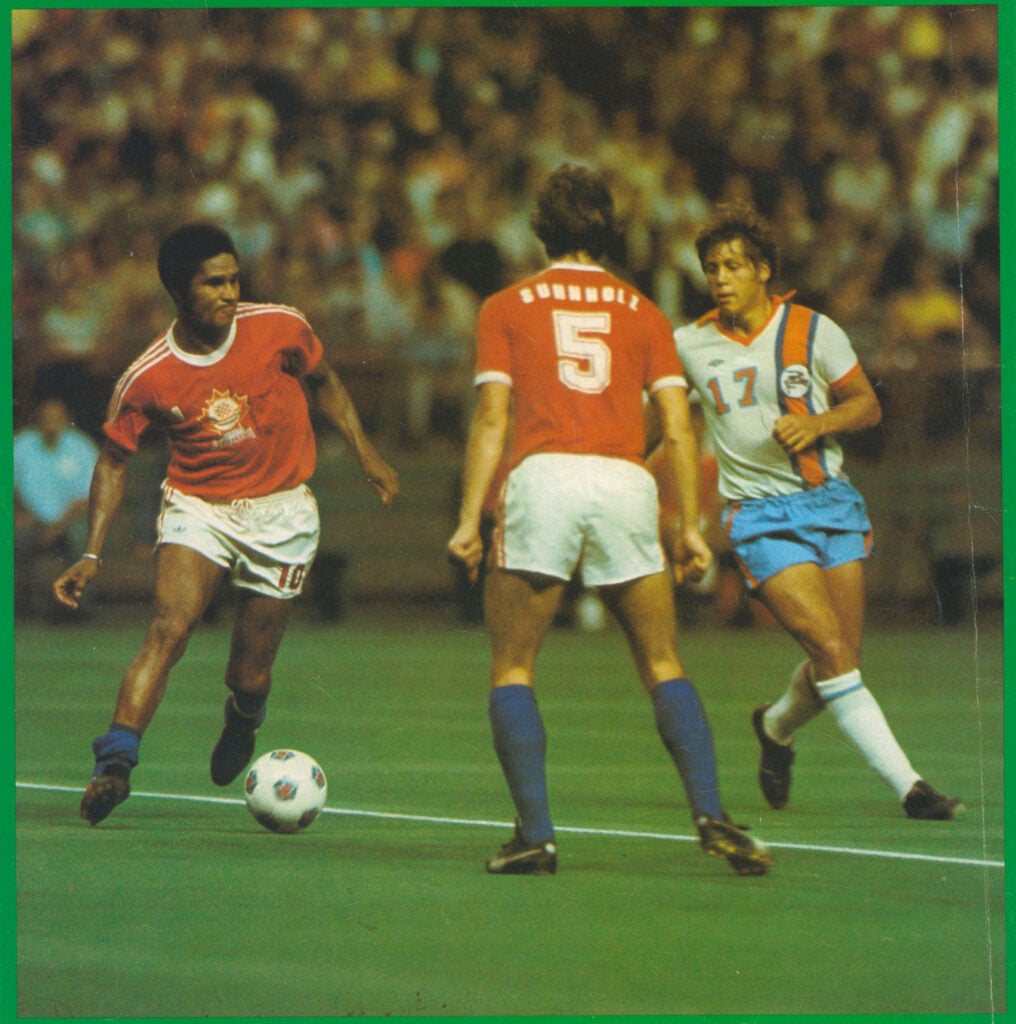
Some of the big names playing for Toronto clubs over this period include English winger Stanley Matthews and Mozambican Portuguese striker Eusebio, winner of the 1965 Ballon d’Or (awarded to the best soccer player in the world each year) — though both were past their best when they played, respectively, for Toronto City and Toronto Metros-Croatia (a club that, in a similar vein to Toronto Scottish, mostly featured players of Croatian and Yugoslavian descent).
Canada withdrew from FIFA in 1926, in a joint protest with British football associations over the organization’s stance that amateur players shouldn’t be paid. They didn’t rejoin until over two decades later.
So, although the World Cup began in 1930, Canada couldn’t attempt to qualify until the tournament of 1958.
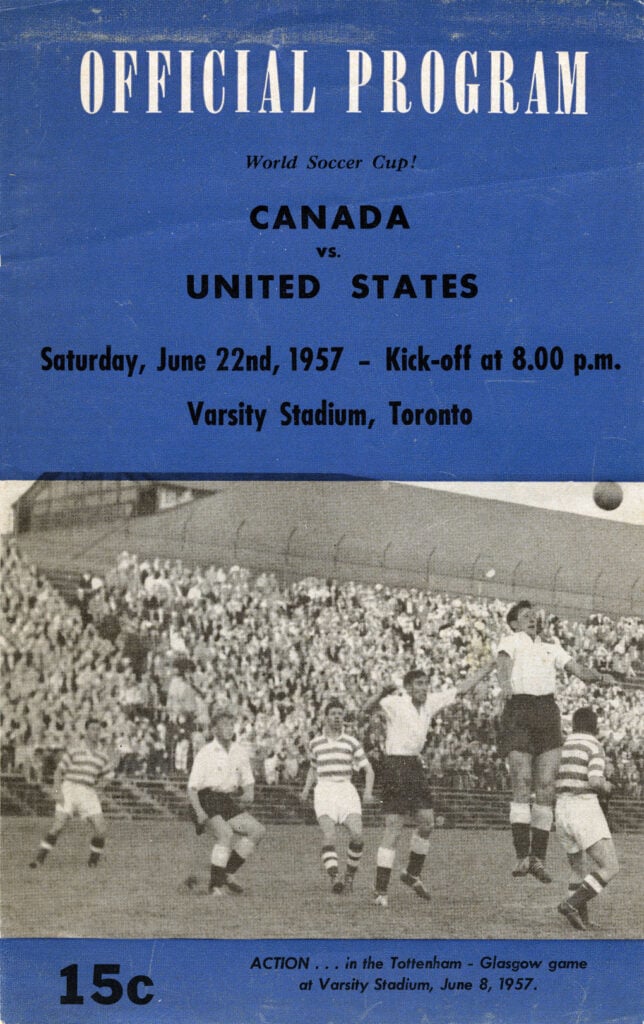
Canada won 5-1 against the United States in its first-ever World Cup qualifying match, on June 22, 1957, at Varsity Stadium in Toronto. Unfortunately, Canada would lose to Mexico twice in its next two matches and fail to make the tournament. The team wouldn’t qualify for a World Cup until 1986. This year marks only the third time Canada’s men will play at a World Cup, following the team’s participation in 2022.
Since its earliest days, one challenge to the success of soccer in Toronto, and most of Canada, is that it’s a challenge to play outside year-round — though a report in The Globe (the predecessor to The Globe and Mail) from 1877 describes one especially motivated team who practised “all winter on the snow.” Soccer also had competition from already-popular summer team sports, like cricket and lacrosse, just as it does now from basketball and baseball.
Another Globe article, a year later, predicted that “though [soccer] is not at all likely to become a national game in any sense of the word, there is a strong probability of its obtaining a firm foothold here.”
But Scott thinks things are shifting. “The game [in Canada] has changed by leaps and bounds,” he says. He adds that “the momentum has really been there the last 20 years,” citing the 2007 men’s under-20 World Cup, which Canada hosted, as a major milestone. That tournament featured players who would go on to be global superstars, like Sergio Aguero, Angel Di Maria and Luis Suarez. But most important for Canadian soccer was the construction of BMO Field in Toronto, which was built for the tournament and held the final. The stadium has also been the home of Major League Soccer team Toronto FC since its inception in 2007.
Now, BMO Field — which has temporarily been renamed “Toronto Stadium” for the tournament — will be the venue for Canada’s opening game on June 12, as well as five other World Cup games. “BMO Field is a real shining light,” Scott says. The international-standard stadium on the Toronto waterfront was part of what made Canada eligible to host the World Cup (although it did need to temporarily add 17,000 seats to meet FIFA’s 45,000-seat capacity requirements).


As Canada takes to the world stage, there seems to be a growing Canadian appreciation for “the beautiful game.” The Department of Canadian Heritage identifies soccer as the most popular sport among Canadian children, and, according to Canada Soccer, it is the fastest growing sport in the country.
Scott, who will be at Friday’s game against Bosnia and Herzegovina, can’t wait for the tournament to start. “It’s just the best athletes in the game, and they’re going to be on display right here, day in, day out. I’m really looking forward to the spectacle,” he says. “It’s a very unique, exciting moment.”
People & Culture
With the 100th Grey Cup set to kick off this November, the Canadian Football League and its rough-around-the-edges charm is winning converts

Science & Tech
From an Abbotsford, BC farm to the Canadian Men’s National Team’s greatest World Cup win: how it took hundreds of thousands of dollars, dozens of workers and one whole year to grow the perfect FIFA soccer field

Places
Remembering P.E.I’s iconic natural wonder after being washed away by Hurricane Fiona in the fall of 2022

People & Culture
Canadians encouraged to submit feedback on the design they'd like to see installed in the nation's capital in 2017, the 125th anniversary of the first Stanley Cup