
Travel
Bermuda: The perfect island getaway
Complete with historic towns, picturesque beaches and breathtaking scenery, Bermuda is the perfect escape with plenty to do and an endless amount to see
- 1593 words
- 7 minutes
Travel
Decades after a horror movie sparked his fascination with the Bermuda Triangle, Robin Esrock travels to Bermuda to investigate the mystery for himself

My long, strange journey to the Bermuda Triangle begins with a priest floating on a plane wing in the middle of the Atlantic Ocean. He’s the sole survivor of a plane crash, but is fortunate to be rescued by a chartered fishing boat. As soon as the priest hops on board, a strange storm appears on the horizon. The panicked crew recognize evil when they see it, jump into a small dinghy and abandon their captain and clients. A few days later, a U.S. Coast Guard helicopter responds to a distress call to find the damaged boat with all passengers on board horrendously deceased, save for the sinister-eyed starlet Kim Novak. That’s when things get weird, slightly kinky, and terrifying.
This is the plot for a 1975 Movie of the Week called Satan’s Triangle, and it scared the bejesus out of me as a kid. The film opens with a narrator announcing: “Just off the east coast of the United States, more than a thousand men, women and children have vanished from the face of the Earth. No one knows how. Or why. This is one explanation.”
As a young boy watching a bad horror movie on TV when he really should have been reading Babar the Elephant, I took it as the only explanation.
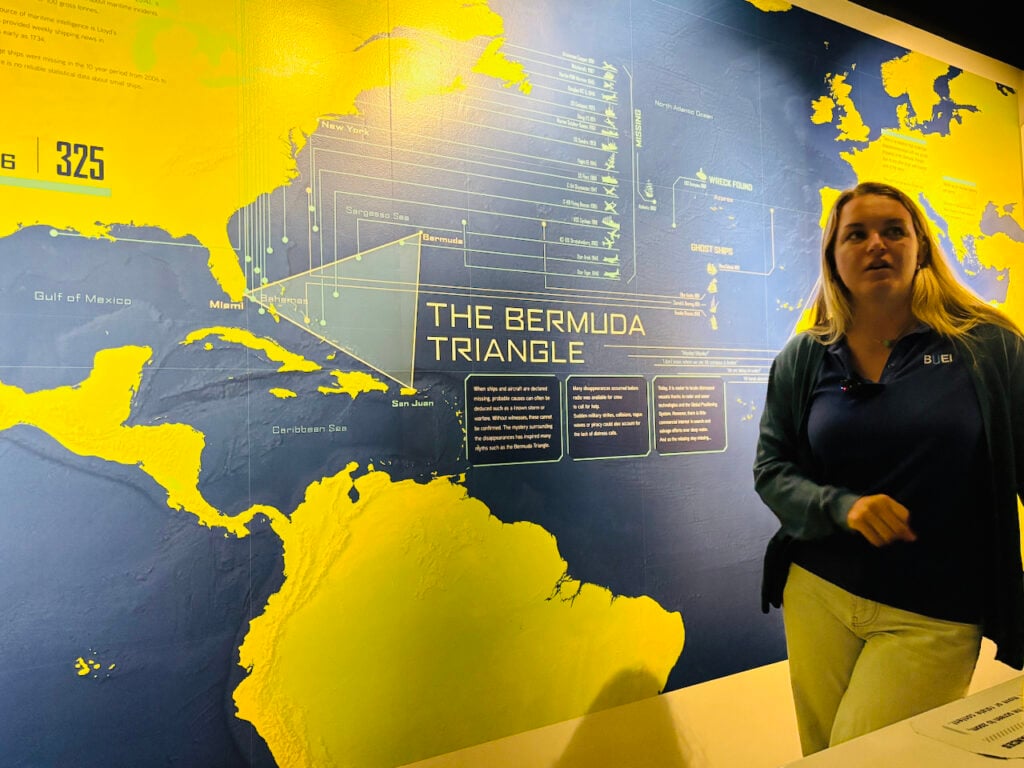
Connecting Puerto Rico, Miami and Bermuda, the Bermuda Triangle was first coined in 1964 in a popular magazine article by a writer named Vincent Gaddis. A year later, he released a bestselling book, recounting the mysterious disappearance of boats, ships, planes, and a squadron of WWII fighter planes, all of which seemingly vanished into thin air.
With public interest in the paranormal skyrocketing, the idea of an ominous Bermuda Triangle (also known as the Devil’s Triangle) took root in popular culture. Dubious tales emerged of compasses spinning wildly, equipment failing, and spooky mayhem raining down on this vast section of the North Atlantic.
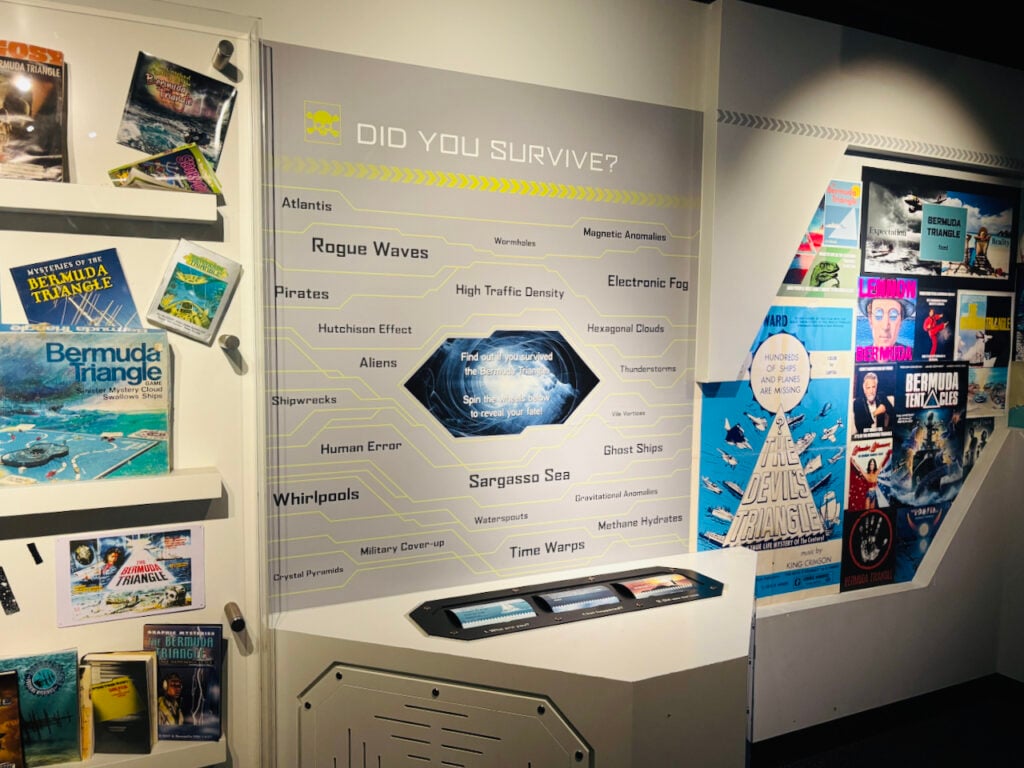
The island nation of Bermuda sits on a seamount surrounded by sharp reefs in the middle of the Atlantic Ocean. As a result, Bermuda has records of more than 300 known shipwrecks, although not all are attributed to the treacherous reefs. Hurricanes, strong currents, rogue waves, shifting magnetic fields, methane hydrates, and human error have also played a likely role in the tragedies. Some people believe aliens, the lost city of Atlantis, military cover-ups, piracy, and sea-demons disguised as priests might be involved too. I’m determined to dive to the bottom of it, which is how I find myself flying into Bermuda on a particularly bumpy plane ride. Rocking through the turbulence, I wonder if a demon is hitching a ride on our plane wing.
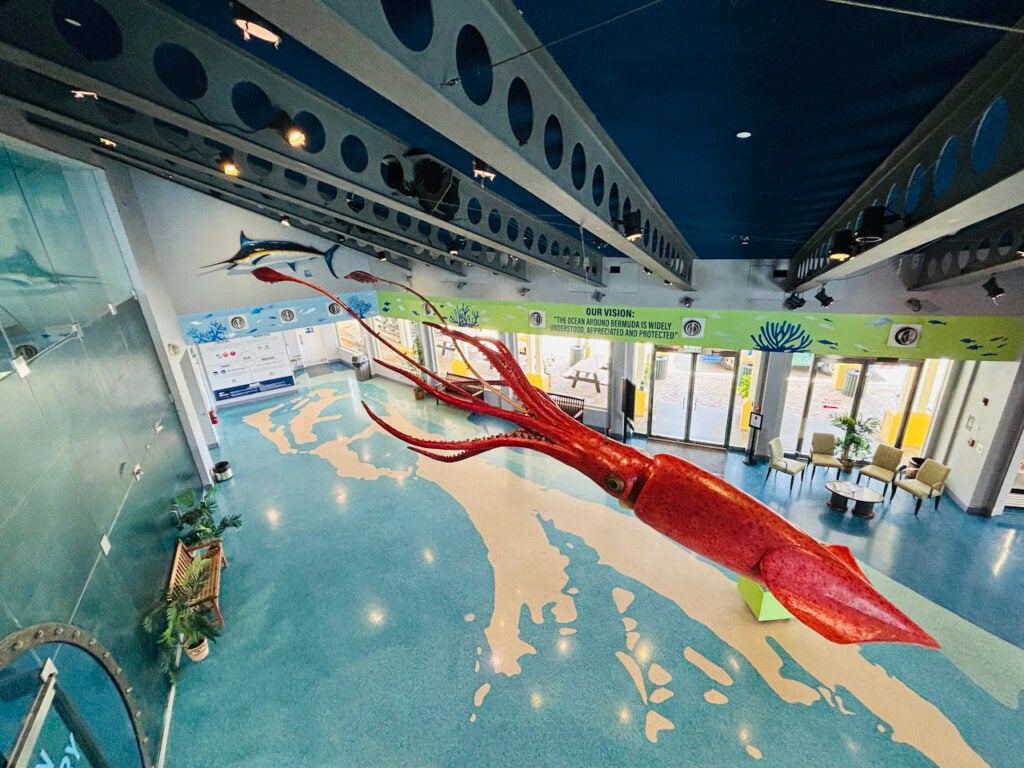
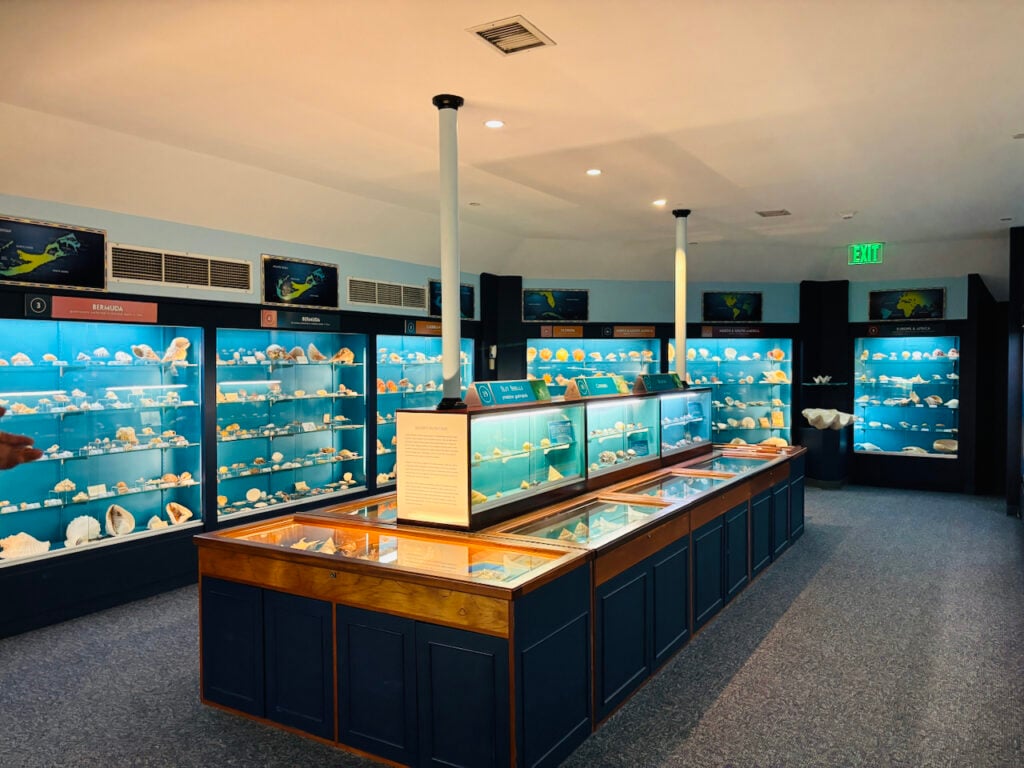
A bus of local school kids arrives at the Bermuda Underwater Exploration Institute, their eyes widening like saucers when they see a giant squid statue suspended from the ceiling over the lobby. The centre devotes itself to educating the public and conserving Bermudian waters, with exhibits on diving, pollution, vanishing seagrass, the island’s unique topography, shipwrecks, and one of the largest private shell collections in the world.
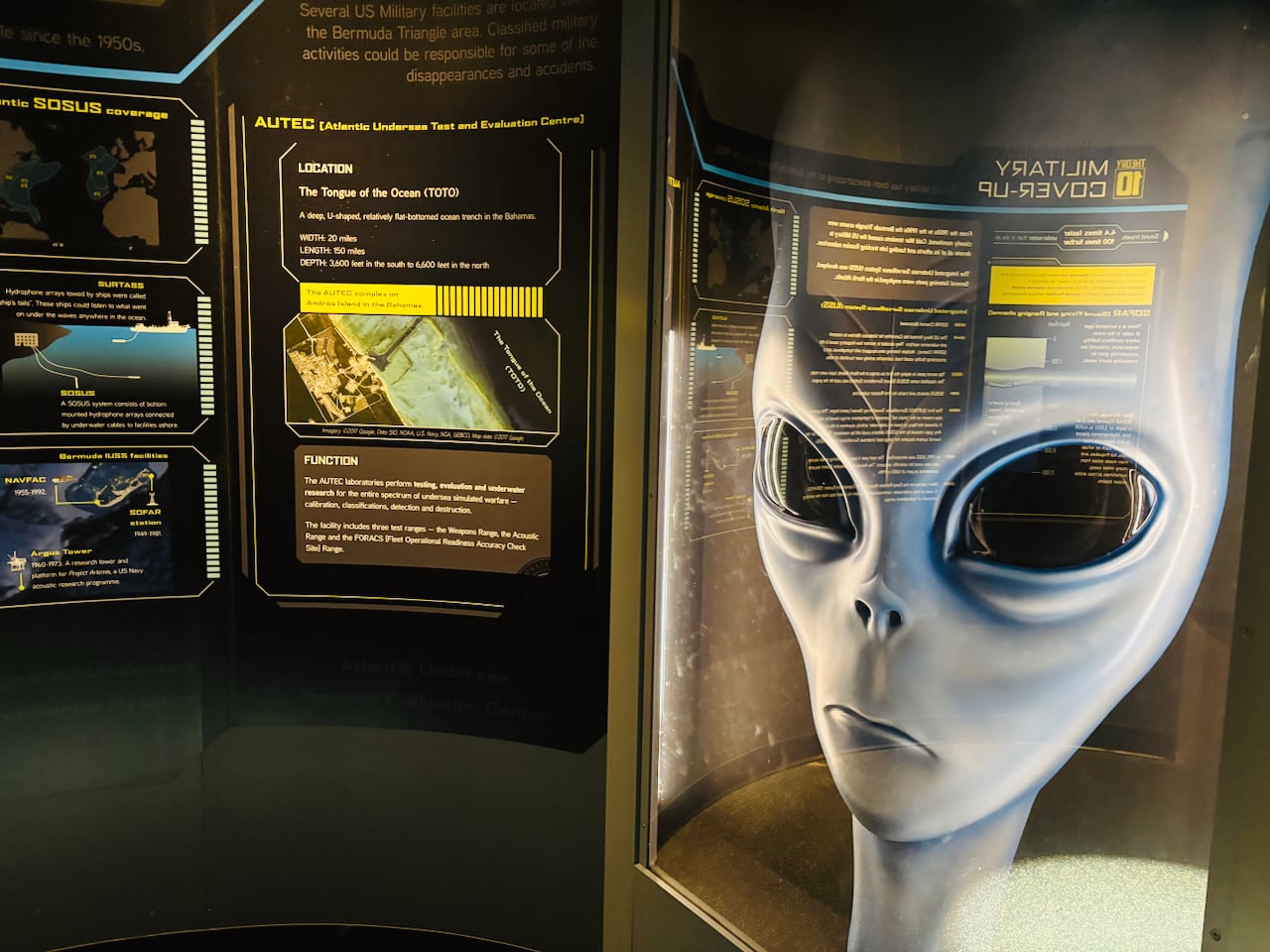
An interactive exhibit about the Bermuda Triangle is the perfect place to search for clues to this enduring mystery. As Agent Mulder repeatedly states in The X-Files: the truth is out there, and I want to believe.
Interactive boards explain the island’s unique geography and provide information on dozens of aircraft and ships that have gone missing. The exhibit addresses both natural and supernatural theories, and like the myth itself, it straddles the line between spooky fun and real scientific evidence. Bermuda Underwater Exploration Institute Programme Director Hannah Horsfield grew up in Bermuda and has often sailed through the Triangle. I ask her if she encountered any weirdness.
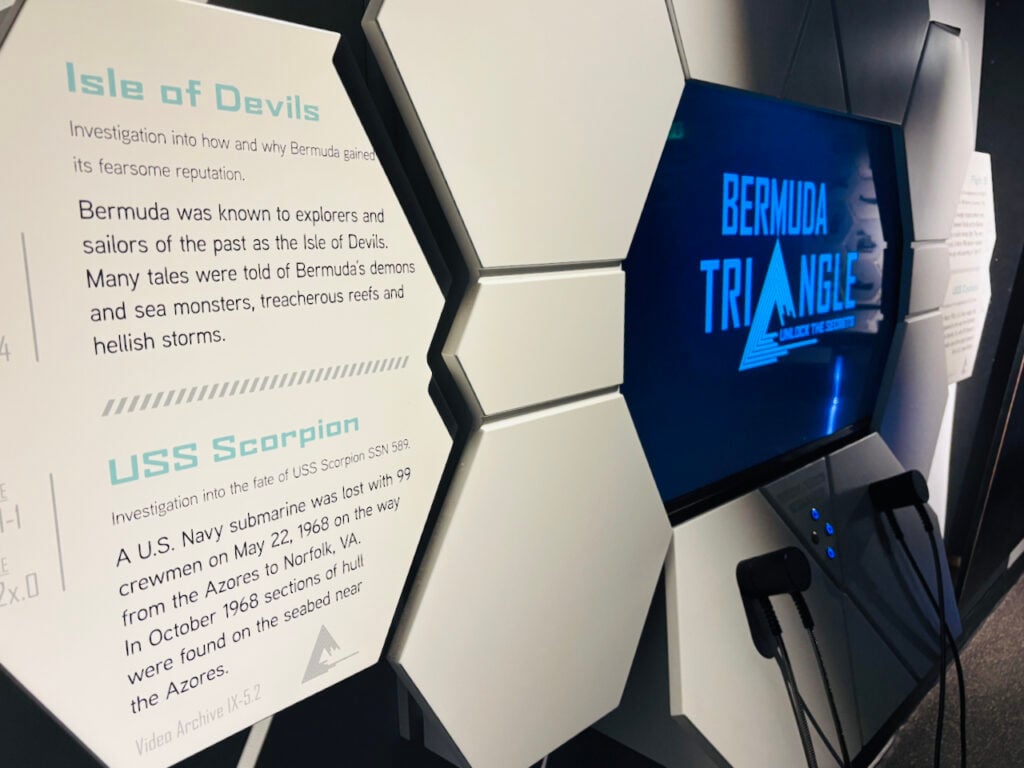
“We put compasses on the deck from various ages, and at one point the older compasses started spinning in different directions. It was kind of scary to watch,” replies Horsfield. She explains that this area of the Atlantic is one of the few places on Earth where True North and Magnetic North can align. The result can throw older compasses for a loop, which might have confused inexperienced pilots or sailors and, tragically, sent them in the wrong direction.
With all the stories floating about, one would think boaters get the heebie-jeebies sailing in this part of the world. Fortunately, the facts can reassure everyone.
Studies by various groups, including the U.S. Coast Guard, have shown no evidence that ships or planes vanish more frequently here than in other ocean regions. The insurer Lloyds of London does not charge any additional fees for ships and planes travelling through the Triangle, assessing that there is no additional risk. When the World Wildlife Fund conducted a study about the world’s most dangerous shipping lanes in 2013, the Bermuda Triangle didn’t even make the Top 10.
The introduction of GPS has largely eliminated the disappearance of planes or ships, although there are still occasional reports of missing craft. Tragically, a Canadian-based air ambulance disappeared on a flight from Bermuda to Boston in October 2026. Over in the Pacific Ocean, the disappearance of Malaysian Airlines’ MH370 is attributed to the vast size and depth of our oceans. Still, given today’s navigational technology, how is anything disappearing at all?
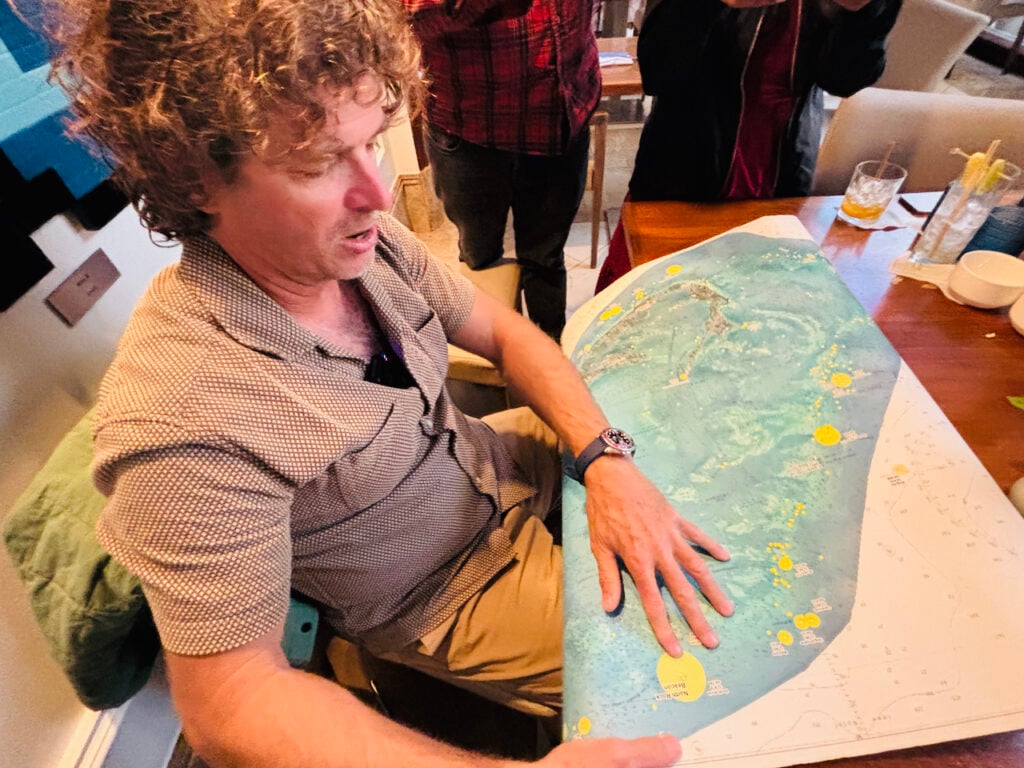
“It’s the high seas, and it’s just… big. And here we are, bobbing around on our little boats,” explains Dr. Philippe Rouja, a cultural anthropologist and Bermuda’s Custodian of Shipwrecks.
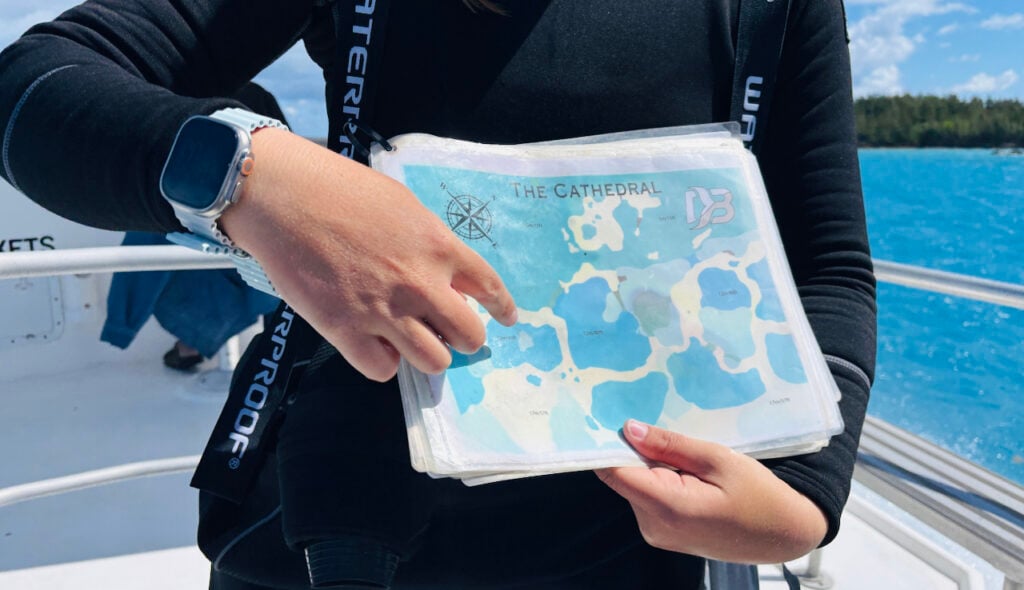
We’re having a drink in a ritzy yacht club, and he’s pulled out a map with the locations of some of his shipwreck discoveries. I figure if anyone would have experienced supernatural entities in the Triangle, it’s the guy who trawls the region in search of shipwrecks. Surprisingly, Rouja has nothing unusual to report, so I ask him what he makes of the Bermuda Triangle myth.
“The real story is a Cold War cover-up that the Americans were happy with. They were out here using hydrophones, high-flying aerial planes, and testing new technology. When an ex-Navy information officer made up a story about the Bermuda Triangle, it landed well with the public, diverting attention away from the other stuff.”
The most famous Triangle disappearance is probably Flight 19, a squadron of Navy planes that disappeared from Fort Lauderdale on a routine training mission in December 1945. Subsequent investigations clearly blamed pilot navigational error, and in the vast, deep and unforgiving waters of the Atlantic, all evidence was swallowed up. As we’re still witnessing, there’s always the possibility of an outlier event, like a storm, a freak wave, or human error, causing tragedy on the ocean.
I’m on my way to one of the dozens of popular wreck dives off Bermuda, eager to explore the boilers and pistons of the ill-fated Pelinaion, a 117-metre-long Greek freighter that hit a reef in 1940. After a particularly fun dive, I ask the local divemaster if he’s encountered any Triangle weirdness.
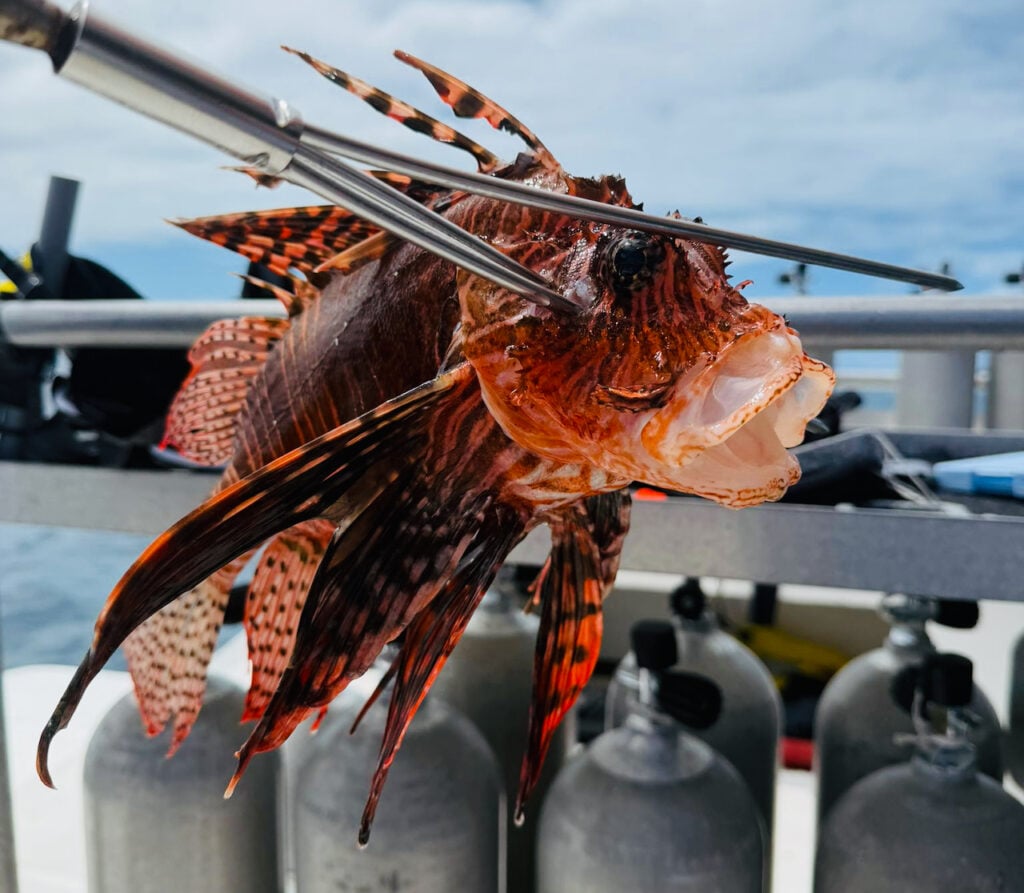
With decades of dives under his belt, he recounts a successful night rescue of some divers who got separated from their boat, but otherwise has nothing to report. Forget the Bermuda Triangle: his biggest concern is encroaching lionfish, an invasive species from the Indo-Pacific causing havoc in the Atlantic. I watch him spear a couple that morning.
With so many wrecks to explore, Bermuda offers world-class diving in clear, warm waters. I purchase a souvenir T-shirt in Dive Bermuda’s gift shop that reads: “I Survived a Dive in the Bermuda Triangle.” If nothing is going on, why do I still gravitate toward the myth of a mystery? Why do so many people associate Bermuda with spookiness, rather than the island’s rich history, festive annual Cup Match, strong rum cocktails, legendary fish sandwiches, or pink powder beaches? Bermudians seem to dismiss the Triangle unless they can capitalize on it for souvenirs and public interest. Otherwise, they’re quite content to just carry on living in their genteel and prosperous paradise. A British Overseas Territory and offshore banking haven, Bermudians smile a lot, love their cricket, and enjoy one of the world’s highest per capita incomes.
Back to Satan’s Triangle. After telling her rescuers about her harrowing experience, Kim Novak’s character takes comfort with the dashing coast guard officer (played by a macho Doug McClure), but pity the fella because Kim is not all she seems. Things do not end well for McClure or the coast guard helicopter. A shocking twist at the end of the film still haunts my earliest childhood memories, right up there with the cello theme from Jaws. Never underestimate the power of a well-told story, especially one that purports to be the “truth” but is actually overimaginative wahoo. A good story can terrify, captivate, and fire up the imagination.
It can also inspire us to visit somewhere special and discover the truth for ourselves.
Travel
Complete with historic towns, picturesque beaches and breathtaking scenery, Bermuda is the perfect escape with plenty to do and an endless amount to see

Travel
Shipwrecks, limestone caves and living reefs reveal the island’s lesser-known history, shaped as much by the ocean as by the land
Travel
Founded as a fishing club in the 1950s, Pompano Beach Club epitomizes casual elegance

Environment
Vancouver might just be home to the greenest building in the world. Meet the geography professor who brought it to life.