Wildlife
The naturalist and the wonderful, lovable, very bold jay
Canada jays thrive in the cold. The life’s work of one biologist gives us clues as to how they’ll fare in a hotter world.
- 3599 words
- 15 minutes
People & Culture
For half a century, the Toronto Blue Jays have united generations of Canadians through unforgettable moments on and off the field
This story has been fact checked
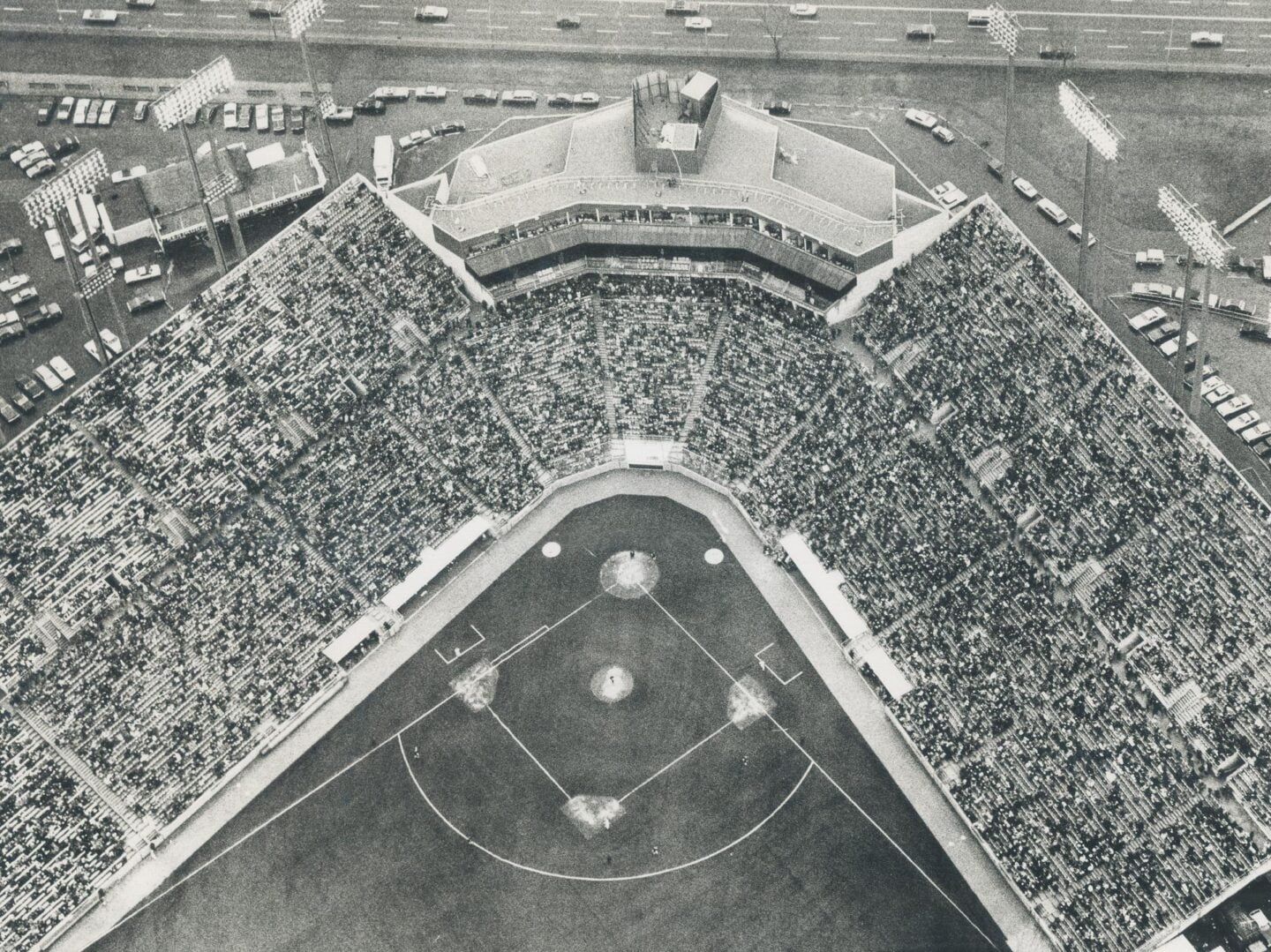
WHILE BASEBALL has long been known as America’s pastime, one of the oldest verified baseball games in North America was actually played on June 4, 1838, in Beachville, Ont. “The Beachville Game,” as it would go on to be known, took place on a square field in a pasture and featured players using a hand-hewn stick as a bat and a ball made of twisted yarn covered with calf skin.
“Baseball has been around in Canada a lot longer than people know,” says Scott Crawford, director of operations at the Canadian Baseball Hall of Fame.
By 1913, 75 years after the Beachville Game, there were some two dozen minor league teams across Canada. The Montreal Expos formed in 1969 as Canada’s first Major League Baseball team. But none of these teams has stood the test of time and entrenched baseball into Canadian national identity quite like the Toronto Blue Jays.
This year marks 50 years since the Blue Jays were founded as an American League expansion team in 1976 — 138 years after the Beachville Game marked the presence of baseball in Canada.
But the Jays as Toronto’s team almost didn’t happen. At first, the San Francisco Giants were set to relocate to Toronto; that fell through. Then, U.S. president Gerald Ford tried to derail expansion plans and get a team in Washington, D.C., instead of Toronto. But by the end of March 1976, the details were finalized, with beer company Labatt footing a chunk of the bill to create a new team in the Great White North (hence the “blue” added to “jays” for the beer Labatt Blue).

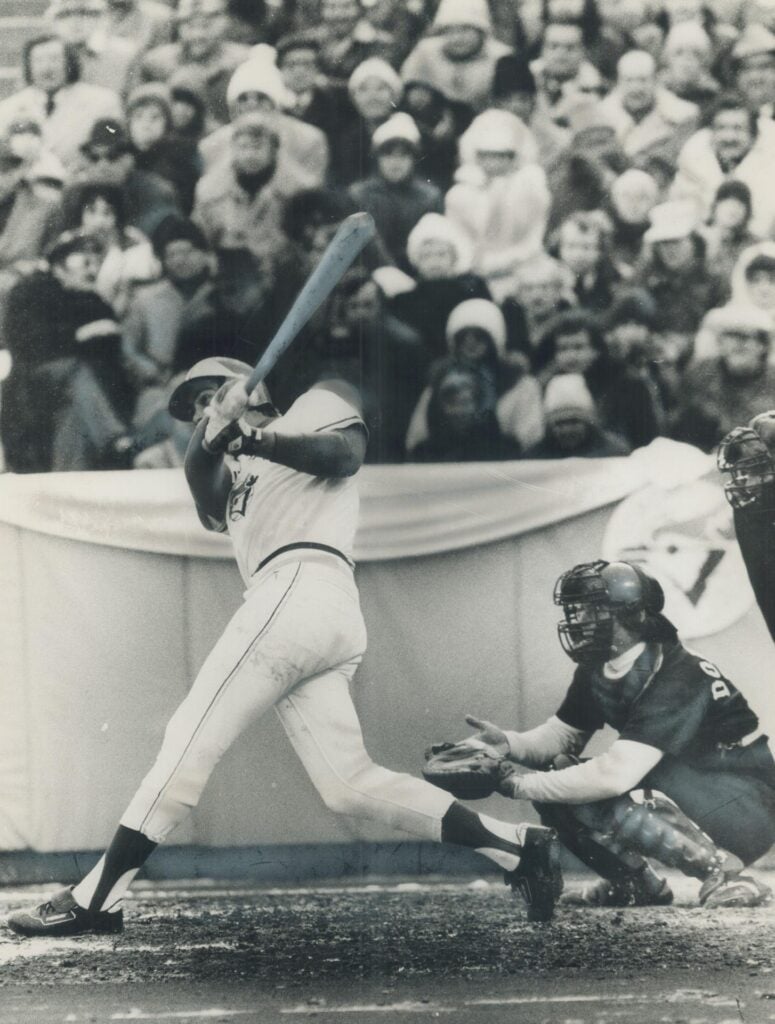
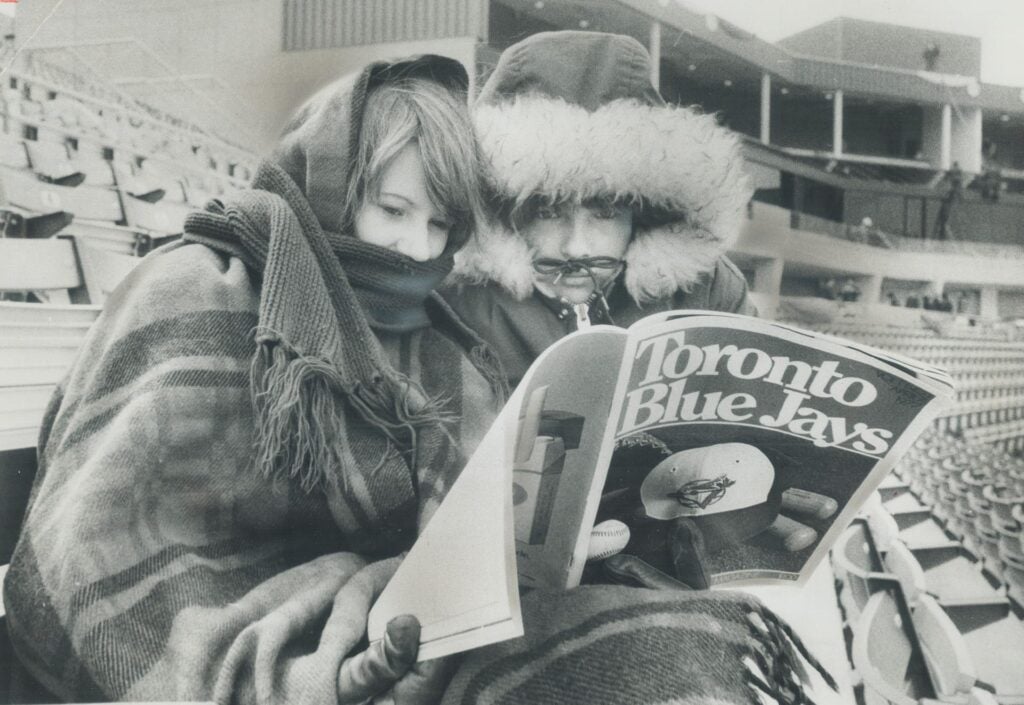
One year later, the Toronto Blue Jays took the field for their first game at Exhibition Stadium on the Canadian National Exhibition grounds. Fittingly, that very first home game on April 7, 1977, involved a very Canadian dump of snow. “They had to shovel off the foul lines and the pitching rubber and get the snow off the field so they could see,” Crawford says, recalling the stories of those there that day.
Paul Beeston — the Blue Jays’ first official employee, hired in May 1976 — spoke in 2016 of the excitement: “You can only do it once. You can only be at that first game once, and that was it. And they were going to be there. The weather didn’t seem to impede anybody from enjoying themselves.”
That first game in Toronto also saw the first Canadian start for the Jays: third baseman Dave McKay from Vancouver. McKay went 2-for-4 at bat and drove in the game-winning run for a 9-5 triumph over the Chicago White Sox. “The famous photo we have up in the museum here is of the back of him, because they’re showing the field for the third base angle,” Crawford says. “To have a Canadian in the lineup in the first ever [Jays] game is pretty special.”
The Canadian Baseball Hall of Fame maintains countless artifacts from the team’s history, from the very first game to the historic dual World Series victories in 1992 and 1993. The museum recently acquired the second base from George Springer’s series-winning three-run home run during the 2025 American League Championship Series — which sent the Jays to their first World Series in a generation, though they’d ultimately lose to the Los Angeles Dodgers in a Game 7 nailbiter.
But Crawford says even though baseball history is his life’s work, the Blue Jays are also his personal life’s passion, as they are for so many Canadians. “1986, I think, is the first year I sort of started really following them, and I’ve been a die-hard fan ever since. So it’s my 40th anniversary — wow — of loving the Blue Jays,” he says. The founding of the Blue Jays sparked a generational interest in baseball in Canada for people like Crawford, one that is reignited with each era’s memorable moments. From those early championships to the fresh excitement of the 2015 playoffs to last year’s brush with World Series glory, Crawford says you can trace the key moments in the team’s timeline to surges in baseball interest across Canada.

“It’s those memories that bring families together and friends together,” he says. “I know exactly where I was and who exactly I was hanging out with the night Joe Carter was jumping around the bases [after his 1993 World Series winning run].”
For me personally, it’s Jose Bautista’s bat flip in Game 5 of the 2015 American League Division Series. I’ll never forget the exact table I was sitting at with my friends in the campus bar at the University of Calgary when Bautista rocketed a no-doubt three-run homer to the bleachers, and the entire room erupted with noise. For young Canadians today, it might be Springer’s American League Championship dinger or pitcher Trey Yesavage’s historic run in the 2025 playoffs that they’ll be looking back on another 50 years from now.
Crawford says baseball has a special way of burning those moments into the collective consciousness, and that the Jays’ ability to create those moments is good for Canada “in all aspects.”
“It’s just as Canadian as it is American.”

This story is from the July/August 2026 Issue
Wildlife
Canada jays thrive in the cold. The life’s work of one biologist gives us clues as to how they’ll fare in a hotter world.

Wildlife
From their bold colours to their clever tricks, Canada’s most charismatic songbirds remind us what it means to play with heart

History
The symbolism of the iconic Canadian fishing and racing schooner Bluenose may be as relevant today as it was 100 years ago when the ship first hit the water

History
Le symbolisme du Bluenose, l’emblématique goélette canadienne de pêche et de course, est peut-être tout aussi pertinent aujourd’hui qu’il y a 100 ans, lorsque le navire a touché l’eau pour la première fois