Wildlife
The naturalist and the wonderful, lovable, very bold jay
Canada jays thrive in the cold. The life’s work of one biologist gives us clues as to how they’ll fare in a hotter world.
- 3599 words
- 15 minutes
Wildlife
From their bold colours to their clever tricks, Canada’s most charismatic songbirds remind us what it means to play with heart
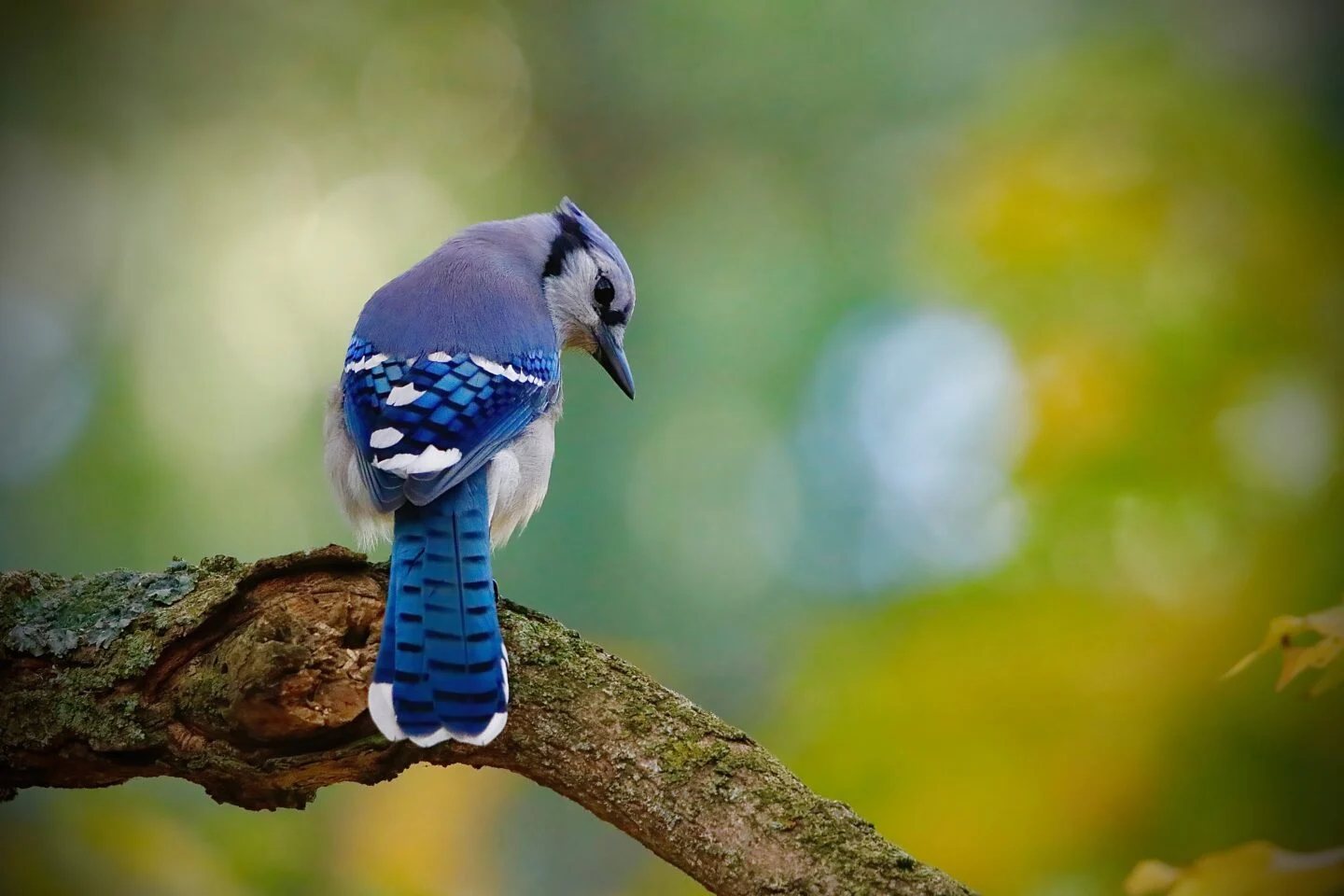
There’s nothing like the nail-biting drama and unmitigated joy of watching a raucous team of underdogs take on a formidable opponent with pluck and ingenuity. And when it came to the 2025 World Series against the L.A. Dodgers, the Toronto Blue Jays proved themselves entirely worthy of their namesake: the compulsively watchable, formidably intelligent, occasionally sly, loud, territorial, sometimes-aggressive, drop-dead gorgeous blue jay.
Who are these irresistible winged wonders? A large songbird decked out in complementary shades of indigo, azure, navy and turquoise, the blue jay can’t help but impress. “Who doesn’t like a blue jay?” asks Mark Peck, president of the Ontario Field Ornithologists. “They’re loud, obvious, somewhat aggressive, but at the same time, kind of adorable.” Having adapted to human settlement, they can “act as ambassadors to the birding world and help get people engaged in nature and the outdoors,” he adds. And although the birds are common east of the Rockies and thrive in both urban and forested environments, nothing about them is ordinary.
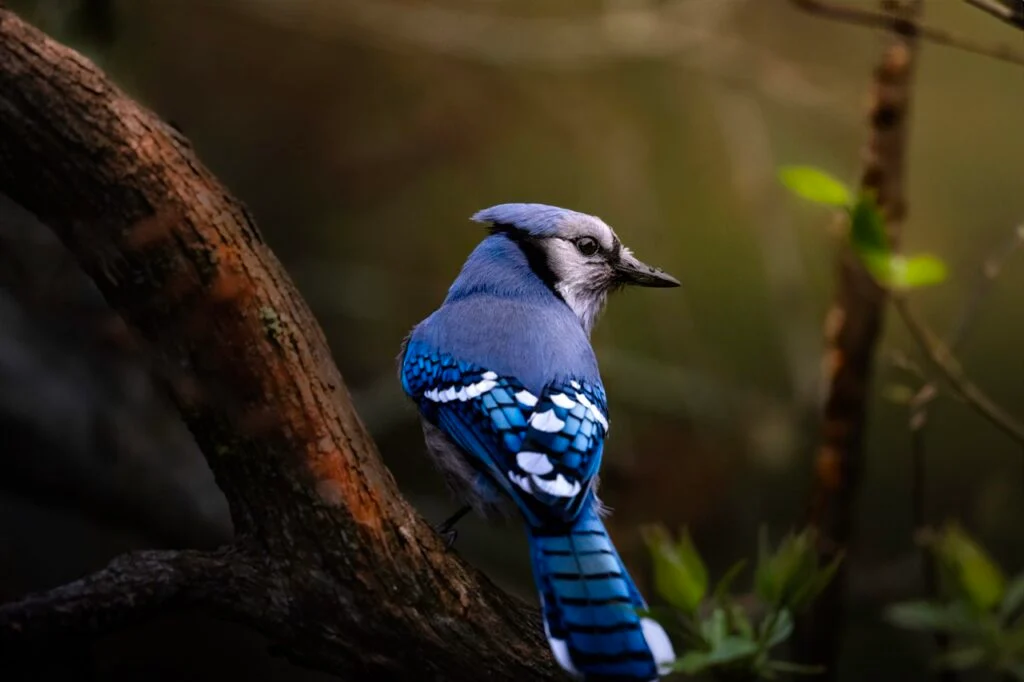
The blue jay’s majestic colouring is nothing short of an optical illusion. In reality, the melanin pigment in their feathers is brown. However, when light scatters through air pockets in the feather structure, it refracts and makes the feathers appear blue to the human eye. Jody Allair, director of communications at Birds Canada, says this explains why sometimes the colour is a grey, dull blue, “and other times it looks like they’re on fire and it’s like, ‘turn it down, blue jay!’” They also have a black collar that varies in width on every bird. Scientists have yet to figure out exactly why; one of the working hypotheses is that blue jays can recognize each other depending on the width of the collar.
A member of the corvid family, blue jays, like their crow and raven relatives, are known for their intelligence. Capable problem-solvers, especially when faced with a squirrel-proof bird feeder, jays also cache and bury vast quantities of food — often up to several thousand acorns, seeds and nuts — for winter consumption, and they remember the exact location of their stashed goods. Since not all their thousands of buried acorns are relocated, jays have unintentionally helped disperse oak trees in the northeast. Where would we be without them?
Mark Peck, president, Ontario Field Ornithologists“They’re loud, obvious, somewhat aggressive, but at the same time, kind of adorable.”
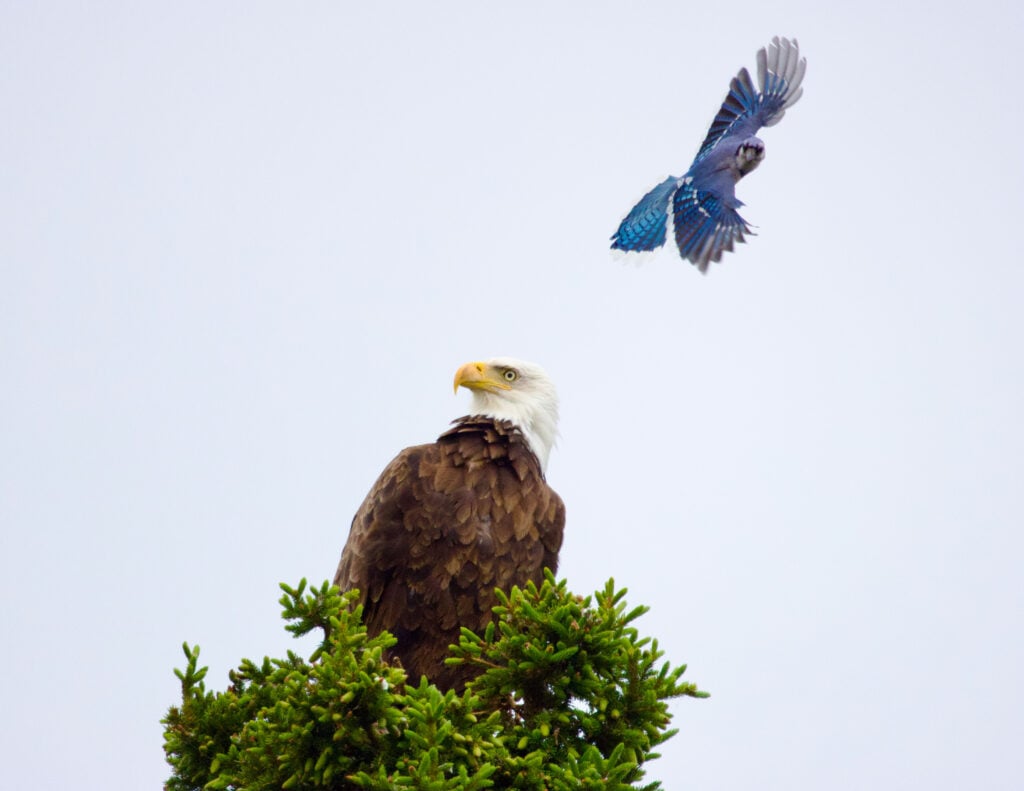
Feeder antics aside, the real joy of watching blue jays is getting to know their myriad vocalizations, which clue us in to the meaning of their behaviour. Their raucous alarm calls signal that a predator is nearby. When breeding and raising their young, the birds form a strong coparenting unit. Once they’re done with their parental duties, they form gregarious flocks and, according to Allair, “become the police squad of the neighbourhood,” emitting loud alarm calls and mobbing predators. They work as a team to protect their community and take a proactive approach: rather than waiting for hawks and owls to attack, they harass and mob would-be predators relentlessly until the larger birds give up and leave. Peck marvels at this behavior, since “teamwork is not something you usually think about with birds.”
Jays are also adept at mimicking hawk calls, but the exact purpose of this remains unclear. Sometimes the hawk impression is intended to warn their community about the presence of a potential threat, but other times the motive is less altruistic: tricking other birds into believing that a predator lurks. The advantage? Birds disperse, and the blue jay gets full, undisturbed access to the feeder.
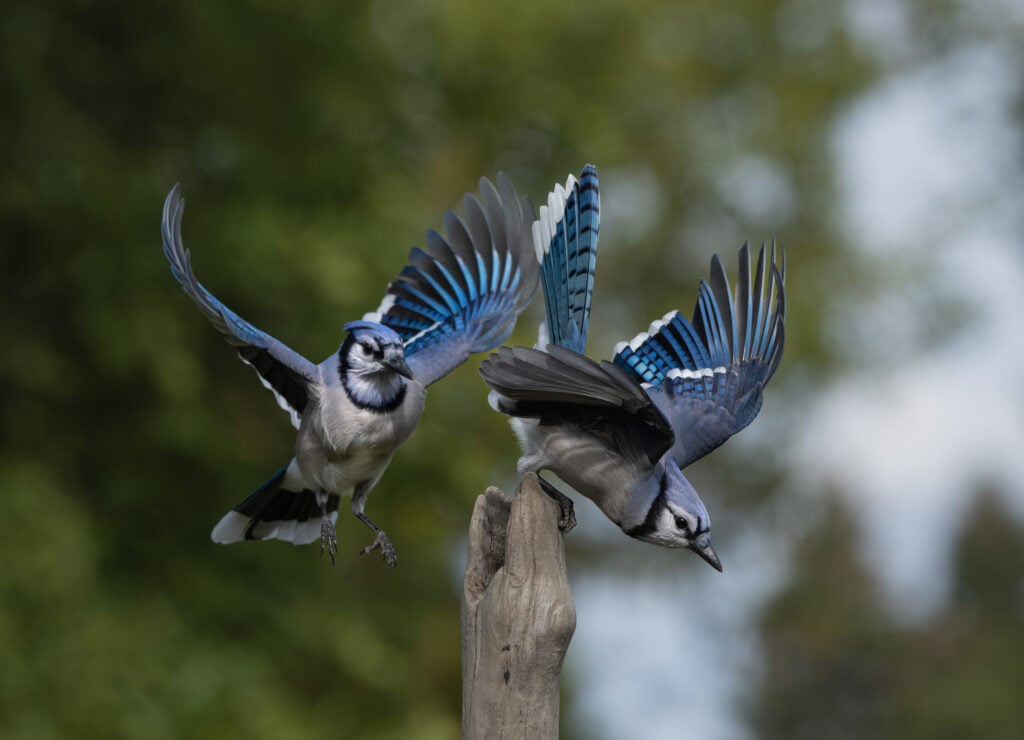
Among their vast vocal repertoire, blue jays also have a courtship song that both males and females warble to one another during breeding season. Part of an array of romantic behaviours that also includes gift giving, cooperative nest building and kissing, they present their mates with a unique song offering designed to impress — even though to our ears it might sound a bit like R2D2.
As for the enormous flocks of blue jays passing overhead in spring and fall, their migration is still poorly understood by scientists. While many jays are year-round residents, others will migrate by the thousands. For such a common bird, there is much that remains a mystery.
Excellent partners and parents, highly intelligent, strong-willed yet community-oriented and utterly intrepid: blue jays are winners. And while we can’t cheer for our baseball team until next year, we can marvel at our beloved blue jays in our backyards, at our feeders and in our parks, where they are guaranteed to deliver show-stopping drama.
Wildlife
Canada jays thrive in the cold. The life’s work of one biologist gives us clues as to how they’ll fare in a hotter world.

People & Culture
For half a century, the Toronto Blue Jays have united generations of Canadians through unforgettable moments on and off the field

Wildlife
Largely unheralded until Canadian Geographic’s National Bird Project was held, the renamed Canada jay — formerly grey jay — has become in many minds the country’s national bird
Wildlife
After two years, nearly 50,000 votes and thousands of public and expert comments, the Canadian Geographic National Bird Project concludes. Meet our newest national emblem.