Shackleton’s swan song and the legacy of the Quest
1921 was a busy year for the London businessman John Quiller Rowett. Having made a considerable fortune, mainly through his position in the rum market, he was turning his mind to charitable and philanthropic causes. Construction started on what would become the Rowett Institute in Aberdeen, Scotland, today a leading research centre for nutritional science. He contributed frequently to hospitals and dental research, working men’s clubs and the like.
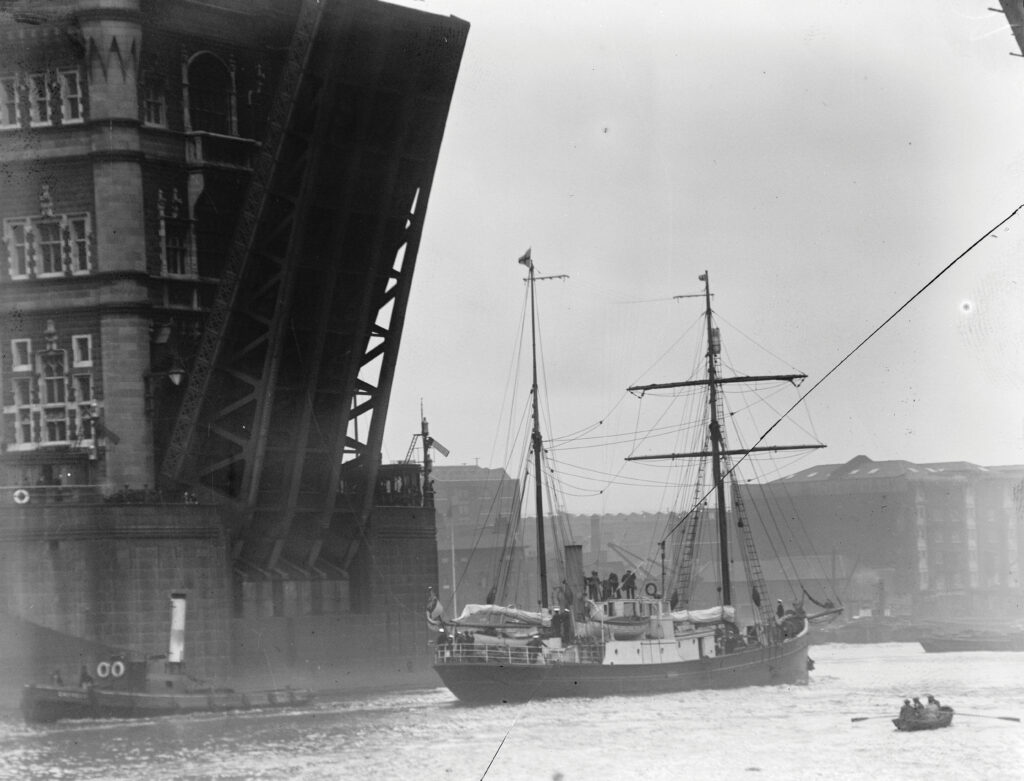
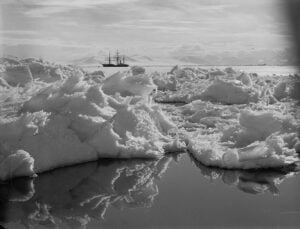
When in 1920 his Dulwich College schoolfriend, Ernest Shackleton, approached him to support an Arctic expedition, he agreed a cornerstone amount on the basis that the majority of the funds would come from the Canadian government. However, in May 1921, the Canadians declined and Rowett generously stepped in and agreed to finance the entire expedition – to be known as the Shackleton-Rowett Expedition. By this time, it was too late to mount an Arctic venture, so Shackleton decided to head south instead. The converted Norwegian sealer he had purchased, now named Quest, was finally ready for departure in September 1921. Addressing the world’s media, Shackleton said of the mission, “It will be my swan song.”
The ambitious plan was to survey uninhabited, rarely visited islands of the Atlantic, chart the coast of Antarctica’s Enderby Land, and go on to circumnavigate the entire continent, exploring bases for wireless networks, long-range weather forecasting stations, supply depots and the like, all of which would have big value for the economies of the southern hemisphere. This far-sighted aspiration no doubt appealed to Rowett’s intentions for making a worthwhile contribution with his money.
Dogged by mechanical difficulties with Quest from the start, the expedition’s route was changed as they diverted to Rio de Janeiro for major repairs, missing out the stop at Cape Town where key supplies, and even a seaplane, would have been loaded. By now well behind schedule, Shackleton headed directly to South Georgia, where he died from a massive heart attack on 5 January 1922.
Shackleton’s right-hand man and Antarctic veteran of four previous expeditions, Frank Wild, took command. The Quest carried on, visiting the Weddell Sea but not reaching Enderby Land. They returned to South Georgia in April 1922 to find that Shackleton’s remains had been buried in the cemetery of the Grytviken whaling station, instead of being returned to England for burial there. After visiting the Tristan da Cunha archipelago, Quest reached Cape Town in June 1922. At that point, Rowett recalled the expedition and they were back in London by September.
Despite the altered and curtailed itinerary, the expedition nonetheless did carry out a considerable volume of research. George Hubert Wilkins, acting as naturalist, and Canada’s George Vibert Douglas, the geologist, had gone ahead together to South Georgia while Quest was being repaired in Rio. They managed to spend several weeks studying on the island. The visit to the south Atlantic islands was also productive. A large collection of biological specimens made its way in various shipments back to the British Museum of Natural History. Its breadth of taxa and geography sets it apart from the collections of other polar expeditions and together these materials are still a key resource for Antarctic and ocean science.
And the Shackleton-Rowett Expedition launched the career of James Marr, the scout who – together with Norman Mooney – was selected to be Shackleton’s cabin boy. Marr went on to a distinguished career in polar exploration and science, writing seminal works on the natural history of krill, the key indicator species group. Marr also led Operation Tabarin, the British mission to establish the first permanent base on the Antarctic continent, from which is descended the British Antarctic Survey, the UK’s national polar research institute.
— Jan Chojecki