People & Culture
On thin ice: Who “owns” the Arctic?
As the climate heats up, so do talks over land ownership in the Arctic. What does Canadian Arctic Sovereignty look like as the ice melts?
- 4353 words
- 18 minutes
People & Culture
With more eyes on the Arctic, the Canadian Rangers embark on their longest patrol in recent history — a path forward for Canada’s defence and its deepening relationship with the North

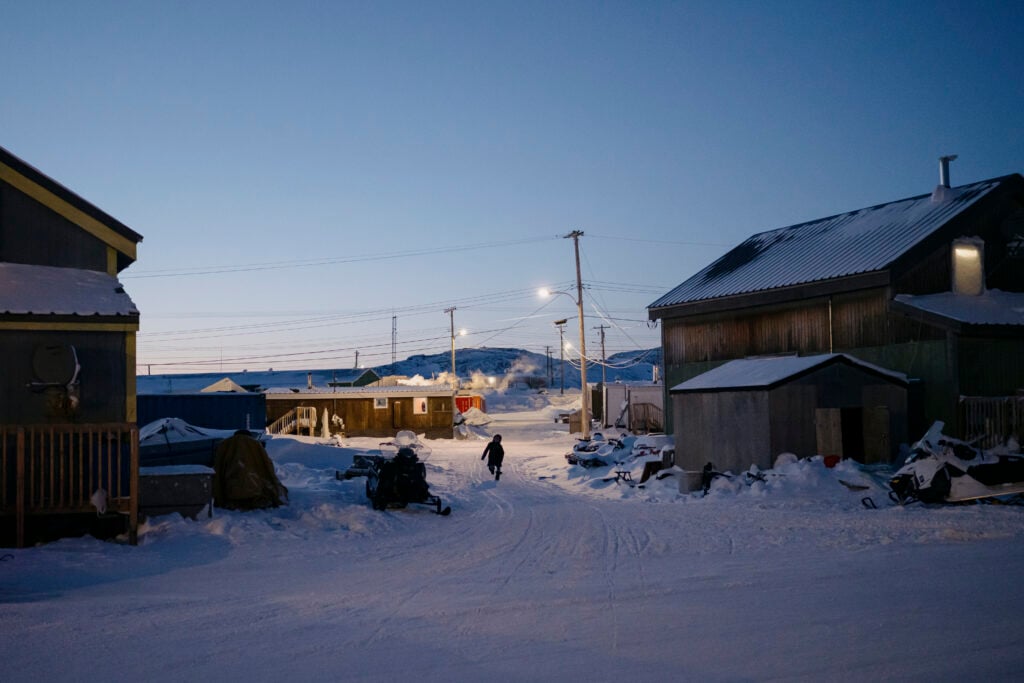
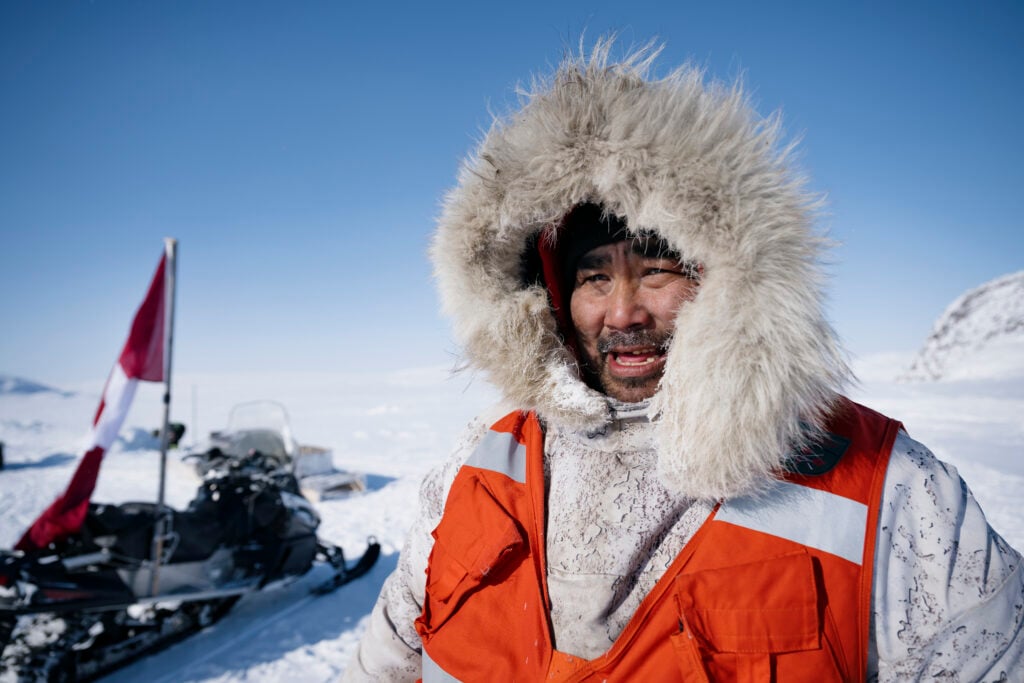
Long before the sun, or the hamlet of Gjoa Haven, Nunavut, rises on a cold March morning, several dark figures pour into the streets. Their breath swirls amid the exhaust of their snowmobiles, and as they load gear into sleds behind their machines, headlights momentarily illuminate red parkas. Near dawn, a final detail is revealed.
On their sleeves, a patch reads Op Nanook-Nunalivut, the name of the annual winter military exercise led by the Canadian Armed Forces in the Arctic, and 1CRPG, which stands for the 1st Canadian Ranger Patrol Group — comprising members from the Yukon, Northwest Territories and Nunavut. The words circle an amaroq, Inuktitut for wolf.
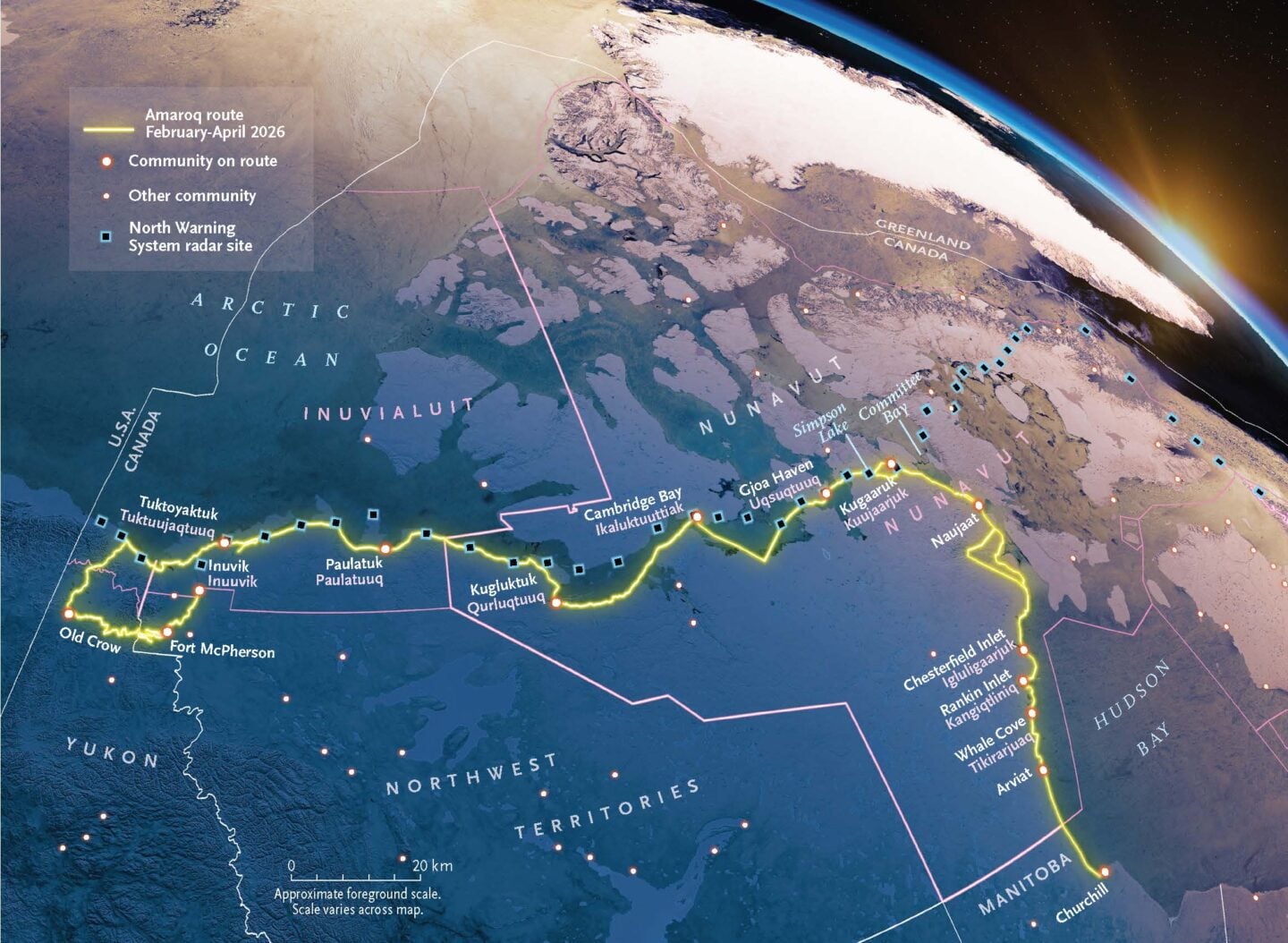
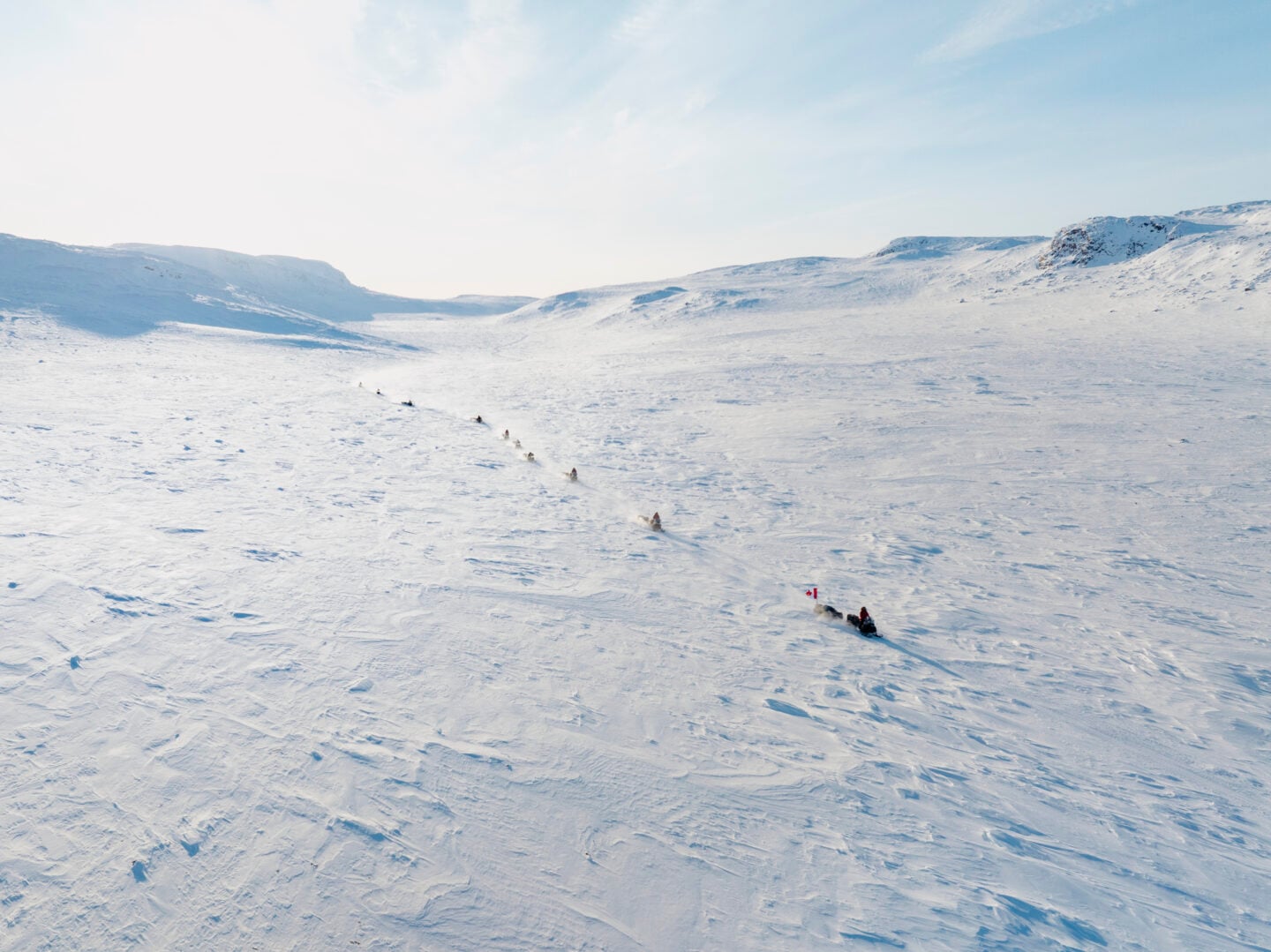
Amaroq is the official name for a 5,200-kilometre snowmobile patrol that began mid-February in Inuvik, N.W.T., circled west through the Yukon, wound up to the coastline and headed east along the Northwest Passage, where the patrollers are now. From here, they will turn south along the coast of Hudson Bay before finishing in Churchill, Man.
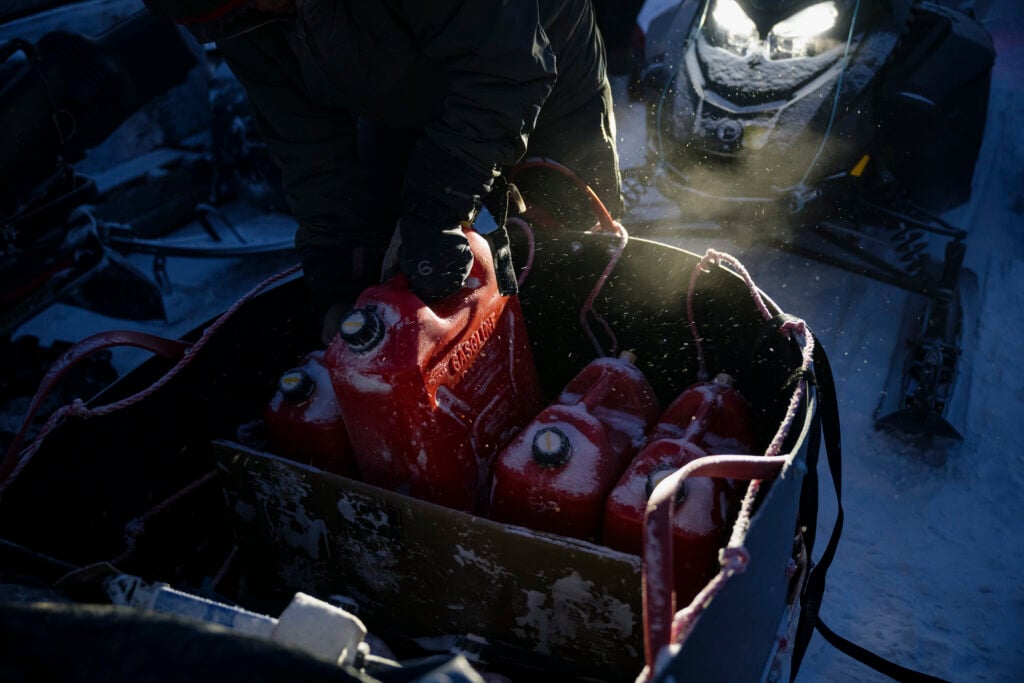
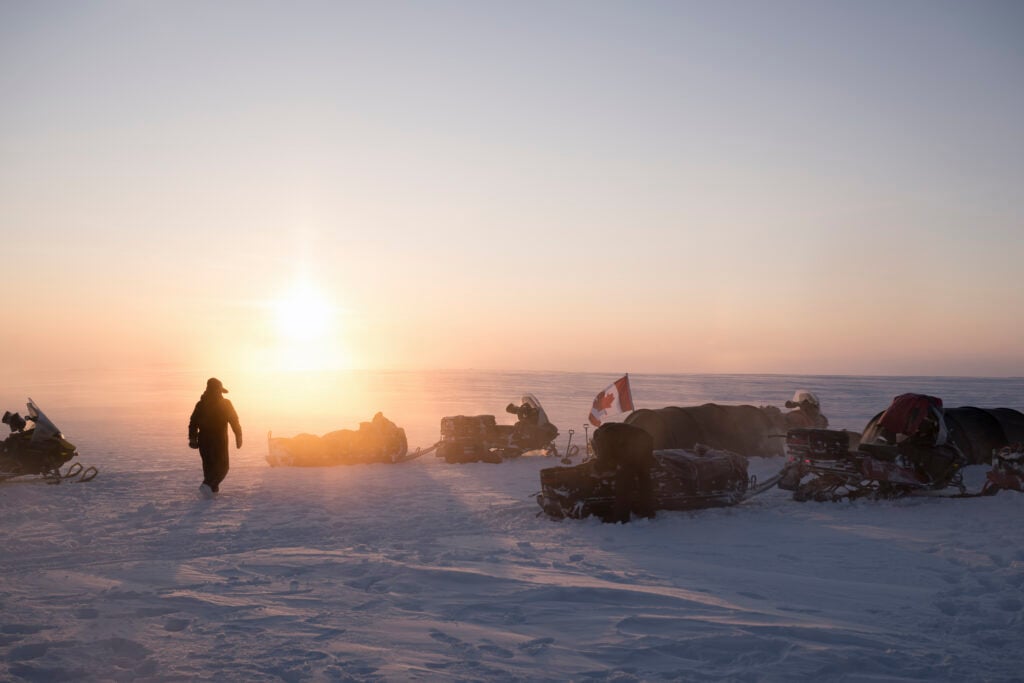
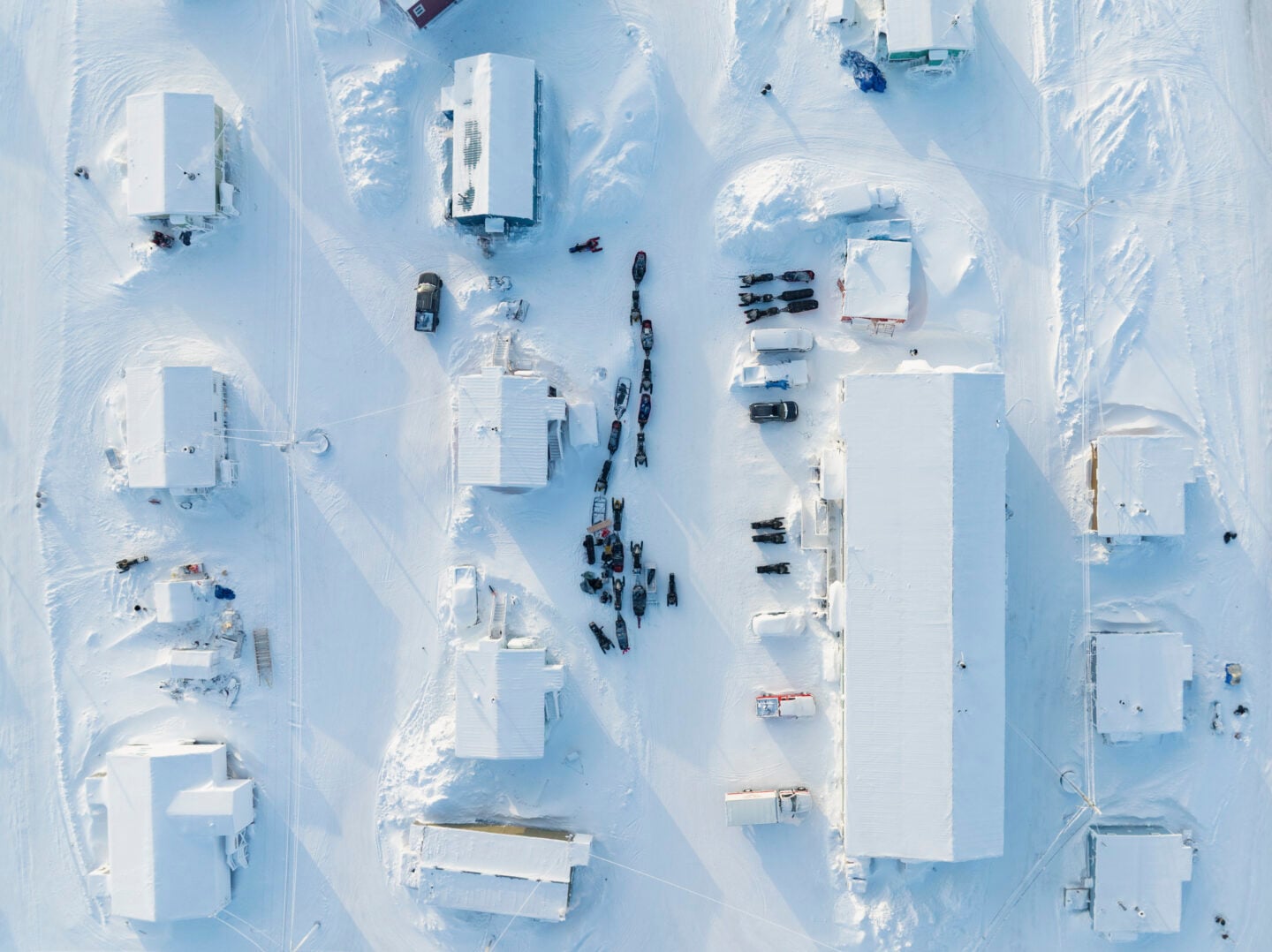
At any time, the core team is 12 Canadian Rangers driving snowmobiles, assisted by 214 support personnel spread across the North. They will pass through 17 communities, many of which have their own Rangers who will guide the long-range patrol through the land and ice they know best. It’s the longest Canadian Ranger-supported Arctic sovereignty patrol in recent history.
The Rangers of 1CRPG, like all members of the five Ranger patrol groups across Canada, are part of the Canadian Army Reserve. But there are often misconceptions about their role. “People either think of them not as soldiers, which is untrue, or they think of them as exactly like combat soldiers, and that’s not true either,” says Lt.‑Col. Travis Hanes, commanding officer of 1CRPG. Instead, Hanes says, they’re a hybrid between the two: non-combat soldiers who can be ratcheted up or down depending on the tasks at hand or the threats that exist.
First established in British Columbia during the Second World War, the Pacific Coast Militia Rangers (as they were known at the time) knew the province’s coastline and interior and were tasked with defending against a possible Japanese invasion. At the end of the war, the group was disbanded, but it was revived as the Canadian Ranger Program. Their mandate hasn’t changed since.
The Rangers serve as the Canadian Armed Forces’ eyes and ears in remote, coastal and northern communities.
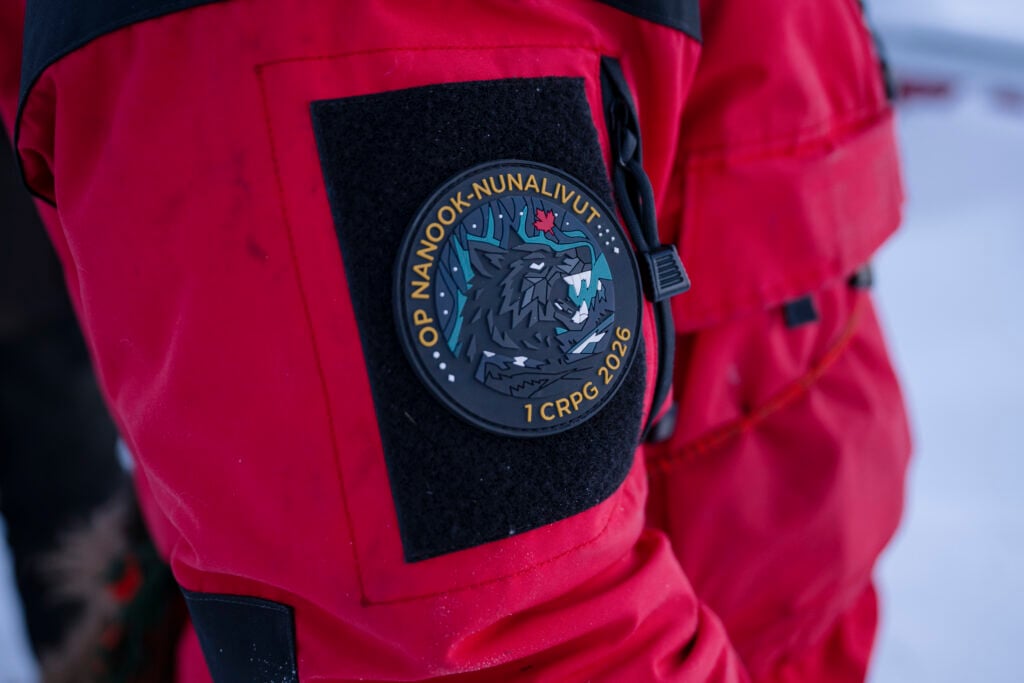
The Rangers serve as the Canadian Armed Forces’ eyes and ears in remote, coastal and northern communities — a duty reflected in their official motto, “Vigilans,” meaning “the watchers” in Latin. They go on patrols, conduct search and rescues, report suspicious and unusual activities, collect local information of military significance and act as guides and trainers for the military as needed — achieving specific outcomes with a lighter footprint on the Arctic environment and communities than conventional military exercises. Across Canada, there are roughly 5,000 Rangers, living in more than 200 communities and speaking 26 different languages and dialects.
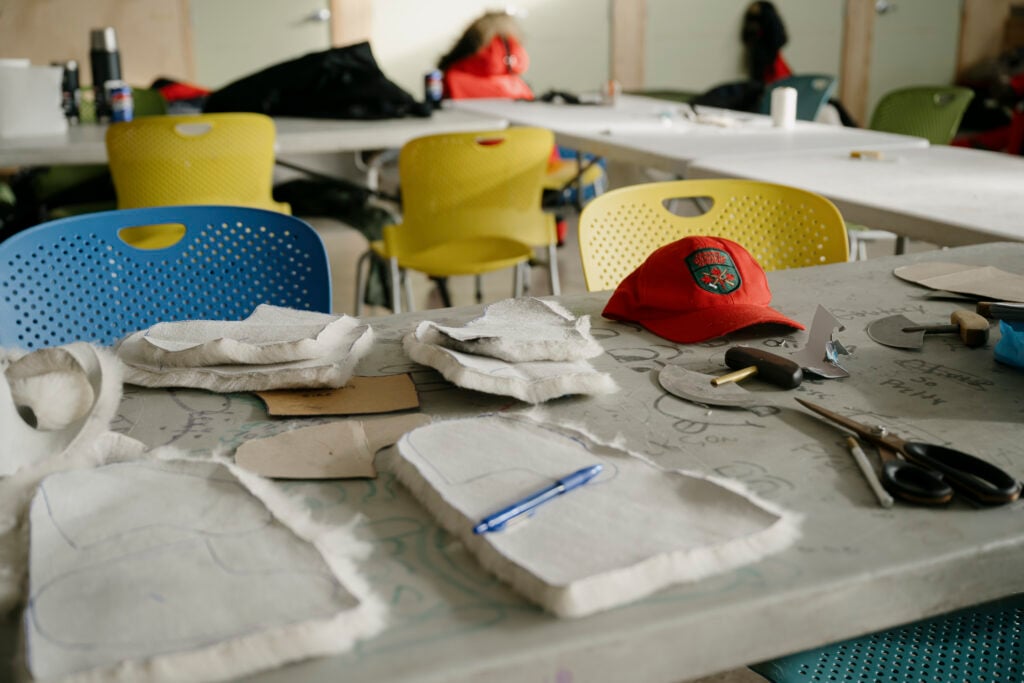
Unlike their winter-camouflage-clad regular force compatriots training in Cambridge Bay, who are also part of Operation Nanook-Nunalivut, the Rangers wear a now-iconic uniform consisting of a bright red hat and hoodie or jacket, with green camouflage pants. “We’re not hiding,” says Hanes. “We’re overtly signalling that our citizen soldiers are on the line.… They’re all in.”
At the same time, part of the ability to ratchet up or down means they can easily trade their bright uniforms in for camouflage if the mission calls for it.
Although they may wear the same uniform, Hanes is quick to point out that, as individuals, many Rangers couldn’t be more different. “Some of them are lawyers. Some of them are teachers. Some of the people… have spent their whole life on the trap line,” he says. “I’ve never seen a more diverse crew, hanging under one umbrella organization [and] volunteering for it.”
Aside from living in the North and wearing the same uniform, members of 1CRPG also have a lot of “hard army skills,” says Hanes. “They can survive on the land, they can fire a weapon, they can use snowmobiles, ATVs, boats.”
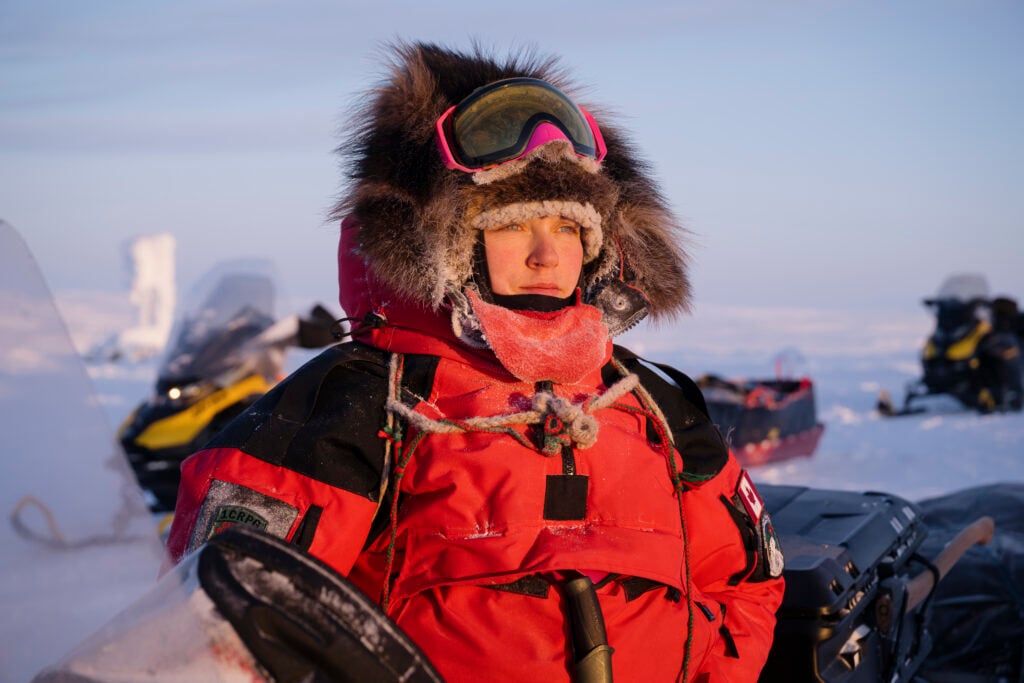
The differences between Rangers also extend to the northern communities they’re from. “It’s been so amazing to see the difference between Rangers in smaller communities versus Rangers in big communities,” says Maya Poirier, a Ranger from Whitehorse who joined the patrol in Paulatuk, N.W.T. “In Whitehorse, if you’re not part of that kind of community or have friends that are Rangers … you might never really know what they are or be exposed to them, whereas when you come into these small communities, [they’re] huge Ranger communities.”
While some members of the patrol run into friends and relatives on some of the community stops, for others, like Poirier, encountering others in red feels special. “You meet someone who’s a Ranger, and you’re like, okay, big hugs,” she says. “You just are family by this association.”
For Hanes, that relationship, that connectedness, is what makes the system work. “If we didn’t have that level of relationship, the North would not be resilient.”
Amaroq was one component of the larger Nanook military exercise that included 1,300 Canadian troops and foreign observers — giving southern-based military personnel a chance to experience the North, to be able to understand its rhythms and to learn from northern experts, but also giving them more confidence in operating there. And Whitney Lackenbauer, an expert on Arctic history and contemporary northern policy at Trent University, says these large training exercises signal to other nations that Canada has the capability to deploy in the Arctic — and that those skills are transferable to deployments elsewhere, in Canada or internationally.
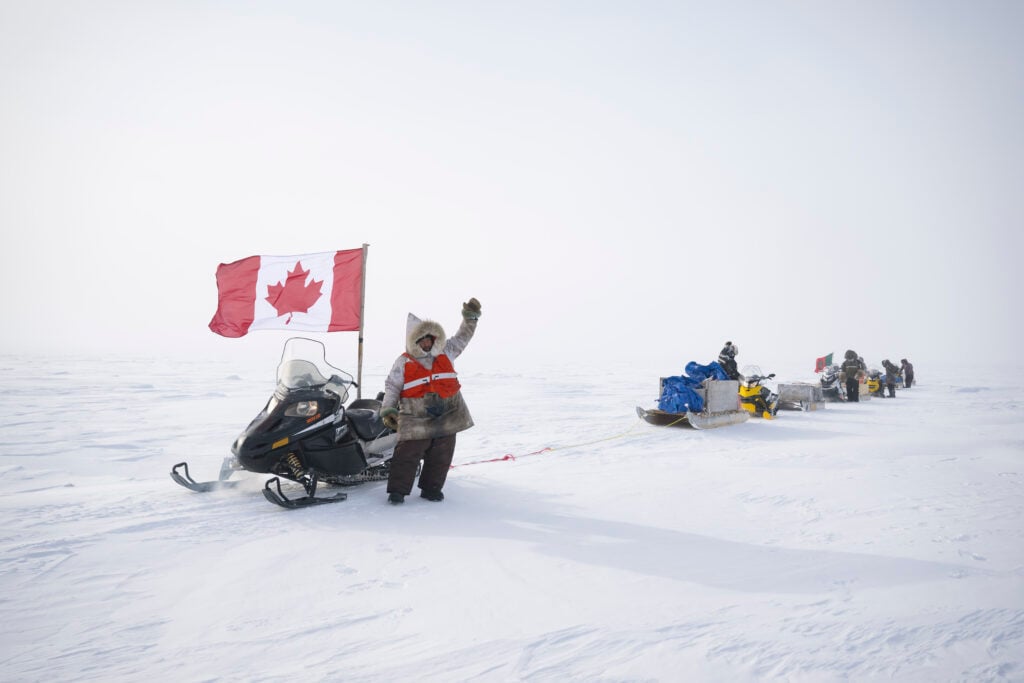
MODERATELY ROUGH SEA ICE conditions crossing the Rae Strait between Gjoa Haven and the Boothia Peninsula keep the patrol’s speed to around 30 kilometres an hour. The journey is punctuated by short breaks, enough time to grab a hot drink and snack, use the bathroom and check in on fellow Rangers to see how they and their machines are doing. As the kilometres and hours pass, this pattern continues like clockwork.
During one stop that afternoon, a mysterious, white, towering structure looms in the distance, evoking a glistening fortress straight from the pages of a fantasy novel. After 30 minutes of driving, the structure becomes clear. In a certain sense, it is a fortress, just not the Tolkien kind. Sitting atop an imposing, snow-wrapped superstructure is a white geodesic ball, flanked by two similar structures and a few small buildings: a North Warning System radar site.
The North Warning System is a joint U.S.-Canadian radar network comprising 47 radar sites along the Arctic Ocean. Together, they support the air defence of North America by providing remote, around-the-clock surveillance of polar airspace.
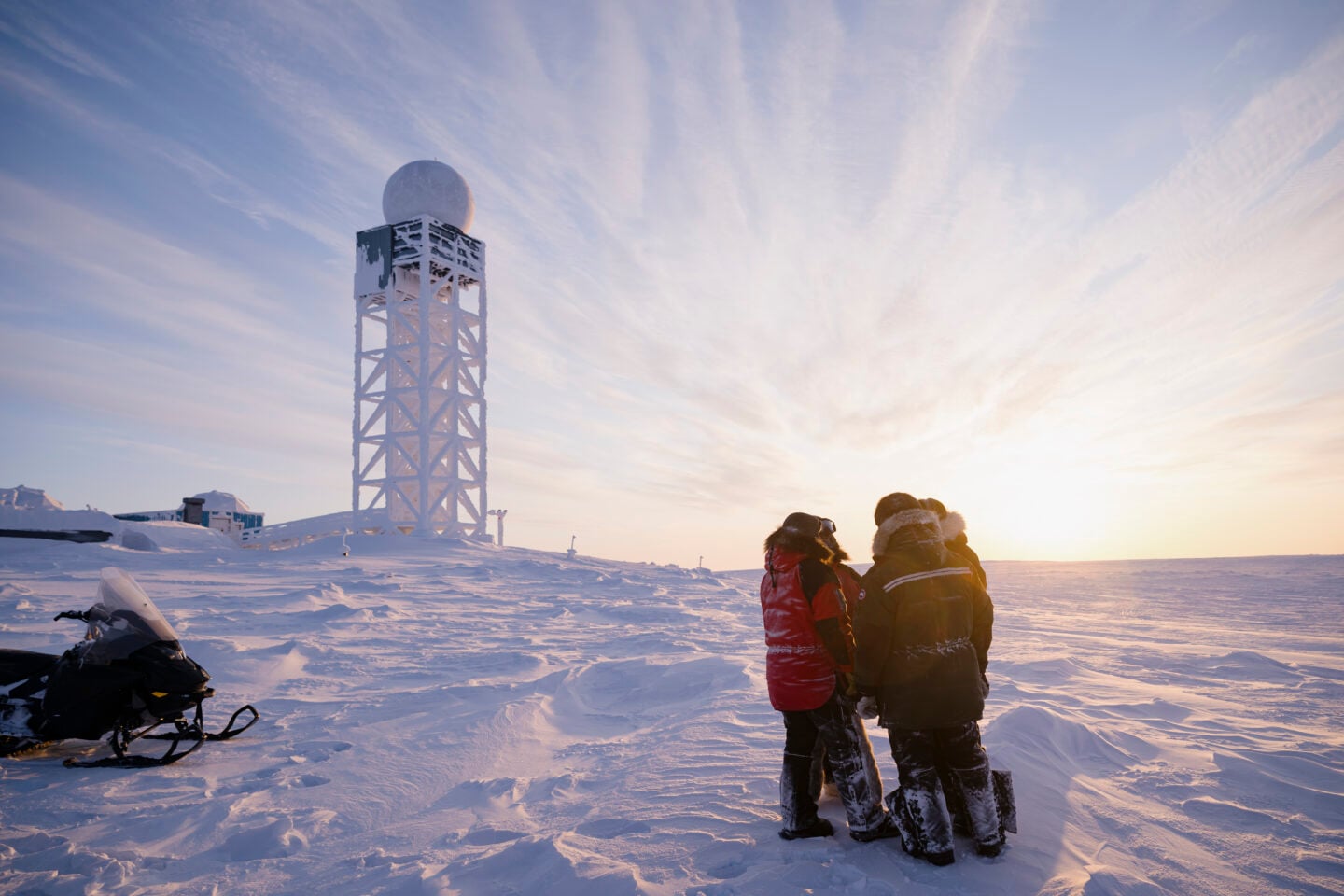
For Lackenbauer, himself an honorary Ranger who accompanied portions of Amaroq, sites like these — as well as the presence of Rangers and other armed forces — are tangible examples that run counter to a narrative he sees repeated in public discourse. “If there was one myth that I could explode, it’s this idea of the undefended Canadian Arctic,” he says. “It’s like we’ve sort of come up with these almost fantastical narratives that make it look like we are especially vulnerable, but I don’t think they’re actually representative of the realities on the ground.”
Those narratives, which include Russian or Chinese invasions of the Canadian Arctic, are “preposterous” to Lackenbauer. But he’s also quick to point out that just because the threat of an invasion isn’t real doesn’t mean other threats also don’t exist. Today, Canada, like much of the world, faces a much more uncertain, volatile and unpredictable geostrategic environment. “The reason why the Arctic has really become a big topic of concern, from a North American defence standpoint, is because it is this long-standing avenue of approach to North America.”
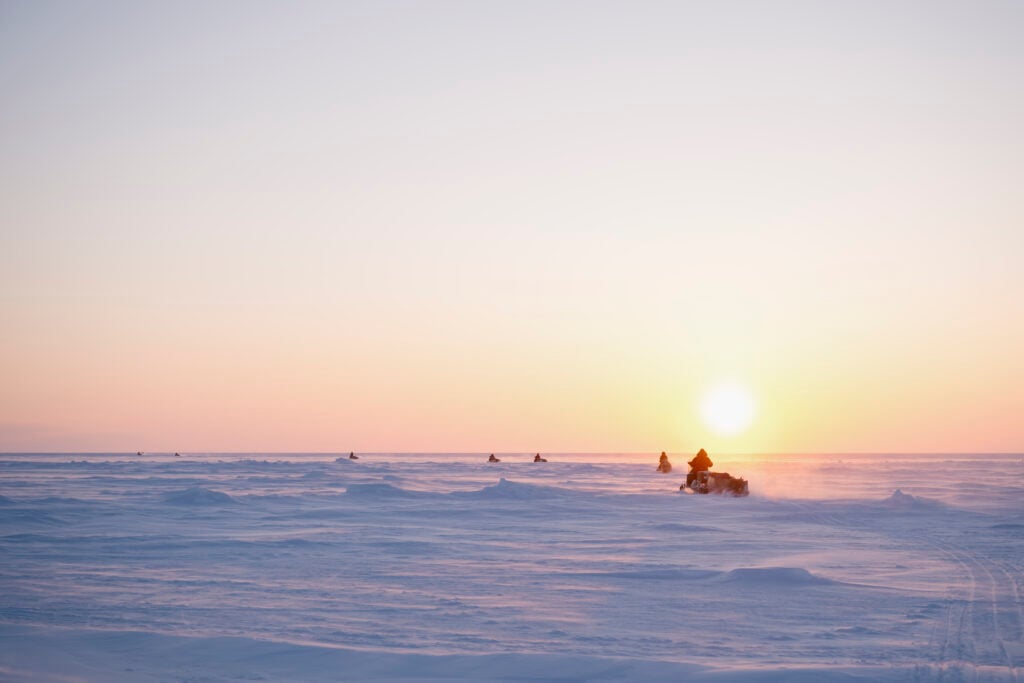
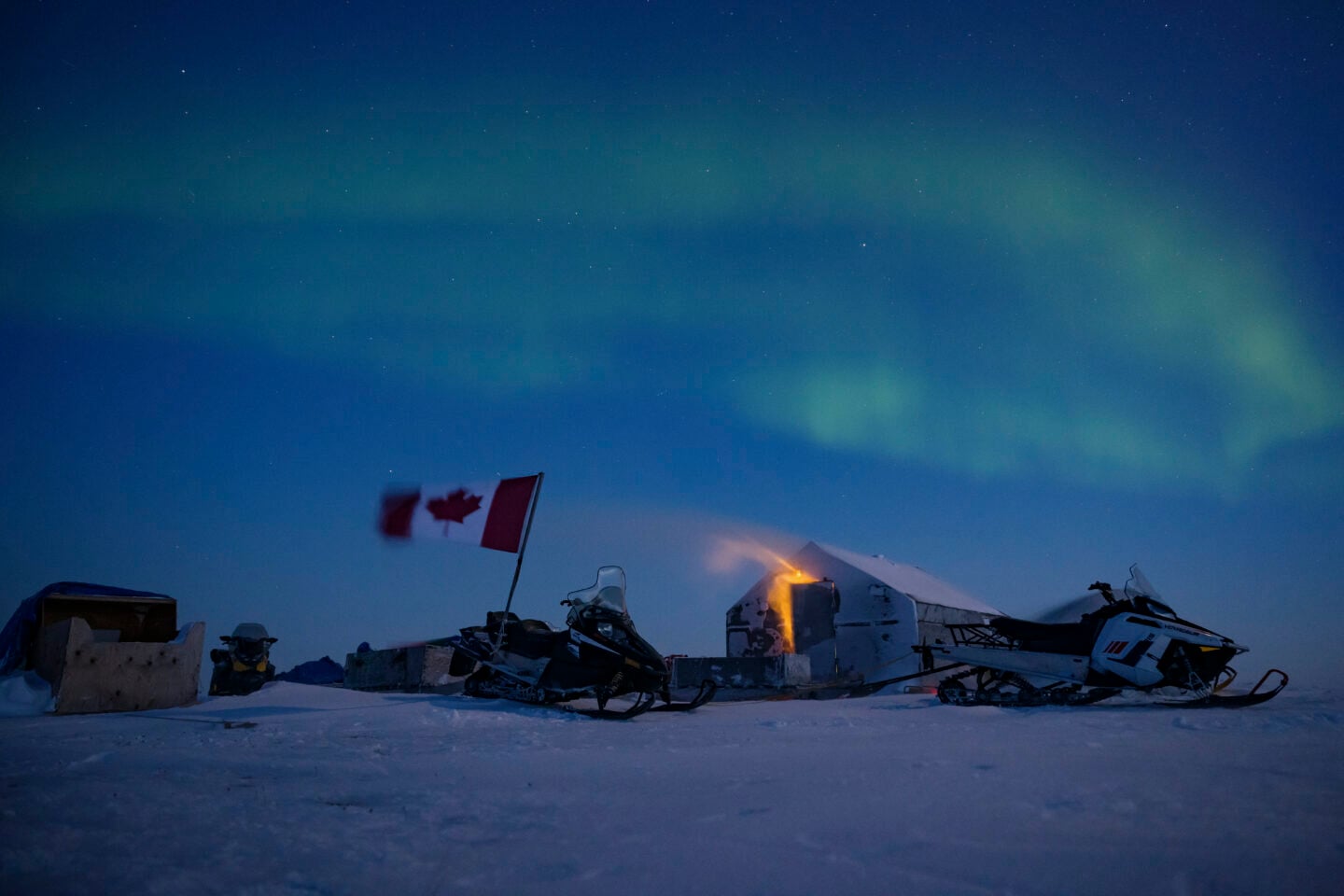
AS THE SUN CASTS its final rays across the geodesic spheres and violet-hued landscape, a column of snowmobiles appears in the distance. It’s the Kugaaruk-based Rangers led by Sgt. Lionel Tigvareark, whose trusty two-stroke Arctic Cat T570 snowmobile, adorned with a large Canadian flag, exhales a distinct, almost sweet-smelling exhaust. Unlike the long-range patrol, these Rangers use their own snowmobiles, ATVs, qamutiit (traditional wooden sleds) and other gear (they are reimbursed for that use).
After hugs and handshakes, the two groups hash out a plan for the morning. Then, as quickly as they appeared, Tigvareark and the half-dozen with him hop on their machines and head to a nearby cabin, where they’ll spend the night. Meanwhile, the long-range patrol fire up their snowmobiles and circumnavigate the radar site before settling on a flat area ideal for camp. In short order, a handful of tents are assembled, and the gentle hissing sound of camp stoves fills the cold air.
The following morning is even colder: -48 C according to the gauge on one Ski-Doo. Together with a decent wind, it’s enough to prevent a few of the snow-crusted machines from starting. The solution is straightforward: start a generator next to the machine in question and cover both with a tarp until the engine warms enough to turn over. The Rangers’ morning routine of striking camp and packing up looks effortless, thanks to their training and, more importantly, sheer experience.
As soon as all the machines roar to life, the patrol meets Tigvareark and the Kugaaruk Rangers and then takes off across Simpson Lake, leaving nothing more than a well-worn snowmobile path on the hard snow that will all but disappear the next time a strong wind or snow comes through. For Lackenbauer, although that footprint disappears, patrols like these leave their own legacy.
“Some of the best activities are the ones that don’t leave much of a trace,” he says. “But they live on in stories and our understandings and our knowledge that we’ve been there, and we can be there again if we need.”
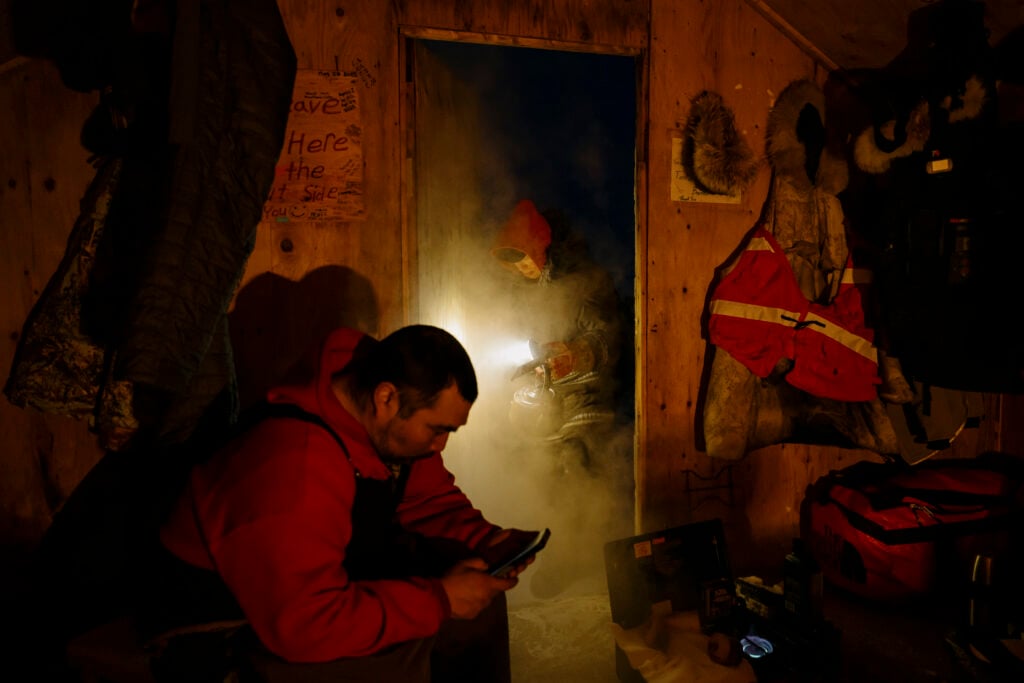
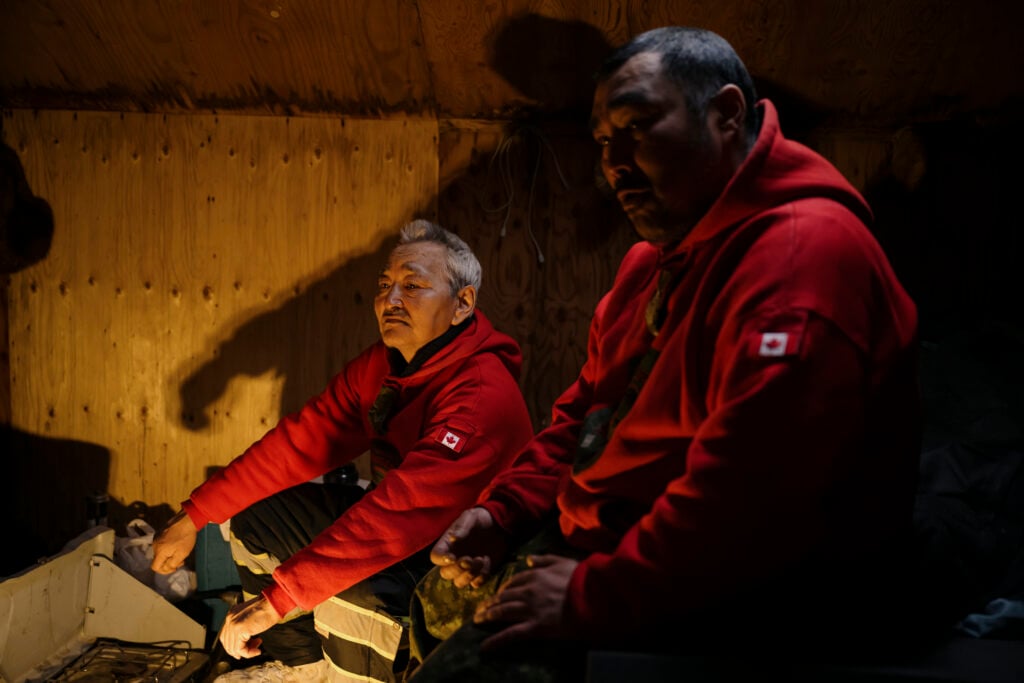
This is particularly true for the Kugaaruk-based Rangers, who will return to places like Simpson Lake because home is only around 80 kilometres away — this is their backyard. They grew up travelling to these places and continue to share them with their friends, family, children and grandchildren. “I like the country here. We have pretty much everything,” says Tigvareark.
Tigvareark joined the Rangers when he was 18 because he liked being out on the land with others. Back then, he had some land skills, but over the course of his 24-year career with the Rangers, he’s learned a lot more. A core tenet of Inuit knowledge, known as Inuit Qaujimajatuqangit, is pilimmaqsarniq, the active process of learning by doing, observing and repeating. As Tigvareark can attest, it’s something that even with decades of experience never stops. “I’m still learning, even to today,” he says with a smile.
“If we didn’t have that level of relationship, the North would not be resilient.”
When the column of snowmobiles arrives in Kugaaruk, they are greeted with waves and smiles from those who step outside to see what the commotion is about.
For Hanes and other members of the patrol, communities like Kugaaruk aren’t just critical because of the Rangers that call them home or even for their logistical significance. On a patrol as long as Amaroq, they also provide psychological safety, allowing the Rangers to push forward and take risks. “Even if the community is 600 kilometres away, just knowing it’s there provides this feeling that allows you to undertake this kind of long patrol,” says Hanes.
After just one night’s stay in Kugaaruk’s community hall (which also doubles as city hall), the procession continues east across the Simpson peninsula towards Committee Bay. This is where the Kugaaruk Rangers will stop, and the long-range patrol will finally begin their journey south, first towards Naujaat, Nunavut, and eventually, after several stops and roughly 1,200 more kilometres, to their finish line in Churchill, Man., in April.
Before departing, the patrol discusses their route and potential threats. “Polar bears come from each direction in that area,” says Tigvareark. “It’s like Afghanistan,” jokes another member of the patrol, inciting a handful of laughs. But everyone takes the threat seriously. Unlike the previous day, where all rifles were kept in their cases, one or two are taken out after the patrol gets underway, something that will likely continue as they near the western shore of Hudson Bay.
LIKE THE MAJOR PATROLS of the past, this 5,200-kilometre show of Canadian sovereignty comes at a time when the Arctic finds itself in the spotlight again. Historically, the militarization of the Arctic has paved the way for other colonial policies that forever changed the land and the people who call it home, a harmful legacy that includes the forced relocations of Inuit families in the name of sovereignty, residential schools, the slaughter of sled dogs and, over time, vast swaths of contaminated land, many of which still need to be remediated.
But Lackenbauer feels that, this time, something has changed: “We’re in a different place when it comes to respecting Arctic rights holders,” he says. “I think today we really do have the language that is talking about this being done in partnership.”
But even with different-sounding dialogue, security developments in the North inevitably raise questions and concerns, such as how military investments are leveraged in ways that also benefit communities. While some projects, like the new Arctic Over-the-Horizon Radar project, are purely defence, and others, like a hydroelectric project in Iqaluit, are purely civilian, many others address both, such as improvements to runways and the construction of ports and highways.
While projects such as these could have lasting positive impacts, many northern communities face other serious issues related to basic human rights, such as housing and water, as well as an all-diesel energy infrastructure and a lack of fibre-optic internet connections.
In mid-January, a pipe that transported water from a nearby lake to the Gjoa Haven water treatment plant broke, creating serious water delivery challenges in the community and a boil water advisory that has yet to be lifted as of press time. Weeks after the patrol left, the community also declared a state of emergency, and local Rangers were activated when the community was hit by a three-day power outage. Late last year, seawater flooded the Kugaaruk water treatment plant, rendering it unusable, triggering a state of emergency and a do-not-consume order, forcing the community to rely on bottled water for nearly a month. Issues such as these are reminders that what many Canadians take for granted is not a given in the North.
For Canada, these northern realities coexist with national needs.
“We’ve got to recognize that making these investments in defence is necessary … [but] investments in dealing with basic infrastructure gaps … that have been identified for a long time by northern leadership, these also have to be addressed,” says Lackenbauer. “We can’t set it up as one or the other.”
In this sense, the Rangers should be seen not just as a tangible force capable of patrols or search-and-rescue operations but also as a way of moving forward that will produce different outcomes from those of the past.
“I think the Rangers [are] kind of this metaphor for how we actually get things right for everyone,” says Lackenbauer. “They are about defence, but they’re also about the security of their communities, right? They’re promoting culture, they’re promoting language, they’re promoting activities on the land. They’re celebrating all the skills that northerners bring to the table — and they’re allowing people to serve their country at home.”
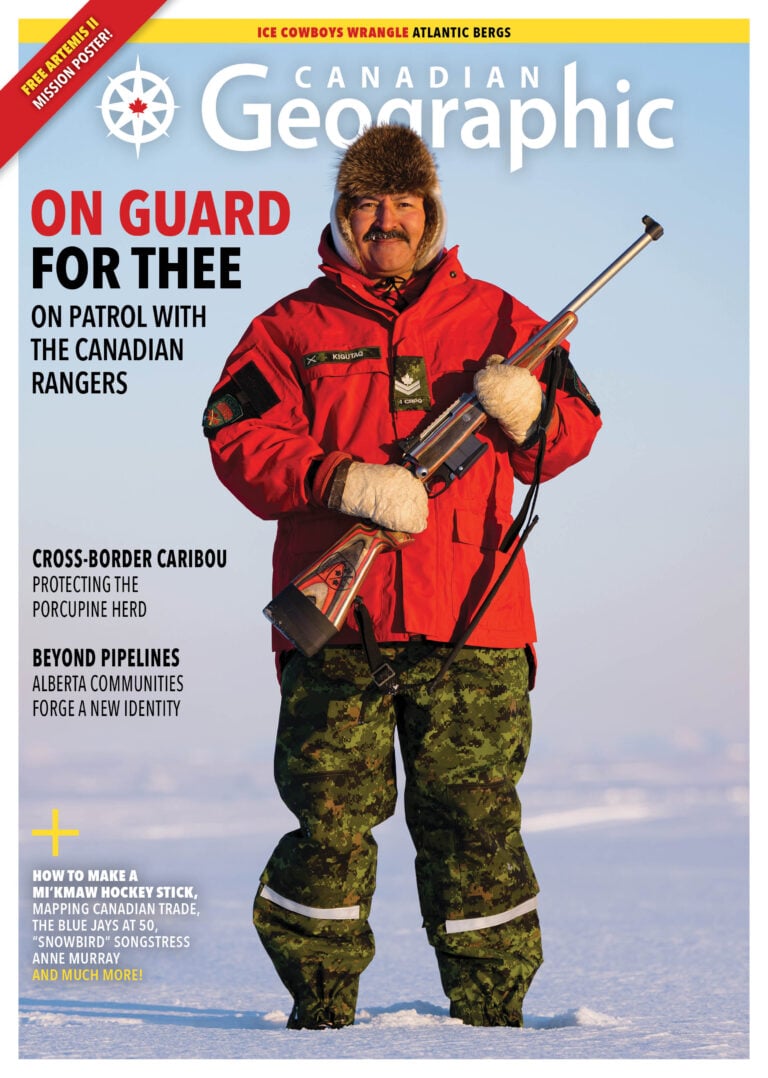
This story is from the July/August 2026 Issue
People & Culture
As the climate heats up, so do talks over land ownership in the Arctic. What does Canadian Arctic Sovereignty look like as the ice melts?
History
Veteran journalist and governor-general spouse Whit Fraser recalls diplomatic row with U.S. over 1980s naval excursion into Canada’s High Arctic in excerpt from latest book
People & Culture
For generations, hunting, and the deep connection to the land it creates, has been a mainstay of Inuit culture. As the coastline changes rapidly—reshaping the marine landscape and jeopardizing the hunt—Inuit youth are charting ways to preserve the hunt, and their identity.
Environment
Inuit food security and self-governance in a rapidly warming Arctic are at the centre of a new policy paper issued by the Inuit Circumpolar Council