
Travel
Belize from above and below — plus scuba diving with kids!
Discovering beauty and resilience on the world’s second-largest barrier reef
- 1881 words
- 8 minutes
Travel
A first-person dive into Belize’s Great Blue Hole, where scale, geology and experience matter more than colour

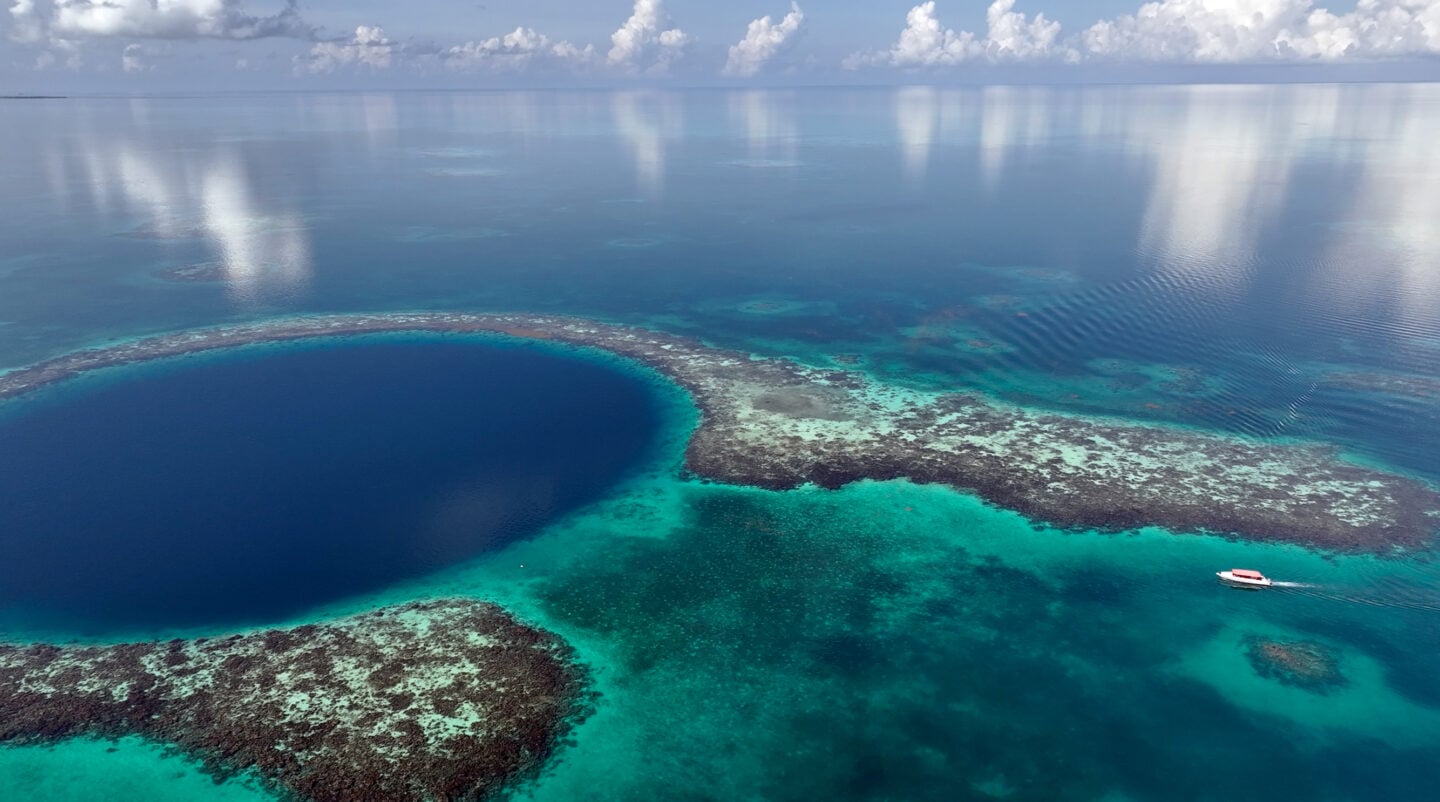
The rumbling engine of wish u had it dissipates from a roar to a gentle hum as the vessel slows at the edge of the world’s largest underwater sinkhole. With no wind and no swell, the ocean lies flat and glass-like, the surface blending into the horizon. In the shallows, coral mounds rise, some touching the surface, making it imperative that we navigate cautiously.
I peer over the edge of the small dive boat and trail my hand through the turquoise water, making out individual shells and stones on the ocean floor just a few metres below. Suddenly, the seabed disappears, and I find myself staring into a vertical plunge equivalent to a 40-storey building.
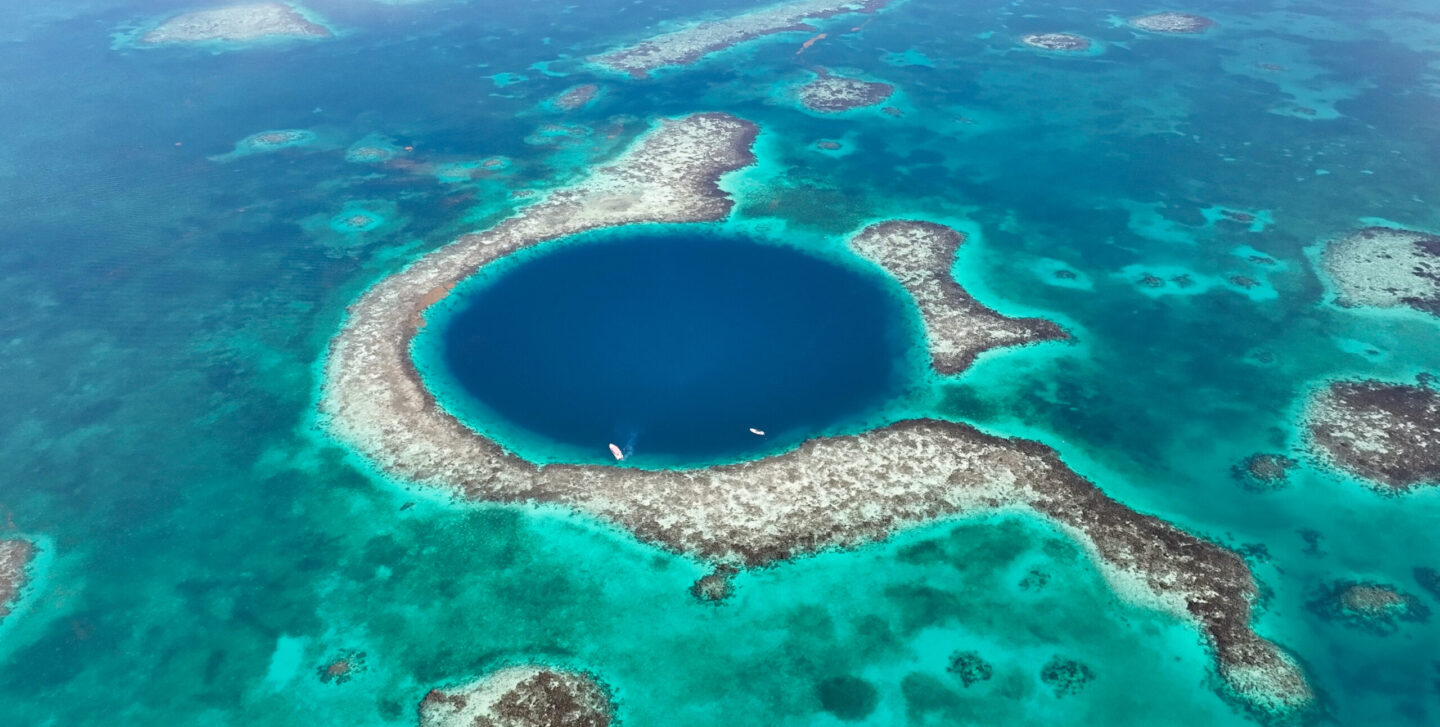
From above, Belize’s Great Blue Hole is one of the world’s most recognizable dive destinations, made famous by oceanographer Jacques Cousteau in the 1970s, though it had long been known to Belizeans. Today, the iconic sinkhole — 318 metres wide and 124 metres deep — draws thousands chasing a bucket-list dive. But the reality of descending into the Great Blue Hole’s shadowy limestone chamber is far quieter than its reputation suggests. It’s a place where colour drains, sound softens, and the dive becomes less about discovery and more about sinking into the sensation of exploring an ancient void.
“This is a geology dive, more about the formations instead of marine life,” says Joe Vasquez, a divemaster with Belize Pro Dive Center. “It’s a very easy dive, but watch your depth because you sometimes don’t even realize how quickly you descend.”
Locally owned and operated, Belize Pro Dive Center has been offering dive excursions for more than a decade. Based in San Pedro on Ambergris Caye, the 5-Star PADI Dive Resort offers a range of trips, from snorkelling Hol Chan Marine Reserve and Shark Ray Alley to diving the Witconcrete, Belize’s premier wreck site. Today, however, our destination is the Great Blue Hole.
The day begins at 6 a.m. with a pickup from the dock of Grande Caribe Belize in San Pedro, with our equipment already loaded onto wish u had it. The previous day, we were fitted with scuba gear, signed our waivers and met with Ian Oliva, a scuba instructor with Belize Pro Dive Center, who provided a preliminary briefing.
“Our Blue Hole often gets mixed up with the one in Egypt,” says Oliva. “This Blue Hole is pretty chill.” He explains that it will take about two and a half hours to reach the dive site (weather permitting). Once there, we will gear up and receive a final briefing before launching into the water with a giant stride. “When you’re descending, take a look at the stalactites, but try to stay away from the wall,” he says. “It can be sharp.”
The Great Blue Hole, which forms part of the Belize Barrier Reef Reserve System (a UNESCO World Heritage Site), dates back to the last Ice Age, which ended about 11,500 years ago. When sea levels were low, the site was a dry limestone cave system, but as the climate warmed and sea levels rose, the caverns became flooded. Subsequent sections of the roof collapsed, forming the circular sinkhole we see today.
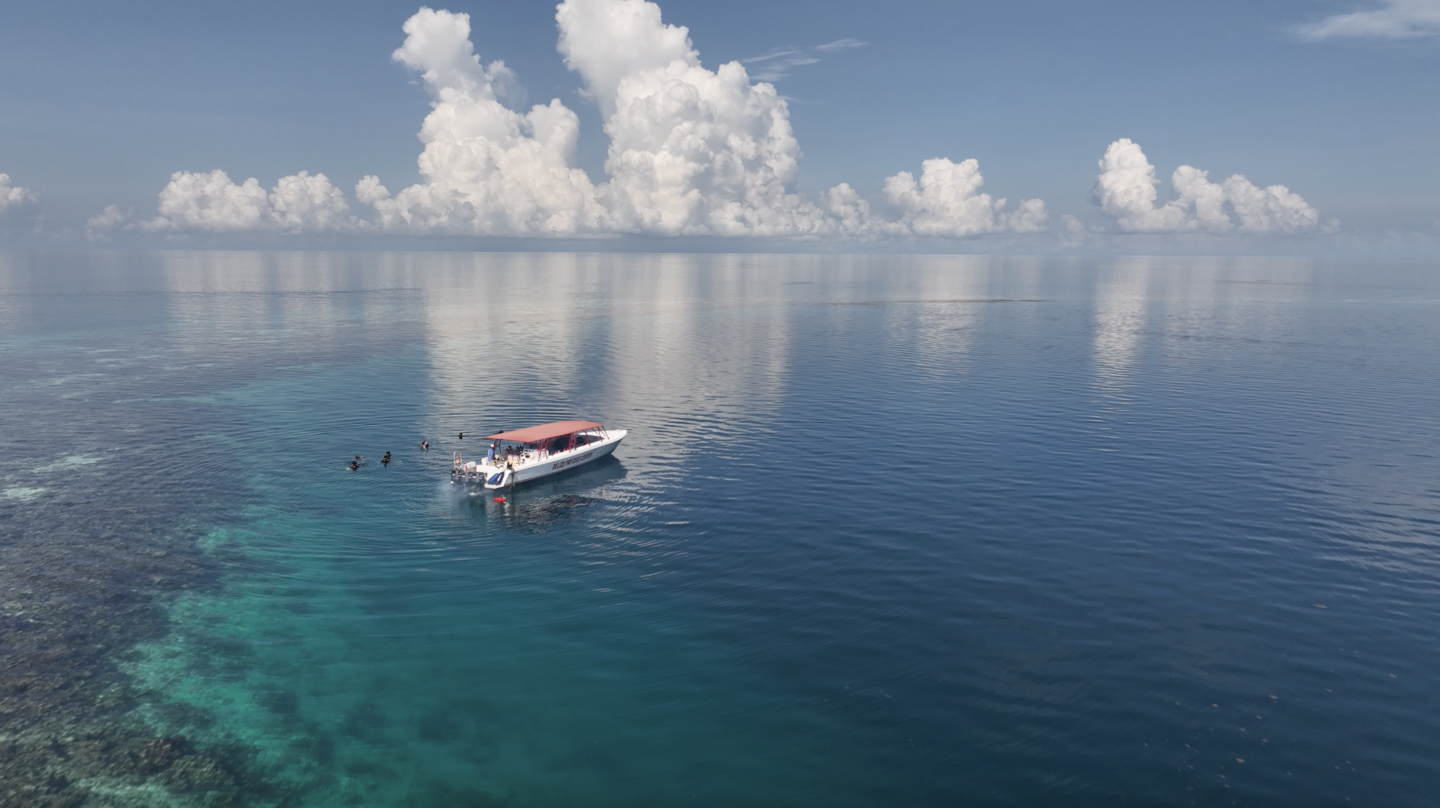
Maybe it was the time of year; maybe it was simply luck. But as wish u had it approaches the mooring buoys on the edge of the Great Blue Hole, I am surprised to see only one other boat in the area. Around the world, many iconic dive sites are crowded with visitors chasing the same bucket-list moments, which can spoil the experience. But today, we find ourselves almost alone.
“Nitrogen narcosis begins to happen around 100 feet (30 metres),” explains Vasquez during our final briefing. “So if you start to notice your thinking being impaired, check your depth and ascend a little bit.” Similar to the feeling of alcohol intoxication, nitrogen narcosis, or “rapture of the deep,” occurs when the increased pressure of diving causes the gases in a tank to shift, altering the air the diver breathes. Serious consequences typically happen closer to a depth of 91 metres — on today’s dive, our maximum depth will only be about 40 metres.
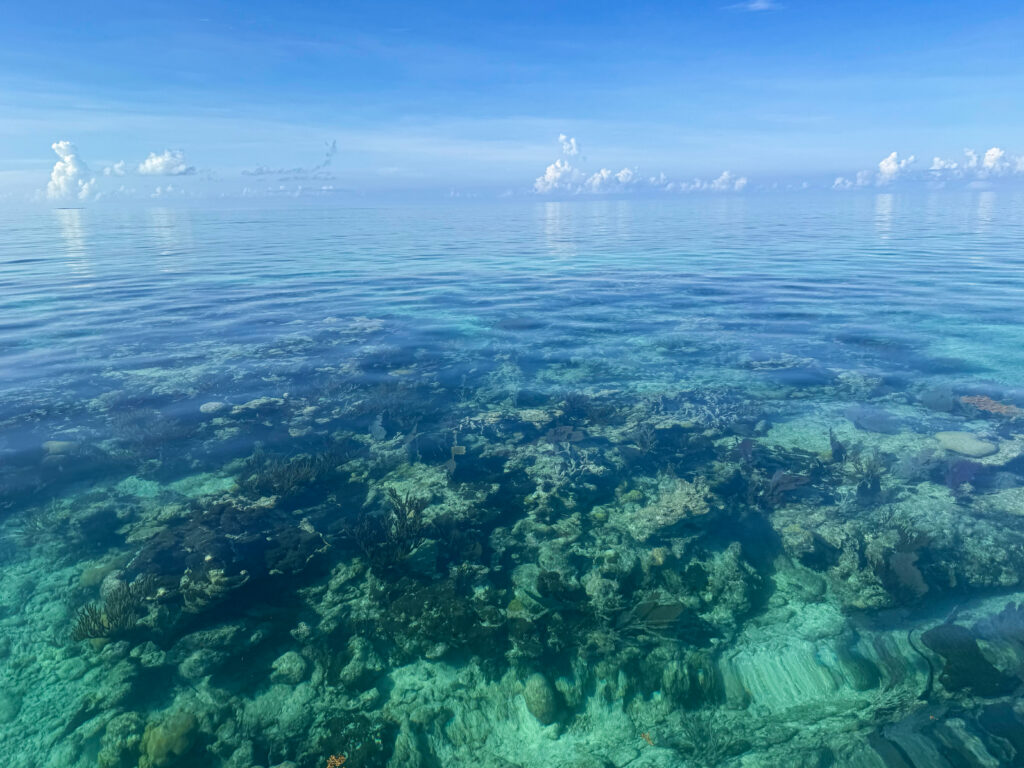
Starting at the mooring buoy, we’re briefed to descend together along the shallow reef surrounding the Great Blue Hole (about nine metres), equalizing our ears as we go to match the water pressure. From there, we’ll level off and swim neutrally over the sandy bottom, following coral mounds as the terrain gradually slopes downward toward the drop-off.
Vasquez guides us through what we might expect to see once we reach the drop. “Sometimes the visibility is bad closer to the surface, then it clears up as you descend. But sometimes, it’s the opposite.” On this day, we experience clear visibility throughout the dive.
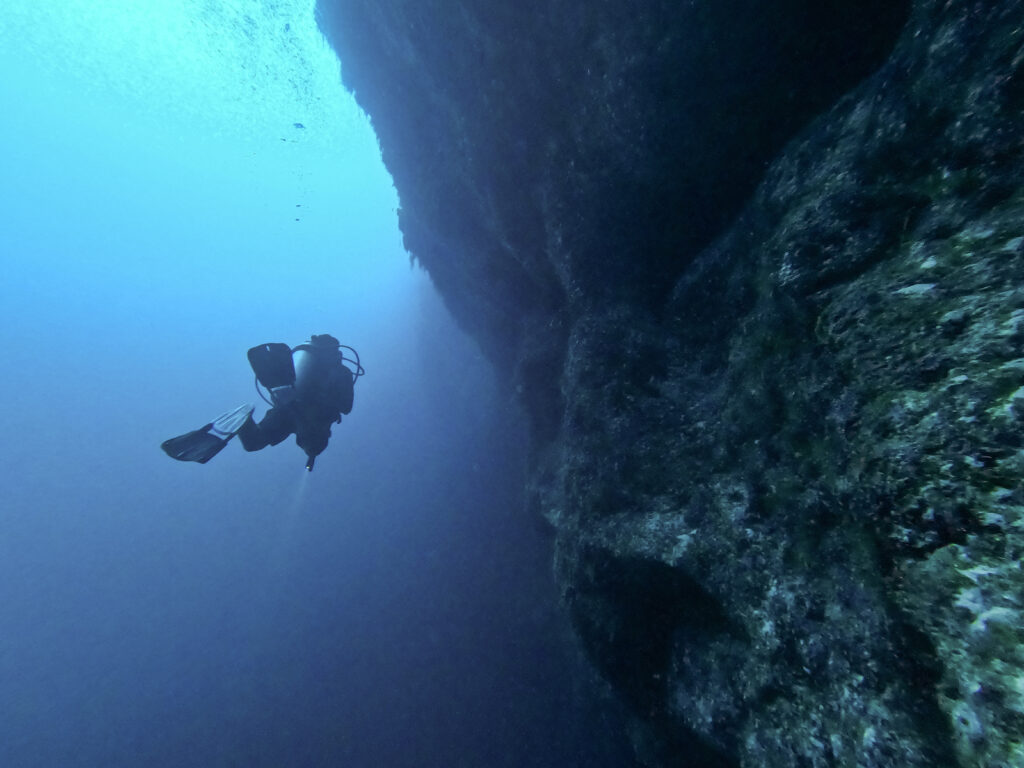
“At about 100 feet (30 metres), you’ll see where the wall begins to cave in,” says Vasquez. “That’s when we start to see the stalactites.” From there, we’ll zigzag carefully through the ancient formations, keeping a close eye on our depth and air while scanning the shadows for passing marine life. When it’s time to ascend, we’ll move slowly, pausing for a three-minute safety stop at five metres to eliminate excess nitrogen before surfacing.
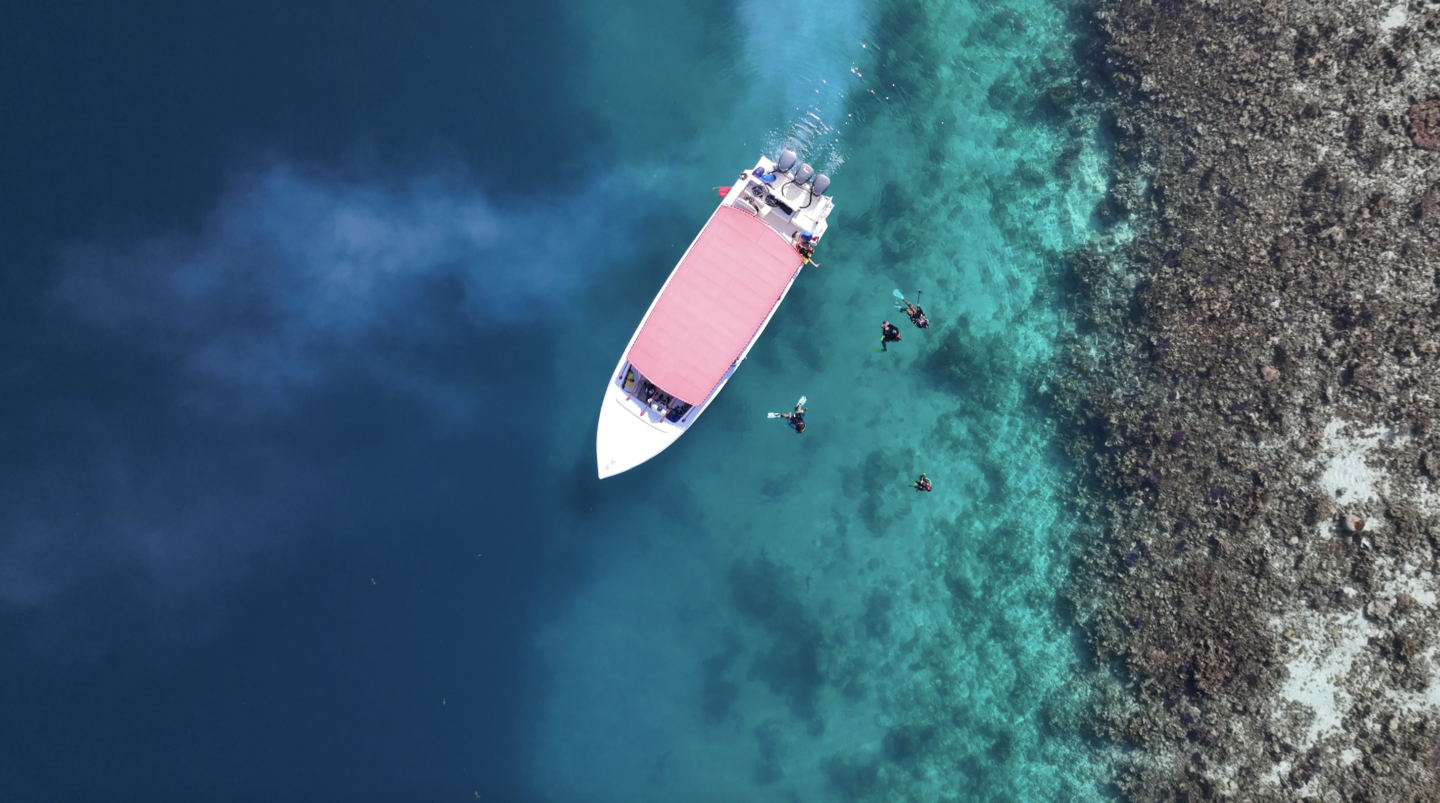
Fins on, buoyancy control device (BCD) fastened and inflated, mask de-fogged, air turned fully on, regulator in my mouth — go time. With a long stride off the back of the boat, I drop into the water. Floating at the surface, I make a fist and tap the top of my head, signalling to the crew that I’m okay. Once all the divers are in and ready, we begin the descent.
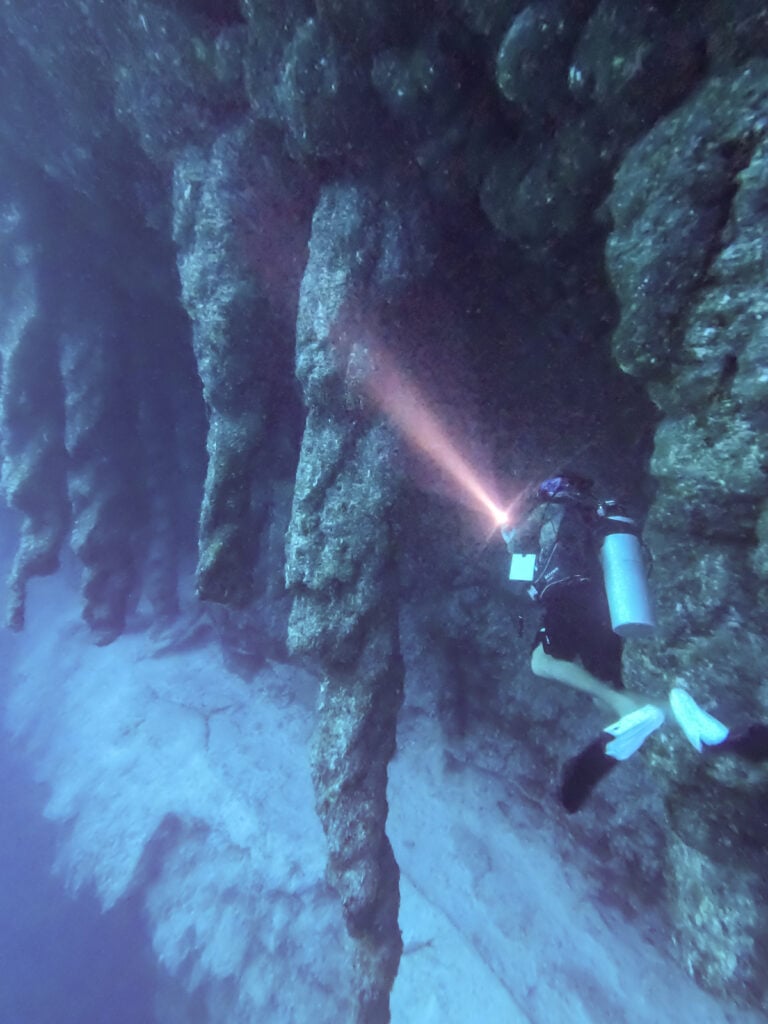
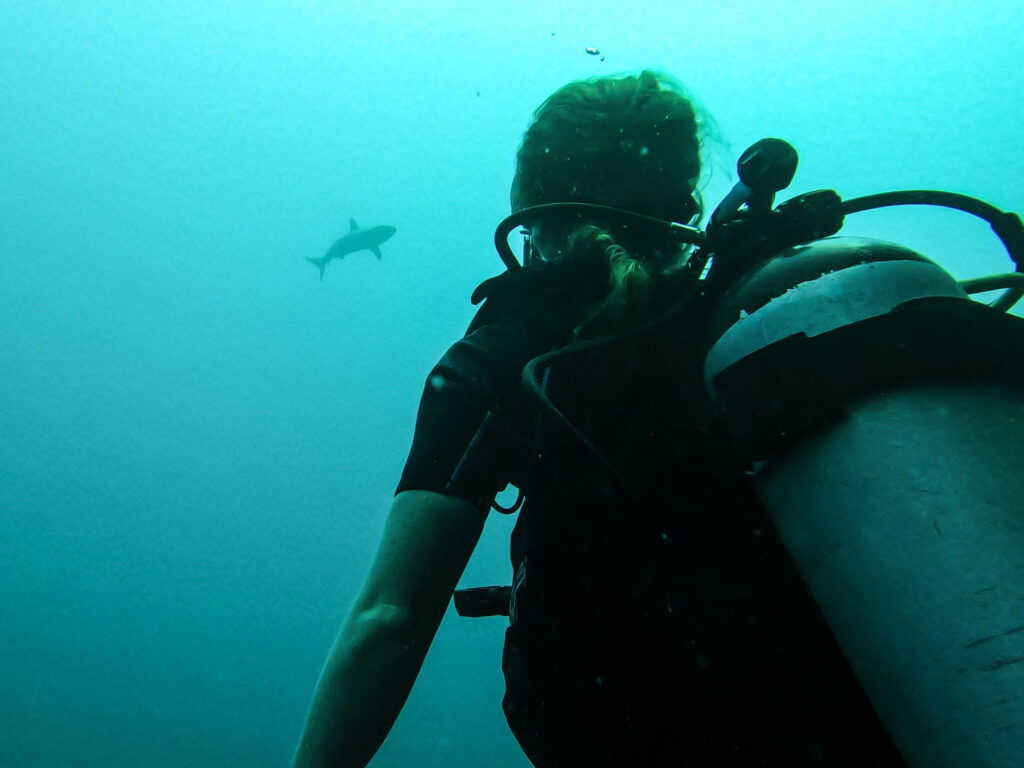
Just as Vasquez has instructed, we sink slowly to the limestone shelf, following coral mounds until the seabed gives way to the drop-off. Unlike other popular dive sites in Belize, such as South Water Caye and Laughing Bird Caye, the Great Blue Hole doesn’t boast an abundance of vibrant marine life. But when I take my first real look into the abyss, I spot a lone Caribbean reef shark gliding past several feet below.
As I descend, the light begins to fade, and I turn on my flashlight, scanning the limestone wall for any sign of small marine life. Twenty metres quickly becomes 30, then 40, as the water turns noticeably colder.
Hovering slightly apart from the group, I watch the other divers weave in and out of the stalactites while I remain suspended in open water, exposed, with 30 metres above me and roughly 90 metres below. Above me, I see the familiar silhouette of another reef shark passing by, and I instinctively inch closer to the wall. As an experienced diver, I know I’m safe, but with so little life around and so much empty space, I still experience a flicker of unease.
I make eye contact with Vasquez, who gestures toward the stalactites, mimicking a camera in his hands. I pass him my GoPro and weave through the limestone formations as he captures my expressions of amazement. In this moment, I remind myself to be present and take in as much as I can throughout our short dive.
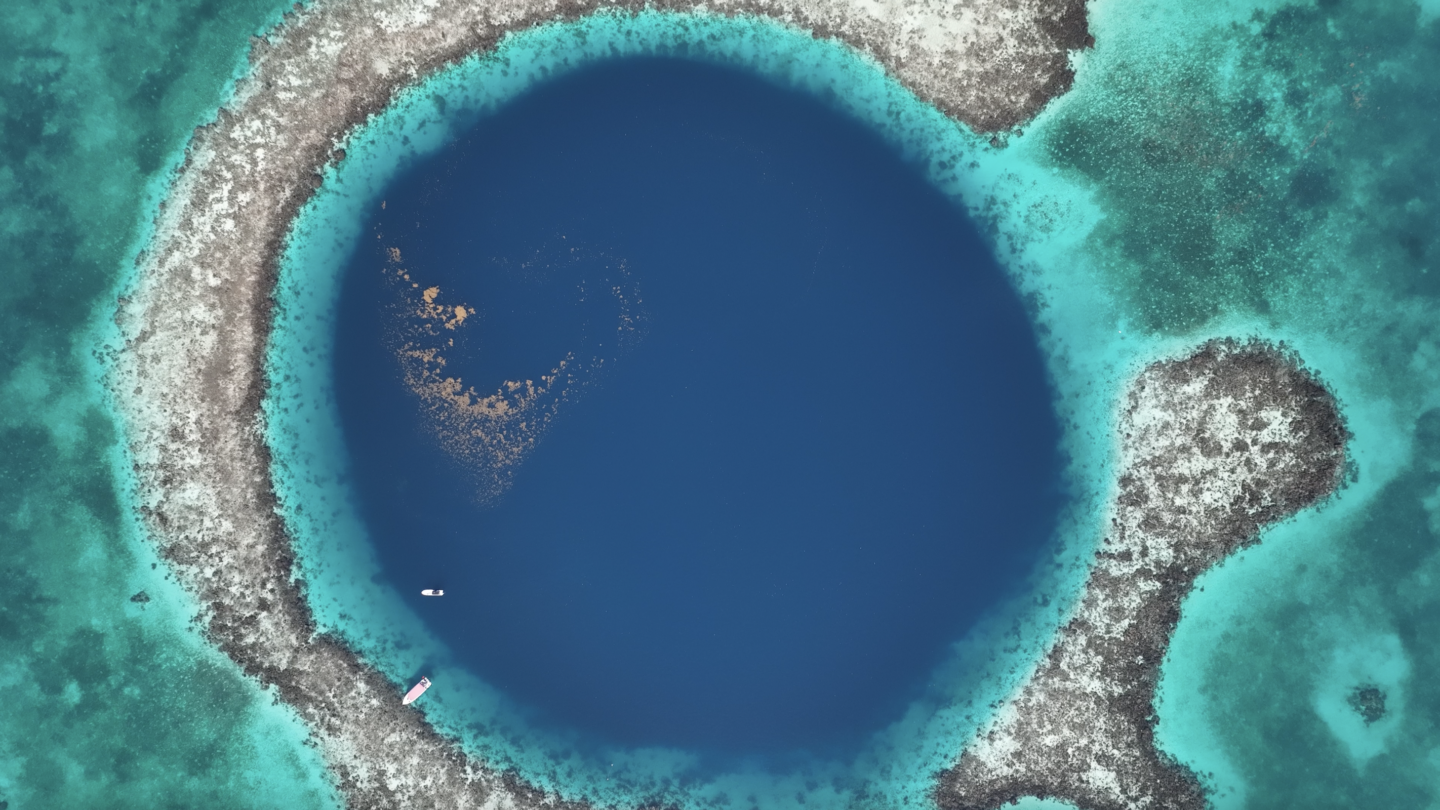
From beneath the surface, the Great Blue Hole feels striking, but not in the way I’d imagined. The breathtaking inky-blue sinkhole carries almost mythic status from above, a visual landmark as famous as the Great Pyramids, Angkor Wat, or the Eiffel Tower. When experienced from below, however, its impact is quiet and peaceful.
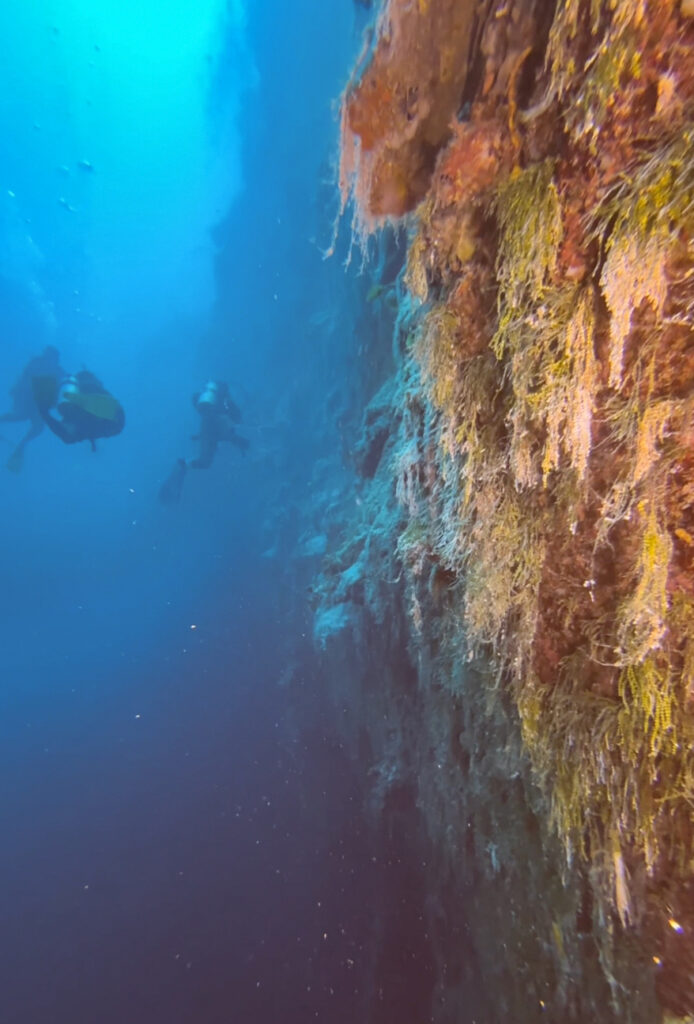
The scenery within the Great Blue Hole is defined less by marine life and colour than by form, as evidenced by the ancient limestone rock formations mirrored in the dark abyss. When compared to other Caribbean dives, the underwater landscape can actually feel surprisingly ordinary, especially if rocks aren’t your thing.
When it’s time to ascend, we move slowly upwards, pausing for our three-minute safety stop, as instructed, before breaking the surface. I pull my mask off my face with a big grin and say, “That was awesome.” The familiar feeling of surfacing after a dive takes over: a mix of unnoticed exhaustion, excitement and awe at what I have just experienced.
Back on wish u had it, the scale of what we’ve just done begins to settle in as I unclip my BCD and peel off my wetsuit. Though not the most visually spectacular dive, the opportunity to explore this ancient landmark firsthand leaves me feeling fulfilled. Diving the Great Blue Hole remains a meaningful once-in-a-lifetime adventure simply for the experience of seeing this geological wonder up close and personal.
Be part of the sustainability movement
Beyond Blue
Interested in learning more about the Belize Barrier Reef and what lies beneath the ocean’s surface? Check out Belize’s Beyond Blue Dive Summit, taking place April 22 to 25, 2026.
This four-day underwater adventure will allows curious travellers to explore world-class reefs, connect with conservation leaders and ultimately, work towards safeguarding the future of our oceans.
Travel
Discovering beauty and resilience on the world’s second-largest barrier reef
Travel
Explore this Central American nation’s top dive sites, where visitors can witness thriving marine ecosystems and learn about sustainable reef protection
Exploration
After years of chasing warm-water reefs abroad, learning to dive in a drysuit off B.C.’s coast reshaped how I see Canada’s seasonal underwater ecosystems
Travel
Taking a closer look at Kingston’s museums below the surface