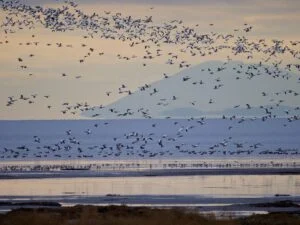
Birds encounter many threats throughout the year, including storms, predation from domestic cats, collisions with communication towers and buildings, pollutants, and more. One of their biggest challenges is simply finding habitat that provides enough food and shelter to survive and raise young. This problem is magnified because they migrate over such large distances: migratory birds need different habitat in the summer, winter, and during spring and fall migration. Some bird species need to eat every day during migration. Other birds, like the blackpoll warbler, almost double their body weight before flying 3,700 kilometres non-stop from Canada to northern South America—a journey that takes around 86 hours. Scientists like me now look beyond those species’ Canadian breeding habitat to see where else conservation may be required.
It’s a complicated problem. Hundreds of migratory bird species arrive in Canada each spring. They come from all over the world, including Mexico, Bolivia and Argentina. Many of them are endangered in Canada. How can researchers collect enough information about migratory birds to effectively plan continental-scale conservation? And how can we do it quickly enough to help species that are at risk right now? Not only are songbird numbers declining and their ranges constricting; conservation funding and human resources are also limited. Plans are urgently needed that maximize the efficiency of financial investments and on-the-ground action.
Identifying cost-effective habitat conservation for migratory birds is exactly what my research partners and I study. We use the largest biodiversity-related “citizen science” project in the world.
It all started with a simple idea: there are millions of individual birdwatchers across the world, each with unique knowledge and experience. They make exactly the kind of observations that researchers need to understand where migratory songbirds live and move. But without a way to harness all their observations, the information can’t be used to study or conserve birds. There needed to be a simple, free way for birders to collect, archive, and publicly share the information they were collecting.
Enter “eBird,” developed by the Cornell Lab of Ornithology. Birders download a free mobile app onto their smartphone or tablet. They enter information about the birds they observe from anywhere around the world – even offline. For example, Caroline a birder might go to High Park in Toronto in May and hear a Canada warbler. That birder can immediately take out their phone, open the eBird app and submit the data. They can also see what other birders are reporting locally and beyond, explore birding hotspots, and search photos and sound clips to help them identify birds in the field.
eBird is very popular: more than 100 million bird sightings are contributed each year from ‘eBirders’ around the world, and more than half a billion sightings have been entered in the 15 years since eBird was created. This is the kind of data that scientists like me dream about. Without citizen scientists, we couldn’t collect that amount of information in a lifetime.
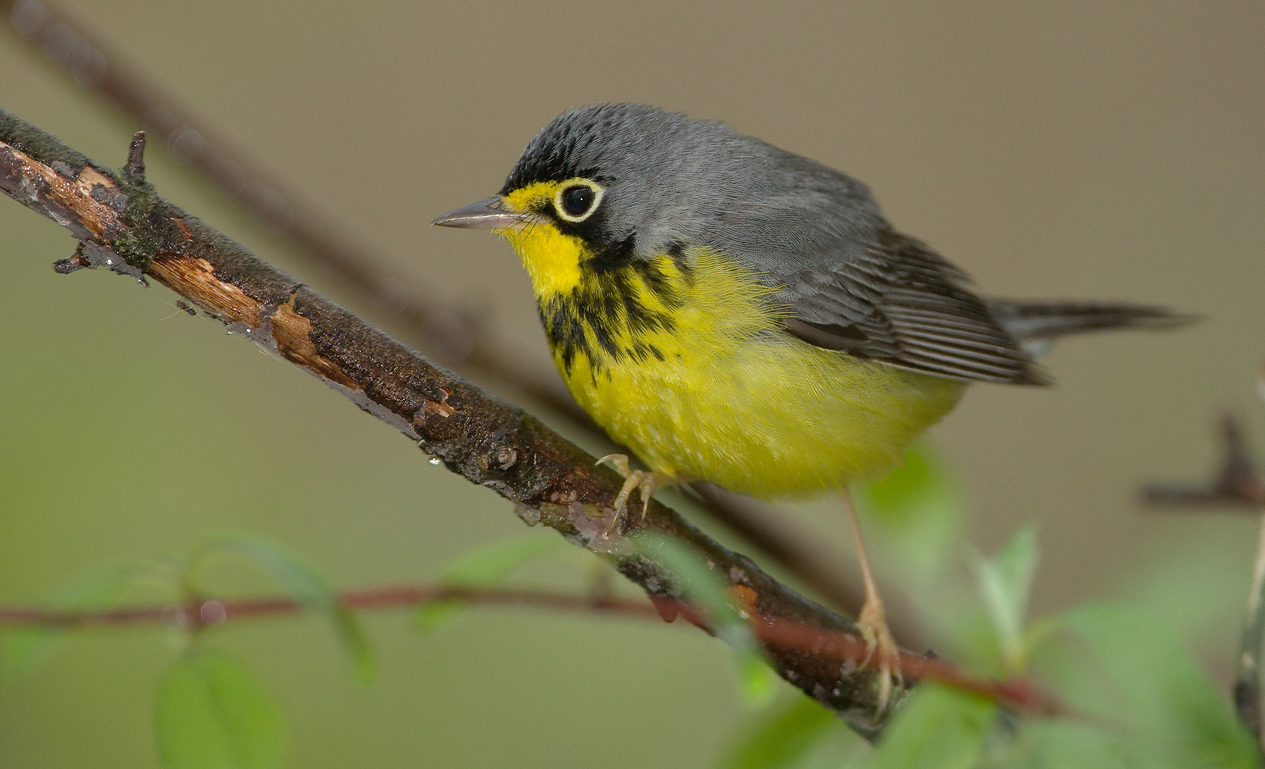
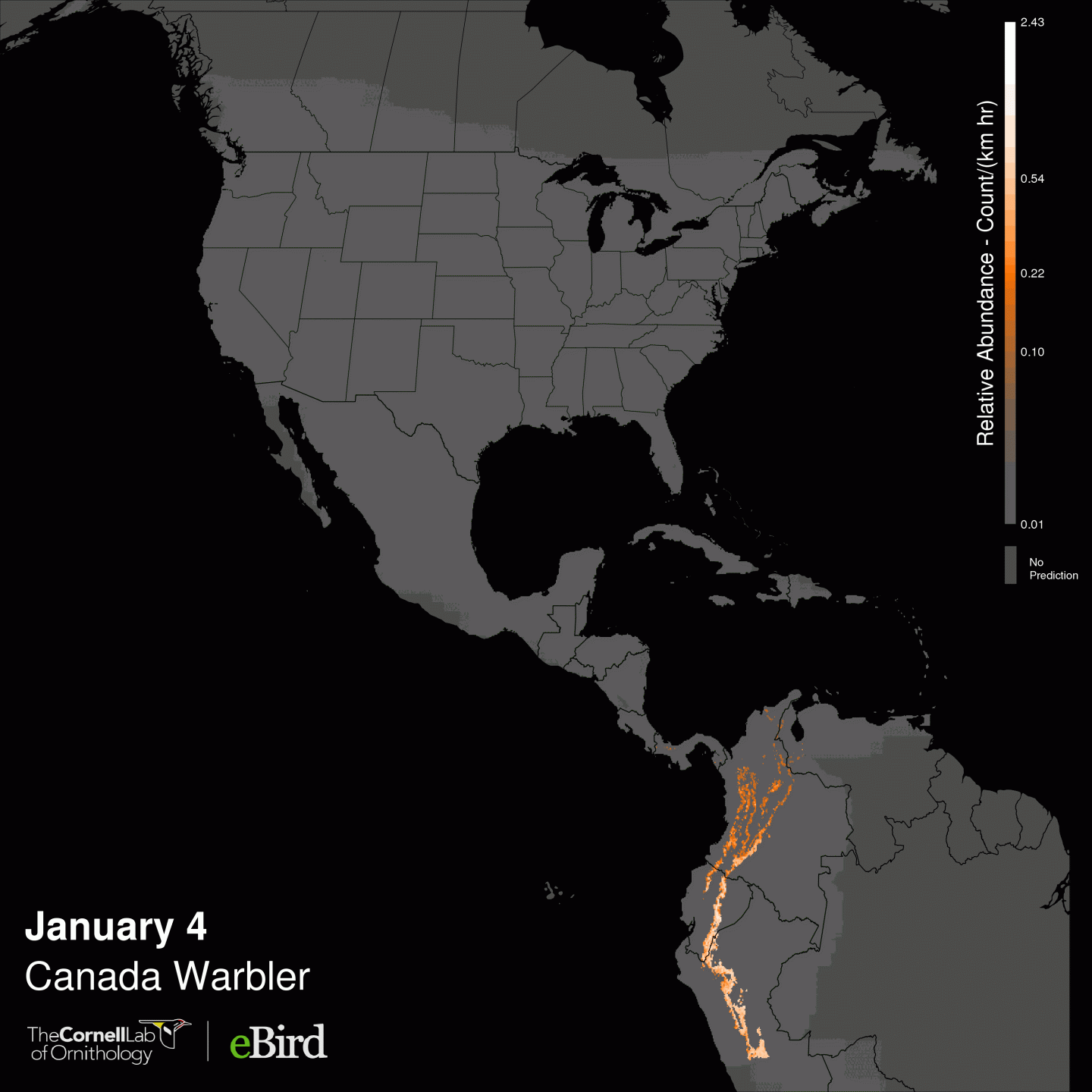
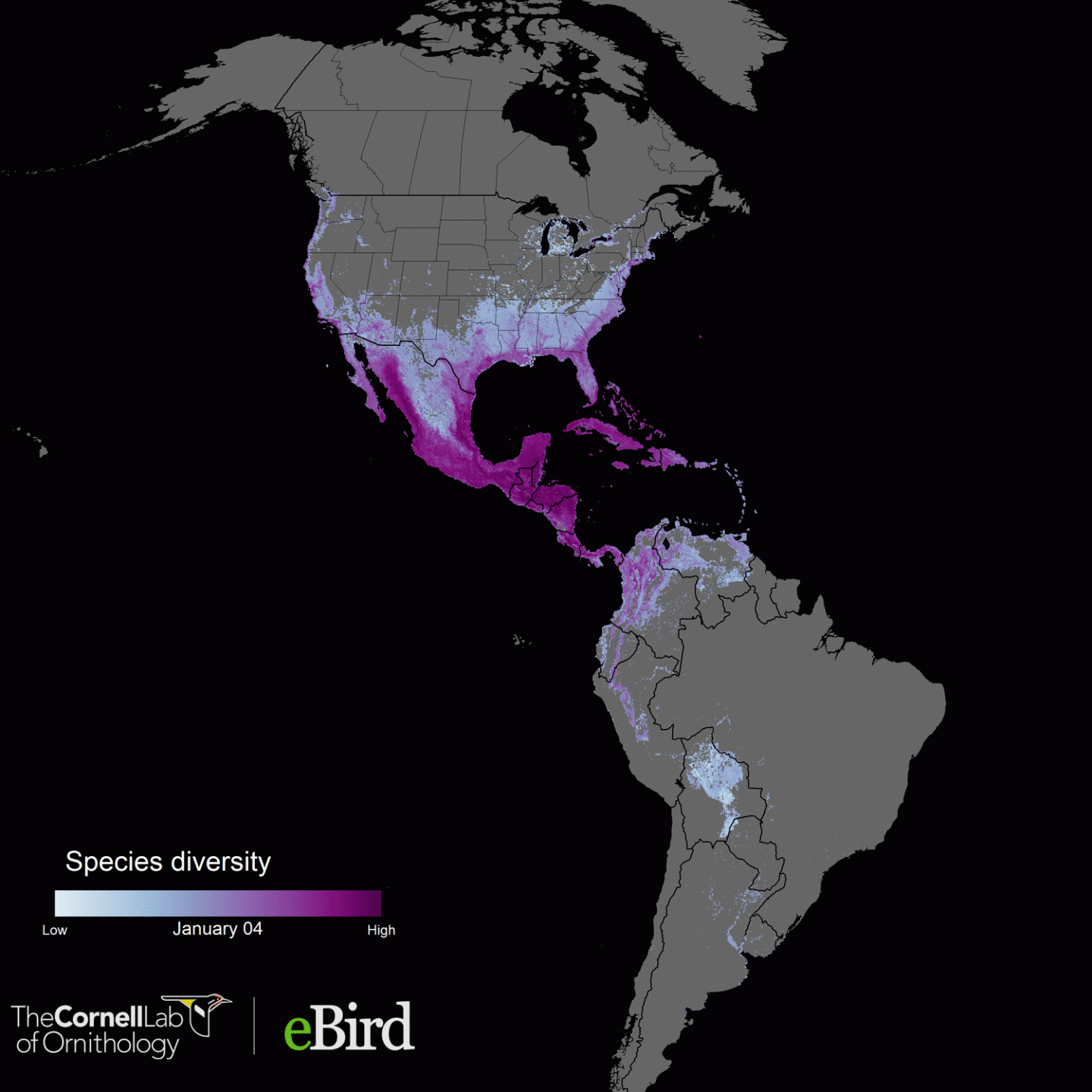
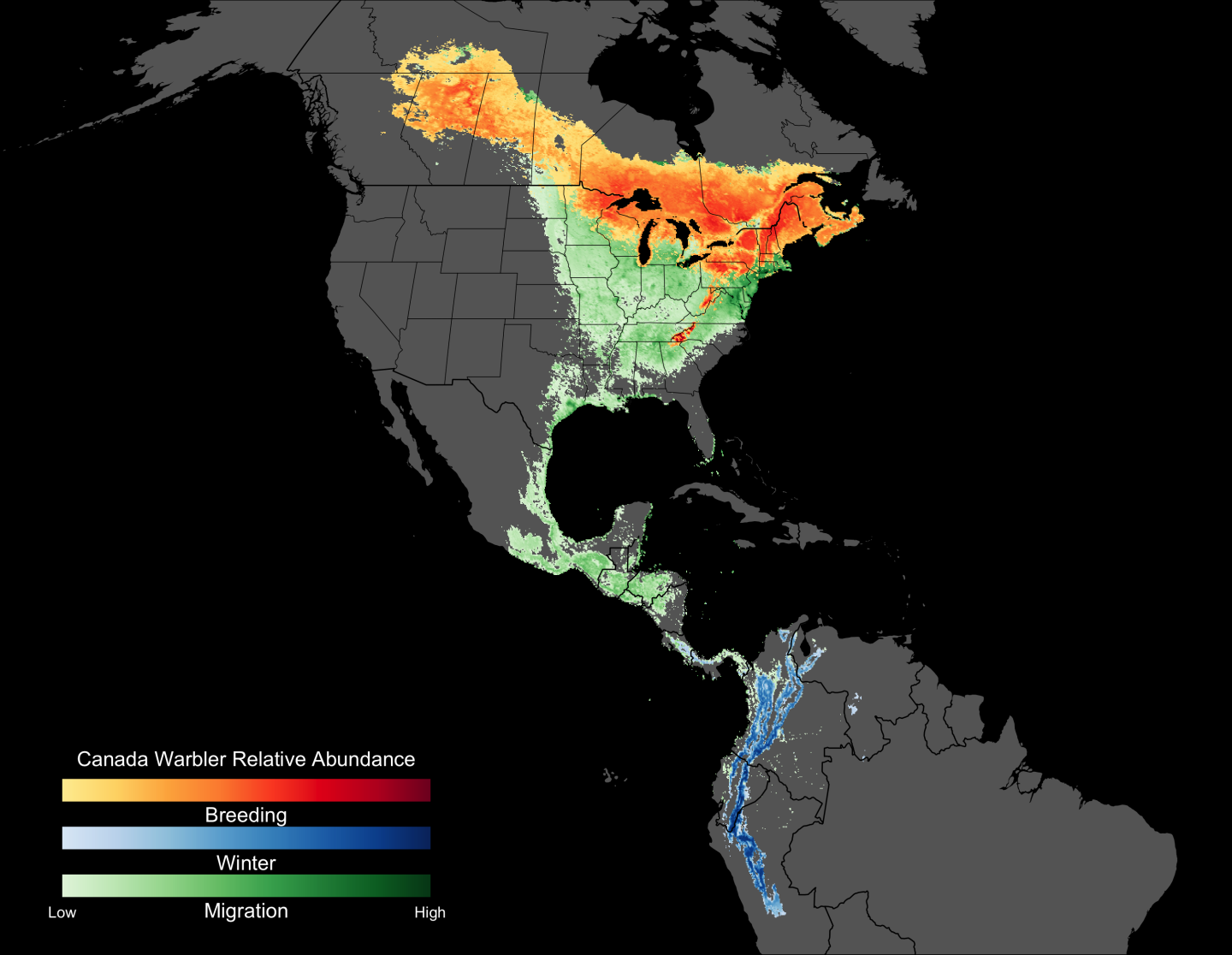
How do these data help the tiny Canada warbler on its transcontinental migration? I work with scientists from the Canadian government, Carleton University, the University of British Columbia, and the Cornell Lab of Ornithology. Together, we combine eBird data from more than 100 songbird species that migrate from Central or South America to Canada and the U.S. We specialize in using statistical models and spatial mapping to analyze data entered in the field by eBirders.
eBird data enable us to accurately predict where species are each week of the year. This allows us to identify which places on the birds’ migration paths might be most critical to their survival. That in turn tells us where to focus conservation efforts.