History

The U.S. Tariff Act of 1890 was meant to hurt Canada. Instead, it made us stronger.

A look at the McKinley Tariff, a political weapon that imposed crippling tariffs of up to 50 per cent on Canadian exports to the U.S.

  • Jul 28, 2025
  • 801 words
  • 4 minutes
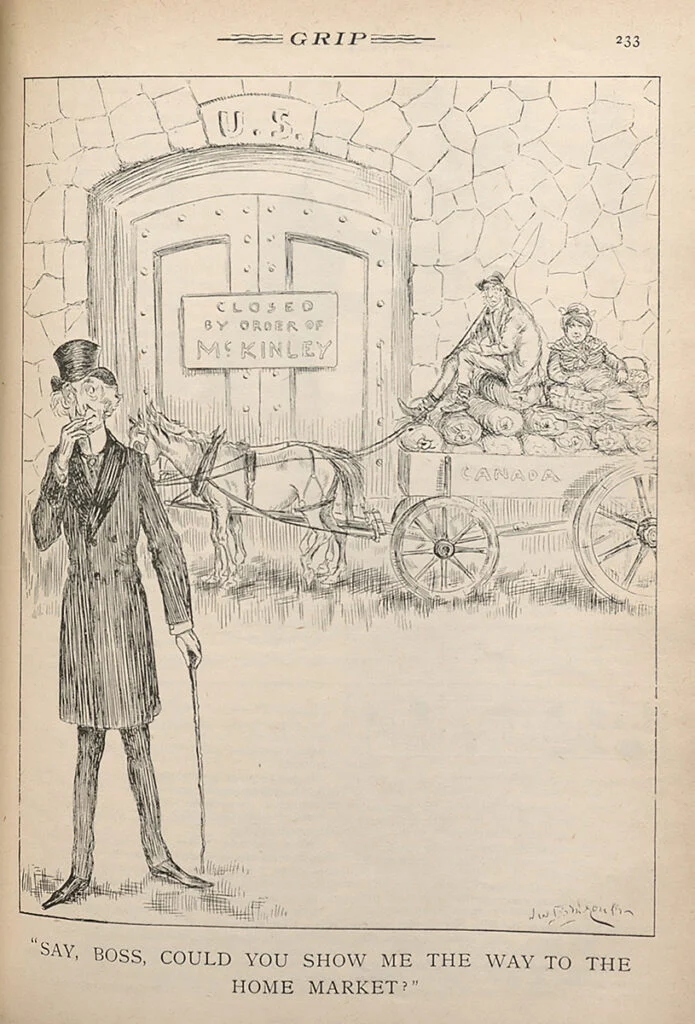
A political cartoon published in the Canadian satrical magazine The Grip in October 1890 with the caption, “Say, Boss, Could You Show Me the Way to the Home Market?” (Photo: INLLUS. IN AP101.P7 1897. Library of Congress Prints and Photographs Division)
Expand Image
Advertisement
Advertisement
Live Net Zero Email Service

Member of parliament Joseph-Adolphe Chapleau had a message for Americans when he spoke at the Commercial Club banquet in Providence, Rhode Island, on Nov. 28, 1891. He told them the sudden increase in tariffs on all Canadian goods going into the United States was a measure, “for the passing of which we ought not to feel angry with the United States. It has done us good, caused us to realize that we stand upon our own feet, who before leaned a little for support upon the United States.”

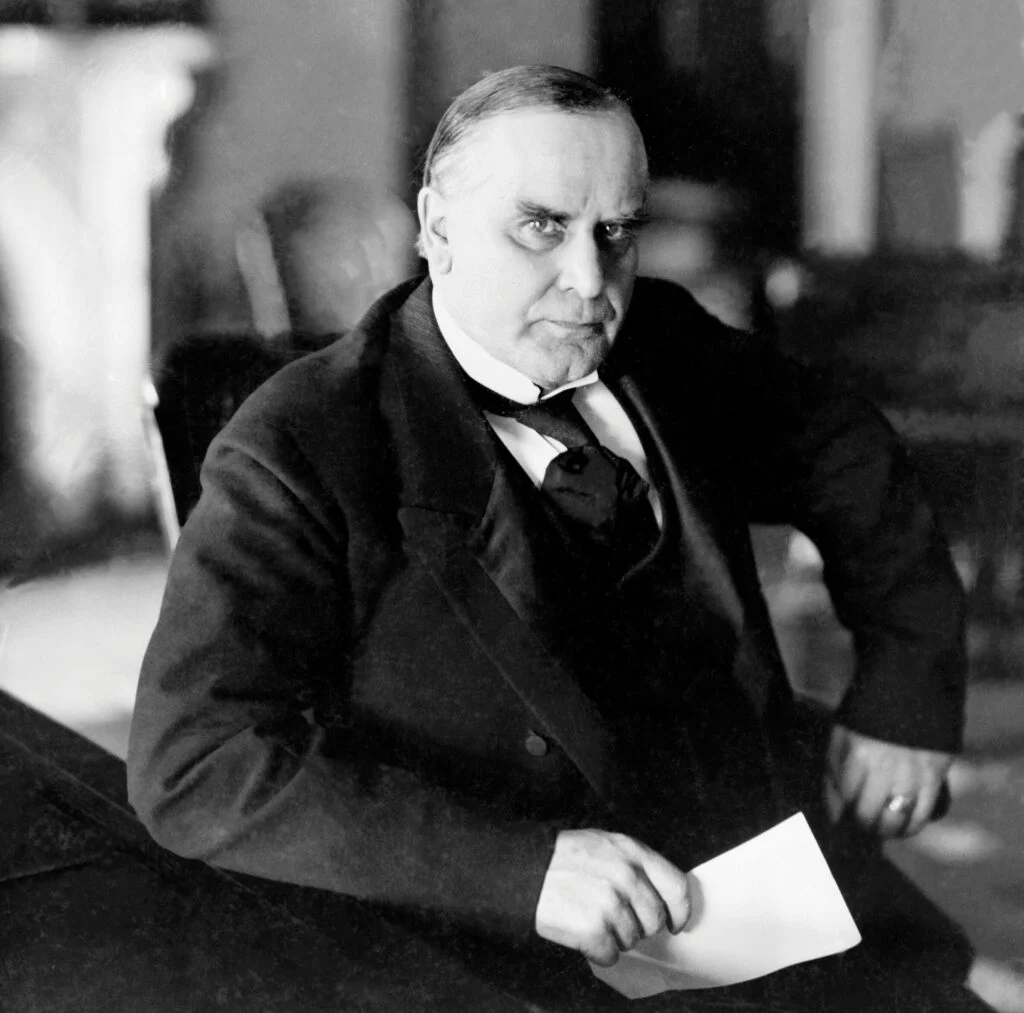
William McKinley, photographed c.1898, became the 25th U.S. president in 1897 and served until 1901. (Photo: IanDagnall Computing/Alamy Stock Photo)
Expand Image

He said these words more than 130 years ago, but with U.S.-imposed tariffs and talk of annexation again rearing their ugly heads, they would not be out of place today.

In October 1890, just over a year before Chapleau gave his speech in Rhode Island, the Tariff Act of 1890 came into law in the United States. It immediately put forward tariffs on some imports to the United States of nearly 50 per cent.

It was popularly known as the McKinley Tariff, named in honour of the future president and Trump hero who championed it, William McKinley. (Trump has also reinstated McKinley’s name on Alaska’s Mount Denali, a Denaakk’e word made official during the Obama administration to honour some of the region’s Indigenous peoples.)

In one speech in Boston on Oct. 4, 1892, McKinley said of his devotion to tariffs, “under free trade the trader is the master and the producer the slave. Protection is but the law of nature, the law of self-preservation, of self-development, of securing the highest and best destiny of the race of man.”

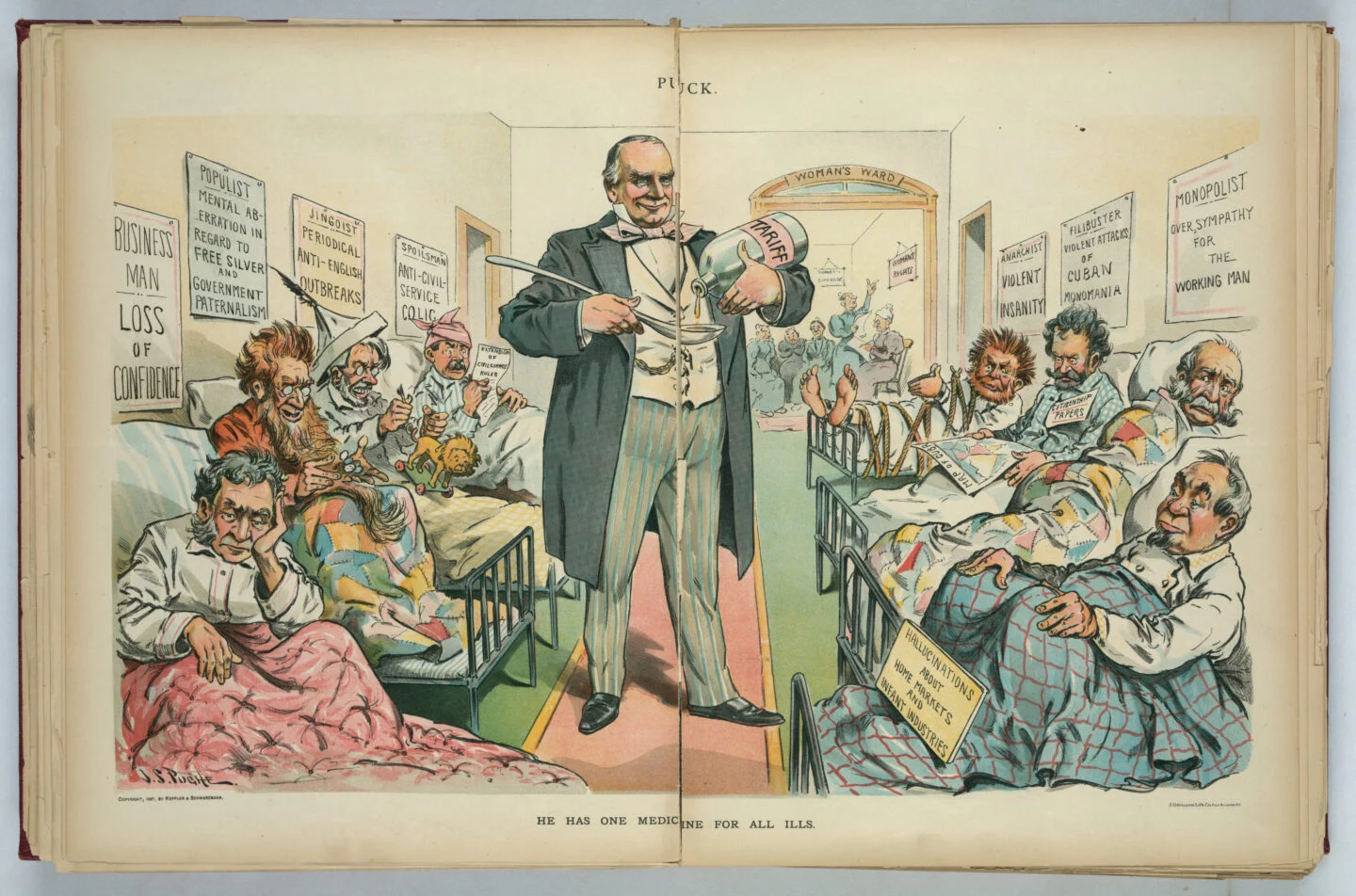
A political cartoon from 1897 depitcs President McKinley as a physician dispensing strong tariff 'medicine.' When McKinley was elected president, he furthered his protectionist policies, enacting the 12-year-long Dingley Tariff. (Photo: Grip, October 11, 1980)
Expand Image

In truth, there was another reason for the tariffs that mirrors our current trade war: the annexation of Canada. At the time, the United States and Canada were at odds over fishery and timber rights along our borders.

Some, like Secretary of State and bill co-author James G. Blaine, believed the issue could be resolved through annexation. “Our great want is an expansion of trade. We are not seeking annexation of territory, certainly we do not desire it, unless it should come by the volition of the people who might ask the priceless boon of a place under the flag of the Union,” he said on Aug. 30, 1890, in Maine.

Some publications, like the Washington Post, said it was “absurd” and “erroneous” to think the tariffs were put in place to annex Canada, and this publicly held belief was a “preposterous delusion.” The Hamilton Spectator hit back at the Post with its own evidence of the annexation threat. 

“Public speakers in the United States boldly advocate annexation. Senators and congressmen in their places in their respective legislative halls right under the nose of the Washington Post, have time and time again spoke of the desirability of annexing Canada. Every American visitor who comes to Canada, and looks upon this fair land, says to us, ‘What a dandy state this would make.’”

Canadians were not fooled, and not giving in. Shortly after the McKinley Tariff passed, John A. Macdonald delivered a speech on the tariffs, stating that giving in to the United States would be traitorous to our British heritage. “The American lion and the Canadian lamb might be down together, but the lamb would be inside the lion.”
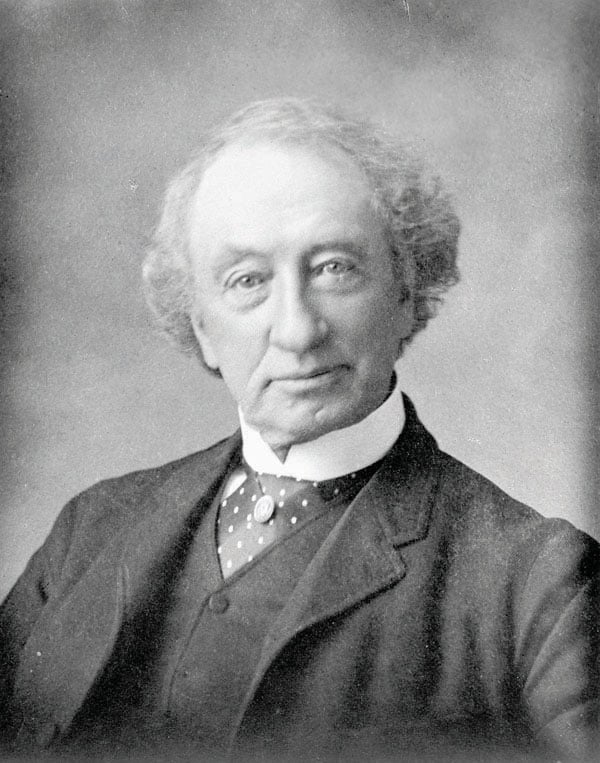
A portrait of Sir John A. Macdonald, taken circa 1875 by George Lancefield when Macdonald had just finished his first tenure as prime minister. By the time the McKinley Tariff threatened Canada, Macdonald was finishing his second tenure. (Photo: Library and Archives Canada/C-005327)
Expand Image

One of the end goals of the McKinley Tariff may have been forcing Canada to become the 45th state, but it achieved the exact opposite and pushed Canada closer to the British Empire. Between 1890 and 1891, trade between Canada and Britain grew by about $1 million, a trend that continued in the subsequent years. In 2025, as our nation faces these same threats, Canada looks to the European Union to diversify our trading network.

The Tariff Act of 1890 proved devastating for the Republicans. That year, in the United States House of Representatives elections, the party lost nearly half its seats. McKinley was part of that sweep. The Weekly British Whig, published in Kingston, Ont., delighted in his demise, writing on Nov. 13, 1890, “William McKinley, the high tariff man, after whom a very obnoxious measure was called, is politically dead. He went to the people for endorsement, and the people have rejected him.”

While McKinley and the Republicans sank because of the tariffs, the opposite happened for Canada’s Conservatives. In March 1891, Canada held a federal election. While the Liberals under Wilfrid Laurier supported free trade with the United States, the Conservatives used the tariff attack as part of their election campaign. It helped the Conservatives win a majority government, their last until 1911, with 117 seats. It was the last election victory for Macdonald, who died a few months later on June 6, 1891.

History is a circle, and it’s coming back around.

Advertisement

Help us tell Canada’s story

You can support Canadian Geographic in 3 ways:

Live Net Zero Email Service

This story is from the July/August 2025 Issue

Related Content

People & Culture

The rise and fall of the North American lobster fishery

In this excerpt from The Lobster Trap, author Greg Mercer explores how climate change, trade wars and greed are reshaping the commercial harvesting of lobsters

  • 2314 words
  • 10 minutes
an aerial view of garden beds

People & Culture

How Canadians are growing resiliency in the face of U.S. threats

As food costs rise as a result of the U.S.-imposed trade war, some Canadians are pushing back by growing their own produce 

  • 634 words
  • 3 minutes

History

Polar Sea, on guard for thee — or not

Veteran journalist and governor-general spouse Whit Fraser recalls diplomatic row with U.S. over 1980s naval excursion into Canada’s High Arctic in excerpt from latest book

  • 4041 words
  • 17 minutes

Science & Tech

Greenbug Energy: Creating renewable energy from old technology

GreenBug Energy wins 2015 3M Environmental Innovation Award for micro-hydro turbines

  • 1659 words
  • 7 minutes
Advertisement
Advertisement