People & Culture
Weird and wonderful ways to eat lobster
From beer to ice cream, here are some lobster-based edibles to spark your curiosity, if not your taste buds
- 527 words
- 3 minutes
People & Culture
In this excerpt from The Lobster Trap, author Greg Mercer explores how climate change, trade wars and greed are reshaping the commercial harvesting of lobsters
Excerpted from The Lobster Trap: The Global Fight for a Seafood on the Brink by Greg Mercer. Copyright © 2025 Greg Mercer. Published by McClelland & Stewart, a division of Penguin Random House Canada Limited. Reproduced by arrangement with the Publisher. All rights reserved.
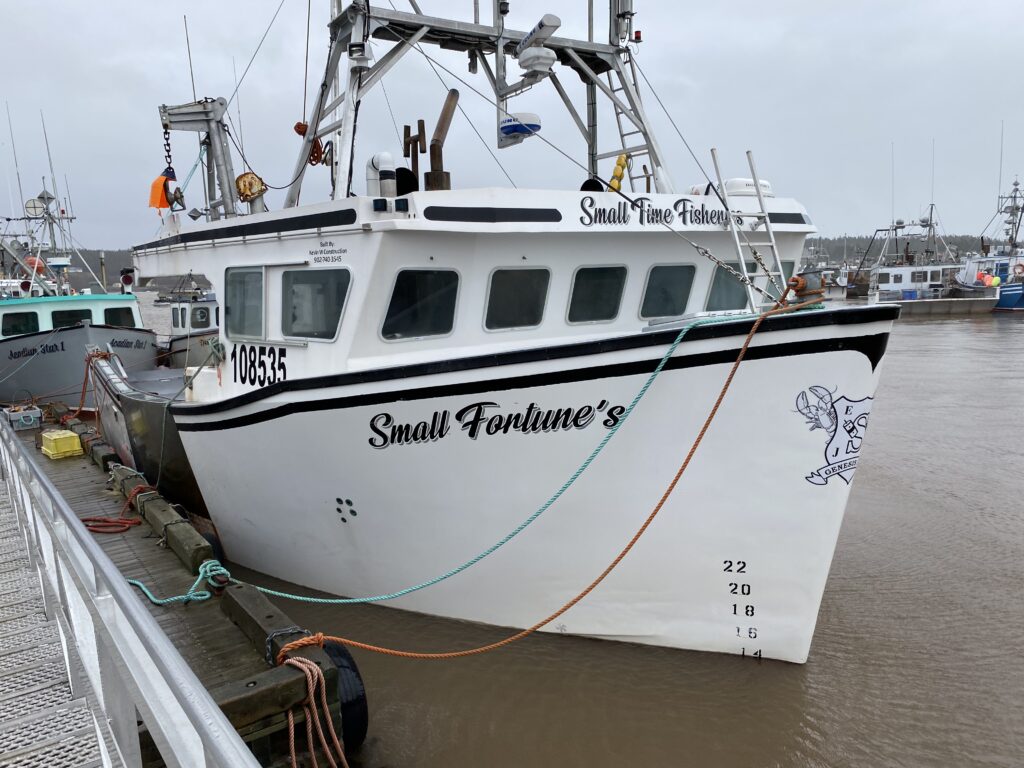
Outside, on the boat’s deck, I could hear them celebrating another successful haul. But I was busy inside, fighting a private battle all my own. I was on my knees, hugging the toilet, while the floor rose and fell around me and the whole room rattled from the droning in the engine room below.
I felt as if I was trapped in this tiny bathroom, bouncing inside a Canadian lobster boat, drifting alone on an angry ocean that tossed me around like a kid stuck on a violent carnival ride. Every time a big wave crashed over the bow, sending the vessel lurching, another swirl of nausea would cause me to empty my guts. My head was pounding, I had cold sweats, and my stomach ached from the constant retching.
It was then I had to remind myself of something—I wanted to do this. I wanted to experience what it was like to go lobster fishing in the weeks before Christmas, one of the most important seasons for the fishery. And I wanted to do it somewhere on the Bay of Fundy, a deep inlet of the Gulf of Maine that separates New Brunswick and Nova Scotia, where the weather can be notoriously awful at this time of year. Seasickness, I told myself, was part of the price of admission.
I grew up on Darlings Island, a small inland community not far from the New Brunswick seacoast, and I’d spent much of my life on the water. My parents were not fishermen—the preferred term for both women and men in the industry—but I’d been on plenty of boats and always felt at home around the sea. Nothing, however, had prepared me for the wild conditions on the big bay a day after a storm had kept fishing crews on land. All I could see outside the windows were the white caps of fierce waves, illuminated by the boat’s headlights. The ocean felt big, black, and immeasurably powerful, a hostile wilderness that was endlessly dangerous.
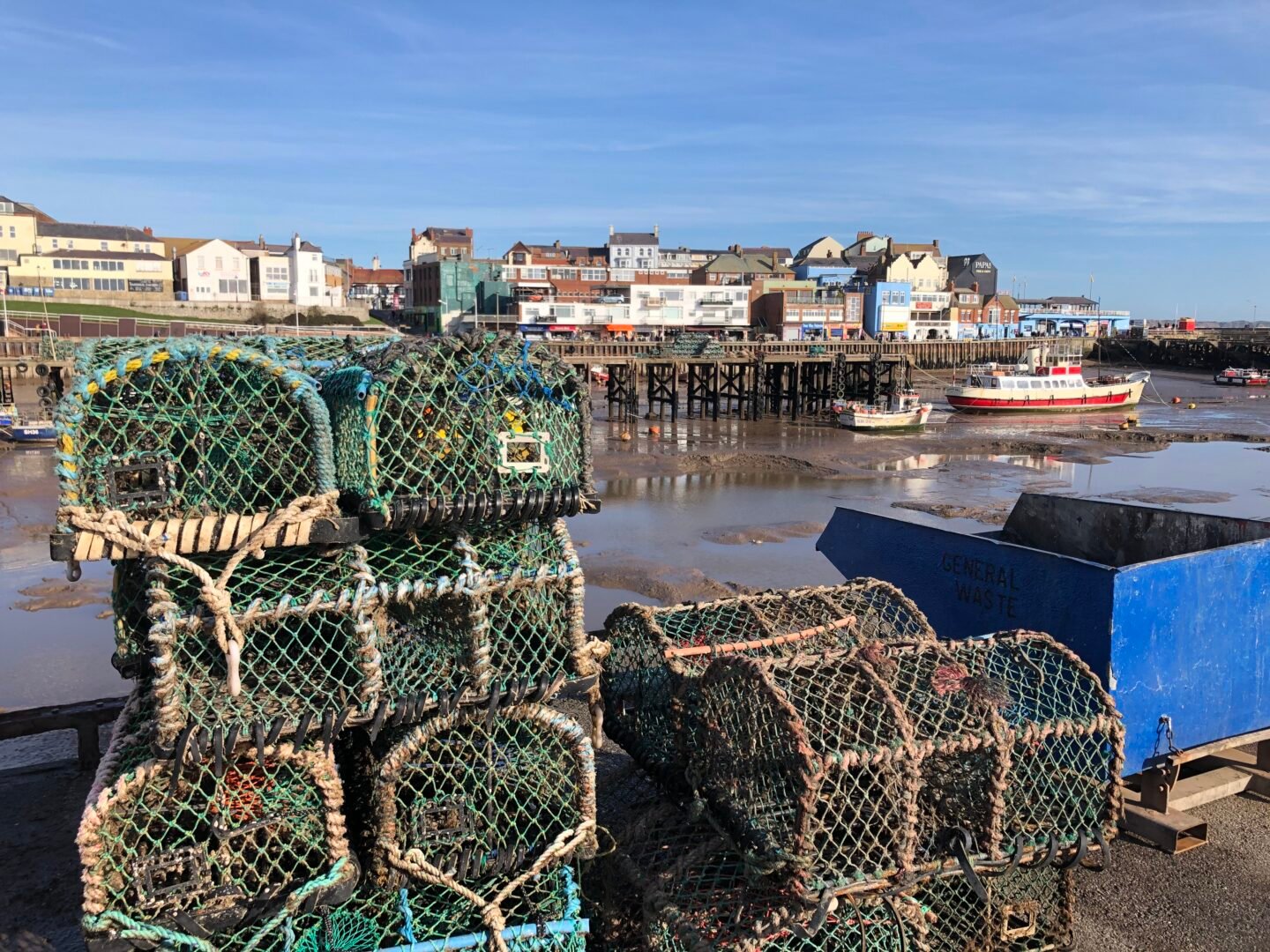
Since I was a teenager, I’d been hearing about the boom in the lobster fishery and the spending spree it was fuelling in fishing villages up and down the coast. I was intrigued by fishermen who chose to chase the promise of riches on the wild ocean. I’d heard how the world had developed a taste for North American lobster, and how the boats couldn’t catch them fast enough. How since the mid-1990s, Canada’s harvest had more than doubled, to ninety-eight thousand tonnes a year—now more than triple America’s output. But Canadian fishermen, nervously watching a second Donald Trump administration and its threats of crippling tariffs on imported foods from the U.S.’s northern neighbour, know how quickly things can change. What the Trump White House seemed to misunderstand, however, is that for an industry as integrated as the North American lobster trade, tariffs can be just as devastating for seafood producers on the U.S. side of the border as they are for Canadians.

While President Trump ultimately chose to hold off on tariffs against Canadian lobster, and Canada paused its plans for reciprocal tariffs, the threat of more trade wars and the uncertainty they bring continue to rattle the industry.
Most of the people I spoke to for this book were interviewed before China announced in March 2025 a 25 per cent tariff on Canadian agricultural and food products, including lobster, in retaliation for a levy on Chinese electric vehicles imposed by Ottawa. The $3.7-billion worth of tariffs piled even more pressure on an industry already grappling with a tariff fight with Washington, and threatened to devastate an overseas market that has become the second-largest buyer of live lobster in the world. Lobster is one of Canada’s most valuable exports to China, with Canada sending $75 million worth of the shellfish to China in the month of January 2025 alone.
A growing trade war between the U.S. and China in the spring of 2025 further complicated Chinese consumers’ love for North American lobster, at a time when American exports of the shellfish were still recovering from the effects of the last tariff fight between China and the U.S. in 2018. As it always has been with lobster, politics often gets in the way.
As a journalist who covered Atlantic Canada for local daily newspapers and later the national Globe and Mail, it was impossible to escape the impact of lobster. I spent years covering the fishery, writing about the wealth it was generating, and the heartache it brought when another fisherman was lost at sea. When the fight over a growing Indigenous lobster fishery exploded in Nova Scotia in 2020, with angry mobs ransacking warehouses being used by the province’s Indigenous Mi’kmaq people, I reported from the wharfs and fishing boats that seemed braced for all-out war.
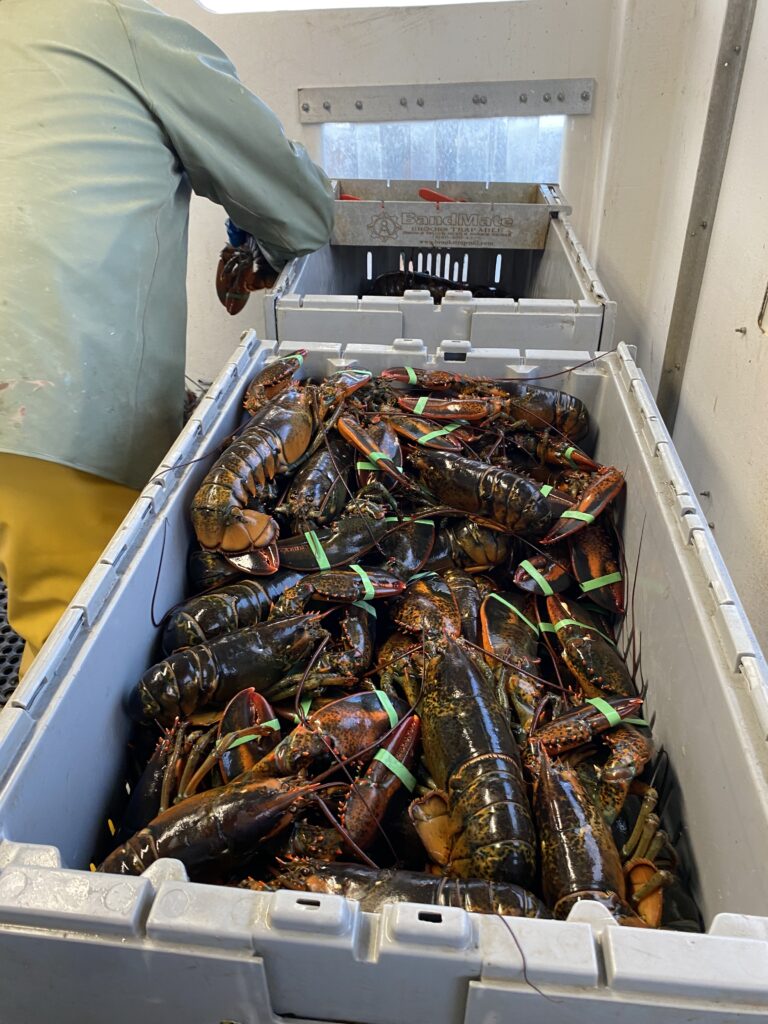
Over time, an idea began bouncing around in my head: I wanted to write about lobster in a bigger way, to better understand its evolution from a cheap protein for the poor into a global luxury food, and to explain how this iconic shellfish has pushed people to risk their lives, burn the boats of rivals, even try to kill those they suspect of stealing their catch. I wanted to understand the territorial tensions that exist in the industry, and why they push some fishermen to carry guns on their boats. Along the way, I hoped to peer into the psyche of fishermen who engage in one of the world’s most dangerous jobs in order to bring us these strange creatures we see looking back at us in grocery store tanks.
As I began researching this book, I wanted to understand the transition happening in the fishery, and how the end of the lobster boom was affecting coastal communities, especially in the U.S., where in southern New England the fishery has all but collapsed and is declining farther north in Maine. I wanted to learn what it means for fishermen when their traps start coming back empty, and what life after lobster looks like.
This is the story about the remarkable rise of the North American lobster fishery and the warning signs about its inevitable decline. It’s a rapidly unfolding story as two powerful forces— ceaseless global demand and warming ocean temperatures—are putting pressure on lobster stocks in ways we’ve never seen before. The irony is that warming ocean water initially fuelled a boom in lobster populations in places such as the Gulf of Maine, causing optimal conditions for lobster production and driving the animals to migrate into areas that were traditionally too cold. But as sea temperatures continue to rise, past the sweet spot of lobster production of between 12 C to 18 C, that same patch of ocean floor becomes inhospitable. Lobsters are ectotherms, meaning their body temperature is regulated by the water temperature around them, so even the smallest changes can begin to alter their behaviour. As the seas warm, the old rules of lobstering—when, where, and how lobster should be caught—are being dramatically rewritten by environmental shifts no fisherman can control.
Telling this story led me across the globe, from Ireland, England, and France to South Korea and China, and across Canada and the U.S. Along the way, I spoke with dozens of fishermen, scientists, seafood exporters, and economists who are genuinely worried about the future of lobster. For many people who have earned a living from the sea, the changes taking place are deeply troubling.
Meanwhile, fishermen keep on fishing at a break-neck pace. Fishing communities don’t need to be reminded of the dangers of single-minded pursuit of every last catchable piece of a species. We’ve seen this play out before. In Newfoundland and Labrador, fishermen watched their cod fishery collapse in the 1990s amid reckless overfishing, causing the province to lose more than forty thousand jobs almost overnight. Lobster, like all wild- caught seafood, is also a limited resource. Declining stocks and rising prices prompt more competition. For many fishermen who bought in during the boom years, this problem becomes a trap: they need to fish harder and harder for a shrinking harvest.
On the other side of the Atlantic, in the few places where European lobster are still caught, it’s almost exclusively an export-only ultra-luxury food, saved for diners in fine restaurants or flown overseas to places like China and resorts in Saudi Arabia. Is this the future for the North American lobster, once so abundant that McDonald’s put it into a cheap fast-food sandwich? And what lessons can we learn from Europe, where for centuries lobster was caught with little regulation or management?
I had to wonder if the era of affordable lobster was over as I visited places like Viking Wharf, an all-you-can-eat lobster buffet inside a sprawling shopping mall in Seoul, South Korea. There, people pay $100 U.S. to gorge themselves on red lobster tails and claws, stacked neatly on long trays of ice, then down bottles of lobster-branded sauvignon blanc and pose for a photo with a giant cartoonish lobster in a top hat outside the front door. How sustainable, I wanted to know, is this for a seafood that so far has proved ill suited for farming and can be caught only in one small corner of the North Atlantic?
These were the questions I was troubled by as, a few months into writing this book, I stepped into Taste of China Seafood Restaurant in Toronto’s Chinatown on a cold and grey February afternoon. This eatery on Dundas Street West has been serving up seafood since 1997, and is known in the neighbourhood as the kind of late-night place favoured by the after-bar crowd and chefs looking for authentic Cantonese-style cooking.

Shortly after I took a seat at a round table in the corner, Mei Cheung emerged from the back and handed me a plastic-covered menu. It had hundreds of dishes, a blur of sautéed shrimp and crab, rice dishes, and black bean sauces, all printed neatly in a tiny font. The list seemed to go on forever. I didn’t bother to finish reading it, and told Mei what I was here for: lobster. She asked if I wanted it Hong Kong style, and I nodded.
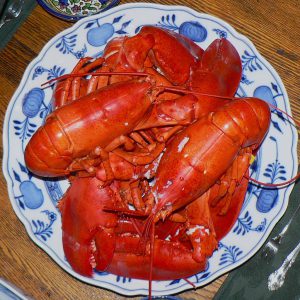
Where I grew up, whole live lobster was almost always served one way: It came steamed or boiled, with a side of melted butter and nothing else. You had to crack the shell yourself and dig out forkfuls of the sweet, tender meat. It was always messy, with lobster juice flying everywhere, while the butter ran down your chin. As a boy, I always wondered how such a simple meal could taste so good.
At the turn of the last century, Chinese immigrants in places like Toronto, New York, and Vancouver and in cities and towns around North America began elevating lobster from the humble pot into a truly international dish. They took this traditionally East Coast food and made it all their own, adding flavours and Cantonese cooking techniques you’d never see at a lobster boil. They even invented something called lobster sauce, a whitish thickened seafood sauce that, ironically, contains no lobster—a cost-saving measure for newcomers who eventually replaced the shellfish with cheaper shrimp as the price of lobster rose beyond their reach.
I was thinking about all this as Mei dipped an arm into one of the bubbling tanks stacked against the wall, picked out a squirming lobster from among the live tilapia and sea bass, and waved for me to follow her into the kitchen in the back. One of the cooks hacked my lobster to pieces with four or five violent whacks of a large cleaver. The lobster was then doused in cornstarch batter and tossed into a large black wok. Chef Ping Yeung cooked it quickly, adding Chinese cooking wine, minced pork, garlic, dried fish, soy sauce, MSG, and sugar. Originally from Guangdong Province, on the South China Sea, he’d been cooking seafood nearly all his life. Ping looked like he could handle a flaming wok in his sleep.
In the span of about four minutes, my Nova Scotia lobster was transformed into a gloriously fried pile of chopped shellfish. Everything on the plate was delicious. Mei hovered nearby, repeatedly topping up my green tea. In Toronto’s Chinatown, she told me, this used to be the meal you ordered when you had something to celebrate. But lately, fewer and fewer people were ordering it when they came into the restaurant.
Lobster is too expensive now, she explained, and the younger crowd drawn to Chinatown’s flashing lights want cheaper meals like noodles or barbecue. When Taste of China opened in 1997, just as lobster catches in North America were beginning to soar, Canadian fishermen were being paid around four dollars a pound for their lobster. By the winter of 2024, those same fishermen were being paid eighteen dollars a pound. Taste of China has to keep raising their prices to afford to keep lobster on the menu. And it appears it’s reaching a tipping point.
“There used to be a lot more Chinese restaurants selling lobster this way,” she said, looking out the window. “But every year there’s less and less.”
Mei was talking about customers, not the supply of lobster. But if you sit in her restaurant and squint and imagine the place lobsters come from, two days’ drive eastward where North America crashes into the Atlantic Ocean, you’ll hear more and more fishermen saying exactly the same thing: Every year there’s less and less.
People & Culture
From beer to ice cream, here are some lobster-based edibles to spark your curiosity, if not your taste buds
People & Culture
A moratorium on cod fishing that was supposed to last two years has now lasted 30. What will it take to rebuild cod stocks — and a way of life?
Travel
Savour winter seafood feasts, explore hands-on crafts and learn all about Nova Scotia’s coastal charm — with a lobster twist
Wildlife
Can British Columbia’s spiny dogfish make the grade as the world’s first “sustainable” shark fishery?