Environment
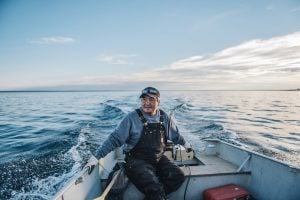
Inside the fight to protect the Arctic’s “Water Heart”
How the Sahtuto’ine Dene of Délı̨nę created the Tsá Tué Biosphere Reserve, the world’s first such UNESCO site managed by an Indigenous community
- 1663 words
- 7 minutes
People & Culture
The new documentary film showcases Indigenous artists singing in their mother tongues on the lands they call home


Indigenous voices are the pulse of this land now known as Canada. In song and language, these original words tie us together; they must not be forgotten.
The Haida Gwaii Salon at the Canadian Museum of History, Quebec, is full of auntie laughs, an unshakable presence, as people wait excitedly for the pre-screening of Rhythms of the Land. The hour-long documentary showcases 16 Indigenous artists singing in their mother tongues, recorded from coast to coast to coast, in each place the artist calls home. The film will officially premiere across Canada on CTV and CTV2 on July 12, 2025 — but tonight is a celebration of land and language for all that brought this project to life.
“Filming on the land, it allowed us to capture where language and land meet,” says Georgina Liberty, director of the Office of the Commissioner of Indigenous Languages, whose inspiration for the documentary was to both educate Canadians and inspire Indigenous language learners. “Everyone wanted to go home — that was what really struck us the most when we started doing this. We gave [the artists] the choice and they all said ‘this is my home territory, this is where I want to go.’”
“There’s another way of connecting language and land, and for us as Indigenous people that’s through music,” she says. “And because it’s a universal tool everybody connects with, we’re trying to find ways of providing education to Canadians but also to inspire our own people to revitalize language.”

Jarrod Tully, the head of production for Rhythms of the Land, hopes the film inspires people to learn more about Indigenous language and culture. “It’s such a big part of our history and a lot of us just don’t know that these languages exist. I think we’re just hoping that it resonates with people on a level that transcends language and will hopefully inspire them to maybe do some research and find out more about the Indigenous culture we have in Canada.”
While filming, Tully travelled across the country from the frozen Arctic of Nunavut, to the beautiful beaches of Manitoba, to the world’s only inland rainforest in B.C. “It changed my perspective on having a better appreciation of how much we have to offer in Canada culturally but also geographically,” he adds.
“[The film] goes through all the four seasons, it takes us across the land, but the message that we wanted to get across from this was that our Indigenous music and our Indigenous languages have been in Canada for time immemorial,” says Liberty. “So this is a way of highlighting, we hope, and I don’t know that a lot of people will get that subtle message, but the fact that we’ve been across this country speaking our languages for generations.”
Liberty is currently studying Michif after she felt as if something was missing from her life. Her father was one of the founding members of the Manitoba Métis Federation in 1967, and a fluent Michif speaker, but Liberty never learned the language. Today, she’s learning from a young person who learned from someone who was mentored by her dad. As a language learner, she likes to add humour to her studies and remind others who are revitalizing their language that it’s okay to laugh at yourself if you make a mistake. Liberty’s advice to those thinking of learning their language is: “If you wanna do it, then go do it.”
Finding the 16 artists who could sing in their mother tongues was a challenge, something that Liberty hopes will change after people see
. “Hopefully some young person will be looking and going ‘Man, I should learn my language!’”


In the Cine+ Theatre at the Canadian Museum of History, the audience is silently rapt as we travel from a grassy field in Six Nations of the Grand River, Ont., as Layla Staats sings a musical rendition of the Ohèn:ton Karihwatéhkwen (the Opening Address that acknowledges the important relationship between all forms of life in Creation) in Kanyen’kéha with her children; to PIQSIQ’s mesmerizing loops of throat singing in the icy tundra of Kugluktuk, Nunavut; to Jeremy Dutcher’s chilling vocals in Wolastoqey in an enchanting forest in Fredericton, N.B..
Visually and sonically stimulating, its makers hope this documentary will be cherished for a long time. “This is historical,” says Liberty. “It’ll be kept in the archives of CTV for years to come and also in the archives for the Commission and I just think, ‘you know what? This is amazing.’ To have these 16 performers perform in their mother tongue language has not been done before. In one episode? So, I just hope people really enjoy it and are proud of the country and the languages that we’re showcasing.”
Tully says the doc is a love letter to Canadian culture and language. “I think the timing is perfect. I think it could either be a very decisive moment or a very connected moment and I think what I’m seeing, from my perspective anyway, is that people are pulling together and just being a lot prouder of Canada than I’ve seen in a long time.”
Environment
How the Sahtuto’ine Dene of Délı̨nę created the Tsá Tué Biosphere Reserve, the world’s first such UNESCO site managed by an Indigenous community
People & Culture
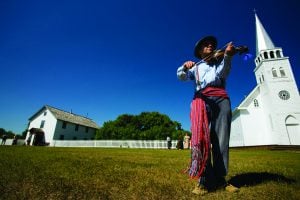
The story of how a critically endangered Indigenous language can be saved
People & Culture
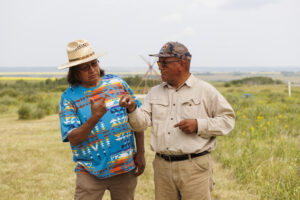
Plains Indian Sign Language was used by generations of Indigenous Peoples to communicate across languages and landscapes. Now, it’s being reclaimed.

People & Culture
In the fifth part of the “Languages of the Land” digital series, the Mi’kmaq singer speaks to Canadian Geographic on love, music and language