Environment
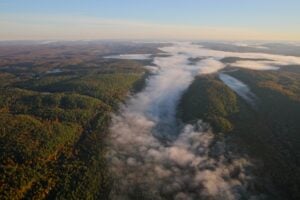
Preserving connectivity in the Laurentian Highlands
The new Plaisance-Tremblant (P2T) Connectivity Plan is preserving space for nature in a rapidly developing area between Ottawa and Montreal
- 1909 words
- 8 minutes
Mapping
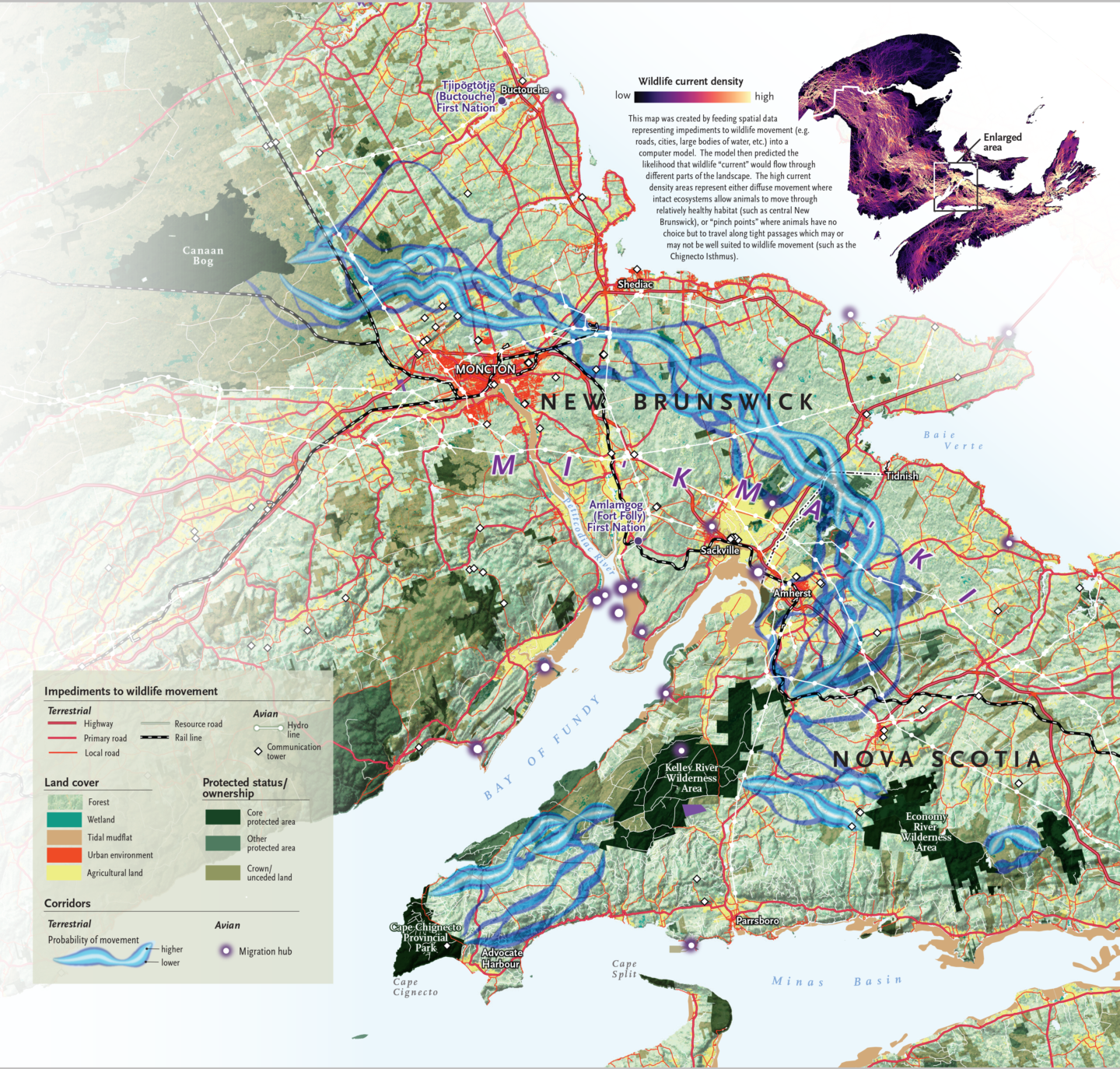
The Chignecto Isthmus between Nova Scotia and New Brunswick is a pinch point for migratory wildlife, but a coalition of conservation groups, scientists and citizens is working to restore ecological connectivity on this highly-developed land bridge

In geological terms, Nova Scotia is hanging on by a thread. The Chignecto Isthmus, a narrow strip of land that connects the maritime province to continental North America, is just 24 kilometres wide at its narrowest point and roughly 25 kilometres long — a pinch point of wetlands, forests and shoreline areas interwoven with transportation corridors, industry and communities. And as the human footprint here grows, the integrity of natural spaces and the connections between them are being whittled away.
The isthmus rests in the Siknikt region (meaning “drainage place”) of Mi’kma’ki, the Mi’kmaq homeland. Its wetlands, including tidal flats, salt marshes and inland wooded wetlands, are favoured by migrating shorebirds and a wide variety of at-risk bird species, such as the Canada warbler. The isthmus is also the only corridor connecting Nova Scotia’s endangered mainland moose population to the rest of North America. Today, many of these wetlands have been lost to agriculture, and once-vast swaths of Acadian forest have been logged. Communications towers and power lines endanger migrating birds, while highways pose a risk to moose and other migrating mammals. Much of the isthmus’s wildlife has become trapped in isolated pockets of nature, unable to move freely between them.
Chignecto has been identified by Parks Canada as one of 23 priority areas across the country where ecological connectivity is in urgent need of restoration and conservation. A coalition of conservation groups, Indigenous Peoples, scientists and citizens, called the Chignecto/Sikniktewaq Partnership*, is working towards this goal. It will spend the next year surveying the area’s connectivity, from monitoring bird flight paths to investigating wildlife crossings on highways to engaging with private landowners who hold the bulk of the land in the area. And a new Indigenous Protected and Conserved Area is being pursued — a collaboration between the Nature Conservancy of Canada and the Amlamgog (Fort Folly) Mi’gmaq to purchase up to 81 hectares of land on the isthmus.
Kelsey Butler of Birds Canada, the group leading the initiative, says the ultimate goal “is about finding the balance” between the area’s human and non-human users. The stakes are high, but connection — between communities and organizations, wildlife and habitat — will hopefully bolster this vital ecological link.
* The Chignecto/Sikniktewaq Partnership is made up of Birds Canada, Fort Folly Habitat Restoration (Amlamgog First Nation), Nature NB, CPAWS NB, Fundy Biosphere Region, Nature Conservancy of Canada and EOS Eco-Energy.
This story is part of a series about ecological corridors produced with support from Parks Canada. Learn more by visiting the Right of Passage website.
This story is from the May/June 2025 Issue
Environment
The new Plaisance-Tremblant (P2T) Connectivity Plan is preserving space for nature in a rapidly developing area between Ottawa and Montreal

People & Culture
What does it mean for Canada if we continue to pull up train tracks?
Wildlife
This past summer an ambitious wildlife under/overpass system broke ground in B.C. on a deadly stretch of highway just west of the Alberta border. Here’s how it happened.

Environment
The ambitious B.C. non-profit is working with like-minded organizations to create a regional network of 12 protected corridors in the Kootenays