Travel
The spell of the Yukon
An insider’s account of the modern-day gold rush
- 4210 words
- 17 minutes
Wildlife
In the immense landscapes of the North, animals are everywhere — hiding in plain sight
For many Canadians, the Yukon exists in the imagination as a landscape dotted with grizzly bears and wolves, along with great, unbroken migrations of caribou. And while all of these species thrive across this immense, half-million-square-kilometre territory — where moose outnumber people and there’s one grizzly for every seven residents — most Yukoners rarely witness them. With few highways and vast stretches of boreal forest, alpine meadows and Arctic tundra, there are many clandestine places for wildlife to avoid the human gaze.
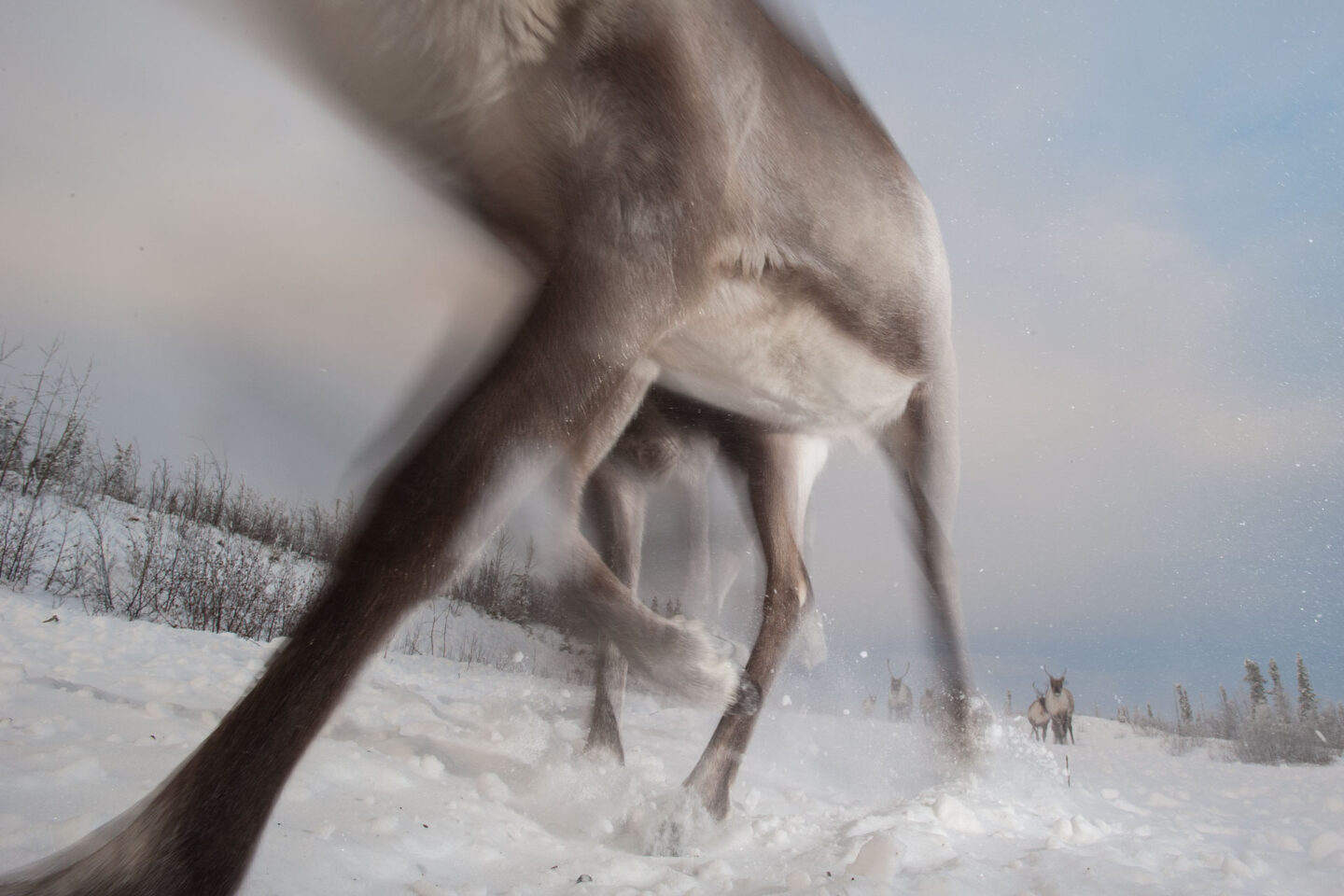
The elusive wildlife is why Yukon-based wildlife photographer Peter Mather uses camera traps to capture the territory’s shy charismatic megafauna. For every day Mather spends on the land, setting up his cameras, he’ll spend another 10 trying to decipher the land’s intricacies. And for every stunning image of a grizzly bear, or wolf pack, there are often thousands more of empty, naked landscapes — seemingly void of life.
But just because you can’t see these creatures, doesn’t mean they aren’t there, says Mather.
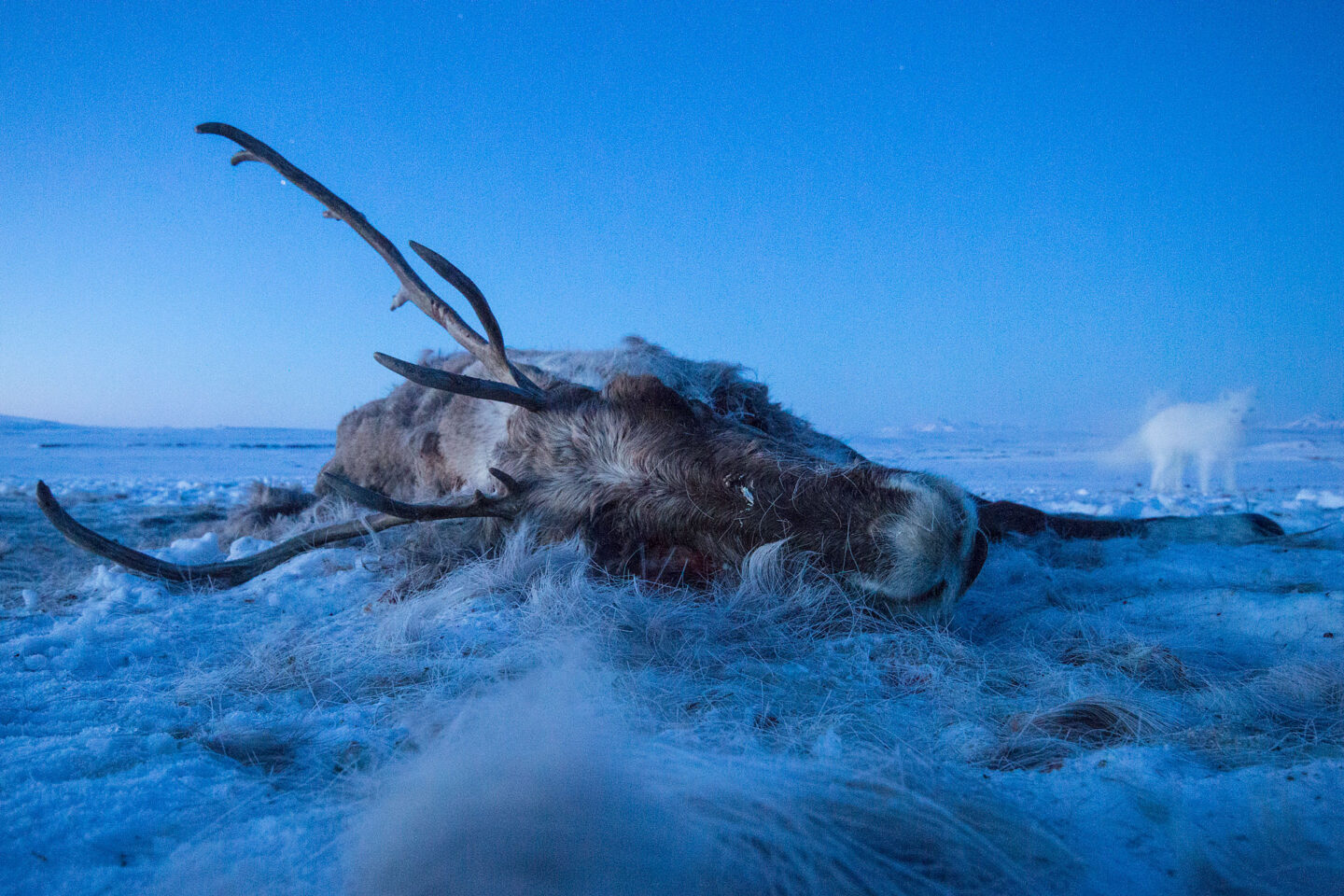
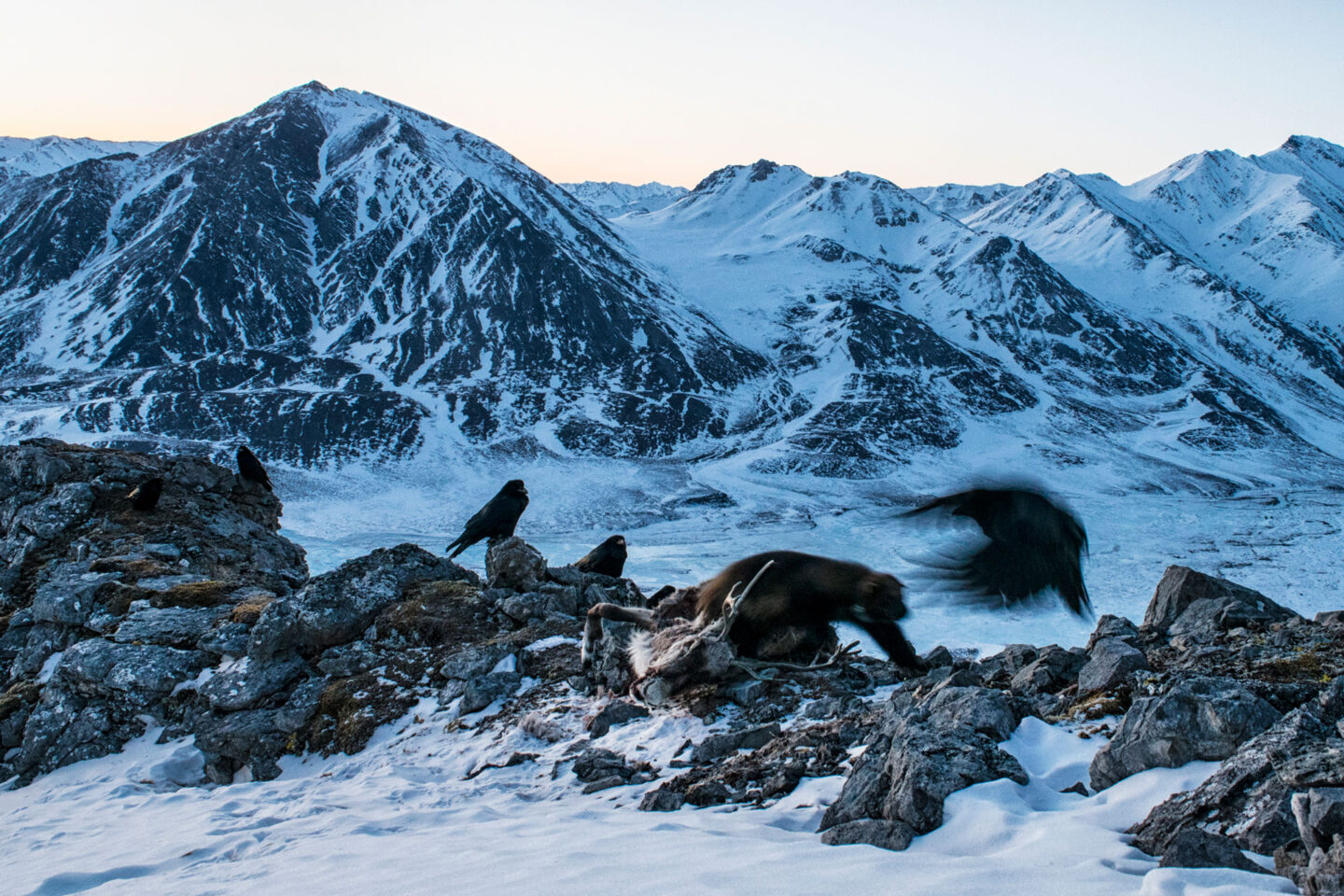
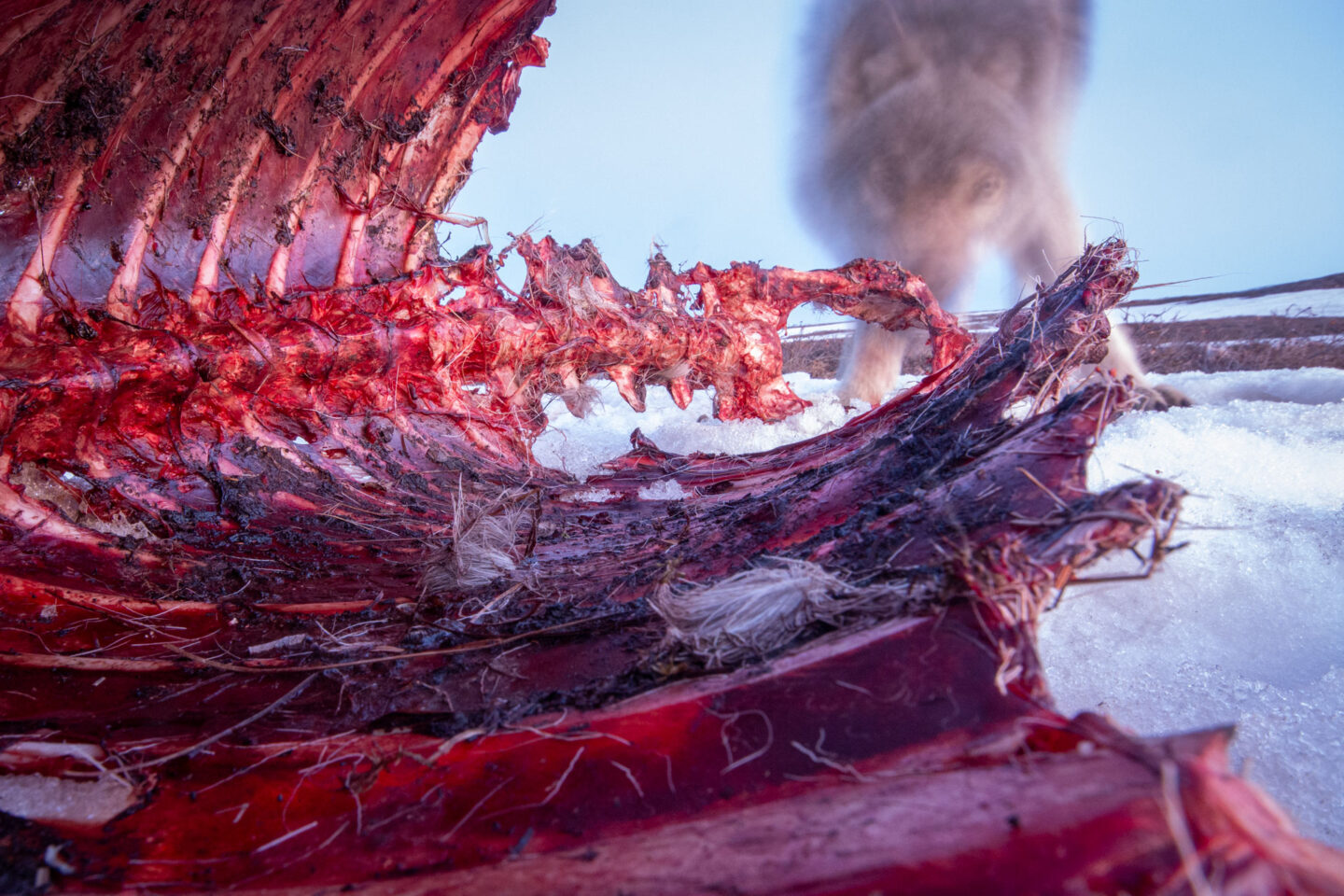
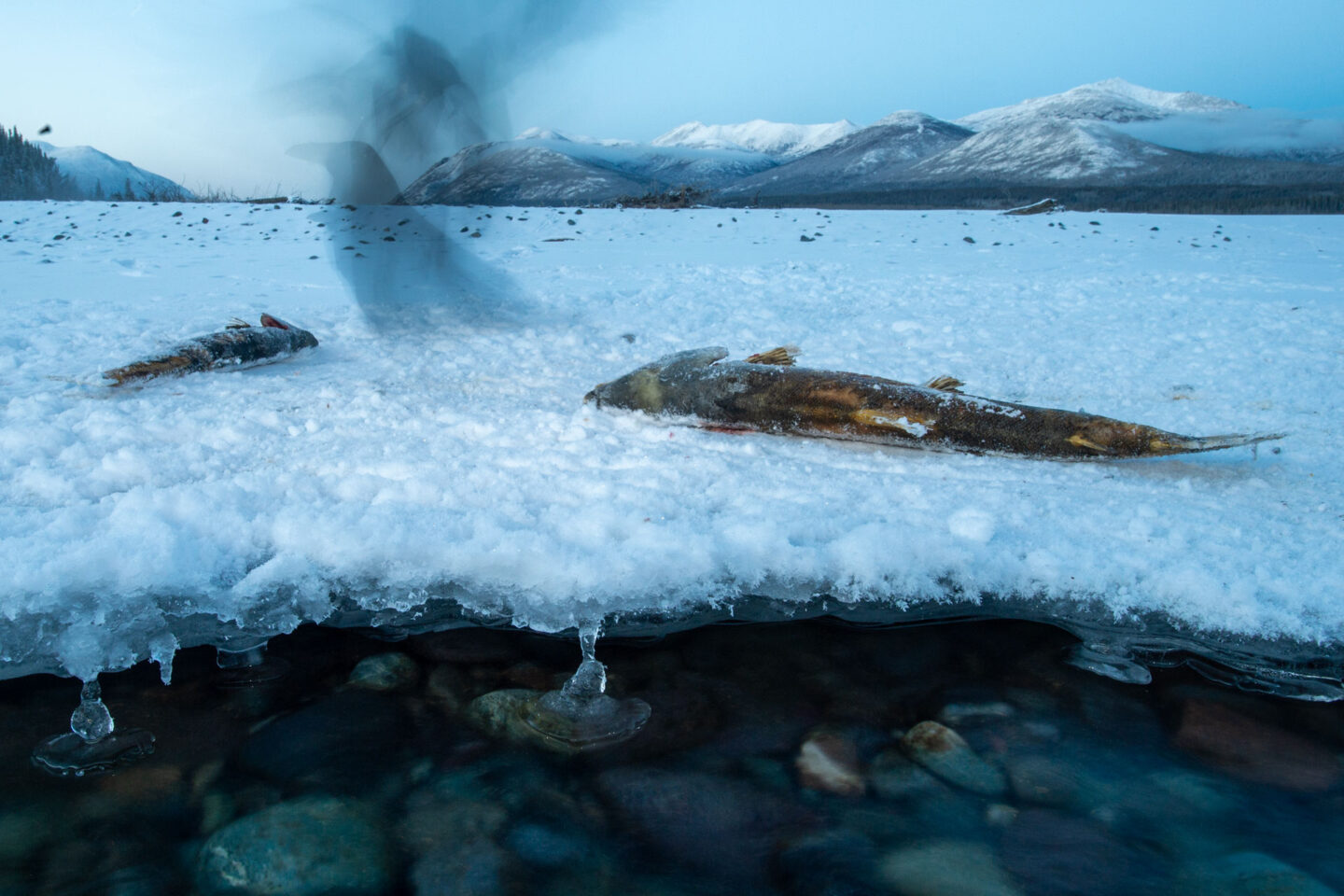
In 2019, Mather set out to document one of the Yukon’s most reclusive predators: the wolverine, notorious for scavenging carrion. He stumbled upon the body of a caribou killed by wolves and positioned a camera-trap on the carcass. Days later, when Mather checked the footage, he was disheartened to find 5,000 images of a snowy, blank canvas — the camera triggered by tufts of caribou hair blowing in the wind — and two blurry, out-of-focus images of an Arctic fox.
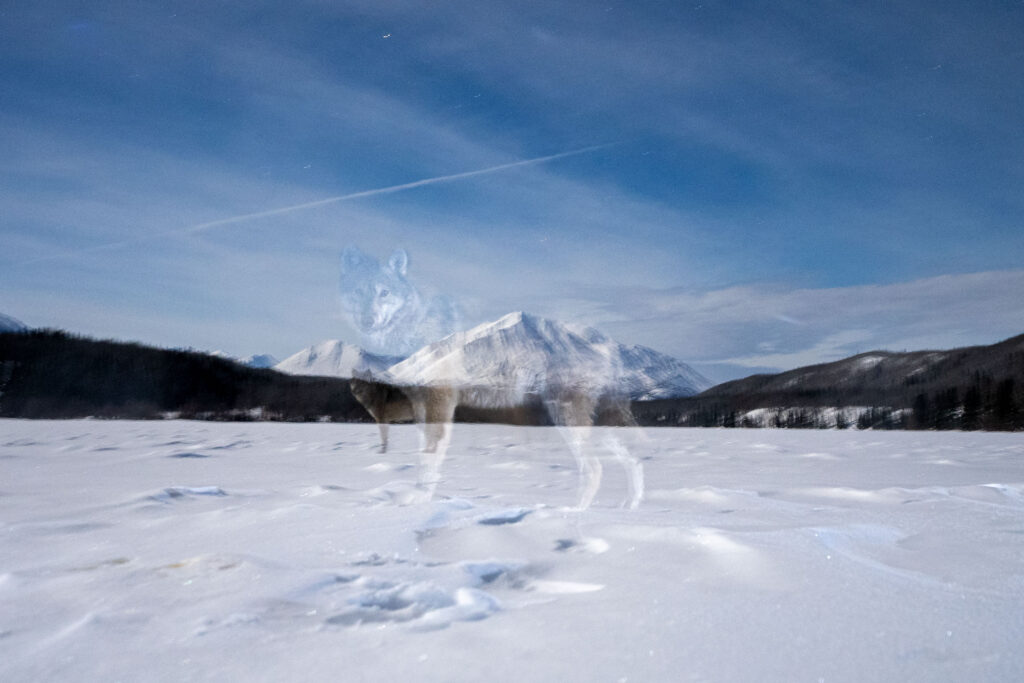
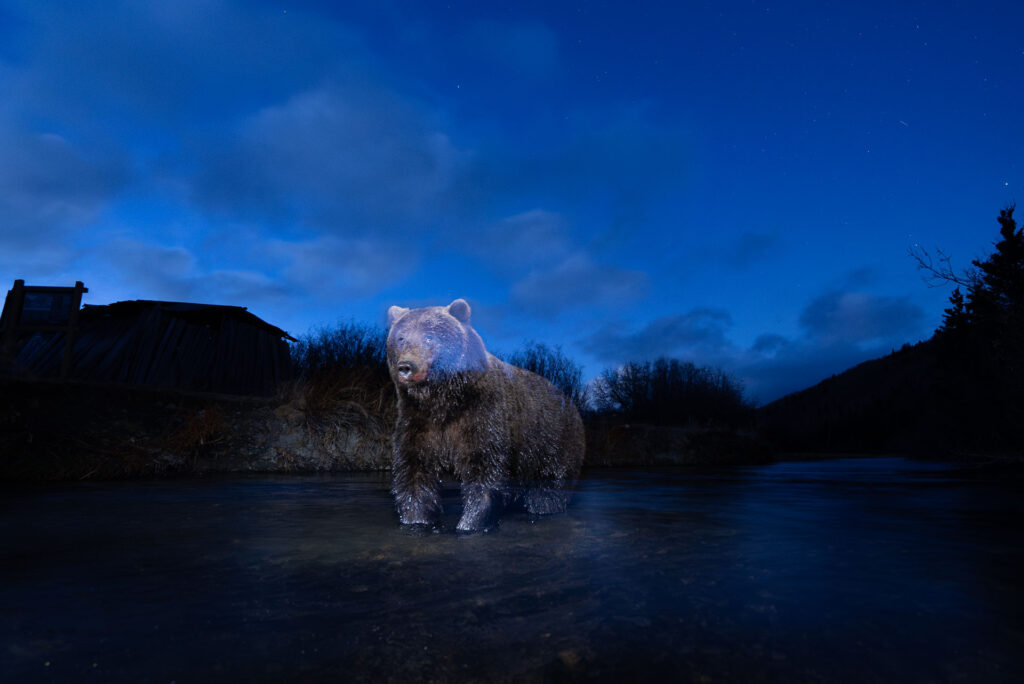
Mather was so disappointed that he nearly deleted the photographs. “But as I looked at the image [of the Arctic fox], I loved it more and more,” Mather says. “I realized it was the photo I should’ve been trying to get from the beginning because it actually captured the feeling of Arctic foxes on the land — they’re so rare you never see them. They’re ghosts.”
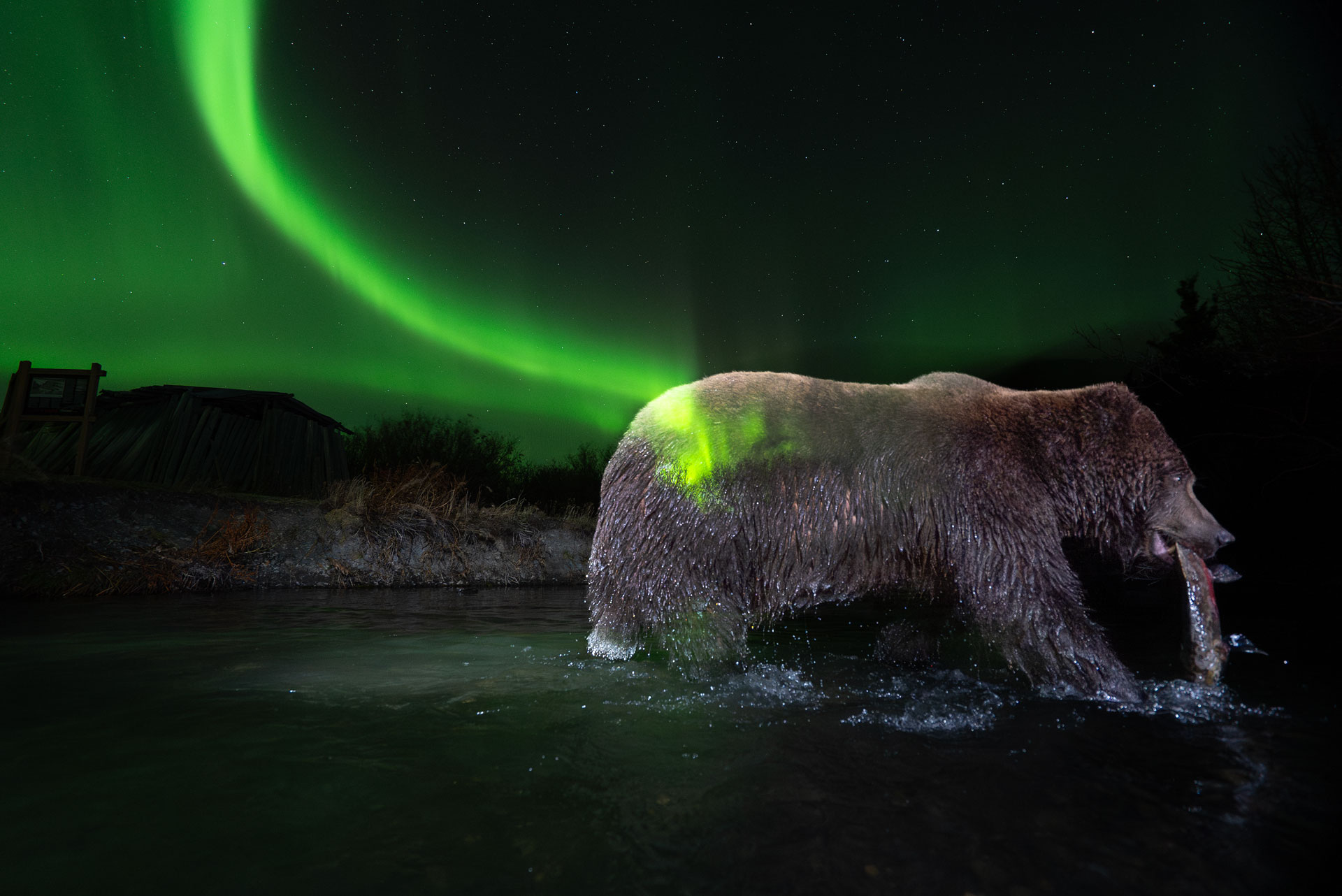
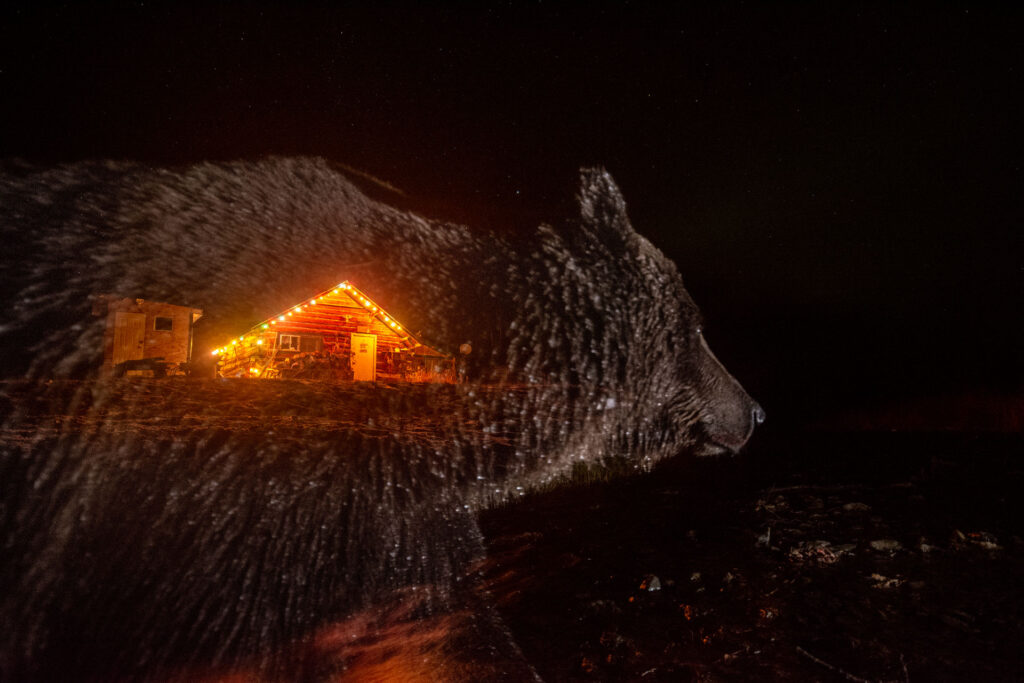
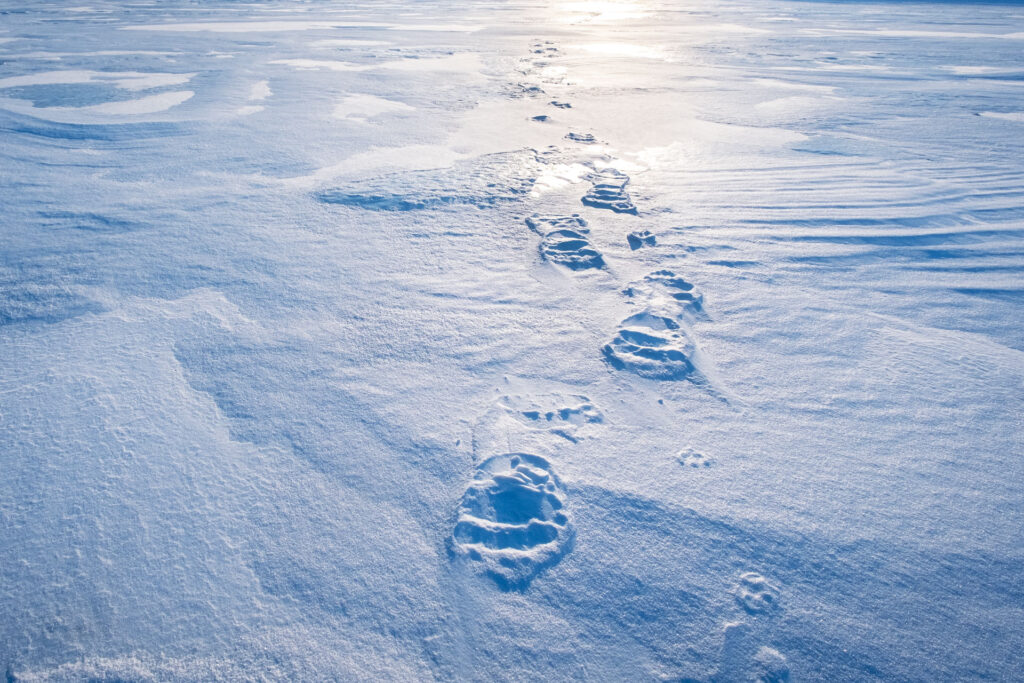
Those first accidental photographs inspired Mather to capture the essence of other Yukon ghosts. The haunting images — each achieved through a single-shot long-exposure lasting upwards of five seconds — reflect wildlife transposed, not against the landscape but within it. For Mather, the series reflects a greater truth of coexisting with wildlife in the Yukon — they are mostly absent from sight like ghostly spirits. But when you develop the eyes to see them, or sense them, you learn that they are, indeed, everywhere, their tracks written in the snow like another language.
“The haunting images reflect wildlife transposed, not against the landscape but within it.”
For Mather, being on the land has evolved into an “animal” experience altogether. He’s learned to be acutely aware of the presence of wildlife — just as he knows the wildlife are acutely aware of him. “When you spend time with bears, you realize they don’t actually see each other all that often,” Mather says. “They sense each other before they see the other bear, and you can see their attitude and personality change if they sense another bear in the area.”
No one understands this better than First Nation communities, who’ve spent thousands of years listening to the land and teaching their children to do the same. Mather credits much of his deep understanding of Yukon wildlife to time spent with Elders, including Chuck Hume, a member of the Champagne and Aishihik First Nations in southwestern Yukon.
Hume grew up at Klukshu, a traditional fishing village, where they have protocols for living closely with wildlife — particularly grizzlies. “Bears sense if you have fear,” he says. “Talking about them — you don’t do that. If you see a big scat on the trail, you walk around, you don’t step over.”
These covenants, practiced over millennia, have translated to mutual respect between bears and people in Klukshu. “When Chuck was at his home in Klukshu, the [bears] would behave a certain way, they were comfortable. But when Chuck wasn’t there, and I was, they behaved very differently — even without seeing me,” says Mather. The bears were more skittish, Mather recalls, far less relaxed than when Hume was at home. “It speaks to a long relationship between First Nation people and bears in that area,” he adds.
This sensory relationship with wildlife — seeing them when they aren’t physically present — is difficult for Mather to understand, or name, but borders on the spiritual. “It’s something that goes beyond what we could define as science,” says Mather. “But it’s the kind of connection I’m looking for.”
Travel
An insider’s account of the modern-day gold rush
Wildlife
Wildlife photographers on the thrill of the chase — and the importance of setting ethical guidelines
Environment
What vanishing mountain glaciers mean for river flows, groundwater and the millions who depend on them
Environment
Yukon-based ecologists uncover four main patterns influencing changes in Yukon and address how outcomes can be improved