Science & Tech

This is what it’s really like to do science at sea

Technical glitches, seasickness and wonders never before seen: a journalist’s diary of a scientific expedition on the Southern Newfoundland Slope reveals the challenges and payoffs of trying to understand the ocean

  • Jun 01, 2026
  • 2,312 words
  • 10 minutes
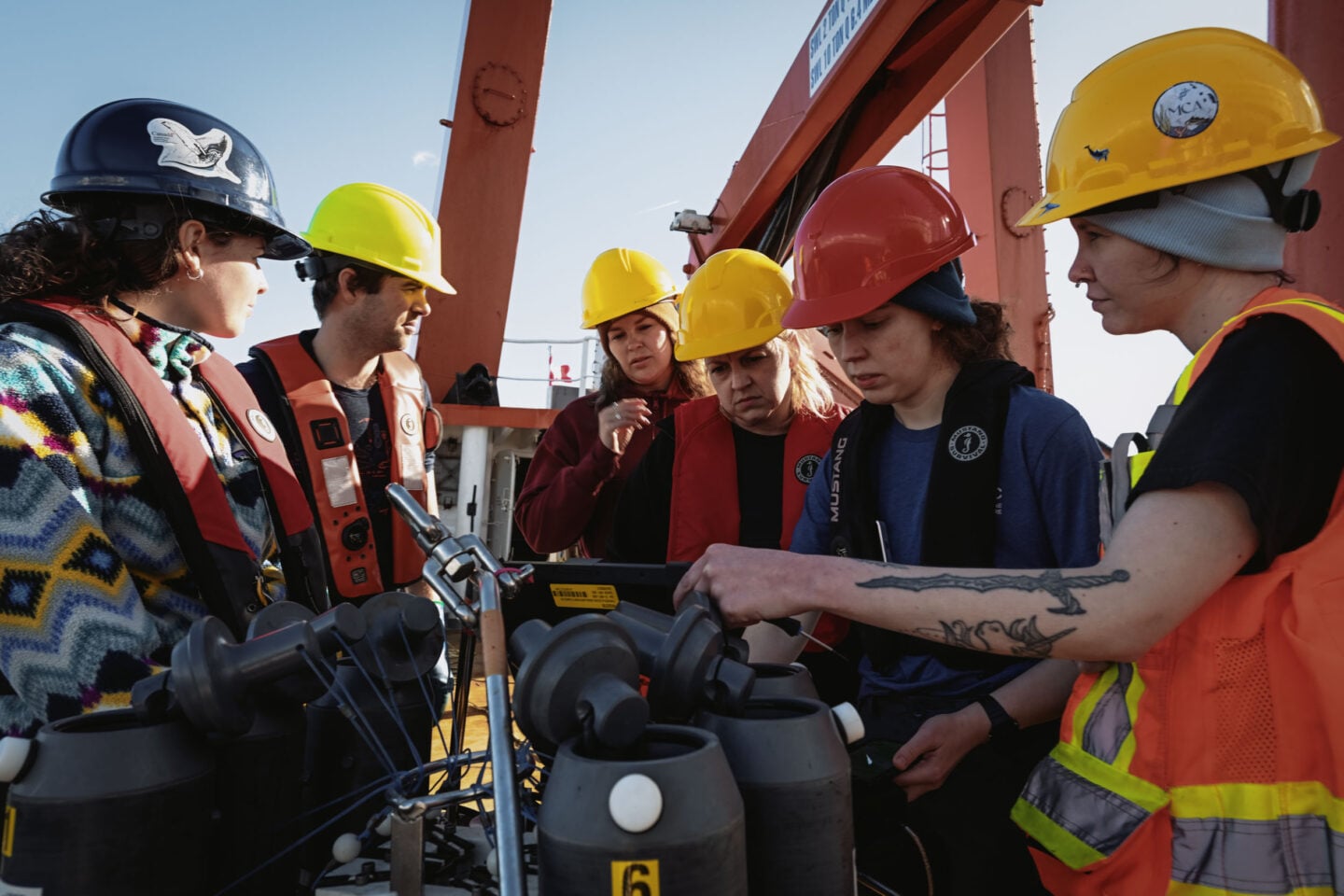
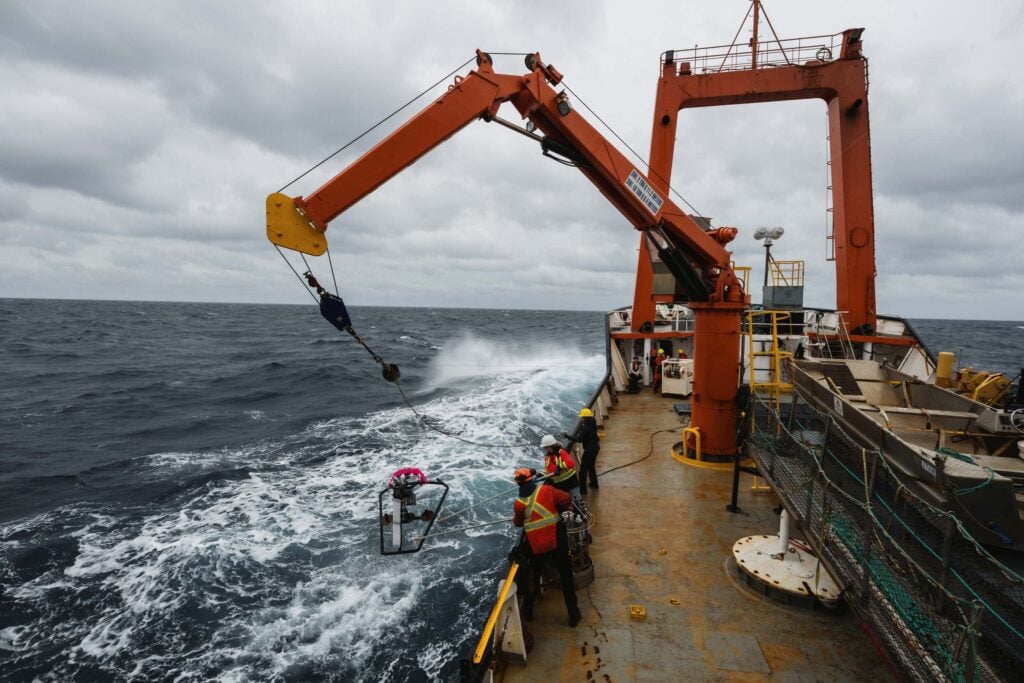
“It’s crazy the amount of effort and collective expertise and years of experience it takes just to put a camera in the water,” says Oceana Canada marine scientist Isabelle Jubinville. (Photo: David Coulson/Oceana Canada)
Expand Image
Advertisement
Advertisement
Advertisement
Friday, October 24, 2025

Nothing about mounting a scientific expedition at sea is easy, as we’re discovering. A dozen of us have gathered in St. John’s and are waiting to board the Polar Prince, a former Canadian Coast Guard light icebreaker, on our way to the Southern Newfoundland Slope, a 24-hour sail from here. Our aim is to drop video cameras and water samplers onto the seabed and see what creatures live there. It’s part of a scientific research project to help support the federal government’s proposal to safeguard the area.

But right now, we are cooling our heels.

Our group is made up of scientists and technicians from the federal Department of Fisheries and Oceans (DFO), the Marine Institute at Memorial University of Newfoundland and the ocean conservation advocacy group Oceana Canada as well as a journalist – that’s me – and a multimedia team invited to observe and document the expedition. Vanessa Oldford, a biologist in marine conservation establishment at DFO, and marine scientist Isabelle Jubinville of Oceana are leading the project and have been planning the expedition for months.

Already, our departure has been shifted by nearly a week. The science team wanted to attach cameras to a fibre-optic cable so they could see in real time where they were going underwater. Not only is the video quality better, but the technique also lets the camera operators dodge creatures that could be damaged by the apparatus, so it’s less intrusive.

A new cable meant a new winch. A new winch meant a lot of welding to install it on board the ship. At the same time, the ship’s generator failed. Six days passed.

This morning, the Polar Prince set off to test the scientific equipment at sea and everything went well – until it didn’t. The new fibre-optic cable kinked up, meaning it could break and then lose the camera or even cause an electrical hazard. It was a deal-breaker.

The team has had to revert to the old camera system, which is made up of two GoPro cameras attached to a braided steel cable, flying blind in the depths of the ocean and recording video onto a memory card. That meant finding a different winch, which was stashed in a DFO warehouse, and installing it. All that took more time. And the winch available doesn’t let the cameras go as deep as the fibre-optic cable, so a few of the test sites are now off the list.

Still, everything’s supposed to be in order by tomorrow morning. We’re all crossing fingers and toes we will be able to set sail. As one of the team put it: Today was four days long.

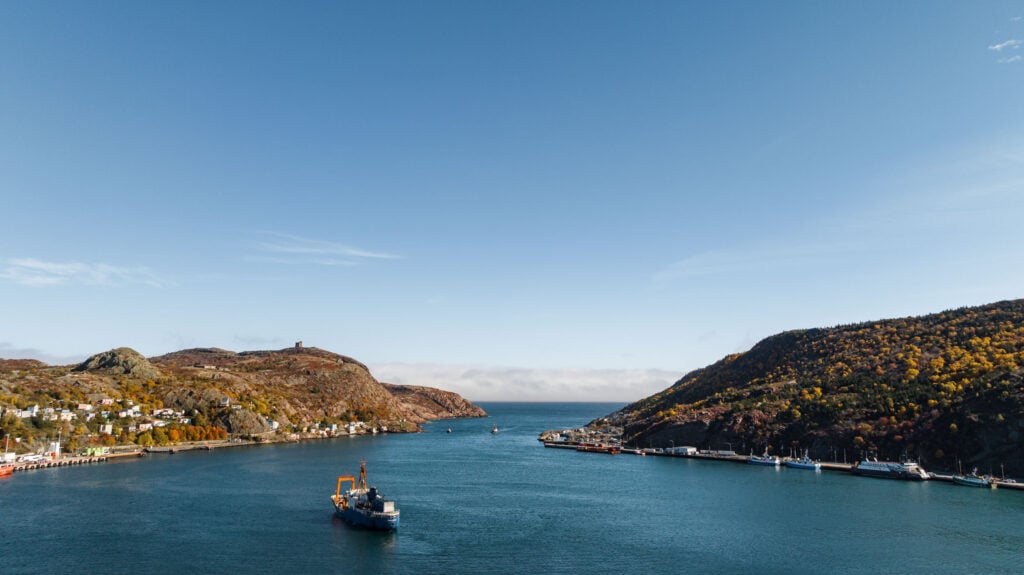
The Polar Prince departs St. John’s en route to the Southern Newfoundland Slope. (Photo: David Coulson/Oceana Canada)
Expand Image
Saturday, October 25

We sailed through the harbour of St. John’s this morning into a gloriously sunny and warm day, heading for the Southern Slope, spirits high. I stood on the deck with Sheena Roul, a technician in DFO’s marine conservation target program, as we hit the open ocean. The Southern Slope, she said, never disappoints. The last time she was there, she spotted a blue whale – the largest animal on Earth – pilot whales and dolphins.

But much of the magic of the area is hidden hundreds or thousands of metres below the surface, on the silty seabed and in a series of unusual underwater canyons that cradle the weird animals known as cold water corals.

These are not the majestic coral reefs made up of thousands of individual animals that you see in tropical waters. Some Southern Slope corals are solitary, a single animal standing alone on the ocean floor. Others bunch up to make small formations called sea pens, some of which are shaped exactly like question marks. Bamboo corals live in vast forests that run vertically up a wall or stretch a kilometre into the distance. A few rare cold-water corals make tree-like structures that grow year by year to become meters high. Unlike tropical corals, the cold-water type don’t shelter phytoplankton in their tissues and so don’t have the riotous colours that come with plankton. Nor do they depend on the food from the planktons’ photosynthesis. In fact, many live far too deep to ever see the light.

They are fascinating in ways scientists are just beginning to explore. They make living space for shrimp, krill and fish. Perhaps they do much more. This expedition is trying to work some of that out. What we do know is that they grow slowly and therefore regenerate slowly when they are hurt.

By the time Roul and I finished chatting, the wind had picked up and so had the cold. We were both shivering. The ship began plowing into the waves and rocking from side to side. Some of the team were looking distinctly pale. People began to disappear to their berths, swallowing Gravol.

It was a long, difficult night. The Polar Prince bucked like a bronco until daylight. I lay there sleepless, forcibly reminded of just how unwelcoming the ocean can be to terrestrial creatures like us.

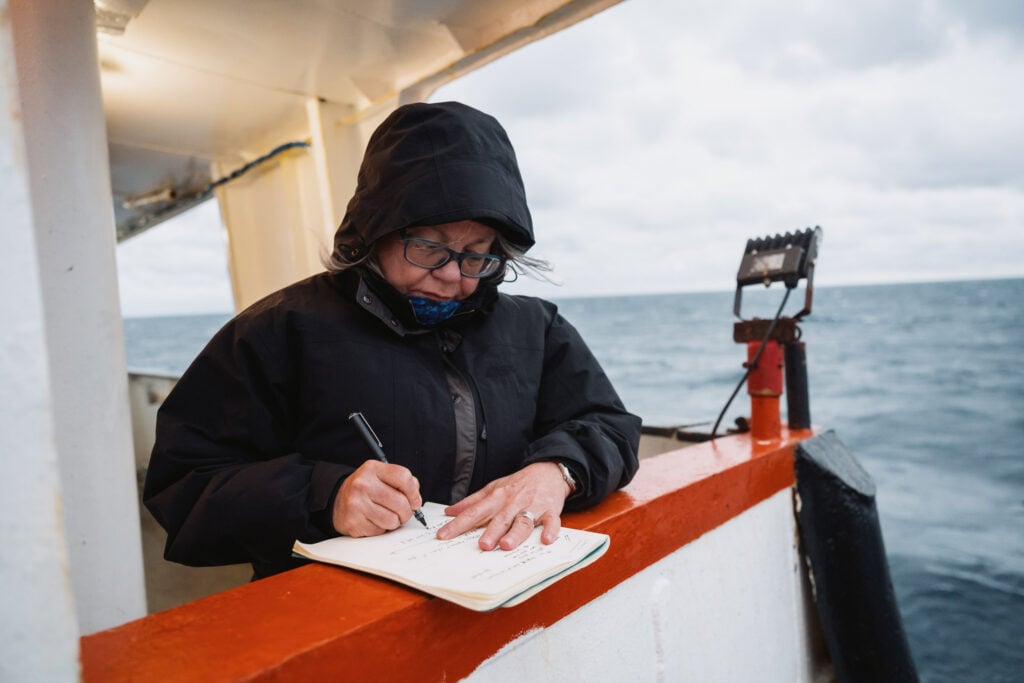
Journalist Alanna Mitchell takes notes on the deck of the Polar Prince. (Photo: David Coulson/Oceana Canada)
Expand Image
Sunday, October 26

At last, the Southern Slope lay beneath us. For a joyful moment, we all just savoured it. Then the whole team and part of the ship’s crew gathered on deck, each focused on a specific job. The task was – at last – to get cameras to the seabed to chronicle what lives there.  

“It’s crazy the amount of effort and collective expertise and years of experience it takes just to put a camera in the water,” said Jubinville.

Finally, after much tweaking, drilling, ratcheting and fiddling in weather so warm and sunny some of the team stripped down to T-shirts, the ship’s crane lifted the camera apparatus over the side. Down it went 700 metres to the ocean floor, attached to the winch. One camera is focused downward, the other, forward. Together, they capture a transect that analysts can then use to figure out which creatures and how many of them live within a specific area.

The apparatus settled on the ocean floor. Then, the winch operator, Martin Dahl of the Marine Institute, pulled it back up, let it drift for 30 seconds and then set it back down, hopping from one spot to another. The scientists call it yoyo-ing. Put together, the information creates a census of the creatures that live in a wide chunk of the seabed.

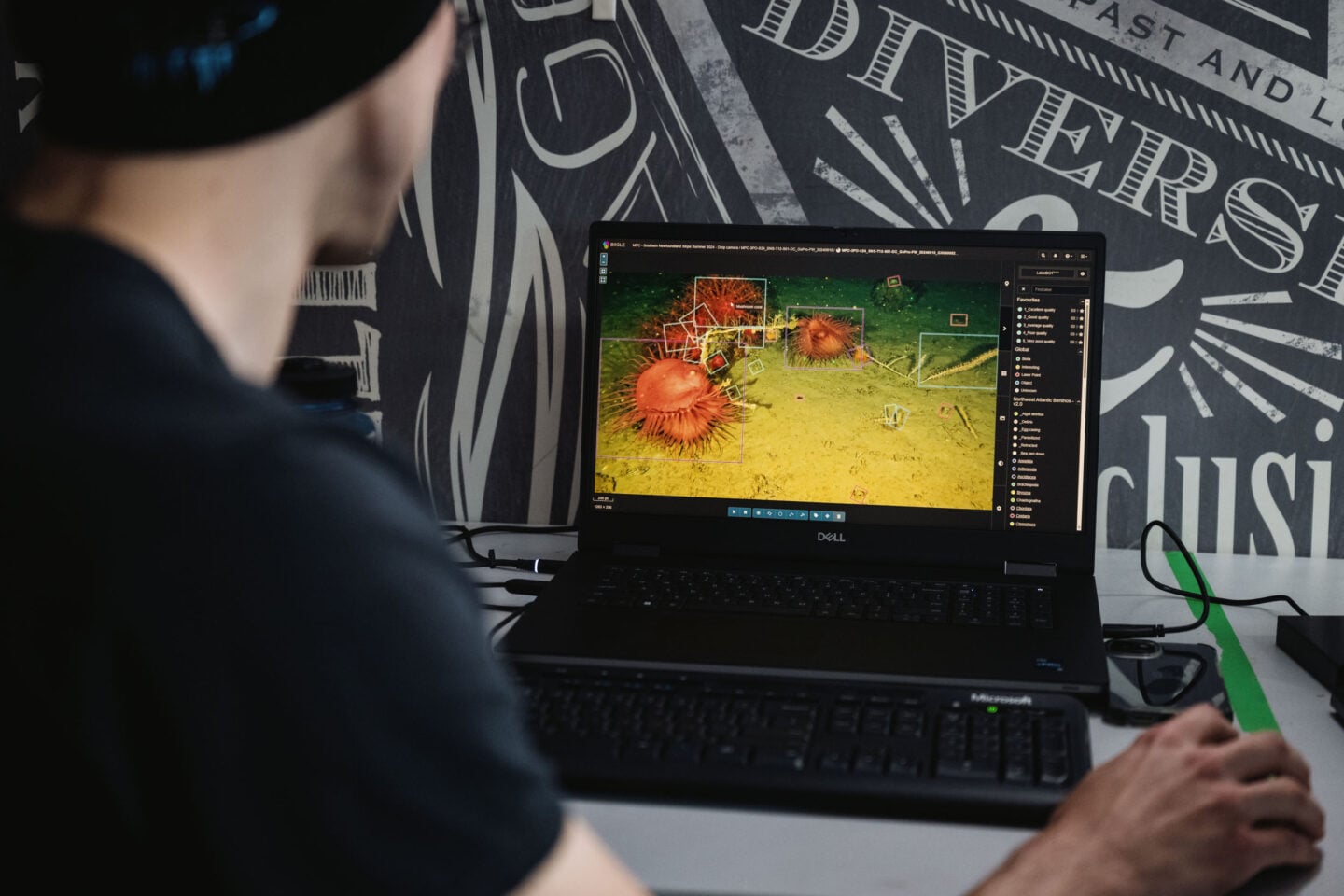
Shortly after the cameras came up from the first site, Rylan Command, an aquatic sciences biologist with DFO, downloaded all the videos. He’s the resident expert on identifying corals and other animals. There on the screen, for the first time, were pictures of the creatures that live on the bottom of this part of the ocean. Nobody had ever laid eyes on them before.

It felt momentous. We saw a riot of species. There were sea pens, corals, brittlestars, sea stars, anemones, worms, a lollipop sponge, a huge shrimp with crazy legs, a bright red spiky sea urchin, a rattail fish, a witch flounder, a black dogfish shark. Arrowtooth eels slithered across the floor, darting away from the light.

“This is pretty wild stuff,” Command said. “This may be the one and only time this is ever seen.”

This is the type of painstaking exploratory science humans have been doing for millennia – the hard work of finding out what’s here on the planet and maybe, if we’re lucky, how it all works together.

Footage from the camera drops reveals the action on the seafloor. (Photo: David Coulson/Oceana Canada)
Expand Image
Advertisement
Launching the camera apparatus, now secured with pink duct tape. (Photo: David Coulson/Oceana Canada)
Expand Image
Monday, October 27

Again, hitches. The first camera drop this morning – the third of the expedition – came too close to a communications cable, so the team had to pull the apparatus up and move it along a bit. Then, one of the cameras detached from the frame and when it finally came up again, the cable had wound around it somehow. Crew members had to cut that piece of the cable off with a saw and reattach the hook. The damaged piece looked like a stretched-out slinky. By sheer luck, the camera hung on and was saved.

Roul and Oldford eyeballed the apparatus and then wrapped it in neon pink duct tape so the cable would have fewer surfaces to get hooked on. Then, in dropped the cameras once more. They came up beautifully and with more stunning new footage.  

In the meantime, the winds picked up and so did the waves. By the time we got to the third site of the day, the captain had called off all deck work because it was too dangerous. We’re on hiatus likely until tomorrow afternoon, losing one whole precious day of sampling. This trip, said Oldford, is an exercise in adapting.

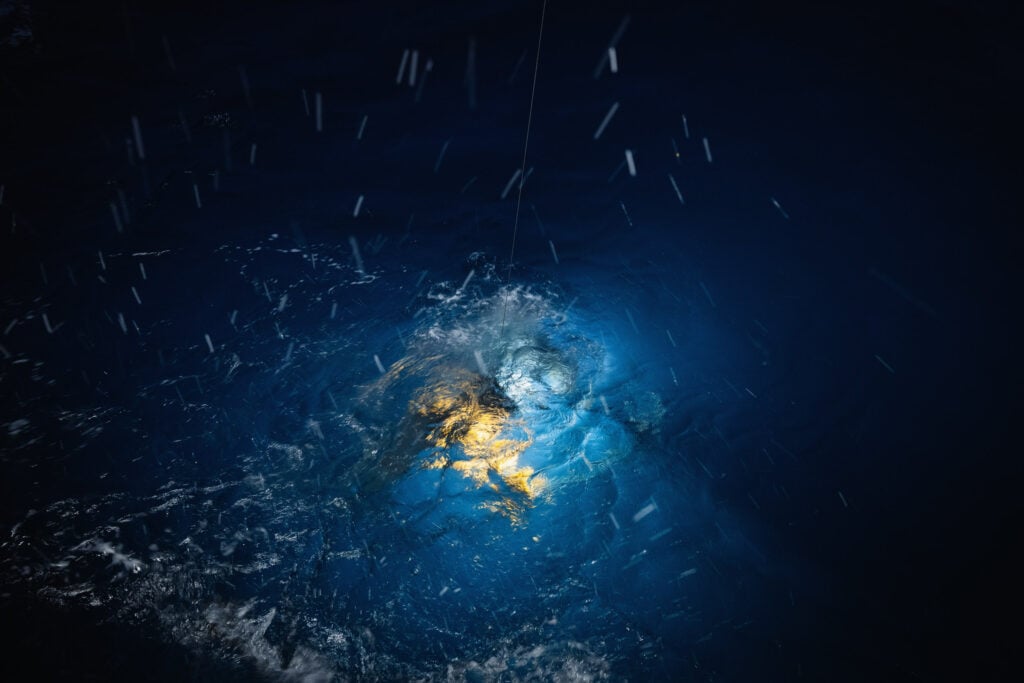
The camera apparatus disappears into the ocean. (Photo: David Coulson/Oceana Canada)
Expand Image
Tuesday, October 28

The storm that blew up yesterday gained strength as the night arrived. I got back to my cabin and found that a closet door had opened in the swell, burped forth my suitcase, rubber boots and a rogue pair of someone else’s sunglasses, and then tidily slammed itself shut again.

As today began, waves hit as high as four metres. It was a foul, sleepless night. Again.

None of it fazed this team. At first, they held out hope that they could still drop some cameras this afternoon, but that hope faded. The sea was far too choppy to risk working on deck. Another half-day lost. Oldford and everybody else kept busy consulting with the captain, planning the next stops and analysing the astounding images we had already collected.

The running obsession was to monitor the Windy.com app, which gives a good sense of the ocean’s wave action in real time, as well as in coming days. We also had one eye on Hurricane Melissa, which was brewing off the coast of Jamaica and predicted to be catastrophic. What would be its trajectory up here to the north? When you work on the North Atlantic in late October, you have to roll with the punches — and the waves.

Wednesday, October 29

By 7 a.m., the team was on deck, ready to go on a relatively calm sea. Oldford and Jubinville set an ambitious program of at least three camera drops, some including water samplers. The time at sea flew by. At one point we all heard a scream coming from below deck. Liv Ward, one of the Oceana team, had spotted a pod of pilot whales outside her porthole. She raced to the deck, phone camera at the ready, shouting “Whale! Whale!” Everybody, even the deck crew, took a moment to watch them frolic, marvelling at the marine life that, for once, was close to the surface.

Meanwhile, reams of new video came up from the bottom. Some of the site looked like a secret garden of sea pens, stretching as far as the camera could see.

By mid-morning, Oldford had decided to extend the day’s program and do a fourth camera drop in the early evening. Windy.com was showing that tomorrow could be too choppy for scientific work, so she opted to max out the efforts today and head back to St. John’s immediately after. It meant more than a dozen hours straight of work for the team, but everyone took it easily in stride. When it came time for the last drop, the deck had the air of celebration. A white half-moon shone brightly over the whole sea. After the camera gear disappeared into the ocean for the last time, two crew members moved to the other side of the deck and began to dance.

Despite early setbacks, far shorter sea time, the shorter winch line and fickle weather, this expedition has ended up getting nearly all the data it came for.

The bonus is that we’ll be back at dock late tomorrow, giving us a few more hours ahead of Melissa, which is heading remorselessly toward St. John’s after devastating Jamaica, Haiti and Cuba.

You might imagine that this group of scientists had had enough of the Southern Newfoundland Slope by this point in the expedition. Not so. Late in the evening, after the last camera drop, Command hooked his computer to the television screen in the lounge and every single member of the team watched undersea footage from earlier in the day, marvelling at the treasures this journey has uncovered.  “Mission accomplished,” Jubinville said.

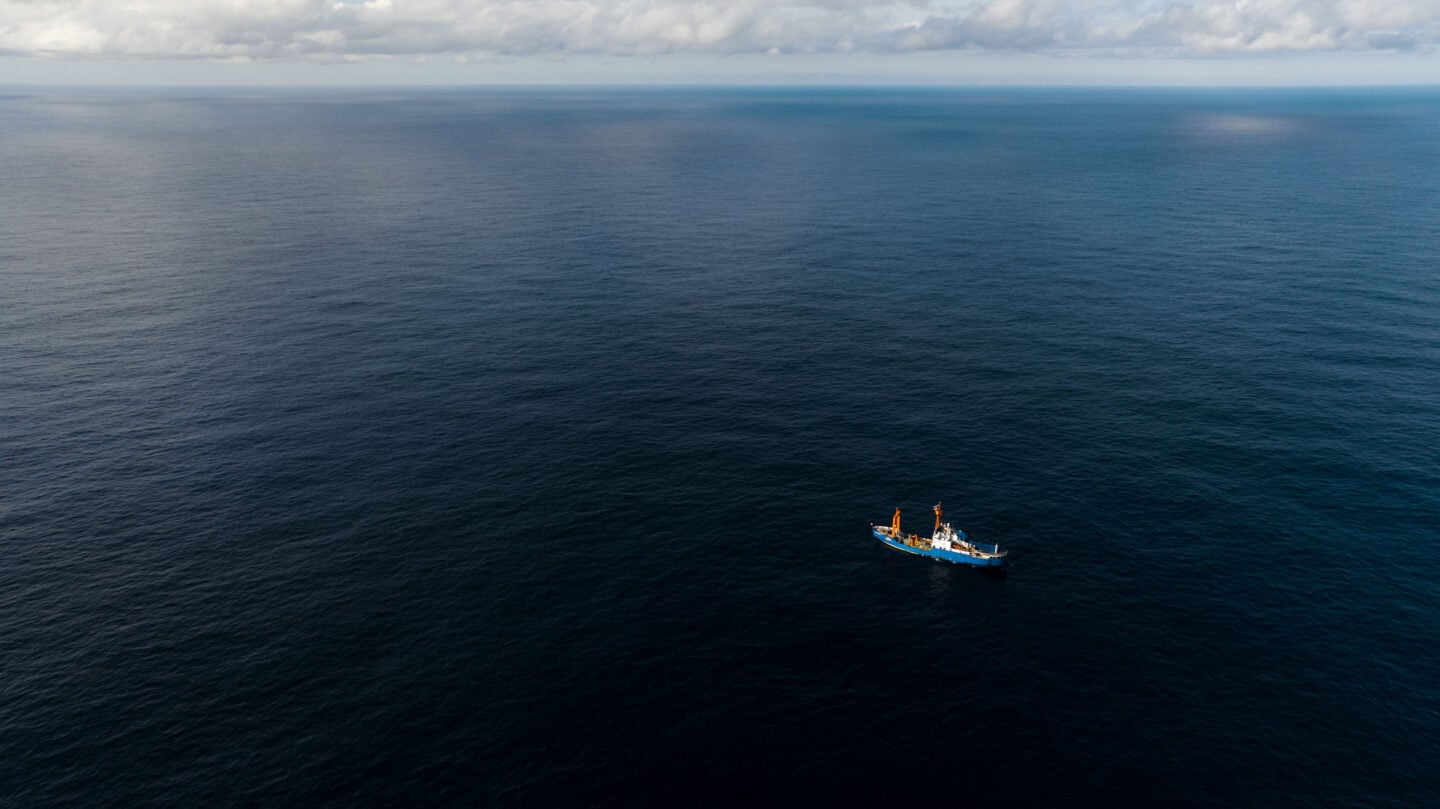
The Polar Prince at sea. (Photo: David Coulson/Oceana Canada)
Expand Image
Thursday, October 30

Back at port in St. John’s late tonight. Today was devoted to catching up on sleep, taking meetings that had been pushed aside, watching the latest underwater footage, feeling excited about the expedition’s findings. Tomorrow is an immense packing and hauling job as the team unloads the ship.

I have an early morning flight back to Toronto so I’m packing up now. As I prepare to leave the Polar Prince, I’m thinking about the spirit of inquiry that underpins an expedition like this one. It’s ancient, this urge to know what’s on our planet, to catalogue and name, count and understand. I feel like I’m part of an arc of human curiosity that reaches back to our Paleolithic ancestors who drew aurochs and lions in charcoal on the walls of the Chauvet cave 32,000 years ago, to Aristotle wondering why cranes flew to the Nile every year, to Charles Darwin on the Beagle collecting samples of creatures he had never before imagined and then weaving the story of life out of it.

This decoding of nature matters. That’s especially true in an era when humanity has become such a powerful force in the destruction of nature — and especially as the very value of scientific inquiry and knowledge comes under widespread attack. As I leave this expedition, I find that I’m just grateful that the planet’s scientists are still so committed to finding out who we share our world with. 

Advertisement

Help us tell Canada’s story

You can support Canadian Geographic in 3 ways:

Related Content

People & Culture

“It’s almost like a treasure hunt:” investigating deepsea corals off Newfoundland’s Grand Banks

Deepsea canyons along the Southern Newfoundland Slope shelter ancient cold-water corals and rich marine biodiversity. Scientists are racing to uncover and protect this fragile ecosystem before it’s lost.

  • 3304 words
  • 14 minutes
Richmond B.C. fishing fleet at sunset

Wildlife

Dozens of Canadian fish stocks in critical condition: report

Advocacy group says action plans are urgently needed for the recovery of 26 dangerously depleted fish populations

  • 624 words
  • 3 minutes
Coral Restoration Foundation nursery

Exploration

Canadians helping save coral

2019 North American Rolex scholar Neha Acharya-Patel shares insights from her work (and that of other Canadians) in assisting the Florida-based Coral Restoration Foundation to rebuild beleaguered reefs

  • 1027 words
  • 5 minutes

Exploration

These ambitious expeditions could radically change our understanding of the global ocean

From studying a highly productive Arctic basin alongside Inuit to mapping mangrove forests in The Gambia, the Rolex National Geographic Perpetual Planet Ocean Expeditions aim to accelerate knowledge of the ocean, “from seashore to seafloor, pole to pole”

  • 1717 words
  • 7 minutes
Advertisement
Advertisement