Exploration
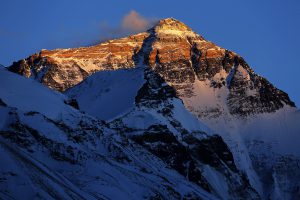
The pull of Everest
A century after a Canadian was instrumental in charting the world’s highest peak, a fellow Canadian reflects on the magnetism of Everest
- 3903 words
- 16 minutes
People & Culture
Director Jennifer Peedom shares behind-the-scenes insights into her new film Tenzing, which explores the life of legendary Sherpa mountaineer Tenzing Norgay

The first ascent of Mount Everest was achieved by two individuals on May 29, 1953, at exactly 11:30 a.m. — it was a courageous human achievement on par with space travel and great ocean voyages. While working at my local library, I asked a young man at the desk next to me who accomplished this legendary feat.
“Em, Hillary, Edward Hillary, right?”
Close, but no oxygen mask. Sir Edmund Hillary was the New Zealander who was knighted, lauded, and whose image has been honoured on the back of New Zealand’s five-dollar note since 1992. But what about the other guy on the mountain?
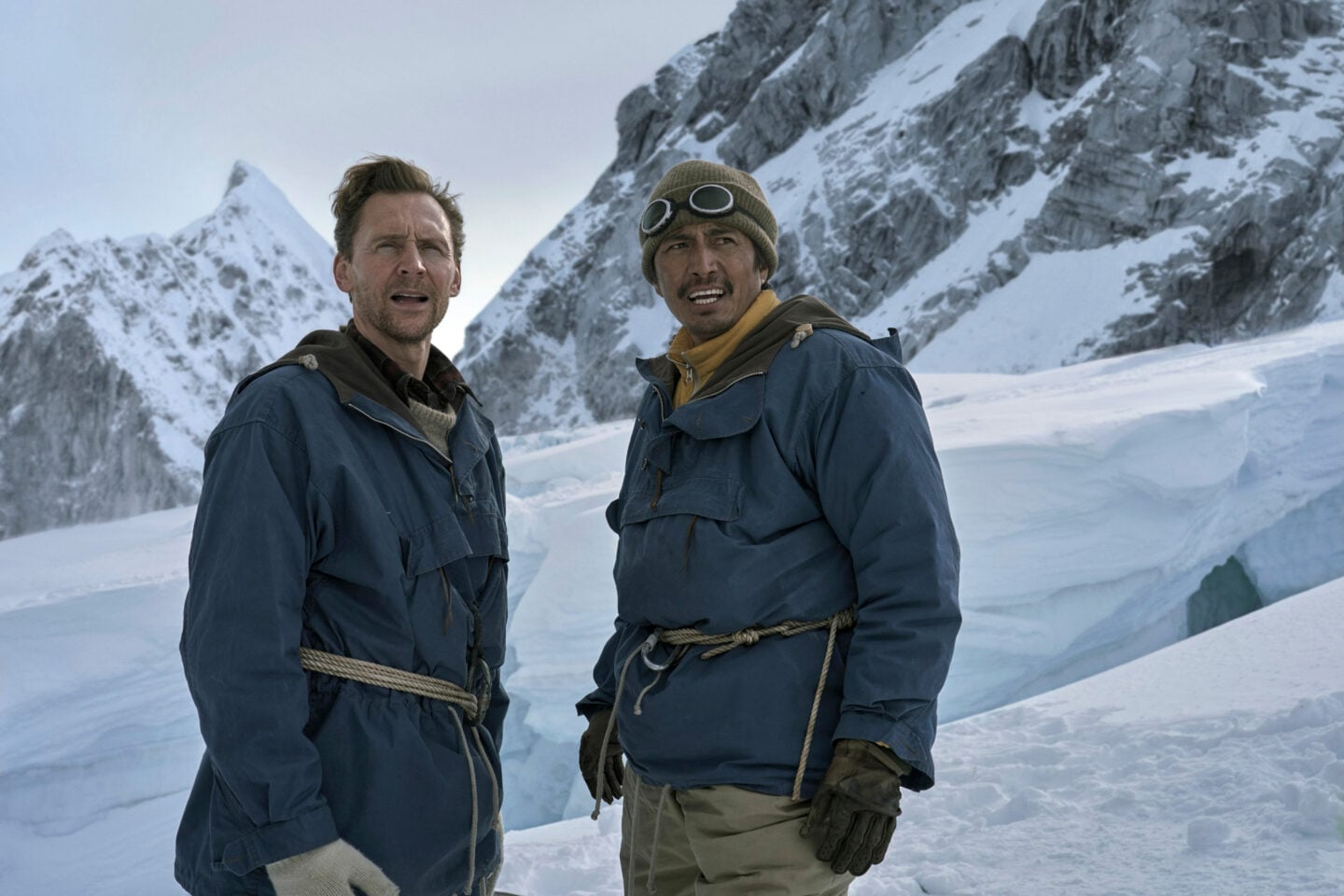
Across much of Asia, Tenzing Norgay remains a household name. If you’re a mountaineer, you can probably spell it. But if you’re someone like myself, whose experience of the Himalayas is limited to schoolbooks and nature documentaries, the little-known story of Norgay’s life is finally getting the big-screen attention it deserves. The captivating depiction of his personal journey, emotional challenges, and successful ascent up the world’s most iconic mountain left me in the best kind of tears.
“I made a film called Sherpa 10 years ago, and was amazed that no one had made that film before me, and I’m amazed that no one made this film before me now,” says Jennifer Peedom, the Australian director of Tenzing, premiering October 16, 2026 on Apple TV. An interest in mountaineering led Peedom to the Himalayas and to award-winning documentaries exploring Sherpa history, culture, and their largely unheralded influence on modern expeditions. Tenzing Norgay’s story was woven through her documentary Sherpa, which inspired her to explore it in a deeper film, in a different genre.
Interspersed with flashback scenes to his childhood, young adulthood, and dramatic ascent up Everest, Tenzing is a stunning film. Sweeping cinematography blows Himalayan air down the back of your neck, the performances feel lived-in, and the attention to historical and cultural detail shows in everything from the costumes to the dirt under the actors’ fingernails.
While there are references to colonialism and the baked-in racism of the times, the film is mostly infused with a generosity of spirit, fuelled by the positive performances of its stars, including Hollywood regulars Tom Hiddleston (who plays Edmund Hillary), Willem Dafoe (expedition leader John Hunt), and especially Chinese-Tibetan actor Genden Phuntsok in the title role as the adult Tenzing Norgay. Younger actors play him as a child and younger man, and all exude Norgay’s famous warmth, humour, quiet conviction, and steely determination.
Holding ascent records from a failed Swiss expedition in 1952, Norgay was renowned as a natural Sherpa leader and one of the finest climbers of his generation before the British expedition. Nonetheless, he still insisted on being credited as a full team member. The endearing friendship he struck with Hillary, a climber from New Zealand and an outsider among the British, was forged in the mountains on their way to base camp. Neither climber was initially chosen for the final ascent, but fate had other ideas.
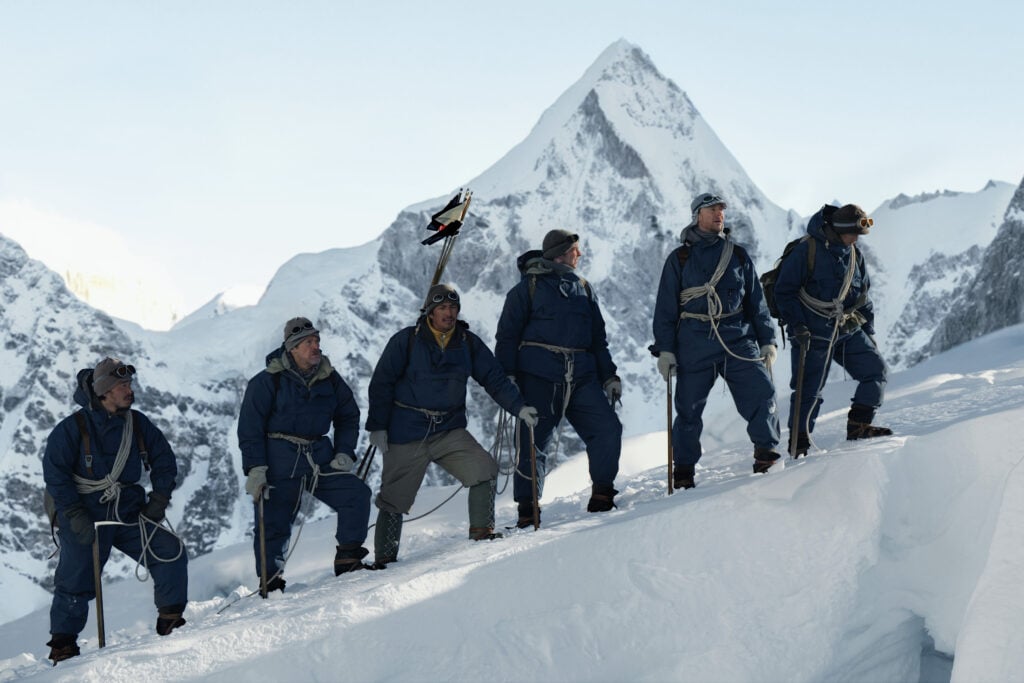
For the British, conquering Everest meant conquering nature itself through science, military planning, and colonial prowess. For the Sherpa people of Nepal, and for Norgay in particular, the mountain — known as Chomolungma in Tibetan and Sherpa — represented something far more personal and spiritual. Yet both climbers faced the same thin air, freezing conditions, strong winds, and seemingly insurmountable terrain.
To build camaraderie, Phuntsok and Hiddleston followed in the footsteps of their characters and trekked to Everest Base Camp together, with no cameras and nothing to perform. Walking in the shadows of the highest peaks on Earth has a habit of bonding companions.
Filming took place in Nepal, but due to logistical and physical challenges, the scenes on Everest were filmed on mountains in Hillary’s native New Zealand, not that you’d know it.
“The actors needed to feel the scale, the altitude, the cold, and the unpredictability of the terrain; they needed to be inside the environment, not imagining it,” explains Peedom.
“I wanted to shoot it on real mountains, on real icefalls, in real crevasses, on real ridges, and in real weather whenever we could. In New Zealand, the mountains are big, but they start at 3,000 metres lower than the Himalayas. It meant we could shoot on epic mountains in remote locations, but at a more acceptable altitude. You can’t disguise the feeling you get when you’re standing on a summit. It’s really emotional, you can see the emotion on the actors’ faces.”
It was a physically demanding shoot, but the cast and crew were up for it.
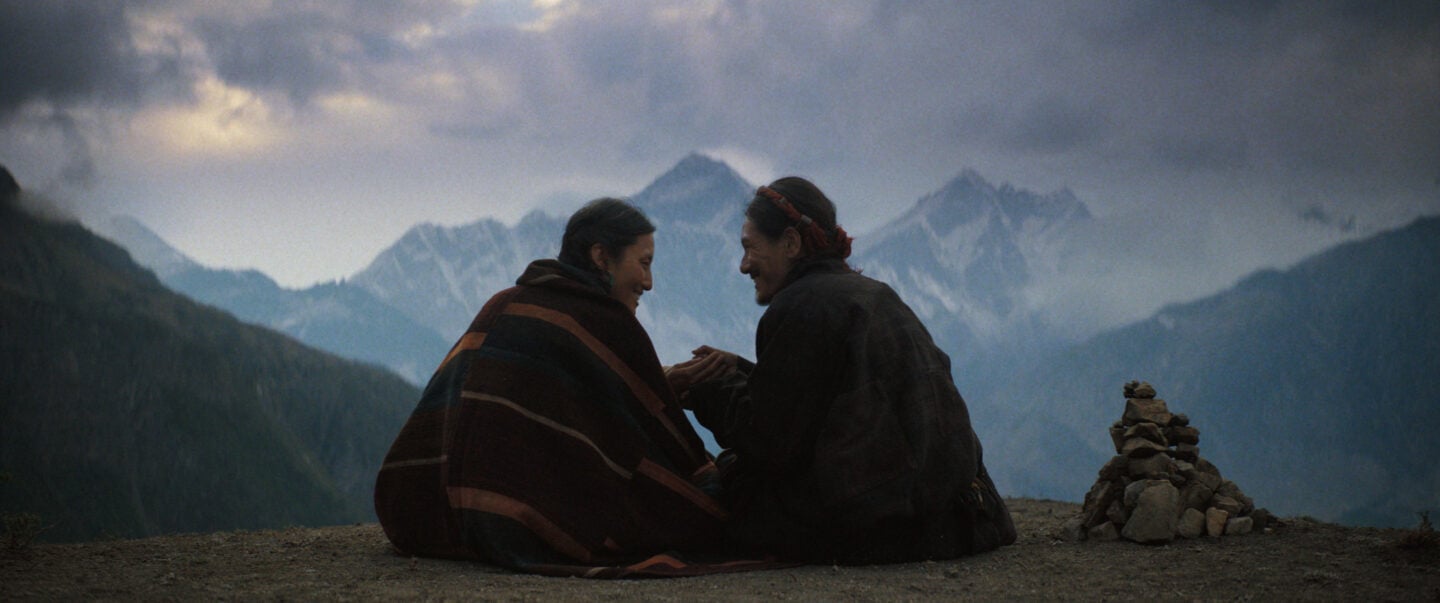
After watching the movie, I immediately searched for the Academy Award-nominated 1953 documentary The Conquest of Everest, depicting dramatic footage from the actual expedition. Comparing what I saw to Tenzing, the production’s attention to detail is remarkable, down to the sunburns, climbing overalls, Hillary’s distinctive blue-striped hat, and the overall sense of exhaustion.
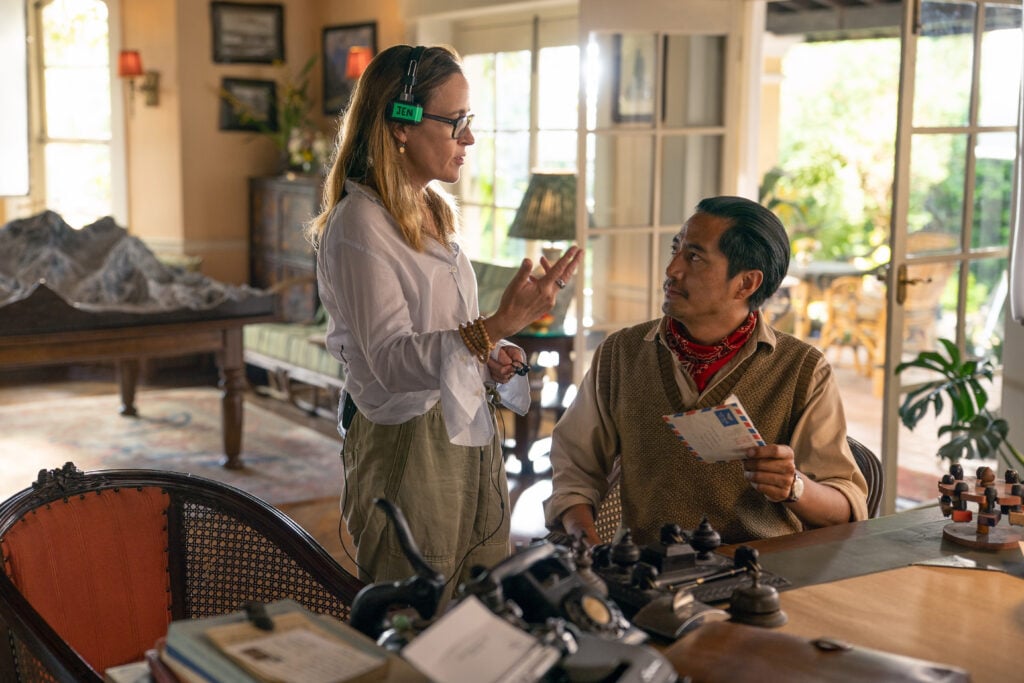
Out of deep respect for both Norgay and Hillary, Peedom sought their families’ support before moving forward with the film. The production also worked closely with cultural consultants who added a distinct authenticity to the Nepali and Sherpa language, local costumes and performances. A sweeping score by Rebekka Karijord features yak bells, Buddhist chants, Tibetan opera, and Nepalese percussion, further immersing the viewer in the spiritual atmosphere of the Himalayas.
After their perilous ascent in 1953, Norgay and Hillary reportedly believed nobody would feel the need to climb Everest again.
“What we’re seeing now on Everest is a massive influx of Nepalese and other operators, and it’s become pretty chaotic,” says Peedom. “I hope they can find ways to better regulate what’s going on over there, because it is overcrowded, and it’s not resourced properly. People are making bad decisions. People are dying. Ten years ago, I thought the crowds were insane. There was an image in my documentary Sherpa that showed hundreds of people lined up, and those numbers have probably tripled now.”
Scaling Everest is very different from a hike in the foothills. Tenzing accurately depicts the many risks anyone faces on the route established by Norgay and Hillary in 1953, even with today’s advanced gear. According to the Himalayan Database, there have been 344 fatalities on Everest to date, including five climbers and guides in May 2026. Incredibly, more than 1000 people summited in the 2026 spring season.
Tenzing Norgay and Edmund Hillary became lifelong friends, forever bonded by their unlikely route to the peak of mountaineering. Hillary received wider acclaim in the English-speaking world, while Norgay became a legend in Nepal, India, and much of Asia.
George Mallory, a pioneering mountaineer who died on an unsuccessful summit attempt in 1924, famously said that Everest had to be conquered “because it’s there.” For Norgay, it was a spiritual pursuit, a personal calling, and an irresistible challenge.
When they finally reached the summit, Hillary took photos to prove their triumph. Norgay offered heartfelt blessings in gratitude and respect.
For history buffs, mountaineers, or anyone who just loves settling down with a great movie, Norgay’s eventful journey from a young shepherd in the Nepalese foothills to one of the pinnacles of human accomplishment will stick with you long after the credits roll.
Tenzing premieres in select theatres on October 9 and globally on Apple TV on October 16, 2026.
Exploration
A century after a Canadian was instrumental in charting the world’s highest peak, a fellow Canadian reflects on the magnetism of Everest

Travel
Garbage litters the trail of the world’s most popular trek, but measures are being taken to clean up the Khumbu region — one kilogram at a time
Exploration
Fifty years after the sinking of the SS Edmund Fitzgerald, bestselling author John U. Bacon revisits the tragedy that changed Great Lakes history

Exploration
Four researchers team up to ascend Mount Logan, measuring change and resilience on Canada’s highest peak