People & Culture

The lone ranger and the quiet crisis in British Columbia’s parks

With B.C. Parks stretched thin, Ming Neil’s career in Princess Louisa Inlet shows the limits of love for the land — and what happens when community fills the funding gap

This story has been fact checked

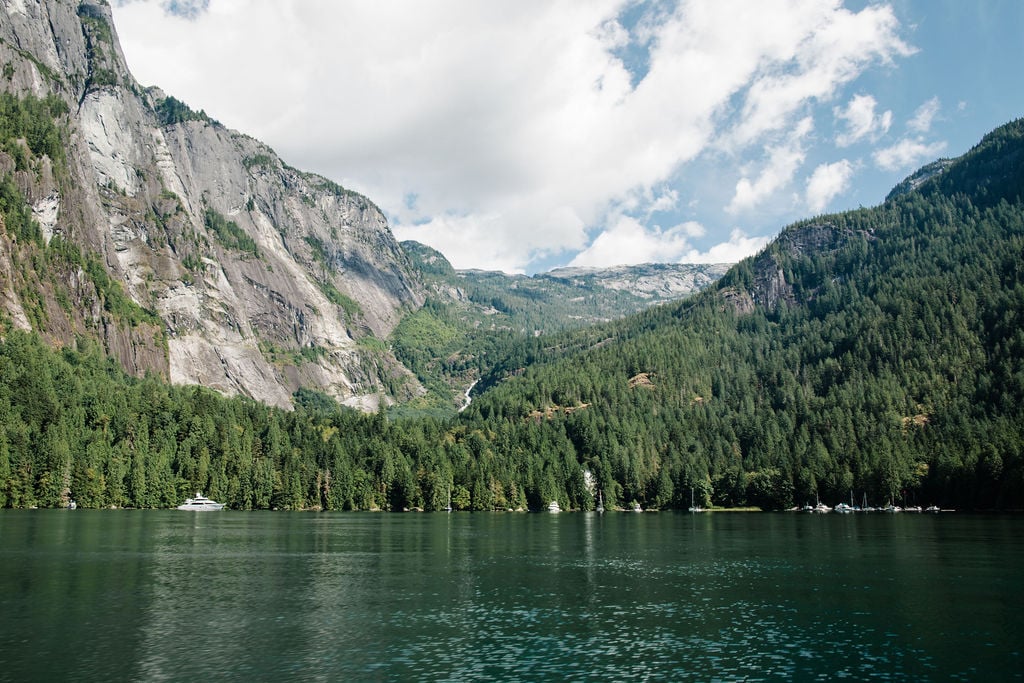
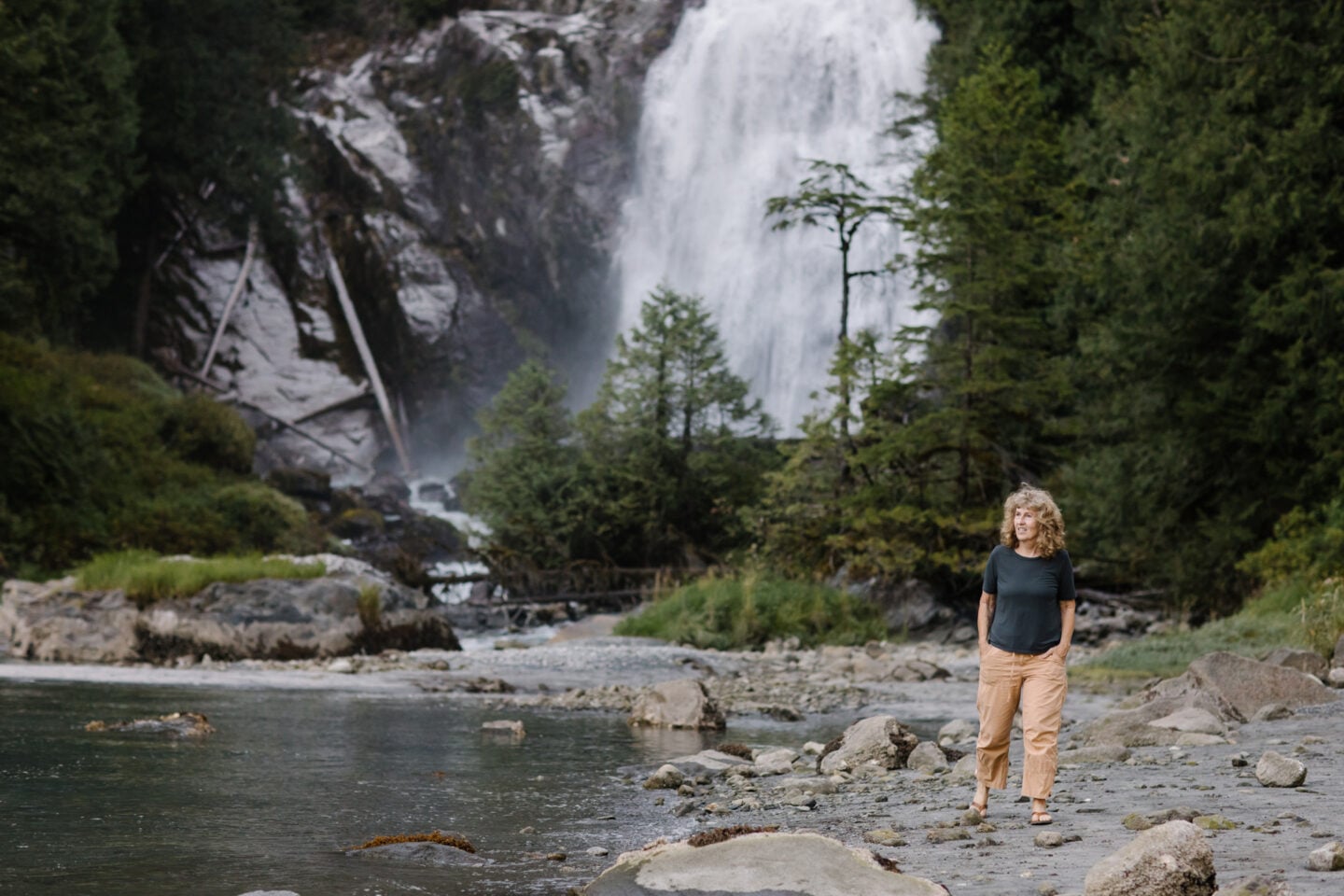
Ming Neil walks along the beach at Princess Louisa Marine Provincial Park in front of Chatterbox Falls looking out towards the inlet.
Expand Image
Advertisement
Advertisement
Advertisement

Late in the summer of 2024, B.C. Park Ranger Ming Neil returned from her days off to discover a problem at Princess Louisa Provincial Marine Park, a remote, water-access-only site on the province’s Sunshine Coast. The pier that visitors relied on to reach the shore from the dock had come off the footings. It was a clear safety risk — and when Neil reported the issue to her supervisor at B.C. Parks, they were not able to come up with a solution. 

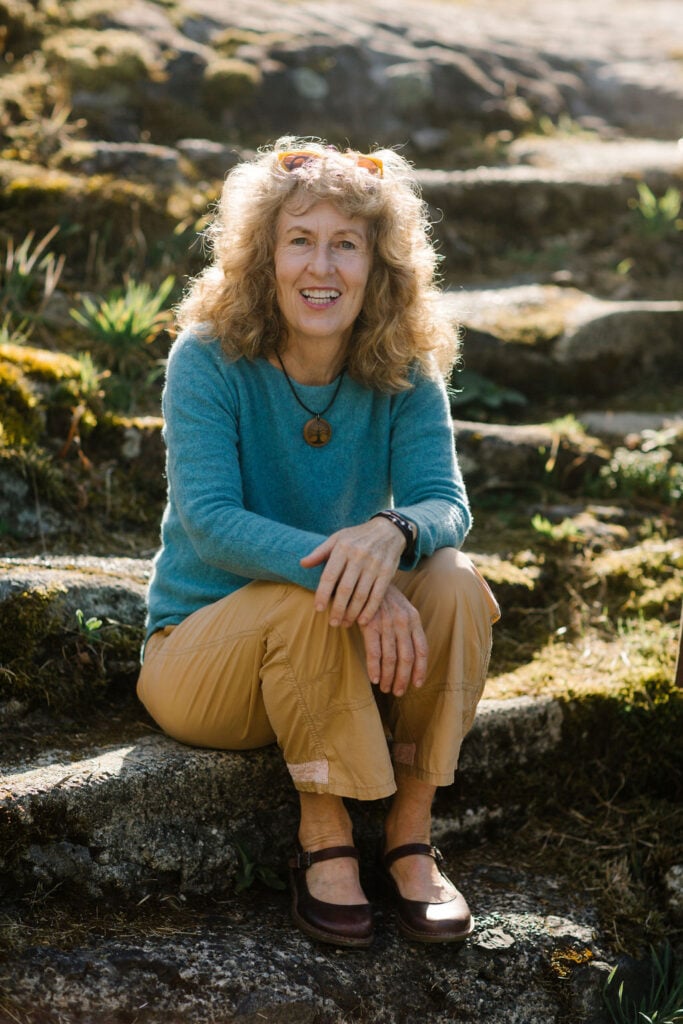
Ming Neil sits on a stone staircase she built during her time as a Park Ranger for Princess Louisa Provincial Marine Park at the entrance of the MacDonald Island trail system.
Expand Image

But after 24 years of working in the inlet, with its tranquil waters and towering granite cliffs, the practical-minded Neil wasn’t ready to call it quits mid-season. She reached out to her network of park supporters.

“Three people came up with the same solution,” she says. “So I found some volunteers, and we made the repair.”

This was a temporary solution and if BC Parks could not come up with the funding for a permanent one, their official response was blunt: close the park. “B.C. Parks didn’t have the funding,” Neil explains with a shrug. “So their solution was to shut it down.”

It’s this kind of moment that weighs on Neil now, as she settles into retirement. Not whether things will go wrong, because after decades of managing flash floods, the effects of wildfires, difficult visitors and inexperienced boaters, the soft-spoken former ranger knows they will. What troubles her is wondering how long one ranger — especially one without her contacts or experience — can keep holding it all together.

Since Neil joined B.C. Parks more than four decades ago, the agency has grown into the third-largest park system by land mass in North America — after Parks Canada and the U.S. National Park Service. But while visits have soared and responsibilities have multiplied for the rangers, resources haven’t always kept pace. Today, just 128 full-time and 62 seasonal rangers manage much of the province’s vast and often remote backcountry. Many leave after only a few years, worn down by seasonal contracts, chronic underfunding and the overwhelming scope of the job.

“When I started, I had passion and dedication, and over time I gained experience and knowledge — the four pillars that make the job possible,” Neil says of the seasonal career that she long balanced with her winter work as an alpine ski racing coach. “But today’s new rangers lose that passion before they even get the chance to gain experience.”

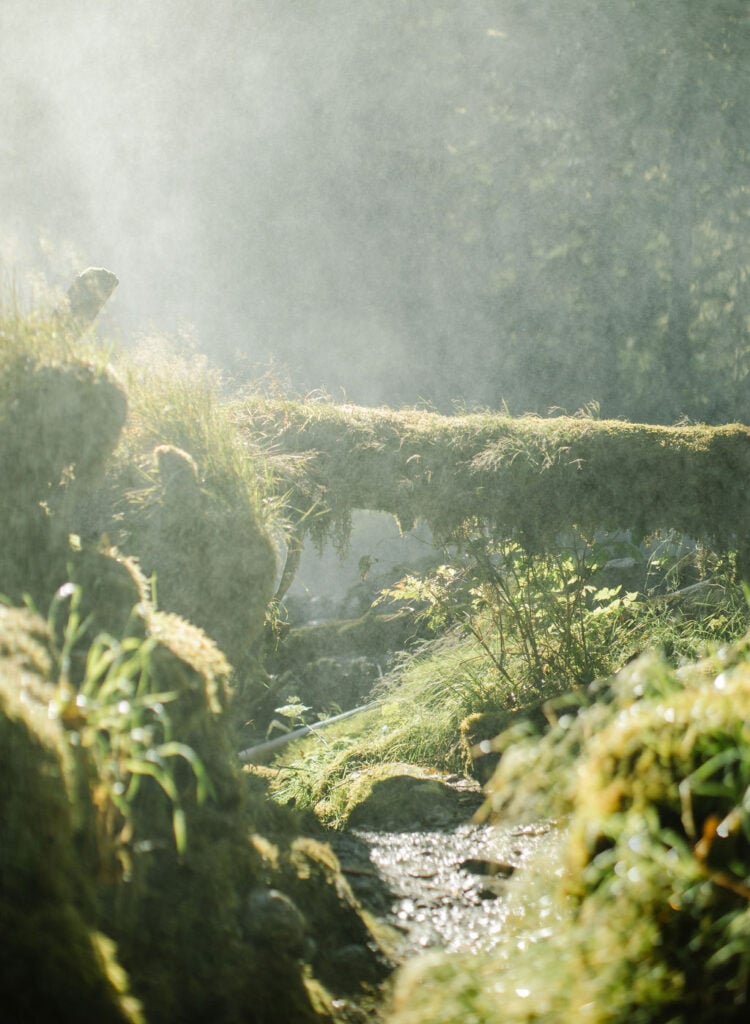
Mist from the nearby Chatterbox Falls turns the forest ethereal.
Expand Image
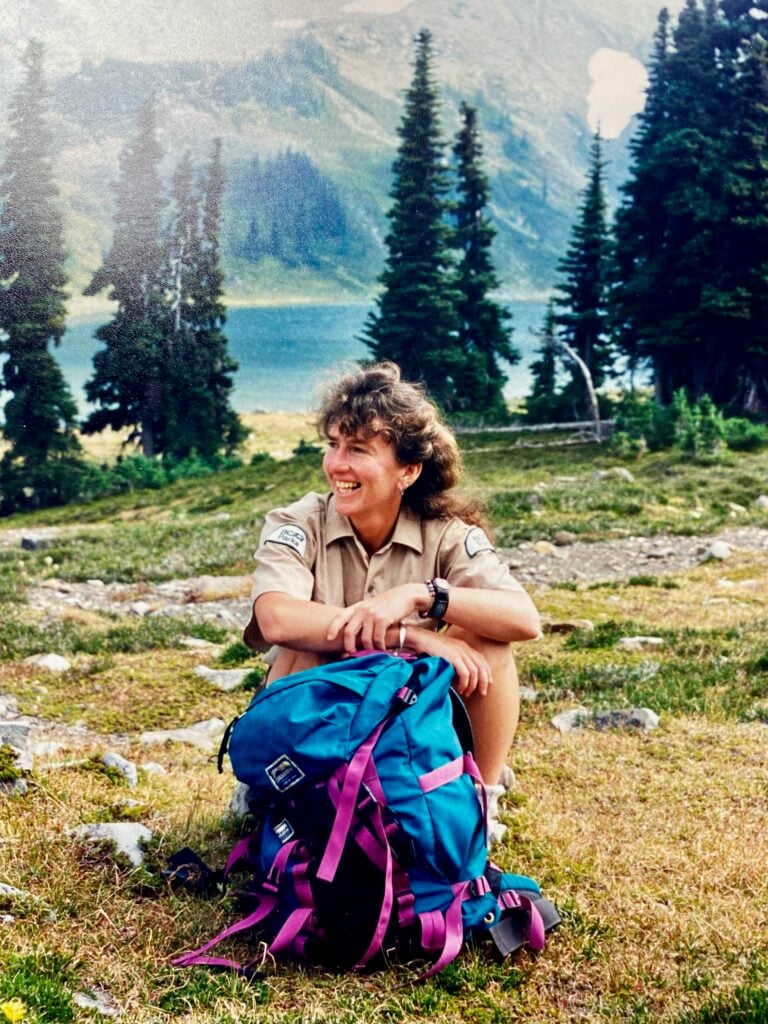
Ming Neil when she first started her career as a B.C. park ranger in the mountains of Garibaldi Park. (Photo: courtesy Ming Neil)
Expand Image

Neil arrived in Princess Louisa Inlet in 2000 as a seasoned ranger after transferring from Garibaldi Provincial Park. She’d done her research before applying — but nothing could have prepared her for that first view of the place the shíshálh Nation call Suivoolot, meaning sunny and warm. As she took in the fiord’s emerald waters, sheer granite walls and dense forest, as well as the thundering 40-metre-high Chatterbox Falls at the inlet’s head, her jaw dropped. “My boss at the time turned to me and said, ‘Yep, we got her. She’s hooked.’”

What she hadn’t anticipated — because there was no way to — was the reality of being the sole ranger in a remote park within an agency under mounting financial pressure.

“In Garibaldi, if something needed doing, a dozen rangers and the management team would show up — we’d work together and get things done,” she says. “But in Louisa, it was just me: Five days on, two days off and worried what was happening when I wasn’t there.”

When Neil began her role at Princess Louisa in the early 2000s, B.C. Parks’ budget had already been slashed in the decades previous. A few cutbacks later, and staffing was so tight that during the 2008 and 2009 seasons, Neil also had to patrol, alone, Desolation Sound Marine Park — an archipelago around 100 nautical miles away by a boat that was prone to breakdowns. Then, just as her responsibilities in Desolation Sound eased, her work year was reduced from six months to four. And her home — a ranger cabin plagued with mould — was condemned.

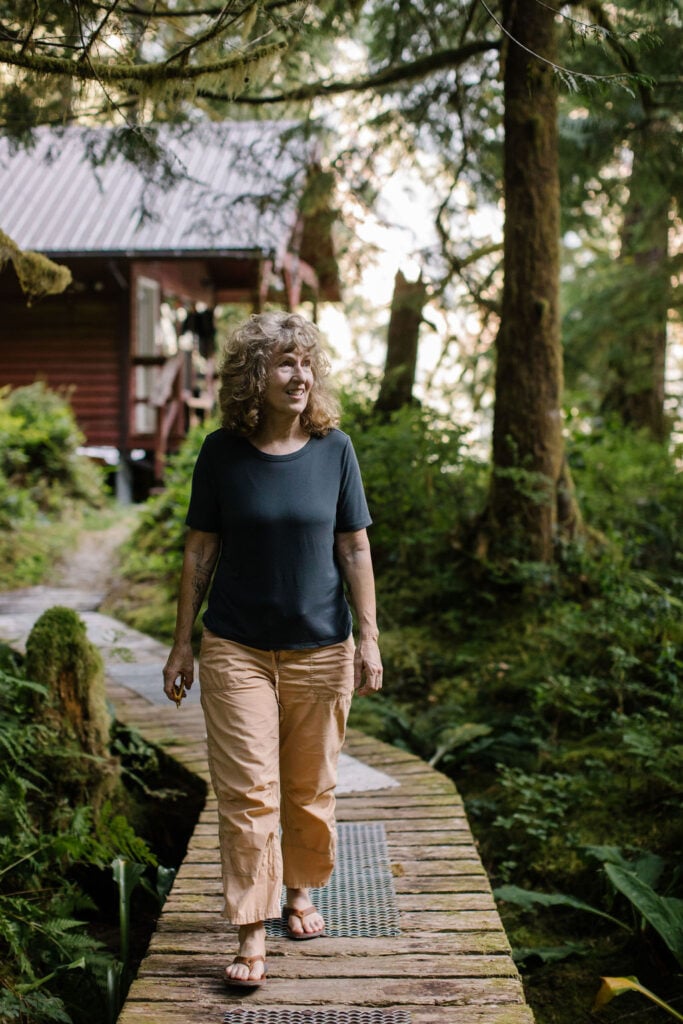
Ming Neil walks the boardwalk in front of the park ranger's cabin, which the Princess Louisa International Society helped remediate.
Expand Image

“The park’s first cabin was replaced in 2007 with a beautiful new one, but by 2012 I started experiencing respiratory problems,” she recalls. Neil repeatedly reported the issue to B.C. Parks, which tried to mitigate it with cleaning and improved ventilation — but by 2015, she was so sick she had to move out and live in a tent. She describes it as tiring, challenging and uncomfortable — especially when the weather was cold and wet.

This was when Neil’s superpower — the ability to draw together a wide range of people who love the park — began to rise to the forefront.

Appalled to discover that Neil was living under canvas, the Princess Louisa International Society intervened. Originally founded to steward the donated lands before the park’s formal creation, the society’s ongoing mandate is to preserve the inlet’s natural character, acquire land (like the 43.5-acre Macdonald Island in 1972) and enhance facilities. But in 2014, its president, William Ireland, reported, “budgetary cutbacks have cast doubt over the ability of B.C. Parks to staff a ranger in Princess Louisa for the coming season.”

The Society stepped in. In 2015, the Princess Louisa International Society entered its first four-year partnership with B.C. Parks. As one of the first organizations to formally partner with the agency, the society helped B.C. Parks cover Neil’s salary, provide mould remediation for the cabin, improve the docks and maintain trails.

Knowing the society “had her back” made it easier for Neil to focus on the job she loved. She embraced the seasonal rhythms: hiking the steep forest trails each spring to assess and repair winter damage, then finally exhaling in the fall when the last visitors departed and she could reconnect with the land.

“Autumn was an amazing time. It felt like the entire inlet took a big breath,” she recalls with a soft smile. “Some mornings, I’d grab my cup of coffee and run up and down the empty dock yelling, ‘Good morning, Princess Louisa! We made it through another season! We did it!’”

In summer, though, it was full-on people management.

“When a boater arrived at the dock or tied up to a mooring buoy, I’d greet them,” she says. With up to 50 boats a night, plus kayakers and day-trippers, these initial interactions helped her assess each visitor for potential trouble.

Most rule-breakers — those lighting fires during fire bans, mismanaging pets or blasting music — responded to her low-key efforts to educate them. But not always. Some became aggressive, especially if they’d had too much to drink. Neil occasionally had to call in other agencies for support, and the response time could be painfully slow — if she could reach help at all.

“I often had to leave the situation and take my boat the 4.5 nautical miles to Malibu to use their phone and arrange for emergency support,” says Neil.

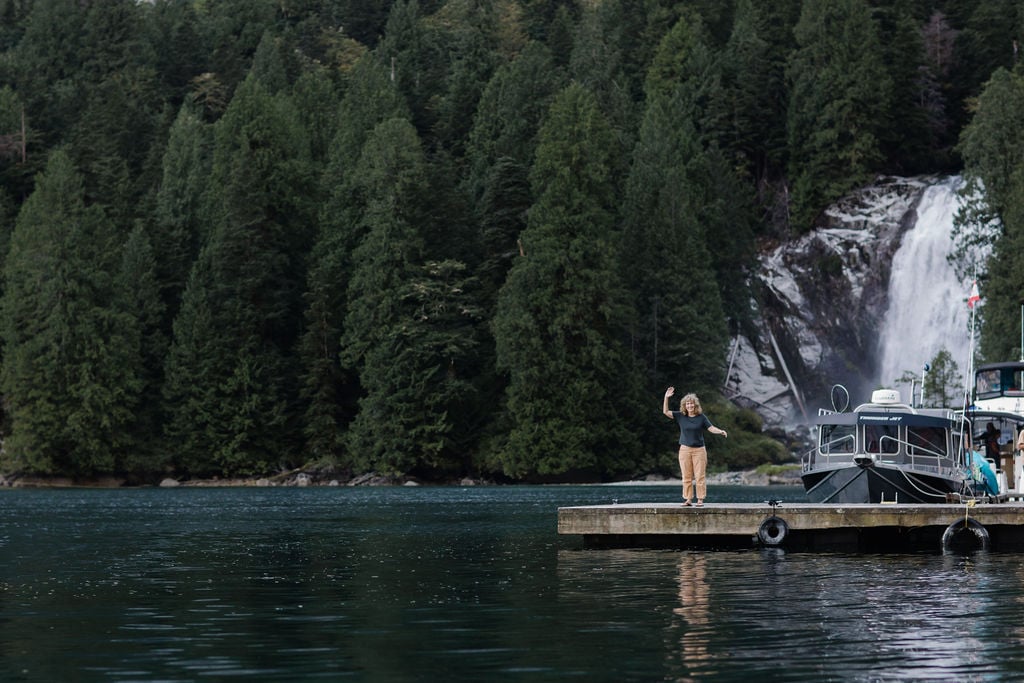
Ming Neil waves to a boat approaching the dock at Princess Louisa Marine Provincial Park, as she did for 24 years as the Park Ranger for the inlet.
Expand Image
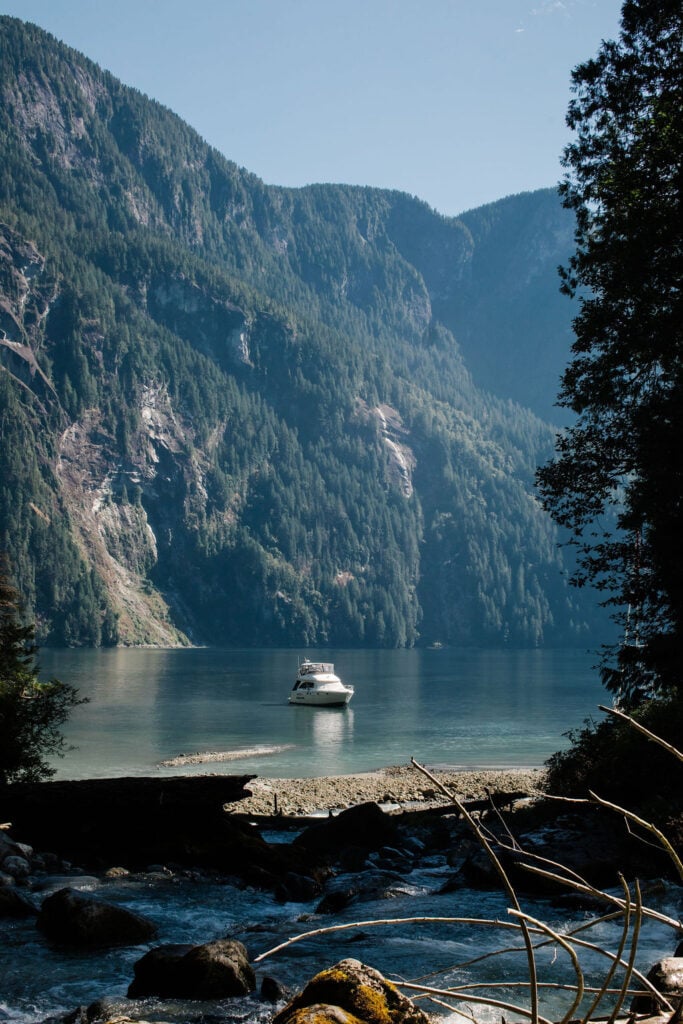
Moored boats, the dock and Chatterbox Falls at the end of Princess Louisa Provincial Marine Park.
Expand Image
Advertisement

Outside communication from the inlet has always been complex. Initially, Neil used an operator-assisted phone system using marine VHF radio. But that service ended in 2010 — and cell signals still didn’t reach the inlet. Over the next 14 years, Neil cycled through a variety of inadequate options: a hit-and-miss satellite phone, the Powell River forestry check-in service and a more expensive satellite system that proved even less reliable.

A moored boat as seen from Chatterbox Falls.
Expand Image

Still, not every challenge came from people or lack of communication. Nature, unpredictable as it is, brought moments of wonder — star-filled nights, wildlife sightings, mist-shrouded trees — and trials, from forest fire smoke to floods.

Neil recalls one particularly dry August — five months without rain — when Chatterbox Falls had been reduced to a whisper.

A man named David had rowed about 160 nautical miles from Port Townsend in a tiny boat. While he said he was glad he’d made the arduous journey to the gorgeous fiord, he was disappointed the falls weren’t flowing in full force. “I explained that it’s, well, August. And the drought,” Neil remembers. “And no word of a lie, he rowed out in front of Chatterbox, and the clouds came in. It clapped and thundered, and over the first hour, the falls just grew and grew.”

But then the storm intensified and Neil had to move quickly to evacuate campers from the creekside sites. “The torrent washed out the bridge, so I housed them at my place until I could figure out how to get back into the campsites,” she says. “All the walls were flowing with water. The damage was amazing — but the next day, David was glowing. He’d gotten to see Louisa in all her glory.”

The storm was just the beginning. Neil had secured the bridge before it washed out to sea — “a large fir tree helped stop it,” she says modestly — but it had snapped in half, and the footings were destroyed. She sent photos to park management but also reached out to Bob Fielding at Princess Louisa International Society. “I said, ‘Bob, can we repair it?’”

Fielding rallied volunteers and brought in a boatload of concrete, and five people spent a full day rebuilding the footings and jacking the bridge back into place. “I don’t know what would have happened if we’d waited for Parks to find the budget and workers to fix it,” Neil says.
B.C. Parks hasn’t always been strapped for cash. The agency began optimistically in 1911 with the creation of the 250,000‑hectare Strathcona Park. Since then, the park system has expanded dramatically. It is now the custodian of 14.42 million hectares across 1,048 protected areas equalling about 14.7 per cent of the province. But while the land mass has increased, the resources to maintain the parks have not kept pace.

By 2011, the funding gap in the century-old system was evident. In a report that year, Mel Turner — a longtime B.C. Parks employee and director of the B.C. Parks Elders Council and the Princess Louisa International Society — noted that while British Columbia had one of the largest park systems in the world, it operated with some of the lowest per‑hectare funding levels. At the time, a reasonable budget for comparable park systems elsewhere in the world averaged about $28 per hectare; B.C. spent just $3.

Since then, funding (when adjusted for inflation) hasn’t really improved. B.C. Parks’ core operating budget is roughly $63 million a year — plus around $12 million in annual revenue from a parks enhancement program from licence plates and other sources — for a total of about $75 million, or just over $5 per hectare.

Comparison with other North American parks helps put those numbers into perspective. While park systems differ — B.C.’s are often remote, with a focus on conservation and low‑impact recreation — the funding disparity remains stark.

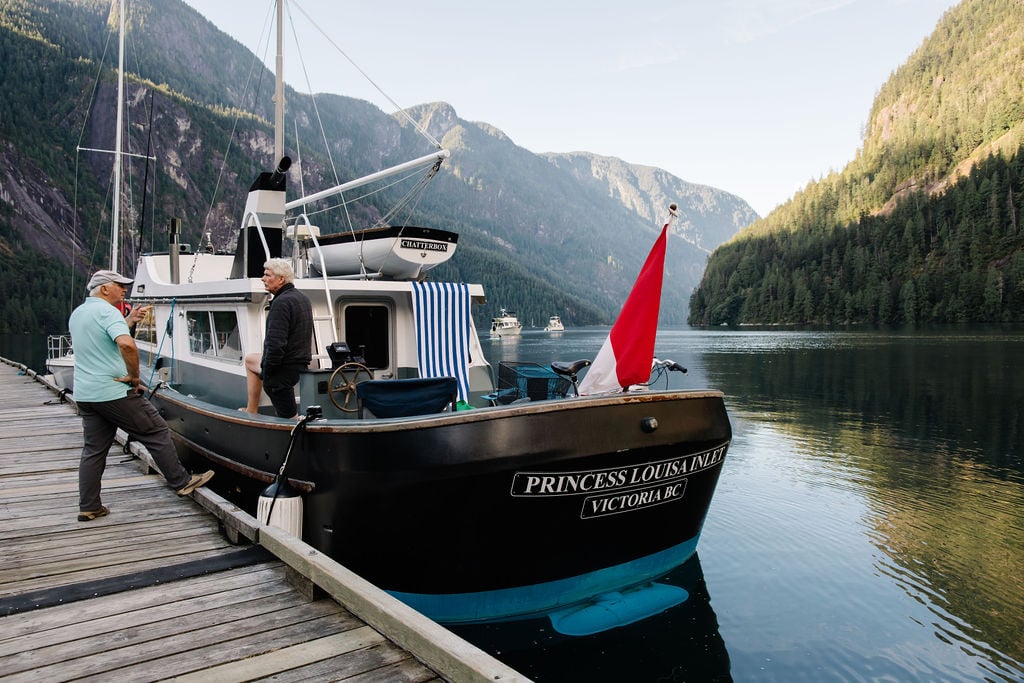
Mel Turner, vice president of the Princess Louisa International Society, stands on the dock speaking with Don Prettie, the society's director. Prettie's boat is aptly named "Princess Louisa Inlet."
Expand Image

Parks Canada plans to spend about $1.27 billion in 2025–26 across roughly 33.6 million hectares — around $37.70 per hectare. Alberta allocates about $103 million to operate its provincial parks across 4.7 million hectares — roughly $21.90 per hectare. Washington State Parks, by contrast, manages about 55,847 hectares of state parkland with an operating budget of roughly US$132 million — the equivalent of about C$3,300 per hectare. That system is far more intensively managed and recreation‑focused than B.C.’s vast, wilderness‑dominated network, but the funding gap is still striking.

Looking ahead, the financial pressure in B.C. is only set to intensify. Between 2025 and 2028, the Ministry of Environment and Parks faces an $11-million reduction in its forecasted spending, with budget 2026 including an almost $6 million reduction to the conservation and recreation division.

To help bridge the widening gap, the province has begun to rely more heavily on groups like the Princess Louisa International Society. First nations guardians as well as almost 100 volunteer groups and special interest organizations now have their own formal partnership agreements with B.C. Parks. Their contributions range from infrastructure development and repair to ecological restoration, public education, cultural stewardship and trail maintenance.

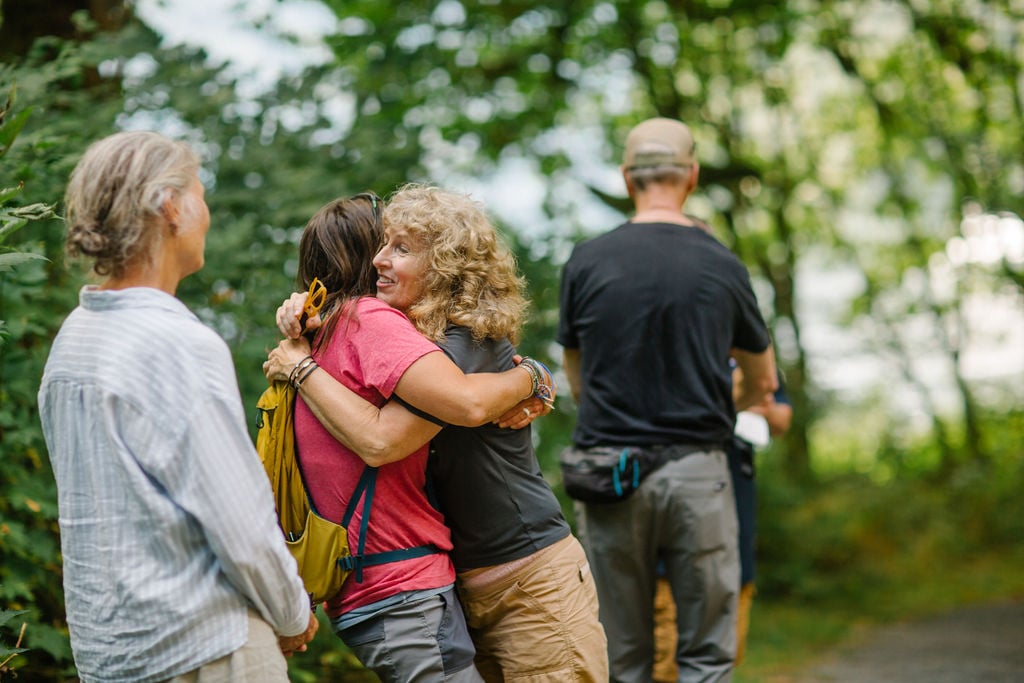
Ming Neil greets old friends as they arrive for her retirement celebration in August 2025.
Expand Image
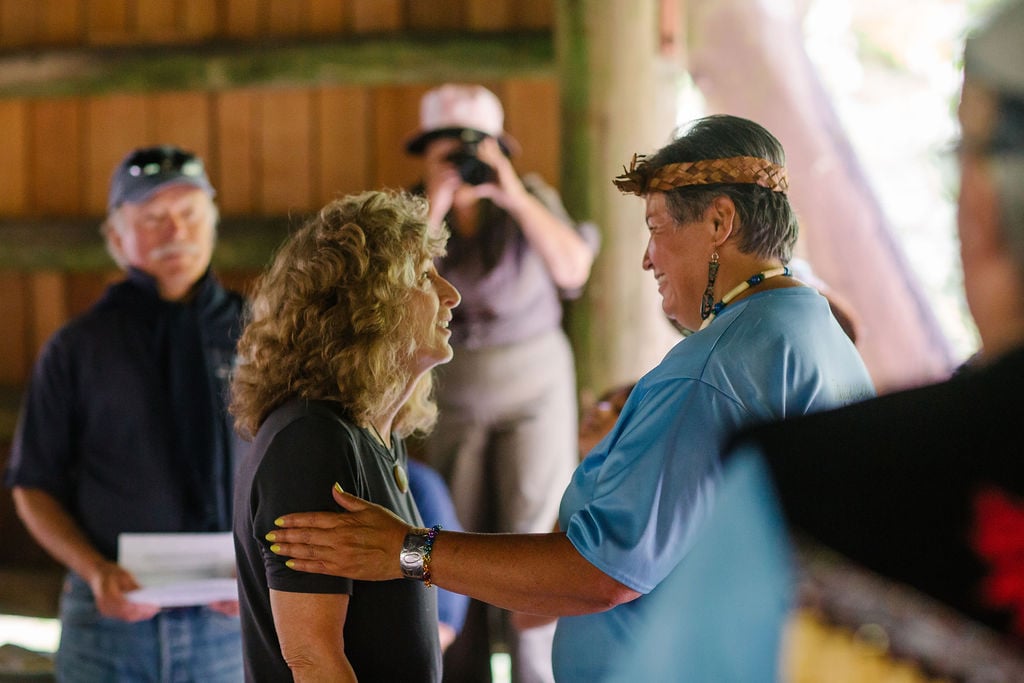
Ming Neil is embraced by Candace Campo — ancestral name xets'emits'a, who is a member of Shíshálh Nation and the founder and co-owner of Talaysay Tours — during Ming's retirement celebration.
Expand Image

“In 2024, volunteers contributed over 50,000 hours to B.C. Parks,” says Chris Price, director of safety, compliance and emergency services for B.C. Parks. “The support they provide is invaluable. Each group brings unique skills and local knowledge — and they create opportunities for communities to get involved.”

While Price doesn’t believe the iconic ranger role is at risk of disappearing, he does see it evolving. “The contributions volunteers make have become essential to visitor experience and the protection of park values,” he says. “As we move forward with reconciliation, I think we’ll see even more collaborations between government, community groups and Indigenous nations.”

For Neil — now experiencing life as a park visitor instead of as a ranger — she carries a mix of gratitude and concern.

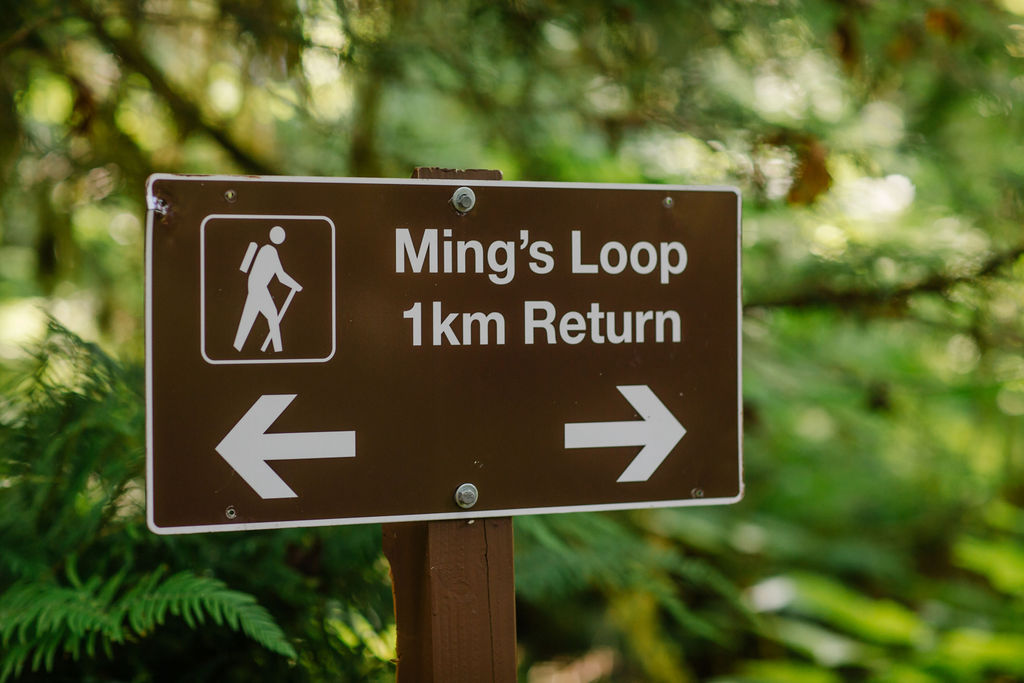
"Ming's Loop" is a one-kilometre trail designed by Ming Neil during her time as park ranger.
Expand Image

At her August 2025 retirement party, dozens of the people she’d connected with, and tapped for help and support over the years, made their way to the remote park to thank her for her unwavering dedication and to celebrate her accomplishments. Then in 2026, Neil was able to return to the park again, this time to help train Ranger Michelle Burns — Princess Louisa’s newest steward.

“I have been blessed with being a caretaker, guardian, educator and protector,” Neil says, in her slow and thoughtful way. “But we have a responsibility to preserve all of these beautiful and sacred places for the generations to come.”

All our parks deserve rangers who know their rhythms and respect their needs — someone whose boots are on the ground, who is deeply connected to the lands and waters and to the wildlife that call them home.

“Places like Louisa are resilient,” she says. “But she still needs a protector.”

Advertisement

Help us tell Canada’s story

You can support Canadian Geographic in 3 ways:

Related Content

People & Culture

The watchers: On patrol with the Canadian Rangers

With more eyes on the Arctic, the Canadian Rangers embark on their longest patrol in recent history — a path forward for Canada’s defence and its deepening relationship with the North

  • 2646 words
  • 11 minutes

Environment

The great turning

Another reckoning is coming with climate change. How do we deal with our mental health — and ultimately find hope?

  • 3646 words
  • 15 minutes
A crowd of tourist swarm on a lakeside beach in Banff National Park

Places

Smother Nature: The struggle to protect Banff National Park

In Banff National Park, Alberta, as in protected areas across the country, managers find it difficult to balance the desire of people to experience wilderness with an imperative to conserve it

  • 3508 words
  • 15 minutes
Gordon Hempton records audio in Grasslands National Park

Science & Tech

The sounds of silence 

A sound artist listens for quiet in Grasslands National Park

  • 5035 words
  • 21 minutes
Advertisement
Advertisement