Environment
Inside the fight to protect the Arctic’s “Water Heart”
How the Sahtuto’ine Dene of Délı̨nę created the Tsá Tué Biosphere Reserve, the world’s first such UNESCO site managed by an Indigenous community
- 1663 words
- 7 minutes
People & Culture
Project Nin, which started as an Anicinabe community exhibit, is being woven into a global Indigenous language art piece
MARIAM WALLET ABOUBAKRINE sits quietly, holding a piece of red cloth in her hands. The room is filled with Elders, youth, language advocates and allies, all gathered at the United Nations headquarters for one purpose: to uplift Indigenous languages.
Aboubakrine is a Tuareg woman from Timbuktu, Mali, and former chair of the United Nations Permanent Forum on Indigenous Issues. The red ribbon in her hand is small, but it holds something immeasurable: memory, responsibility and hope.
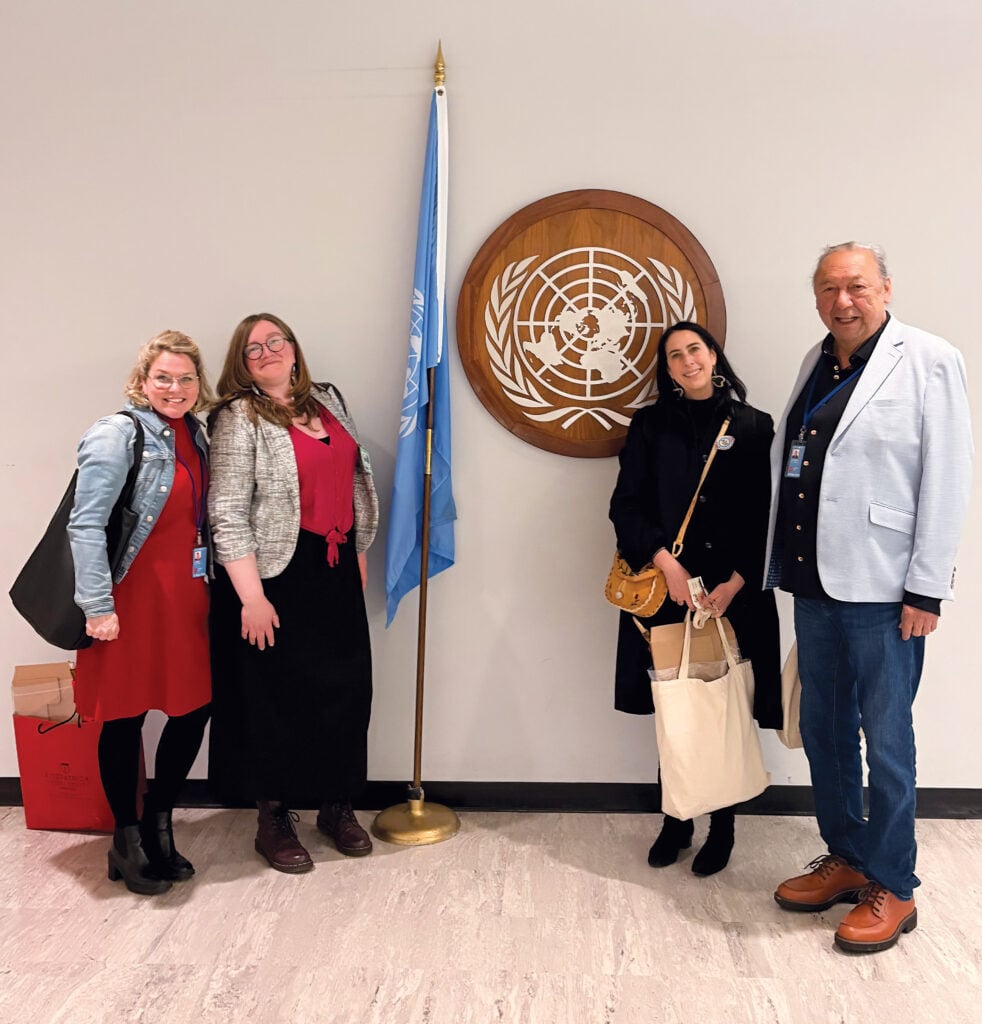
The event, held in New York on April 21 during the 25th session of the United Nations Permanent Forum on Indigenous Issues, was the first public gesture for Project Nin, a global initiative started on Anicinabe territory in 2022 at the beginning of the International Decade of Indigenous Languages. The project is rooted in the belief that Indigenous languages are not only worth saving but essential to the future of humanity, and is intended to be a space for meeting and reflecting on the challenges of revitalizing languages and sharing worldviews among language speakers.
The project was the vision of Anicinabe [Anishinaabe] language advocate Ejinagosi Richard Kistabish, as part of an exhibition about the power of language that toured every community in Anicinabe Aki [Anicinabe territory], a massive area of land spanning from the Prairies to Quebec. Raised in Anicinabemowin until the age of six, Kistabish was taken from his family and sent to the St-Marc-de-Figuery Indian Residential School, where he spent 10 years separated from his family, language and culture. That experience shaped his lifelong commitment to language revitalization and healing. Kistabish spoke at the launch about the deep connection between language, identity and the land.
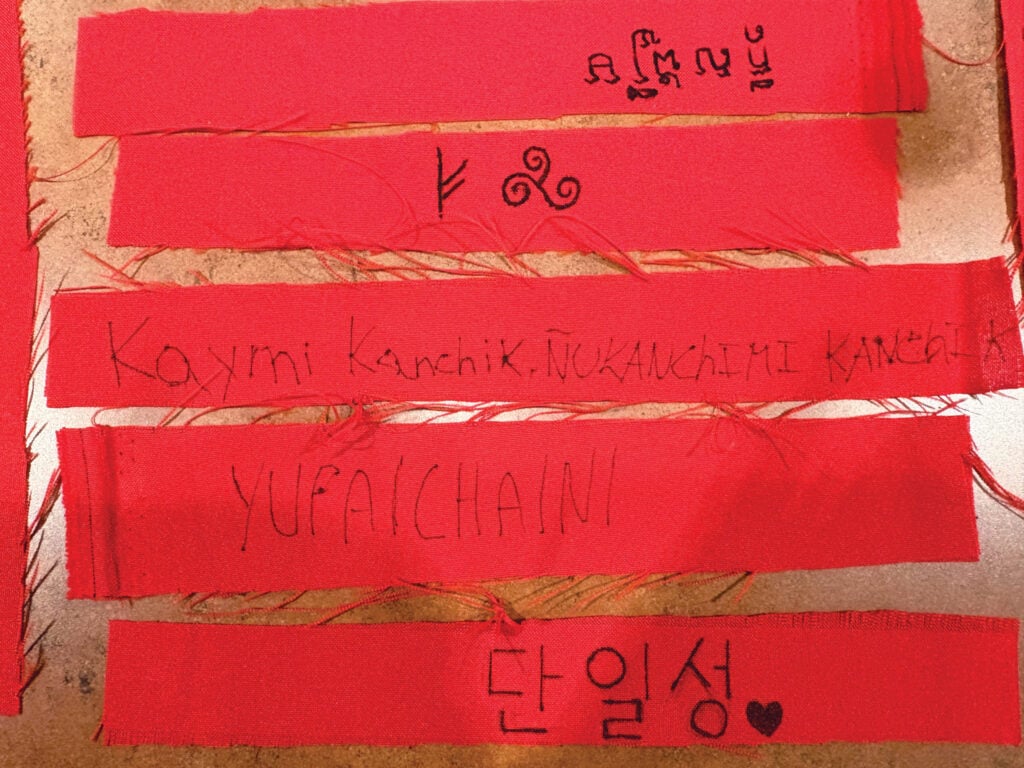
“Our language is the living fire of our culture: sacred, vulnerable and alive. If we lend it our breath, it will guide its own resurgence through our words, stories and wisdom,” says Kistabish, who co-founded Minwashin, a cultural organization based in Abitibi-Témiscamingue, Que. As Kistabish speaks, red ribbons are passed from hand to hand. One by one, people write messages to their ancestors, their grandchildren, the land, the future: “When our languages live, communities heal. My wish is for the Cree language to be spoken daily in my community.”
The ribbons will eventually form a collective artwork, with a goal of having the final piece displayed at UNESCO headquarters in Paris at the close of the international decade. The artwork will serve as both a celebration and a call to action for revitalizing Indigenous languages.
The messages on the ribbons gathered so far speak to the profound role that language plays in Indigenous peoples’ lives. Some express the hope of hearing their language spoken fluently and routinely once again. Others describe language as the path to healing communities, the key to keeping cultures alive and the means of reconnecting with identity, ancestors and homelands. So far, ribbons have been collected from Indigenous communities across Turtle Island, throughout Canada and the United States. Over the coming years, Project Nin aims to gather messages from Indigenous peoples across every continent. To date, more than 5,000 ribbons have been collected.
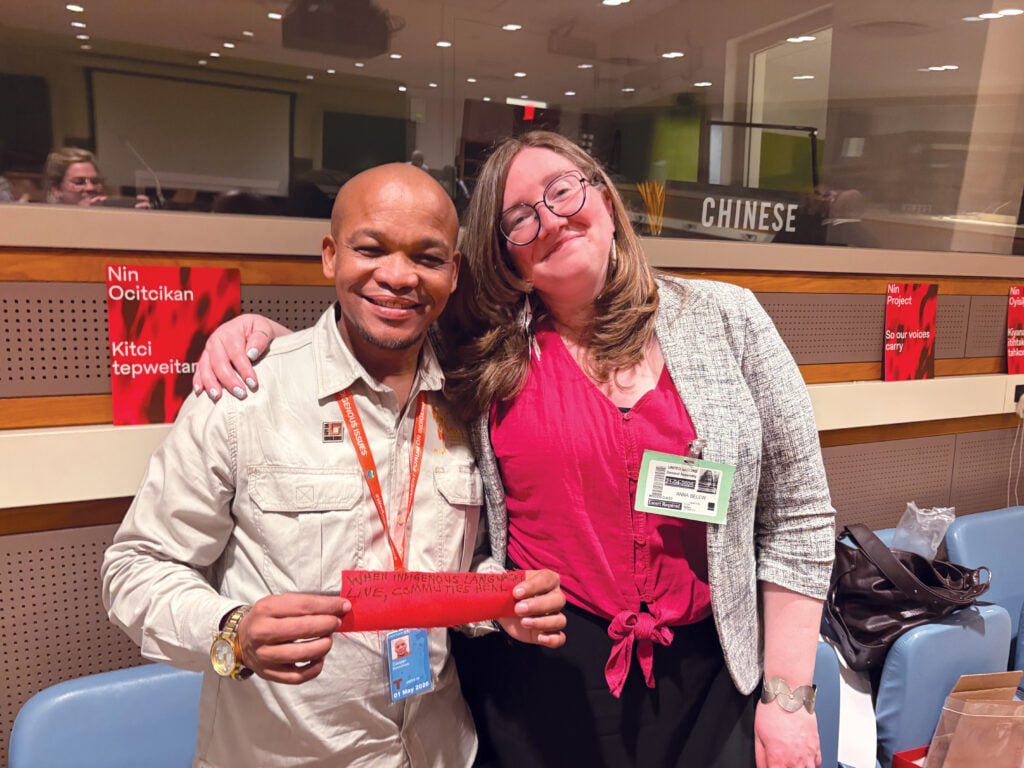
According to UNESCO, nearly half of the world’s 7,000 languages, most of them Indigenous, could fall dormant before the end of the century. Project Nin intends to remind the world that the work of supporting Indigenous languages must continue for generations to come. As the event draws to a close, the red ribbons are collected, carrying messages in dozens of Indigenous languages, from Nêhiyawêwin [Plains Cree] to Miluk, a language from Oregon that went quiet when its last fluent speaker died in 1939 but is now being recovered and spoken.
Perhaps that is what makes Project Nin so powerful: it recognizes that Indigenous languages are diverse and have managed to survive not only through policies or institutions but through people and through moments when someone chooses to learn, speak, remember and dream.
Discovery Language is supported by the Office of the Commissioner of Indigenous Languages.
This story is from the September/October 2026 Issue
Environment
How the Sahtuto’ine Dene of Délı̨nę created the Tsá Tué Biosphere Reserve, the world’s first such UNESCO site managed by an Indigenous community
People & Culture
The story of how a critically endangered Indigenous language can be saved
People & Culture
Plains Indian Sign Language was used by generations of Indigenous Peoples to communicate across languages and landscapes. Now, it’s being reclaimed.
People & Culture
Languages represent entire worlds of knowledge and meaning. This Indigenous Languages Day, Chief Perry Bellegarde, Honorary President of the Royal Canadian Geographical Society, introduces a new CanGeo digital series celebrating Indigenous languages from across the lands and waters we call Canada.