
Science & Tech
Flying through Arctic storms in the name of science
Zen Mariani explains the ground-breaking Polar Night Experiment, plus more atmospheric stakes in the Far North
- 1622 words
- 7 minutes
Science & Tech
A massive study of winter air pollution conducted by more than 100 scientists is shedding light on our exposure to everything from microplastics to metals
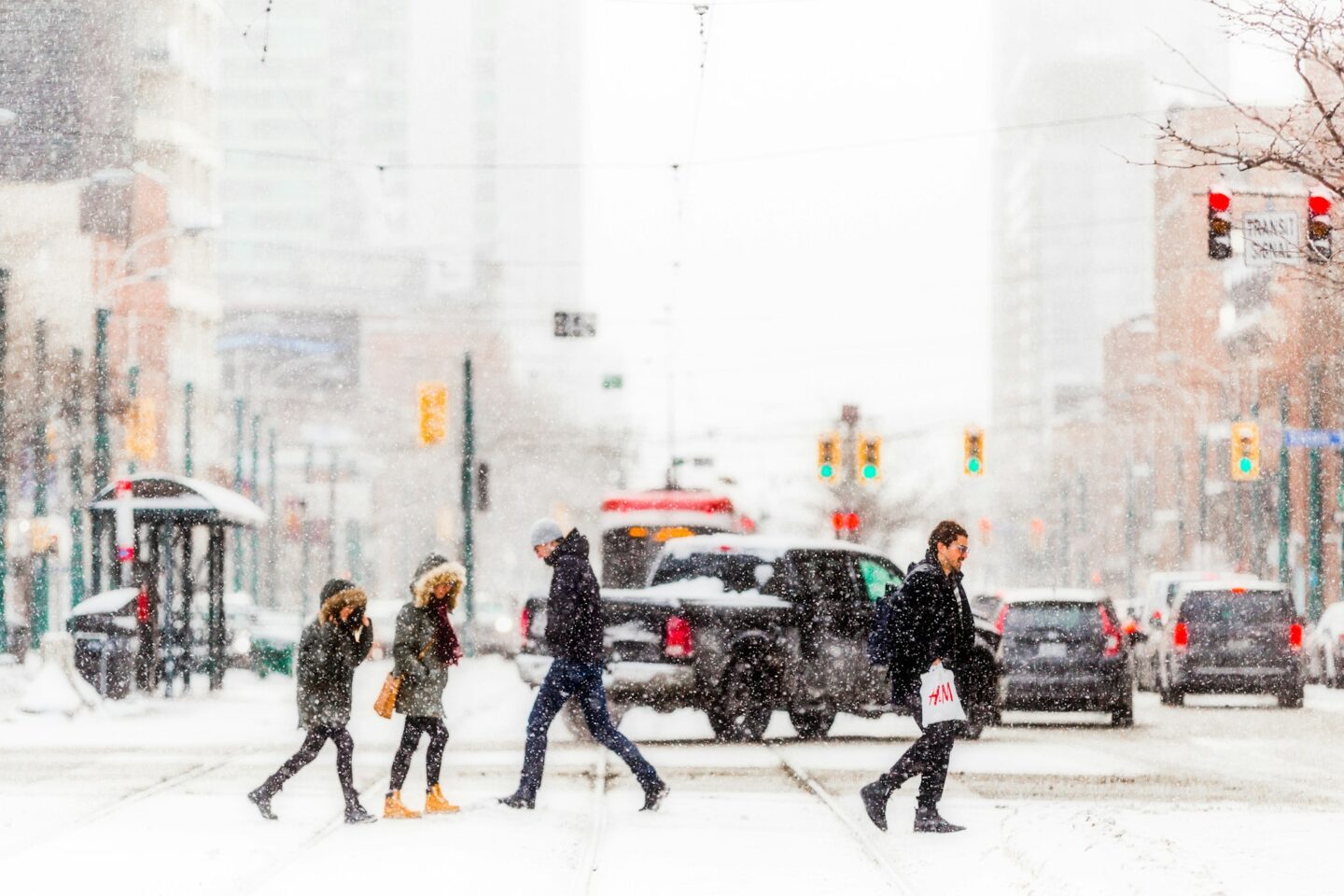
The winter air in Canadian cities might seem fresh and clear compared with the hazy days of summer. But looks can be deceiving. New research shows that, as well as carrying a chill, those icy breezes ferry into the lungs of every urban dweller a seasonal cocktail of gaseous and particle emissions from wood stoves, fireplaces, furnaces, road salters, vehicle exhaust and other cold-weather sources. In Toronto at least, that potent mix of pollutants can rival the worst air quality days of summer.
“Around 2013, the Air Quality Health Index values in the winter [in Toronto] started to become equal to or even greater than the summer values,” says Elisabeth Galarneau, a scientist at Environment and Climate Change Canada.
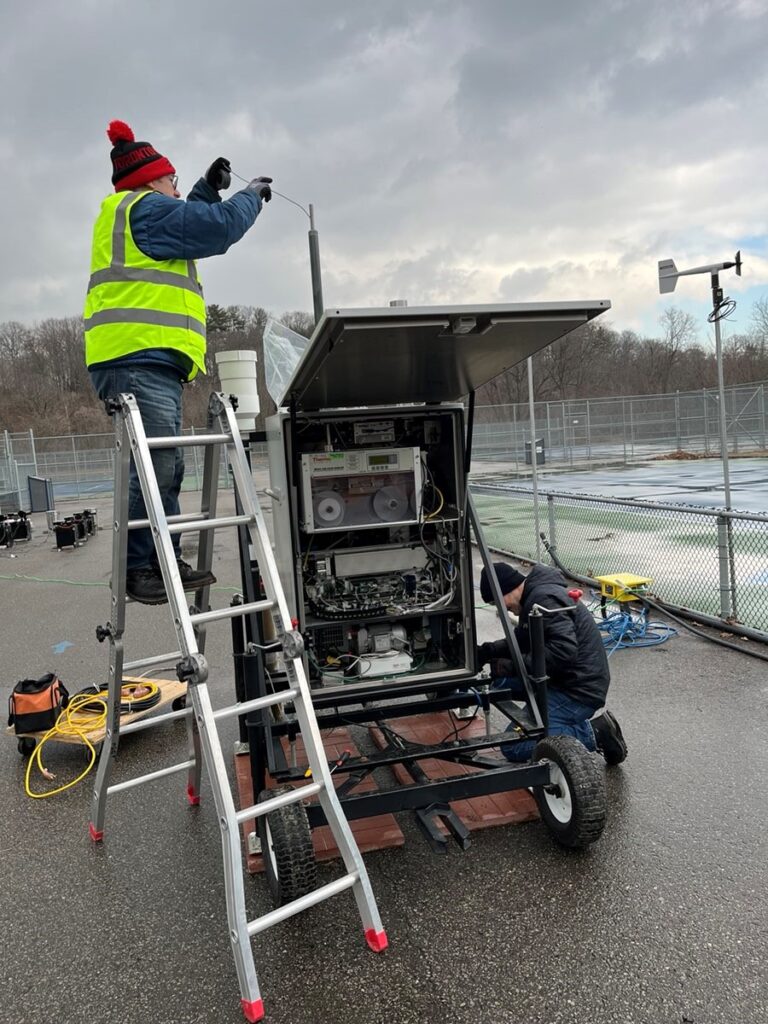
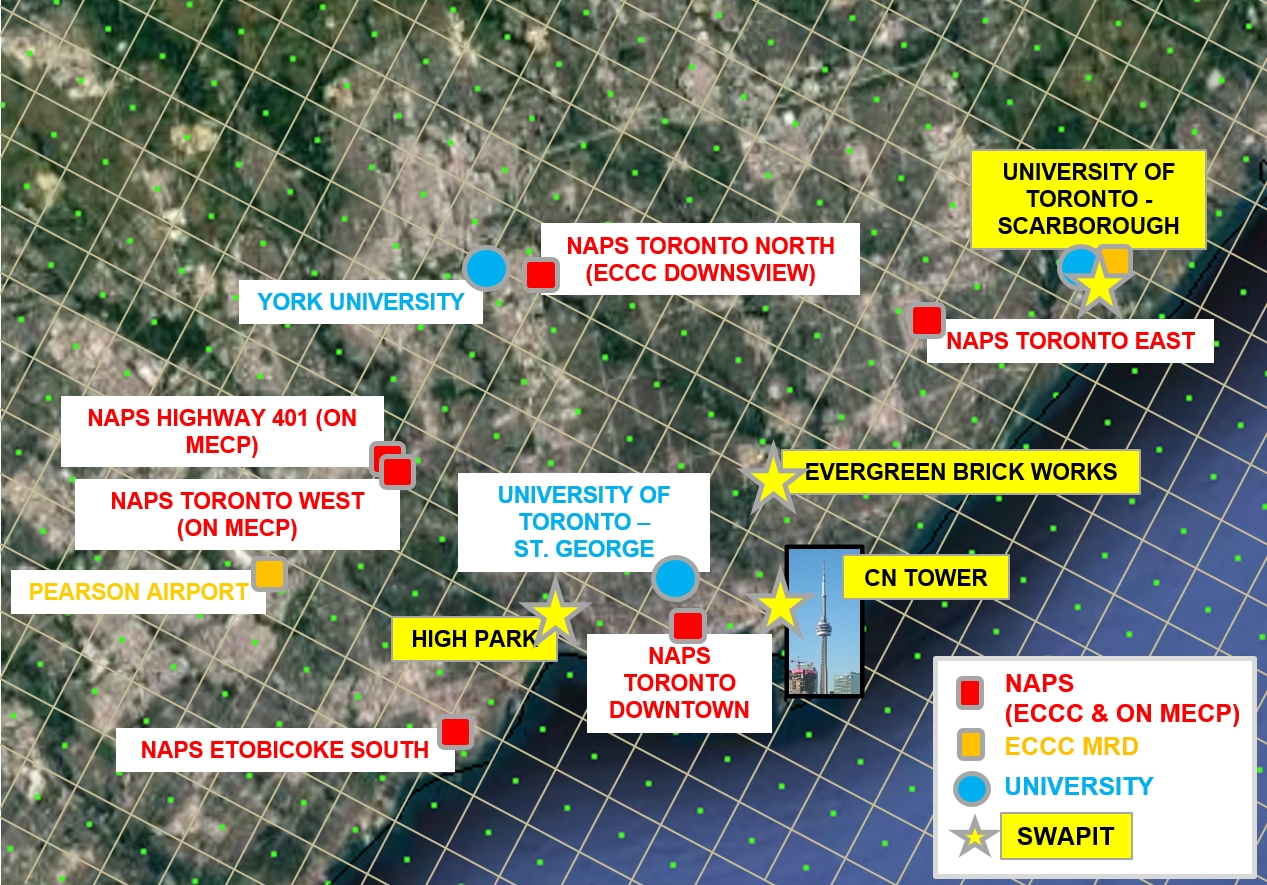
That finding is just one outcome from a massive investigation of winter air quality in Toronto, led by Galarneau, that involved more than 100 scientific and technical experts. Dubbed SWAPIT (short for Study of Winter Air Pollution in Toronto), the project’s core data was collected over an intensive six weeks from January to March 2024. During that period, air monitoring sites at 13 fixed locations collected readings from instruments that were stationary or installed on mobile sampling vehicles and trailers.
“There has never been a study that has looked at as broad a range of air pollutants as this one,” says Galarneau.
The results, which are still being compiled, not only shed new light on city-wide pollution levels in winter, at a time of year that’s been traditionally under-studied, but they also detail how exposure to certain elements in the winter air — such as soot, tire debris and gaseous volatile organic compounds (known as VOCs), and toxic substances produced by chemical reactions between them — varies by neighbourhood.
That variety, Galarneau notes, can have significant implications for urban health and environmental justice. “There are some pollutants that women of childbearing age are more sensitive to, or that elderly people are more sensitive to … and cities are a hotbed for that kind of diversity,” she says.
The wide-ranging study also had dozens of sub-projects. Some are looking at pollution’s secondary impacts, while others are applying the findings to improve research tools and models. Examples of how the data is being used range from a project that examines how air pollution that infiltrates surface water can affect urban wildlife to one that will help researchers fine-tune satellite-based tools that measure trace gas levels in the atmosphere.
“There has never been a study that has looked at as broad a range of air pollutants as this one.”
WHILE THE DISCOVERY that winter Air Quality Health Index values now equal or surpass those in summer is new, the impetus for the study, which was first floated as an idea in 2018, was the realization that certain key air pollutants such as ground-level ozone have not been decreasing as expected over time.
Ground-level ozone, Galarneau says, is not directly emitted but instead is created via chemical reactions between other pollutants (chiefly nitrogen oxides from fossil fuel combustion and volatile organic compounds that are present in combustion exhaust and emitted by industrial activities and commercial and chemical products such as paints and cleaners). “We think there’s actually been a shift in the mixture of pollutants that create ozone,” she says. “And if you change that mixture, you change the chemistry that’s happening.” Consequently, there hasn’t been the “steeply declining trend we might have hoped to see.”
Other pollutants of concern include certain trace metals and a class of chemicals called polycyclic aromatic hydrocarbons, which are byproducts of burning fossil fuels.
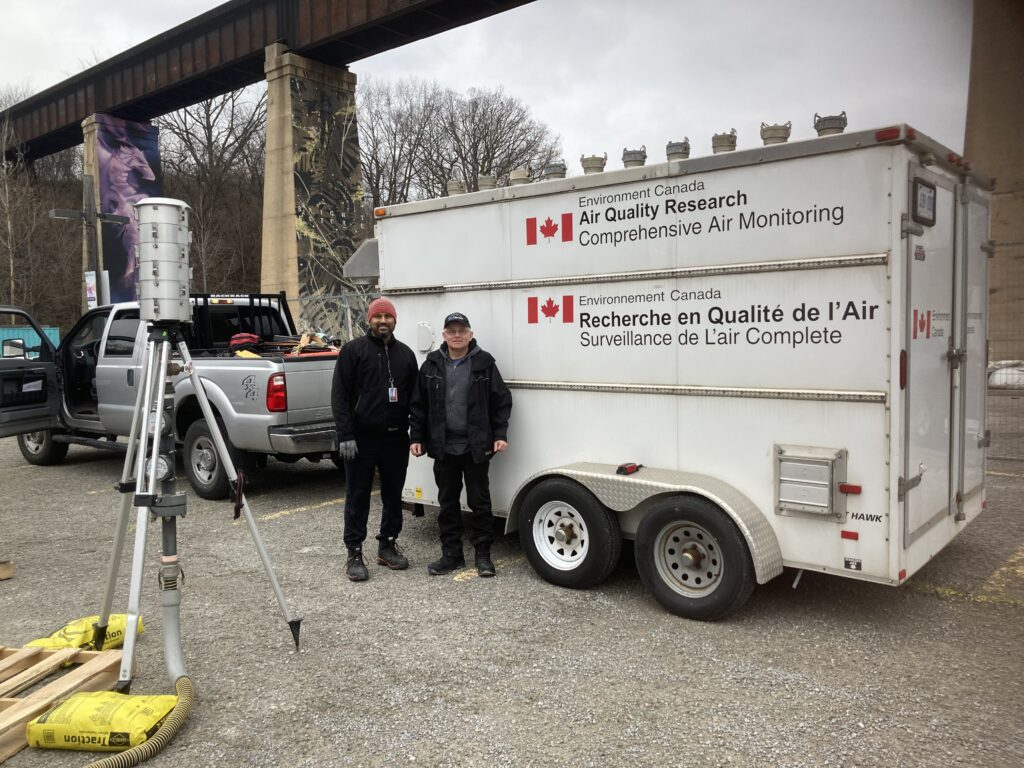
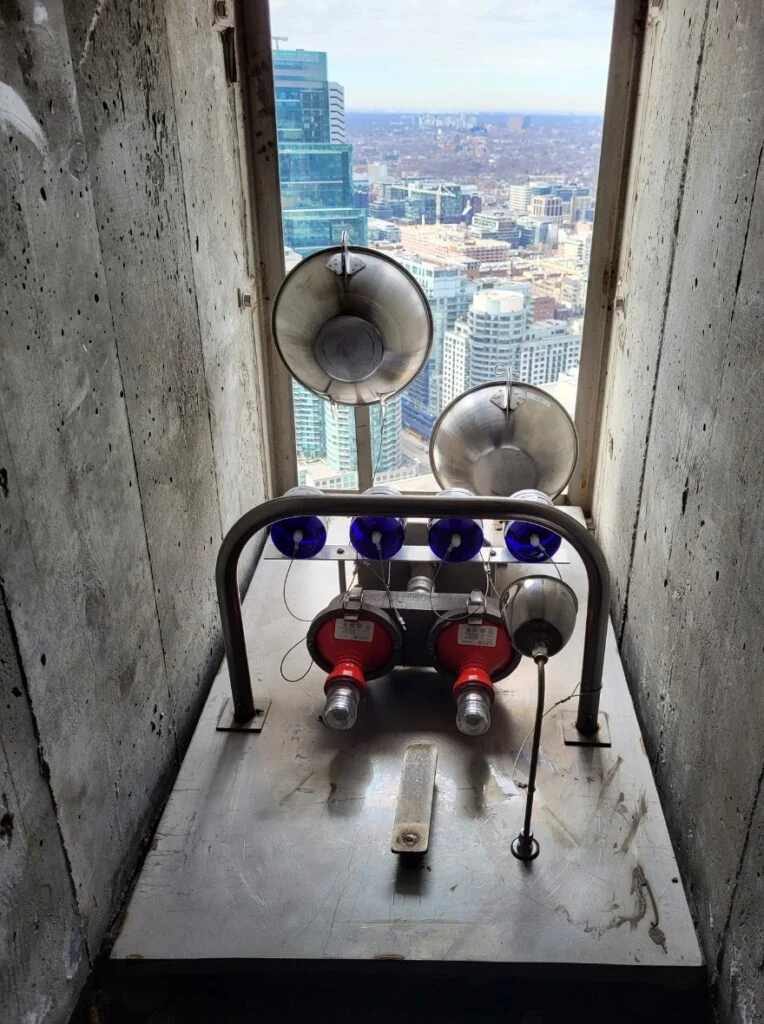
To capture the air readings, the study team gathered data at six existing national air pollution surveillance stations and two university stations in the city. They installed additional monitoring gear at a station at Toronto Pearson Airport and what Galarneau calls a “very sophisticated suite of instrumentation in several trailers” at three other ground sites at High Park, Evergreen Brick Works and the University of Toronto Scarborough campus. They also installed monitors up the side of the CN Tower and on the roof of its observation deck, 350 metres above the city. “We were really trying to fill in the map. And then also to get some vertical information,” she explains.
According to Galarneau, the three stations with sophisticated gear were designed to augment routine data gathered at the permanent sites with research-grade measurements. One of the tools used, a chemical ionization mass spectrometer, detects a long list of ozone-producing VOCs in real time. “In High Park, we could actually see when somebody would walk by because we could see signals of their deodorant and soap and shampoo,” says Galarneau. “All those different compounds have different powers in terms of how much they contribute to forming ozone.”
MANY OF THE FINDINGS from the research projects won’t be available until results are published in peer-reviewed journals, though Galarneau is preparing a summary report that she expects to release this fall. For now, she can offer a few highlights.
One of the animal studies, for example, involved northern leopard frogs, a local, native species that breeds in spring meltwater ponds. To see how air pollution captured in falling precipitation infiltrates surface water and affects local species, researchers collected snow from various study locations, exposed frog embryos to samples in the lab and compared their gene expression against control specimens. Researchers noted significant changes in the gene expression of embryos exposed to snowmelt from the more polluted sites. “The takeaway is that it’s not just pollution in the air you inhale that’s an issue, right? It’s cycling through the whole ecosystem,” she says.
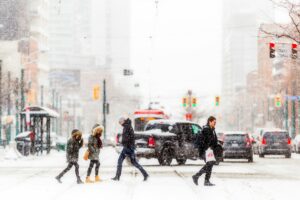
We’re used to worrying about the pollution that comes out of a car’s tailpipe, but another study dataset is likely to amplify concerns about the pollution from tire wear. As tires roll over the pavement, they release tiny particles that become airborne. These tire-wear particles have been recognized as one of the major categories of microplastic pollution.
“We measure those as part of what we call plastics, in general,” says Galarneau. At measurement sites near Highway 401, plastics were recorded at the highest levels, with tire-wear particles making up the bulk of the plastics measured. In other areas of the city, instead of tire-wear particles, fibres from fabrics dominated.
A final highlight for Galarneau and her colleagues is that the data will allow them to improve existing models that plot and predict the movement of airborne chemicals in much the same way weather models forecast pressure changes and precipitation. Current models have a coarse 2.5-kilometre resolution. But in cities, she says, conditions change at a much finer scale.
Moving “2.5 kilometres in a city could bring you to a very different type of environment. You could be in a park or you could be beside Highway 401.” By incorporating the copious study data, the goal is to drive the model resolution down to something as fine as 250 metres.
She stresses that this collection and modelling does not simply satisfy scientific curiosity. There are real-world policy implications and benefits. “We use these models to test different policy scenarios,” says Galarneau. “If a policymaker decides that they want to cut emissions from a particular source, we use these models to say, ‘What would be the impact of that? How much would it improve air quality?’ We want to get this modeling piece right so that we can make good, credible forecasts and inform the policies that government looks to make.”
This story was created in partnership with Environment and Climate Change Canada.
Science & Tech
Zen Mariani explains the ground-breaking Polar Night Experiment, plus more atmospheric stakes in the Far North
Science & Tech
Une vaste étude sur la pollution atmosphérique hivernale, menée par plus de 100 scientifiques, met en lumière notre exposition à de nombreux polluants, des microplastiques aux métaux.
Environment
Carbon capture is big business, but its challenges fly in the face of the need to lower emissions. Can we square the circle on this technological Wild West?
History
Mary Vaux’s groundbreaking 19th-century study of B.C.’s Illecillewaet Glacier created an invaluable record of the glacier’s recession